Buying Guide
Watch for a Job Interview or New Job
Watch Finder
Best Watch for a Job Interview or New Job: Our Picks by Budget
Time on the Move
| Published November 4, 2026 | Buying Guide
If you are hunting for the best watch for a job interview or a new job, this page is for you. It is written for anyone starting out, changing careers or heading into a first week in a new workplace, who wants a watch that looks tidy and does not distract. We cannot know your employer's culture, so we lean on common norms: restraint, a slim case and a simple dial. Picks cover three budgets, from under $1,000 to well above $5,000, in US dollars. For an interview, a watch is optional.
We choose with the same Watch Finder method we use across the site. Hard filters on budget and on size come first, including a thickness cap of about 11 mm. Next come weighted traits: a quiet look, a classic dial, a slim case and low flash, with status pieces and bold cases marked down. Our own research draws on published guides and workplace commentary. Most of it is advice and anecdote, not data, and we label it that way. No watch choice guarantees any outcome.
The short answer: Under $1,000
: Timex Marlin (hand-wound 34 mm); $1,000 to $5,000
: NOMOS Tangente 35; $5,000 to $15,000
: Jaeger-LeCoultre Reverso Classic Monoface Small Seconds (40.1 mm). Not sure which fits you? Take the Watch Finder quiz.
Our picks by budget
Under $1,000
Timex Marlin (hand-wound 34 mm)
New: about $259 (checked 2026-11-04)
A 34 mm hand-wound watch 10 mm thick with a plain face keeps things simple at a very low price. The limit is size: 34 mm looks small on larger wrists, and water resistance is only 30 m.
Worth knowing:
34 mm wears small on larger wrists
Read the Timex history
· Related guide
Where to look: Amazon
Chrono24
Orient Bambino Version 7 (38.4 mm)
New: about $295 to $345 (checked 2026-11-04)
A 38.4 mm automatic with a domed crystal and clean dial looks dressier than its price suggests. At 12.5 mm thick it is above our usual thickness cap, so a fitted cuff may catch, and it is rated to only 30 m.
Worth knowing:
Only 30 m water resistance
Read the Orient history
· Related guide
Where to look: Amazon
Chrono24
$1,000 to $5,000
NOMOS Tangente 35
New: about $2,330 to $2,620 (reported, checked 2026-11-04)
At 35 mm and 6.6 mm thick with a plain time-only face, it fits under a fitted cuff and looks tidy. The limit is price, which is a large spend for a first week, and 35 mm is small on some wrists.
Worth knowing:
Only 50 m, so keep it away from water
Read the Nomos history
· Related guide
Where to look: Amazon
Chrono24
IWC Portofino Automatic 40 (IW356527)
Pre-owned: about $4,200 to $5,000 (reported, checked 2026-11-04)
A 40 mm automatic about 9.2 mm thick, with a classic dressy look from a name brand. The limit is that it is a notable spend and rated to only 30 m. Our range is pre-owned, so ask for service history.
Worth knowing:
Only 30 m water resistance
Read the IWC history
· Related guide
Where to look: Chrono24
Bob's Watches
$5,000 to $15,000
Jaeger-LeCoultre Reverso Classic Monoface Small Seconds (40.1 mm)
New: about $9,000 (reported, checked 2026-11-04)
A very slim hand-wound dress watch at about 7.6 mm, easy under a cuff. At about $9,000 it is a lot for a new job or interview, so it suits someone senior or marking a milestone more than a candidate.
Worth knowing:
Only 30 m water resistance; avoid splashes
Read the Jaeger-LeCoultre history
· Related guide
Where to look: Amazon
Chrono24
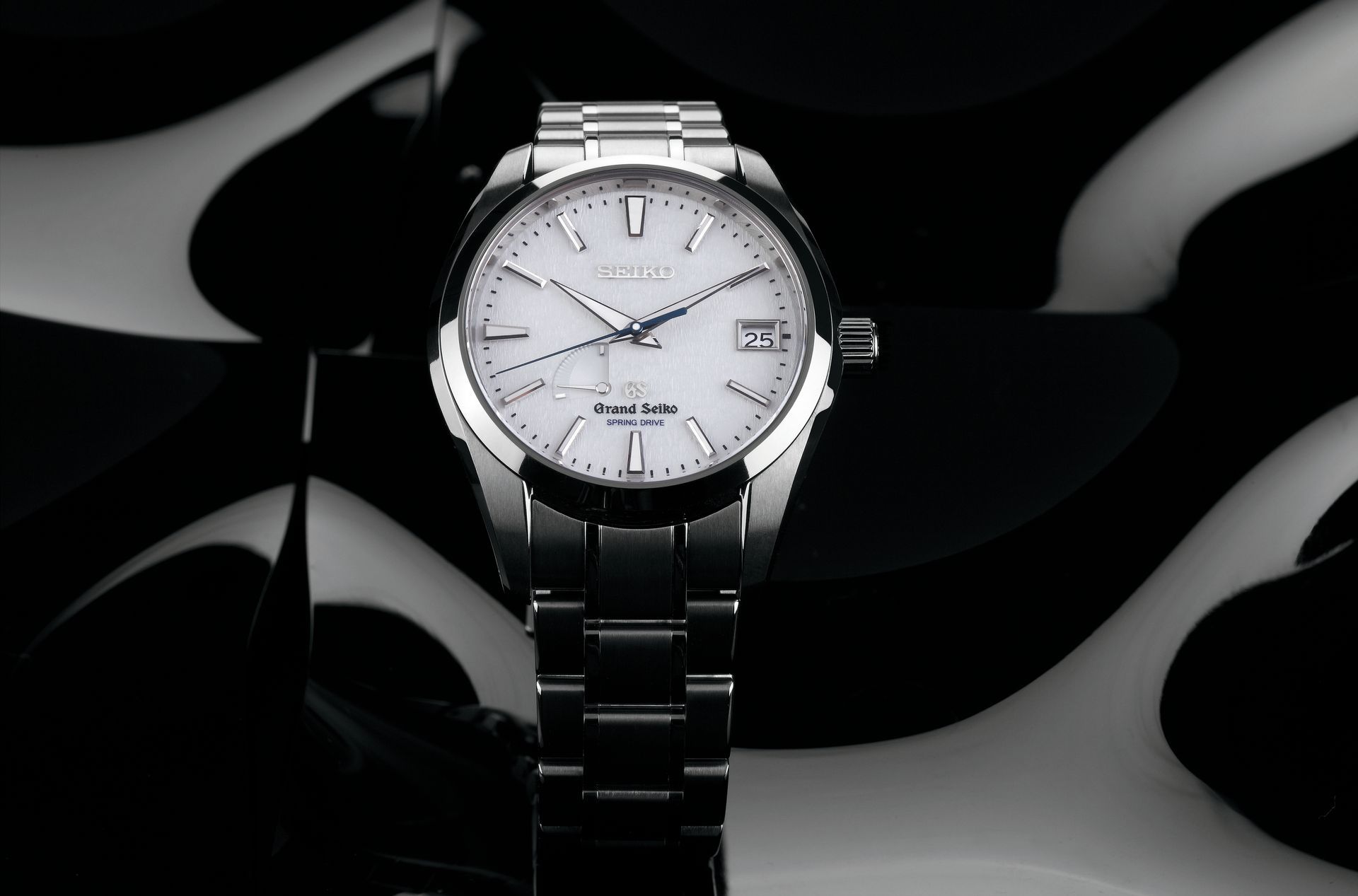
Grand Seiko Snowflake SBGA211
New: about $6,900 (checked 2026-11-04)
A light titanium watch with a textured white dial that looks calm from a distance. At about $6,900 new and 12.5 mm thick it is not a first-week watch for most people, and it is only rated to 100 m.
Worth knowing:
Only 100 m water resistance and not a dive watch
Read the Grand Seiko history
· Related guide
Where to look: Amazon
Chrono24
Picks at a glance
| Watch |
Price |
Size |
Movement |
Water resistance |
| Timex Marlin (hand-wound 34 mm) |
$259 |
34 mm x 10 mm thick |
Manual |
30 m |
| Orient Bambino Version 7 (38.4 mm) |
$295 to $345 |
38.4 mm x 12.5 mm thick |
Automatic |
30 m |
| NOMOS Tangente 35 |
$2,330 to $2,620 |
35 mm x 6.6 mm thick |
Manual |
50 m |
| IWC Portofino Automatic 40 (IW356527) |
$4,200 to $5,000 (pre-owned) |
40 mm x 9.2 mm thick |
Automatic |
30 m |
| Jaeger-LeCoultre Reverso Classic Monoface Small Seconds (40.1 mm) |
$9,000 |
24.4 mm x 7.6 mm thick |
Manual |
30 m |
| Grand Seiko Snowflake SBGA211 |
$6,900 |
41 mm x 12.5 mm thick |
Automatic |
100 m |
Restraint is the common advice
Across interview and workplace advice, the shared message is to keep it simple. A retailer essay and an interview guide, both seen partly through summaries, say a flashy watch can read as careless spending and a very cheap or scruffy one can suggest a lack of attention to detail. That is opinion, not tested fact. Plain dials, clean cases and tidy straps fit the advice. How the watch reads matters more than its price.
Size, thickness and tidiness
For a formal interview you may wear a jacket and fitted shirt cuffs. A thin case, about 10 mm or less, slides under a cuff, and a diameter of roughly 34 to 40 mm is the common range. Sources differ, so treat those numbers as soft. Check the strap too. A worn, cracked or dirty strap undermines a good watch, and a fresh strap on a modest watch is a cheap improvement.
Know your audience
Advice varies by field. Finance and law are usually described as the strictest, with plain, often leather-strapped watches the norm. Creative and tech settings are more relaxed, though evidence there is thin. Client-facing roles add another factor, since one source suggests a costly watch can send the wrong message to clients. All of this is reported commentary, so look at what interviewers and staff wear if you can. None of this is a rule, and interviewers differ.
Starting a new job
One banking-careers article reports that juniors usually avoid costly watches and that a pricey purchase soon after starting can look poor. That is a single source about a single industry, so treat it as an illustration. A watch given by family or inherited is generally described as fine for interviews, in the same reporting. Mute any smartwatch alerts, and avoid checking the time often. Looking at a watch during a conversation can read as impatience. Repeat checks of the time are the bigger risk.
Go without if it fits, and check rules
Some guides say no watch beats the wrong one for an interview, and some senior leaders wear none. That is a legitimate option, not a recommendation. Also note that some workplaces have rules about wrist items for hygiene or safety, including clinical, food prep and electrical roles. Those rules apply from your first day and override style. Ask HR if you are unsure. Some workplaces also run bare-below-the-elbows policies for staff in clinical areas.
When this advice does not fit
- Your workplace bans wrist items for hygiene or safety reasons. Follow the rule and wear your watch off duty.
- You already own a plain, clean watch that fits you. Buying a new one for an interview is usually unnecessary.
- You work in a casual or creative field where a personal style watch is normal. Our everyday and sport pages may suit you better.
Get a personal recommendation
These picks suit most people in this situation. For a recommendation based on your own budget, wrist size, style and workplace, take our Watch Finder quiz.
Prices are approximate US figures checked in November 2026 and change often. Some retailer links may become affiliate links; see our affiliate disclosure. Picks are chosen before any retailer link is added.
Frequently Asked Questions
Do I need to wear a watch to a job interview?
No. Some guides say no watch beats the wrong one, and some senior leaders wear none. A simple watch can help you keep track of time without pulling out a phone. If you do wear one, keep it plain and avoid looking at it during the conversation.
Does the price of my watch matter at an interview?
Advice suggests how a watch looks matters more than what it costs. A flashy or oversized watch can read as showy, and a very cheap-looking one as inattentive, according to one retailer essay. These are opinions, and interviewers differ. A clean, simple watch is the common recommendation.
Can I wear a smartwatch to an interview?
Views conflict. Some etiquette sources call a smartwatch casual and distracting. Other reports say juniors in finance commonly wear them. If you wear one, mute notifications and avoid glancing at it. Checking a wrist can read as impatience in any watch. Check how staff dress first if you can.
Is a borrowed or inherited watch fine?
One banking-careers article describes an inherited or family watch as generally acceptable for interviews, and this comes from a single report. Make sure it fits properly and keeps time, and have the strap checked if it is old. Keep it clean and tidy.
Do employers have watch rules?
Some do. Clinical settings often follow bare-below-the-elbows rules, food prep rules limit wrist jewelry, and electrical work restricts conductive items. These come from hygiene or safety standards and override style. Ask HR or your manager before you buy a watch for a role like this.