Nomos Tangente: The Iconic Bauhaus Wristwatch Since 1992

Zach Charles • June 16, 2026

Share this article

Nomos Tangente: The Iconic Bauhaus Wristwatch Since 1992

The Tangente is the watch that made Nomos. It debuted at Baselworld 1992, two years after the brand's founding, and immediately established a design language that was unmistakably German, unmistakably modern, and unmistakably different from anything else in the market. More than three decades later, it remains the brand's most recognised and commercially important reference — not through revision and updating, but through refinement of an original idea that was correct from the beginning.


The 1992 Debut

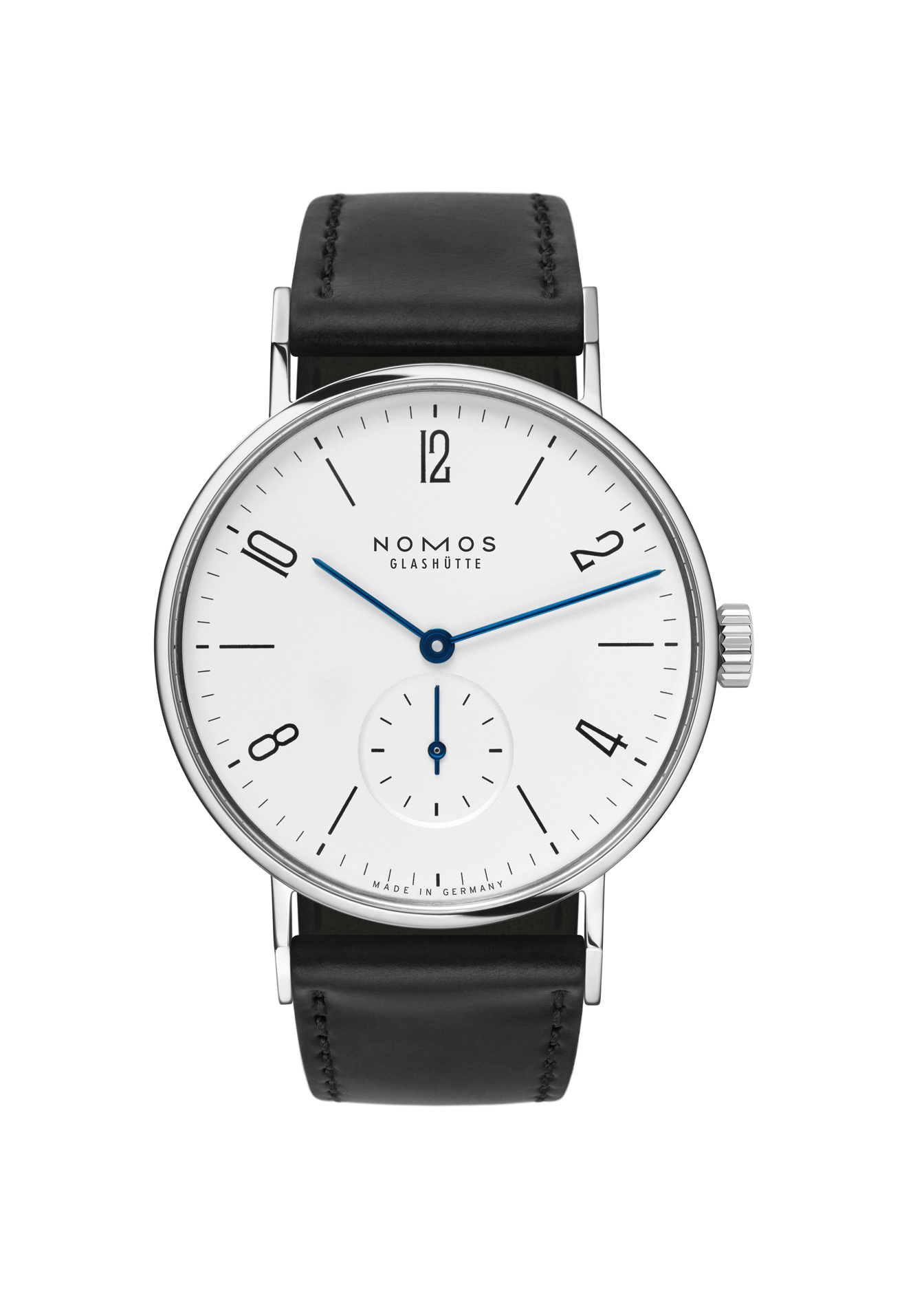
NOMOS Glashütte Tangente dress watch
NOMOS Glashütte Tangente — the brand’s most iconic reference, showing the railroad track chapter ring, cathedral hands, and clean white dial designed by Susanne Günther.
Photo: Berlinerblau — CC BY-SA 4.0 — Wikimedia Commons

Nomos presented the Tangente at Baselworld 1992 alongside the Orion — the two founding references that would define the brand. Where the Orion was the more traditional of the pair, the Tangente was the radical statement.

The name "Tangente" is German for tangent — the geometric concept of a line that touches a curve at exactly one point. It is an abstract name that refers to nothing watchmaking-specific: no historical model, no technical feature, no founder's name. The naming convention established a pattern Nomos has followed consistently: collection names from mathematics, geography, and abstract concepts rather than from marketing language.

The design: a round case in stainless steel, 38mm in diameter (slightly larger than the era's standard dress watch), a white dial with a railroad track minute chapter ring — fine, closely spaced lines around the dial perimeter marking each minute — and Breguet-style (or cathedral-style) hands with elongated openwork. The dial carried only what was strictly necessary: the Nomos Glashütte text, the model name, "Made in Germany," and the movement name.


The Railroad Track Chapter Ring

Nomos Tangente neomatik with in-house automatic movement
Nomos Tangente neomatik — the Tangente fitted with Nomos’s proprietary in-house automatic DUW movement incorporating the swing system escapement.
Photo: GodeNehler — CC BY-SA 4.0 — Wikimedia Commons

The defining visual element of the Tangente is the railroad track minute chapter ring — a ring of fine marks, one per minute (60 total), with longer marks at the five-minute positions. This system, derived from precision instrument dials, differs from the more common Arabic numeral minute track or the simple printed minute scale:

  • 60 individual marks rather than numerals — more precise, less visually crowded
  • The marks are applied lines (or printed with high precision), creating a visual texture that rewards close inspection
  • The absence of Arabic numerals at the minute positions forces the eye to count the marks, which sounds cumbersome but is intuitive in practice

The railroad track is a feature associated with scientific instruments, precision measurement tools, and certain pocket watches of the nineteenth century — it signals accuracy and seriousness without requiring text to say so.


Cathedral Hands

NOMOS Glashütte Ludwig dress watch
NOMOS Glashütte Ludwig — a round-cased dress watch from the Nomos collection, demonstrating the brand’s consistent application of Bauhaus design principles.
Photo: Berlinerblau — CC BY-SA 4.0 — Wikimedia Commons
The hour and minute hands on the Tangente are cathedral hands (also called sword hands in Nomos's own terminology): elongated, slightly tapered, with a wider body and a fine point, filled with Super-LumiNova for night reading. The name "cathedral" refers to the resemblance to Gothic architectural spires — attenuated, upward-reaching, slightly severe.

The hands are produced at Nomos's own facility to very precise tolerances. The white lacquer finish (for the standard white dial version) creates a high contrast against the dial; the lume fill is applied in a narrow corridor along the hand's length rather than in a bulky blob, maintaining the hand's slender profile.


Sizing — 33mm, 35mm, 38mm, 41mm

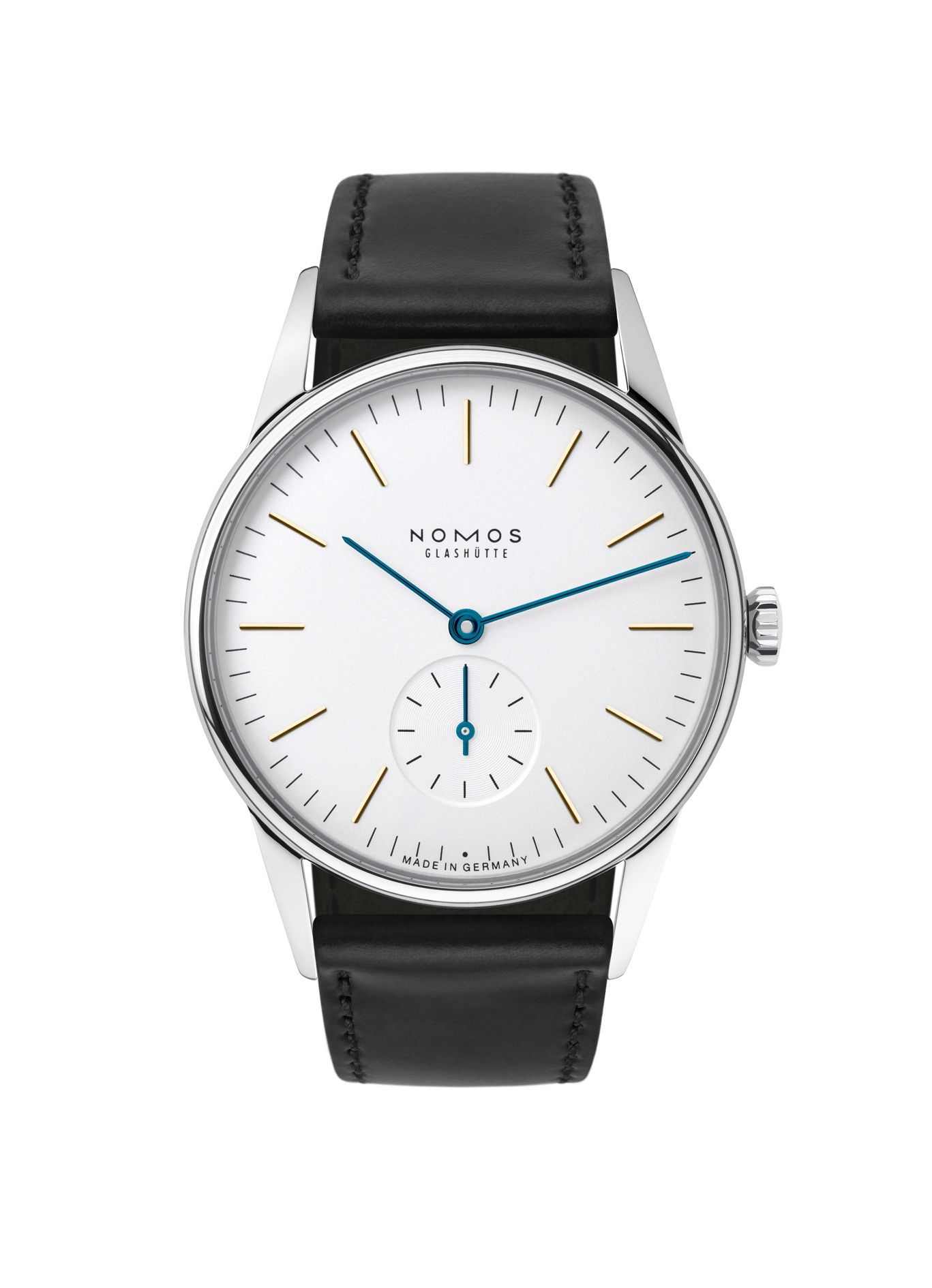
NOMOS Glashütte Orion dress watch
NOMOS Glashütte Orion — one of the original 1990 Nomos references, representing the brand’s most classical dress watch design with small seconds at 6 o’clock.
Photo: Berlinerblau — CC BY-SA 4.0 — Wikimedia Commons

The Tangente has expanded through careful size progression:

Reference Diameter Movement Crown
Tangente 33 33mm DUW Alpha (manual) 3 o'clock
Tangente 35 35mm DUW Alpha (manual) 3 o'clock
Tangente 38 38mm DUW Alpha (manual) 3 o'clock
Tangente 38 Datum 38mm DUW 1 (auto) 3 o'clock
Tangente Neomatik 41 Datum 41mm DUW 3001 (neomatik auto) 3 o'clock

The 33mm and 35mm are marketed without gender designation — Nomos has explicitly rejected the convention of "ladies' watches" and "men's watches," instead noting that case size preference is individual. The 33mm remains manual-wind because the DUW automatic movements are too large for such a compact case without compromising case height.


Tangente Datum — Date Display

Nomos Glashütte Metro complications dress watch
Nomos Glashütte Metro — the brand’s complications platform in dress watch form, showing the clean integration of functional indicators within a Bauhaus-influenced dial.
Photo: Berlinerblau — CC BY-SA 4.0 — Wikimedia Commons

The Tangente Datum (Datum = date in German) adds a date display via a classical date window at 3 o'clock. The display is simple: a white-disc date wheel with black numerals, reading through a rectangular aperture in the dial. The aesthetic discipline of the date window on the Tangente — no cyclops lens, no magnification, simply a clean aperture — is consistent with the broader design philosophy: function without embellishment.

The Tangente Datum uses either the DUW 1 (early automatics) or DUW 3001 (current neomatik automatics). The additional movement height of an automatic calibre increased the case thickness to approximately 8.5mm — still thin, but noticeably different from the 6.8mm of the manual Tangente 38.


Dial Colour Variants

NOMOS Glashütte Tetra square-case watch
NOMOS Glashütte Tetra — the brand’s square-case reference, with the railroad track chapter ring adapted for a square dial perimeter.
Photo: Berlinerblau — CC BY-SA 4.0 — Wikimedia Commons

The original Tangente was white-dialled. Over decades, Nomos has expanded the colour palette judiciously:

  • White — the original, most recognised
  • Blue — introduced mid-2010s, now equally standard
  • Black — available in most sizes
  • Silverite — a light grey/silver metallic dial, more formal
  • Gold — yellow gold and rose gold cases (premium tier)
  • Limited edition colours — occasional collaboration-specific dials

The expansion has been deliberately restrained. Nomos has not produced the colour catalogue of, say, Oris Divers Sixty-Five — limiting to 4–5 standard dial options preserves the collection's coherence.


The DUW Alpha Movement

The manual-wind movement in the Tangente 33, 35, and 38 is the DUW Alpha — the Nomos in-house re-engineering of what was originally a Peseux 7001-derived calibre. The DUW Alpha provides:

  • Manual wind (no rotor, thus thinner)
  • 43-hour power reserve
  • 21,600 vph (3 Hz) — a slower frequency than modern automatics, contributing to the long reserve
  • 17 jewels
  • Glashütte stripes (Glashütter Streifen) on the three-quarter plate — the decorative surface finish traditional to Glashütte watchmaking

The Glashütte stripe — fine parallel lines applied through a specific grinding technique — is part of what justifies the "Made in Glashütte" designation and part of what distinguishes a Nomos movement from a standard Swiss ébauche.


Recent Posts

By Zach Charles • October 10, 2026
Hamilton's American Classic Cushion Mechanical revives its 1926 Art Deco cushion watches, seen in Oppenheimer, in 30mm and 34mm with the new hand-wound…
Doxa SUB 200: The Accessible Everyday Diver
By Zach Charles • October 10, 2026
Complete guide to the Doxa SUB 200 — 42mm, 200m, four colorways, Sellita SW200-1. The accessible entry to the Doxa SUB family with the full…

By Zach Charles • October 10, 2026
The Breitling Top Time B01 Aston Martin DB5 pairs a cushion-shaped 41mm case, a wooden inner ring and the in-house Caliber 01 across three limited…
By Zach Charles • October 10, 2026
TAG Heuer developed the Mikrograph (2011, 1/100th second), Mikrotimer Flying 1000 (2011, 1/1000th second), and Mikrogirder (2012, 1/2000th second).
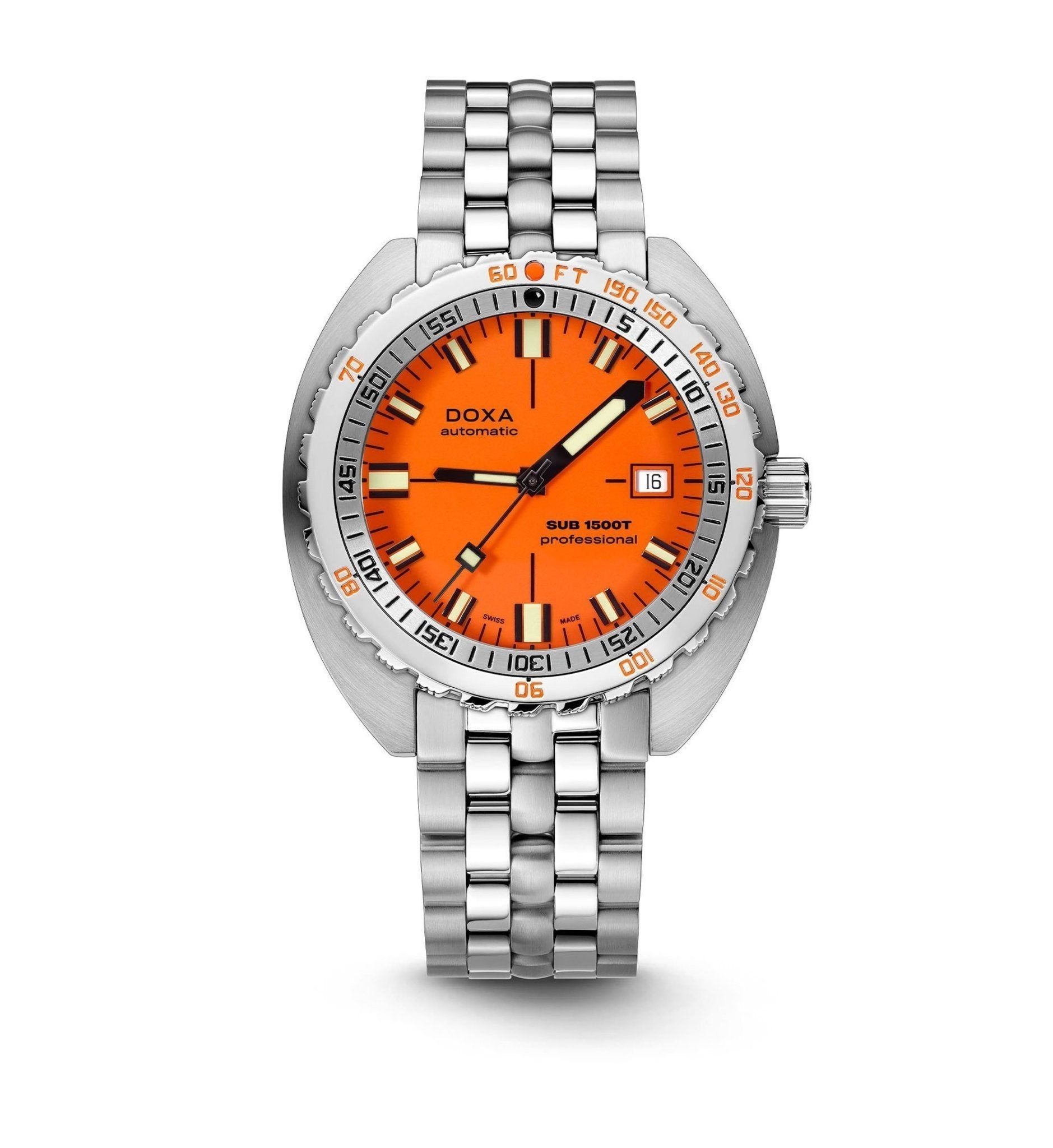
Doxa SUB 1500T: The 1,500-Metre Depth-Rating Flagship
By Zach Charles • October 10, 2026
Complete guide to the Doxa SUB 1500T — 45mm, 1,500m depth rating, helium escape valve, ETA 2892-2 movement, USD 2,690.
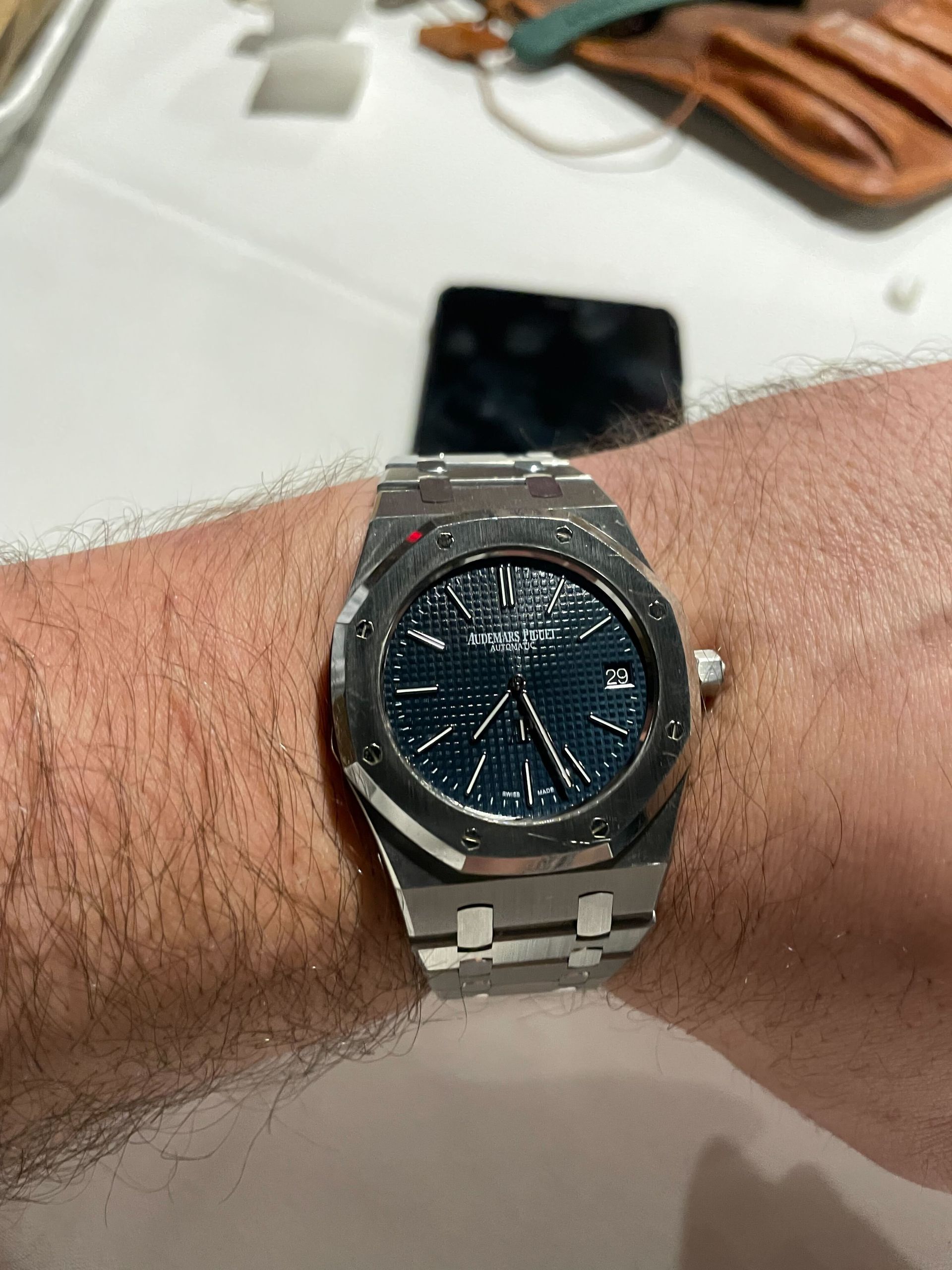
Audemars Piguet Royal Oak 'Jumbo' ref. 15202 with blue tapisserie dial and integrated steel bracelet
By Zach Charles • October 10, 2026
The Audemars Piguet × Swatch Royal Pop is a $400 bioceramic pocket watch in 8 colourways, powered by a new hand-wound SISTEM51 with 90+ hour power…

Time on the Move logo
By Zach Charles • October 10, 2026
Zach Charles is the editor of Time on the Move, an independent watch reference covering brand and model histories, buying guides and release news…
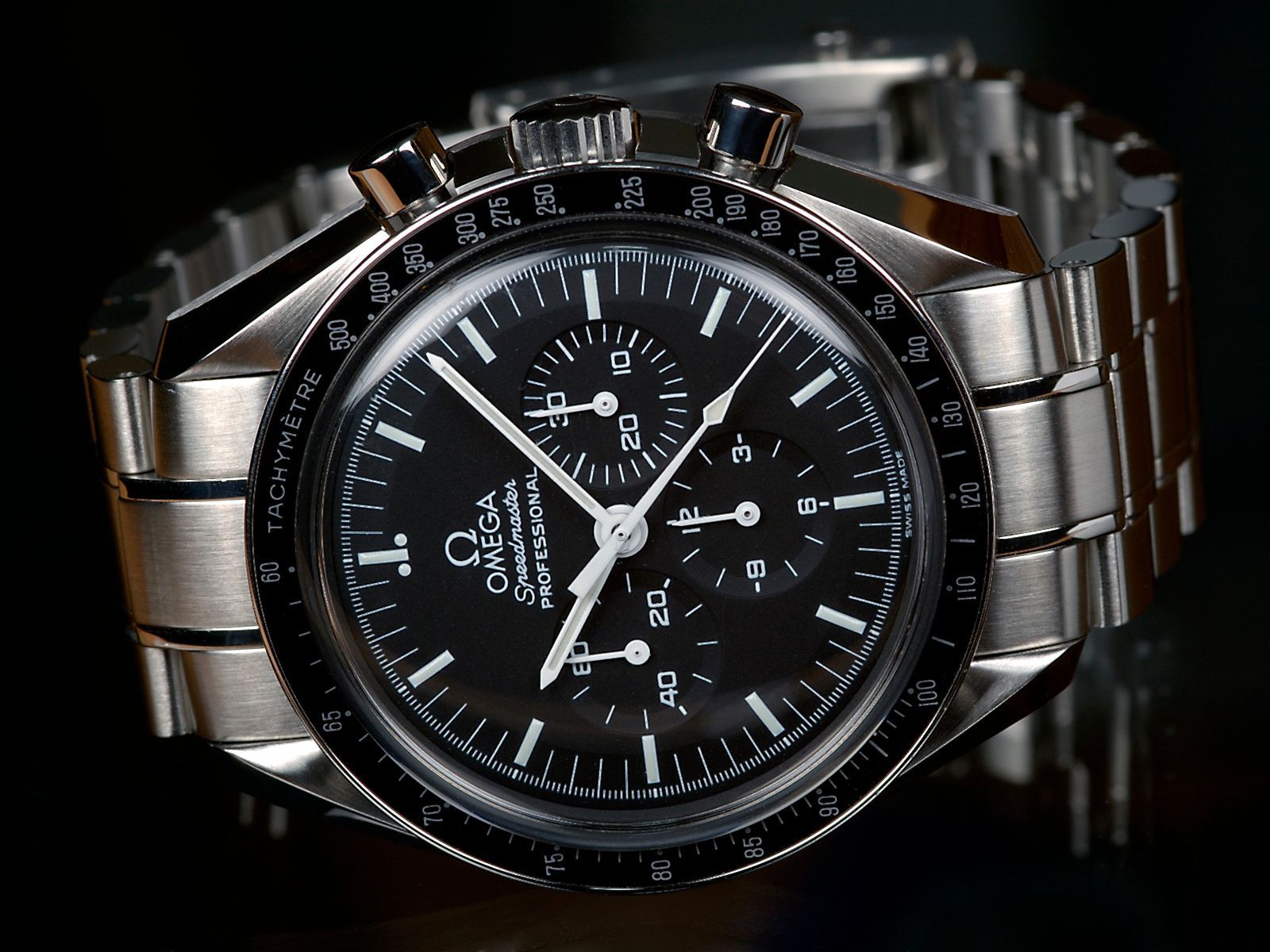
Omega Speedmaster Professional 'Moonwatch' chronograph, front view on steel bracelet
By Zach Charles • October 9, 2026
Find the best watches at every price point from $500 to $15,000 — new and pre-owned. Covers every budget tier with specific reference picks, brand…
By Zach Charles • October 9, 2026
The latest watch news: new releases, Watches and Wonders coverage, discontinuations, industry analysis, and market trends. Currently 1 article.

Seiko's New Panda Chronograph Is Literally a Panda: The Power Design Project HHK001 and HHK002
By Zach Charles • October 8, 2026
Seiko's Power Design Project panda chronograph (HHK001, HHK002) turns the panda dial into an actual panda face, with ear pushers, a 'Sasameter' and a 3D…
Show More