
Grand Seiko Snowflake: The SBGA011 Dial and the Shinshu Studio

Zach Charles • August 3, 2026

Share this article

Grand Seiko Snowflake: The SBGA211

The Hotaka mountain range rises behind the Shinshu Watch Studio in Shiojiri, Nagano. In winter, snow settles on the peaks and across the surrounding plateau, compacted by wind until its surface takes on a particular texture — not the soft crystals of fresh snowfall, but a denser, more structured crystalline pattern. That texture became a dial.

The watch built around it — titanium case, Spring Drive movement, silver-plated textured dial — is the Grand Seiko Snowflake . In the decade and a half since it reached international markets, it has become the single watch most associated with Grand Seiko in the collector community, and arguably the clearest argument for the brand's particular identity.


Grand Seiko Automatic Hi-Beat watch
A Grand Seiko Automatic Hi-Beat — running at 36,000 vph (10 beats per second), the hi-beat movements deliver improved positional accuracy and a characteristically smooth seconds sweep compared with standard-beat automatics.
Photo: Roland Fischer (Dnalor 01) — CC BY-SA 3.0 AT — Wikimedia Commons

Reference History — SBGA011 to SBGA211

Grand Seiko SBGR051 — side view
The Grand Seiko SBGR051 from the side — showing the case thickness and lug profile that result from the Zaratsu polishing process: mirror-finished flat surfaces meeting brushed flanks at a perfectly crisp edge.
Photo: STSPP — CC BY-SA 4.0 — Wikimedia Commons

The Snowflake's reference history is straightforward but worth stating clearly:

  • SBGA011: The original reference, introduced in Japan in 2005 . Powered by Calibre 9R65 (the automatic Spring Drive movement). Available in Japan only for five years.
  • 2010: Grand Seiko entered international markets for the first time. The SBGA011 was among the first watches made available to international retailers. For many collectors outside Japan, it was their first encounter with the brand.
  • 2017: When Grand Seiko became an independent brand and updated its reference numbering system, the SBGA011 was redesignated SBGA211 . The watch itself was unchanged; only the reference number reflects the new system.

The SBGA211 designation is the correct current reference for the watch in production.


Specifications

Grand Seiko Calibre 9S65 automatic movement
The Grand Seiko Calibre 9S65 automatic movement — a standard-beat automatic at 28,800 vph with 72-hour power reserve, hand-finished to the Grand Seiko standard with machine-striped plates and manually bevelled components.
Photo: STSPP — CC BY-SA 4.0 — Wikimedia Commons

  • Movement: Calibre 9R65 (automatic Spring Drive)
  • Power reserve: 72 hours
  • Accuracy: ±1 second per day / ±15 seconds per month
  • Case material: High-intensity titanium (Grade 5, approximately 30% lighter than stainless steel, high scratch and corrosion resistance)
  • Case diameter: 41 mm
  • Case thickness: 12.5 mm
  • Lug-to-lug: 49 mm
  • Band width: 20 mm
  • Water resistance: 100 m
  • Current retail (2026): US$6,900

The titanium case is not a cost-reduction measure — Grade 5 high-intensity titanium (Ti-6Al-4V) is harder and more expensive to machine than stainless steel, and approximately 30% lighter on the wrist. The combination of the Zaratsu-polished titanium case surfaces and the brushed titanium lugs creates the same contrast of mirror and matte that Grand Seiko applies across its steel and gold references.


The Dial — What It Actually Is

Grand Seiko SBGW231 manual-wind — side view
The Grand Seiko SBGW231 manual-wind from the side — powered by Calibre 9S64, the 4.28mm manual-wind movement that underpins the Elegance Collection and represents Grand Seiko’s purest expression of thin-case dress watchmaking.
Photo: STSPP — CC BY-SA 4.0 — Wikimedia Commons
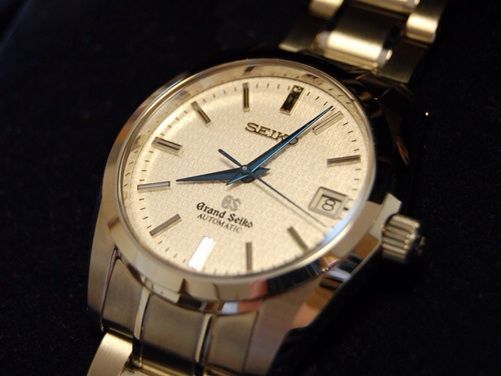
The Snowflake dial is frequently misdescribed. It is not enamel. It is not lacquer. It is not painted.

The confirmed process, reconstructed from independent technical sources including watchmaker teardowns:

  1. A brass plate is pressed and stamped with a textured surface pattern that replicates the crystalline structure of compacted, wind-swept snow
  2. A hand-brushing technique is applied to the textured surface to refine the three-dimensional character
  3. The dial surface is silver-plated
  4. Protective finishing steps are applied

The total process involves over 80 separate steps . The result is a dial that varies in reflectivity across its surface — the peaks of the texture catching light differently from the recesses — in a way that neither flat lacquer nor enamel can replicate. The dial changes perceptibly depending on the angle of light and the viewer's position, which is characteristic of the best Grand Seiko dials across all materials.

The inspiration is specific: the snow visible on the Hotaka mountains from the Shinshu Watch Studio in winter, compacted into a surface texture that is neither soft nor uniform but has the geometric character of crystalline structure. The dial does not illustrate snow. It approximates the visual quality of a particular kind of snow in a particular place.


Spring Drive and the Snowflake

Grand Seiko SBGR037 with Calibre 9S automatic
The Grand Seiko SBGR037 — a Heritage Collection automatic with Calibre 9S, illustrating the 44GS design language: horizontal brushed dial, applied indices, and the case geometry developed by Taro Tanaka at the Suwa Seikosha studio in 1967.
Photo: Hiroaki Kikuchi (Torajiro) — CC BY-SA 3.0 — Wikimedia Commons

The Calibre 9R65's characteristic is the smooth, continuous sweep of its seconds hand — a consequence of the Spring Drive's electromagnetic regulation operating continuously rather than in discrete mechanical ticks.

On the Snowflake, this is not an incidental detail. The textured dial is a field of visual movement — light plays differently across its surface every moment. The seconds hand moving in a continuous sweep across this dial is coherent with the character of the watch in a way that a stepped mechanical seconds hand would not be. The overall impression — of something natural, continuous, and unhurried — is reinforced by both the dial and the movement.


The Snowflake as Introduction to Grand Seiko

Grand Seiko Automatic Hi-Beat watch
A Grand Seiko Automatic Hi-Beat — running at 36,000 vph (10 beats per second), the hi-beat movements deliver improved positional accuracy and a characteristically smooth seconds sweep compared with standard-beat automatics.
Photo: Roland Fischer (Dnalor 01) — CC BY-SA 3.0 AT — Wikimedia Commons

The SBGA211's central role in Grand Seiko's international reception is straightforward to explain. When Grand Seiko reached international retailers in 2010, it needed to communicate a clear identity to collectors who had no familiarity with the brand. The Snowflake did this without explanation.

The combination of elements — Grade 5 titanium case (practical and technically sophisticated), Spring Drive movement (genuinely unique mechanism with no Swiss equivalent), a dial that referenced a specific Japanese landscape — gave the watch an identity that had no parallel in the Swiss market at any price. At a price point well below comparable Swiss alternatives, it also had immediate commercial credibility.

The Snowflake remains in continuous production. Secondary market demand is consistent and strong: the SBGA211 is one of the fastest-moving Grand Seiko references in the pre-owned market.


Variants

  • SBGA011: Original Japan reference (2005–2017), identical to SBGA211 in specification, different in reference number only
  • SBGA211: Current production reference (2017–present)
  • STGF359: Ladies' Snowflake in the Elegance Collection
  • SBGA497: 2024 limited edition "Pink Snowflake," released to mark the 20th anniversary of Calibre 9R65, featuring a rose-tinted variant of the signature dial texture


Frequently Asked Questions

What is the Grand Seiko Snowflake?
The SBGA211 — a 41mm titanium-cased automatic Spring Drive watch (Calibre 9R65) with a silver-plated textured dial inspired by the wind-compacted snow on the Hotaka mountains. 72-hour power reserve, ±1 second/day accuracy, 100m water resistance. US$6,900 retail (2026).

What is the Snowflake dial made of?
The dial is a silver-plated brass base with a pressed-and-stamped texture replicating the crystalline structure of compacted snow. It is not enamel, lacquer, or paint. The total finishing process involves over 80 steps.

What is the difference between SBGA011 and SBGA211?
They are the same watch. SBGA011 was the original Japan reference (2005); it was redesignated SBGA211 in 2017 when Grand Seiko updated its reference numbering system following brand independence. Specifications are identical.

When did the Snowflake become available internationally?
2010, when Grand Seiko entered international markets for the first time. The SBGA011/SBGA211 was among the first watches made available to international retailers.

Why is the Snowflake considered Grand Seiko's most iconic watch?
It was the first Grand Seiko watch that many international collectors encountered (from 2010), its design identity is immediately legible (textured dial, titanium case, sweeping seconds hand), and there is no equivalent in the Swiss market at its price point.


Related Articles

Recent Posts

By Zach Charles • October 10, 2026
Hamilton's American Classic Cushion Mechanical revives its 1926 Art Deco cushion watches, seen in Oppenheimer, in 30mm and 34mm with the new hand-wound…
Doxa SUB 200: The Accessible Everyday Diver
By Zach Charles • October 10, 2026
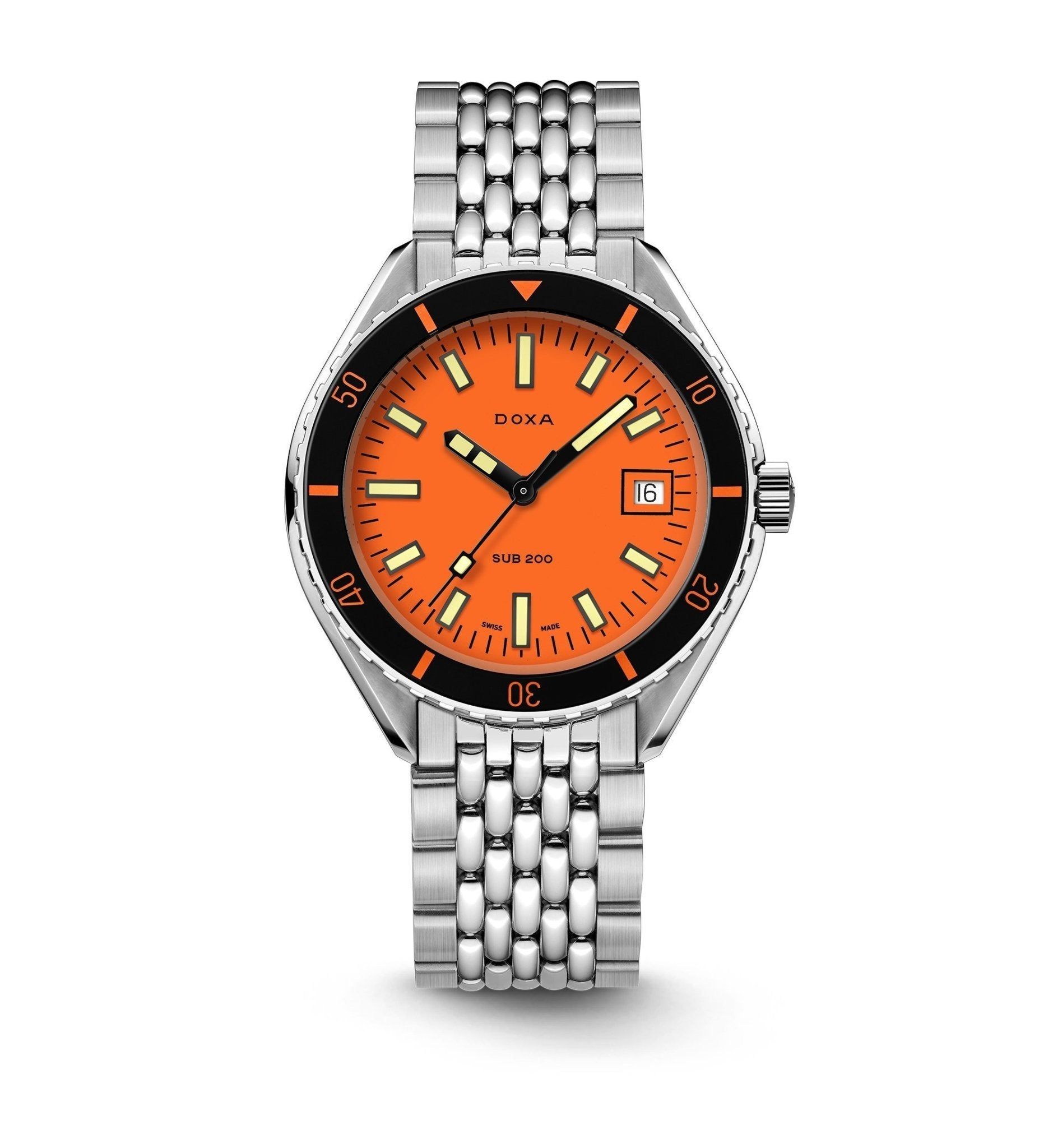
Complete guide to the Doxa SUB 200 — 42mm, 200m, four colorways, Sellita SW200-1. The accessible entry to the Doxa SUB family with the full…
By Zach Charles • October 10, 2026
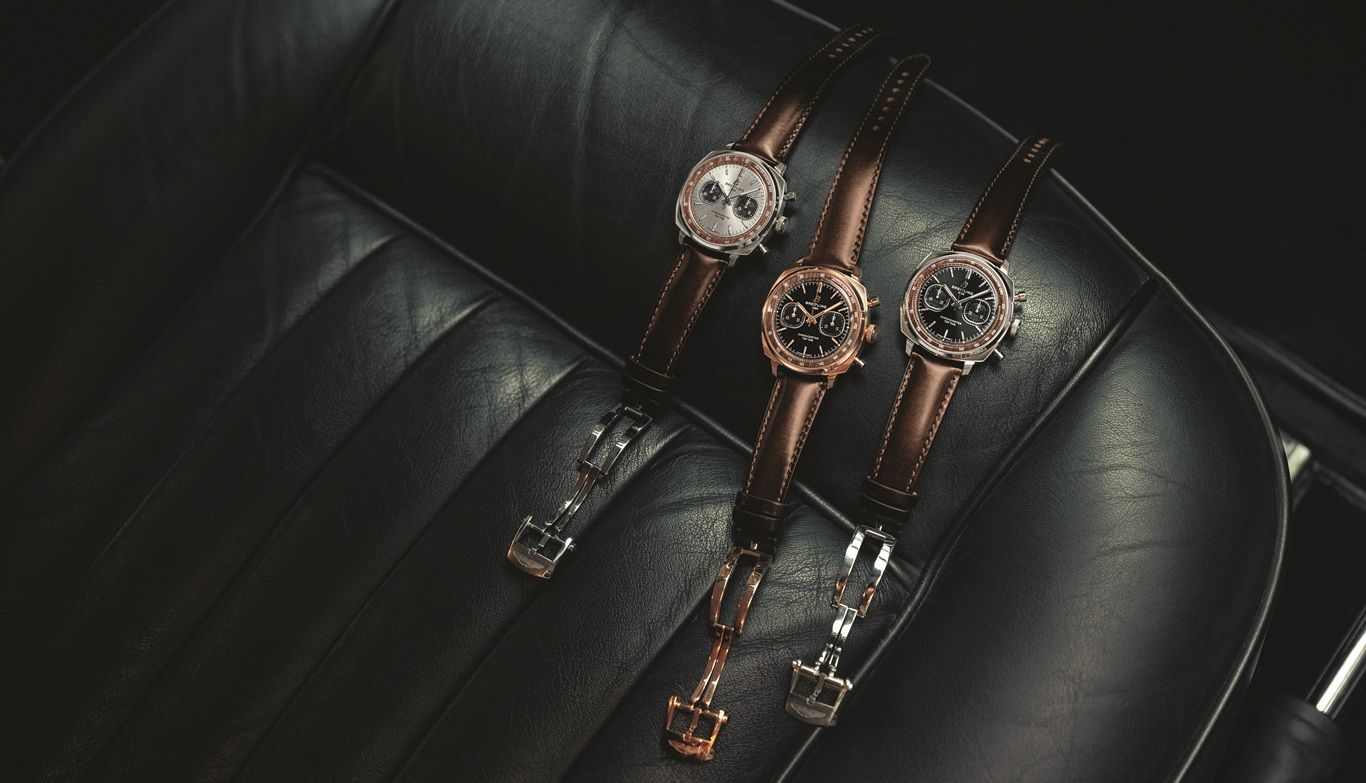
The Breitling Top Time B01 Aston Martin DB5 pairs a cushion-shaped 41mm case, a wooden inner ring and the in-house Caliber 01 across three limited…
By Zach Charles • October 10, 2026
TAG Heuer developed the Mikrograph (2011, 1/100th second), Mikrotimer Flying 1000 (2011, 1/1000th second), and Mikrogirder (2012, 1/2000th second).
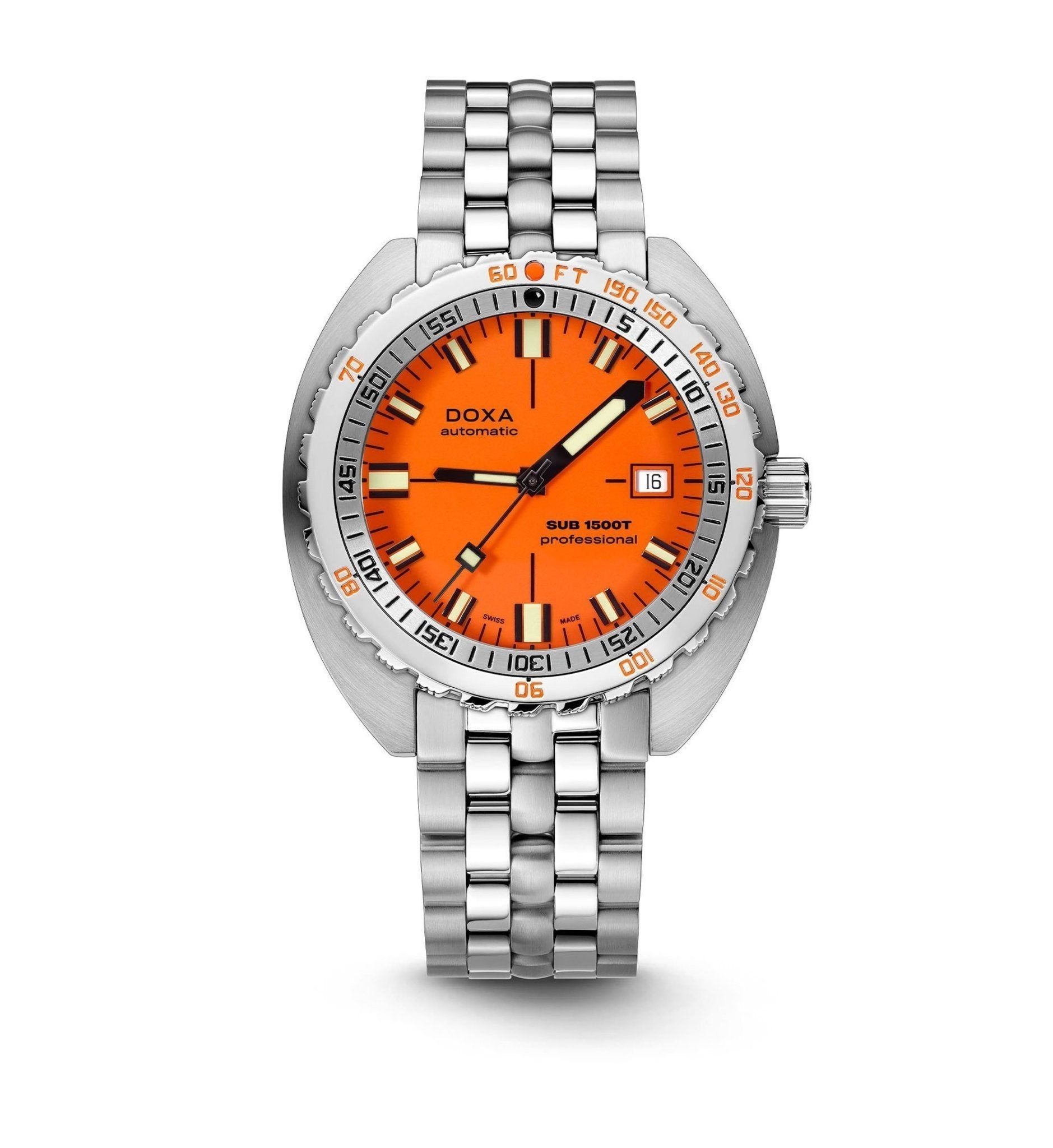
Doxa SUB 1500T: The 1,500-Metre Depth-Rating Flagship
By Zach Charles • October 10, 2026
Complete guide to the Doxa SUB 1500T — 45mm, 1,500m depth rating, helium escape valve, ETA 2892-2 movement, USD 2,690.

Audemars Piguet Royal Oak 'Jumbo' ref. 15202 with blue tapisserie dial and integrated steel bracelet
By Zach Charles • October 10, 2026
The Audemars Piguet × Swatch Royal Pop is a $400 bioceramic pocket watch in 8 colourways, powered by a new hand-wound SISTEM51 with 90+ hour power…

Time on the Move logo
By Zach Charles • October 10, 2026
Zach Charles is the editor of Time on the Move, an independent watch reference covering brand and model histories, buying guides and release news…
Omega Speedmaster Professional 'Moonwatch' chronograph, front view on steel bracelet
By Zach Charles • October 9, 2026
Find the best watches at every price point from $500 to $15,000 — new and pre-owned. Covers every budget tier with specific reference picks, brand…
By Zach Charles • October 9, 2026
The latest watch news: new releases, Watches and Wonders coverage, discontinuations, industry analysis, and market trends. Currently 1 article.
Seiko's New Panda Chronograph Is Literally a Panda: The Power Design Project HHK001 and HHK002
By Zach Charles • October 8, 2026
Seiko's Power Design Project panda chronograph (HHK001, HHK002) turns the panda dial into an actual panda face, with ear pushers, a 'Sasameter' and a 3D…
Show More