Cartier Ballon Bleu: History of the Round Dress Watch

Zach Charles • July 31, 2026

Share this article

Cartier Ballon Bleu: History of the Modern Classic

The Cartier Ballon Bleu is a remarkable achievement: a watch introduced in 2007 that became Cartier's best-selling model within five years, demonstrating that genuinely original design can still find a mass market in an industry obsessed with heritage. Its defining feature — a floating bubble of blue synthetic sapphire protecting the crown, integrated into the round case as a jewel — is the most immediately recognisable watch design detail introduced in the past two decades. Not a complication, not a movement visible through a caseback, not a bezel material: a crown protector. It is an unlikely candidate for a design signature, which is precisely why it works.

The Ballon Bleu's commercial success was not merely a function of its design novelty. It succeeded because it arrived at exactly the right moment with exactly the right proposition: a round watch — the most commercially acceptable case shape — from the world's most prestigious jeweller, at a price point accessible to aspirational buyers, with a design detail distinctive enough to be immediately recognisable. The blue bubble at 9 o'clock tells you, across a room, that this is a Cartier. In a market where that recognition is worth thousands of euros in brand value, it is a highly effective solution to a marketing problem.

Understanding the Ballon Bleu means understanding both its design intelligence and its commercial intelligence — two things that, in this case, are inseparable.


Cartier Santos Trianon
A Cartier Santos Trianon — the ultra-thin Santos variant that strips the model to its most essential elements. The Santos Trianon’s rectangular case with exposed screws on the bezel is the direct descendant of Santos-Dumont’s 1904 commission: square case, visible construction, aviation-derived practicality translated into a formal dress watch.
Photo: EMore98 — CC BY-SA 4.0 — Wikimedia Commons
Origins and Design Concept (2007)

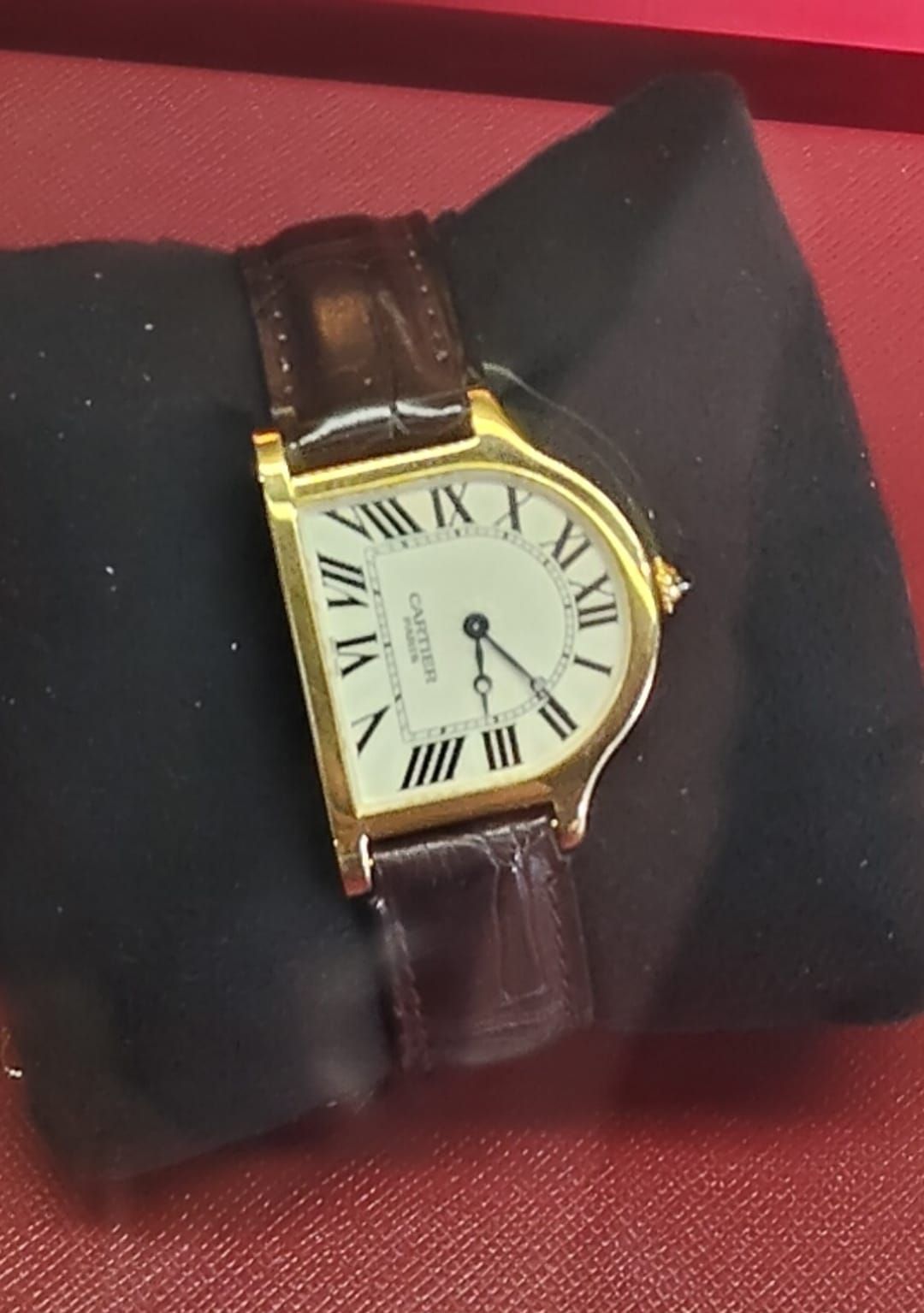
Cartier Cloche ref. 2841
A Cartier Cloche reference 2841 — illustrating Cartier’s tradition of unconventional case shapes derived from Art Deco geometry. The Cloche (“bell”) case, with its inverted arch and movement positioned vertically within the case, exemplifies the approach to watch design that Jeanne Toussaint and Louis Cartier developed across the 1920s and 1930s: form first, movement engineering second, with no case shape considered too difficult to achieve.
Photo: EMore98 — CC BY-SA 4.0 — Wikimedia Commons
The Ballon Bleu was introduced at the Salon International de la Haute Horlogerie in Geneva in January 2007. Its designer, Carole Forestier-Kasapi — who had joined Cartier in 1999 as head of movement development and had already designed several important Cartier calibres — brought a movement engineer's pragmatism to a design problem that had long troubled round watch aesthetics: the crown.

On a conventional round watch, the crown protrudes from the case at 3 o'clock. It is functional but visually disruptive — a cylinder protruding from a smooth curve, requiring crown guards on sporty watches and simply accepted as an interruption on dress watches. Forestier-Kasapi's solution was to make the crown's protection its own design feature. A rounded protrusion in the caseband at 9 o'clock — the opposite side from convention — houses and conceals the crown beneath a domed blue synthetic sapphire cabochon. The crown is accessed by pulling the sapphire bubble slightly outward; in its resting position, it presents simply as a blue dome.

The decision to place the crown at 9 o'clock rather than the conventional 3 o'clock is less arbitrary than it appears. On the left wrist — where most watches are worn — 3 o'clock is the outer side and 9 o'clock is the inner side, closer to the body. Moving the crown to 9 o'clock removes it from the position where it most commonly catches on cuffs, jacket sleeves, and furniture. It is, in addition to its visual function, a genuinely ergonomic improvement.

The "Ballon Bleu" name — Blue Balloon in French — references both the rounded case, which bows outward gently at the casebands in a way that gives it an "inflated" quality, and the blue sapphire bubble that is the crown protector. The name tells the design story in two words, which is one of the better pieces of product naming in recent watch history.


Immediate Commercial Success

Cartier Santos Trianon
A Cartier Santos Trianon — the ultra-thin Santos variant that strips the model to its most essential elements. The Santos Trianon’s rectangular case with exposed screws on the bezel is the direct descendant of Santos-Dumont’s 1904 commission: square case, visible construction, aviation-derived practicality translated into a formal dress watch.
Photo: EMore98 — CC BY-SA 4.0 — Wikimedia Commons
The Ballon Bleu's commercial trajectory from 2007 to 2012 was exceptional by any measure. Within approximately five years of launch, it had become Cartier's best-selling watch model — displacing the Tank, which had held that position for decades, and the Panthère, which had occupied a strong secondary position.

Several factors combined to produce this outcome. The round case — fundamental to the Ballon Bleu's commercial success — is simply the most commercially acceptable case shape. While the Tank's rectangular form is more historically significant and design-historically more interesting, the circular watch face is what most buyers, particularly buyers who do not identify primarily as watch enthusiasts, expect and prefer. By building its distinctive design detail — the blue crown bubble — onto a round case, Cartier made the Ballon Bleu legible as a "normal" watch that happened to have an unusual feature, rather than an unusual watch that required justification.

The price positioning was equally important. The Ballon Bleu in steel was initially available at approximately $4,500–$5,500 — a meaningful purchase for an aspirational buyer but not inaccessible in the way that a Tank in yellow gold at $8,000–$15,000 might be. The steel Ballon Bleu became the entry point to Cartier watch ownership for a generation of buyers who associated the brand with prestige but had not previously found a Cartier watch that felt right for everyday wear.


Design DNA

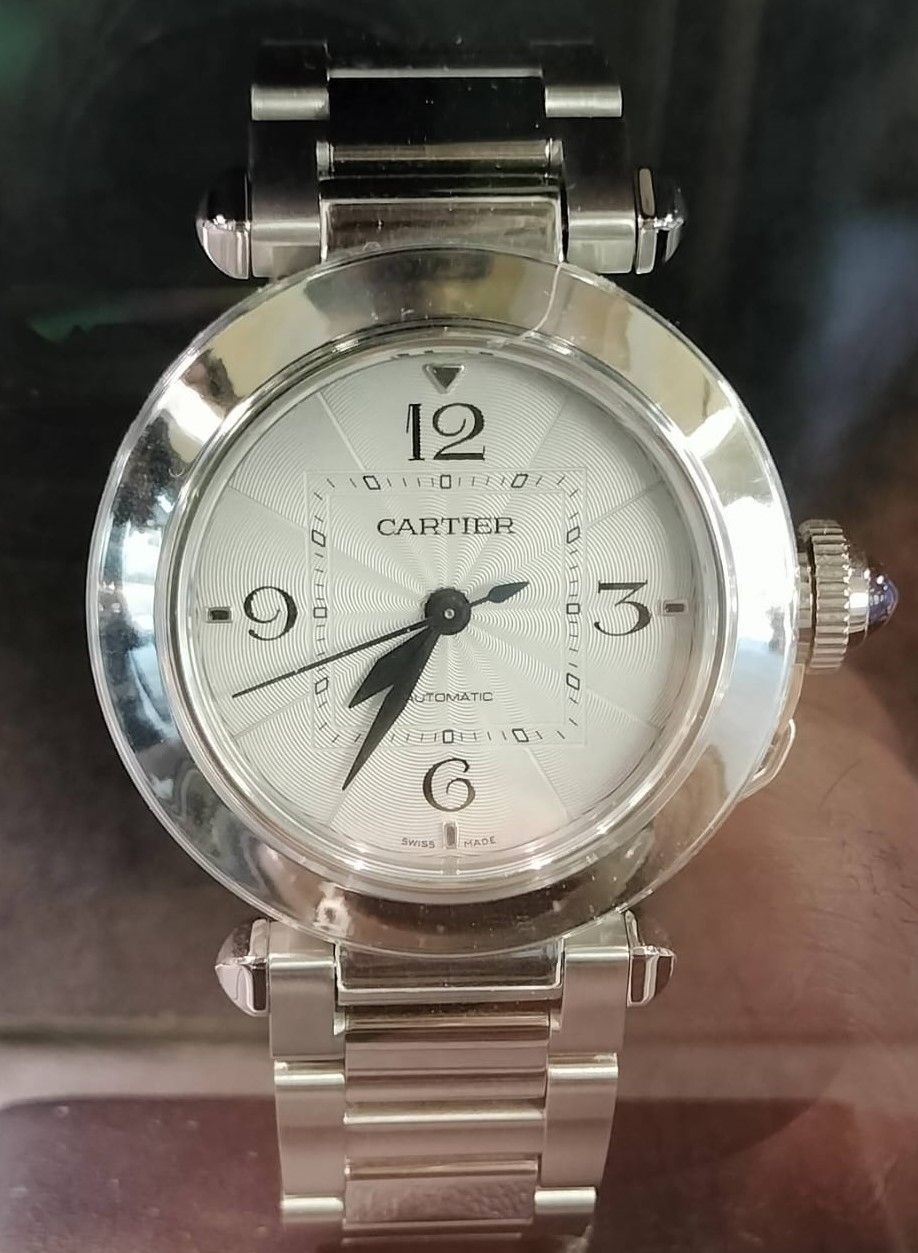
Cartier Pasha automatic
A Cartier Pasha automatic — the round sports watch originally commissioned by the Pasha of Marrakech in the 1930s and relaunched commercially in 1985. The Pasha’s distinctive crown cap on a chain and its grid-patterned dial became design signatures that distinguished it within Cartier’s catalogue, appealing to buyers who wanted Cartier’s formal credentials in a more sporting case.
Photo: EMore98 — CC BY-SA 4.0 — Wikimedia Commons

The Ballon Bleu's design is built from a small number of carefully chosen elements that work together with unusual coherence.

The blue synthetic sapphire cabochon at 9 o'clock is the primary element — the thing that makes the Ballon Bleu a Ballon Bleu from across a table. It is manufactured to a precise dome geometry, polished to a high gloss, and set so that it appears to float in the case architecture rather than being bolted on. The colour is a specific shade of blue that Cartier maintains consistently across its entire range — the same blue used in the sword-shaped hands, the same blue used in the sapphire crowns of the Tank and Santos. It is Cartier's corporate colour in functional form.

The case itself curves outward gently at the casebands — the sides of the case bow slightly, giving the watch its balloon quality. This is not a dramatic curve but a subtle one; the Ballon Bleu does not look inflated so much as it looks rounded at every edge, with no sharp angles anywhere. Combined with the case's circular planform, the result is a watch of unusual three-dimensionality for its price category.

The dial is a study in restraint. Roman numerals, always Cartier's choice over Arabic, set against white, cream, or silver. Blue sword-shaped Breguet hands. A railway-track minute chapter ring at the outer edge of the dial. A date window at 3 o'clock on most models. The overall effect is of a watch that is clearly Cartier — the Roman numerals and blue hands are house signatures — while being distinctly different from any other Cartier in the range.


Size Range and Variants

Cartier Santos Trianon
A Cartier Santos Trianon — the ultra-thin Santos variant that strips the model to its most essential elements. The Santos Trianon’s rectangular case with exposed screws on the bezel is the direct descendant of Santos-Dumont’s 1904 commission: square case, visible construction, aviation-derived practicality translated into a formal dress watch.
Photo: EMore98 — CC BY-SA 4.0 — Wikimedia Commons

The Ballon Bleu is available in four sizes that serve genuinely different markets: 28mm extra small, 33mm small, 36mm medium, and 40mm large. The 33mm is the primary women's size; the 40mm is the primary men's size; the 36mm is genuinely unisex. This breadth allows the Ballon Bleu to function as a women's jewellery watch at one end of the range and a men's dress-sports watch at the other, with the same design operating across the full span.

Metal options include stainless steel, yellow gold, rose gold, white gold, and two-tone combinations. The steel references are the commercial backbone; the gold references are the prestige tier that justifies the brand position. Diamond-set bezels, diamond dials, and fully pavé-set versions are available at the top of the range, where the Ballon Bleu transitions from a watch with diamond accents to a piece of high jewellery that also tells time.

Movement options range from the quartz Cal. 157 in most standard references to the Cal. 1847 MC automatic (Cartier in-house, 42-hour power reserve) in the more serious pieces. The Ballon Bleu Flying Tourbillon — one of Cartier's most complex pieces — places a flying tourbillon in an open-worked Ballon Bleu case at approximately $200,000, demonstrating that the design can carry the most demanding complications Cartier makes.


Ballon Bleu vs. Rolex Datejust

Cartier Cloche ref. 2841
A Cartier Cloche reference 2841 — illustrating Cartier’s tradition of unconventional case shapes derived from Art Deco geometry. The Cloche (“bell”) case, with its inverted arch and movement positioned vertically within the case, exemplifies the approach to watch design that Jeanne Toussaint and Louis Cartier developed across the 1920s and 1930s: form first, movement engineering second, with no case shape considered too difficult to achieve.
Photo: EMore98 — CC BY-SA 4.0 — Wikimedia Commons

The most direct comparison to the Ballon Bleu is the Rolex Datejust, and it is worth examining carefully because it reveals the genuine trade-offs involved in choosing between them.

The Datejust's advantages are real and significant. Rolex's secondary market is among the most liquid in the watch industry; a Datejust bought today will retain a meaningful portion of its value under virtually all circumstances, and popular configurations frequently trade above retail. The Cyclops lens provides 2.5x date magnification. The Oyster case offers 100 metres water resistance against the Ballon Bleu's 30 metres. The Rolex name carries a cultural prestige that Cartier, despite being the older and arguably more prestigious jeweller, does not quite match in the watch-specific context.

The Ballon Bleu's advantages are design-related. No other watch has the blue crown bubble; it is an unambiguous identifier that is both distinctive and elegant. The Ballon Bleu's case architecture — the bowed casebands, the smooth curves, the integrated crown housing — is more architecturally coherent than the Datejust's more conventional construction. The Ballon Bleu is more available at retail, without the waiting lists that characterise popular Datejust configurations.

At retail, comparable steel configurations are similarly priced: approximately $5,000–$7,500 for both. On the secondary market, the Datejust typically commands a premium while the Ballon Bleu trades at or below retail — a disadvantage for sellers but an advantage for buyers.


Celebrity Presence and Cultural Position

The Ballon Bleu's round form and clean aesthetic have made it attractive to a broader demographic than the more fashion-forward Tank or Panthère. It is less specifically a "fashion watch" than either of those models — its appeal is broader, which has both commercial advantages (larger addressable market) and prestige disadvantages (less aspirational as a singular statement).

In corporate and professional environments, the Ballon Bleu in steel has become something of a default Cartier choice: it reads as sophisticated and understated without the historical weight of the Tank or the jewellery-watch identity of the Panthère. Taylor Swift has been photographed wearing the Ballon Bleu; Harry Styles wore a Ballon Bleu in steel for a period; various athletes and executives wear it as a reliable but not ostentatious luxury signal.

The watch's cultural position in 2024 is slightly complex: its success has made it common enough that it is no longer as immediately prestigious as it was in 2010. In watch enthusiast circles, the Ballon Bleu is sometimes described as the "safe" Cartier choice — the option for someone who wants a round luxury watch from a prestige brand without making a strong design statement. This is partly accurate and partly unfair; the blue crown bubble remains a genuinely original design detail, and the Ballon Bleu at its best — in rose gold with a cream dial — is a beautiful object that no amount of commercial success diminishes.


Frequently Asked Questions

What does "Ballon Bleu" mean?
"Blue Balloon" in French — named for the rounded case that resembles an inflated balloon and the blue synthetic sapphire cabochon protecting the crown, which is set as a blue dome into the side of the case at 9 o'clock.

When was the Ballon Bleu introduced?
2007, at the SIHH watch fair in Geneva. It became Cartier's bestselling watch within approximately five years of launch, displacing the Tank from a position that model had held for decades.

Is the Ballon Bleu water resistant?
Standard models are rated to 30 metres — adequate for rain and brief water contact but not recommended for swimming or diving.

Does the Ballon Bleu hold its value?
Less reliably than comparable Rolex models. The Ballon Bleu in steel typically sells at or slightly below original retail on the secondary market. Gold versions hold value better. For buyers who intend to wear rather than resell, this represents good value; for buyers focused on investment return, Rolex alternatives perform more consistently.


Related Articles

Recent Posts

By Zach Charles • October 10, 2026
Hamilton's American Classic Cushion Mechanical revives its 1926 Art Deco cushion watches, seen in Oppenheimer, in 30mm and 34mm with the new hand-wound…
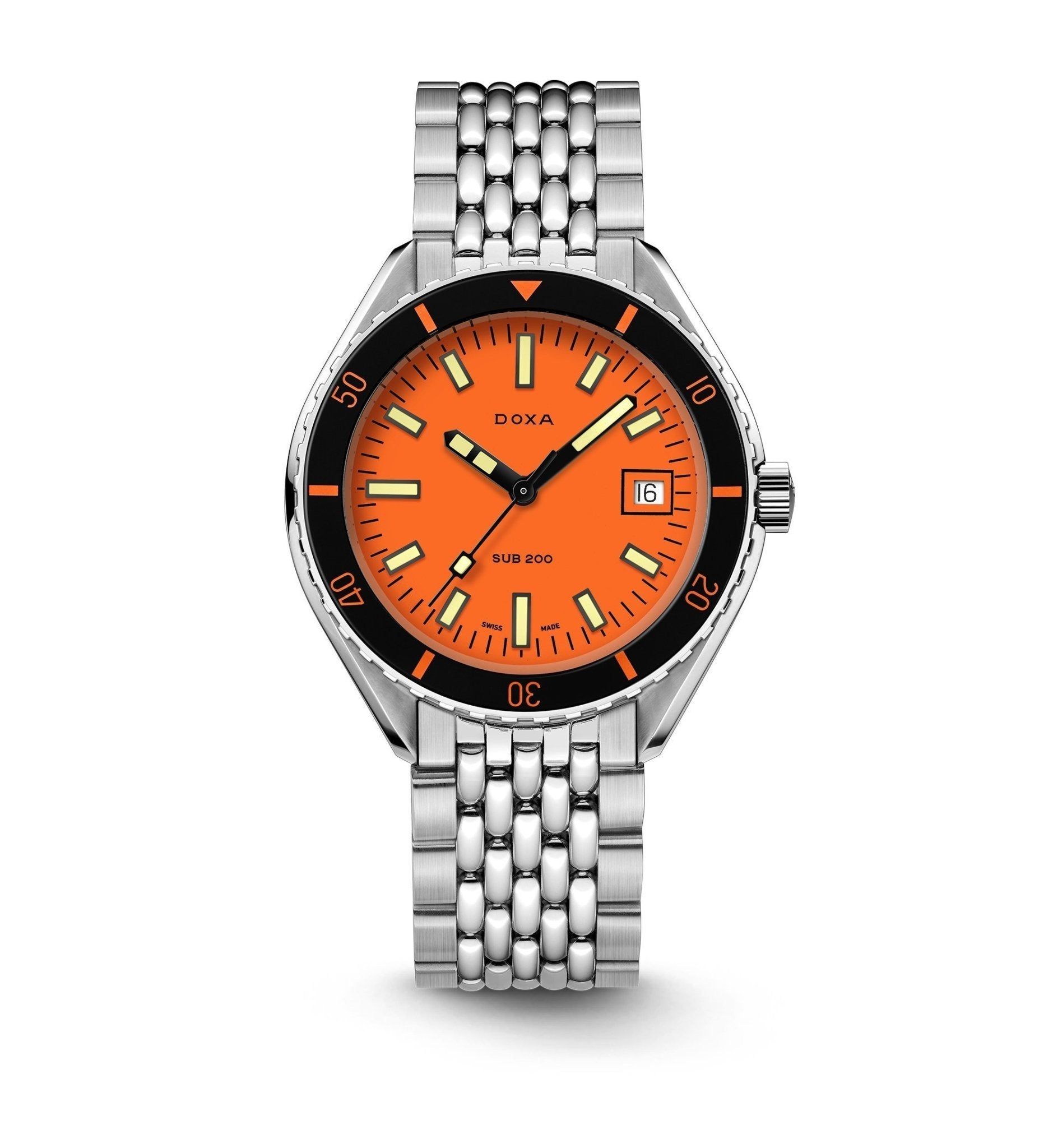
Doxa SUB 200: The Accessible Everyday Diver
By Zach Charles • October 10, 2026
Complete guide to the Doxa SUB 200 — 42mm, 200m, four colorways, Sellita SW200-1. The accessible entry to the Doxa SUB family with the full…
By Zach Charles • October 10, 2026
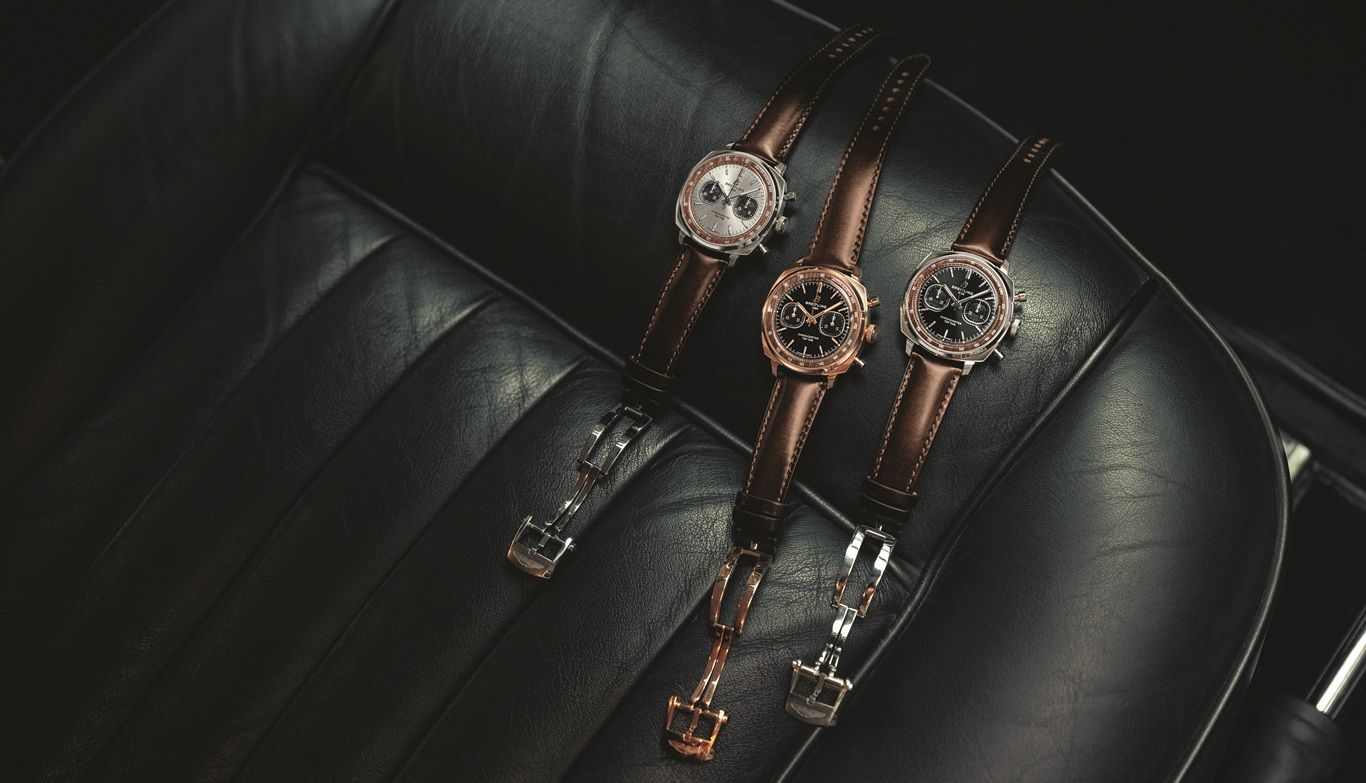
The Breitling Top Time B01 Aston Martin DB5 pairs a cushion-shaped 41mm case, a wooden inner ring and the in-house Caliber 01 across three limited…
By Zach Charles • October 10, 2026
TAG Heuer developed the Mikrograph (2011, 1/100th second), Mikrotimer Flying 1000 (2011, 1/1000th second), and Mikrogirder (2012, 1/2000th second).
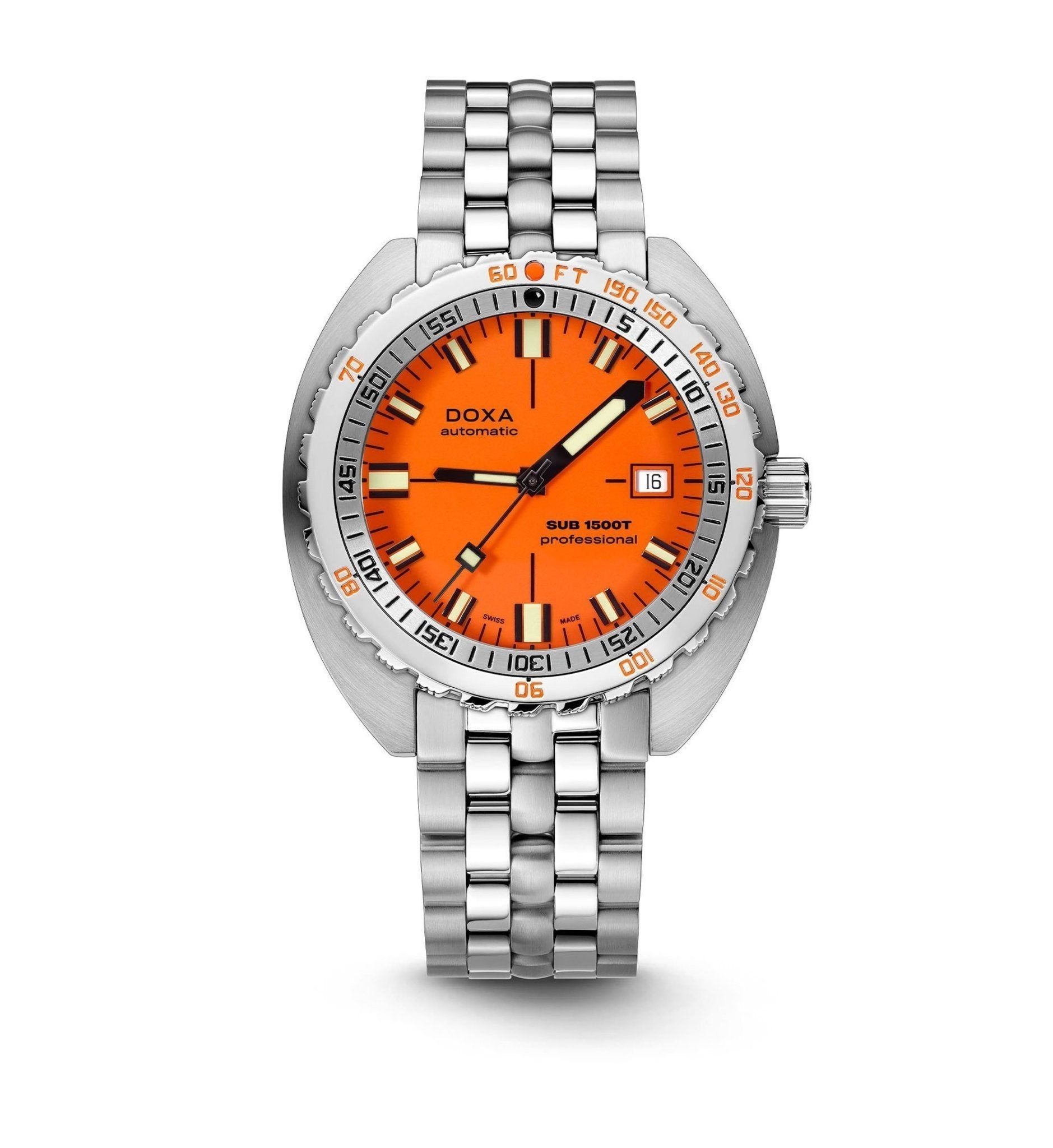
Doxa SUB 1500T: The 1,500-Metre Depth-Rating Flagship
By Zach Charles • October 10, 2026
Complete guide to the Doxa SUB 1500T — 45mm, 1,500m depth rating, helium escape valve, ETA 2892-2 movement, USD 2,690.
Audemars Piguet Royal Oak 'Jumbo' ref. 15202 with blue tapisserie dial and integrated steel bracelet
By Zach Charles • October 10, 2026
The Audemars Piguet × Swatch Royal Pop is a $400 bioceramic pocket watch in 8 colourways, powered by a new hand-wound SISTEM51 with 90+ hour power…

Time on the Move logo
By Zach Charles • October 10, 2026
Zach Charles is the editor of Time on the Move, an independent watch reference covering brand and model histories, buying guides and release news…
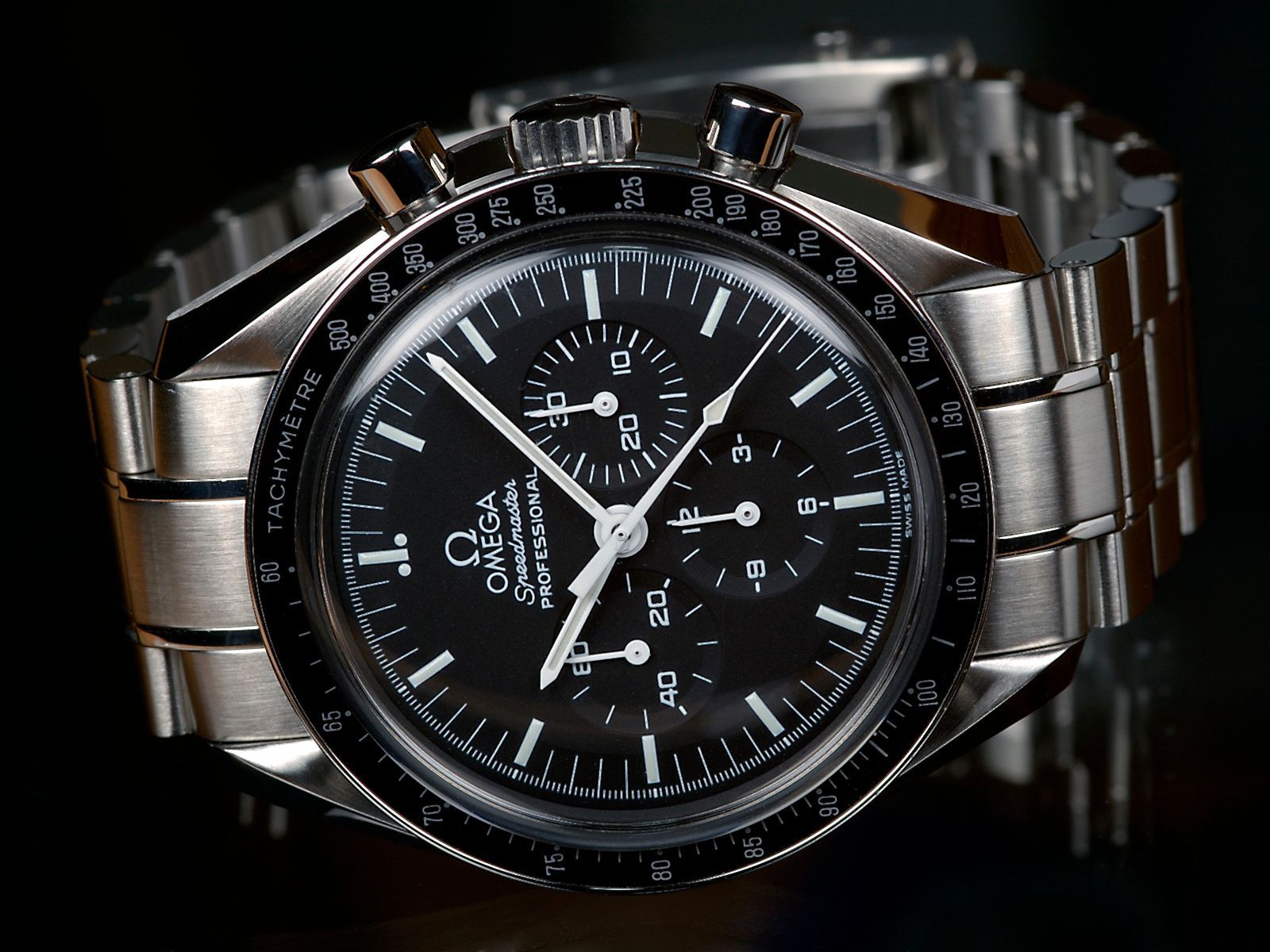
Omega Speedmaster Professional 'Moonwatch' chronograph, front view on steel bracelet
By Zach Charles • October 9, 2026
Find the best watches at every price point from $500 to $15,000 — new and pre-owned. Covers every budget tier with specific reference picks, brand…
By Zach Charles • October 9, 2026
The latest watch news: new releases, Watches and Wonders coverage, discontinuations, industry analysis, and market trends. Currently 1 article.
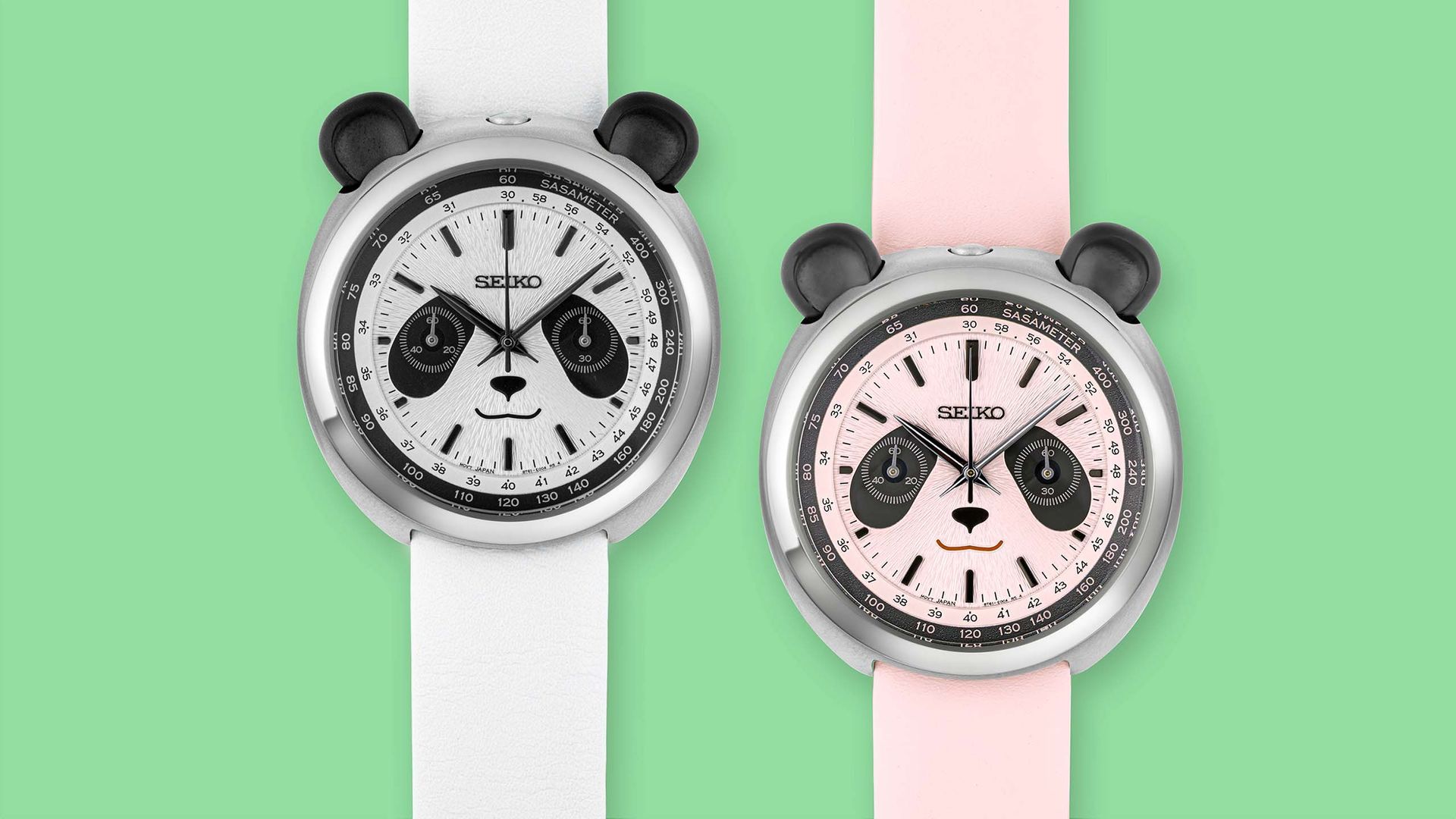
Seiko's New Panda Chronograph Is Literally a Panda: The Power Design Project HHK001 and HHK002
By Zach Charles • October 8, 2026
Seiko's Power Design Project panda chronograph (HHK001, HHK002) turns the panda dial into an actual panda face, with ear pushers, a 'Sasameter' and a 3D…
Show More