Best Watches for Every Budget: New and Pre-Owned Buying Guides for 2026
By Zach Charles, Editor, Time on the Move
By Time on the Move Editorial Team
· June 14, 2026
The secondhand watch market has normalized after the post-pandemic speculation bubble — and for buyers, that is unambiguously good news. Grey market discounts are returning on non-icon brands, pre-owned premiums have collapsed on everything outside Rolex and Patek, and manufacturing quality at every price tier has never been higher. In 2026, you have two sound strategies for any budget: buy new for warranty coverage and the pride of an unworn reference, or buy pre-owned to step up a full prestige tier for the same money. This series covers both paths, at every price point we recommend.
About This Series
The Time on the Move budget buying guide series covers four price tiers: under $500, under $1,000, under $2,000, and under $2,500. Each guide is structured to give you two distinct recommendations per tier — the best new watch you can buy at MSRP today, and the best pre-owned or grey market watch that represents exceptional value at that ceiling. No tier is treated as a stepping stone to the next. A $400 Seiko Prospex is a serious watch deserving serious analysis, and we treat it as such.
Our evaluation methodology is consistent across all tiers. We assess movement quality, brand heritage and after-sales infrastructure, case and dial finishing relative to price, water resistance appropriate to category, whether the movement is serviceable by independent watchmakers, and used market liquidity — meaning the ease with which you could sell the watch on Chrono24 or through a dealer if your tastes change. Details of each criterion are in the methodology box below.
The Four Tiers — Jump to Your Budget
Tier 1: The Best Watches Under $500
Under $500
This is where Japanese horology rules — Seiko, Orient, and Casio offer genuine automatic movements, sapphire crystals, and 200m water resistance at prices that would have seemed impossible two decades ago. But savvy used buyers can reach into discontinued Swiss legends at this price point, particularly discontinued Seiko references that now trade on the secondary market at a premium to their original retail — though careful hunting still turns up fair deals.
Top New Pick:
Seiko Prospex "Turtle" SRPE93 (~$325)
Top Used Pick:
Seiko SKX007 (discontinued, ~$275 used)
Read the Full Under-$500 Guide →
Tier 2: The Best Watches Under $1,000
Under $1,000
The $1,000 ceiling is where Swiss quality becomes genuinely accessible — Hamilton, Tissot, and Longines entry lines all live here, offering COSC-certified movements, solid stainless steel cases, and decades of brand infrastructure behind them. Used buyers at this tier gain access to early-generation Longines divers and TAG Heuer sport models that represent some of the best value propositions in the entire secondhand market.
Top New Pick:
Hamilton Khaki Field Auto (~$695)
Top Used Pick:
Longines Legend Diver (older reference, ~$750–$900 used)
Read the Full Under-$1,000 Guide →
Tier 3: The Best Watches Under $2,000
Under $2,000
At $2,000 the field opens dramatically — Oris, Longines at its top tier, Nomos Glashütte, and Christopher Ward all compete here with Swiss Made automatics of genuine collector interest, movements that inspire loyalty rather than mere adequacy. Used buyers at this budget cross into IWC Pilot territory and pre-owned Grand Seiko quartz, two categories where the watches routinely outperform their price on every technical and aesthetic metric.
Top New Pick:
Oris Aquis Date (~$1,500)
Top Used Pick:
IWC Pilot Mark XVIII (~$1,500–$1,700 used)
Read the Full Under-$2,000 Guide →
Tier 4: The Best Watches Under $2,500
Under $2,500
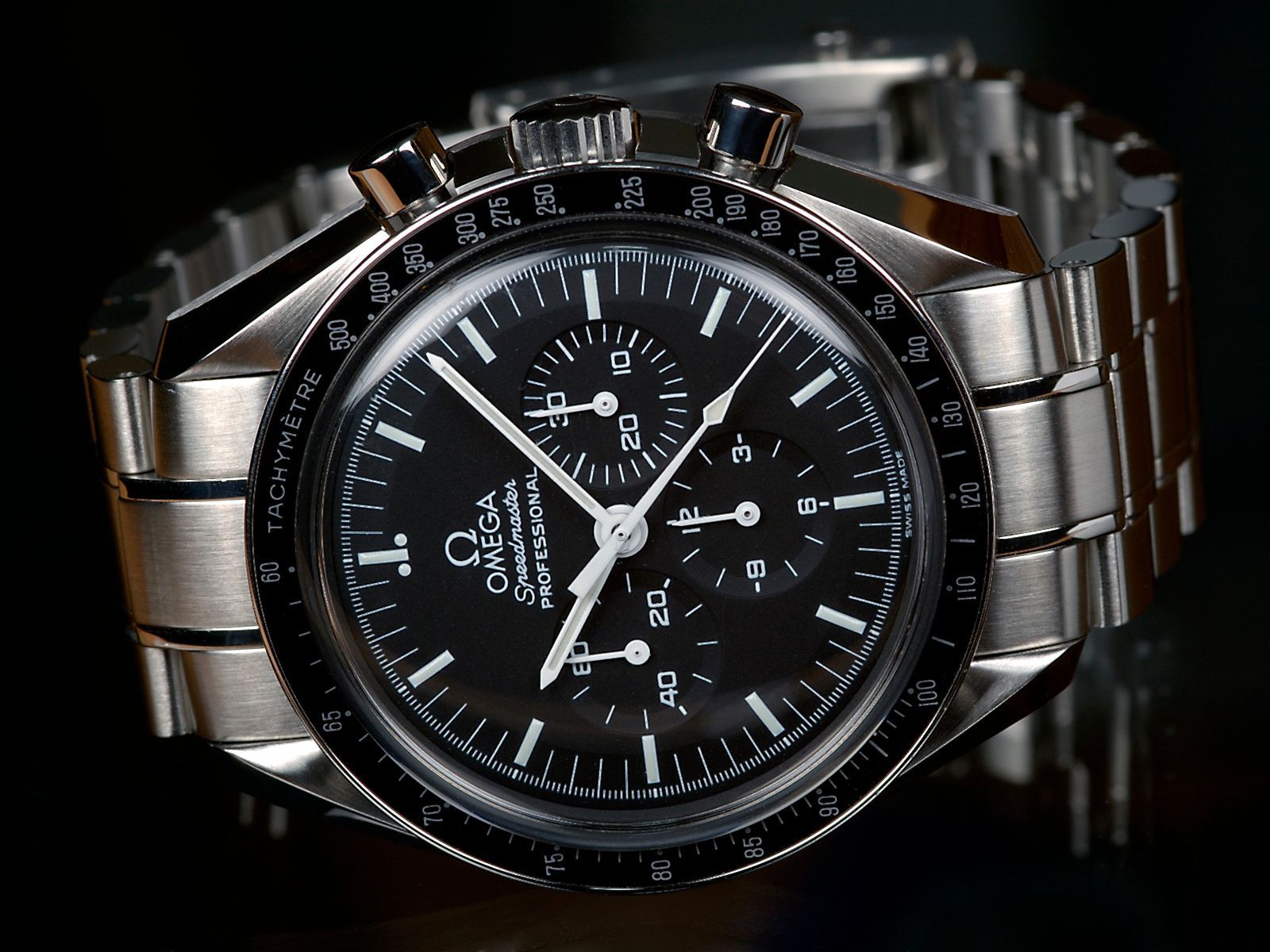
The $2,500 ceiling is the last stop before true luxury — and with pre-owned buying, that barrier disappears entirely, putting historically significant pieces within reach of a considered budget. A pre-owned Omega Speedmaster Professional Moonwatch or a used IWC Pilot's Watch Chronograph can be found in this range with patience, and both watches represent genuine horological icons rather than mere commodities.
Top New Pick:
Oris Aquis Date Calibre 400 (~$2,200)
Top Used Pick:
Omega Speedmaster Professional (manual-wind Moonwatch, ~$2,200–$2,500 used)
Read the Full Under-$2,500 Guide →
New vs. Pre-Owned: How to Decide
Buying new means you receive the watch in unworn condition, with the manufacturer's warranty intact — typically two to five years depending on brand. You have a direct relationship with the authorized dealer, access to manufacturer servicing at standard rates, and the current production reference rather than a discontinued variant. For first-time buyers especially, there is genuine peace of mind in knowing the watch's complete history starts with you.
Buying pre-owned trades those assurances for purchasing power. A used $1,000 budget genuinely competes with a new $1,500 to $2,000 budget in terms of the watches available to you. Depreciation on most non-icon references is front-loaded — someone else absorbed the steepest drop, and you benefit. The watch may also carry history: a discontinued reference, a dial variation no longer produced, or simply a piece with a story.
The essential rule for pre-owned buying: prioritize box and papers (B&P) whenever possible, especially on higher-value pieces. B&P verifies authenticity, establishes provenance, and meaningfully improves future resale value. When B&P is unavailable, buy only from established grey market dealers — Bob's Watches, Crown & Caliber, WatchBox — who offer written authenticity certificates and return policies. Avoid private eBay listings for your first used purchase until you have experience identifying counterfeits and service-due movements.
How We Select Watches
- Movement quality
— We require either an in-house caliber or a reputable base movement from a recognized Swiss or Japanese supplier: ETA, Sellita, Miyota, or Seiko's NH family. We exclude brands using anonymous or unserviceable Chinese movements at any price tier.
- Finishing
— Case, bracelet, and dial quality must be appropriate and competitive for the price tier. We assess brushing and polishing consistency, dial printing precision, and hand alignment under magnification.
- Serviceability
— Every movement we recommend must be serviceable by independent watchmakers, not only brand service centers. We exclude known parts-desert calibers where service is expensive or practically impossible after a certain age.
- Used market liquidity
— For each pre-owned pick, we verify active Chrono24 listings exist at the time of publication. A watch we cannot find being actively traded is not a watch we can responsibly recommend for resale flexibility.
Watch Terminology Quick Reference
New buyers encounter a set of abbreviations and trade terms that experienced collectors use as shorthand. Here are the eight you will encounter most frequently across this series.
| Term |
Meaning |
| COSC
|
Contrôle Officiel Suisse des Chronomètres — Swiss precision certification requiring accuracy within −4/+6 seconds per day across 16 days of testing in multiple positions and temperatures. |
| METAS
|
Swiss Federal Institute of Metrology — a stricter standard than COSC, requiring 0/+5 seconds per day on the complete assembled watch (movement installed in case), used notably by Omega's Master Chronometer certification. |
| Caliber
|
The movement — the engine inside the watch. A caliber number (e.g., ETA 2824, NH35) identifies the specific movement architecture and helps you assess service costs and parts availability. |
| In-house / Manufacture
|
A movement designed, engineered, and built by the brand itself rather than sourced from a third-party supplier. Generally commands a price premium and is considered a mark of watchmaking credibility. |
| ETA / Sellita
|
Swiss movement suppliers whose calibers power watches across hundreds of brands. Reliable, well-documented, easily serviced by most watchmakers worldwide — a positive attribute, not a shortcoming. |
| B&P
|
Box and papers — the original manufacturer's box, inner box, warranty card, and any supplemental documentation. Essential for authenticating a pre-owned watch and typically adds 10–20% to resale value. |
| Grey market
|
Genuine, brand-authorized watches sold outside the official authorized dealer (AD) network — often imported from lower-price markets or sold by dealers without a brand agreement. Authentic, but typically without AD warranty. |
| L2L / Lug-to-lug
|
The vertical measurement of the watch case from the tip of one lug to the tip of the opposite lug. A critical fit dimension — a watch with a short lug-to-lug length sits flush on smaller wrists; a long L2L overhangs the wrist on smaller arms. |
Frequently Asked Questions
What is the best watch brand under $500?
Seiko is the dominant answer at this price point. The Prospex line offers ISO-certified 200m dive watches with genuine automatic movements — not quartz, not fashion-brand automatics — for under $400 retail. The movement architecture is well-documented, independently serviceable, and backed by decades of parts availability. Orient is the strong runner-up, particularly for bracelet quality and dial variety at similar price points. Both brands deliver watches that functionally and aesthetically outperform anything the Swiss market offers new at this tier.
Is it better to buy a new watch or a used watch?
It depends on your primary goal. New watches come with manufacturer warranties, pristine condition, and full documentation. Pre-owned watches let you access a meaningfully higher tier of watch for the same money. At a $1,000 budget, a used Longines Legend Diver from an earlier reference often represents a more compelling watch — technically, aesthetically, and historically — than anything available new at that ceiling. Neither choice is wrong; they optimize for different values.
What used watch brands hold their value best?
Rolex holds value better than any other brand in the world — many references appreciate rather than depreciate, which makes them poor candidates for used buying on value grounds but exceptional stores of wealth. Omega, Audemars Piguet, and Patek Philippe follow in the prestige tier. Among mid-range brands, Tudor holds value unusually well given its price positioning. Tissot and Hamilton depreciate more steeply from retail, which makes them excellent targets as pre-owned purchases — you get a reliable Swiss watch at a significant discount to new pricing.
What is a grey market watch?
A grey market watch is a genuine, brand-manufactured piece sold outside the brand's official authorized dealer (AD) network. This typically happens when dealers or importers source product from lower-price regional markets and resell it in higher-price markets. The watches are authentic — not counterfeit — but purchasing through the grey market typically means forgoing the brand's AD warranty. Reputable grey market and pre-owned dealers including Bob's Watches, Jomashop, and WatchBox offer their own authenticity guarantees and return policies that provide meaningful consumer protection in place of the AD warranty.
Should I buy a watch on Chrono24 or eBay?
Chrono24 is the recommended starting point for first-time used watch buyers. The platform escrows payment until the buyer confirms receipt and authenticity, enforces dealer standards, and provides a dispute resolution process with established precedent. eBay offers more volume and occasionally lower prices, but counterfeit watches are significantly more prevalent, private sellers are harder to evaluate, and dispute resolution is less tailored to the specific challenges of used watch transactions. For experienced buyers who know how to authenticate a watch and read a seller's history, eBay can be productive. For a first pre-owned purchase, use Chrono24 or a dedicated pre-owned dealer.