Buying Guide
Watch for the Outdoors
Watch Finder
Best Watch for the Outdoors: Our Picks by Budget
Time on the Move
| Published November 4, 2026 | Buying Guide
If you want the best watch for the outdoors, this page is for you. It suits hikers, campers and weekend explorers who want a watch that survives knocks, rain and mud, and that they can read in a dim tent or at dusk. It also suits anyone who just wants one rugged watch for rough days. We cover three budget bands, from a cheap digital to a Swiss steel sports watch, so you can start from what you can spend. A watch is not a navigation tool, so if you need GPS tracks or altitude data, a dedicated sports watch is a better choice.
We picked these with the same Watch Finder method we use across the site. We apply hard filters first, so each pick falls inside a budget band and we label whether the price is new or pre-owned. Then we weight traits. For the outdoors, toughness and an outdoor character count most, followed by strong lume, then good water resistance and a strap or bracelet that suits rough use. Finally we check each watch against our research notes and published specifications. Prices were checked in late October and early November 2026 and will change.
The short answer: Under $1,000
: Casio G-Shock DW-5600E / GW-M5610U (square 5600); $1,000 to $5,000
: Tudor Black Bay Pro (M79470); $5,000 to $15,000
: Tudor Pelagos 39 (M25407N-0001). Not sure which fits you? Take the Watch Finder quiz.
Our picks by budget
Under $1,000
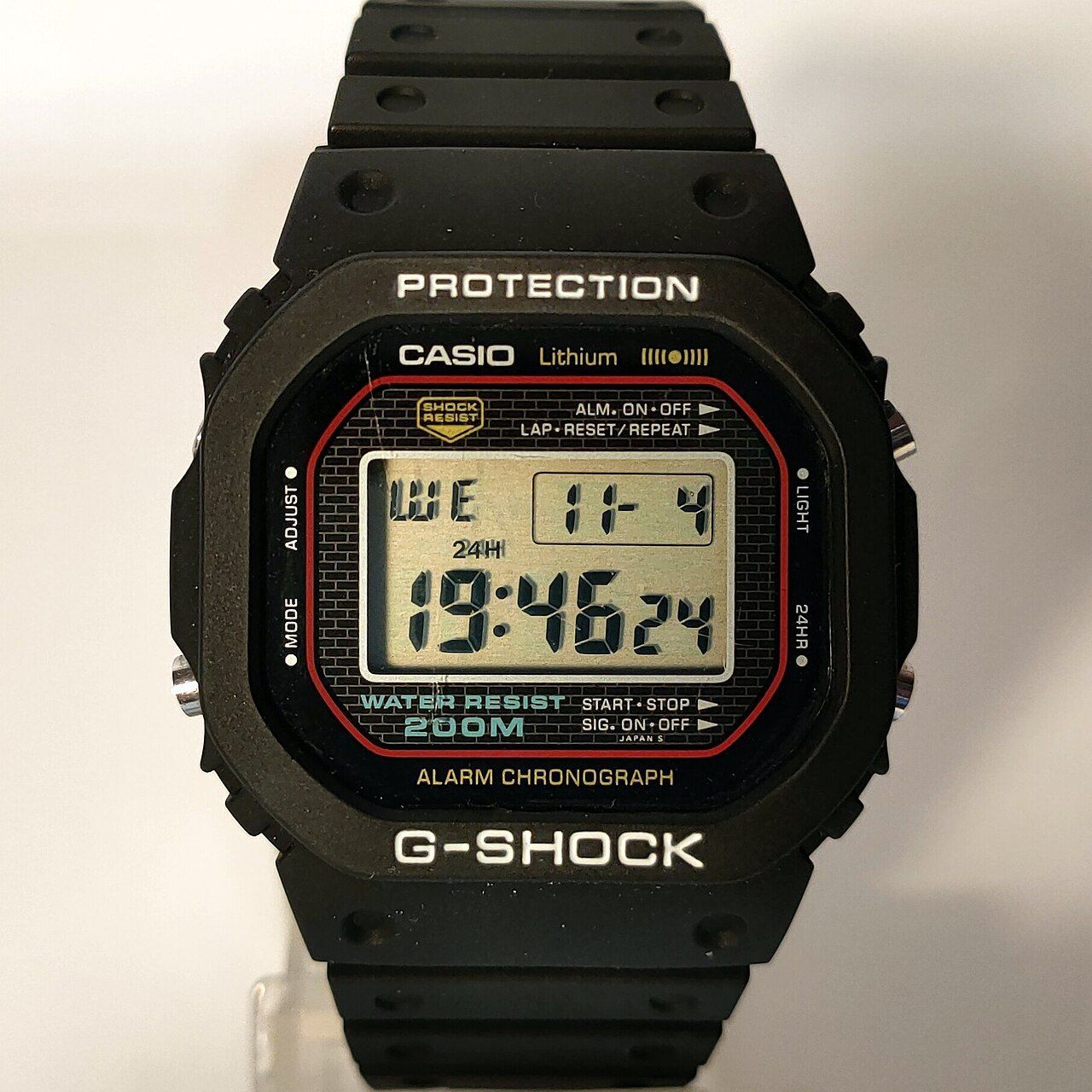
Casio G-Shock DW-5600E / GW-M5610U (square 5600)
New: about $65 to $165 (checked 2026-11-04)
A shock-resistant digital with 200 m water resistance for roughly $65 to $165, so you can wear it hard and not worry. It is the best value on the page for rough use. The limit is size: at about 13.4 mm thick and 42.8 mm wide it wears chunky for a resin watch.
Worth knowing:
Wears wide and thick (about 13.4 mm) for a resin watch
Read the Casio history
· Related guide
Where to look: Amazon
Chrono24
Seiko Prospex Alpinist SPB503 / SPB505 / SPB507
New: about $900 to $995 (reported, checked 2026-11-04)
A field watch with a clean dial and an inner compass bezel, rated to 200 m, with a 72-hour power reserve in a 39.5 mm case. It is handsome enough for town too. The limit is height: at 12.7 mm it sits tall for its width, and our price (about $900 to $995) comes from a single source.
Worth knowing:
12.7 mm thick, so it sits tall for a 39.5 mm watch
Read the Seiko history
· Related guide
Where to look: Amazon
Chrono24
$1,000 to $5,000
Tudor Black Bay Pro (M79470)
New: about $4,525 to $5,075 (checked 2026-11-04)
A tough 39 mm steel watch with 200 m water resistance and a fixed bezel that cannot be knocked out of position on a pack strap. It adds a second time zone too. The limit is thickness: at about 14.6 mm it will catch cuffs and sleeves. New prices run about $4,525 to $5,075.
Worth knowing:
About 14.6 mm thick: it sits tall and will catch a cuff despite the 39 mm width
Read the Tudor history
· Related guide
Where to look: Amazon
Chrono24
Christopher Ward C60 Trident Pro 300 40mm
New: about $1,095 to $1,320 (checked 2026-11-04)
A 300 m Swiss automatic with strong lume in a 40 mm case, sold at a direct-to-consumer price (new around $1,095 to $1,320). It is a good fit for wet trips. The limit is a short 38-hour power reserve, so it will stop if you leave it off for a couple of days.
Worth knowing:
38-hour power reserve is short for the price
Read the Christopher Ward history
· Related guide
Where to look: Amazon
Chrono24
$5,000 to $15,000
Tudor Pelagos 39 (M25407N-0001)
New: about $5,625 (checked 2026-11-04)
A light titanium watch rated to 200 m, which keeps weight down for all-day wear. At 39 mm it is smaller than the standard Pelagos. The limit is height: at 11.8 mm it will not slip under tight cuffs. New it costs about $5,625.
Worth knowing:
11.8 mm thick, so it will not slip under tight cuffs
Read the Tudor history
· Related guide
Where to look: Amazon
Chrono24
Rolex Explorer 36 (124270)
New: about $7,900 to $8,350 (checked 2026-11-04)
A small, plain steel watch with a 36 mm case and strong lume, and a no-nonsense look that works with jeans or a suit. The honest limits are a 100 m rating, which is fine for rain and swimming but not heavy water use, and limited retail stock, so waitlists are common.
Worth knowing:
Retail stock is limited and waitlists are common
Read the Rolex history
· Related guide
Where to look: Amazon
Chrono24
Picks at a glance
| Watch |
Price |
Size |
Movement |
Water resistance |
| Casio G-Shock DW-5600E / GW-M5610U (square 5600) |
$65 to $165 |
42.8 mm x 13.4 mm thick |
Quartz |
200 m |
| Seiko Prospex Alpinist SPB503 / SPB505 / SPB507 |
$900 to $995 |
39.5 mm x 12.7 mm thick |
Automatic |
200 m |
| Tudor Black Bay Pro (M79470) |
$4,525 to $5,075 |
39 mm x 14.6 mm thick |
Automatic |
200 m |
| Christopher Ward C60 Trident Pro 300 40mm |
$1,095 to $1,320 |
40 mm x 11.3 mm thick |
Automatic |
300 m |
| Tudor Pelagos 39 (M25407N-0001) |
$5,625 |
39 mm x 11.8 mm thick |
Automatic |
200 m |
| Rolex Explorer 36 (124270) |
$7,900 to $8,350 |
36 mm x 11.6 mm thick |
Automatic |
100 m |
Toughness you can check
Words like rugged are marketing, not a standard, so look for specific claims: a shock-resistant case, a protected crystal, and a water-resistance rating you can read on the dial or spec sheet. Of our picks, only the Casio is described in our data as shock-resistant. Our opinion, not a test result, is that simpler watches tend to take rough use better than ones with delicate parts, and that quartz designs have fewer fragile components than mechanical ones. Expect scratches on any watch you wear outdoors. If that would bother you, pick a cheaper model you can replace.
Water resistance for rain, rivers and swimming
The metre rating is a laboratory test pressure, not a safe depth. Retailer and enthusiast guides broadly agree that 30 m means splashes only, 100 m is the minimum for swimming, and 200 m with a screw-down crown gives more confidence for kayaking, wading or snorkelling. Some brands rate 50 m and 100 m watches for swimming, so sources do differ. Our picks range from 100 m to 300 m. For anything beyond rain and a quick rinse, we would look for 200 m.
Lume and a clear dial
In a tent or on a trail at dusk, you need to read the time quickly. Look for large hands and markers with strong lume, and a dial with good contrast so it still reads in glare. Lume fades over a night, so treat it as a glance tool, not a lamp. We have no lab brightness data for these models, so our view comes from spec sheets and what reviewers say. Check photos of the dial in low light and owner reviews, especially for field-style watches, which can have slimmer hands.
Strap or bracelet for rough use
This is common retailer and enthusiast advice, so treat it as consensus, not proof. A metal bracelet is sturdy but heavier, and it can pinch over a jacket cuff. Rubber, fabric or NATO-style straps dry faster and swap in seconds, so many people keep a spare. Buying the bracelet version when offered is often advised, because you can fit a strap later. If you plan to change straps, check the lug width of the model first, so the strap you buy will fit. We have no test showing one material lasts longer than another.
Size, weight and power source
Check lug-to-lug length, not just diameter, and check thickness. A thick watch can snag on sleeves and pack straps. A mechanical watch keeps running while you wear it but stops if left off for a while, while a quartz watch can sit unworn and still be right. Some of our picks have a compass bezel or a long power reserve, but those are conveniences. For navigation, carry a real compass or phone and treat the watch as a backup, not the primary tool.
When this advice does not fit
- You need GPS tracks, altitude, heart rate or storm alerts. None of these picks do that, and a dedicated sports watch is the better tool.
- You have a small wrist. The Casio and several others here wear wide or thick, and the Rolex Explorer at 36 mm is the only truly compact pick.
- You would be upset by scratches or dents. Choose the Casio, because you can replace it cheaply.
Get a personal recommendation
These picks suit most people in this situation. For a recommendation based on your own budget, wrist size, style and workplace, take our Watch Finder quiz.
Prices are approximate US figures checked in November 2026 and change often. Some retailer links may become affiliate links; see our affiliate disclosure. Picks are chosen before any retailer link is added.
Frequently Asked Questions
Is a mechanical or quartz watch better for hiking?
Neither is clearly better. Quartz is simpler, keeps running if unworn, and often costs less, so it suits long trips. Mechanical watches need wearing or winding, and they need servicing every several years, but many people like them. This is a matter of taste and the evidence is opinion, not a test. Pick the one you will enjoy wearing.
How much water resistance do I need for camping and hiking?
For rain and handwashing, 30 m is the minimum, but that rating means splashes only. If you may wade, kayak or swim, look for 100 m at least, and 200 m with a screw-down crown for more confidence. The rating is a lab test pressure, not a safe depth, and seals wear with age.
Can I use a watch as a compass?
Treat it as a rough backup only. Some watches have a compass bezel, and there are sun-and-watch methods that work with a standard analogue watch in daylight. They give only an approximate direction. For real navigation, carry a proper compass or a phone with offline maps, and learn to use it before you need it.
Are expensive watches worth wearing outdoors?
It is your choice, and this is opinion. Steel sports watches from Tudor and Rolex are built for hard use, but scratches and dents still happen and are costly to fix. Most watches lose value after purchase, so wear it for the pleasure, not as an investment. If you worry about damage, wear a cheaper watch on the trail.
What strap is best for hiking?
Common retailer advice is that rubber, fabric or NATO-style straps suit rough use, because they dry quickly and are easy to swap. A metal bracelet is sturdier but heavier and can pinch over a jacket cuff. If your watch ships on a bracelet, you can often add a strap later, so choose the version that gives you both.