Seiko Alpinist: Mountain Climber Heritage and the SARB017 Holy Grail
Seiko Alpinist: The Mountain Watch
The Seiko Alpinist is simultaneously a mountain watch and a dress watch — a combination that should not work as well as it does. The 200m water resistance, inner rotating compass bezel, and field watch proportions say one thing; the sunburst dial, applied indices, and sapphire crystal say something else entirely. The resolution of this apparent contradiction is what made the SARB017 one of the most discussed Seiko references of the 2000s and 2010s — a watch that wore as well in the city as on a mountain trail, that offered a 50-hour power reserve in a 39.5mm case at a price that made comparable Swiss alternatives look unreasonable. It has been discontinued, reissued, and is now a permanent part of the Seiko Prospex range at a price point reflecting the premium the design deserves.
Photo: Roland Fischer (Dnalor 01) — CC BY-SA 3.0 AT — Wikimedia Commons
Origins — 1959 and the Alpinist Concept
Photo: Ash Crow (Sylvain Boissel) — CC BY-SA 3.0 — Wikimedia Commons
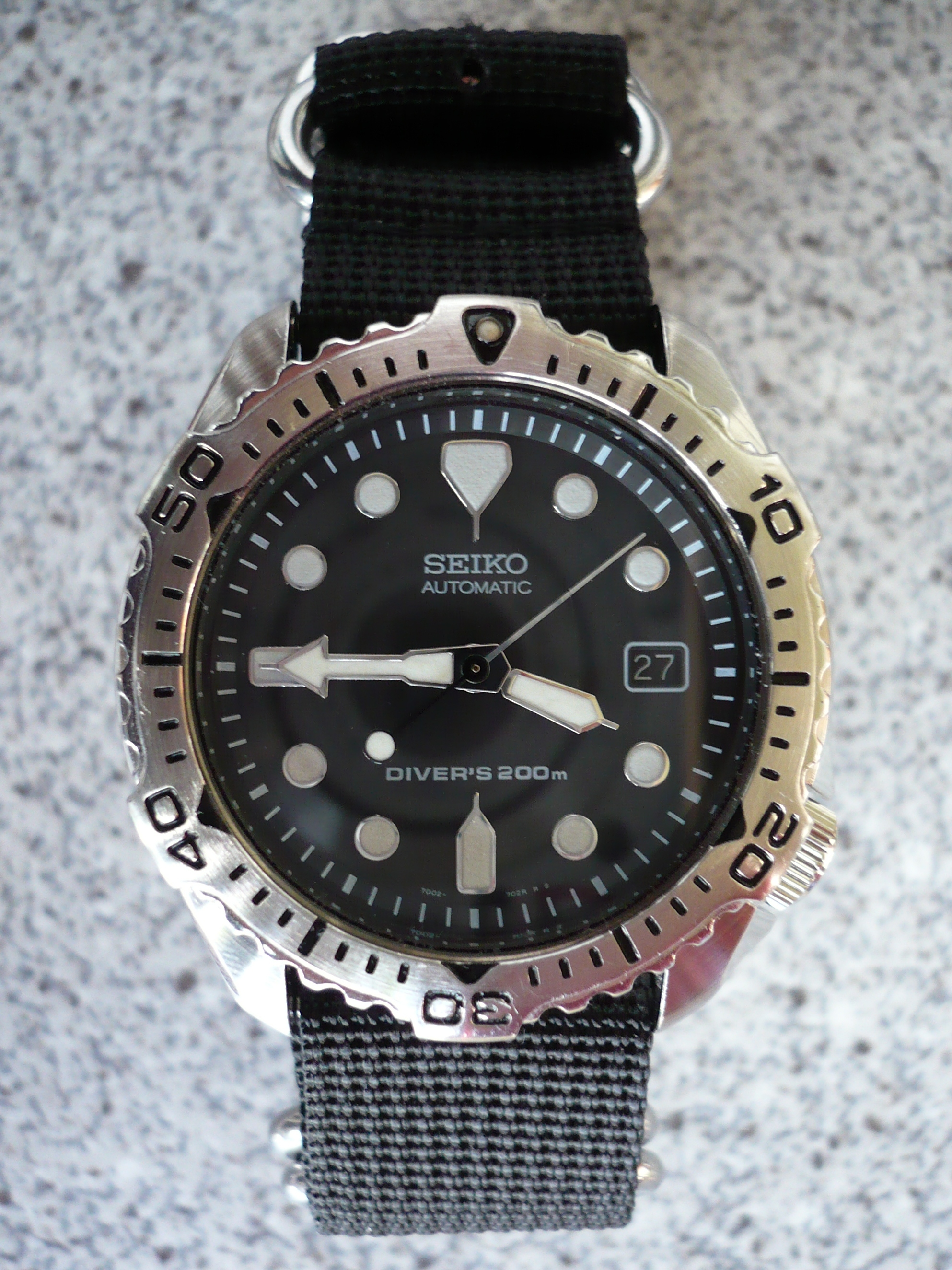
The concept of a Seiko watch designed specifically for Japanese mountaineers dates to 1959 . Seiko's own documentation identifies this year as the beginning of the Alpinist story — a watch built for the specific conditions of alpine climbing in Japan, where the weather, temperature range, and physical demands of the environment differ meaningfully from casual outdoor use.
The formal Alpinist name appeared in 1961 as part of the Laurel Alpinist line — Seiko's Laurel brand applying the alpinist concept under its own designation. The original Alpinists were 35mm steel-cased automatics with 17-jewel movements, running at 18,000 vph, produced exclusively for the Japan Domestic Market. They remained JDM products for decades, known to Western collectors through import channels rather than official distribution.
The SARB017 — The Holy Grail
Photo: Francis Flinch — Public Domain — Wikimedia Commons
From approximately 2006 to 2018 , Seiko produced the SARB017 — a watch that achieved cult status while in production and commanded significant secondary market premiums after discontinuation.
SARB017 Specifications
| Specification | Value |
|---|---|
| Case diameter | 39.5mm |
| Case material | Stainless steel |
| Crystal | Sapphire |
| Water resistance | 200m |
| Movement | Calibre 6R15 |
| Frequency | 21,600 vph |
| Jewels | 23 |
| Power reserve | 50 hours |
| Hacking | Yes |
| Manual wind | Yes |
| Dial | Emerald green sunburst |
| Features | Inner rotating compass bezel |
| Original retail | ~$549 USD |
The SARB017's defining characteristics:
The dial : The emerald green sunburst — a colour that shifts from deep forest green to vivid lime depending on the light — was immediately distinctive. Green dials were not common in the mid-2000s watch market, and the depth of the SARB017's green was unusual even among the green dials that existed.
The inner compass bezel : The SARB017 carries a rotating bezel ring inside the case, engraved with compass points. This bezel is operated by the crown at the 4 o'clock position — rotating it independently of the main timekeeping function. The compass bezel positions the Alpinist as a field watch capable of orienteering use; its integration within the case, rather than on the outer bezel, protects the markings from wear and gives the watch a cleaner exterior profile.
The 6R15 movement : At the SARB017's price point, the 6R15's 50-hour power reserve and hacking + hand-wind capability were exceptional. The Seiko-proprietary SPRON alloy mainspring and 23-jewel construction placed the movement above the 7S26 and 4R36 families in specification.
The 200m water resistance : For a 39.5mm watch with a sapphire crystal and field watch aesthetic, 200m ISO-rated water resistance was genuinely unusual. The SARB017 could accompany its owner anywhere.
After Discontinuation
The SARB017 was discontinued in 2018 . The secondary market response was immediate: a watch that had retailed at approximately $549 began trading at $900–$1,200 — a premium of 60–120%. The reasons were the same reasons the watch had always been good: no direct equivalent existed at the same price point. The combination of compass bezel, sapphire crystal, field watch aesthetic, 50-hour power reserve, and 200m water resistance in a 39.5mm package was specific enough that the discontinuation created a gap that the existing market could not fill.
The Modern Alpinist — SPB117 and SPB121
Photo: Ferengi — CC BY-SA 3.0 — Wikimedia Commons
In approximately 2020 , Seiko returned the Alpinist to production under the Prospex umbrella:
SPB121J1 — The Primary Reference
| Specification | Value |
|---|---|
| Movement | Calibre 6R35 |
| Power reserve | 70 hours |
| Frequency | 21,600 vph |
| Jewels | 24 |
| Case diameter | ~38.5–39mm |
| Crystal | Sapphire |
| Water resistance | 200m |
| Features | Inner rotating compass bezel (retained) |
| Retail price | ~$725 USD |
The 6R35 upgrade delivers a 40% improvement in power reserve over the SARB017's 6R15 — from 50 hours to 70 hours. All other defining features of the Alpinist concept are retained: the inner compass bezel, the sapphire crystal, the 200m water resistance, the field watch proportions.
SPB117J1
The SPB117J1 is the brighter green dial variant — closer to a vivid lime green — compared to the SPB121's more muted, subdued green. Both are JDM references widely available through international authorised dealers.
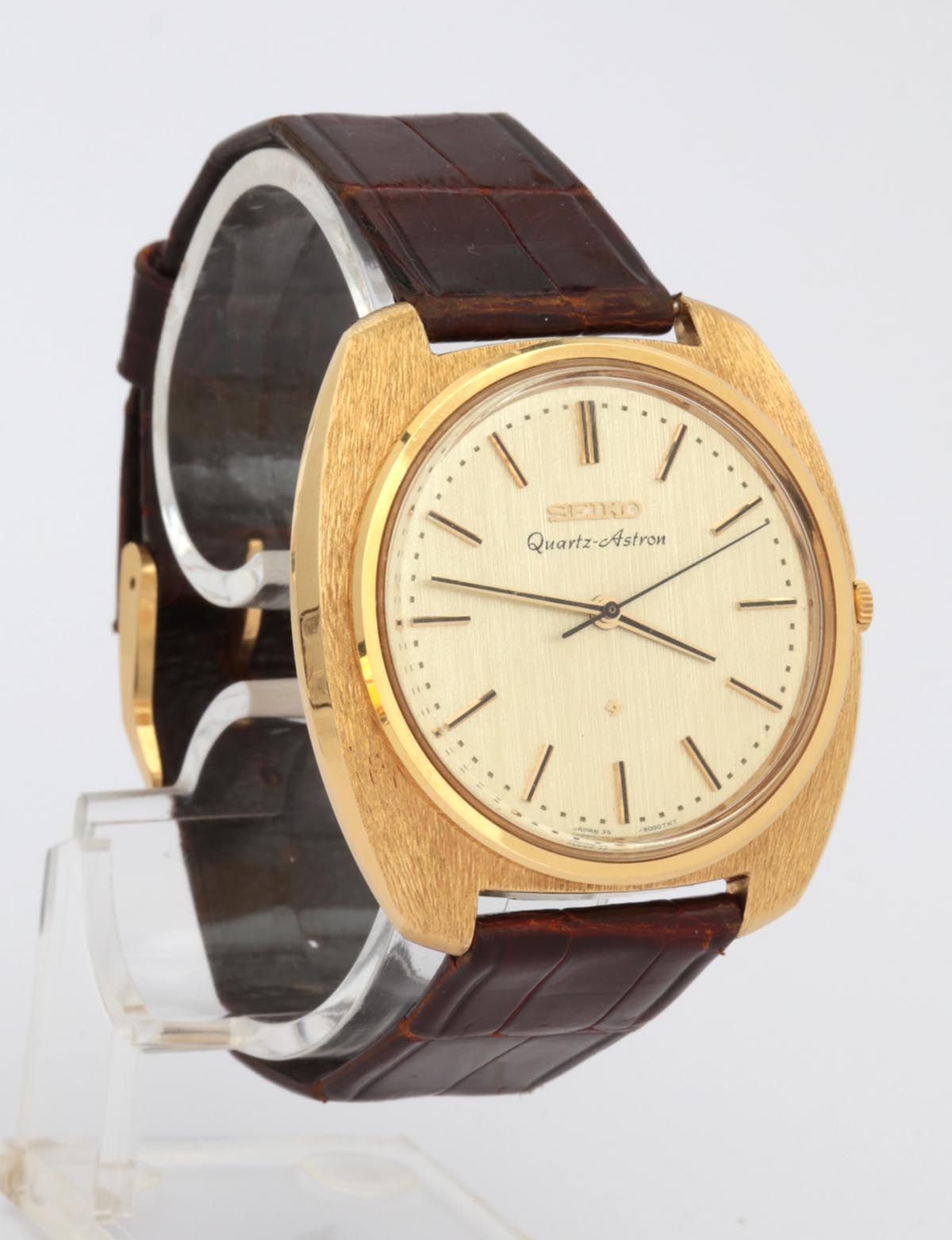
Calibre Comparison: 6R15 vs 6R35
Photo: Les Zetlein — Public Domain — Wikimedia Commons
| Specification | 6R15 (SARB017) | 6R35 (SPB121) |
|---|---|---|
| Jewels | 23 | 24 |
| Frequency | 21,600 vph | 21,600 vph |
| Power reserve | 50 hours | 70 hours |
| Hacking | Yes | Yes |
| Manual wind | Yes | Yes |
| Mainspring | SPRON alloy | SPRON alloy |
The Alpinist in the Collector Market
Photo: Deutsches Uhrenmuseum — CC BY-SA 4.0 — Wikimedia Commons
The Alpinist occupies a specific position: a Seiko watch that is simultaneously a legitimate field/sport instrument (200m WR, compass bezel) and an aesthetically distinctive dress watch (green sunburst dial, applied indices, sapphire crystal). This dual character has driven collector interest from two directions — buyers who want a field watch and buyers who want a distinctive dress watch both find in the Alpinist a watch that addresses both requirements.
The SARB017's secondary market premium reflects the collector community's view that the modern SPB121, despite its movement upgrade, is not a complete substitute for the original. The 6R35's 70-hour power reserve is objectively better than the 6R15's 50 hours; the green of the SPB121 is close but not identical to the SARB017. Collectors who want the specific SARB017 experience continue to seek the original.
Frequently Asked Questions
When did the Seiko Alpinist begin?
The concept dates to 1959, when Seiko began developing watches for Japanese mountaineers. The Alpinist name was formalised in 1961 as the Laurel Alpinist. The most celebrated modern Alpinist — the SARB017 — was produced from approximately 2006 to 2018.
What makes the SARB017 special?
Emerald green sunburst dial, inner rotating compass bezel, Calibre 6R15 (50hr PR, hacking, hand-wind), 39.5mm case, sapphire crystal, 200m water resistance — all for approximately $549 retail. The combination was extraordinary value and genuinely without equivalent competition at the price.
What replaced the SARB017?
The SPB117J1 and SPB121J1 (2020), using Calibre 6R35 (70hr power reserve), retailing at approximately $725. The compass bezel, sapphire crystal, and 200m WR are all retained.
What is the inner compass bezel?
A rotating ring engraved with compass points, inside the case beneath the crystal, operated by the crown at the 4 o'clock position. It allows orienteering/navigation use while keeping the exterior case profile uncluttered.