Omega Railmaster: History of the Anti-Magnetic Watch
Omega Railmaster: History of the Anti-Magnetic Workhorse
The Railmaster is the least-known of Omega's 1957 "Holy Trinity" — yet it solved a genuine engineering problem that the other two members of that celebrated trio never needed to address. While the Seamaster 300 was built to keep accurate time underwater and the Speedmaster was designed to measure speed on the racetrack, the Railmaster was created for a more invisible but equally real threat: the powerful magnetic fields generated by railway equipment, scientific instruments, and electrical infrastructure. In an era when mechanical watches were the universal tool for professional timekeeping, the ability of a magnetic field to permanently damage a movement's accuracy was a serious occupational hazard. The Railmaster was Omega's answer.
Photo: Clyde94 — CC BY-SA 4.0 — Wikimedia Commons
1957 — The Holy Trinity Context
Photo: Clyde94 — CC BY-SA 4.0 — Wikimedia Commons

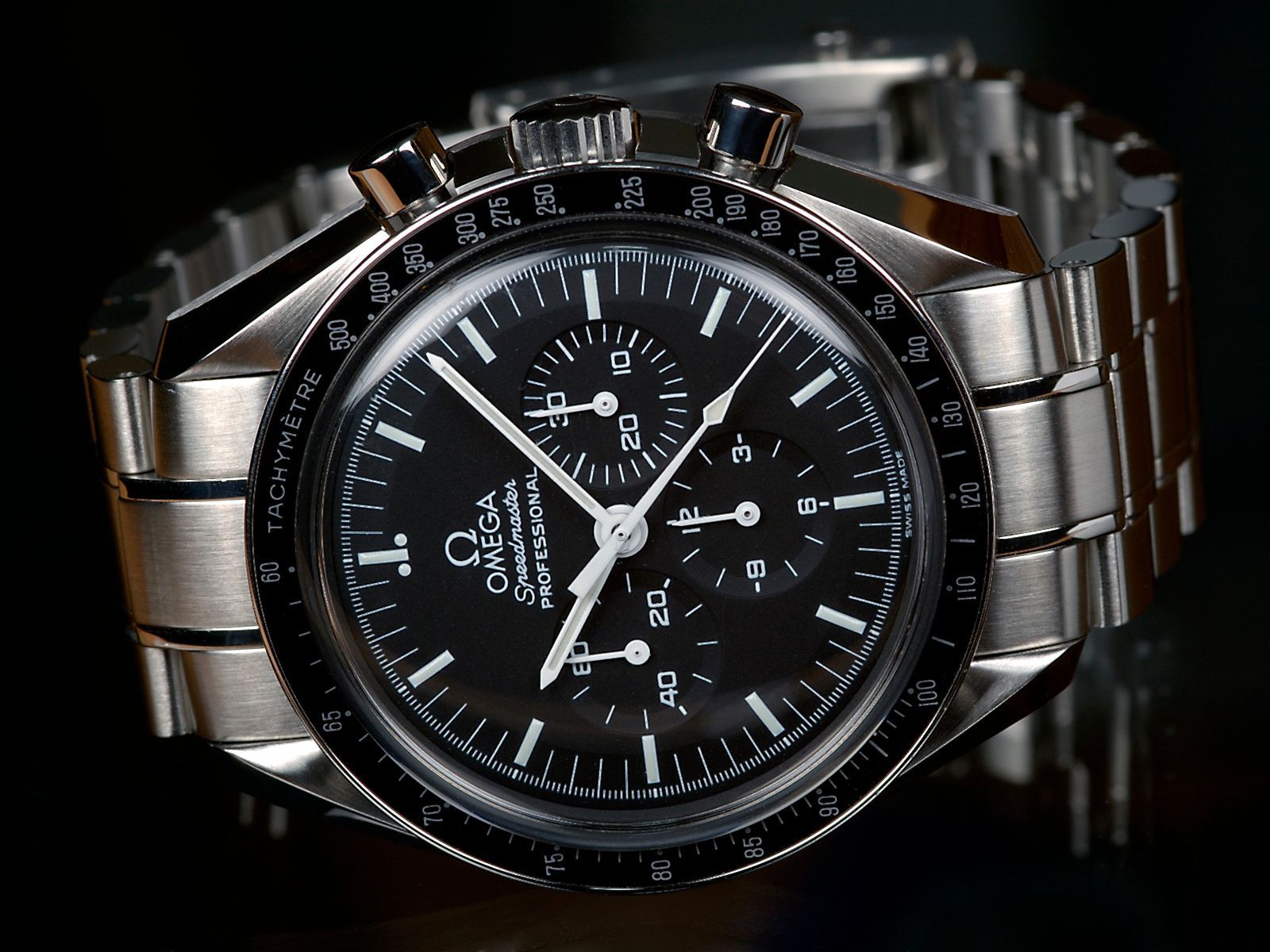
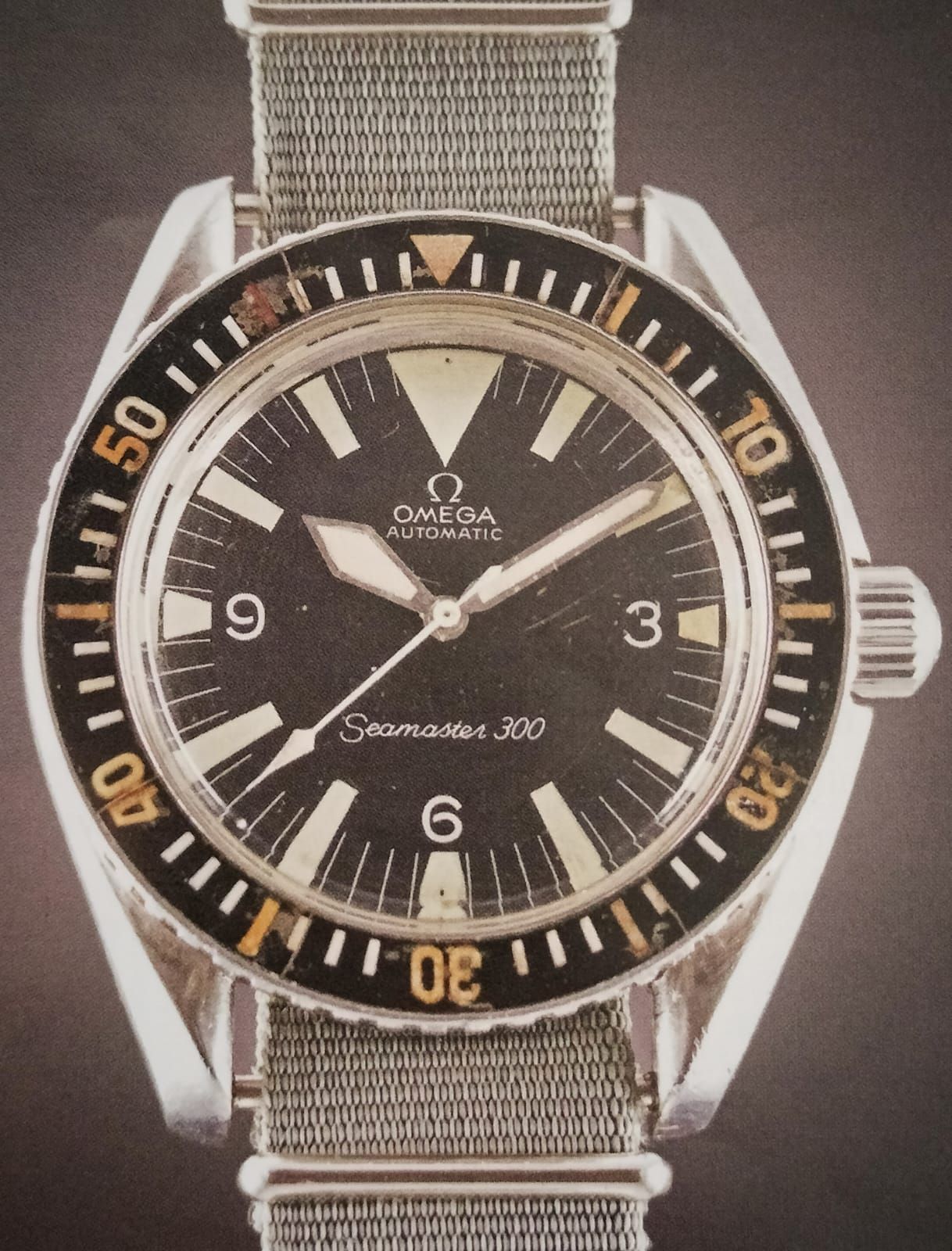
In 1957, Omega made a strategic decision that has few parallels in watchmaking history: the simultaneous launch of three professional tool watches, each addressing a distinct and specific hazard faced by working professionals. The Seamaster 300 (ref. CK 2913) was built for divers and underwater work, water-resistant to 200 metres. The Speedmaster (ref. CK 2915) was built for motorsport and aviation, equipped with a tachymeter bezel for speed measurement. And the Railmaster (ref. CK 2914) was built for anyone who worked in proximity to powerful magnetic fields — railway engineers, scientists, electricians, and operators of heavy electrical equipment.
The simultaneity of the launch was significant. It demonstrated that Omega saw professional tool watches not as a single category but as a matrix of solutions to specific problems. The three watches share a family resemblance — all are stainless steel, all emphasise legibility over decoration, all are unambiguously instruments first — but each is engineered around a different professional requirement.
The Anti-Magnetic Problem
Photo: Lindemann97 — CC BY-SA 4.0 — Wikimedia Commons
To understand why the Railmaster exists, it helps to understand what magnetic fields actually do to a mechanical watch. The heart of any mechanical movement is the balance wheel and its associated hairspring — a coiled strip of metal that oscillates back and forth, regulating the release of energy from the mainspring. When a hairspring is exposed to a strong magnetic field, the metal can become magnetised. A magnetised hairspring loses its natural elasticity and its coils can stick together or repel each other irregularly — the result is a watch that runs fast, runs slow, stops entirely, or behaves erratically.
In the 1950s, a railway worker operating electric trains or maintaining switching equipment was routinely exposed to powerful alternating magnetic fields. So was a physicist working near the precursors to MRI machines, a technician maintaining electrical substations, or an engineer working on early radar systems. For all of these people, a mechanical watch was likely to be rendered inaccurate within a short time of exposure.
The Railmaster's solution was a Faraday cage — a soft iron inner case that surrounded the movement and shielded it from external magnetic fields by conducting and redirecting the magnetic flux around rather than through the delicate components. The CK 2914 was rated to withstand magnetic fields of 1,000 gauss. For context, COSC chronometer certification today requires resistance to only approximately 60 gauss — the Railmaster's original specification was more than fifteen times that standard.
Original Design (1957–1960)
Photo: Clyde94 — CC BY-SA 4.0 — Wikimedia Commons
The CK 2914 is a study in purposeful minimalism. At 38mm in diameter, the case is symmetrical and clean, without the asymmetric crown guards of the Speedmaster or the bold rotating bezel of the Seamaster. The dial is black with large Arabic numerals and substantial luminous material on both the indices and the hands. There are no complications — no date, no chronograph, no dual time zone. The Railmaster's single function is to tell accurate time in environments where other mechanical watches cannot.
The movement, the Calibre 284, sat within the soft iron inner case that formed the core of the anti-magnetic system. The Railmaster was produced in relatively small numbers compared to the Seamaster and Speedmaster, which addressed hazards affecting a broader range of consumers. Around 1960, as electric railway technology evolved and the specific configurations of magnetic field exposure changed, Omega discontinued the Railmaster line.
The Gap Years (1960–2003)
Photo: Lindemann97 — CC BY-SA 4.0 — Wikimedia Commons
The Railmaster disappeared from Omega's catalogue for over forty years. Through the 1970s, the Quartz Crisis reshaped the Swiss watch industry, and quartz movements — inherently immune to magnetism — penetrated the professional market. The specific problem the Railmaster solved became less acute for many users.
The niche of anti-magnetic mechanical watches did not disappear entirely. Rolex produced the Milgauss from 1956 onward, though that model was also discontinued in 1988. The mechanical watch revival of the 1990s changed the calculus: as collectors and enthusiasts rediscovered the appeal of hand-wound and automatic movements, the specific technical merits of historical tool watches gained new appreciation. Vintage Railmasters, relatively scarce to begin with, began attracting collector interest as examples of a clearly defined professional instrument from a significant era of Swiss watchmaking.
The 2003 Revival
Photo: Clyde94 — CC BY-SA 4.0 — Wikimedia Commons
Omega revived the Railmaster in 2003 with reference 2803.52.31: a modern interpretation that honoured the spirit of the original. The case diameter expanded to 40mm and the 60-hour power reserve was a significant practical improvement. The anti-magnetic specification was maintained at 1,000 gauss. The dial retained the black-and-white legibility of the original, with Arabic numerals and strong hands communicating function over decoration.
The 2003 Railmaster achieved limited commercial success, remaining primarily a niche model appealing to collectors who appreciated its historical context. In retrospect, however, it established the Railmaster's position in Omega's portfolio and set the stage for a more significant relaunch.
The 2017 Relaunch — Master Chronometer Era
The 2017 Railmaster (ref. 220.12.40.20.01.001) represented a fundamental rethinking of what an anti-magnetic watch could be in the twenty-first century.
The key innovation was the movement itself. Where the original Railmaster had relied on a Faraday cage — a soft iron shield surrounding a conventional movement — the 2017 reference used the Cal. 8806 Co-Axial Master Chronometer, a movement engineered from first principles to be antimagnetic without any external shielding whatsoever. The Cal. 8806 achieves antimagnetic resistance through the use of non-ferrous alloys throughout the movement's construction: silicon for the balance spring, silicon for the escapement, and non-magnetic alloys for the remaining components. The result is a movement that cannot be significantly magnetised because its critical components are made of materials that do not interact with magnetic fields.
This is a fundamental technological shift. A Faraday cage protects a conventional movement from external fields but does not change the movement's inherent vulnerability — if the shield is compromised, the movement can still be affected. A movement built from non-ferrous materials has no such vulnerability. The Cal. 8806 is rated to resist fields of 15,000 gauss — fifteen times the specification of the original 1957 model and roughly 250 times the COSC antimagnetic standard.
The METAS Master Chronometer certification adds a further layer of assurance, requiring performance within ±0/+5 seconds per day even after magnetic exposure. The 2017 Railmaster's design echoed the original's vocabulary while incorporating a cushion-shaped case connecting it visually to the CK 2914. Available only in stainless steel — no precious metal variants, no gem-set editions — it maintained the Railmaster's identity as a pure tool watch.
Railmaster vs. Rolex Milgauss
The comparison between the Railmaster and the Rolex Milgauss is inevitable, and it illuminates both watches clearly.
Both are anti-magnetic instrument watches with specific professional origins. The Milgauss — whose name derives from "mille gauss," one thousand gauss — was introduced in 1956 as the Railmaster's near-contemporary. Its most distinctive modern features are the green sapphire crystal (on certain variants) and the lightning-bolt seconds hand — design elements that give it a visual personality the Railmaster conspicuously lacks.
On the technical specifications that actually define an anti-magnetic watch, the Railmaster wins substantially. The current Cal. 8806 resists 15,000 gauss; the Milgauss, as its name indicates, resists 1,000 gauss. On the criteria that drive the secondary market, however, the Milgauss has a consistent advantage. Rolex's brand cachet, the visual distinctiveness of the lightning-bolt hand and green crystal, and a more active collector community all contribute to stronger secondary market pricing.
The practical buyer's choice reduces to this: the Railmaster makes the stronger technical argument with superior specifications at a comparable price. The Milgauss offers stronger brand recognition and better secondary market performance. Both are excellent watches. Neither is objectively superior.
Collecting the Railmaster
The original CK 2914 (1957–1960) is the foundation piece for any serious collection. Production numbers were modest, and examples in genuinely good condition — original dial, original hands, no case polishing — are scarce. Prices range from $4,000 to $12,000, with condition and completeness being the primary value drivers.
The 2003 revival models offer accessibility: pre-owned examples trade between $1,500 and $3,000, among the most affordable entry points into Omega's professional watch history. The 2017 Master Chronometer references trade close to their approximately $5,000 retail price on the secondary market.
Frequently Asked Questions
What is the Omega Railmaster?
The Railmaster is Omega's anti-magnetic professional watch, first launched in 1957 as part of the "Holy Trinity" alongside the Seamaster 300 and Speedmaster. It was designed for railway workers, scientists, and others who worked around powerful electrical equipment.
How magnetic resistant is the Railmaster?
The current Cal. 8806 Co-Axial Master Chronometer model resists magnetic fields of 15,000 gauss — substantially exceeding the Milgauss (1,000 gauss) and far beyond the COSC antimagnetic standard of approximately 60 gauss. This resistance is achieved through non-ferrous movement construction rather than a Faraday cage.
Is the Railmaster worth buying?
For buyers who prioritise genuine anti-magnetic performance, METAS-certified accuracy, and a clean purposeful design with direct historical lineage to 1957, yes — the Railmaster offers the best magnetic resistance specifications available at approximately $5,000 retail. Those prioritising secondary market performance or brand recognition may prefer the Milgauss, but on pure technical merit the Railmaster makes a compelling case.