Gold at $5,000: Why Precious Metal Watches Have Never Cost More — and What to Buy Instead
By Time on the Move Editorial · May 10, 2026
When gold broke $5,000 per troy ounce in late 2025 and surged to an all-time high of $5,589 on January 28, 2026 , the numbers were staggering on commodity screens. On the wrists of collectors and in the display cases of authorised dealers, the consequences were immediate and expensive. The gold price luxury watches 2026 story is not simply about a rising commodity — it is a structural realignment of the entire watch market, one that is separating ultra-wealthy buyers from everyone else and pushing a new generation of enthusiasts toward steel, titanium, and ceramic alternatives. This is what you need to know, and what you should consider buying instead.
How Gold Got Here: A 64% Gain in One Year
The 2024-to-2025 annual gain in gold prices — approximately 64% — was the largest single-year percentage rise since 1979. The surge was driven by central bank accumulation, persistent inflation anxiety, dollar weakness, and a flight to hard assets. By December 31, 2025, gold had settled near $4,314 — then broke $5,000 in late January 2026, briefly spiking to $5,589 on January 28.
The five major institutional forecasts for gold in 2026 reflect no consensus about a ceiling: Goldman Sachs targets $5,400/oz , Deutsche Bank projects $6,000 , JPMorgan is most bullish at $6,300 , and Morgan Stanley projects a range of $4,500–$5,700 . Not a single major financial institution is forecasting a return to sub-$3,000 levels. See also our January 2026 price increase analysis for the full brand-by-brand breakdown of how watches responded.
How the Swiss Brands Responded: Rolex Gold Watch Price Increases in 2026
Rolex moved first and most aggressively. In January 2026, the manufacture raised US retail prices on gold and two-tone references by 8.7% and steel references by 5.6% — the third price increase within twelve months. The Daytona in Everose gold, the Day-Date 40 (from $38,150 to $41,550), and the Datejust in Rolesor all saw meaningful increases because gold now constitutes a larger share of their bill of materials than at any point in the modern era.
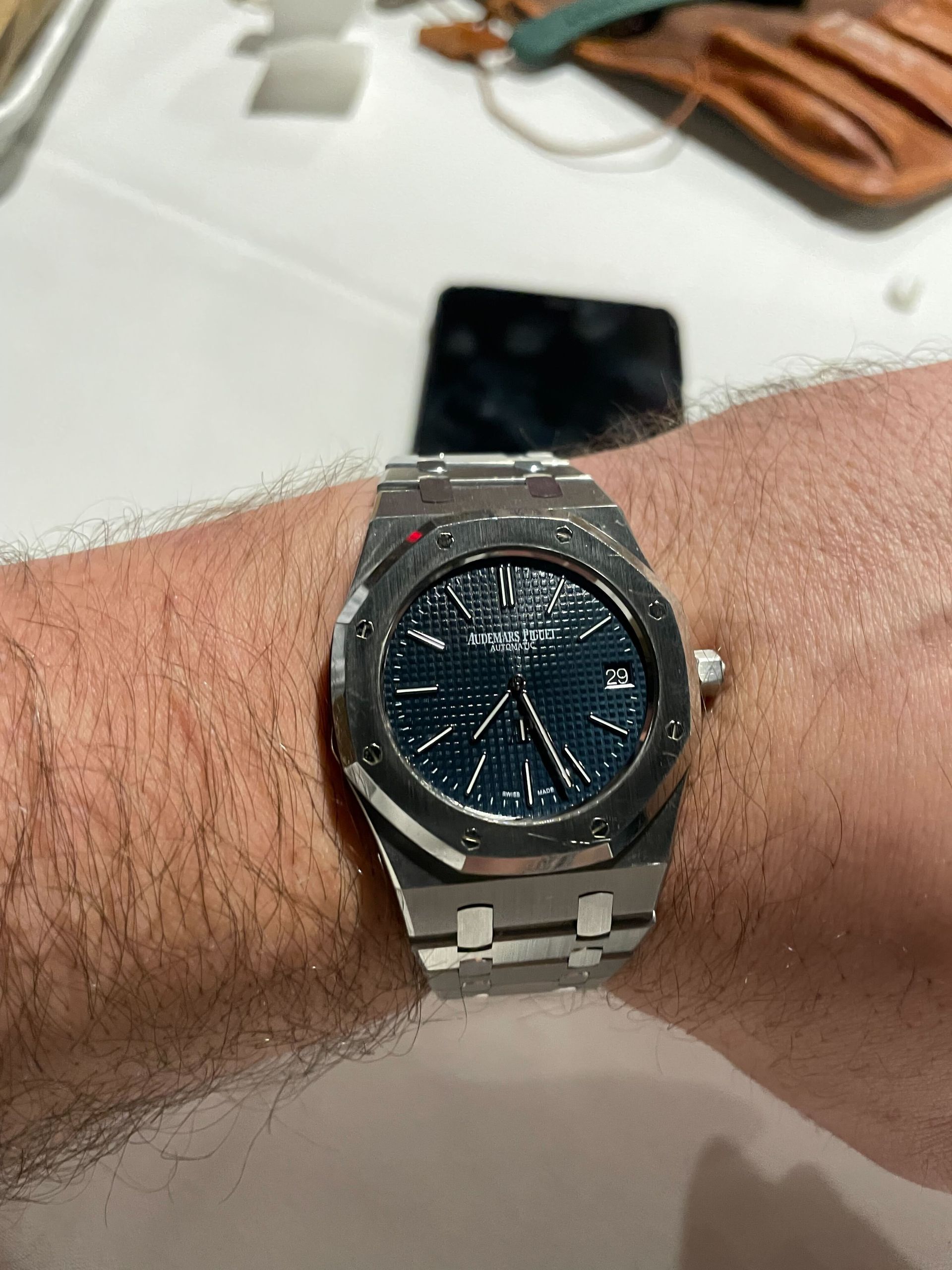
Audemars Piguet followed with a 7.5% US increase, directly impacting the Royal Oak in 18k gold variants. Patek Philippe held prices flat — a signal of confidence in demand elasticity that no other major maison matched.
| Reference | Material | Jan 2025 | Jan 2026 | Change |
|---|---|---|---|---|
| Rolex Day-Date 40 | Everose Gold | $38,150 | $41,550 | +8.9% |
| Rolex Submariner Date | Two-Tone Rolesor | $15,350 | $16,700 | +8.8% |
| Rolex Submariner Date | Oystersteel | $10,800 | $11,400 | +5.6% |
| AP Royal Oak 15500ST | Stainless Steel | $32,300 | $34,700 | +7.4% |
| Patek Philippe Aquanaut 5167A | Stainless Steel | $29,980 | $29,980 | Flat (0%) |
The Melt Value Floor: When a Watch Is Worth More as Metal
Melt value is the intrinsic worth of a watch's precious metal content if the case and bracelet were melted and sold as raw commodity — think of it as a hard price floor, like the minimum structural load a bridge must bear before it fails. For most of horological history, melt value was an academic curiosity. In December 2025, dealer Matthew Bain stated plainly: "Some collectible gold watches are worth more melted than as watches."
At $5,000/oz, a typical 18k gold watch case and bracelet contains $12,000–$25,000 in raw metal. This floor cannot go below zero — but it can move downward with gold. If gold corrects to $3,500, that floor falls proportionally, potentially below what some buyers paid. Melt value provides support; it does not provide immunity from a commodity correction.
The Barbell Market: Ultra-Luxury Holds, Mid-Tier Gold Softens
Swiss watch export data for 2025 reveals a sharp split: precious metal watch exports fell 4% in both volume and value , even as gold soared. The barbell effect is at work — ultra-luxury gold (Day-Date, Royal Oak 18k, Patek Philippe grand complications) holds or rises; mid-tier gold ($8,000–$25,000 range) is losing buyers who cannot justify the commodity premium. The beneficiary: titanium, ceramic, and bronze watches, which grew 23.8% in volume across 2025. The CHF 200–500 export price segment grew 15.4% — buyers are trading down intelligently. The same trend was visible at Watches & Wonders 2026, where several maisons debuted flagship references in titanium rather than leading with gold.
The $5,300 Question: What Are You Actually Paying For?
The steel Rolex Submariner Date retails at $11,400 . The two-tone Rolesor Submariner — same Calibre 3235 movement, same 41mm case, same 300m water resistance — retails at approximately $16,700 . That $5,300 premium buys one thing: the material. Calibre 3235 is identical in both. For daily wear, the steel version delivers the same horological experience. For an asset-play or statement piece, gold has an argument — but buyers should understand with clarity that they are making a commodity bet alongside a watch purchase.
Best Steel & Titanium Alternatives in 2026
- Rolex Submariner Date 126610LN — $11,400 · Cal. 3235 · 70hr power reserve · Oystersteel
- Omega Seamaster Diver 300M (Steel) — Master Chronometer, METAS certified, ~$6,000
- IWC Pilot's Watch Mark XX (Titanium) — Lightweight, in-house Cal., ~$5,500
- Breitling Navitimer B01 (Steel) — In-house COSC chronograph, 70hr power reserve, ~$9,700
- Royal Oak 15500ST (Steel) — Most rational entry to the AP Royal Oak universe at current gold prices
Frequently Asked Questions
Related Reading
- Our January 2026 Price Increase Analysis: Which Brands Raised Prices and by How Much
- Watches & Wonders 2026: Every Major Debut Covered
- The Rolex Daytona: A Complete Reference History
- The Royal Oak Story: How Audemars Piguet Reinvented Luxury
- Patek Philippe: Brand History, Heritage, and the Generations Principle