The Complete History of the Rolex Daytona
The Complete History of the Rolex Daytona
On 26 October 2017, a Phillips auction in New York closed a bidding round at $17,752,500 — the highest price ever paid at auction for a wristwatch at that time. The watch was a 1968 Rolex Daytona reference 6239 with an "exotic" dial. It had been worn daily for decades by its original owner, who had received it as a gift from his wife. That owner was Paul Newman. The watch that could not be sold when it was new — Rolex dealers in the 1960s discounted Daytonas, cancelled orders, and struggled to move inventory — had become the most expensive production wristwatch in history.
No trajectory in watchmaking is more improbable than the Daytona's. Introduced in 1963 as a racing chronograph at a moment when the Swiss watch industry was pivoting toward sports models, it spent its first decade as a commercial embarrassment. It spent its second decade as a cult object among a small circle of collectors who recognised something in the exotic dials that the broader market had missed. It spent its third decade as the hardest watch to buy at retail. Today, the Daytona is simultaneously the most desired, most counterfeited, and most auction-recorded luxury watch reference in the world.
This is the complete history of how that happened.

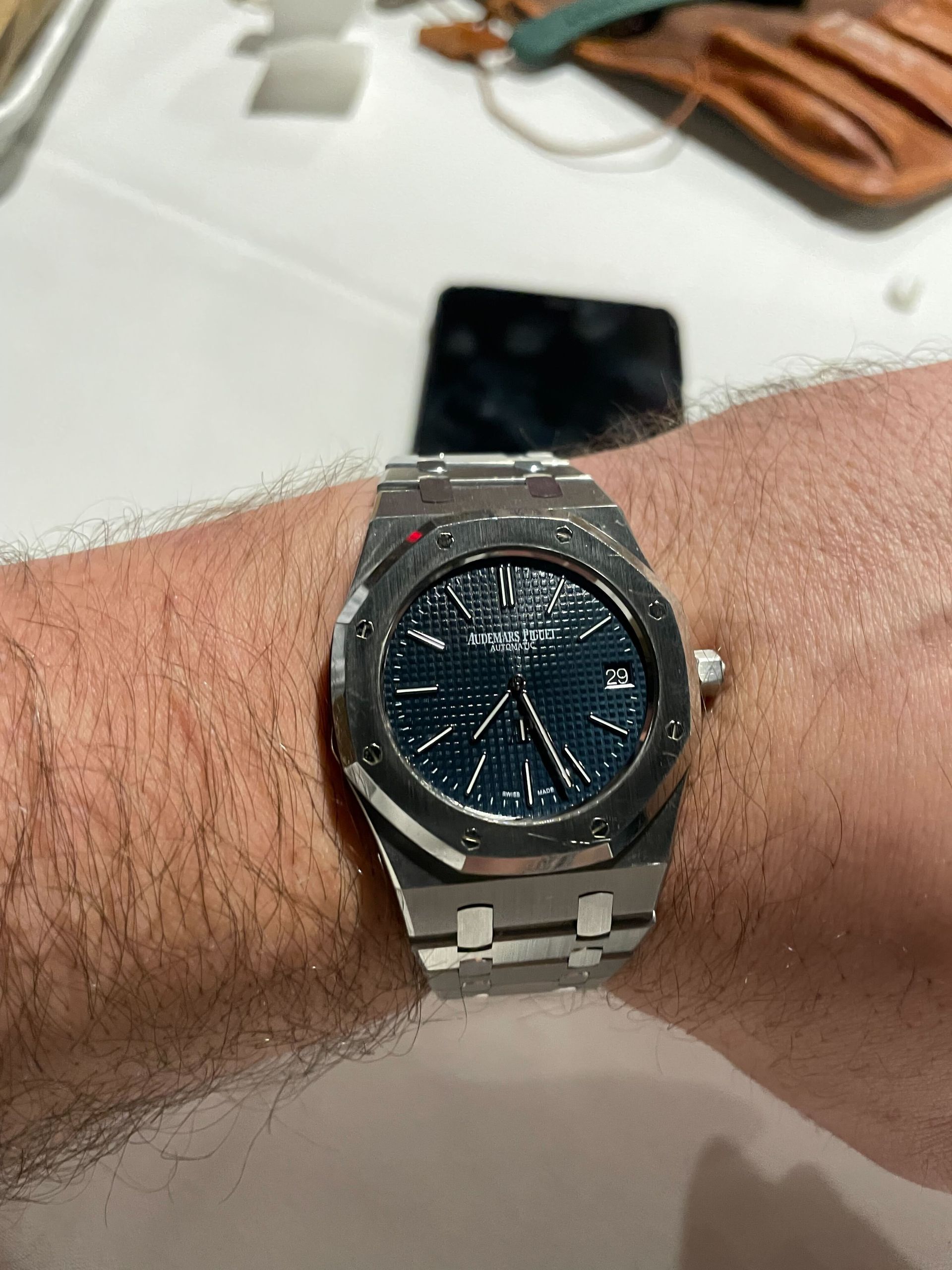
Photo: EMore98 — CC BY-SA 4.0 — Wikimedia Commons
Racing, Florida, and the Name
The Rolex Daytona history begins with a geography and a relationship. Daytona Beach, Florida had been an American speed record venue since 1902, when the hard-packed sand of its shoreline proved a natural racing surface. By the 1950s, as purpose-built circuits supplanted beach racing, the nearby Daytona International Speedway became home to the Rolex 24 at Daytona — the endurance race that Rolex would eventually title-sponsor and that gave the watch its name.
The relationship predates the name. Rolex had cultivated ties with motorsport through the 1950s and early 1960s, supplying timing instruments and driver watches as part of an emerging professional sports association strategy. The Submariner had proven that a professional tool watch narrative — this is what serious people wear in serious environments — could transcend its original audience and reach luxury buyers. Racing was the next arena. Drivers needed accurate elapsed time measurement; a chronograph with a tachymeter bezel could calculate average speed from a standing start; and the Daytona International Speedway was the highest-profile venue in American motorsport.
The Cosmograph name — retained in official Rolex nomenclature to this day as the full designation "Cosmograph Daytona" — preceded the Daytona name. Early references were sold as the Rolex Cosmograph, with "Daytona" appearing on dials from approximately 1965 onward. The Daytona name was added to anchor the watch's identity to the racing context that Rolex was building around it. It was branding in the modern sense: naming the object for the place it was meant to be associated with, not for what it technically did.
The Founding References: 6239 and 6241 (1963–1969)
The reference 6239, introduced in 1963, is the founding Daytona — and it arrived into a market that had no particular interest in it. Chronographs in the early 1960s were a niche product; the market for precision elapsed-time measurement on a wristwatch was dominated by enthusiasts and professionals rather than the aspirational buyers who purchased Submariners and Datejusts. Retailers reported slow sales. Rolex authorised dealers marked Daytonas down, cancelled future allocations, and in some cases simply stopped ordering them.
The 6239 was a 37mm stainless steel watch powered by calibre 722-1 — a modified Valjoux manual-winding movement, not an in-house Rolex calibre. The Daytona's entire first era, from 1963 to 1987, was powered by Valjoux-based movements: Rolex did not yet produce its own chronograph calibre. The tachymeter scale for calculating speed — the calibrated outer scale reading in units per hour — was engraved on the case bezel, not applied to the dial, distinguishing the Daytona from competing chronographs whose tachymeters were integrated into the dial.
The dial existed in two configurations from the outset: black registers on a white dial, or white registers on a black dial. The contrasting sub-dial colours — the registers showing elapsed minutes and hours against a dial of the opposite colour — are what collectors now call the "standard" dial. They are not what made the Daytona famous.
The Exotic Dial: What Made the Daytona Immortal
Alongside standard dials, Rolex offered a small number of 6239 and subsequent references with what the market now universally calls "exotic" or "Paul Newman" dials — characterised by an Art Deco typeface on the sub-dial numerals, a square-cornered minute track on the outer ring of each register, and a distinctive two-tone register face that separated the outer minute chapter ring from the inner colour field in a way that the standard dial did not. The exotic dial was offered as a factory option, not an aftermarket modification, and it appeared across references 6239, 6241, 6262, 6263, 6264, and 6265 through the manual-winding era.
Nobody wanted them. The Art Deco aesthetic read as old-fashioned in the late 1960s, a decade defined by modernist minimalism. Retailers who received exotic-dial examples were grateful when any buyer took them. In at least one documented case, an authorised dealer offered a price reduction specifically on exotic-dial stock because it was harder to move than standard examples.
This is the foundational paradox of Daytona collecting: the rarest and most valuable configuration was rare precisely because it was unwanted. The exotic dial Daytona's scarcity is not the result of limited production intent — it is the accidental product of consumer indifference at the moment of retail.
Paul Newman and the Transformation of the Market
Paul Newman received a Rolex Daytona reference 6239 with an exotic dial from his wife, actress Joanne Woodward, sometime in the late 1960s. The inscription on the caseback reads: "Drive Carefully Me." Newman, a serious amateur racing driver who competed in SCCA events and later co-owned a racing team, wore the watch constantly — on circuit, in interviews, in everyday life — for years.
Photographs of Newman wearing the watch began circulating in the collector community during the 1980s. Italian collectors, who had developed a sophisticated vintage chronograph market earlier than most other national collector communities, began calling exotic-dial Daytonas "Paul Newman" in reference to the actor. The name spread. By the early 1990s, the Paul Newman dial had become the most sought-after dial configuration in vintage chronograph collecting globally, and prices began to diverge sharply from standard-dial examples.
Newman sold or gave away his own 6239 at some point — the watch's whereabouts were unknown for decades. In 2017, it surfaced through his daughter's boyfriend, who had received it from Newman with instructions to "have a good life." The Phillips sale that October established $17,752,500 as the definitive statement of what the Paul Newman association, combined with documented direct provenance, was worth to the collector market. The result was not purely about the watch — every element of the sale was a perfect storm of provenance, rarity, and cultural weight — but it permanently reset the pricing floor for all exotic-dial Daytonas regardless of provenance.
Today, a standard-condition exotic-dial Daytona reference 6239 without Paul Newman provenance trades at $150,000–$400,000 on Chrono24 and at auction (April 2026), depending on dial condition, case integrity, and reference variant. A standard-dial 6239 in equivalent mechanical condition trades at $40,000–$80,000. The dial premium is 3–5x. That ratio — maintained consistently across twenty years of price documentation — is the market's quantified valuation of the exotic dial's aesthetic superiority over contemporary collector consensus.
The Manual-Winding Era: Reference Guide (1963–1987)
The original Daytona was produced across six primary references during its manual-winding era, each distinguished by bezel material and minor dial and case variations:
Reference 6239 (1963–1969): The founding reference. Steel case with engraved tachymeter bezel. Calibre 722-1 (Valjoux). Available in standard and exotic dial. The first reference to carry the "Daytona" name on the dial, from approximately 1965.
Reference 6241 (1965–1969): The companion reference to the 6239, distinguished by a black acrylic "Pulsations" bezel insert rather than the engraved steel bezel. The acrylic insert is fragile — most have been replaced — making original-bezel examples scarce. Exists in exotic dial configuration; the Paul Newman 6241 is rarer than the 6239 equivalent. Auction estimates for exotic-dial 6241: $200,000–$600,000.
Reference 6262 and 6264 (1970–1972): Transitional references bridging the engraved-bezel and metal-bezel generations. The 6262 carried a steel engraved bezel; the 6264 had an acrylic bezel. Both are rarer than the 6239/6241 due to shorter production windows and are proportionally more valuable in exotic dial configuration.
Reference 6263 (1971–1987): The longest-running manual Daytona reference and the one most associated with serious collector interest at accessible price points. Steel case, black acrylic bezel insert, calibre 727 (upgraded Valjoux movement). Exists in both standard and exotic dial. The 6263 is the reference most actively traded among collectors approaching the manual Daytona market for the first time; good standard-dial examples in honest condition trade at $50,000–$90,000 on Chrono24 (April 2026).
Reference 6265 (1971–1987): The steel engraved bezel companion to the 6263. Mechanically identical; distinguished by bezel type. Slightly more common than the 6263; trades at a modest discount in equivalent condition.
The manual-winding Daytona era ended in 1987 — not with a formal discontinuation, but with a quiet transition as inventory was sold through while Rolex's engineering team completed work on the next generation.
The El Primero Era: Reference 16520 (1988–2000)
The reference 16520 introduced in 1988 is the most technically consequential Daytona ever produced, for one specific reason: it was powered by calibre 4030 — a heavily modified version of the Zenith El Primero movement that Rolex purchased, deconstructed, and rebuilt to its own specifications.
The El Primero is a landmark movement. Zenith introduced it in 1969 as one of the first automatic chronograph calibres in history — the automatic winding mechanism and chronograph function integrated into a single movement architecture. Its beating frequency of 36,000 vibrations per hour (5 Hz) gives it measurement resolution of 1/10th of a second — the finest increment achievable with a traditional mechanical chronograph. The El Primero is, by this measure, the most accurate mechanical chronograph movement ever put into mass production.
Rolex's modification of the El Primero for the 4030 was extensive and, to Zenith's engineers at the time, somewhat insulting: Rolex reduced the beat frequency from 36,000 to 28,800 vph (standard for Rolex movements), regeared the movement's chronograph train, replaced several Zenith components with Rolex-manufactured equivalents, and applied Rolex finishing standards throughout. The resulting calibre 4030 is measurably less capable than the El Primero it derived from — it measures to 1/8th of a second rather than 1/10th — but it is a more consistent performer over time and easier to service within Rolex's established service infrastructure.
The 16520 introduced the modern Daytona's signature aesthetic: a wider case at 40mm versus the earlier 37mm, a sapphire crystal replacing the acrylic, and a more structured, contemporary dial layout. It was offered in black and white dial configurations without the exotic dial option — the Paul Newman chapter was closed. The 16520 "inverted six" — early production examples featuring a small "6" at the bottom of the 6 o'clock sub-dial that reads as an upside-down "9" due to a printing quirk — is a documented production detail that commands a premium among specialists. Good 16520 examples trade at $25,000–$45,000 on Chrono24 (April 2026), with inverted-six examples at $35,000–$55,000.
The In-House Era: Calibre 4130 and Reference 116520 (2000–2023)
In 2000, Rolex introduced the reference 116520 powered by calibre 4130 — Rolex's first in-house chronograph movement, developed over a decade of internal engineering. The 4130 represents the definitive statement of what Rolex believed a chronograph movement should be.
The 4130's architecture makes two choices that distinguish it from virtually every other chronograph movement on the market. First, it uses a vertical clutch rather than a lateral clutch to engage the chronograph function. A lateral clutch connects the chronograph train by sliding a gear into mesh — a motion that can cause the seconds hand to jump slightly when the chronograph is started. A vertical clutch engages from above, like a friction plate, producing a smooth start with no hand jump. Second, the column wheel mechanism that governs chronograph start, stop, and reset uses a vertical column wheel design that provides precise, tactile control with less wear over time than the more common cam-and-lever system. The practical result is a chronograph that starts cleanly, stops instantly, and resets to zero without the slight hand flutter that compromises lesser movements.
The 4130 runs at 28,800 vph and achieves +2/-2 seconds per day in Rolex's Superlative Chronometer testing. Its 72-hour power reserve — from a movement that also drives a chronograph function — reflects the efficiency gains of the vertical clutch architecture. The Daytona is the only current Rolex with a manual-start chronograph function; no Daytona has ever been produced with a flyback mechanism, which Rolex considers unnecessary for the watch's intended racing use case.
The 116520 was produced in steel with black or white dial, and in gold and two-tone variants with the same dial options. It established the Daytona as the reference most consistently above retail at authorised dealers — by the mid-2000s, steel Daytonas had multi-year waitlists at most authorised dealers globally. This scarcity was structural: Rolex produced the Daytona in smaller numbers than the Submariner or Datejust, and global demand for chronographs had grown substantially since the 1960s commercial failure. The watch that dealers couldn't give away in 1965 had become the watch that buyers couldn't obtain in 2005 regardless of price.
Reference 116500LN: Ceramic Bezel Arrives (2016–2023)
The 2016 Baselworld introduced reference 116500LN — the steel Daytona with a black Cerachrom ceramic bezel replacing the previous stainless steel engraved bezel. The ceramic bezel brought the Daytona into visual alignment with the ceramic Submariner and GMT-Master II families while preserving the tachymeter scale, now rendered in platinum CVD coating rather than paint — a process where platinum particles are vapour-deposited into the ceramic at an atomic level, producing a scale that cannot be removed, chipped, or faded.
The 116500LN became arguably the single most waitlisted production watch in history. At launch, no steel example was available at retail from any authorised dealer globally — the entire allocation had sold through before watches reached boutiques. Secondary market premiums peaked at 200–300% above retail during 2021. By April 2026, the 116500LN has settled to a secondary market range of $28,000–$38,000 against its $16,550 retail price — a 70–130% premium that has remained sustained for seven consecutive production years, the longest period of above-retail trading for any modern Rolex reference.
Reference 126500LN: The Current Generation (2023–Present)
In 2023, Rolex introduced the reference 126500LN — transitioning the Daytona to calibre 4131, an evolution of the 4130 incorporating the same Chronergy escapement improvements that the 3235 brought to the Submariner and Datejust. Power reserve extended from 72 to 72 hours (unchanged, but with improved efficiency), and accuracy tightened to the Superlative Chronometer ±2 seconds per day standard. The case diameter remains 40mm; the ceramic bezel and overall aesthetic are continuous with the 116500LN.
Current retail (April 2026): reference 126500LN in steel at $16,800. Secondary market: $24,000–$32,000, reflecting a normalisation from the 116500LN's peak premiums as the new reference accumulates production volume. The 126500LN in white gold (reference 126509) retails at $44,650; the Everose gold variant (reference 126505) at $47,150.
Calibre Evolution: The Complete Technical History
| Era | Calibre | Base | Hz | Chronograph Type | Power Reserve |
|---|---|---|---|---|---|
| 1963–1969 | 722-1 | Valjoux 72 | 18,000 | Manual, lateral | ~44 hrs |
| 1969–1987 | 727 | Valjoux 72B | 21,600 | Manual, lateral | ~44 hrs |
| 1988–2000 | 4030 | Zenith El Primero | 28,800 | Auto, lateral | 48 hrs |
| 2000–2023 | 4130 | In-house Rolex | 28,800 | Auto, vertical clutch | 72 hrs |
| 2023–present | 4131 | In-house Rolex | 28,800 | Auto, vertical clutch | 72 hrs |
The shift from Valjoux to El Primero to in-house represents the three phases of the Daytona's mechanical development: dependence on third-party movements, strategic acquisition of a superior external calibre, and ultimate self-sufficiency. Rolex spent twelve years developing the 4130 in-house specifically because it found no existing movement that met its standards for consistency, serviceability, and accuracy under Superlative Chronometer testing.
Rolex Daytona vs Omega Speedmaster: The Great Chronograph Rivalry
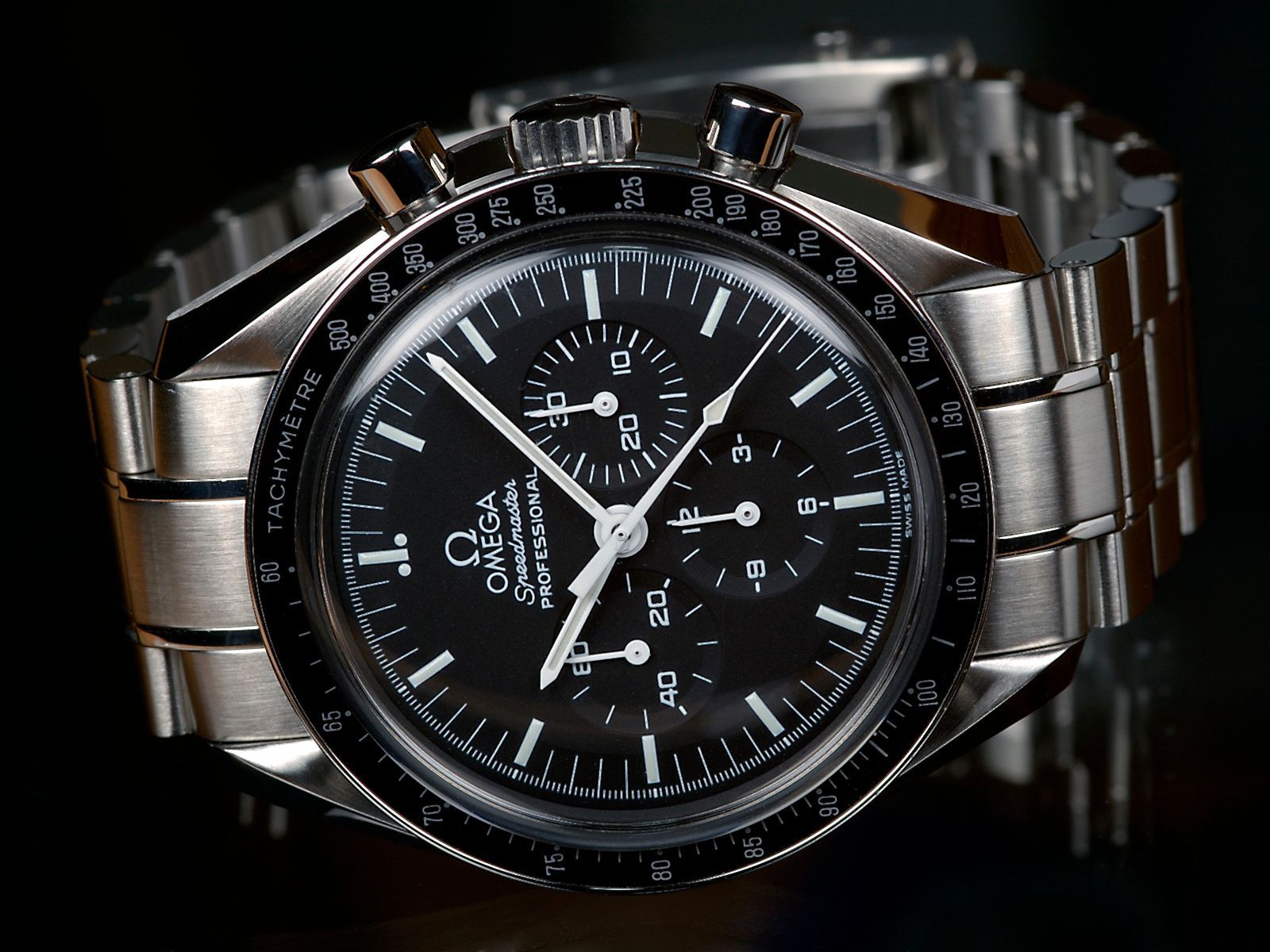
The Daytona and Speedmaster are the two chronographs that define the category for most collectors — launched within the same decade, associated with the two most powerful professional deployment stories in chronograph history (motorsport for the Daytona, NASA and the moon landings for the Speedmaster), and representing genuinely different philosophical approaches to what a chronograph should be.
| Criterion | Rolex Daytona | Omega Speedmaster |
|---|---|---|
| Introduced | 1963 | 1957 |
| Original purpose | Motorsport timing | Pilot / general professional |
| NASA moonwatch | No | Yes — Speedmaster Professional worn on all Apollo missions |
| Current movement | Cal. 4131 (auto, in-house) | Cal. 3861 (manual, Co-Axial) |
| Beat frequency | 28,800 vph | 21,600 vph |
| Chronograph type | Vertical clutch, column wheel | Lateral clutch, column wheel |
| Case diameter | 40mm | 42mm |
| Water resistance | 100 metres | 50 metres (Professional) |
| Current retail (steel) | $16,800 | ~$6,650 (Moonwatch Professional) |
| Secondary market | 70–130% above retail | At or below retail |
| Most valuable reference | Paul Newman 6239 — $17.75M | Ref 105.003 Alaska Project — ~$1.8M |
The philosophical divergence is fundamental: the Speedmaster Professional has remained in continuous production with a manual-winding movement since 1968 — unchanged in principle, updated in detail — because NASA certification was based on that specific configuration and Omega has treated the association as sacred. The Daytona has been continuously reinvented mechanically while maintaining its visual continuity. The Speedmaster is the watch of historical preservation; the Daytona is the watch of engineering ambition.
Both positions are legitimate. The collector who values the Speedmaster's direct connection to the Apollo program — there are documented Speedmaster Professionals that went to the moon — is valuing something the Daytona cannot offer at any price. The collector who values the Daytona's mechanical sophistication — the vertical clutch, the 4130/4131 architecture, the Superlative Chronometer precision — is valuing something the Speedmaster cannot offer at its price point.
Vintage vs Modern Daytona: The Key Differences
| Criterion | Vintage (6239–6265) | Modern (116520–126500LN) |
|---|---|---|
| Case diameter | 37mm | 40mm |
| Crystal | Acrylic (domed) | Sapphire (flat) |
| Movement | Manual winding (Valjoux) | Automatic (Zenith or in-house) |
| Chronograph pusher style | Pump pushers (large oval) | Round pushers (integrated) |
| Exotic / Newman dial | Available | Not available |
| Bezel material | Steel (engraved) or acrylic insert | Steel (engraved) or Cerachrom ceramic |
| Lug width | 19mm | 20mm |
| Water resistance | 50 metres | 100 metres |
| Winding | Manual — crown at 3 o'clock | Automatic — rotor winds while worn |
| Price entry point | $40,000+ (standard dial) | $16,800 retail; $24,000+ secondary |
The vintage Daytona's manual-winding character is central to its appeal for collectors: the act of winding the crown before timing a lap, the tactile feedback of the pump pushers, the slimmer case profile that disappears under a shirt cuff — these are qualities the automatic modern Daytona cannot replicate. The modern Daytona's superiority is entirely technical: more accurate, more water-resistant, self-winding, and covered by Rolex's five-year warranty and service infrastructure.
Reference Numbers: A Complete Identification Guide
Manual-winding era (1963–1987):
- 6239
— Steel, engraved bezel, standard or exotic dial (1963–69)
- 6241
— Steel, acrylic bezel insert, standard or exotic dial (1965–69)
- 6262
— Steel, engraved bezel, transitional (1970–72)
- 6264
— Steel, acrylic bezel insert, transitional (1970–72)
- 6263
— Steel, acrylic bezel insert, Cal. 727, long run (1971–87)
- 6265
— Steel, engraved bezel, Cal. 727, long run (1971–87)
- 6269
— Yellow gold, acrylic bezel
- 6270
— Yellow gold, engraved bezel
El Primero era (1988–2000):
- 16520
— Steel, Cal. 4030 (El Primero-based)
- 16523
— Two-tone (steel/gold), Cal. 4030
- 16528
— Yellow gold, Cal. 4030
In-house era (2000–2016):
- 116520
— Steel, Cal. 4130, steel bezel
- 116523
— Two-tone, Cal. 4130
- 116528
— Yellow gold, Cal. 4130
Ceramic era I (2016–2023):
- 116500LN
— Steel, Cal. 4130, Cerachrom black bezel
- 116500
— Steel, Cal. 4130, Cerachrom white bezel (white dial)
- 116505
— Everose gold, Cal. 4130
- 116509
— White gold, Cal. 4130
Ceramic era II (2023–present):
- 126500LN
— Steel, Cal. 4131, Cerachrom black bezel
- 126505
— Everose gold, Cal. 4131
- 126509
— White gold, Cal. 4131
Authenticating a Vintage Rolex Daytona
The Daytona is the most counterfeited Rolex reference by volume — a direct consequence of its price premium over every other steel sports watch in the line. Sophisticated fakes exist at every level of the market and have become difficult to distinguish from authentic examples without specialist examination. The following applies to manual-winding references (6239–6265):
Dial authentication. The exotic dial's Art Deco typeface has been reproduced by counterfeiters, but original printing has a depth and precision under 10x magnification that reproductions cannot fully replicate. Original tritium plots show consistent, age-appropriate shrinkage and may have hairline cracks from thermal cycling — a natural ageing signature that is extremely difficult to fake convincingly. The lume colour should be consistent across all plots; inconsistency suggests replacement.
Case and serial correlation. The reference number is engraved at 12 o'clock between the lugs; the serial number at 6 o'clock. Cross-referencing these against published Rolex serial tables (which correlate production year to serial number range) is the first authentication step. A 6239 case with a serial number from the 16520 production era is either a rebuild or a fake. Both are problems.
Movement verification. Opening the caseback to inspect the movement is the definitive step. The Valjoux 72 family has specific visual signatures — rotor architecture, bridge layout, jewel count — that are documented and reproducible only by manufacturing from the correct donor movement. A swapped movement from an incompatible calibre is immediately identifiable by an experienced eye.
Pusher and crown authenticity. Manual Daytona pump pushers have specific dimensions and threading that differ from aftermarket replacements. The crown should show appropriate wear consistent with the case's age and have the correct Triplex seal architecture. A new-looking crown on a 50-year-old case requires explanation.
For any exotic-dial or Paul Newman Daytona above $100,000, independent authentication by a specialist (Rolex-authorised watchmaker with documented vintage expertise, or specialist services such as Rolex Authentication or WatchCSA) is not optional — it is the minimum standard of due diligence.
The Investment Case: Market Data and Perspective
The Daytona has outperformed every other Rolex reference as an investment vehicle over any 10-year horizon in the past three decades — a statement that requires two qualifications.
First, the performance is reference-specific. The Paul Newman exotic-dial population has appreciated at rates that make all other luxury assets look modest — a confirmed 6239 exotic-dial that traded at $50,000 in 2010 would exceed $300,000 today. The standard-dial 6239 has appreciated meaningfully but at perhaps one-third that rate. The 16520 has appreciated at a rate comparable to the Submariner 1675 — approximately 200–250% over fifteen years. The 116520 appreciated dramatically between 2015 and 2021 and has partially corrected since, now trading at 70–130% above its original retail.
Second, past performance has structural drivers that may not persist indefinitely. The Paul Newman premium specifically reflects the convergence of genuine rarity (very few confirmed examples), cultural weight (one of the most recognisable names in 20th-century American culture), and documented provenance (the Phillips sale established a verified price ceiling). These conditions are unlikely to deteriorate but are also unlikely to be replicated — there is no equivalent celebrity provenance story available to any other reference.
For buyers approaching the Daytona as an investment: the 16520 in excellent condition represents the most rational entry point — established appreciation history, authentic mechanical interest, and a price level ($25,000–$45,000) that is accessible relative to the manual-winding references without the exotic dial premium or the modern references' above-retail secondary market dynamics.
The Collector's Guide: Where to Start
The Daytona's price landscape spans more than any other Rolex reference — from $16,800 retail for a current 126500LN to $17,752,500 for a Newman 6239. Within that range, the practical entry points by collector profile:
First-time buyer: The reference 126500LN at retail is the most straightforward path, assuming dealer access. If not, a pre-owned 116520 or 116500LN from an established specialist (WatchBox, Govberg, Chrono24 vetted dealers) is the alternative. Avoid grey market examples at 200% premiums — the watch is not worth double the retail price.
Serious collector, vintage focus: The reference 6263 standard-dial in unpolished case condition is the correct entry point — the longest-running manual reference, available in authentic honest condition at $50,000–$90,000, with mechanical character that the automatic generation cannot replicate. Examine the movement, verify the serial, and do not accept a polished case.
Advanced collector: The reference 16520 inverted-six or the 6241 standard-dial are the natural progression — both represent specific production windows with documented scarcity, and both trade at premiums that reflect genuine rarity rather than marketing.
Trophy collector: The Paul Newman exotic-dial market requires specialist advisors, auction house relationships, and deep provenance documentation. It is a market for experienced participants with access to authentication infrastructure.
For all categories: the Daytona's counterfeiting problem is severe enough that buying without authentication is inadvisable at any price above $10,000. The authentication cost — typically $200–$500 for an independent inspection — is the cheapest insurance available in this market.
What the Daytona's History Actually Proves
The Rolex Daytona spent its first decade proving that market timing, in watches as in everything, is an unreliable guide to value. The exotic dial that no dealer wanted in 1967 sold for $17,752,500 in 2017. The chronograph that Rolex couldn't convince retailers to stock became the hardest watch to buy at retail on earth.
None of that was predictable. The collectors who acquired early Daytonas in the 1980s were not making calculated investment decisions — they were following aesthetic instincts about a dial that the market had judged incorrectly. The market eventually corrected. It always does, in one direction or another.
What the Daytona's history does prove — consistently, across reference generations, across mechanical evolutions — is that a watch built around a genuine functional purpose, executed to the highest manufacturing standard, and associated with a compelling human story will find its audience eventually. The Daytona found its audience thirty years after it was supposed to.
Latest News
- Rolex at Watches & Wonders 2026: 58 New References, the Daytona Rolesium, and 100 Years of the Oyster — April 14, 2026
- W&W 2026 Secondary Market Report: Pepsi Up $3,000, Daytona Jubilee Rewrites Pre-Owned Prices — May 15, 2026
- Phillips New York Watch Auction XIV: A $13.9M F.P. Journe and a $75.8M U.S. Record — June 21, 2026
Related Articles
Sports Watch Collection
Sister Brand: Tudor
The Foundation
Recent Posts