Breitling: From Léon Breitling’s Chronograph Workshop to the Modern Era
Breitling: The Instrument Watch Maker Since 1884
By Zach Charles, Editor, Time on the Move
Breitling's identity is built on a single word: instrument. Not jewellery, not fashion, not prestige in the traditional sense — instrument. Since Léon Breitling opened his workshop in Saint-Imier in 1884, the house has approached the watch as a precision tool first and an object of desire second. The sequence matters: the desire, when it comes, derives from the precision. A Breitling Navitimer is beautiful because it works. A Breitling Chronomat is desirable because it was designed for the Italian Air Force's acrobatic display team, tested in the conditions of professional aerobatics, and found adequate.
This orientation — function leading form — has produced some of the most genuinely original watch designs of the twentieth century. The Navitimer(1952) is the only watch in history with an integrated circular slide rule capable of all calculations required for air navigation. The Cosmonaute variant was the first Swiss watch worn in space, on Scott Carpenter's wrist during the Aurora 7 mission in 1962. The Emergency contains a working distress beacon transmitter — a genuine emergency locator transmitter embedded in a watch case, capable of summoning rescue from remote locations. No other watchmaker has built anything like it.
Understanding Breitling requires accepting that functionality, for this house, is not a marketing claim but a design constraint. The slide rule works. The chronograph achieves COSC precision. The Emergency beacon transmits. The watches are what they say they are.
Photo: EMore98 — CC BY-SA 4.0 — Wikimedia Commons
Origins — Léon Breitling and the Chronograph (1884)
Photo: EMore98 — CC BY-SA 4.0 — Wikimedia Commons
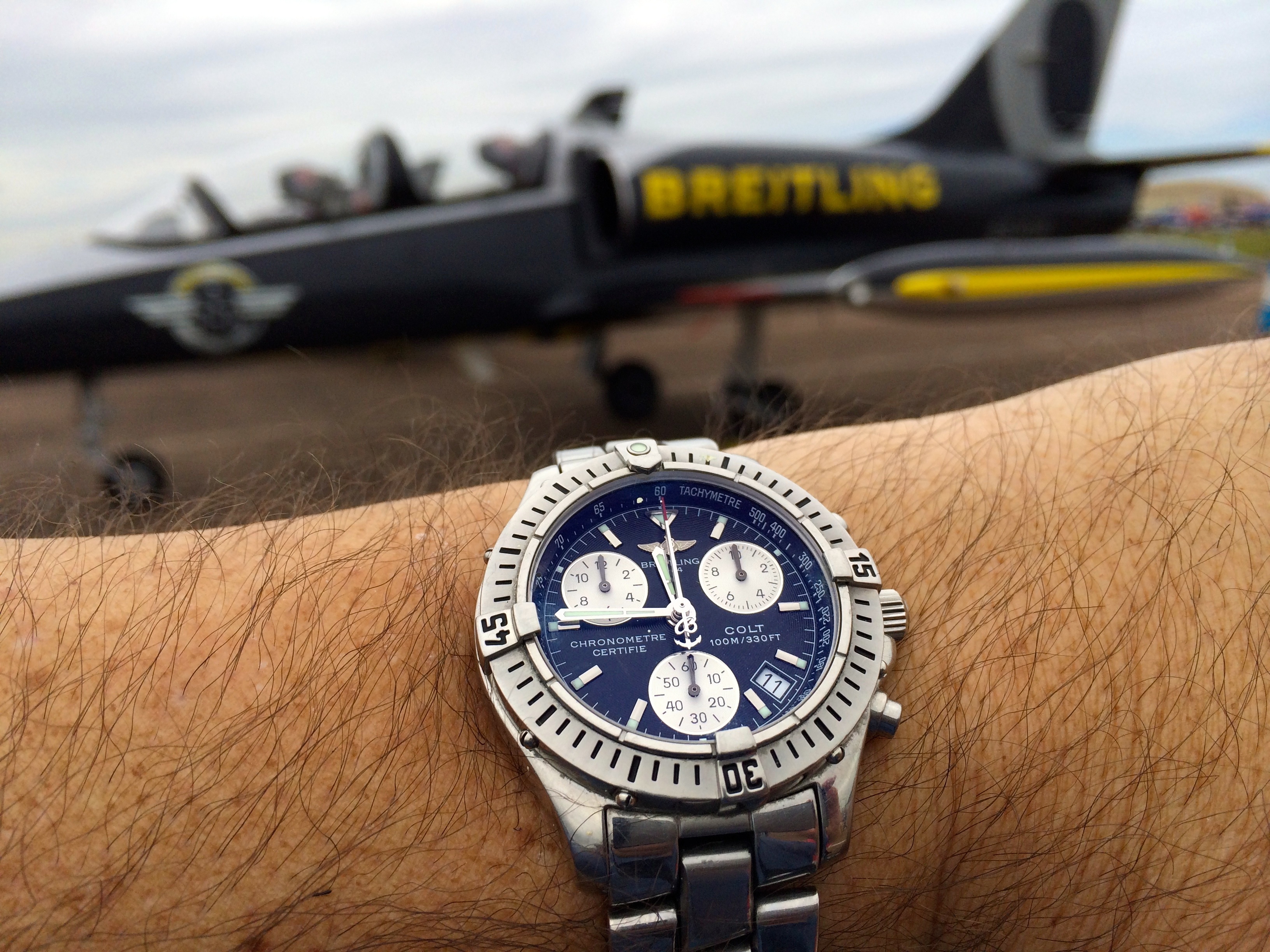
Léon Breitling (1860–1914) founded his workshop in Saint-Imier, in the Swiss Jura, in 1884, specialising from the beginning in precision counters and chronographs for scientific and industrial use. The choice of specialty was prescient: the late nineteenth century was a period of intense demand for precision timekeeping in sport, science, and industry, and the chronograph — a watch that could time intervals — was at the centre of that demand.
By 1892, the business had grown sufficiently that Léon moved operations to La Chaux-de-Fonds, the centre of the Swiss watch industry, where the concentration of skilled craftsmen, suppliers, and technical infrastructure was unmatched. This move placed Breitling in the company of Longines, Patek Philippe, and other houses that were defining the standards of precision watchmaking.
Léon Breitling's specific contribution to chronograph design was the development of specialised push-pieces — the external buttons that operate the chronograph function — as a means of making the instrument easier to use without disturbing the timekeeping function. In the period before the push-piece, chronographs were operated by pressing the crown, which risked disrupting the movement. Breitling's emphasis on independent operating mechanisms foreshadowed the two key innovations his son would make in the next generation.
Two Inventions That Changed Watchmaking (1915 and 1934)
The two most important technical contributions in Breitling's history were made in successive generations: the first independent chronograph pusher in 1915, and the two-pusher (start/stop/reset) system in 1934.
1915 — The Independent Chronograph Pusher : Gaston Breitling (Léon's son, who had taken over the company after his father's death in 1914) patented a wristwatch chronograph with an independent push-piece separate from the crown. Before this, the chronograph function was engaged by pressing the crown — a mechanism that was imprecise, inconvenient, and required the wearer to release the watch from the wrist. The independent pusher at 2 o'clock allowed the chronograph to be started with a single thumb press without removing the watch. This is now the universal standard for wristwatch chronographs.
1934 — Two-Pusher System : Willy Breitling (Gaston's son, who took over in 1932) added a second pusher, creating the start/stop/reset system that remains the standard chronograph operating convention: push at 2 o'clock to start, push at 2 o'clock again to stop, push at 4 o'clock to reset. This two-pusher architecture is used by essentially every mechanical chronograph wristwatch made today, from the Omega Speedmaster to the Rolex Daytona to the Patek Philippe 5172. Both critical innovations are Breitling inventions.
Aviation and the Royal Air Force (1936–1945)
Photo: Phil Guest — CC BY-SA 2.0 — Wikimedia Commons
The connection between Breitling and aviation that defines the brand today was established by Willy Breitling in the 1930s, when he recognised that aircraft cockpits required precision timing instruments and that watchmakers were uniquely qualified to provide them. In 1936, Breitling became an official supplier to the Royal Air Force — a relationship that would define the company's identity for decades.
The RAF contract required onboard chronographs: large, legible, precise instruments installed in aircraft instrument panels for navigation timing. These were not wristwatches but cockpit instruments, and producing them required both the precision that Breitling's chronograph specialisation had developed and the durability that military specifications demanded.
The Second World War expanded this relationship significantly. Breitling supplied chronographs and onboard instruments to the RAF and to Allied air forces throughout the conflict, producing the instruments that navigators used to calculate positions, time bombing runs, and manage fuel consumption over the hostile skies of occupied Europe. This wartime production established Breitling as the aviation watchmaker — not because of any marketing claim but because of operational reality. RAF navigators trusted Breitling instruments with their lives.
The Navitimer and the Pilot's Computer (1952)
The Navitimer, launched in 1952, is Breitling's most significant achievement and one of the most important watch designs of the twentieth century. Its defining feature — the circular slide rule integrated into the bezel — transforms the watch from a timekeeping instrument into a navigation computer capable of performing every calculation required for air navigation: airspeed, rate of climb, fuel consumption, distance, conversion between units of measurement.
The slide rule bezel works by rotating the outer bezel ring relative to a fixed inner scale. The scales are logarithmic, enabling multiplication and division to be performed by aligning numbers around the bezel. A pilot could calculate, for example, that at a fuel consumption rate of 40 gallons per hour, a 3.5-hour flight would require 140 gallons — without a pencil, without a dedicated calculator, with both hands free for the controls.
The Navitimer was officially adopted by the Aircraft Owners and Pilots Association (AOPA), whose logo appeared on the original AOPA-issued dials — which bore no Breitling branding. When Breitling launched the watch publicly under its own name in late 1955 (reference 806), the winged AOPA logo was retained as a dial signature that makes period references immediately identifiable to collectors. The AOPA endorsement was not a marketing arrangement but a technical recognition: the AOPA's members, professional and recreational pilots throughout the United States, confirmed that the Navitimer's slide rule was genuinely useful in the cockpit.
The Navitimer's case size — originally 40mm, which was large for its era — was determined by the legibility requirements of the slide rule. A smaller bezel would produce scales too compressed to read under cockpit conditions. The 40mm case established the Navitimer's visual authority on the wrist and anticipated the larger case sizes that became normal in watchmaking a generation later.
Scott Carpenter and the Cosmonaute (1962)
On 24 May 1962, astronaut Scott Carpenter launched aboard the Aurora 7 capsule on NASA's Mercury-Atlas 7 mission, wearing a Breitling Navitimer Cosmonaute on his wrist. This made the Cosmonaute the first Swiss watch worn in space — a distinction that predates the more famous Omega Speedmaster's NASA story by three years.
The Cosmonaute was a specially modified Navitimer with a 24-hour dial rather than a standard 12-hour dial. The reason was practical: in orbit, the sun rises and sets every 90 minutes, making it impossible to distinguish AM from PM by natural light. A 24-hour display, showing the full day's arc in a single rotation, allowed the astronaut to maintain accurate time reference relative to ground stations and mission timelines.
Carpenter wore his Cosmonaute throughout the three-orbit mission, returning to Earth after approximately five hours in space. The watch functioned normally. The Cosmonaute remains in production today, and its 24-hour dial — originally a necessity — has become an identifying design detail of the most historically significant Navitimer variant.
Willy Breitling, the Quartz Crisis, and the Sale (1974–1979)
The quartz crisis of the mid-1970s struck Breitling with particular force. The company had specialised in mechanical chronographs — among the most complex and expensive mechanical watch complications — and found itself competing with quartz chronographs that were more accurate, far cheaper to produce, and required no mechanical expertise to service.
Willy Breitling's response was characteristic of many Swiss manufacturers of the period: attempt to maintain mechanical production while absorbing the losses that came from a market that had largely turned to quartz. By the late 1970s, Breitling — in common with many Swiss mechanical watch firms — was in serious financial difficulty.
In 1979, Willy Breitling, having no heir willing to continue the business, sold the company to Ernst Schneider, a watchmaker and entrepreneur who was also a licensed pilot. The sale preserved the brand's continuity but ended 95 years of family ownership. Schneider's personal connection to aviation — he held commercial pilot and instructor qualifications — was directly relevant to his subsequent restoration of Breitling's identity as the aviation watchmaker.
The Chronomat and the Resurrection (1984)
Photo: EMore98 — CC BY-SA 4.0 — Wikimedia Commons
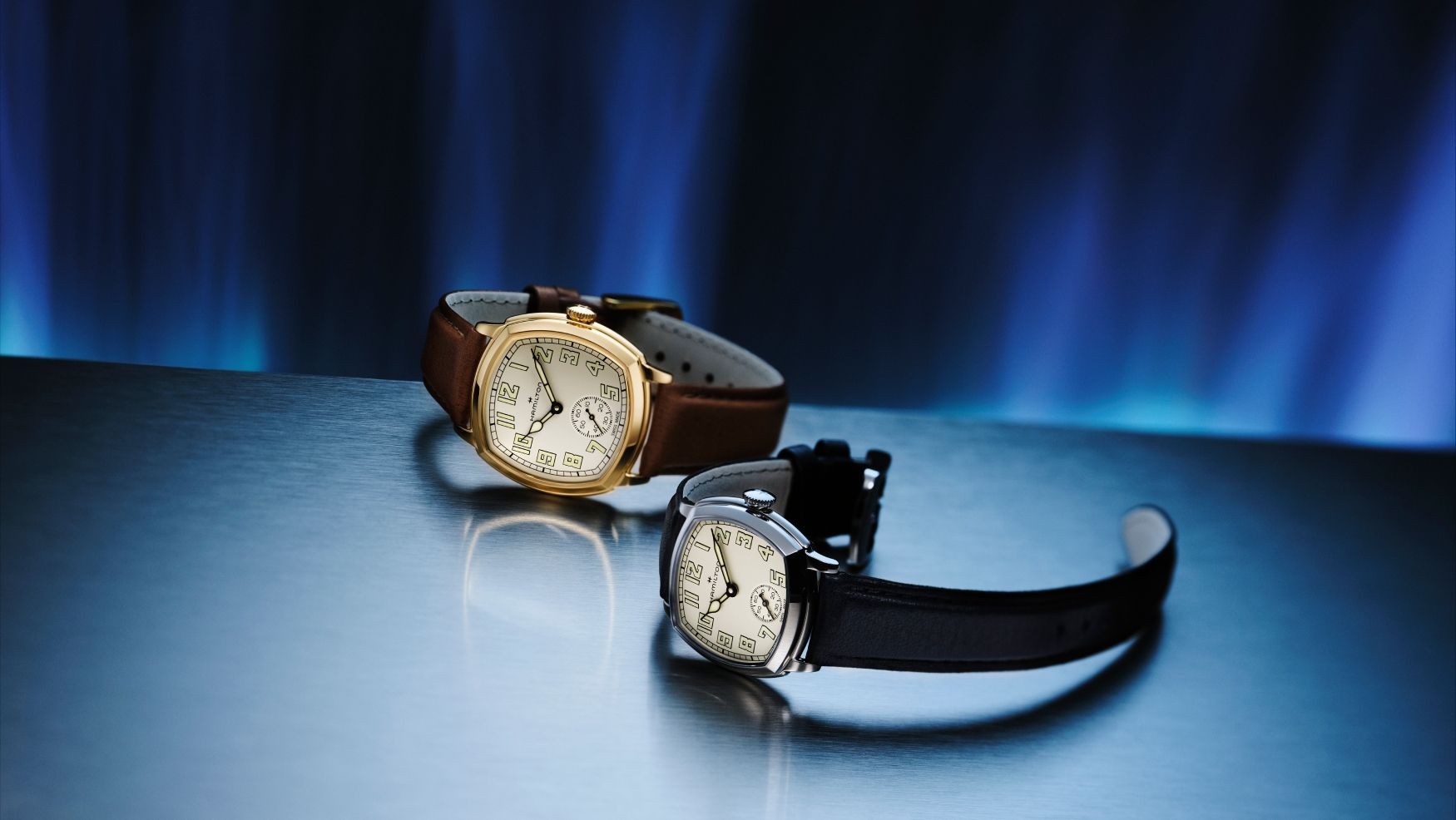
Ernst Schneider's decisive act as Breitling's new owner was the 1984 relaunch of the Chronomat — a watch originally produced in the 1940s — in a new form developed in collaboration with the Italian Air Force's Frecce Tricolori acrobatic display team.
The Frecce Tricolori connection gave the revived Chronomat its design brief and its credibility simultaneously. The team's pilots required a watch that could withstand the physical stresses of aerobatic flying — acceleration forces, vibration, temperature cycling — while providing a precise chronograph for timing display sequences. The Chronomat's distinctive "Rouleaux" bracelet, with its H-shaped links providing both flexibility and rigidity, and its "rider tabs" bezel, with four large protruding markers that could be operated with gloved hands, were both responses to the operational requirements of the team.
The 1984 Chronomat was an immediate commercial success. It arrived at the precise moment when the watch market was beginning to recover from the quartz crisis, when collectors and buyers were rediscovering the appeal of mechanical watchmaking, and when the sports watch aesthetic — large, robust, technically credible — was becoming the dominant idiom of luxury watches. The Chronomat was all of these things and had a genuine aviation pedigree to support its claims.
The Chronomat rescue established the pattern for Breitling's subsequent thirty years: mechanical chronographs, aviation positioning, robust tool watch aesthetics, COSC chronometer certification as a baseline standard rather than an achievement. Ernst Schneider rebuilt Breitling as the instrument watchmaker, and that identity has held.
The B01 — Breitling's First In-House Chronograph (2009)
For most of its history after the quartz crisis, Breitling relied on modified versions of movements purchased from ETA and from the calibre consortium it co-owned with Rolex, Patek Philippe, and other manufacturers (before that consortium became Patek Philippe's exclusive Manufacture). In 2009, Breitling launched Calibre B01 — its first fully in-house chronograph movement.
The B01 is a column-wheel, vertical clutch chronograph movement with a 70-hour power reserve and COSC certification as standard. The column wheel — a rotating star-shaped component that coordinates the chronograph's functions — produces a smoother, more precise engagement than a cam-and-lever system and has long been the mark of a quality chronograph movement. The vertical clutch eliminates the brief "jump" of the seconds hand that occurs when a horizontal clutch chronograph is started, producing a cleaner start.
The B01 was a significant investment in credibility: it demonstrated that Breitling could produce manufacture movements of genuine quality, not merely assemble purchased calibres into its own cases. It now powers the Navitimer B01, the Chronomat B01, and other flagship references, and its quality has been consistently praised by independent watchmaking reviewers.
Georges Kern and the Modern Era (2017–Present)
In April 2017, CVC Capital Partners acquired an 80% majority stake in Breitling for approximately $870 million, with Théodore Schneider (Ernst's son, who had inherited the company) reinvesting in the remaining 20%. Georges Kern was installed as CEO. Kern — previously CEO of IWC Schaffhausen and Head of Watchmaking at Richemont — brought a different philosophy to Breitling: broader audience, more contemporary positioning, a deliberate effort to attract buyers who would not previously have considered the brand.
The most visible expression of this philosophy was the "squad" concept: groups of brand ambassadors defined by activity rather than celebrity. The Surfer Squad, the Triathlon Squad, the Explorer Squad, the Aviator Squad — each a group of working professionals in their fields, wearing Breitling watches appropriate to those activities. The concept was explicitly democratic: the ambassadors were chosen for what they did, not for their fame.
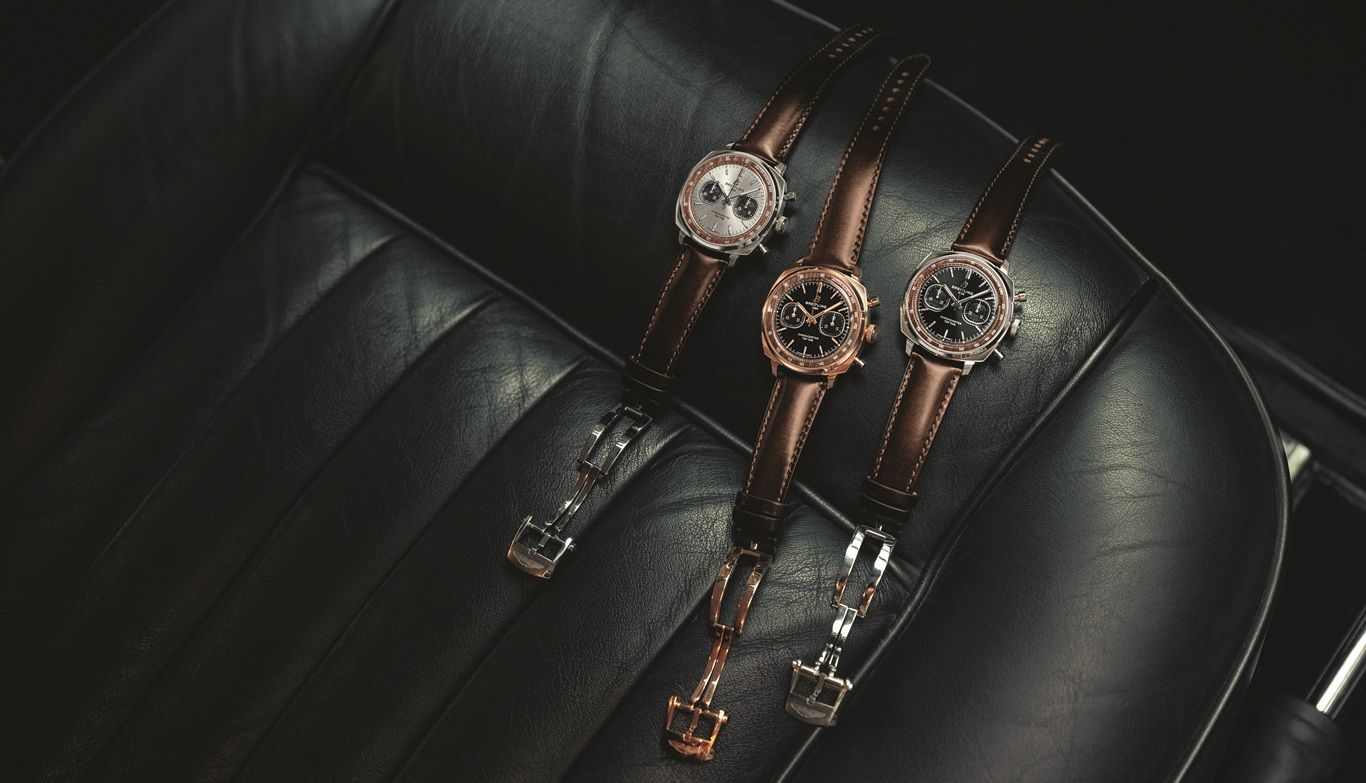
Kern also oversaw the revival of the Premier collection (originally from the 1940s) as Breitling's elegant, dress-adjacent line; the introduction of the Superocean Heritage as a vintage-influenced dive watch; and the development of a sustainability programme that included recycled ocean plastic straps and a commitment to carbon-neutral manufacturing.
The contemporary Breitling produces approximately 200,000–250,000 watches per year across its collection. COSC chronometer certification remains the brand's baseline standard — every Breitling mechanical watch is certified — which is a stronger commitment to precision than most comparable manufacturers make.
Breitling's Design DNA
Several elements recur consistently across the Breitling range and constitute the brand's design identity.
Bold legibility : Breitling dials are designed for readability under operational conditions — large indices, high-contrast colour schemes, luminous application. The slide rule scales of the Navitimer, the tachymeter of the Chronomat, the depth ratings of the Superocean: all are functional information, not decoration.
Robust cases : Breitling cases are typically larger and heavier than equivalent dress watches. The 42–46mm case sizes that dominate the range were determined by functional requirements — legibility, slide rule scale size, bezel grip — before they became aesthetically fashionable.
Rider tabs : The four protruding markers on the Chronomat's rotating bezel — designed for gloved-hand operation — are Breitling's most immediately recognisable design element after the Navitimer slide rule. They appear across the range as a house signature.
COSC certification : Every Breitling mechanical watch is COSC certified, meaning it has been tested by the Contrôle Officiel Suisse des Chronomètres and rated to -4/+6 seconds per day. This is a commitment most brands reserve for selected premium references; Breitling applies it to its entire mechanical range.
Frequently Asked Questions
Who founded Breitling and when?
Léon Breitling founded the company in Saint-Imier, Switzerland, in 1884, specialising from the outset in precision counters and chronographs. The company moved to La Chaux-de-Fonds in 1892 and remained family-owned through three generations — Léon, his son Gaston, and grandson Willy — until Willy Breitling sold it to Ernst Schneider in 1979.
What is Breitling's most famous watch?
The Navitimer (1952) is Breitling's signature and most historically significant model — the only watch with an integrated circular slide rule capable of all air navigation calculations. It was worn in space by Scott Carpenter in 1962 and remains in production in essentially the same form today.
Did Breitling invent the chronograph pusher?
Breitling made two foundational contributions to chronograph design: Gaston Breitling introduced the first independent chronograph pusher in 1915, and Willy Breitling introduced the two-pusher start/stop/reset system in 1934. Both are now universal standards in chronograph watchmaking.
What is the COSC certification on Breitling watches?
COSC (Contrôle Officiel Suisse des Chronomètres) certifies that a watch movement achieves -4/+6 seconds per day accuracy after testing across multiple temperatures and positions. Breitling certifies every mechanical watch it produces — a stronger precision commitment than most comparable brands, which certify only selected references.
Breitling Watch Collection
- Breitling Navitimer: The Pilot's Computer Watch Since 1952
- Breitling Chronomat: History of the Aviation Chronograph
- Breitling Superocean: Complete History of the Dive Watch
- Breitling Avenger: History of the Military Instrument Watch
- Breitling Emergency: The Watch That Can Save Your Life
- Breitling Premier: The Elegant Side of a Tool Watch Brand
- Breitling Aerospace: The Serious Case for Quartz
- Breitling Transocean: History of the Long-Haul Aviation Watch
- Breitling Endurance Pro: History of the Performance Sports Watch