
Omega Seamaster: History of the Swiss Dive Watch

Zach Charles • July 4, 2026

Share this article

Omega Seamaster: Complete Collection History

The Omega Seamaster is one of the longest-running and most varied watch families in Swiss horology. Launched in 1948 to mark Omega's centenary, the Seamaster has evolved over the course of more than seven decades from an elegant, water-resistant dress watch into a family of professional diving instruments recognised across the world. Along the way it has equipped military divers, professional saturation divers, recreational adventurers, and — most famously — a certain fictional British intelligence officer who has been wearing one consistently since 1995.

What makes the Seamaster's history distinctive is the breadth of its evolution. Unlike the Speedmaster, which has remained largely faithful to a single design lineage, the Seamaster name now encompasses everything from the 150m-rated Aqua Terra, at home in a boardroom or on a sailing deck, to the 600m-rated Planet Ocean, which approaches saturation diving territory. Understanding the Seamaster means understanding not a single watch but a philosophy: the idea that water resistance, functionality, and design elegance are not competing values but complementary ones.

The collection's cultural prominence derives in large part from its uninterrupted association with the James Bond film franchise since GoldenEye in 1995. No watch in the world has been worn by a more widely recognised fictional character for a longer continuous period. But the Bond connection, as commercially powerful as it is, should not obscure the Seamaster's substantive horological credentials: the current Seamaster Diver 300M is powered by the Co-Axial Master Chronometer Calibre 8800, one of the most technically advanced movements in mainstream Swiss production.


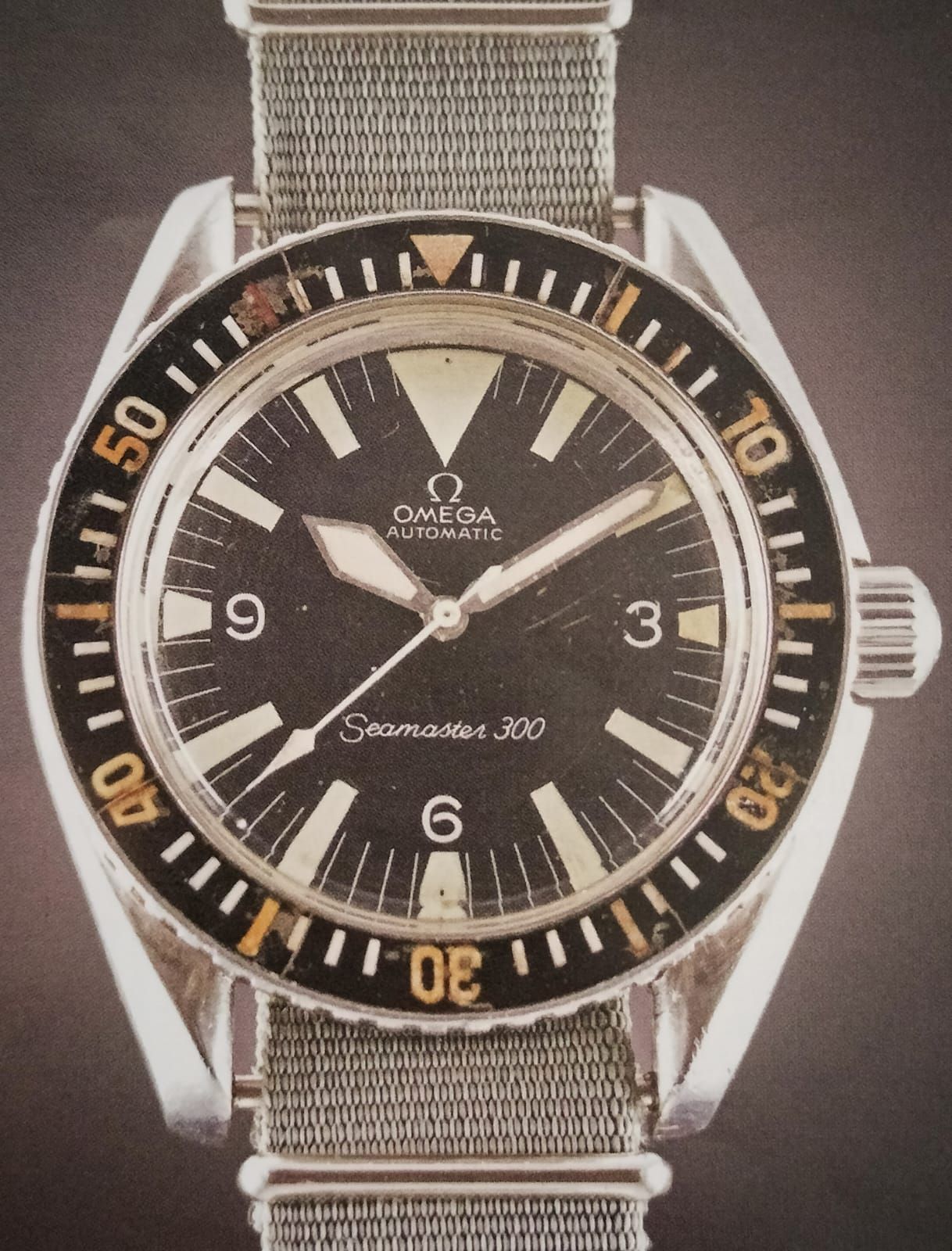
Omega Seamaster 300 — military-issue variant on NATO strap
An Omega Seamaster 300 military-issue variant on a NATO strap — representative of the dive watch specification that Omega established in 1957 as part of the Holy Trinity launch alongside the Speedmaster and Railmaster. The Seamaster 300’s 300m water resistance, rotating bezel, and luminous dial met the specification for professional diving instruments adopted by military diving units worldwide.
Photo: Clyde94 — CC BY-SA 4.0 — Wikimedia Commons
Origins — The 1948 Centenary Watch

Omega Seamaster 300 — military-issue variant on NATO strap
An Omega Seamaster 300 military-issue variant on a NATO strap — representative of the dive watch specification that Omega established in 1957 as part of the Holy Trinity launch alongside the Speedmaster and Railmaster. The Seamaster 300’s 300m water resistance, rotating bezel, and luminous dial met the specification for professional diving instruments adopted by military diving units worldwide.
Photo: Clyde94 — CC BY-SA 4.0 — Wikimedia Commons
In 1948, Omega marked its centenary — one hundred years since Louis Brandt's first workshop in La Chaux-de-Fonds — by launching a new watch that would carry the name Seamaster. The reference CK 2577 was not, by modern standards, a dive watch. It was a water-resistant dress watch: elegantly proportioned, with a polished case and distinctive rounded lugs, powered by the Calibre 269 (later 283), and rated to a practical waterproofing depth of approximately 60 metres. The name itself reflected an aspiration rather than a specification; "Seamaster" signalled that this was a watch that could accompany an active, outdoors-oriented wearer into the water without damage.

The early Seamasters were sold alongside military variants. The British Royal Air Force adopted versions of the early Seamaster as a serviceable and reliable military timepiece, as did elements of the Swiss Army. These military-specification watches differed from civilian versions primarily in their dials — more austere, with higher-contrast legibility — and their straps, which were issued in leather or textile rather than the metal bracelets of civilian models. The basic architecture of the watch, however, was consistent: a solid, dependable Swiss movement in a water-resistant case that had genuine style without pretension.

This early period established the Seamaster's character as a watch for real use — not a jeweller's piece but not an instrument watch either. It occupied the practical middle ground that would define the collection's identity across subsequent decades: capable enough to trust in demanding conditions, refined enough to wear to dinner.


1957 — The Seamaster 300 and Professional Identity

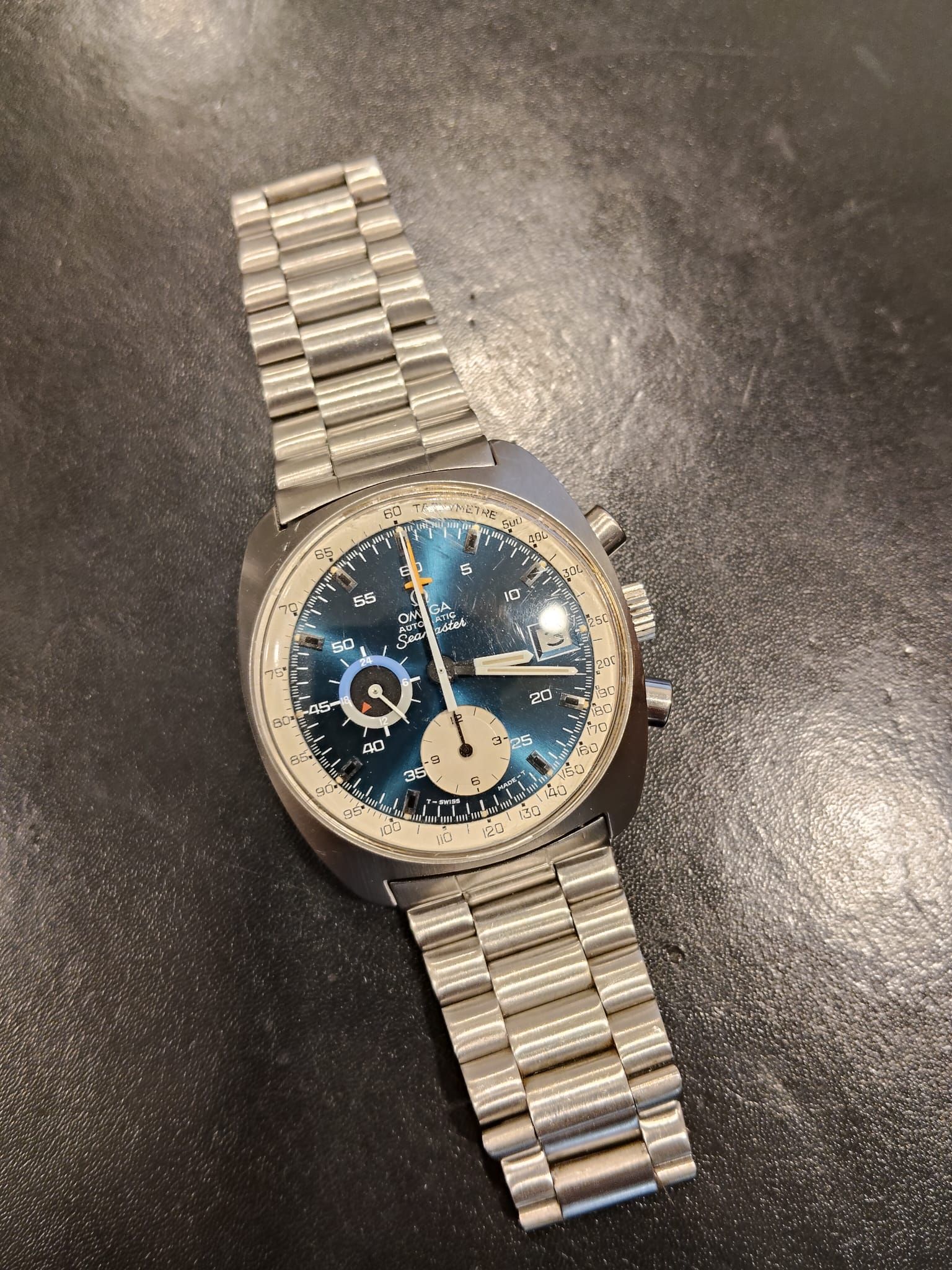
Omega Seamaster Chrono ref. 176.007, 1970s
An Omega Seamaster Chrono reference 176.007 from the 1970s — combining the Seamaster’s dive watch credentials with a chronograph complication. The Seamaster range has expanded across seven decades to encompass professional dive watches, formal dress references, and chronograph variants, united by water resistance specifications and the Seamaster name that Omega first used in 1948.
Photo: EMore98 — CC BY-SA 4.0 — Wikimedia Commons

The year 1957 was transformative for Omega, and the Seamaster in particular. As part of the celebrated Holy Trinity launch — three professional watches introduced simultaneously alongside the Speedmaster and the Railmaster — Omega released the Seamaster 300 in reference CK 2913. This was a genuinely different watch from the 1948 original: not a water-resistant dress watch but a purpose-built professional diver, rated to 200 metres and designed explicitly for underwater use.

The CK 2913 introduced the design vocabulary that would define dive watch aesthetics for decades. The rotating elapsed-time bezel — allowing the diver to track bottom time — was unidirectional, so that accidental bumps would cause it to move in the direction that understated remaining air, never overstated it. The dial featured large, highly luminous applied indices readable at depth in limited visibility. The case was broader and more robustly proportioned than the 1948 original, with crown protection and a screw-down caseback to maintain the 200-metre water resistance rating.

The Seamaster 300's arrival coincided with the emergence of the Rolex Submariner as the defining professional dive watch, and the two references became the twin benchmarks against which all subsequent professional dive watches would be measured. Military adoption followed: the Royal Navy and various European armed forces issued variants of the Seamaster 300 to their divers. The distinctive "Broad Arrow" crown marking on military-issue versions has made these pieces among the most sought-after vintage Omega references.


The 300M Professional — Seamaster Reborn (1993)

Omega Seamaster 300 — military-issue variant on NATO strap
An Omega Seamaster 300 military-issue variant on a NATO strap — representative of the dive watch specification that Omega established in 1957 as part of the Holy Trinity launch alongside the Speedmaster and Railmaster. The Seamaster 300’s 300m water resistance, rotating bezel, and luminous dial met the specification for professional diving instruments adopted by military diving units worldwide.
Photo: Clyde94 — CC BY-SA 4.0 — Wikimedia Commons

For much of the 1960s, 1970s, and 1980s, the Seamaster line continued to develop but did not produce a single reference of the cultural or commercial impact of the 1957 original. That changed comprehensively in 1993, when Omega launched the Seamaster Professional 300M in reference 2541.80 — a watch that would go on to become one of the most recognised luxury dive watches in the world.

The 2541.80 was designed by Yves Piaget, an industrial designer brought in to modernise the Seamaster's aesthetic. His most distinctive contribution was the wave-pattern dial: a subtle, almost topographical texture applied to the dial surface that evokes the movement of water under sunlight. Paired with a luminous applied index set and a printed minute track, the wave dial gave the 300M an immediately recognisable face that was simultaneously functional and beautiful. The blue version became the definitive image of the watch.

Technically, the 1993 300M was a serious professional instrument. The water resistance was rated to 300 metres. The bezel featured a ceramic insert with a unidirectional rotation and 60-minute scale. A helium escape valve at 10 o'clock allowed the watch to be safely depressurised after saturation diving operations. The movement was the Calibre 1120, a refined Swiss automatic; later versions received the Calibre 2220 and, in the major 2018 update, the Co-Axial Master Chronometer Calibre 8800.

The 2018 update was comprehensive: the case grew to 42mm, the bezel received a fully ceramic construction, the mesh bracelet became an available option alongside the rubber strap, and the movement was upgraded to the 8800 — METAS Master Chronometer certified, maintaining -0/+5 seconds per day accuracy after exposure to a 15,000-gauss magnetic field.


James Bond and the Seamaster — A 30-Year Partnership

Omega Seamaster Chrono ref. 176.007, 1970s
An Omega Seamaster Chrono reference 176.007 from the 1970s — combining the Seamaster’s dive watch credentials with a chronograph complication. The Seamaster range has expanded across seven decades to encompass professional dive watches, formal dress references, and chronograph variants, united by water resistance specifications and the Seamaster name that Omega first used in 1948.
Photo: EMore98 — CC BY-SA 4.0 — Wikimedia Commons

No discussion of the Omega Seamaster can proceed very far without addressing its relationship with James Bond. The partnership began with GoldenEye in 1995, when Pierce Brosnan wore the Seamaster Professional 300M in reference 2541.80. The choice ended twenty-six years of the Bond franchise's association with Rolex (Timothy Dalton's last Bond film, Licence to Kill, 1989, featured a Rolex Submariner ref. 16610) and inaugurated what has become the most sustained luxury watch partnership in cinema history.

The specific watches Bond has worn across the Omega era tell a story of the Seamaster collection's own evolution. Brosnan's 2541.80 in GoldenEye (1995) established the template: a blue wave-dial 300M on a metal bracelet. Tomorrow Never Dies (1997) featured the updated reference 2531.80. Die Another Day (2002) saw a further update to the 300M in reference 2220.80.

The transition to Daniel Craig in Casino Royale (2006) brought a notable change: Craig's Bond wore the Seamaster Planet Ocean in reference 2900.50 for much of the film, as well as an Aqua Terra. Skyfall (2012) returned to the 300M, now in the updated 42mm reference 212.30.41.20.01.003. Spectre (2015) made perhaps the most historically aware choice of the Craig era: the vintage-inspired Seamaster 300 in reference 233.32.41.21.01.001, drawing directly on the design vocabulary of the 1957 Holy Trinity original. No Time to Die (2021) brought the titanium Seamaster Diver 300M 007 Edition (ref. 210.62.42.20.01.001) — the most historically considered Bond Seamaster to date.


Seamaster Sub-Collections

Omega Seamaster 300 — military-issue variant on NATO strap
An Omega Seamaster 300 military-issue variant on a NATO strap — representative of the dive watch specification that Omega established in 1957 as part of the Holy Trinity launch alongside the Speedmaster and Railmaster. The Seamaster 300’s 300m water resistance, rotating bezel, and luminous dial met the specification for professional diving instruments adopted by military diving units worldwide.
Photo: Clyde94 — CC BY-SA 4.0 — Wikimedia Commons

The Seamaster name today encompasses four principal sub-collections, each with a distinct identity and target use case.

The Seamaster Diver 300M is the current flagship diver, the direct descendant of the 1993 original. In its 2018 form — 42mm, Co-Axial Master Chronometer Calibre 8800, ceramic bezel, 300m water resistance — it is offered in steel, titanium, and bronze, with a range of dial colours including canonical blue and increasingly popular green.

The Seamaster Aqua Terra occupies a deliberately different position: a sports-luxury watch rather than a professional instrument. Rated to 150 metres, the Aqua Terra features the distinctive "teak-pattern" dial, a more refined case, and the Co-Axial Master Chronometer movement. A dedicated page at /horological-history/omega/seamaster/aqua-terra covers the Aqua Terra's history in full.

The Seamaster Planet Ocean is the most capable diver in the family, rated to 600 metres. Its larger case and greater depth communicate its professional saturation diving heritage. Full coverage is available at /horological-history/omega/seamaster/planet-ocean.

The Seamaster 300 — distinct from the 300M — is the heritage revival model, drawing directly on the 1957 CK 2913's design language, introduced in modern form for Spectre (2015).


Comparing the Seamaster to the Rolex Submariner

The comparison between the Omega Seamaster 300M and the Rolex Submariner is one of the most frequently made in watch enthusiast communities. At retail, both fall in the roughly $5,000 to $12,000 range depending on reference and configuration.

The Seamaster's principal technical advantage is its movement. The Co-Axial Master Chronometer Calibre 8800 is a more mechanically sophisticated design than the Rolex Calibre 3235 — the co-axial escapement genuinely reduces friction in a measurable way, and the METAS Master Chronometer certification represents a more demanding real-world accuracy standard than COSC. Omega also offers more dial colour variants and case material options.

The Submariner's advantages lie primarily in brand positioning and secondary market performance. Desirable Submariner references frequently trade above retail on the secondary market, something less consistently true of the Seamaster. The Oyster case's legendary robustness and the Submariner's nearly seventy-year design continuity give it a solidity of identity that is genuinely compelling.

Neither watch is objectively superior. The choice is a matter of values: movement technology and design variety (Seamaster) versus brand prestige, secondary market strength, and design continuity (Submariner).


Collecting Vintage Seamasters

The CK 2913 "Broad Arrow" (1957–1962) is the most historically important vintage Seamaster — the first true dive watch in the collection. Military-issue examples with the broad arrow crown marking command particular premiums. Prices for civilian examples range from approximately $3,000 to $8,000; military-specification pieces can exceed $15,000.

The reference 166.024 "PloProf" (1970) is one of the most unusual Seamasters ever produced. Designed in collaboration with the Comex diving company for professional saturation diving, the PloProf features an unusual oval case and an orange-accented crown protector. Examples in collector-grade condition sell from approximately $5,000 to $20,000.

The reference 2541.80 (1993 original, first-generation 300M) is the Bond watch — the specific reference worn by Pierce Brosnan in GoldenEye. Pre-owned examples in good condition are available in the $800 to $2,500 range, making them among the most accessible pieces of genuinely significant watch history in the current market.


Latest News

Frequently Asked Questions

Is the Seamaster a good dive watch?
Yes — comprehensively. The current Seamaster Diver 300M is rated to 300 metres, features a helium escape valve for saturation diving, and is powered by the Co-Axial Master Chronometer Calibre 8800, METAS-certified for accuracy and magnetic resistance to 15,000 gauss.

Which Seamaster did James Bond wear?
Bond has worn multiple Seamaster references. Pierce Brosnan wore the 300M (references 2541.80 and 2531.80, 1995–2002). Daniel Craig wore the Planet Ocean (2006–2010), the 300M in Skyfall (2012), the vintage-inspired Seamaster 300 in Spectre (2015), and the titanium Seamaster Diver 300M 007 Edition in No Time to Die (2021).

Seamaster vs. Submariner — which should I buy?
Choose the Seamaster if you prioritise movement technology (Co-Axial escapement, Master Chronometer certification), dial variety, and design options. Choose the Submariner if you prioritise Rolex brand prestige, stronger secondary market performance, and the Oyster case's design legacy. Either decision is a sound one.


Related Articles

Recent Posts

By Zach Charles • October 10, 2026
Hamilton's American Classic Cushion Mechanical revives its 1926 Art Deco cushion watches, seen in Oppenheimer, in 30mm and 34mm with the new hand-wound…
Doxa SUB 200: The Accessible Everyday Diver
By Zach Charles • October 10, 2026
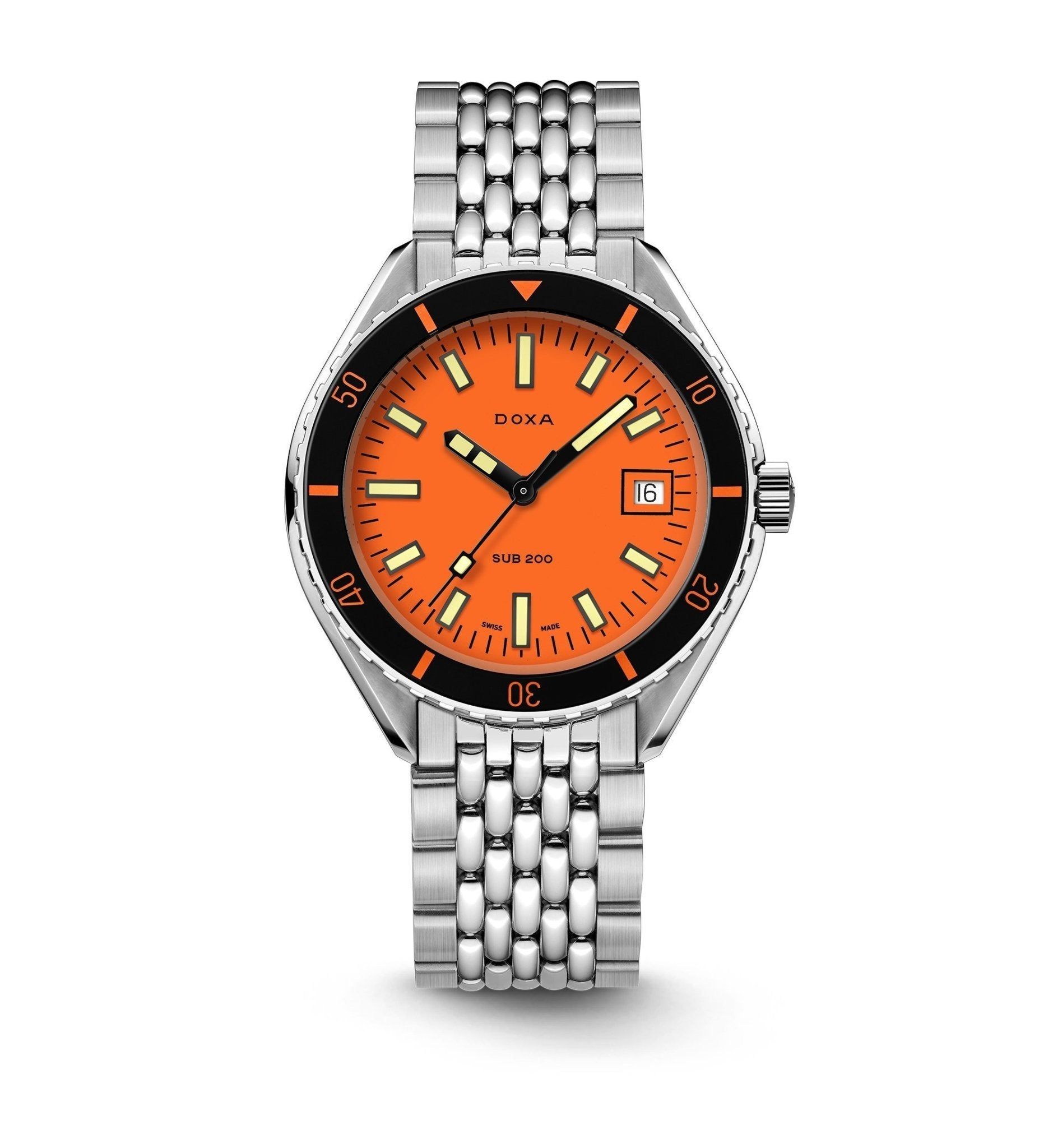
Complete guide to the Doxa SUB 200 — 42mm, 200m, four colorways, Sellita SW200-1. The accessible entry to the Doxa SUB family with the full…
By Zach Charles • October 10, 2026
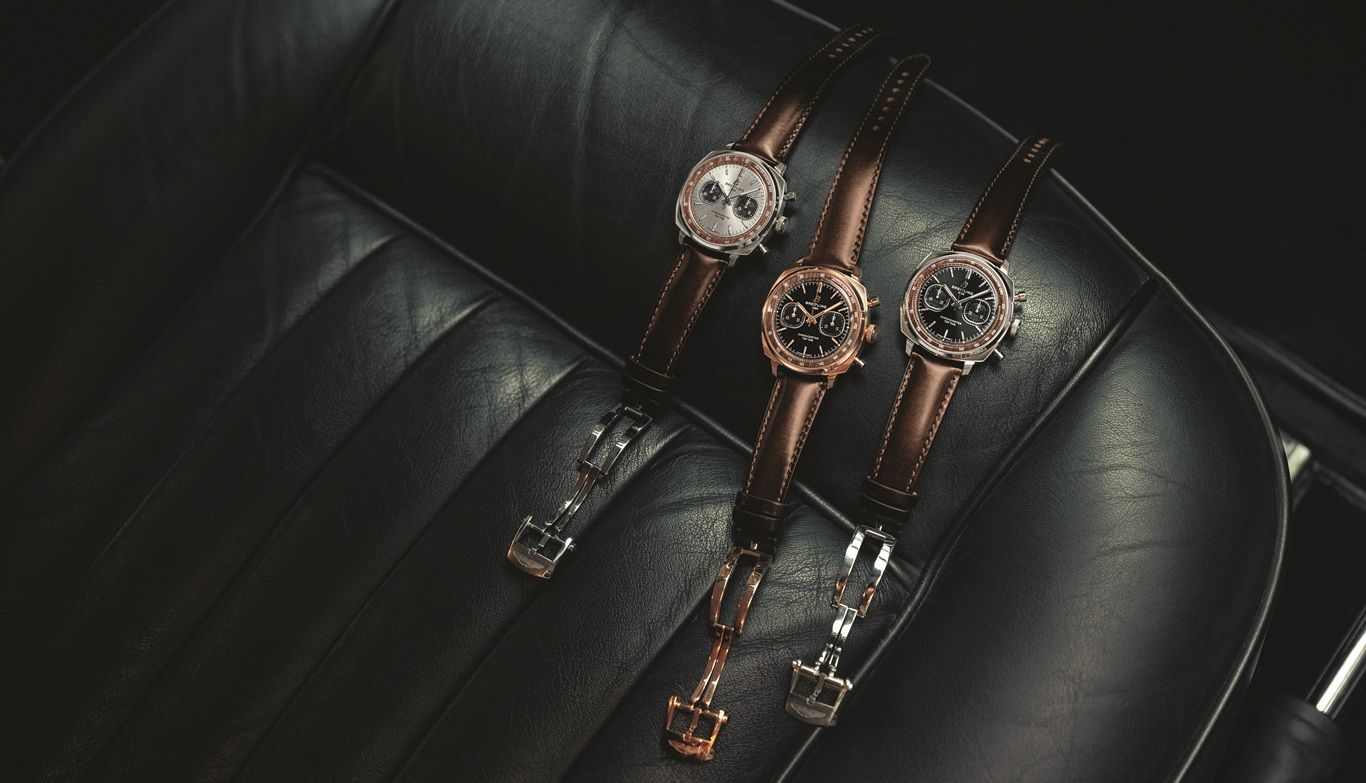
The Breitling Top Time B01 Aston Martin DB5 pairs a cushion-shaped 41mm case, a wooden inner ring and the in-house Caliber 01 across three limited…
By Zach Charles • October 10, 2026
TAG Heuer developed the Mikrograph (2011, 1/100th second), Mikrotimer Flying 1000 (2011, 1/1000th second), and Mikrogirder (2012, 1/2000th second).
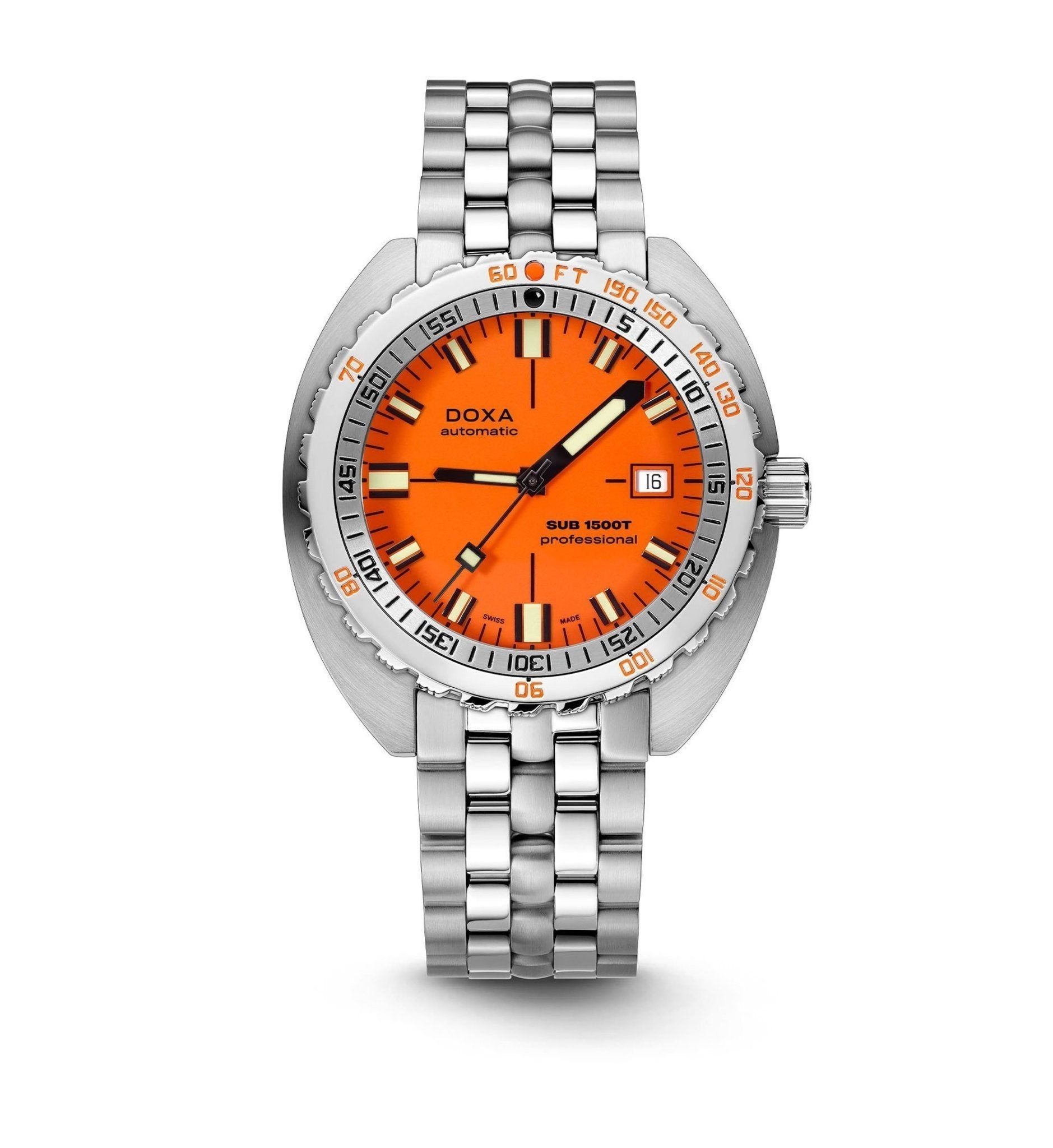
Doxa SUB 1500T: The 1,500-Metre Depth-Rating Flagship
By Zach Charles • October 10, 2026
Complete guide to the Doxa SUB 1500T — 45mm, 1,500m depth rating, helium escape valve, ETA 2892-2 movement, USD 2,690.
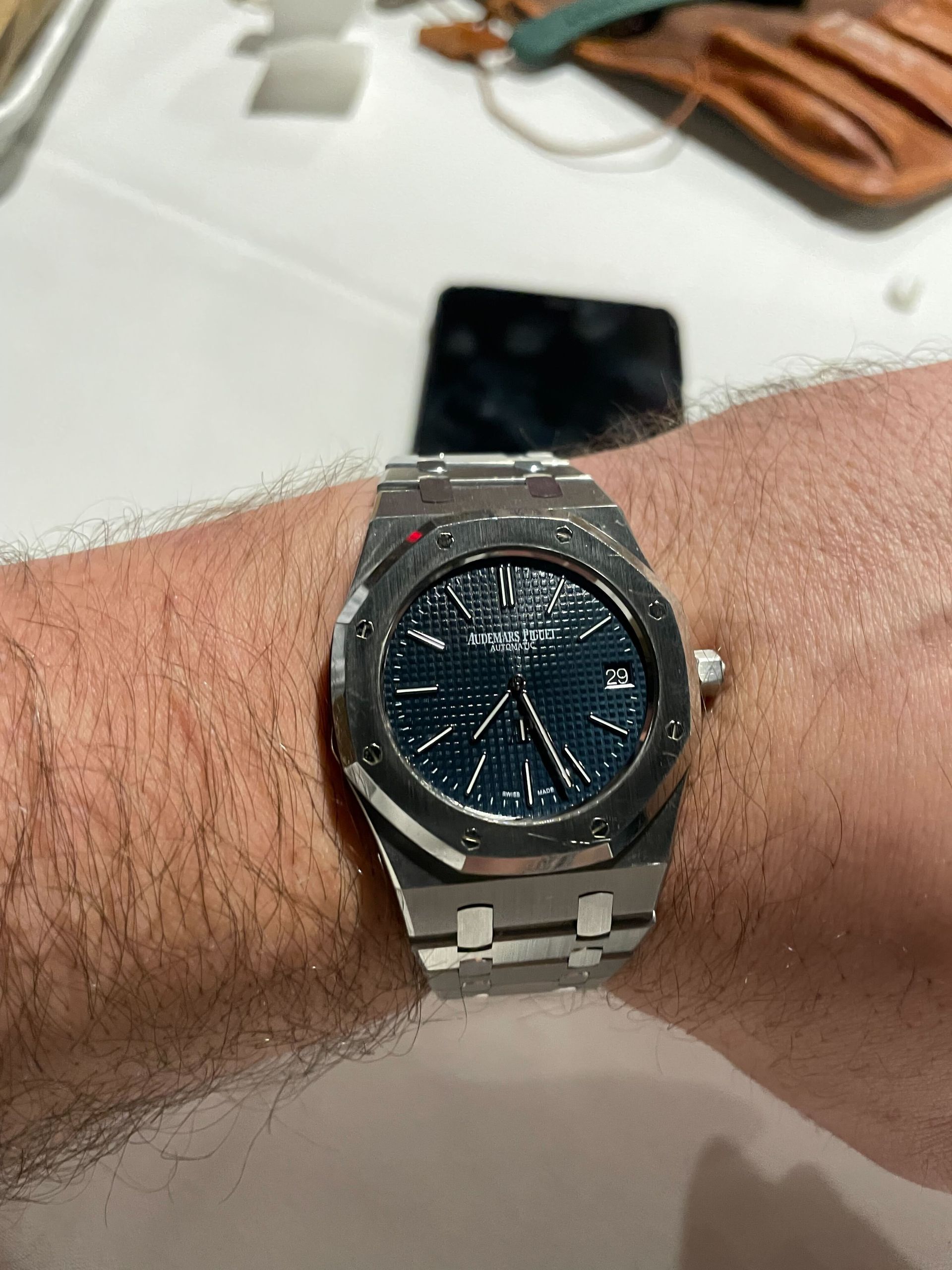
Audemars Piguet Royal Oak 'Jumbo' ref. 15202 with blue tapisserie dial and integrated steel bracelet
By Zach Charles • October 10, 2026
The Audemars Piguet × Swatch Royal Pop is a $400 bioceramic pocket watch in 8 colourways, powered by a new hand-wound SISTEM51 with 90+ hour power…

Time on the Move logo
By Zach Charles • October 10, 2026
Zach Charles is the editor of Time on the Move, an independent watch reference covering brand and model histories, buying guides and release news…
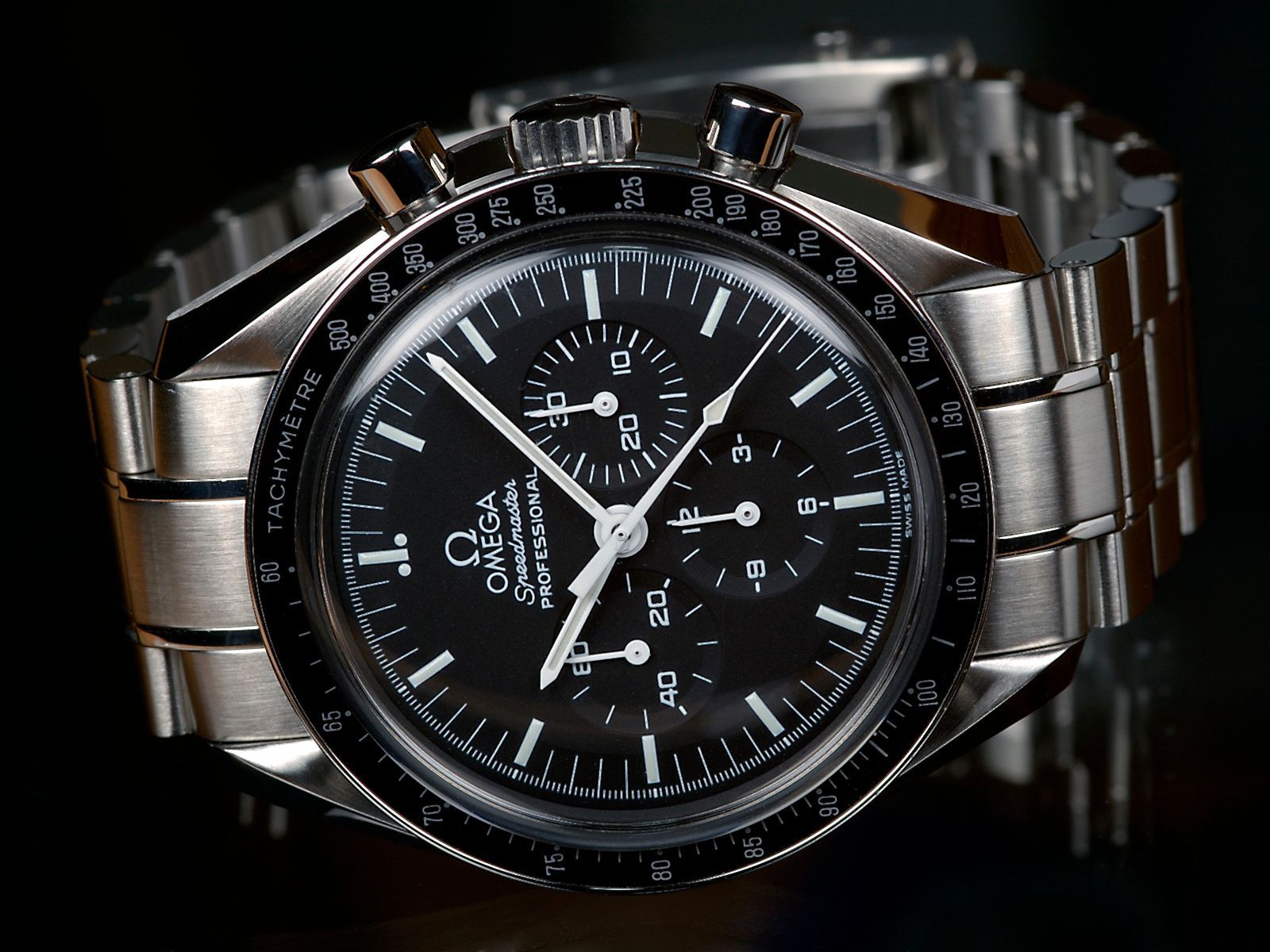
Omega Speedmaster Professional 'Moonwatch' chronograph, front view on steel bracelet
By Zach Charles • October 9, 2026
Find the best watches at every price point from $500 to $15,000 — new and pre-owned. Covers every budget tier with specific reference picks, brand…
By Zach Charles • October 9, 2026
The latest watch news: new releases, Watches and Wonders coverage, discontinuations, industry analysis, and market trends. Currently 1 article.
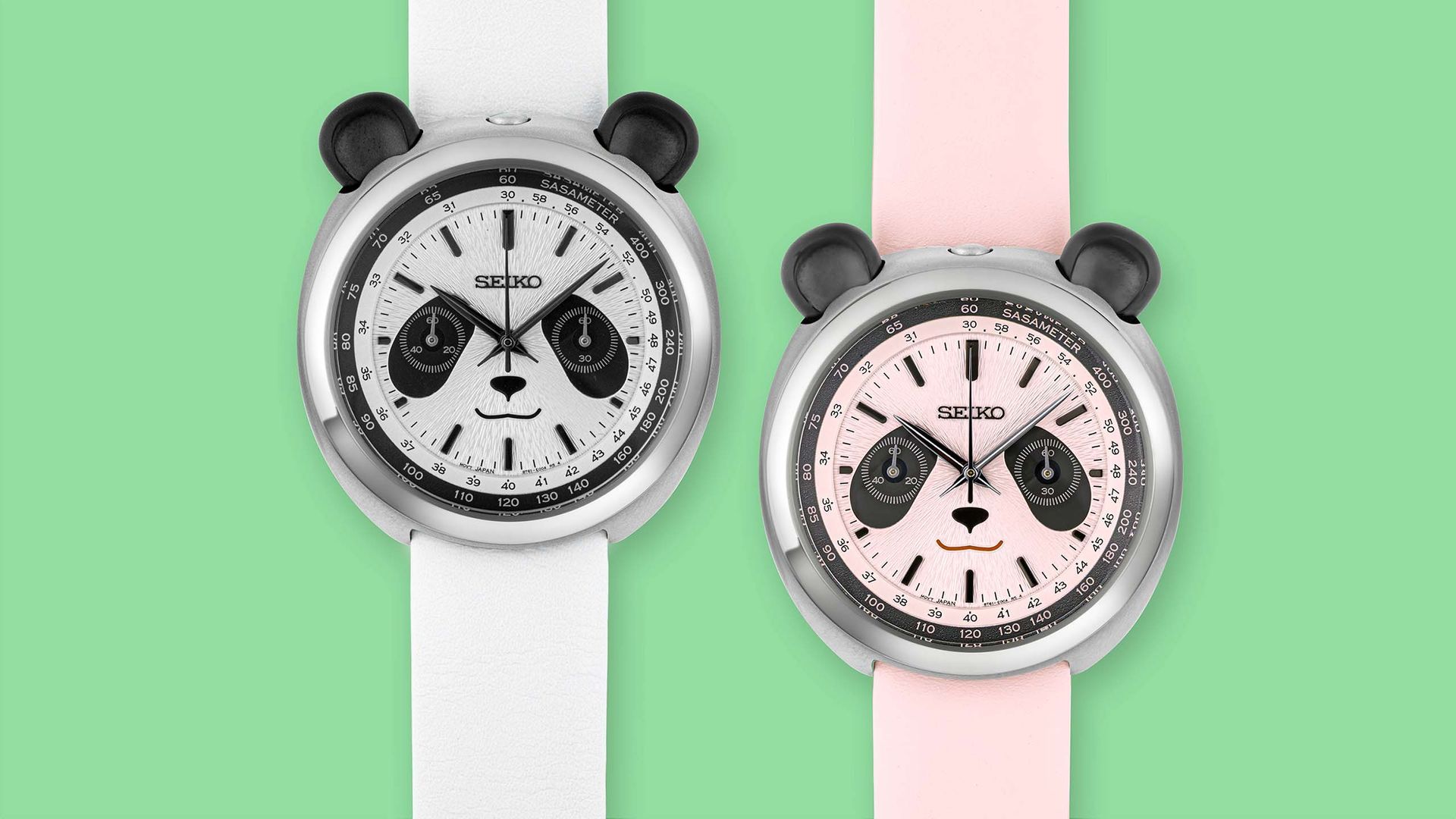
Seiko's New Panda Chronograph Is Literally a Panda: The Power Design Project HHK001 and HHK002
By Zach Charles • October 8, 2026
Seiko's Power Design Project panda chronograph (HHK001, HHK002) turns the panda dial into an actual panda face, with ear pushers, a 'Sasameter' and a 3D…
Show More