
Jaeger-LeCoultre: The Manufacture That Built the Swiss Watch Industry

Zach Charles • August 9, 2026

Share this article

Jaeger-LeCoultre: The Great Watchmaker of the Vallée de Joux

The Vallée de Joux is a long, narrow valley in the Swiss Jura, high enough that the ground freezes from October through April. Farmers in the valley took up watchmaking during the winter months in the eighteenth century — it was precise indoor work that required no large equipment — and over generations the valley became one of the most concentrated centres of horological expertise in the world.

Antoine LeCoultre was born into this tradition in 1803. What he built from it was something different in scale: not a cottage workshop but a manufacture capable of producing every component of a watch movement under one roof, beginning with raw metal and ending with a finished calibre. By the time the collaboration with Edmond Jaeger was formalised as Jaeger-LeCoultre in 1937, the manufacture had invented more than it is usually given credit for, supplied movements to firms whose names are better known than its own, and established a depth of technical capability that remains among the most complete in Swiss watchmaking.


Jaeger-LeCoultre Reverso — iconic art deco flip-case wristwatch
A Jaeger-LeCoultre Reverso — the pivoting rectangular case introduced in 1931 for polo players in British India, allowing the sapphire crystal to be protected by flipping to expose the plain metal back.
Photo: Tiberido — CC BY-SA 4.0 — Wikimedia Commons

Antoine LeCoultre and the Founding of the Manufacture

LeCoultre & Co. share certificate, 1899
A LeCoultre & Co. share certificate from 1899 — documenting the company’s corporate structure at the height of its role as a movement supplier to the Swiss and international watch industry, decades before the formal merger with Edmond Jaeger.
Photo: LeCoultre & Co. — Public Domain — Wikimedia Commons

Antoine LeCoultre established his workshop in Le Sentier in 1833 . The valley already had watchmakers, but LeCoultre's ambition was integration: he wanted to bring the scattered cottage-industry tasks of pinion-cutting, wheel-making, movement assembly, and finishing under a single structure.

In 1844 he invented the Millionomètre — an instrument capable of measuring to one-thousandth of a millimetre, making it the first practical tool for measuring dimensions at the micron level. The Millionomètre enabled precision that the existing instruments could not achieve, and it made the manufacture of interchangeable parts — parts that fitted without individual adjustment — possible at scale.

In 1847 he introduced a keyless winding and setting system , replacing the key that pocket watches of the era required for winding. The stem-and-crown system became the standard.

By 1866 the manufacture had consolidated into LeCoultre & Cie. , employing approximately 500 people and operating as the first fully integrated watchmaking manufactory in the Vallée de Joux. The firm became known locally as the "Grande Maison" — the Great House.


Edmond Jaeger and the Calibre That Changed Everything

Atmos clock prototype, Jaeger-LeCoultre — Gewerbemuseum, Nuremberg
An Atmos clock prototype by Jaeger-LeCoultre from the Karl Gebhardt Horological Collection at the Gewerbemuseum, Nuremberg — the Atmos requires no winding, drawing energy solely from ambient temperature fluctuations of as little as 1°C.
Photo: Daderot — CC0 1.0 Universal — Wikimedia Commons

In 1903 , Paris-based watchmaker Edmond Jaeger — who supplied ultra-thin movements to the French Navy and to luxury clockmakers — issued a challenge to Swiss manufacturers: could anyone produce the ultra-thin movements he had designed? Jacques-David LeCoultre , Antoine's grandson, accepted.

The collaboration produced the world's thinnest pocket watch in 1907 : a movement measuring 1.38mm thick, using the in-house Calibre 145 . The technical barrier Jaeger had described had been cleared.

The partnership formalised in 1937 , when the combined brand name Jaeger-LeCoultre was officially registered.


The Manufacture That Made Other Manufactures

Jaeger-LeCoultre Memovox model E855 with Calibre K825
A Jaeger-LeCoultre Memovox model E855 with the Calibre K825 — the first automatic wristwatch alarm movement (1956), with the date complication added circa 1959, establishing the Memovox as a technical milestone in the brand’s history.
Photo: Ghilt — CC BY-SA 3.0 — Wikimedia Commons

One of Jaeger-LeCoultre's less-publicised roles in Swiss watchmaking history is as the movement supplier to firms whose names dominate the market. For approximately 30 years from 1902 , LeCoultre & Cie. supplied the majority of movement blanks to Patek Philippe . In the 1960s, Patek again turned to JLC calibres to cover production requirements.

The Calibre 920 , introduced in 1967 , was designed at JLC but never used internally — it was sold as an ébauche to three other manufactures:
- Audemars Piguet , which used it as the Calibre 2121 in the Royal Oak
- Patek Philippe , which used it as the Calibre 28-255 in the original Nautilus reference 3700/1A (1976–1981)
- Vacheron Constantin , which adopted it as the Calibre 1120 and continues using it today

At 2.45mm thick with a full-sized rotor, the 920 was the world's thinnest automatic movement at the time of its introduction. Three of watchmaking's most celebrated watches of the 1970s — the Royal Oak, the Nautilus, the Vacheron Patrimony — share a movement origin.

The Calibre 889 family was similarly supplied in ébauche form to Audemars Piguet, Breguet, IWC, Vacheron Constantin, Chopard, and Cartier, among others.

This supply role has obscured JLC's stature in the broader market. The firm that made the movements inside many of the most coveted watches of the twentieth century has historically operated with less collector visibility than the brands that wore its calibres.


Calibre 101 — The World's Smallest Mechanical Movement

In 1929 , JLC introduced the Calibre 101 — the world's smallest mechanical watch movement, a record it has never relinquished.

Specifications:
- Dimensions: 14.0mm × 4.8mm , 3.4mm thick
- Weight: approximately 1 gram (original 74-part version)
- Components: currently 98 parts
- Jewels: 19
- Frequency: 21,600 vph (3 Hz)
- Power reserve: 33 hours

The Calibre 101 grew from the "Duoplan" architecture of 1925, which used a stacked dual-level layout to achieve minimal footprint. The movement has been in continuous production since its introduction — currently used in the Calibre 101 Secrets collection.

Its most prominent public appearance was at the coronation of Queen Elizabeth II in 1953 , where the Queen wore a Calibre 101-powered watch — a logical choice for a movement small enough to disappear into bracelet jewellery.


Manufacture Scale — What the Numbers Mean

Jaeger-LeCoultre Reverso, 2011 edition
A Jaeger-LeCoultre Reverso from 2011 — the modern interpretation of the 1931 original, retaining the swivelling rectangular case with updated movement and finishing.
Photo: Provo rossi — CC BY 4.0 — Wikimedia Commons

Jaeger-LeCoultre has produced over 1,400 different calibres across its history and holds more than 430 patents . The company uses the marketing phrase "Thousand and One Inventions" — the patents and calibre count are the verifiable underpinning of the claim.

More significant than the count is the depth of integration. JLC is among a small number of manufactures that produces its own escapements, mainsprings, and jewels — components that most Swiss firms purchase from external suppliers. This is what "integrated manufacture" means in practice: the ability to begin with raw material and produce a finished movement without external dependencies.

The 1000 Hours Control testing standard, introduced in 1992 alongside the Master Control collection, applies this integration to quality assurance: every JLC watch passes up to six weeks of continuous testing in the fully cased state, across multiple positions, temperatures, and simulated wear conditions.


Richemont and the Modern Era

Casa Fagliano leather strap on a Jaeger-LeCoultre Reverso
A Casa Fagliano leather strap on a Jaeger-LeCoultre Reverso — the Argentine leather atelier has supplied straps for the Reverso since 1931, a partnership that reflects the watch’s original connection to the polo circuit.
Photo: Provo rossi — CC BY-SA 4.0 — Wikimedia Commons
In 2000 , Richemont acquired Jaeger-LeCoultre as part of a broader purchase of Les Manufactures Horlogères SA (LMH) — a package that also included IWC Schaffhausen and A. Lange & Söhne — for CHF 2,800 million. Separately, Richemont acquired the outstanding 40% stake in Manufacture Jaeger-LeCoultre SA (previously held by the Audemars Piguet group) for CHF 280 million. Both transactions completed in 2000.

The acquisition placed JLC within a luxury conglomerate structure while preserving Le Sentier as the manufacture's base. Under Richemont ownership, JLC has continued its pattern of technical ambition: the Reverso Grande Complication à Triptyque (2006), the Hybris Mechanica 55 trilogy (2009), the Master Ultra Thin Squelette (2015), and the Reverso Quadriptyque Calibre 185 (2021) have each extended what wristwatch mechanics can do.


Collections

The Jaeger-LeCoultre catalogue organises around several core families:

  • Reverso — the swiveling rectangular case, introduced 1931, the most recognisable JLC design
  • Master Control — the flagship dress watch line since 1992, home of the 1000 Hours Control standard
  • Master Ultra Thin — ultra-thin dress watches built around Calibre 849 and Calibre 920 architecture
  • Atmos — the perpetual-motion clock, powered by temperature differentials, in production since 1935
  • Polaris — the sports and diving line, revived in 2018 from the original 1965 Memovox Polaris
  • Memovox — the alarm complication line, from the world's first automatic alarm wristwatch in 1956
  • Duomètre — the Dual-Wing movement architecture, introduced 2007
  • Grand Complications / Hybris Mechanica — the manufacturer's most complex creations
  • Rendez-Vous — the women's round-case collection launched 2012


Frequently Asked Questions

When was Jaeger-LeCoultre founded?
Antoine LeCoultre established his workshop in Le Sentier, Vallée de Joux, in 1833. The firm formalised as LeCoultre & Cie. in 1866. The combined Jaeger-LeCoultre name was officially registered in 1937 following decades of collaboration with Paris-based watchmaker Edmond Jaeger.

What is the Calibre 101?
The world's smallest mechanical watch movement, introduced by JLC in 1929. Dimensions: 14.0mm × 4.8mm × 3.4mm thick, 98 components, 19 jewels, 33-hour power reserve. In continuous production since 1929; worn by Queen Elizabeth II at her 1953 coronation.

Did JLC supply movements to Patek Philippe?
Yes — for approximately 30 years from 1902, LeCoultre & Cie. supplied the majority of movement blanks to Patek Philippe. The Calibre 920 (1967), designed at JLC and sold as an ébauche, was used by Patek Philippe as the Calibre 28-255 in the original Nautilus reference 3700/1A.

What is the 1000 Hours Control?
JLC's proprietary testing standard introduced in 1992. Every JLC watch passes up to six weeks of continuous testing in the fully cased state — across multiple positions, three temperature points, and simulated daily wear — before leaving the manufacture. Unlike COSC, which tests only the movement, the 1000 Hours Control tests the complete cased watch.

Who owns Jaeger-LeCoultre?
Richemont, the Swiss luxury group, acquired JLC in 2000 as part of a larger transaction that also included IWC and A. Lange & Söhne.


Related Articles

Recent Posts

By Zach Charles • October 10, 2026
Hamilton's American Classic Cushion Mechanical revives its 1926 Art Deco cushion watches, seen in Oppenheimer, in 30mm and 34mm with the new hand-wound…
Doxa SUB 200: The Accessible Everyday Diver
By Zach Charles • October 10, 2026
Complete guide to the Doxa SUB 200 — 42mm, 200m, four colorways, Sellita SW200-1. The accessible entry to the Doxa SUB family with the full…
By Zach Charles • October 10, 2026
The Breitling Top Time B01 Aston Martin DB5 pairs a cushion-shaped 41mm case, a wooden inner ring and the in-house Caliber 01 across three limited…
By Zach Charles • October 10, 2026
TAG Heuer developed the Mikrograph (2011, 1/100th second), Mikrotimer Flying 1000 (2011, 1/1000th second), and Mikrogirder (2012, 1/2000th second).
Doxa SUB 1500T: The 1,500-Metre Depth-Rating Flagship
By Zach Charles • October 10, 2026
Complete guide to the Doxa SUB 1500T — 45mm, 1,500m depth rating, helium escape valve, ETA 2892-2 movement, USD 2,690.
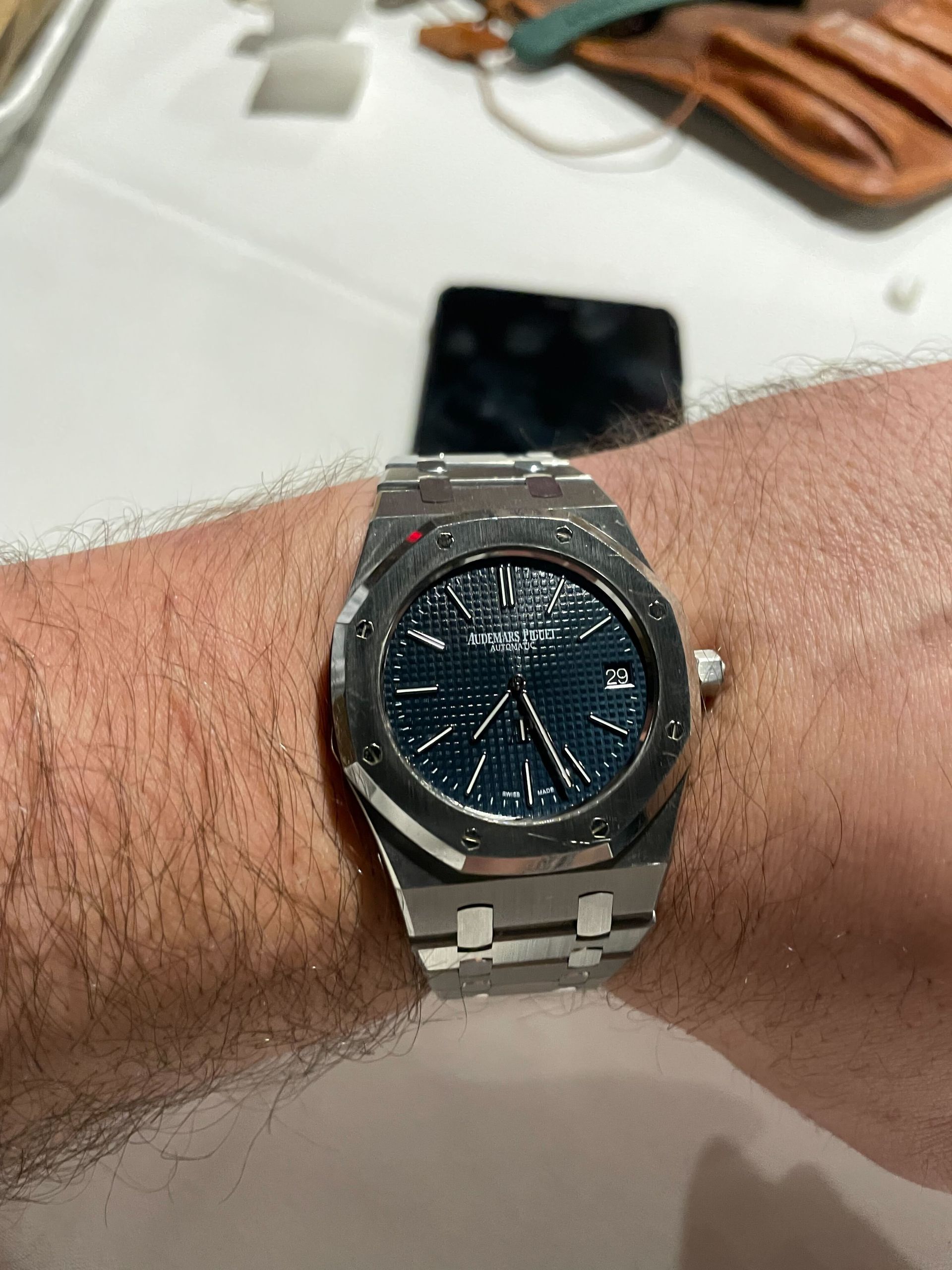
Audemars Piguet Royal Oak 'Jumbo' ref. 15202 with blue tapisserie dial and integrated steel bracelet
By Zach Charles • October 10, 2026
The Audemars Piguet × Swatch Royal Pop is a $400 bioceramic pocket watch in 8 colourways, powered by a new hand-wound SISTEM51 with 90+ hour power…

Time on the Move logo
By Zach Charles • October 10, 2026
Zach Charles is the editor of Time on the Move, an independent watch reference covering brand and model histories, buying guides and release news…
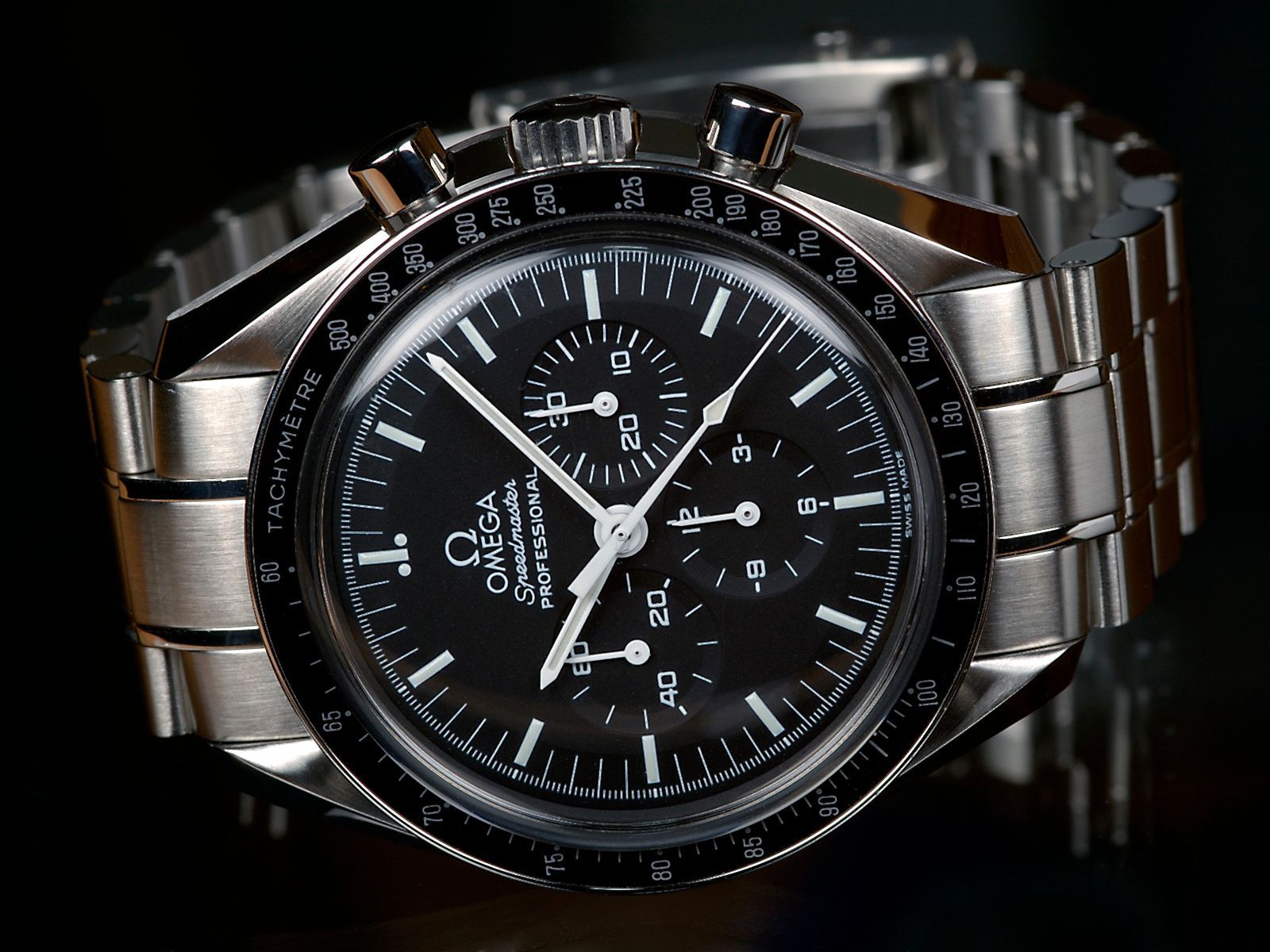
Omega Speedmaster Professional 'Moonwatch' chronograph, front view on steel bracelet
By Zach Charles • October 9, 2026
Find the best watches at every price point from $500 to $15,000 — new and pre-owned. Covers every budget tier with specific reference picks, brand…
By Zach Charles • October 9, 2026
The latest watch news: new releases, Watches and Wonders coverage, discontinuations, industry analysis, and market trends. Currently 1 article.
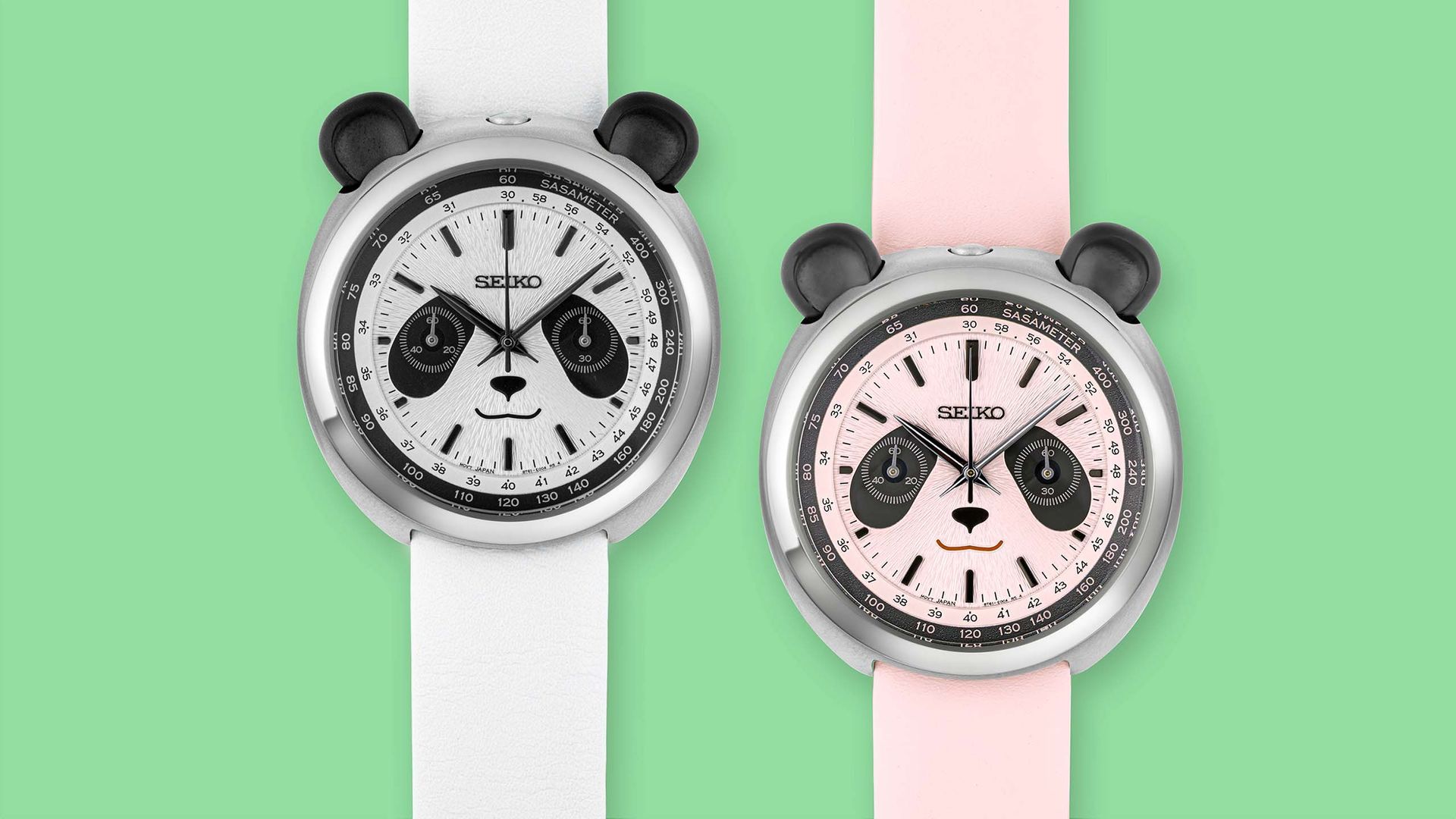
Seiko's New Panda Chronograph Is Literally a Panda: The Power Design Project HHK001 and HHK002
By Zach Charles • October 8, 2026
Seiko's Power Design Project panda chronograph (HHK001, HHK002) turns the panda dial into an actual panda face, with ear pushers, a 'Sasameter' and a 3D…
Show More