Cartier Tank: History of the Rectangular Watch Icon
Cartier Tank: The Watch That Defined Dress Watch Design
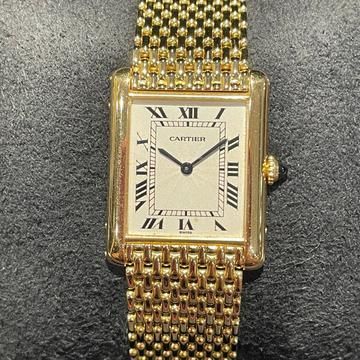
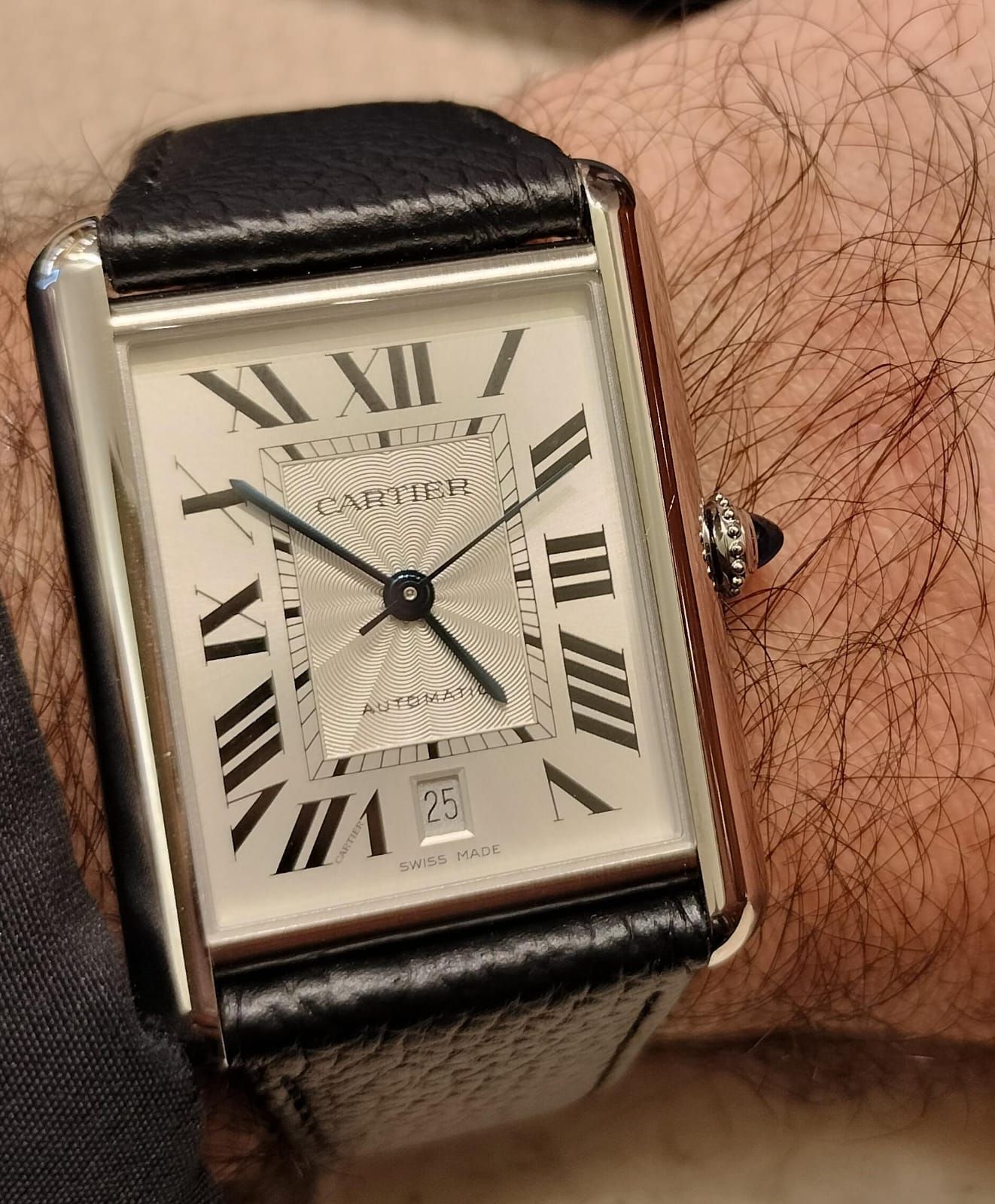
The Cartier Tank is the most continuously produced watch design in history. From its first commercial references in 1919 to the watches on sale in Cartier boutiques today, the Tank's fundamental architecture has remained unchanged: two parallel side rails extending beyond the rectangular case, a clean dial with Roman numerals and blue sword hands, a crown set with a blue sapphire cabochon. That this design, created during the First World War, should remain not merely relevant but genuinely desirable more than a century later is either a tribute to Louis Cartier's genius or evidence that he arrived at something genuinely universal in the geometry of a watch case.
The Tank's cultural history is as remarkable as its design history. Rudolph Valentino wore one. The Duke and Duchess of Windsor wore them. Jacqueline Kennedy Onassis wore a Tank Louis Cartier for most of her adult life and was buried wearing it. Andy Warhol famously declined to wear his — "I don't wear a Tank to tell the time; I wear a Tank to know time is passing" — in a formulation that captures both the Tank's status as cultural object and Warhol's gift for turning objects into statements. Princess Diana, Muhammad Ali, Gary Cooper, Michelle Obama: the Tank's list of famous wearers is effectively a cultural history of the twentieth century.
Understanding the Tank means understanding both the watch it is and the watches it inspired, since virtually every rectangular dress watch made since 1919 is a response to what Cartier established.
Photo: EMore98 — CC BY-SA 4.0 — Wikimedia Commons
Design Origins — The Western Front (1917)
Photo: EMore98 — CC BY-SA 4.0 — Wikimedia Commons
Louis Cartier designed the Tank in 1917 after visiting the Western Front and observing the Renault FT tank in operation. The Renault FT — first deployed by French forces in 1917 — was the world's first modern tank, with a rotating turret and the track system that became the template for tank design throughout the twentieth century. It was the tracks that interested Louis Cartier: the way they extended beyond the body of the vehicle, providing the structural system that held the entire machine together.
The Tank's case reproduces this architecture in miniature. The dial sits within a rectangular case; extending from that case along the sides are the "brancards" — rails, the French military term for stretcher handles — which run parallel to the dial face and extend slightly beyond it at top and bottom. These brancards serve a visual function: they frame the dial, create the watch's distinctive silhouette, and connect the case to the strap in a way that makes the whole object read as a single piece rather than a case with a strap attached.
The first Tank was presented to General John Pershing, commander of the American Expeditionary Forces, in 1917 as a gift from Louis Cartier. It is not certain whether this was a single prototype or one of a small initial production run; what is established is that the Tank reached commercial production in 1919, when Cartier sold six pieces. Those six watches — if they survive in knowable condition — would be among the most historically significant objects in watchmaking.
The Tank Family — Major References
Photo: EMore98 — CC BY-SA 4.0 — Wikimedia Commons
The Tank has expanded into a family of related designs over more than a century of production. The core references are distinct in architecture while sharing the fundamental Tank vocabulary.
Tank Louis Cartier : The most classical and historically direct Tank reference, named posthumously for Louis Cartier. The brancards are straight and clean; the case has no decoration beyond the case architecture itself; the overall effect is of a watch reduced to its essential geometry. This is the reference that Jacqueline Kennedy Onassis wore for decades.
Tank Américaine : Introduced in the 1990s, the Américaine has a curved case — the bracelet of the case is arched to follow the wrist's curvature rather than lying flat. This creates a more three-dimensional profile and a comfortable fit on the wrist that the flat Tank Louis Cartier does not provide. The Américaine is typically offered in yellow gold and is the most overtly luxurious Tank variant.
Tank Française : The Tank Française, introduced in 1996, is the Tank most directly influenced by the integrated bracelet philosophy of the 1970s sports watch. The brancards flow directly into a metal bracelet without any transition point, creating a coherent case-bracelet object in the manner of the Panthère or the Santos. The Tank Française in steel is one of Cartier's most commercially significant references.
Tank Solo : The entry-level Tank, introduced in 2004 as an accessible reference in steel. The Solo maintains the Tank Louis Cartier's case geometry but simplifies the finishing and movement. At approximately $2,500–$3,500, the Tank Solo has served as the entry point to Tank ownership for a generation of buyers.
Tank Must : The Tank Must name was originally applied to vermeil (gold-plated silver) Tank references introduced in the 1970s as part of the broader "Les Must de Cartier" programme that democratised the Tank. The contemporary Tank Must, relaunched in 2021, is available in steel with coloured lacquer dials — green, red, and blue were the launch colours — in a deliberate reference to the colourful 1970s originals. The Tank Must has been among Cartier's most commercially successful recent introductions.
Cintrée : The rarest Tank variant in historical production. The Cintrée ("curved" in French) has a very long, narrow case with a pronounced longitudinal curve — effectively the opposite of the Américaine, which curves transversely. The Cintrée was produced in the 1920s and is today among the most sought-after vintage Cartier references.
Movements
Photo: EMore98 — CC BY-SA 4.0 — Wikimedia Commons
The Tank's long production history spans the full range of Cartier's movement procurement strategy, from purchased Swiss lever movements in the early decades to purchased ETA movements in the mid-century to Cartier's own Manufacture calibres today.
Vintage movements (pre-1970): early Tanks used movements purchased from Swiss ébauche makers and finished to Cartier's specification. These are hand-wound movements of varying quality, reliable when properly serviced but not comparable to contemporary manufacture calibres.
ETA period (approximately 1970–2000): Cartier used ETA-supplied movements across most of its range, including the Tank. The ETA 2671 automatic and various quartz calibres powered most production during this period. These movements are excellent in their class — the ETA 2671 is among the most reliable small automatic calibres ever made — but represent purchased rather than in-house technology.
Cartier Manufacture calibres (2000s–present): Cartier's investment in in-house movement production began seriously in the early 2000s and produced the Calibre 1847 MC (automatic) and the Calibre 1904 MC (automatic, 48-hour power reserve), among others. Most current Tank references use either these in-house calibres or quartz movements. The quartz Cal. 157 remains standard in entry-level references; the Calibre 1847 MC is used in mid-range references.
Cultural History
Photo: EMore98 — CC BY-SA 4.0 — Wikimedia Commons
The Tank's cultural history is not simply a list of famous owners; it is an ongoing argument about what luxury means and who deserves to express it. Several clusters of association stand out.
Hollywood and glamour (1920s–1960s) : The Tank's first half-century was dominated by associations with cinematic and aristocratic glamour. Rudolph Valentino's Tank appeared in studio photographs that defined male elegance for the 1920s. Gary Cooper, Cary Grant, and Clark Gable all wore Tanks. This was the Tank as masculine dress jewellery — not a tool, not a sports watch, but an object of refinement worn by men for whom refinement was itself a value.
Intellectual and artistic credibility (1960s–1980s) : The Tank's second act aligned it with intellectual and artistic figures who wore it as a statement of seriousness rather than luxury. Andy Warhol's famous formulation — the Tank as a way to know time is passing rather than to tell it — captures this perfectly. Yves Saint Laurent, Truman Capote, and Muhammad Ali all wore Tanks during this period, creating an association between the watch and a certain kind of cultural intelligence.
Enduring femininity : The Tank has been worn continuously by remarkable women since the 1920s. The Duchess of Windsor wore hers set with diamonds. Jacqueline Kennedy Onassis wore hers plain, in yellow gold, every day. Princess Diana wore hers. Michelle Obama has been photographed in a Tank Must. These associations are cumulative and deliberate: Cartier has been consistent in cultivating the Tank's identity as a watch for women of consequence.
The Tank Today — Investment and Collecting
Photo: EMore98 — CC BY-SA 4.0 — Wikimedia Commons
The Tank's secondary market is interesting precisely because it behaves unlike most luxury watch markets. Vintage Tanks in original, unpolished condition with original dials command substantial premiums — a first-generation Tank Louis Cartier in yellow gold from the 1920s or 1930s can sell for $50,000–$200,000 at auction, depending on reference and condition. Mid-century Tanks (1950s–1970s) in yellow gold with original dials typically sell for $3,000–$15,000 on the secondary market.
Modern Tanks present differently. The Tank Louis Cartier in yellow gold retails at approximately $8,000–$12,000 and holds a reasonable portion of its value on the secondary market, though not at the premium rates achieved by comparable Rolex references. The Tank Solo and Tank Must in steel trade at or slightly below retail — not an investment vehicle, but a reliable hold for those who intend to wear rather than resell.
The most interesting collector category is the Tank Cintrée and other pre-war references: early production, unusual case shapes, dial configurations not seen in later production. These pieces represent Cartier at its most experimental and attract both horological collectors and design collectors who respond to their Art Deco clarity.
Frequently Asked Questions
Why is it called the Tank?
The Tank was designed by Louis Cartier in 1917, inspired by the Renault FT tank he observed at the Western Front. The watch's case architecture — specifically the parallel "brancard" rails that extend beyond the rectangular case — reproduces the visual profile of the tank's track system extending beyond the vehicle's body.
When was the Cartier Tank first made?
The first Tank was presented to General John Pershing in 1917. Commercial production began in 1919, when Cartier sold six pieces. The design has been in continuous production in various references since then — over 100 years of unbroken production, making it the longest-running watch design in history.
Which Tank is the most classic?
The Tank Louis Cartier — named posthumously for the watch's designer — is considered the purest expression of the original design. Flat case, straight brancards, minimal decoration. Jacqueline Kennedy Onassis's choice throughout her life, it represents the Tank at its most resolved.
Does the Tank hold its value?
Vintage Tanks in original condition appreciate significantly. Modern Tanks hold reasonable but not exceptional value on the secondary market — not at Rolex premiums, but stable relative to other luxury watches. For buyers who intend to wear rather than resell, the Tank represents very good value relative to its cultural and design significance.