
Jaeger-LeCoultre Master Control: The 1000 Hours Standard

Zach Charles • August 24, 2026

Share this article

Jaeger-LeCoultre Master Control: The 1000 Hours Standard

The distinction that matters about the Master Control is not primarily its aesthetics — round case, applied indices, classical proportions — but the standard of quality assurance it introduced when Jaeger-LeCoultre launched it in 1992. The 1000 Hours Control testing protocol, introduced simultaneously with the collection, established a benchmark that applies to the cased watch rather than the movement alone. That difference defines what "quality assurance" means in practice.


Jaeger-LeCoultre Reverso — iconic art deco flip-case wristwatch
A Jaeger-LeCoultre Reverso — the pivoting rectangular case introduced in 1931 for polo players in British India, allowing the sapphire crystal to be protected by flipping to expose the plain metal back.
Photo: Tiberido — CC BY-SA 4.0 — Wikimedia Commons

Launch — 1992

Jaeger-LeCoultre Reverso, 2011 edition
A Jaeger-LeCoultre Reverso from 2011 — the modern interpretation of the 1931 original, retaining the swivelling rectangular case with updated movement and finishing.
Photo: Provo rossi — CC BY 4.0 — Wikimedia Commons

The Master Control collection launched in 1992 , positioned as JLC's flagship dress watch line and as a demonstration of the manufacture's calibres and capabilities in a single coherent collection. The name asserts two things: precision of construction and control of outcome through testing.

The Calibre 889 powered the original Master Control — a movement that JLC had also supplied in ébauche form to Audemars Piguet, Breguet, IWC, Vacheron Constantin, Chopard, Cartier, and Gérald Genta, among others. Its appearance inside a JLC-branded dress watch gave the outside world a clear view of what had been powering much of the Swiss luxury market's output for years.


The 1000 Hours Control — What It Actually Tests

LeCoultre & Co. share certificate, 1899
A LeCoultre & Co. share certificate from 1899 — documenting the company’s corporate structure at the height of its role as a movement supplier to the Swiss and international watch industry, decades before the formal merger with Edmond Jaeger.
Photo: LeCoultre & Co. — Public Domain — Wikimedia Commons

The COSC (Contrôle Officiel Suisse des Chronomètres) standard tests the movement before it is cased — a bare movement under controlled laboratory conditions. The 1000 Hours Control tests the fully cased watch : case, crystal, crown, caseback, seals, and all. The difference matters because casing a movement changes its behaviour — crown position affects accuracy, case materials interact with temperature differently than laboratory conditions, and seal integrity is a function of assembly rather than movement architecture.

Testing phases (applied to the cased watch):

  1. Daily wear simulation — winder-equivalent rotation replicating wrist movement patterns
  2. Six-position rate testing — measuring amplitude and accuracy across dial-up, dial-down, crown-up, crown-down, crown-left, crown-right
  3. Power reserve verification — full run-down and recovery cycle
  4. Temperature testing at three points — 4°C, 22°C, and 40°C (simulating cold, ambient, and body-heat environments)
  5. Cyclotest rotation — varying angles and rest periods over extended duration
  6. Water resistance verification — 3 to 20 atmospheres depending on the reference

The total testing period runs up to six weeks per watch. JLC does not publicly disclose the exact pass/fail accuracy tolerance — the threshold rate deviation that causes rejection. The 1000 Hours Control is a proprietary standard rather than a submitted certification.

A key distinction: the 1000 Hours Control does not preclude COSC certification. Several Master Control variants have also been COSC-certified, wearing both standards.


Master Control vs. Master Compressor

The naming can confuse because both lines used "Master" and ran concurrently for several years.

Master Control (1992–present): The dress watch line — classical case proportions, a range of complications from simple time-only to chronograph to perpetual calendar. This is the line addressed in this article.

Master Compressor (2002–c.2010s): A sports watch line — entirely distinct aesthetic, named for its patented one-half-turn crown system that compressed a seal for enhanced waterproofing. Designed by JLC's first female designer, Magali Métraillet. Discontinued as a standalone line; effectively replaced by the Polaris collection from 2018.


Key References and Calibres

Jaeger-LeCoultre Memovox model E855 with Calibre K825
A Jaeger-LeCoultre Memovox model E855 with the Calibre K825 — the first automatic wristwatch alarm movement (1956), with the date complication added circa 1959, establishing the Memovox as a technical milestone in the brand’s history.
Photo: Ghilt — CC BY-SA 3.0 — Wikimedia Commons

Master Control Date — The entry-level Master Control: 40mm round case, date at 3 o'clock, three-hand display. Current movement: Calibre 899/1 (in-house, 70-hour power reserve). The 2020 generation updated proportions and lug geometry while preserving the classical face.

Master Control Chronograph Calendar — The most technically ambitious current Master Control reference: Calibre 759 , a column-wheel chronograph with vertical clutch, triple calendar (day, date, month), and moonphase display in a single movement. 65-hour power reserve. The combination of a vertical-clutch column-wheel chronograph with a full calendar complication in a manufacture calibre at this case diameter (42mm) represents a significant movement engineering achievement.

Master Control Calendar — Calibre 866 (344 parts, 70-hour power reserve): triple calendar with day, date, month, and moonphase. A less complex companion to the Chronograph Calendar.

Master Control Geographic — Dual time zone (home time plus local time display): based on the Calibre 899 family. Addresses the practical needs of the international traveller in a dress watch form.

Master Grande Tradition — The sub-family within Master Control devoted to grand complications: the Master Grande Tradition Gyrotourbillon Westminster Perpétuel ( Calibre 184 , 1,050 parts) combines a multi-axis spherical tourbillon, constant-force remontoir, Westminster chime minute repeater, and perpetual calendar. It is the most technically demanding expression of the Master Control philosophy applied to complications rather than to precision testing.


The Classical Case Architecture

Jaeger-LeCoultre Reverso, early 2000s reference
A Jaeger-LeCoultre Reverso reference from the early 2000s — showing the refined proportions of the Grande Taille era, with the characteristic stepped lugs and slim profile that define the collection.
Photo: Clyde94 — CC BY-SA 4.0 — Wikimedia Commons

The Master Control case has changed in proportion across its generations — 37mm in the original, 40mm in current production — but has maintained its formal character: a round polished case with polished/brushed lugs, applied faceted indices, and dauphine or bâton hands. The result is a dress watch that positions itself through movement quality rather than design distinction.

This is a deliberate strategy. JLC's comparative advantage has historically been in what it makes rather than how it presents it. The Master Control case is functional, elegant, and unobtrusive — a vehicle for the movement and the testing standard rather than a design statement that competes with the Reverso's immediately recognisable form.


Collector Position

Casa Fagliano leather strap on a Jaeger-LeCoultre Reverso
A Casa Fagliano leather strap on a Jaeger-LeCoultre Reverso — the Argentine leather atelier has supplied straps for the Reverso since 1931, a partnership that reflects the watch’s original connection to the polo circuit.
Photo: Provo rossi — CC BY-SA 4.0 — Wikimedia Commons
Master Control references occupy the middle tier of the JLC secondary market — above the Rendez-Vous and standard Polaris, below the Reverso grand complications and Hybris Mechanica pieces. Pre-owned values for standard Master Control Date and Geographic references are stable and trade near retail, reflecting the quality of the movements without the scarcity premiums that drive the more desirable Reverso and Polaris references.

The Master Control Chronograph Calendar has attracted buyer interest at a price point that represents strong value relative to comparable complications from other manufactures. The Master Grande Tradition pieces trade at significant premiums reflecting their limited production and manufacturing complexity.


Frequently Asked Questions

What is the Master Control 1000 Hours Control?
JLC's proprietary quality standard, introduced in 1992. Every JLC watch passes up to six weeks of continuous testing in the fully cased state — across six positions, three temperature points (4°C, 22°C, 40°C), simulated daily wear, and water resistance verification. It tests the complete cased watch, not just the movement — distinguishing it from COSC certification.

What movement does the Master Control use?
Current Master Control Date uses Calibre 899/1 (in-house, 70-hour power reserve). The Master Control Chronograph Calendar uses Calibre 759 (column-wheel chronograph with vertical clutch, triple calendar, moonphase, 65-hour power reserve).

What is the difference between Master Control and Master Compressor?
Master Control is JLC's dress watch line (1992–present) with classical proportions. Master Compressor was a sports watch line (2002–c.2010s) with a distinctive patented compressor crown mechanism. They ran concurrently but served different purposes; the Polaris collection replaced Master Compressor.

Is the Master Control COSC certified?
Some Master Control variants carry COSC certification in addition to the 1000 Hours Control. JLC does not universally submit Master Control references to COSC, but COSC certification is not incompatible with the 1000 Hours Control standard.

What is the Master Grande Tradition?
A sub-family of Master Control references housing JLC's most complex complications — including the Gyrotourbillon Westminster Perpétuel (Calibre 184, 1,050 parts), which combines a multi-axis tourbillon, constant-force remontoir, Westminster chime minute repeater, and perpetual calendar.


Related Articles

Recent Posts

By Zach Charles • October 10, 2026
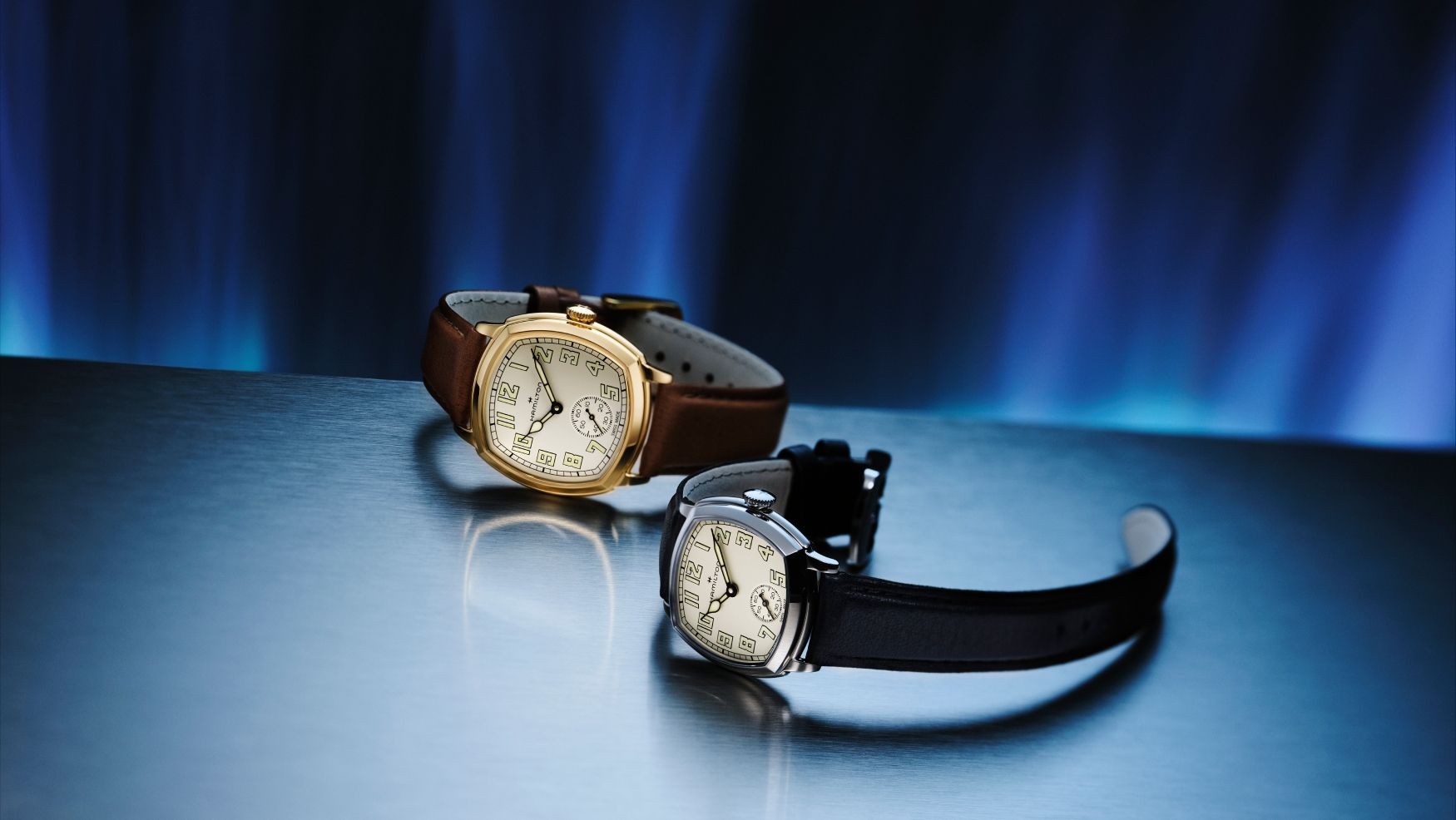
Hamilton's American Classic Cushion Mechanical revives its 1926 Art Deco cushion watches, seen in Oppenheimer, in 30mm and 34mm with the new hand-wound…
Doxa SUB 200: The Accessible Everyday Diver
By Zach Charles • October 10, 2026
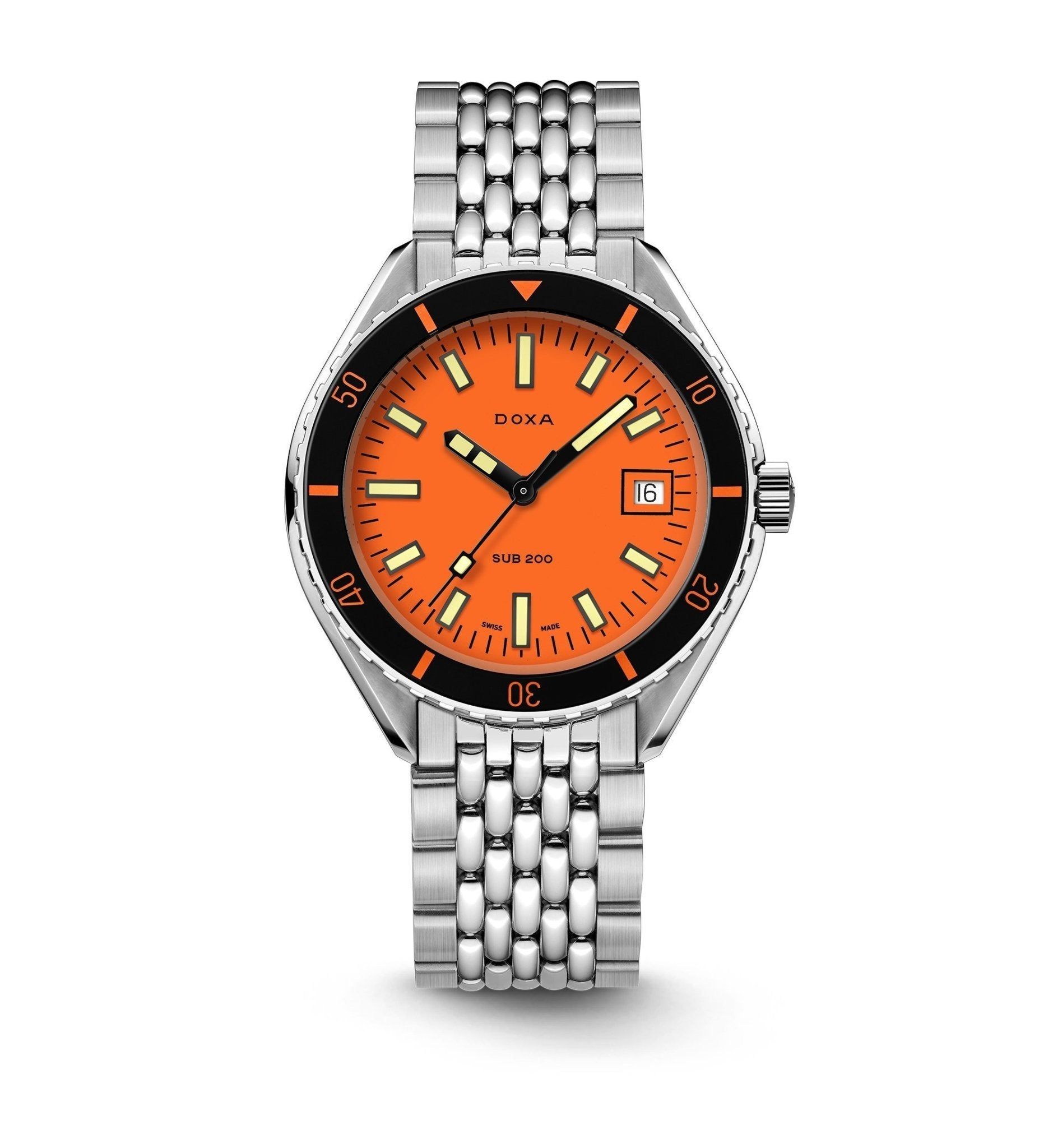
Complete guide to the Doxa SUB 200 — 42mm, 200m, four colorways, Sellita SW200-1. The accessible entry to the Doxa SUB family with the full…
By Zach Charles • October 10, 2026
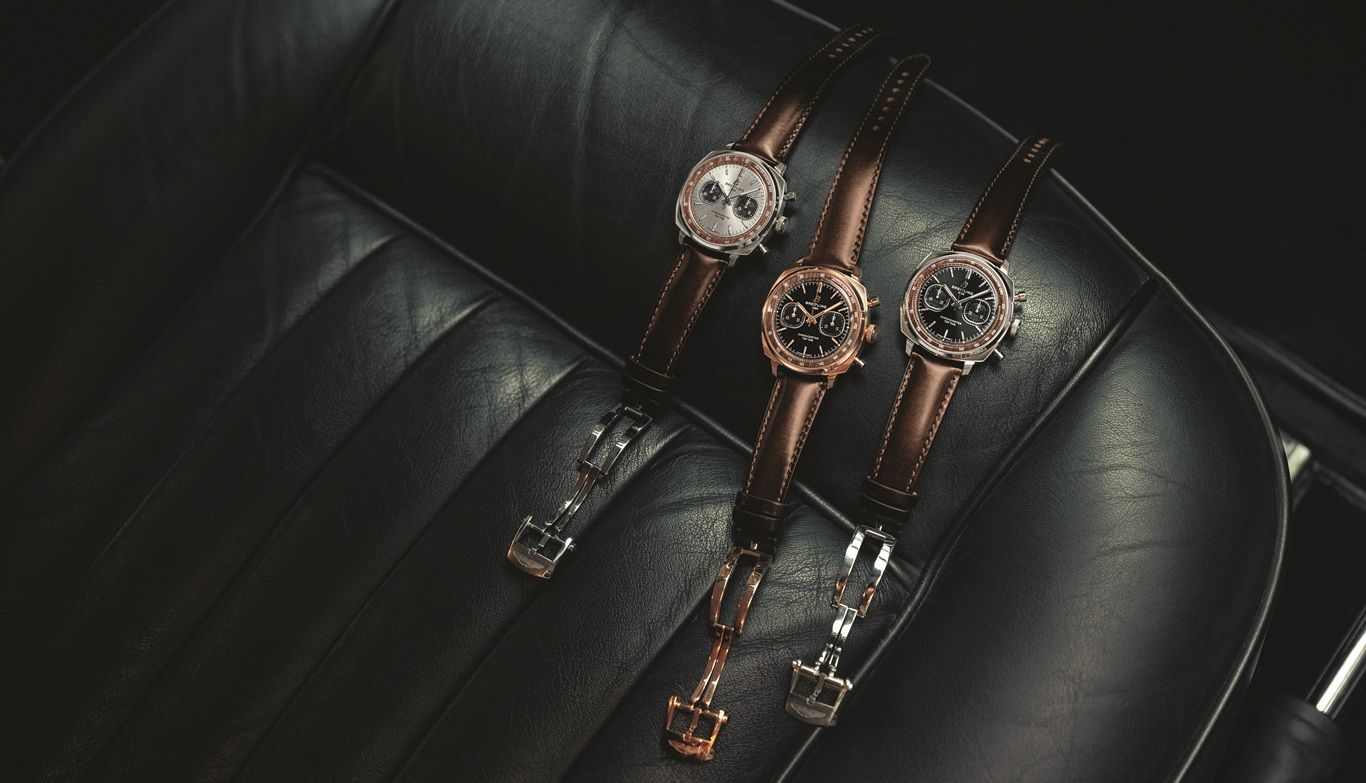
The Breitling Top Time B01 Aston Martin DB5 pairs a cushion-shaped 41mm case, a wooden inner ring and the in-house Caliber 01 across three limited…
By Zach Charles • October 10, 2026
TAG Heuer developed the Mikrograph (2011, 1/100th second), Mikrotimer Flying 1000 (2011, 1/1000th second), and Mikrogirder (2012, 1/2000th second).
Doxa SUB 1500T: The 1,500-Metre Depth-Rating Flagship
By Zach Charles • October 10, 2026
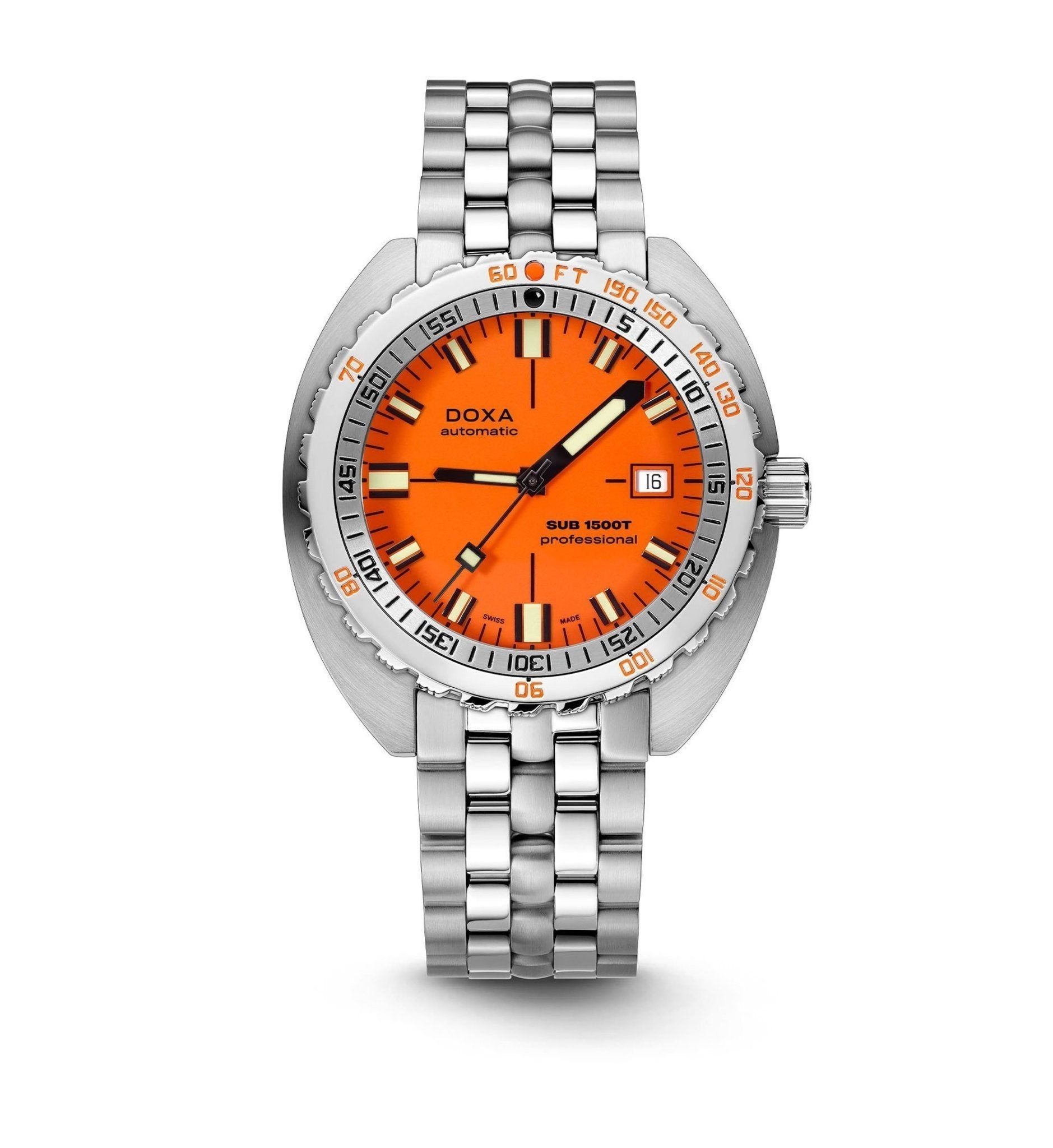
Complete guide to the Doxa SUB 1500T — 45mm, 1,500m depth rating, helium escape valve, ETA 2892-2 movement, USD 2,690.
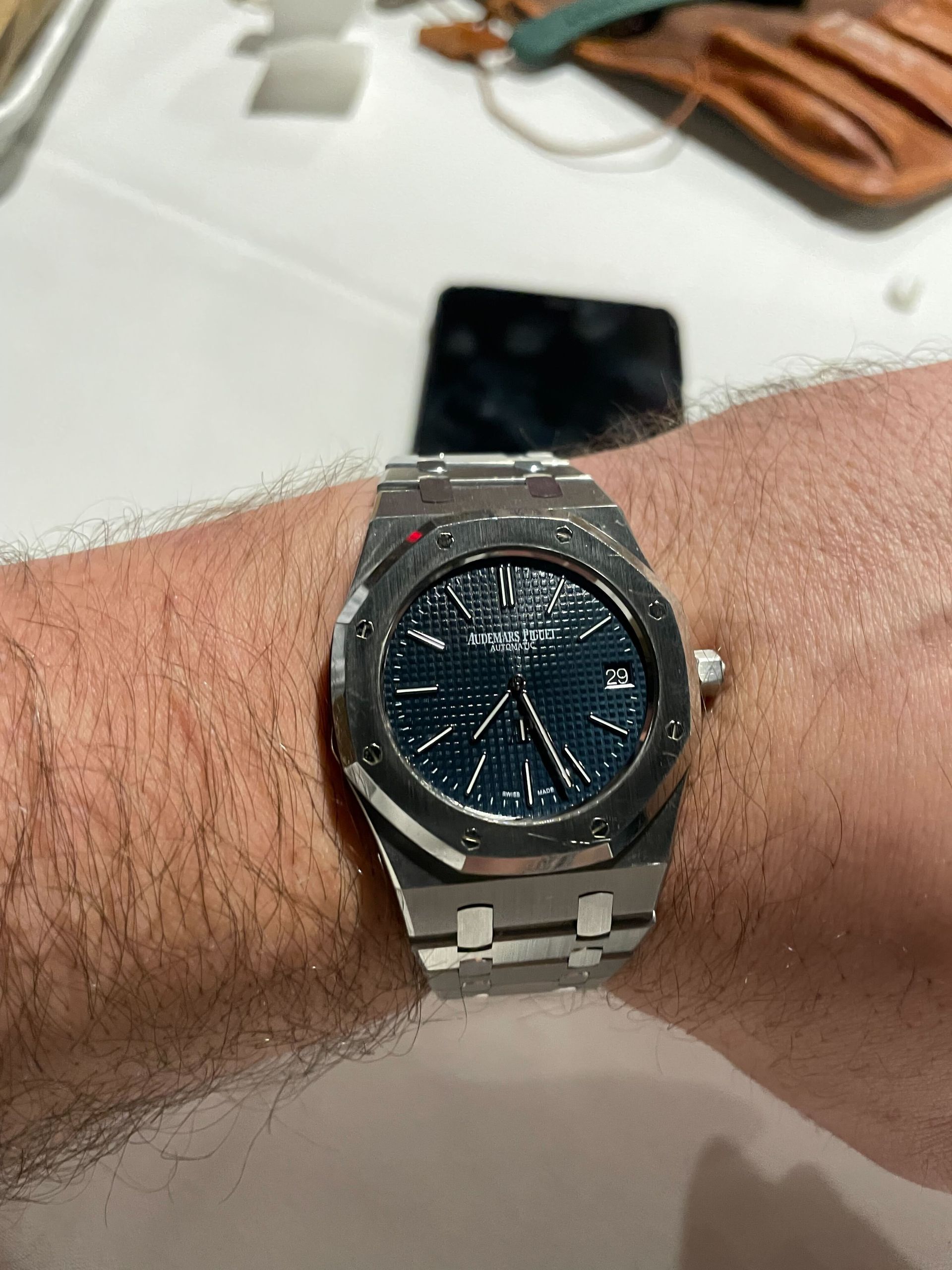
Audemars Piguet Royal Oak 'Jumbo' ref. 15202 with blue tapisserie dial and integrated steel bracelet
By Zach Charles • October 10, 2026
The Audemars Piguet × Swatch Royal Pop is a $400 bioceramic pocket watch in 8 colourways, powered by a new hand-wound SISTEM51 with 90+ hour power…

Time on the Move logo
By Zach Charles • October 10, 2026
Zach Charles is the editor of Time on the Move, an independent watch reference covering brand and model histories, buying guides and release news…
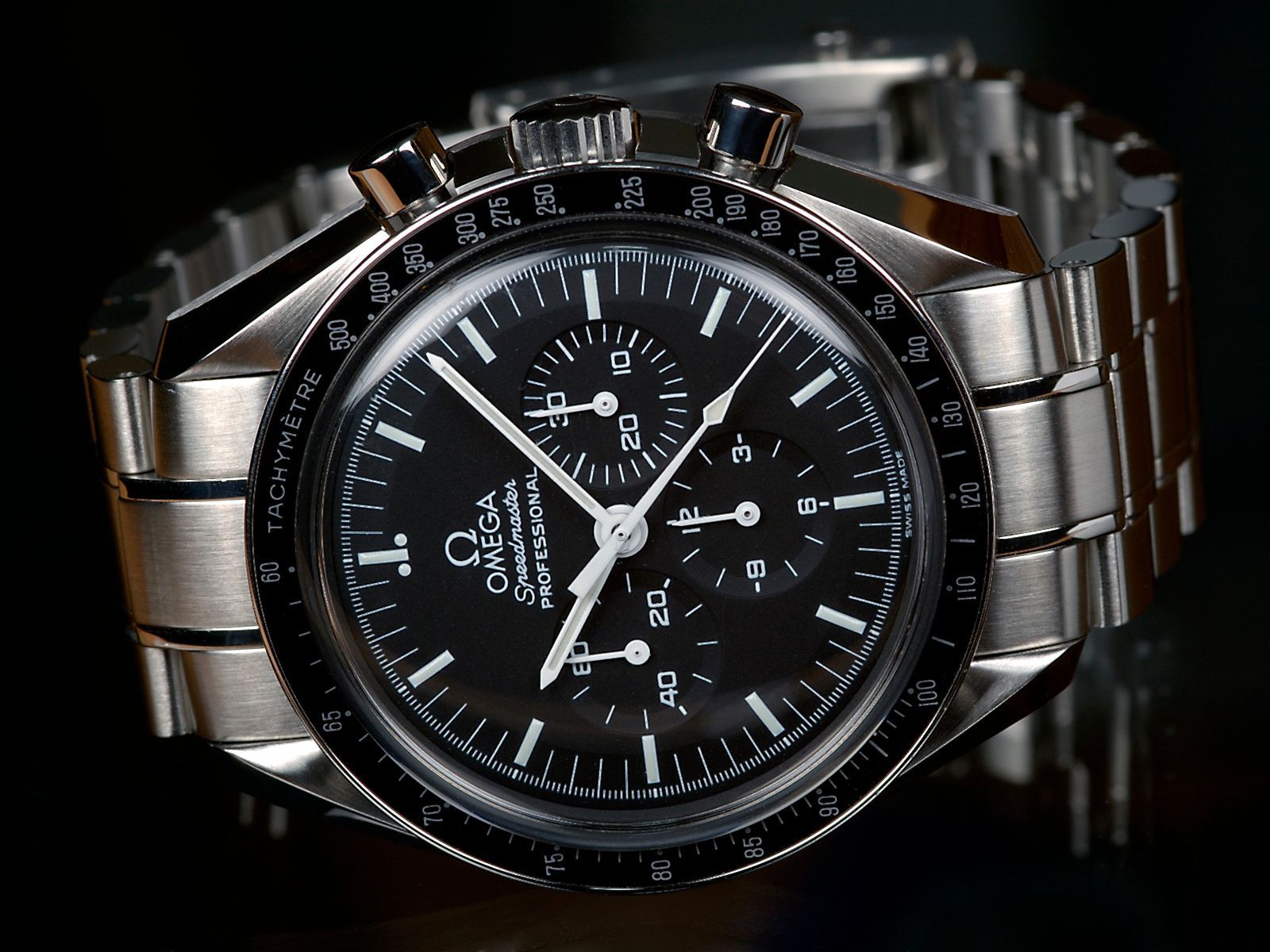
Omega Speedmaster Professional 'Moonwatch' chronograph, front view on steel bracelet
By Zach Charles • October 9, 2026
Find the best watches at every price point from $500 to $15,000 — new and pre-owned. Covers every budget tier with specific reference picks, brand…
By Zach Charles • October 9, 2026
The latest watch news: new releases, Watches and Wonders coverage, discontinuations, industry analysis, and market trends. Currently 1 article.
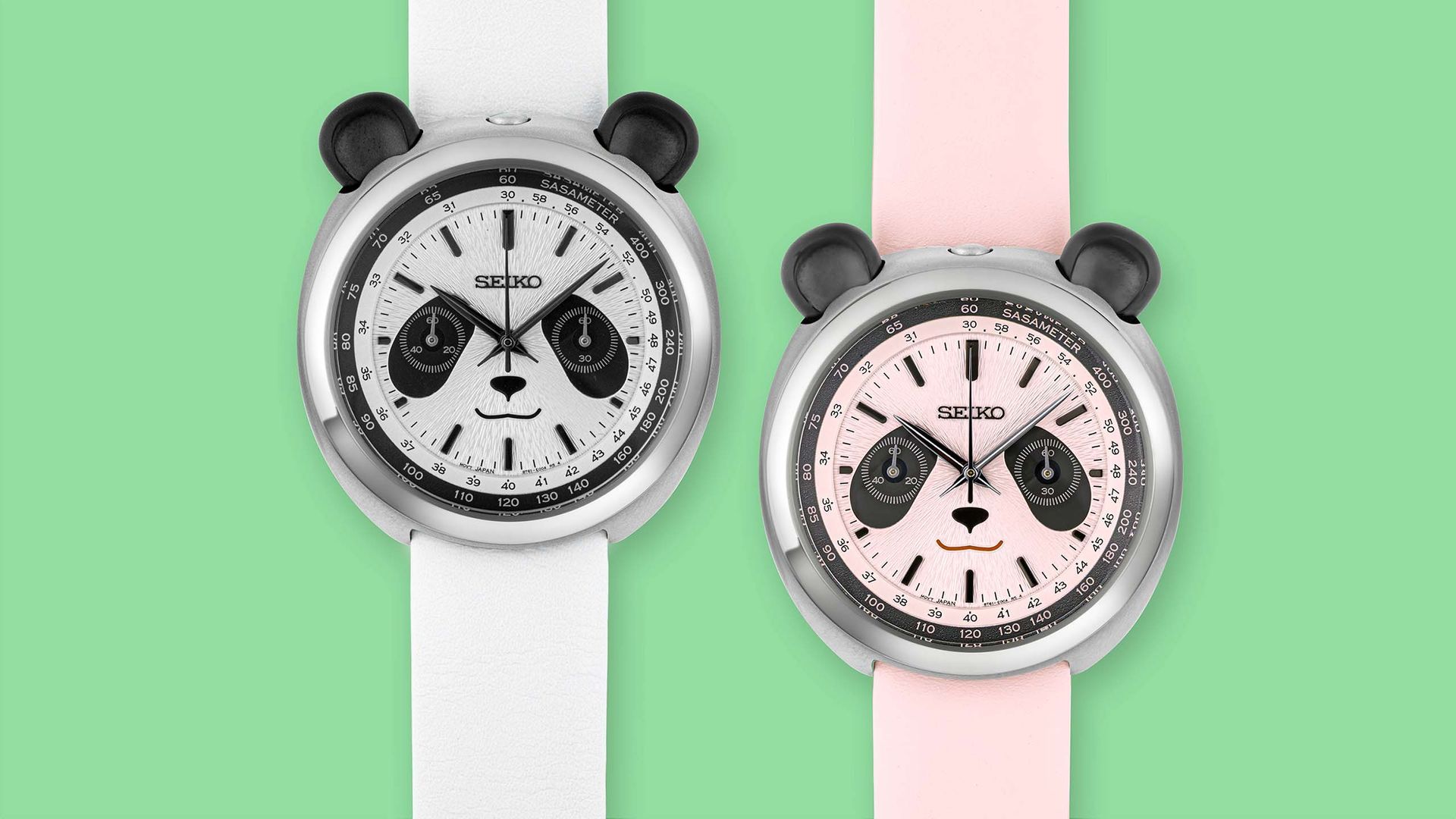
Seiko's New Panda Chronograph Is Literally a Panda: The Power Design Project HHK001 and HHK002
By Zach Charles • October 8, 2026
Seiko's Power Design Project panda chronograph (HHK001, HHK002) turns the panda dial into an actual panda face, with ear pushers, a 'Sasameter' and a 3D…
Show More