Jaeger-LeCoultre Memovox: The First Automatic Alarm Wristwatch

Zach Charles • June 13, 2026

Share this article

Jaeger-LeCoultre Memovox: The Alarm Complication

An alarm complication in a wristwatch requires more than adding a striker mechanism to a movement. It requires a separate power source : a second mainspring barrel, independent of the timekeeping barrel, dedicated to powering the alarm. Without this separation, activating the alarm draws power from the timekeeping train, degrading accuracy and potentially stopping the watch at the moment of alarm. With it, the two functions operate independently — the alarm fires without consequence to the rate.

Jaeger-LeCoultre solved this problem for the wristwatch in 1950. The Memovox introduced the dual-barrel alarm architecture that remains the basis of JLC's alarm calibres today.


Jaeger-LeCoultre Memovox model E855 with Calibre K825
A Jaeger-LeCoultre Memovox model E855 with the Calibre K825 — the first automatic wristwatch alarm movement (1956), with the date complication added circa 1959, establishing the Memovox as a technical milestone in the brand’s history.
Photo: Ghilt — CC BY-SA 3.0 — Wikimedia Commons

First Memovox — 1950

Jaeger-LeCoultre Reverso — iconic art deco flip-case wristwatch
A Jaeger-LeCoultre Reverso — the pivoting rectangular case introduced in 1931 for polo players in British India, allowing the sapphire crystal to be protected by flipping to expose the plain metal back.
Photo: Tiberido — CC BY-SA 4.0 — Wikimedia Commons

The first Memovox was shown at the Basel Watch Fair in 1950 and reached public availability in 1951 . The movement was Calibre K489 (and its variants K489/1 and K601) — manually wound, with the dual-barrel construction.

The name combines "memo" (reminder) with "vox" (Latin: voice). The alarm function was set by a dedicated crown — in the original three-crown layout, one crown wound the timekeeping barrel, one wound the alarm barrel, and one set the alarm time.

The claim that the Memovox was the world's first alarm wristwatch is supported by the horological literature. Alarm pocket watches existed for centuries; alarm wristwatches did not, primarily because the size constraints of a wristwatch made the dual-barrel architecture extremely difficult to execute. JLC's Calibre K489 made it practical.


Calibre K815 — The First Automatic Alarm (1956)

LeCoultre & Co. share certificate, 1899
A LeCoultre & Co. share certificate from 1899 — documenting the company’s corporate structure at the height of its role as a movement supplier to the Swiss and international watch industry, decades before the formal merger with Edmond Jaeger.
Photo: LeCoultre & Co. — Public Domain — Wikimedia Commons

The manual-wind Memovox was followed in 1956 by the Calibre K815 — the movement that made the Memovox the world's first automatic alarm wristwatch .

The K815 used a bumper winding system (a rotor that oscillates within a limited arc, bouncing between two springs rather than rotating 360°) rather than a full peripheral rotor. The bumper system allowed automatic winding while keeping the case profile within the slim dimensions of a dress watch.

The dual-barrel architecture of the K489 was carried over: the timekeeping barrel and the alarm barrel remained independent. Approximately 1,000 examples of the Memovox Deep Sea Alarm (reference E857, 1959), which used the K815, were produced.


Calibre K825 — The Automatic Alarm with Date (c.1959)

Jaeger-LeCoultre Reverso, 2011 edition
A Jaeger-LeCoultre Reverso from 2011 — the modern interpretation of the 1931 original, retaining the swivelling rectangular case with updated movement and finishing.
Photo: Provo rossi — CC BY 4.0 — Wikimedia Commons

The Calibre K825 added a date complication to the K815 architecture — automatic winding, alarm, and date in a single wristwatch movement. Approximately 45,000 K825 movements were produced over the decade of its production, across multiple references including the Polaris E859 (1965–1970).


Key Memovox References

Jaeger-LeCoultre Reverso, early 2000s reference
A Jaeger-LeCoultre Reverso reference from the early 2000s — showing the refined proportions of the Grande Taille era, with the characteristic stepped lugs and slim profile that define the collection.
Photo: Clyde94 — CC BY-SA 4.0 — Wikimedia Commons

Memovox (first, 1951): The manual-wind original, Calibre K489. Three crowns: timekeeping wind, alarm wind, alarm set. The founding reference.

Memovox Parking (reference E855, 1958): Produced for JLC's 125th anniversary , the Parking model featured a dial with time-markings designed for setting parking reminders — the urban driver's alternative to the sporting original. An idiosyncratic application of the alarm function to an everyday urban problem; the watch is now a collector's piece for the specificity of its intended use.

Memovox Deep Sea Alarm (reference E857, 1959): The first diving alarm watch. Calibre K815, approximately 1,000 pieces, 200m water resistance. The direct predecessor to the Polaris; established that JLC's alarm mechanism could be made waterproof.

Memovox Polaris (reference E859, 1965–1970): The pinnacle of the Memovox line — the diving alarm watch with triple caseback designed to transmit sound underwater. Calibre K825, 1,714 pieces, 300m water resistance. See the dedicated Polaris article.

Memovox Speedbeat (1969): Calibre K916 — a high-beat variant at 28,800 vph (4Hz), doubling the frequency of the K825's 18,000 vph. The Speedbeat was JLC's response to the high-beat movement trend of the late 1960s, applied to the alarm complication.


Calibre Evolution

Casa Fagliano leather strap on a Jaeger-LeCoultre Reverso
A Casa Fagliano leather strap on a Jaeger-LeCoultre Reverso — the Argentine leather atelier has supplied straps for the Reverso since 1931, a partnership that reflects the watch’s original connection to the polo circuit.
Photo: Provo rossi — CC BY-SA 4.0 — Wikimedia Commons
Calibre Year Type Frequency Notes
K489 / K489/1 / K601 1950–1958 Manual wind 18,000 vph First Memovox; dual-barrel alarm
K815 1956 Automatic (bumper) 18,000 vph World's first automatic alarm wristwatch
K825 c.1959 Automatic (bumper) + date 18,000 vph ~45,000 produced; Polaris calibre
K916 1969 Automatic 28,800 vph High-beat "Speedbeat" variant
956 2018 Automatic — Modern Polaris Memovox calibre

The Alarm Complication Today

The Memovox name is used today within the Polaris Memovox — the modern alarm dive watch introduced at SIHH 2018, powered by Calibre 956. The broader Memovox designation has otherwise given way to the Polaris and Master Control names for their respective contexts.

The alarm complication remains unusual in contemporary watchmaking. Most Swiss manufactures produce none. Among those that do — primarily JLC and a small number of others — the alarm is generally a heritage complication housed in vintage-inspired designs rather than a tool watch specification. JLC's position is distinctive: the alarm has been a continuous technical thread from 1950 to the present, applied across dress watches, parking-reminder watches, and diving instruments. The architecture invented for the Calibre K489 — two independent barrels — is unchanged in the Calibre 956.


Frequently Asked Questions

Was the Memovox the first alarm wristwatch?
Yes — the JLC Memovox, shown at Basel 1950 and in public availability from 1951, is widely credited as the world's first alarm wristwatch. The 1956 Calibre K815 made it the world's first automatic alarm wristwatch.

What is the dual-barrel architecture?
The Memovox uses two separate mainspring barrels: one powers the timekeeping function, one powers the alarm. This ensures that activating the alarm does not draw energy from the timekeeping train or degrade accuracy — the two functions are energetically independent.

What were the key Memovox references?
The first Memovox (1951, Calibre K489), the Memovox Parking (1958, E855), the Deep Sea Alarm (1959, E857, ~1,000 pieces), the Polaris (1965–1970, E859, 1,714 pieces), and the Speedbeat (1969, Calibre K916, 28,800 vph).

What movement powers the modern Memovox?
The Polaris Memovox (2018) uses Calibre 956, an in-house automatic alarm movement descended from the K815/K825 family.

Is there a collector market for vintage Memovox watches?
Yes — particularly the E859 Polaris, which has appreciated since the 2018 revival. The E857 Deep Sea Alarm is rarer at approximately 1,000 pieces. The Parking model is collected for its eccentric period character. The first-generation K489 references are historically significant but less widely traded.


Related Articles

Recent Posts

By Zach Charles • October 10, 2026
Hamilton's American Classic Cushion Mechanical revives its 1926 Art Deco cushion watches, seen in Oppenheimer, in 30mm and 34mm with the new hand-wound…
Doxa SUB 200: The Accessible Everyday Diver
By Zach Charles • October 10, 2026
Complete guide to the Doxa SUB 200 — 42mm, 200m, four colorways, Sellita SW200-1. The accessible entry to the Doxa SUB family with the full…
By Zach Charles • October 10, 2026
The Breitling Top Time B01 Aston Martin DB5 pairs a cushion-shaped 41mm case, a wooden inner ring and the in-house Caliber 01 across three limited…
By Zach Charles • October 10, 2026
TAG Heuer developed the Mikrograph (2011, 1/100th second), Mikrotimer Flying 1000 (2011, 1/1000th second), and Mikrogirder (2012, 1/2000th second).
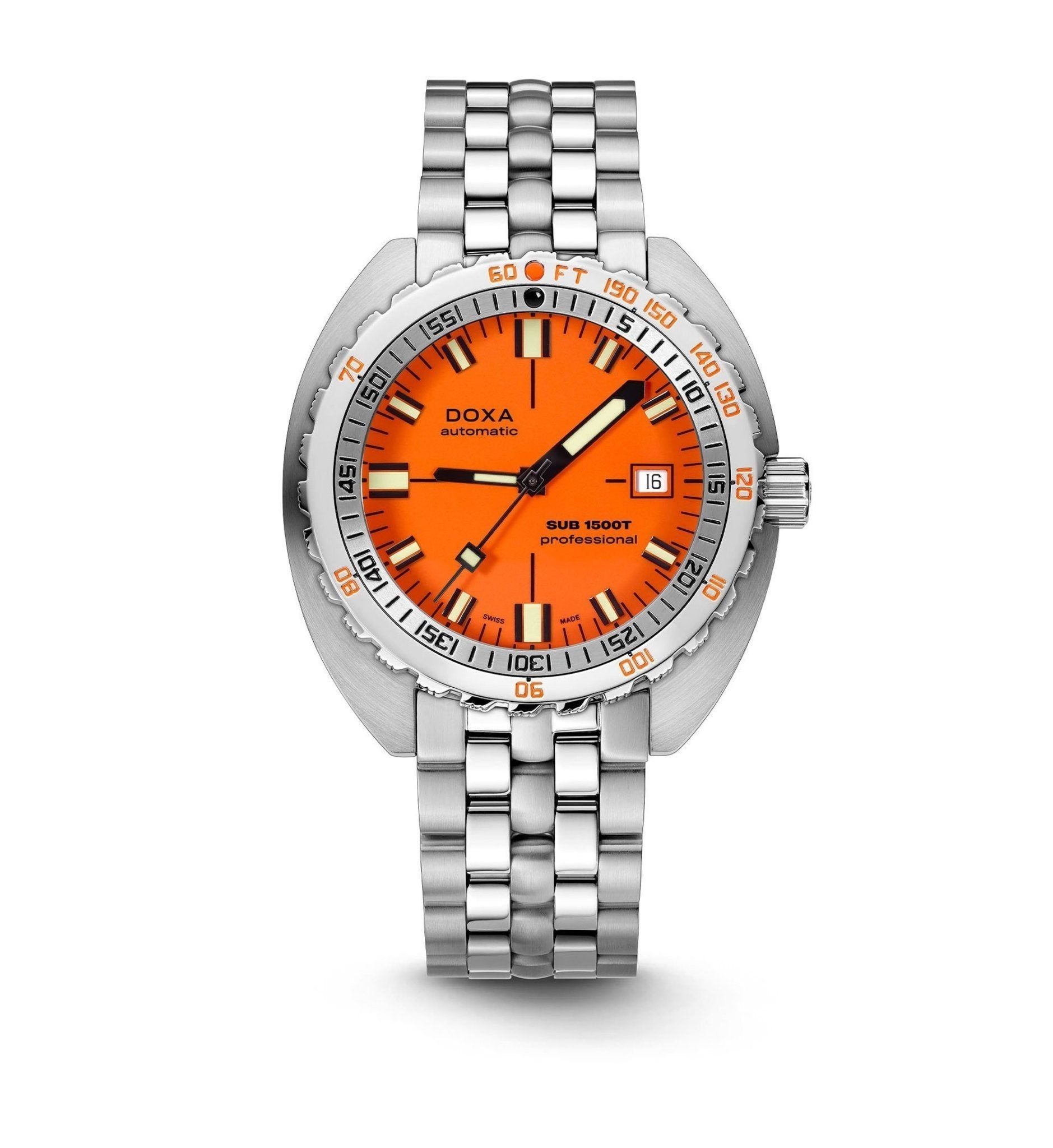
Doxa SUB 1500T: The 1,500-Metre Depth-Rating Flagship
By Zach Charles • October 10, 2026
Complete guide to the Doxa SUB 1500T — 45mm, 1,500m depth rating, helium escape valve, ETA 2892-2 movement, USD 2,690.
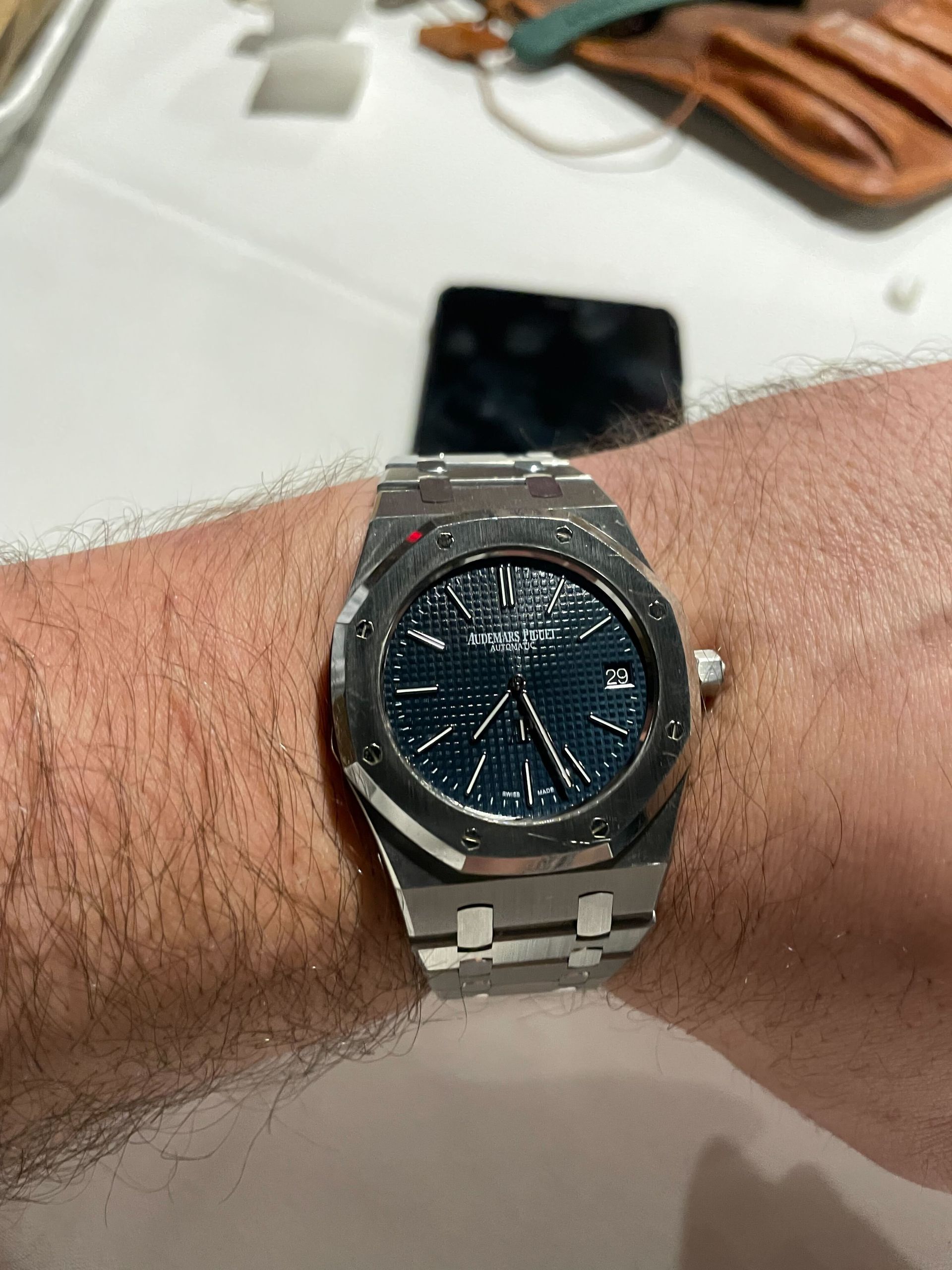
Audemars Piguet Royal Oak 'Jumbo' ref. 15202 with blue tapisserie dial and integrated steel bracelet
By Zach Charles • October 10, 2026
The Audemars Piguet × Swatch Royal Pop is a $400 bioceramic pocket watch in 8 colourways, powered by a new hand-wound SISTEM51 with 90+ hour power…

Time on the Move logo
By Zach Charles • October 10, 2026
Zach Charles is the editor of Time on the Move, an independent watch reference covering brand and model histories, buying guides and release news…
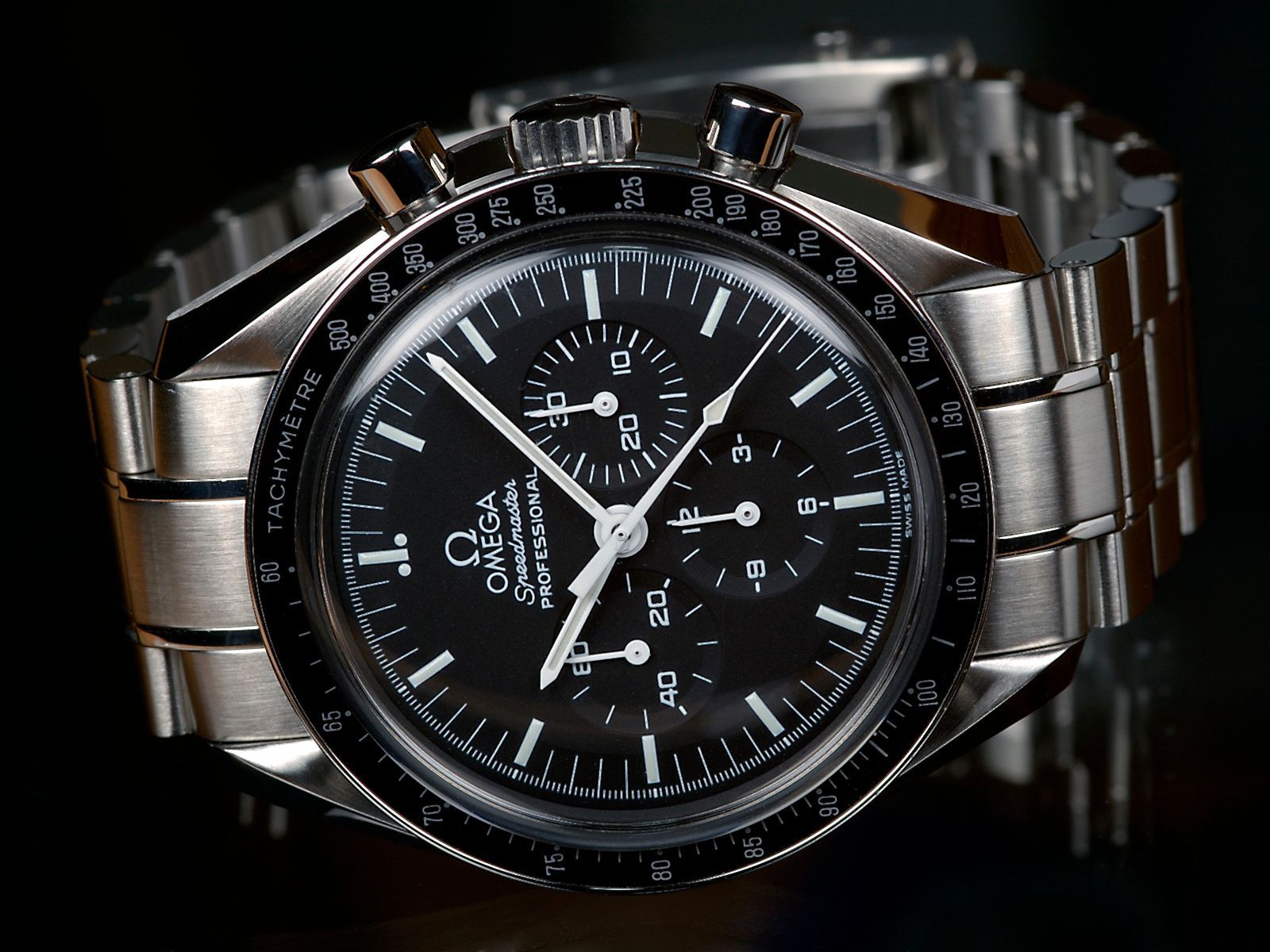
Omega Speedmaster Professional 'Moonwatch' chronograph, front view on steel bracelet
By Zach Charles • October 9, 2026
Find the best watches at every price point from $500 to $15,000 — new and pre-owned. Covers every budget tier with specific reference picks, brand…
By Zach Charles • October 9, 2026
The latest watch news: new releases, Watches and Wonders coverage, discontinuations, industry analysis, and market trends. Currently 1 article.
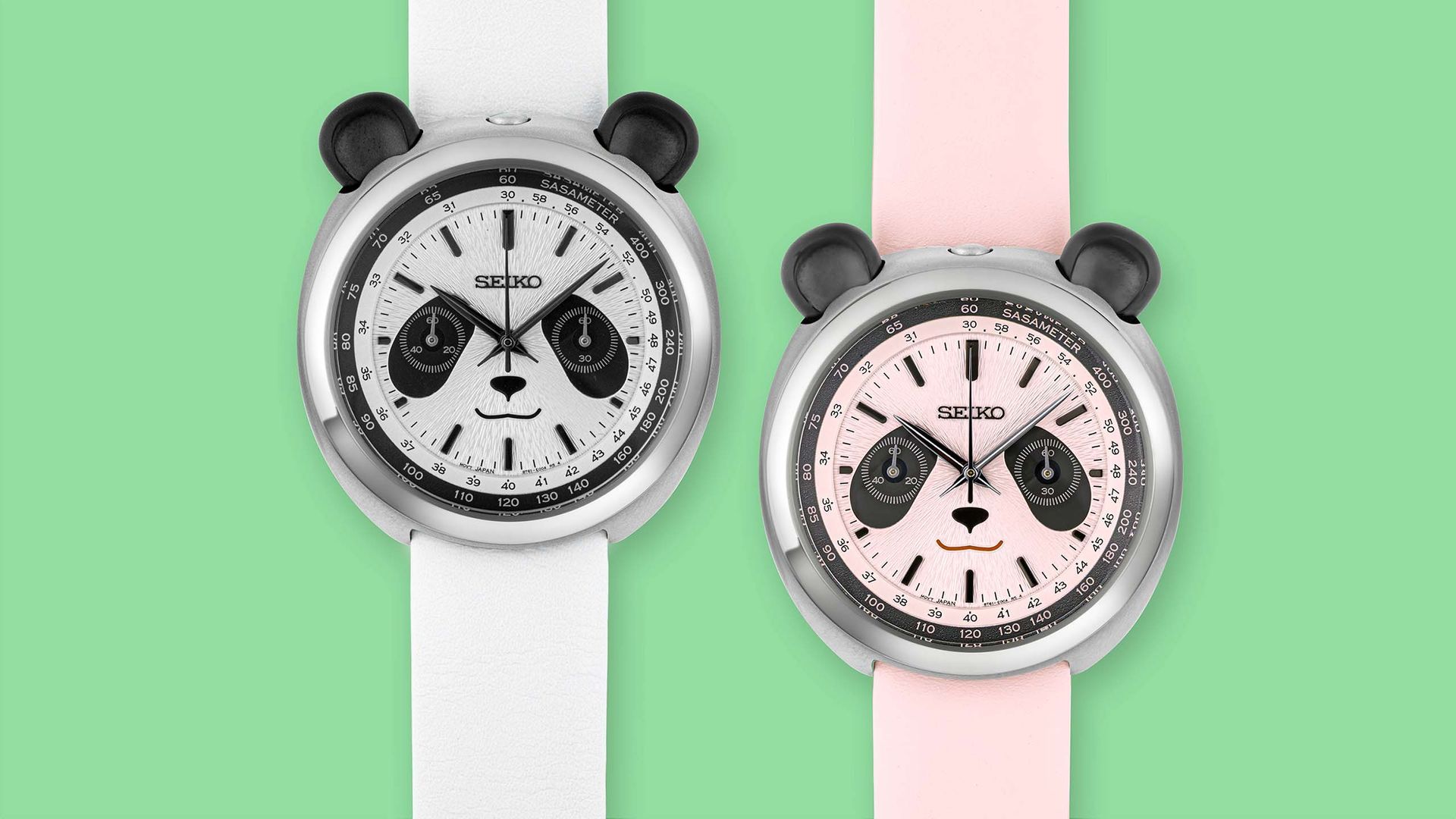
Seiko's New Panda Chronograph Is Literally a Panda: The Power Design Project HHK001 and HHK002
By Zach Charles • October 8, 2026
Seiko's Power Design Project panda chronograph (HHK001, HHK002) turns the panda dial into an actual panda face, with ear pushers, a 'Sasameter' and a 3D…
Show More