Jaeger-LeCoultre Atmos: The Self-Winding Clock Powered by Temperature

Zach Charles • July 10, 2026

Share this article

Jaeger-LeCoultre Atmos: The Clock That Runs on Air

The Atmos clock requires no winding. It does not run on batteries. It does not need to be plugged in. It runs on the temperature differentials of its environment — the slight warming and cooling of the air in a room across a day is sufficient to keep it going indefinitely, provided the room remains inhabited and the clock is not placed in a draught or sealed environment where temperature is artificially stabilised.

This sounds like a paradox. It is not. It is physics: the controlled expansion and contraction of gas under changing temperature, harnessed as a mechanical energy source. Jaeger-LeCoultre has been producing the Atmos since 1935, and several hundred thousand have been made. The clock remains in current production.


Atmos clock prototype, Jaeger-LeCoultre — Gewerbemuseum, Nuremberg
An Atmos clock prototype by Jaeger-LeCoultre from the Karl Gebhardt Horological Collection at the Gewerbemuseum, Nuremberg — the Atmos requires no winding, drawing energy solely from ambient temperature fluctuations of as little as 1°C.
Photo: Daderot — CC0 1.0 Universal — Wikimedia Commons

Origin — Jean-Léon Reutter, 1928

Jaeger-LeCoultre Reverso — iconic art deco flip-case wristwatch
A Jaeger-LeCoultre Reverso — the pivoting rectangular case introduced in 1931 for polo players in British India, allowing the sapphire crystal to be protected by flipping to expose the plain metal back.
Photo: Tiberido — CC BY-SA 4.0 — Wikimedia Commons

The Atmos was not invented by JLC. It was invented by Jean-Léon Reutter , an engineer in Neuchâtel, Switzerland, who filed his first patents in 1928 . The prototype he called "Atmos 0" used mercury-in-glass expansion — a technically elegant but practically hazardous approach.

JLC acquired the rights to the Atmos on 27 July 1935 . The "Atmos 1" designation refers to the Reutter design as JLC took it over on that date. The "Atmos 2" — announced 15 January 1936 and entering full production by mid-1939 — was JLC's redesign using ethyl chloride instead of mercury. Ethyl chloride is a compound that exists as both a gas and a liquid at room temperature, making it ideally suited for thermal expansion cycles.


How the Mechanism Works

LeCoultre & Co. share certificate, 1899
A LeCoultre & Co. share certificate from 1899 — documenting the company’s corporate structure at the height of its role as a movement supplier to the Swiss and international watch industry, decades before the formal merger with Edmond Jaeger.
Photo: LeCoultre & Co. — Public Domain — Wikimedia Commons

The Atmos operates through a sequence of energy transfers that begins with ambient temperature:

  1. A hermetically sealed metal bellows contains ethyl chloride , held at a state between gas and liquid at room temperature
  2. When ambient temperature rises — even fractionally — the ethyl chloride vaporises, expanding the bellows outward
  3. The expanding bellows compress a spiral spring
  4. When temperature falls , the gas condenses back to liquid, the bellows contract, and the spiral spring releases its stored energy , winding the mainspring
  5. The mainspring drives a torsion pendulum — a balance wheel suspended on a fine wire that rotates 30° in each direction, completing a full oscillation every 60 seconds

The torsion pendulum is crucial to the mechanism's efficiency. A conventional pendulum completes two oscillations per second; the Atmos torsion pendulum completes one oscillation per minute. This dramatically reduces the energy the escapement consumes with each beat — the Atmos uses approximately 1,000 times less energy than a conventional clock of comparable size.

Power reserve relationship to temperature: For the Atmos Classique, a temperature change of 1°C provides approximately two days of running time. In a normally inhabited room with typical daily temperature variation, the clock accumulates far more energy than it consumes — it is, under normal conditions, self-sustaining.


Production History

Jaeger-LeCoultre Reverso, 2011 edition
A Jaeger-LeCoultre Reverso from 2011 — the modern interpretation of the 1931 original, retaining the swivelling rectangular case with updated movement and finishing.
Photo: Provo rossi — CC BY 4.0 — Wikimedia Commons

The Atmos entered full production in 1939 and has been made continuously since, with the exception of wartime interruptions. Several hundred thousand clocks have been produced across all variants, making the Atmos JLC's highest-volume single product in units over the long term.

Production platforms:
- Atmos VII (Calibre 540/560): Introduced in the early 1980s; the primary production platform for the Classique and many special editions
- Atmos Classique (current): Based on the Calibre 540 architecture; the entry-level Atmos; dimensions approximately 22.5cm × 20cm × 15.5cm; retail in the €5,000–6,000 range

The Atmos has been a frequent diplomatic gift from the Swiss government and from JLC — presented to the United Nations, to heads of state, and to institutions as a symbol of precision and Swiss technical accomplishment. Albert Einstein received one.


Notable Special Editions

Jaeger-LeCoultre Memovox model E855 with Calibre K825
A Jaeger-LeCoultre Memovox model E855 with the Calibre K825 — the first automatic wristwatch alarm movement (1956), with the date complication added circa 1959, establishing the Memovox as a technical milestone in the brand’s history.
Photo: Ghilt — CC BY-SA 3.0 — Wikimedia Commons

Atmos du Millénaire Atlantis (c.1999–2002): Wedge-shaped beveled glass panels on three conical stainless steel feet; white dial; lunar calendar calibrated to the year 3000. Limited to 50 pieces . Calibre 555.

Atmos Marqueterie du Millénaire: Art Nouveau wood cabinet with marquetry inspired by Alphonse Mucha paintings; 1,000-year calendar with moonphase display. Limited to 25 pieces . Calibre 555.

Atmos x Hermès (2013): Spherical crystal case produced by glassmaker Les Cristalleries de Saint-Louis; Calibre 560a. Limited to 176 pieces .

Atmos 568 by Marc Newson (2016): Baccarat crystal cabinet; displays hours, minutes, month, and moonphase. The first Atmos to incorporate a moonphase complication in current regular production. Retail approximately USD $28,000.

Atmos Marqueterie L'Attente: Cabinet with marquetry in the style of Gustav Klimt; limited edition produced for the high-jewellery collector segment.


The Atmos as Object

Casa Fagliano leather strap on a Jaeger-LeCoultre Reverso
A Casa Fagliano leather strap on a Jaeger-LeCoultre Reverso — the Argentine leather atelier has supplied straps for the Reverso since 1931, a partnership that reflects the watch’s original connection to the polo circuit.
Photo: Provo rossi — CC BY-SA 4.0 — Wikimedia Commons
The Atmos exists in a category the watch market rarely addresses: it is a table clock with the technical ambitions of a watch manufacture, produced by one of the few firms with the in-house capability to make everything it contains.

The glass case — the transparency that allows the mechanism to be observed — is not merely decorative. It makes the Atmos a demonstration object: the bellows visibly expand and contract with temperature changes, the torsion pendulum oscillates slowly enough to be watched, and the escapement action is legible to the naked eye. The Atmos in a room communicates what it is doing in a way that a wristwatch never can.

For the collector, the Atmos occupies a different position from wristwatches: it does not go on the wrist, it is not subject to allocation dynamics, and it ages without winding. It is a permanent object rather than a worn one, and the market for it is correspondingly different — a domestic luxury rather than a personal adornment.


Frequently Asked Questions

How does the Atmos clock work?
The Atmos uses temperature differentials to wind itself. A sealed bellows containing ethyl chloride expands when temperature rises and contracts when it falls. This expansion/contraction compresses and releases a spiral spring that winds the mainspring, which drives a torsion pendulum oscillating at one cycle per minute — 1,000 times more slowly than a conventional clock, requiring far less energy.

How much temperature change does the Atmos need?
For the Atmos Classique, approximately 1°C of temperature change provides about two days of running time. In a normally inhabited room, the clock accumulates sufficient energy from daily temperature variation to run indefinitely without intervention.

When did JLC acquire the Atmos?
JLC acquired rights to the Atmos from inventor Jean-Léon Reutter on 27 July 1935. The original Reutter design used mercury in glass; JLC's redesign (announced January 1936, in full production by mid-1939) replaced mercury with the safer and more effective ethyl chloride.

How many Atmos clocks have been made?
Several hundred thousand since production began in 1939, making it JLC's highest-volume product over the long term.

Does the Atmos need any maintenance?
The Atmos requires no winding and no battery replacement. It should be kept level, away from draughts, vibrations, and environments where temperature is artificially stabilised (which would deprive it of the differentials it needs). Periodic servicing by a specialist is recommended every 10–15 years.


Related Articles

Recent Posts

By Zach Charles • October 10, 2026
Hamilton's American Classic Cushion Mechanical revives its 1926 Art Deco cushion watches, seen in Oppenheimer, in 30mm and 34mm with the new hand-wound…
Doxa SUB 200: The Accessible Everyday Diver
By Zach Charles • October 10, 2026
Complete guide to the Doxa SUB 200 — 42mm, 200m, four colorways, Sellita SW200-1. The accessible entry to the Doxa SUB family with the full…
By Zach Charles • October 10, 2026
The Breitling Top Time B01 Aston Martin DB5 pairs a cushion-shaped 41mm case, a wooden inner ring and the in-house Caliber 01 across three limited…
By Zach Charles • October 10, 2026
TAG Heuer developed the Mikrograph (2011, 1/100th second), Mikrotimer Flying 1000 (2011, 1/1000th second), and Mikrogirder (2012, 1/2000th second).
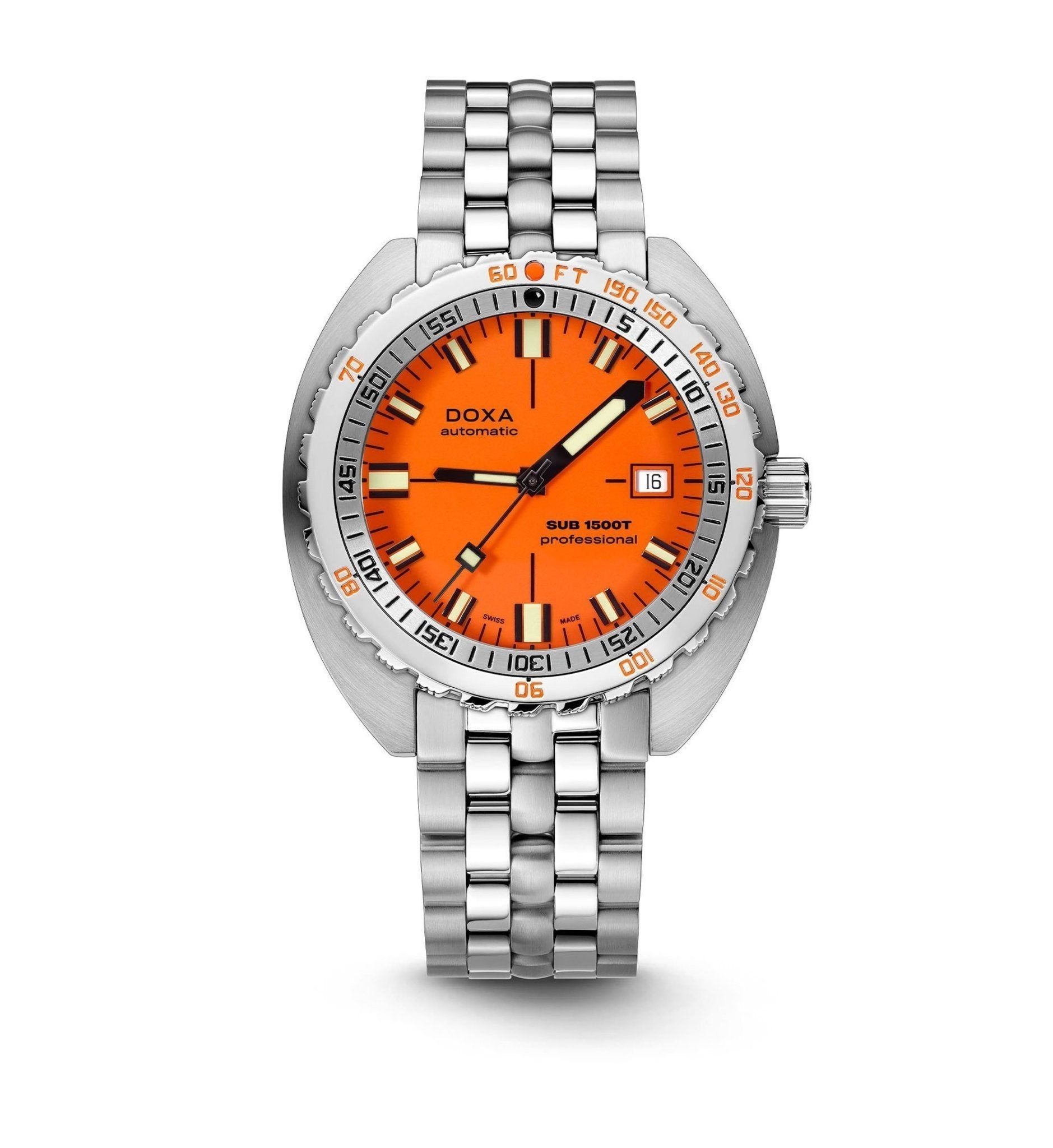
Doxa SUB 1500T: The 1,500-Metre Depth-Rating Flagship
By Zach Charles • October 10, 2026
Complete guide to the Doxa SUB 1500T — 45mm, 1,500m depth rating, helium escape valve, ETA 2892-2 movement, USD 2,690.
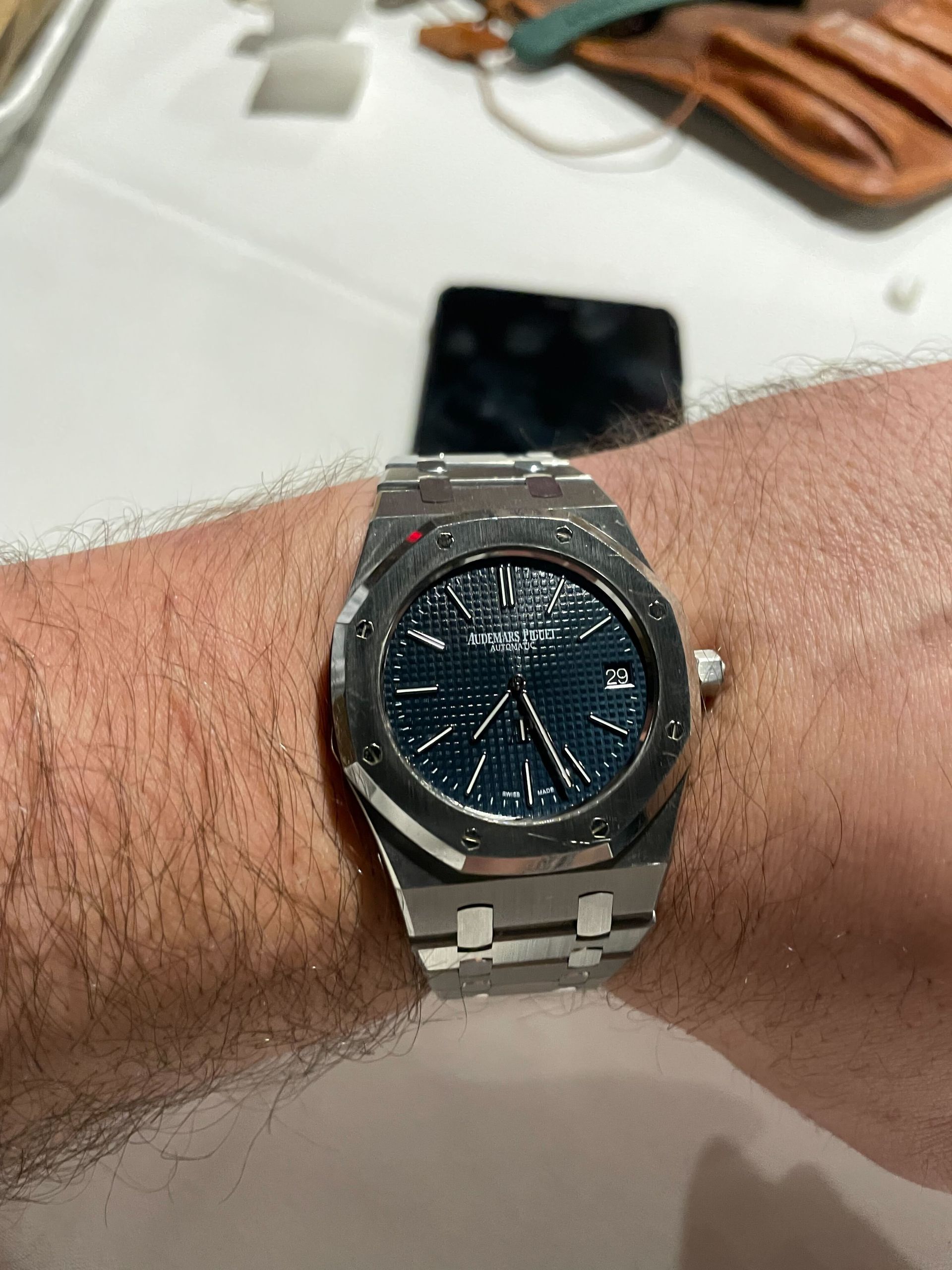
Audemars Piguet Royal Oak 'Jumbo' ref. 15202 with blue tapisserie dial and integrated steel bracelet
By Zach Charles • October 10, 2026
The Audemars Piguet × Swatch Royal Pop is a $400 bioceramic pocket watch in 8 colourways, powered by a new hand-wound SISTEM51 with 90+ hour power…

Time on the Move logo
By Zach Charles • October 10, 2026
Zach Charles is the editor of Time on the Move, an independent watch reference covering brand and model histories, buying guides and release news…
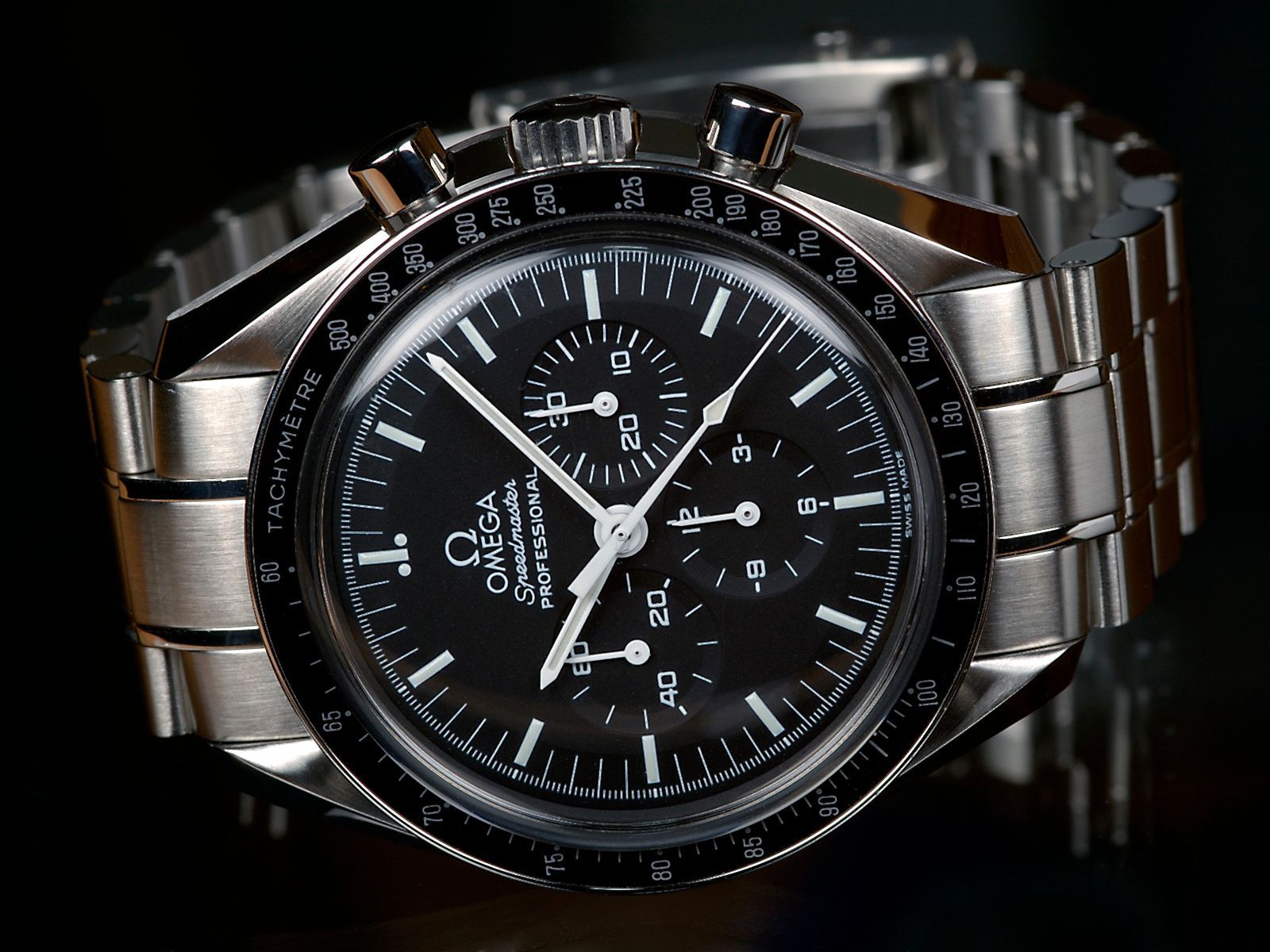
Omega Speedmaster Professional 'Moonwatch' chronograph, front view on steel bracelet
By Zach Charles • October 9, 2026
Find the best watches at every price point from $500 to $15,000 — new and pre-owned. Covers every budget tier with specific reference picks, brand…
By Zach Charles • October 9, 2026
The latest watch news: new releases, Watches and Wonders coverage, discontinuations, industry analysis, and market trends. Currently 1 article.
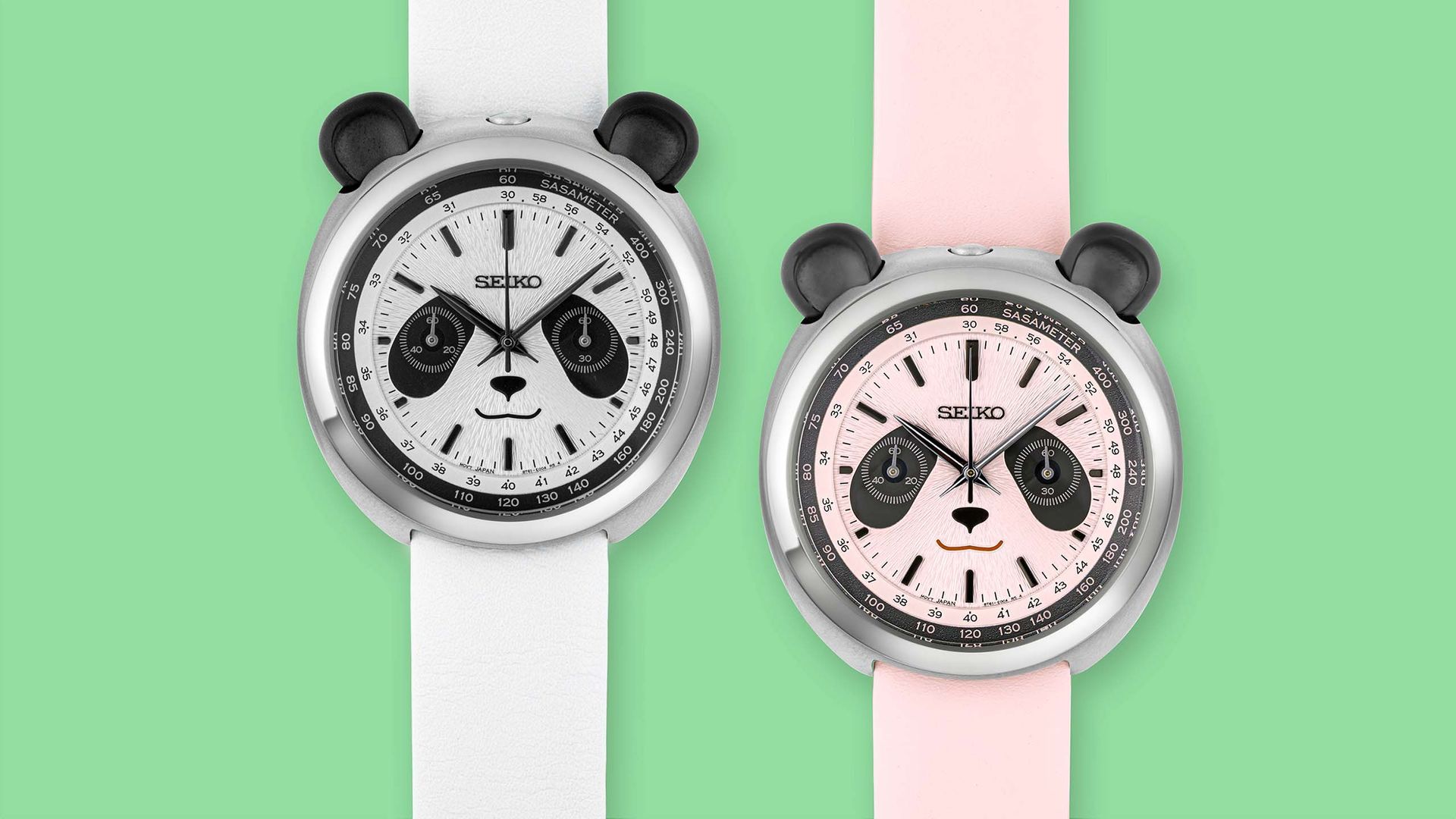
Seiko's New Panda Chronograph Is Literally a Panda: The Power Design Project HHK001 and HHK002
By Zach Charles • October 8, 2026
Seiko's Power Design Project panda chronograph (HHK001, HHK002) turns the panda dial into an actual panda face, with ear pushers, a 'Sasameter' and a 3D…
Show More