
TAG Heuer: From Heuer to LVMH

Zach Charles • September 11, 2026

Share this article

TAG Heuer: From Heuer to LVMH

Edouard Heuer opened his watchmaking workshop in Saint-Imier, Switzerland in 1860. The workshop became a precision instrument company, the precision instrument company became a motorsport icon, the motorsport icon became a luxury brand, and the luxury brand became the property of LVMH for CHF 1.15 billion. The through-line across 165 years is the chronograph: the instrument that measures elapsed time, which Heuer has been building — and building better than almost anyone else — since the nineteenth century.


Jack Heuer at age 85, 2017
Jack Heuer photographed at age 85 in June 2017 — CEO of Ed. Heuer & Co from 1961 to 1982, the period in which Heuer created the Monaco, Carrera, and Autavia.
Photo: BBCLCD — CC BY-SA 4.0 — Wikimedia Commons

Founding — Saint-Imier, 1860

TAG Heuer rally timing chronograph
TAG Heuer rally timing chronograph — official race timing equipment used in motorsport events.
Photo: Jorjum — CC BY-SA 3.0 — Wikimedia Commons
Edouard Heuer was approximately twenty years old when he opened his workshop in Saint-Imier in the Canton of Bern in 1860 . The company subsequently relocated: to Brugg (as Edouard Heuer & Compagnie ) in 1864, and then to Biel/Bienne in 1867, where it remained headquartered through subsequent decades.

The workshop's early speciality was precision timekeeping for measurement purposes — stopwatches, pocket chronographs, timing instruments. From the beginning, Heuer's competitive advantage was in the mechanism of the chronograph rather than the decoration of the case.


The Oscillating Pinion Patent — 1887

On 3 May 1887 , the Paris Bureau for Industrial Property issued a patent for Edouard Heuer's oscillating pinion — a device that transformed chronograph engineering and remains in use in mechanical chronograph movements today.

Before the oscillating pinion, chronograph mechanisms used a lever-clutch to engage and disengage the timing train from the timekeeping train. The lever-clutch system was mechanically complex and prone to friction. The oscillating pinion replaced this with a movable shaft carrying two sprockets: in one position, the pinion engages the chronograph train; in the other, it disengages. The transition is instant, smooth, and mechanically simpler than what it replaced.

The practical consequence: chronographs became more reliable, easier to manufacture, and more responsive. The oscillating pinion is why a start/stop pusher feels clean. It is present in almost every mechanical chronograph produced since its adoption became widespread in the early twentieth century. It is Heuer's most significant technical contribution to watchmaking.


Precision Instruments — 1911 Onwards

In 1911 , Heuer received a patent for the "Time of Trip" — the first dashboard chronograph designed for installation in automobiles and aircraft. Positioned on a vehicle's dashboard, the instrument allowed precise measurement of journey and flight times using a large, easily read display.

The dashboard chronograph established Heuer's identity as a motorsport and aviation instrument supplier decades before any wristwatch existed. When Jack Heuer later named collections after racing events — the Carrera in 1963, the Autavia in 1962 — he was extending a brand identity that had existed since 1911.

In 1962 , Heuer stopwatches were carried aboard the Mercury Atlas 6 spacecraft, timing John Glenn's orbital flight as the first American to orbit the Earth. The mission specification required NASA-grade timing precision. Heuer instruments provided it.


The Jack Heuer Era — 1958 to 1985

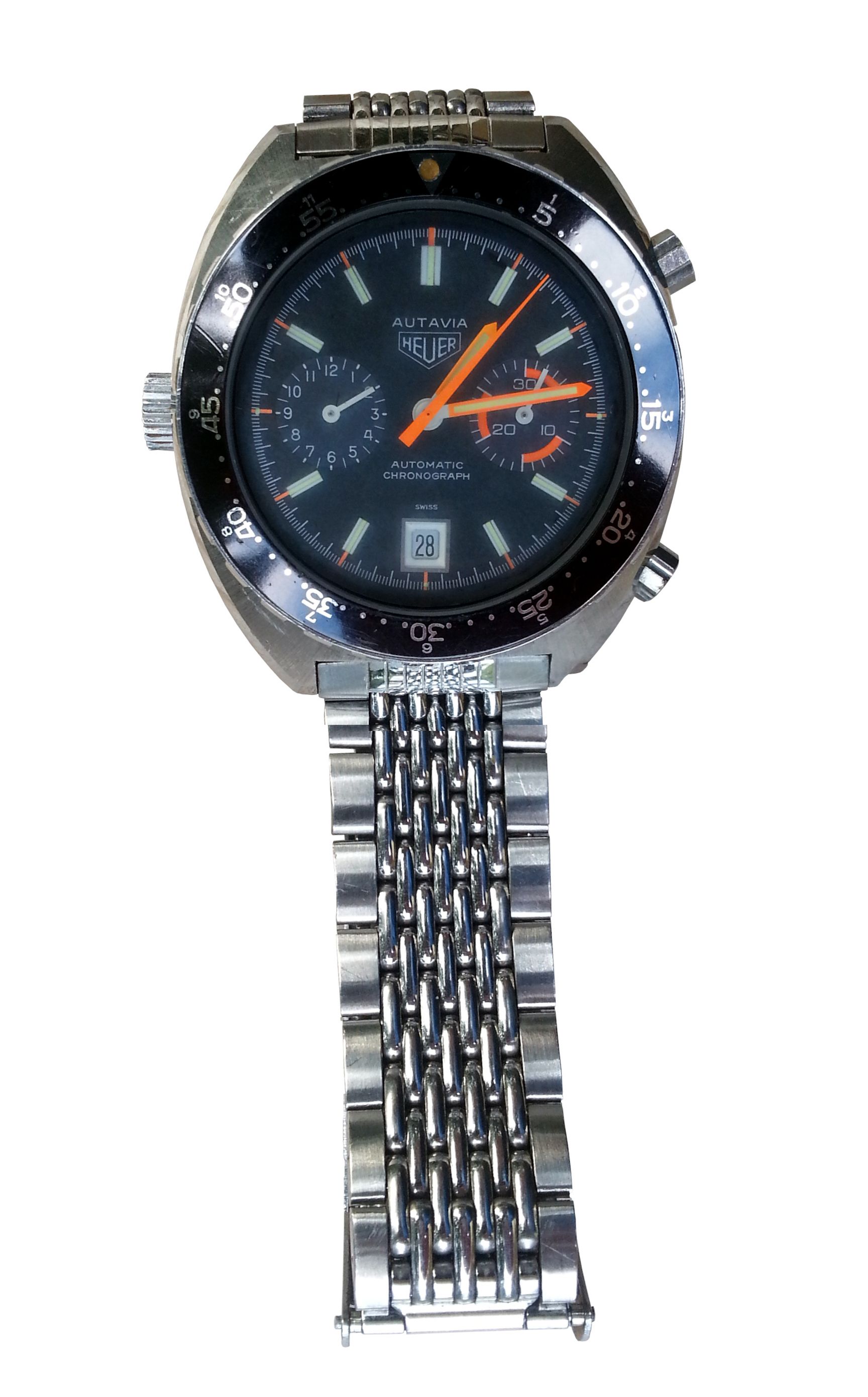
Vintage Heuer Autavia reference 11630 with orange dial
Vintage Heuer Autavia reference 11630 chronograph with orange panda dial — one of the most sought-after collector pieces from the pre-TAG Heuer era.
Photo: Alex Peters (photo); Pittigrilli (retouching) — CC BY-SA 3.0 — Wikimedia Commons
Jack W. Heuer , great-grandson of founder Edouard, joined the family company in 1958 as a young engineer. By 1962 he had become the company's majority shareholder .

The decade and a half that followed produced the defining Heuer designs. Under Jack Heuer's direction:

  • 1962 : The Autavia wristwatch — the first wristwatch Jack Heuer personally designed, named for the existing dashboard instrument brand (AUTomobile + AVIAtion)
  • 1963 : The Carrera — named after the Carrera Panamericana road race, following a conversation Jack had with Mexican racing drivers Pedro and Ricardo Rodríguez
  • 1969 : The Monaco — the world's first square automatic chronograph, introduced alongside the Calibre 11 on 3 March 1969 ; the same day Steve McQueen was confirmed as the lead for the Le Mans film
  • 1969 : The Calibre 11 automatic chronograph — developed through a consortium (Heuer-Léonidas, Breitling, Büren Watch Co., Dubois-Dépraz) as a joint venture to produce the world's first automatic integrated chronograph

Jack Heuer also made the decision that defined Heuer's marketing for decades: he chose Jo Siffert — the Swiss Formula 1 driver — as Heuer's first brand ambassador, giving Heuer access to the closed world of Formula 1. Siffert introduced Heuer to Ferrari. The Scuderia Ferrari sponsorship began in 1971.


TAG Acquisition — 1985

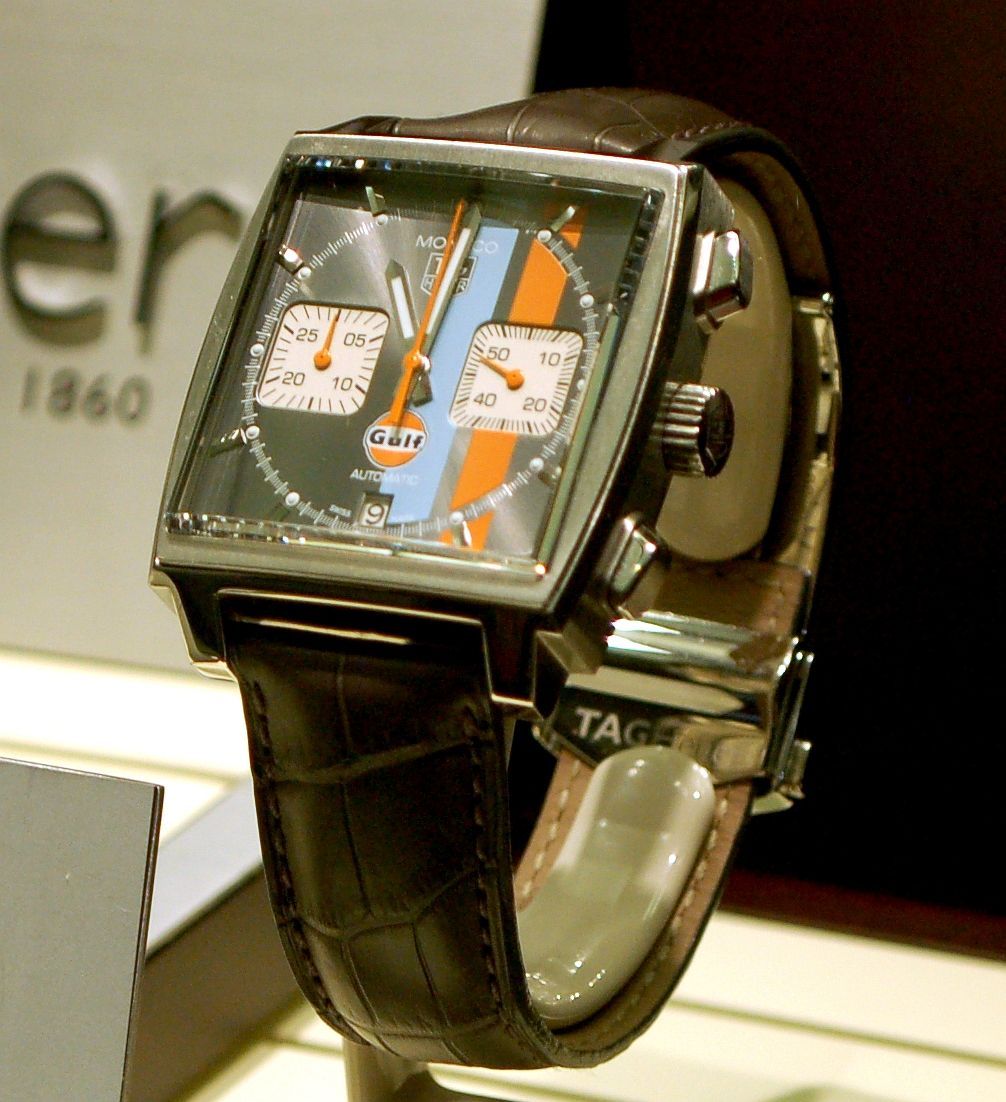
TAG Heuer Monaco Gulf Racing edition with Calibre 12
TAG Heuer Monaco Gulf Racing edition — Calibre 12 automatic, limited to 5,000 pieces, featuring the blue and orange Gulf Oil livery on the iconic square case.
Photo: Ferengi — CC BY-SA 3.0 — Wikimedia Commons
In 1985 , the TAG Group (Holdings) S.A. — Techniques d'Avant Garde — purchased a majority stake in Heuer. The controlling shareholders of TAG were the Ojjeh family , led by Mansour Ojjeh.

TAG was already prominent in Formula 1: the Porsche TAG turbo engines used by the McLaren team from 1983 to 1987 bore the TAG name, winning three consecutive Constructors' Championships (1984, 1985, 1986). The acquisition of Heuer gave the TAG name watch-brand visibility; the McLaren-Porsche TAG F1 dominance gave the newly renamed TAG Heuer immediate motorsport credibility at the moment of the rebrand.

Jack Heuer stepped down from operational leadership following the acquisition. He later returned as Honorary Chairman — a role in which he remained active for decades, lending his personal history and credibility to the brand's marketing of its own heritage.


LVMH Acquisition — 1999

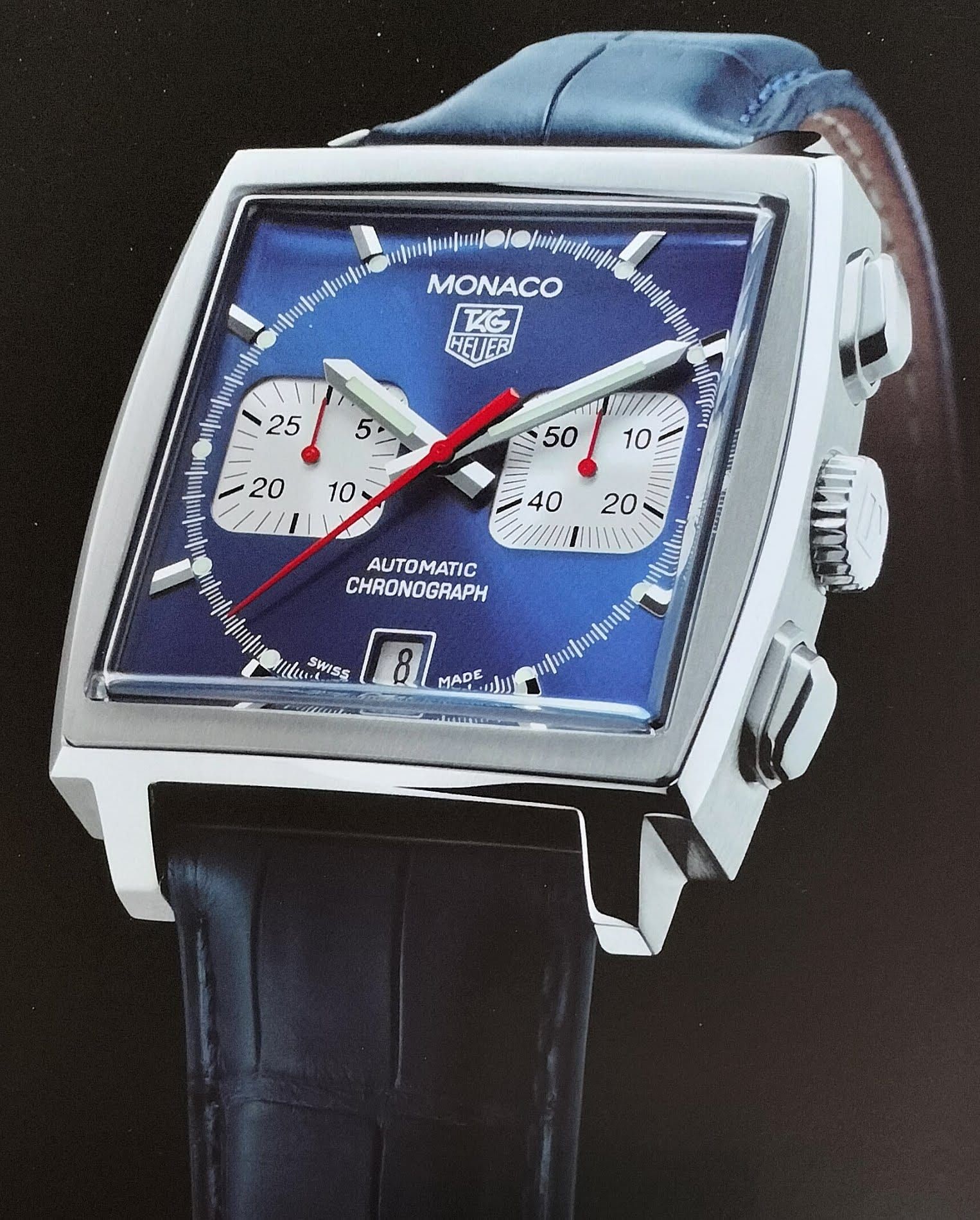
TAG Heuer Monaco 2020
TAG Heuer Monaco 2020 reference — the current-generation square-case automatic chronograph.
Photo: EMore98 — CC BY-SA 4.0 — Wikimedia Commons
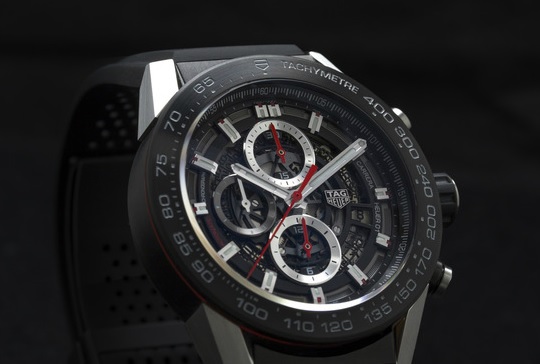
In 1999 , LVMH Moët Hennessy Louis Vuitton (Bernard Arnault) acquired TAG Heuer for CHF 1.15 billion — approximately USD 739 million at the time.

The deal came in a context where LVMH was actively expanding its hard luxury portfolio. The acquisition was described by analysts at the time as filling a significant gap: LVMH was "virtually absent in watches" and TAG Heuer provided an established platform with global brand recognition, a motorsport heritage, and strong distribution.

TAG Heuer joined what became the LVMH Watches & Jewelry division alongside Hublot (acquired 2008) and Zenith (acquired 1999, also that year). From 2020, Frédéric Arnault (son of Bernard Arnault) served as TAG Heuer CEO, overseeing a significant expansion of the in-house movement programme and the Connected smartwatch line. In late 2023 , Frédéric Arnault was elevated to a broader LVMH Watches CEO role overseeing TAG Heuer, Hublot, and Zenith, with Julien Tornare appointed as TAG Heuer CEO.


Current Position

TAG Heuer Carrera Heuer 01 in-house chronograph
TAG Heuer Carrera Heuer 01 — the model that introduced TAG Heuer’s first fully in-house column-wheel chronograph movement.
Photo: Personey — CC BY-SA 4.0 — Wikimedia Commons
TAG Heuer sits at the entry point of the Swiss mechanical luxury watch market — a position that is strategically important and competitively intense. The mainstream Carrera, Aquaracer, and Aquaracer Professional 300 compete directly with Omega Seamaster, IWC Pilot, and Breitling Superocean at the CHF 2,000–6,000 price range.

The brand's technical ambitions have expanded since 2010: the Calibre 1887 (2010), Calibre Heuer 01 (2015), and Calibre Heuer 02 (2017) represent a genuine in-house movement programme. The high-frequency innovations — the Mikrograph (1/100th second, 2011), Mikrotimer (1/1000th second concept, 2011), and Mikrogirder (carbon composite oscillator, 2012) — are the most technically ambitious chronograph developments any brand produced in that decade.

In 2025 , TAG Heuer returned as the Official Timekeeper of Formula 1 as part of a broader LVMH–Formula 1 partnership, and became the first-ever title sponsor of the Monaco Grand Prix . The circular logic — the brand whose watch is named after Monaco is now the title sponsor of Monaco — is not lost on collectors.


TAG Heuer Model and Technology Guides

Each TAG Heuer collection and key technology has its own in-depth history on Time on the Move:

Latest News

Frequently Asked Questions

When was Heuer founded?
In 1860, by Edouard Heuer in Saint-Imier, Switzerland. The company subsequently relocated to Biel/Bienne.

What is the oscillating pinion?
A Heuer patent from 3 May 1887. The oscillating pinion is a movable shaft with two sprockets that allows a chronograph mechanism to start and stop instantly via a pushbutton, replacing the more complex lever-clutch system. It remains in use in virtually all mechanical chronographs today.

What does TAG stand for?
Techniques d'Avant Garde — the name of the group that acquired a majority stake in Heuer in 1985.

When did LVMH acquire TAG Heuer?
In 1999, for CHF 1.15 billion (approximately USD 739 million).

Who is Jack Heuer?
Jack W. Heuer, great-grandson of founder Edouard Heuer. He joined the family company in 1958, became majority shareholder in 1962, and oversaw the design of the Autavia, Carrera, and Monaco, the Calibre 11 automatic chronograph consortium, and the Scuderia Ferrari sponsorship. He stepped down when TAG acquired the brand in 1985 and later served as Honorary Chairman.


Related Articles

Recent Posts

By Zach Charles • October 10, 2026
Hamilton's American Classic Cushion Mechanical revives its 1926 Art Deco cushion watches, seen in Oppenheimer, in 30mm and 34mm with the new hand-wound…
Doxa SUB 200: The Accessible Everyday Diver
By Zach Charles • October 10, 2026
Complete guide to the Doxa SUB 200 — 42mm, 200m, four colorways, Sellita SW200-1. The accessible entry to the Doxa SUB family with the full…
By Zach Charles • October 10, 2026
The Breitling Top Time B01 Aston Martin DB5 pairs a cushion-shaped 41mm case, a wooden inner ring and the in-house Caliber 01 across three limited…
By Zach Charles • October 10, 2026
TAG Heuer developed the Mikrograph (2011, 1/100th second), Mikrotimer Flying 1000 (2011, 1/1000th second), and Mikrogirder (2012, 1/2000th second).
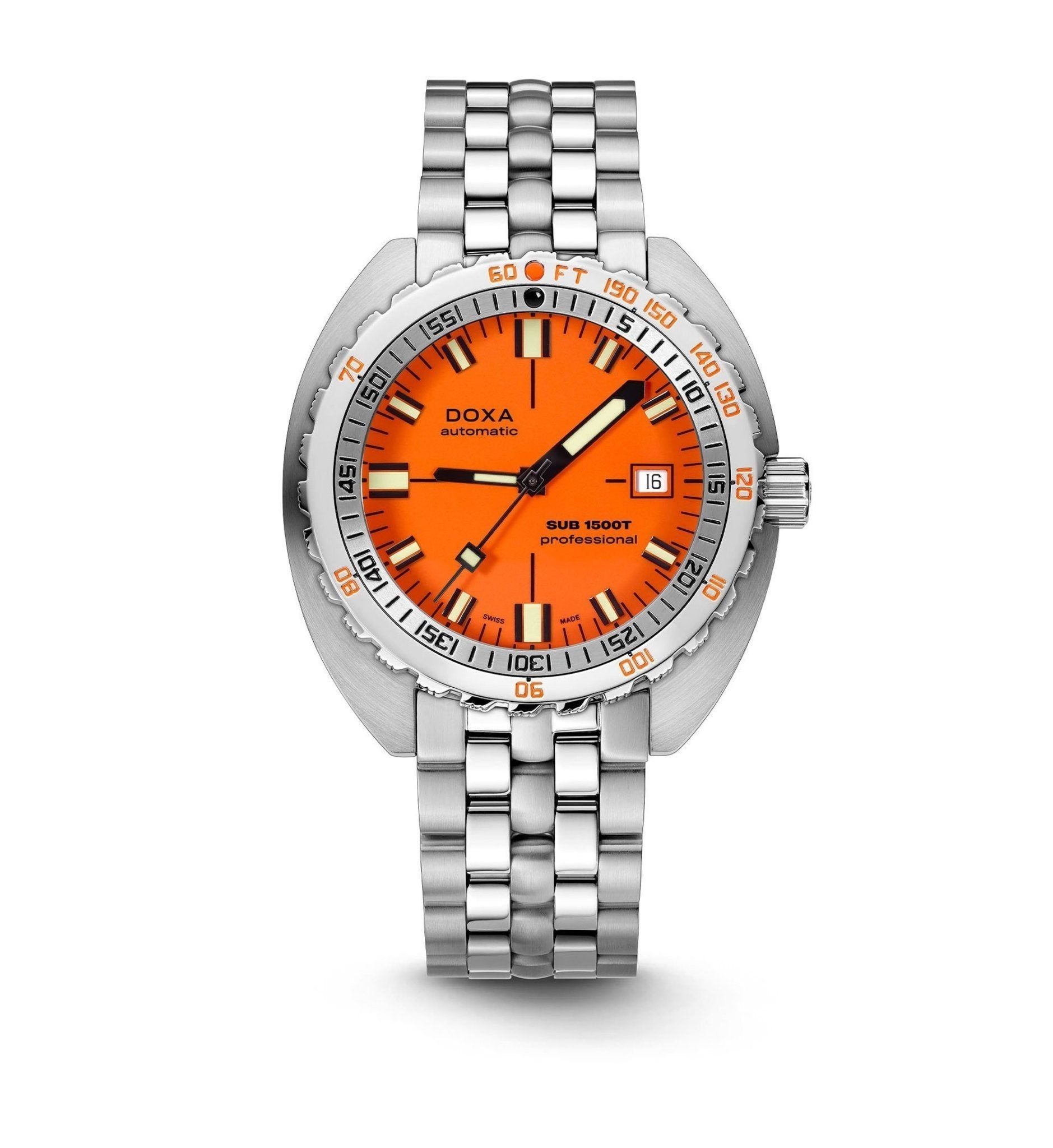
Doxa SUB 1500T: The 1,500-Metre Depth-Rating Flagship
By Zach Charles • October 10, 2026
Complete guide to the Doxa SUB 1500T — 45mm, 1,500m depth rating, helium escape valve, ETA 2892-2 movement, USD 2,690.
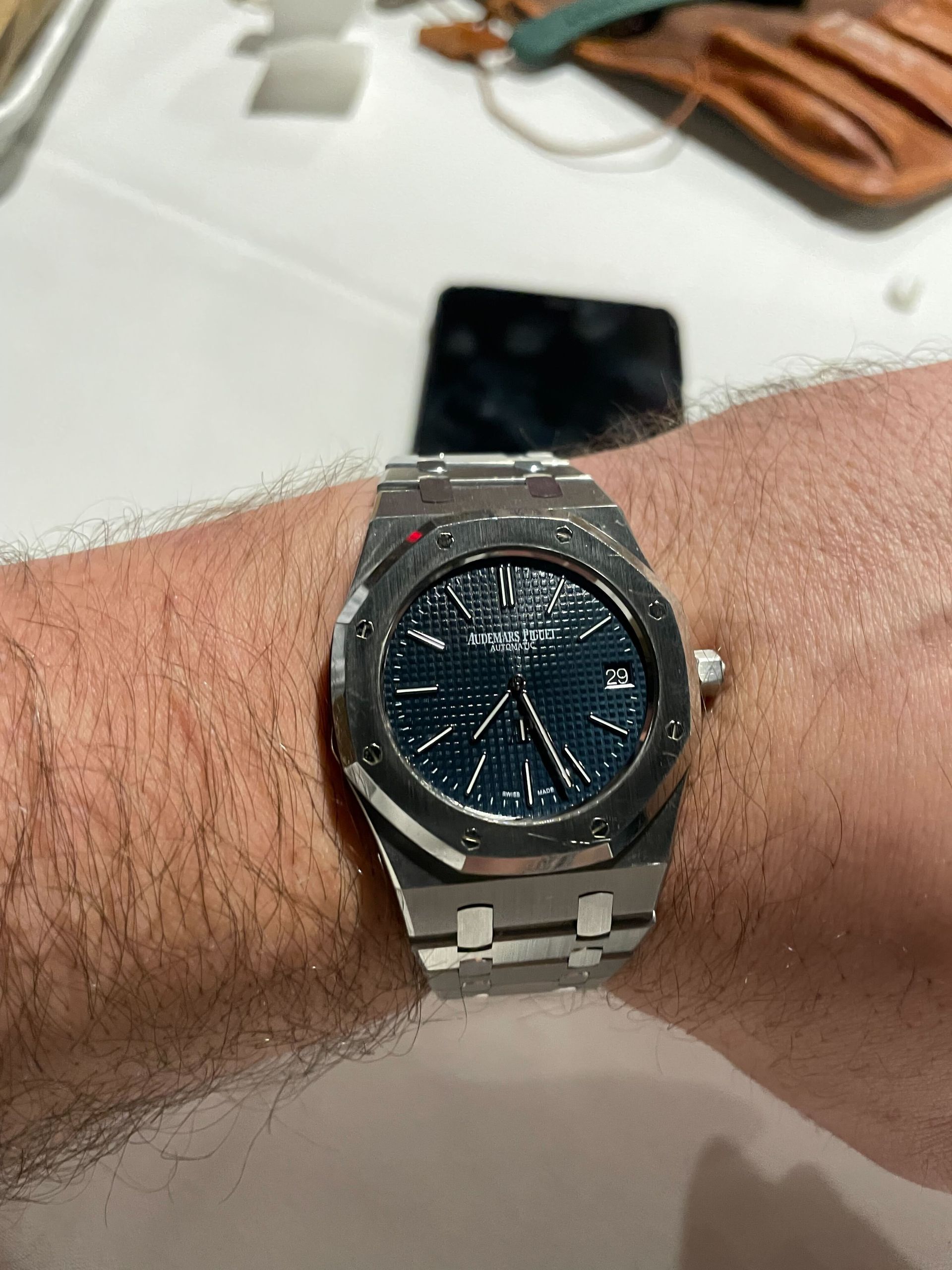
Audemars Piguet Royal Oak 'Jumbo' ref. 15202 with blue tapisserie dial and integrated steel bracelet
By Zach Charles • October 10, 2026
The Audemars Piguet × Swatch Royal Pop is a $400 bioceramic pocket watch in 8 colourways, powered by a new hand-wound SISTEM51 with 90+ hour power…

Time on the Move logo
By Zach Charles • October 10, 2026
Zach Charles is the editor of Time on the Move, an independent watch reference covering brand and model histories, buying guides and release news…
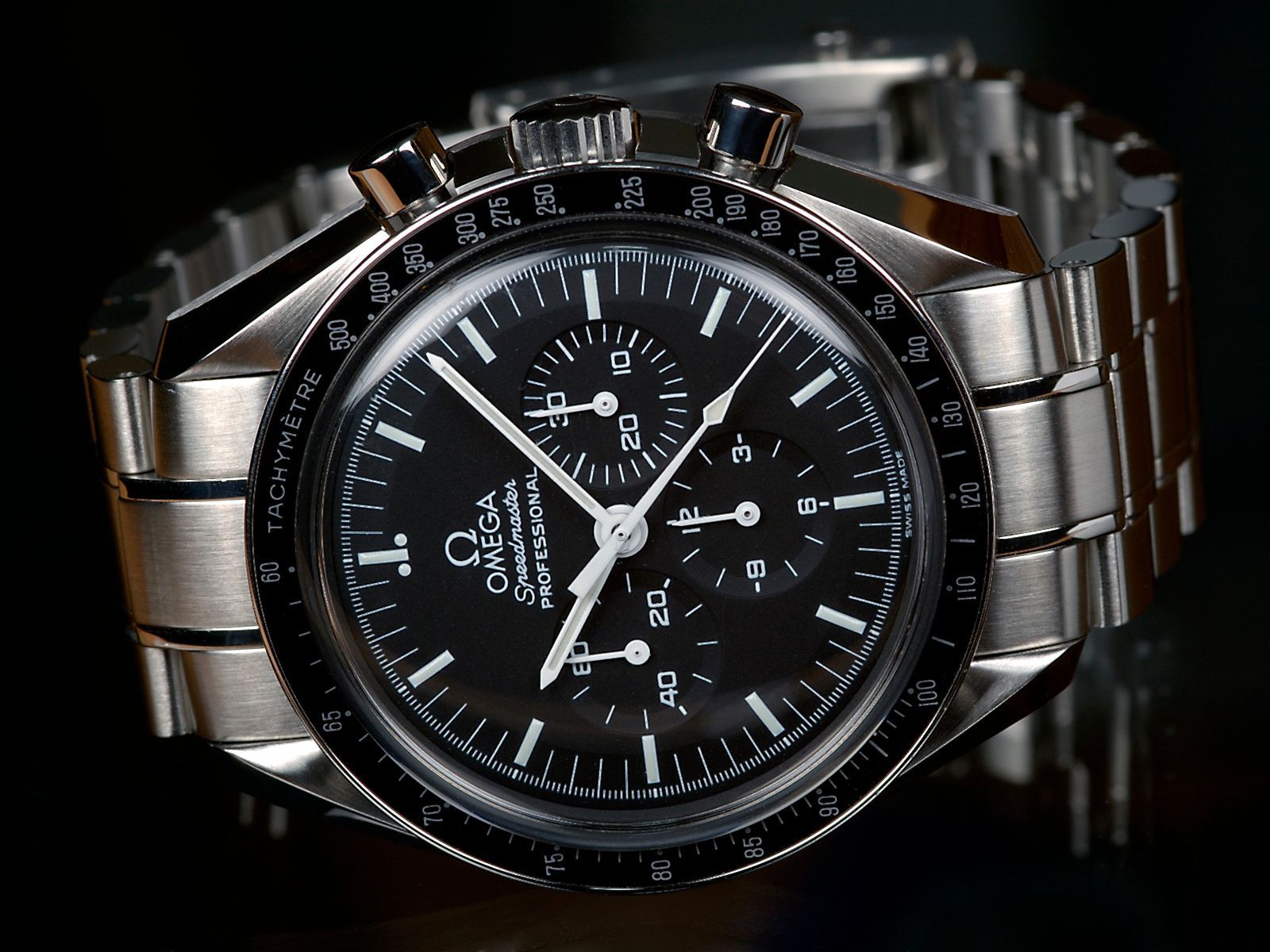
Omega Speedmaster Professional 'Moonwatch' chronograph, front view on steel bracelet
By Zach Charles • October 9, 2026
Find the best watches at every price point from $500 to $15,000 — new and pre-owned. Covers every budget tier with specific reference picks, brand…
By Zach Charles • October 9, 2026
The latest watch news: new releases, Watches and Wonders coverage, discontinuations, industry analysis, and market trends. Currently 1 article.
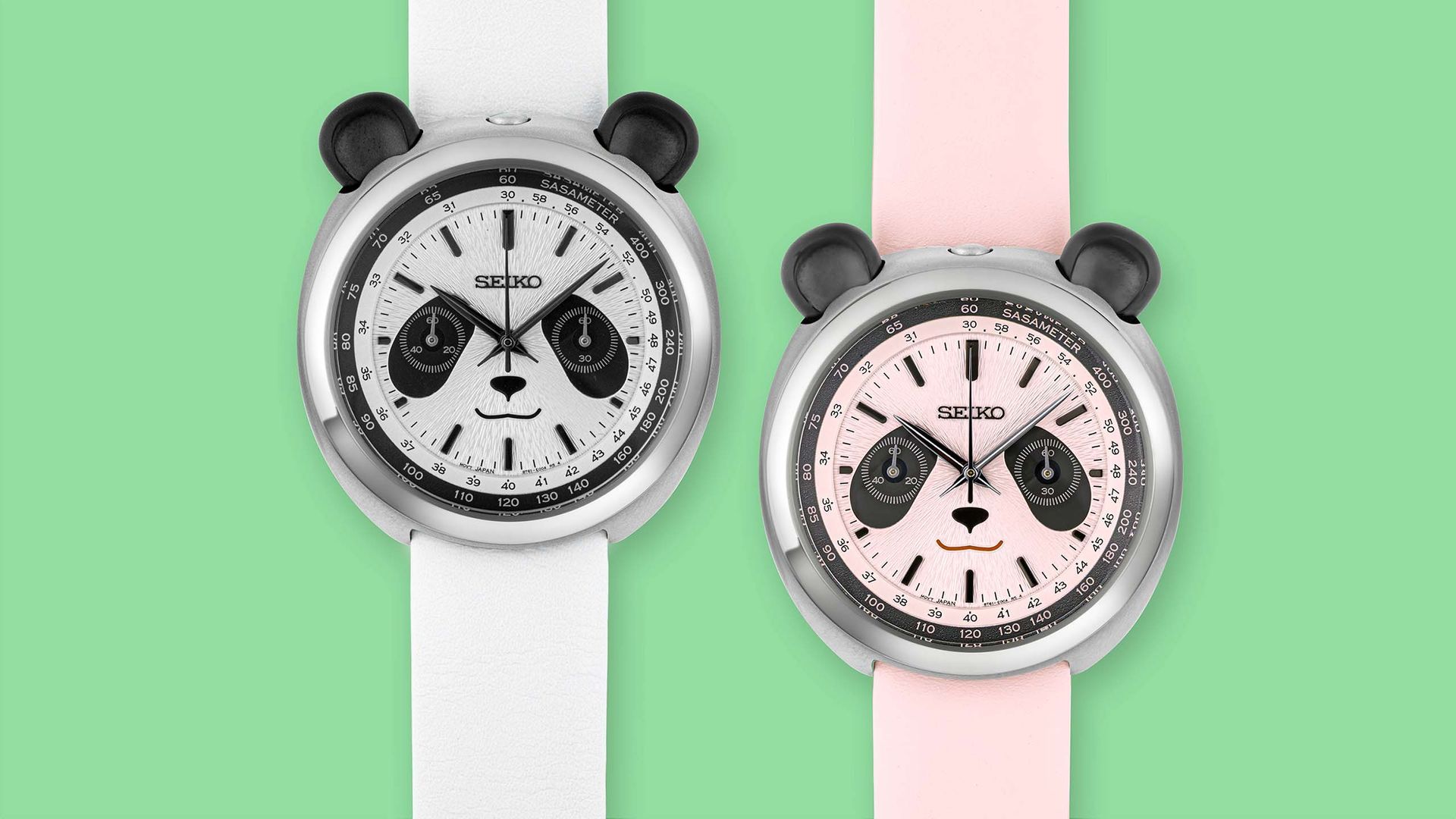
Seiko's New Panda Chronograph Is Literally a Panda: The Power Design Project HHK001 and HHK002
By Zach Charles • October 8, 2026
Seiko's Power Design Project panda chronograph (HHK001, HHK002) turns the panda dial into an actual panda face, with ear pushers, a 'Sasameter' and a 3D…
Show More