Vintage Heuer: The Collector's Guide

Zach Charles • September 3, 2026

Share this article

Vintage Heuer: The Pre-TAG Collector References

The Heuer collector universe is larger than its three most famous names. The Monaco, Carrera, and Autavia dominate auction catalogues and editorial attention, but they existed alongside a broader range of chronograph references that responded to the design sensibilities of each decade they were produced in. The Silverstone responded to the angular 1970s sports watch aesthetic. The Monza responded to Ferrari's championship season. The Skipper responded to the sailing market. The Camaro and Montreal responded to the trend toward cushion and integrated case designs. Collectively, these references define a brand that was actively experimenting with form throughout the manual-wind and early automatic era.


Jack Heuer at age 85, 2017
Jack Heuer photographed at age 85 in June 2017 — CEO of Ed. Heuer & Co from 1961 to 1982, the period in which Heuer created the Monaco, Carrera, and Autavia.
Photo: BBCLCD — CC BY-SA 4.0 — Wikimedia Commons

What "Vintage Heuer" Means

Vintage Heuer Autavia reference 11630 with orange dial
Vintage Heuer Autavia reference 11630 chronograph with orange panda dial — one of the most sought-after collector pieces from the pre-TAG Heuer era.
Photo: Alex Peters (photo); Pittigrilli (retouching) — CC BY-SA 3.0 — Wikimedia Commons

The collector designation "vintage Heuer" typically refers to watches produced before the TAG acquisition in 1985 — the pre-TAG era when the brand carried only the "Heuer" name and the Heuer shield logo.

More precisely, collectors identify three sub-periods:

  • Pre-Calibre 11 (pre-1969) : Manual-wind references, including early Carrera, Autavia, and Camaro variants. Movements are primarily Valjoux (72, 92) or Landeron calibres.
  • Calibre 11 era (1969–c.1975) : Automatic chronograph references powered by the consortium movement. Monaco, Carrera, and Autavia all received Calibre 11 variants. Some references were produced exclusively in this era.
  • Post-Calibre 11 / Pre-TAG (c.1975–1985) : References using Lemania and ETA-based movements, including the Monza and Silverstone.

The quartz crisis (c.1975–1982) significantly reduced Heuer's mechanical production volume. Mechanical references from this period are proportionally rarer than those from the Calibre 11 era.


Heuer Camaro

Heuer Fliegerchronograph military pilot's watch dial and hands
Close-up of the dial and hands of a Heuer Fliegerchronograph military pilot’s chronograph — illustrating the clean legible layout typical of vintage Heuer sports chronographs.
Photo: M. Pfeiffer (Gordito1869); Superbass (derivative) — CC BY 3.0 — Wikimedia Commons
The Camaro (named after the Chevrolet muscle car) was introduced circa 1968 , just before the Calibre 11. It used a cushion-shaped case with pump-style pushers — a design language that positioned it as a sporty alternative to the rounder Autavia.

The Camaro's most notable feature for collectors is its dial variety : multiple layouts exist across manual-wind variants, with colour combinations and sub-register configurations that make identification of specific examples a significant collector skill. The Camaro was never as prominent as the Monaco or Carrera but has developed a dedicated following among collectors who appreciate its bold case form and the dial variety it offers.


Heuer Skipper

The Skipper was designed for the sailing market — a specific functional application that produced a distinctive dial.

The Skipper's dial features a pulsometer-style layout , typically in orange and blue, with the 15-minute countdown interval prominently displayed — relevant for timing sailing race starts, where a countdown from 15 (or 10) minutes to the gun is the central timing function. The colour scheme (orange and blue) references traditional nautical signal flag colours.

The Skipper was produced in manual-wind variants using the Valjoux 7736 and in Calibre 11 automatic variants. The orange/blue dial makes it one of the most visually distinctive Heuer references of the period — immediately identifiable at a glance. Collector interest is driven by the dial's graphic quality as much as by its functional specification.


Heuer Montreal

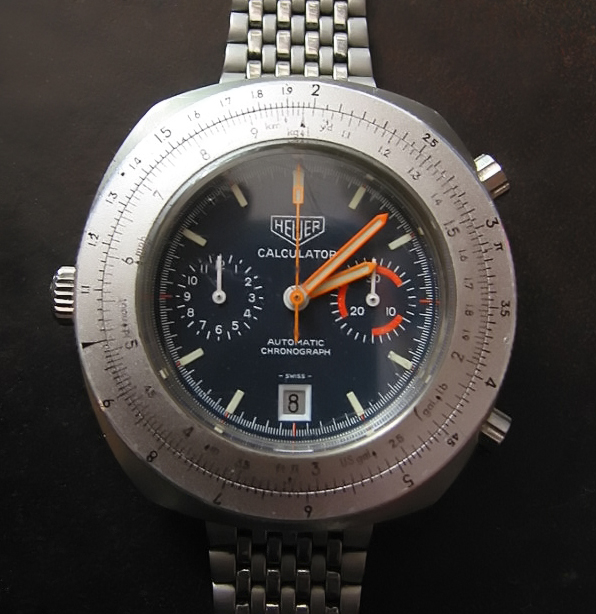
Heuer Calculator Automatic slide-rule chronograph
Heuer Calculator Automatic chronograph with integrated circular slide rule bezel — a rare vintage Heuer piece for the engineering-minded collector.
Photo: Dr.mgf.winkelmann — CC BY 3.0 — Wikimedia Commons
The Montreal — named after the Formula 1 race circuit on the Île Notre-Dame in Quebec — was introduced circa 1972 . It represents a specific moment in Swiss case design: the angular, multi-faceted cushion case aesthetic that characterised 1970s sport watches broadly.

The Montreal case features pronounced angular facets, visible in both the bezel and the case band, that catch light differently at different angles. It was available in stainless steel and with a two-tone (steel and gold-plated) case option. The movement was typically the Calibre 11 or Calibre 12.

The Montreal's name — a Formula 1 reference — connected it to Heuer's motorsport identity without directly referencing a specific race result or driver. Its case design has aged better than many 1970s interpretations of the same aesthetic, and collector premiums for clean examples have risen steadily as interest in 1970s sports watches generally has grown.


Heuer Silverstone

The Silverstone — named after the British Formula 1 circuit — was introduced circa 1974 and represents the most extreme expression of 1970s Heuer case design.

The Silverstone case is square with clipped corners — a cousin to the Monaco's square form but with an angular, integrated strap design that is completely of its era. The integrated bracelet (available in rubber or metal mesh) is part of the watch's architecture rather than an attachable accessory. The dial layout uses large, strongly contrasted displays.

The Silverstone was produced in the post-Calibre 11 era, typically using the Calibre 12 (the direct descendant of the Calibre 11 with a date function) or Lemania-based movements.

The Silverstone is the vintage Heuer reference with the most direct connection to the broader 1970s sports watch aesthetic — the integrated bracket and angular case design that characterised the Royal Oak, Nautilus, and their contemporaries. It was a mainstream sport watch of its era; it is now a collector's piece for exactly that reason.


Heuer Monza

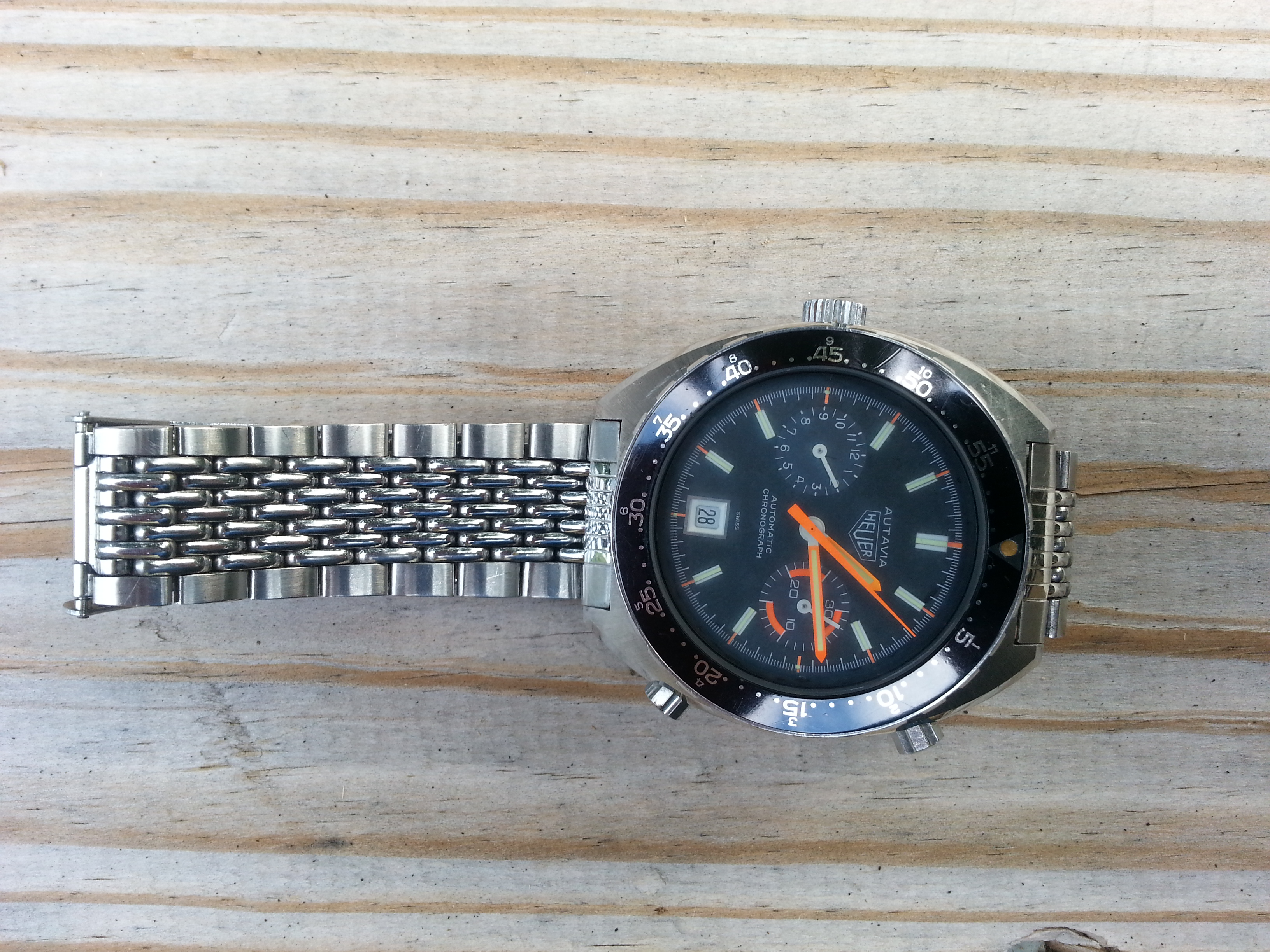
Heuer Autavia 11630 vintage orange dial
Heuer Autavia reference 11630 with orange dial on original steel bracelet — one of the landmark vintage Heuer references in the collector market.
Photo: Alex Peters (Ape10000) — CC BY-SA 3.0 — Wikimedia Commons

The Monza was introduced in 1976 — the year Niki Lauda survived the near-fatal accident at the Nürburgring and finished the season with Ferrari. The Monza was produced to celebrate Ferrari's 1975 Constructors' Championship (the first of two Ferrari championships during the Heuer-Ferrari sponsorship period).

The Monza's most distinctive feature: the case was treated with black PVD coating — a Physical Vapour Deposition process that produces a durable, heat-resistant black finish. Black PVD cases were unusual in Swiss watchmaking in 1976, giving the Monza a visual identity that distinguished it from the steel-cased majority of the Heuer catalogue.

Movements used in the Monza included the Calibre 11 , Calibre 12 , and subsequently Lemania-based calibres. The black PVD has aged variably — examples with intact PVD carry significant collector premiums over worn examples, as re-PVDing (applying new coating) is considered a form of restoration that reduces collectibility.

The name "Monza" — the Italian circuit where Formula 1's Italian Grand Prix is held — connected the watch to Ferrari's Italian identity at the height of the Heuer-Ferrari partnership.


The Oscillating Pinion — Heuer's Presence in Every Chronograph

TAG Heuer Monaco Gulf Racing edition with Calibre 12
TAG Heuer Monaco Gulf Racing edition — Calibre 12 automatic, limited to 5,000 pieces, featuring the blue and orange Gulf Oil livery on the iconic square case.
Photo: Ferengi — CC BY-SA 3.0 — Wikimedia Commons
A thread connecting every Heuer chronograph of the pre-TAG era: the oscillating pinion patented by Edouard Heuer on 3 May 1887. This device — a movable shaft with two sprockets that allows instant start/stop of the chronograph function — appears in the Valjoux calibres used in the Carrera and Camaro, in the consortium-produced Calibre 11, and in the Lemania movements used in the Monza and Silverstone.

The oscillating pinion is not visible to the owner. It is an internal mechanism. But its presence in the movement of every significant Heuer chronograph connects the 1960s–1970s production to the 1887 patent that defined the brand's technical identity. The Carrera, the Monaco, the Silverstone — all are, in a mechanical sense, descendants of Edouard Heuer's 1887 innovation.


Collector Market Overview

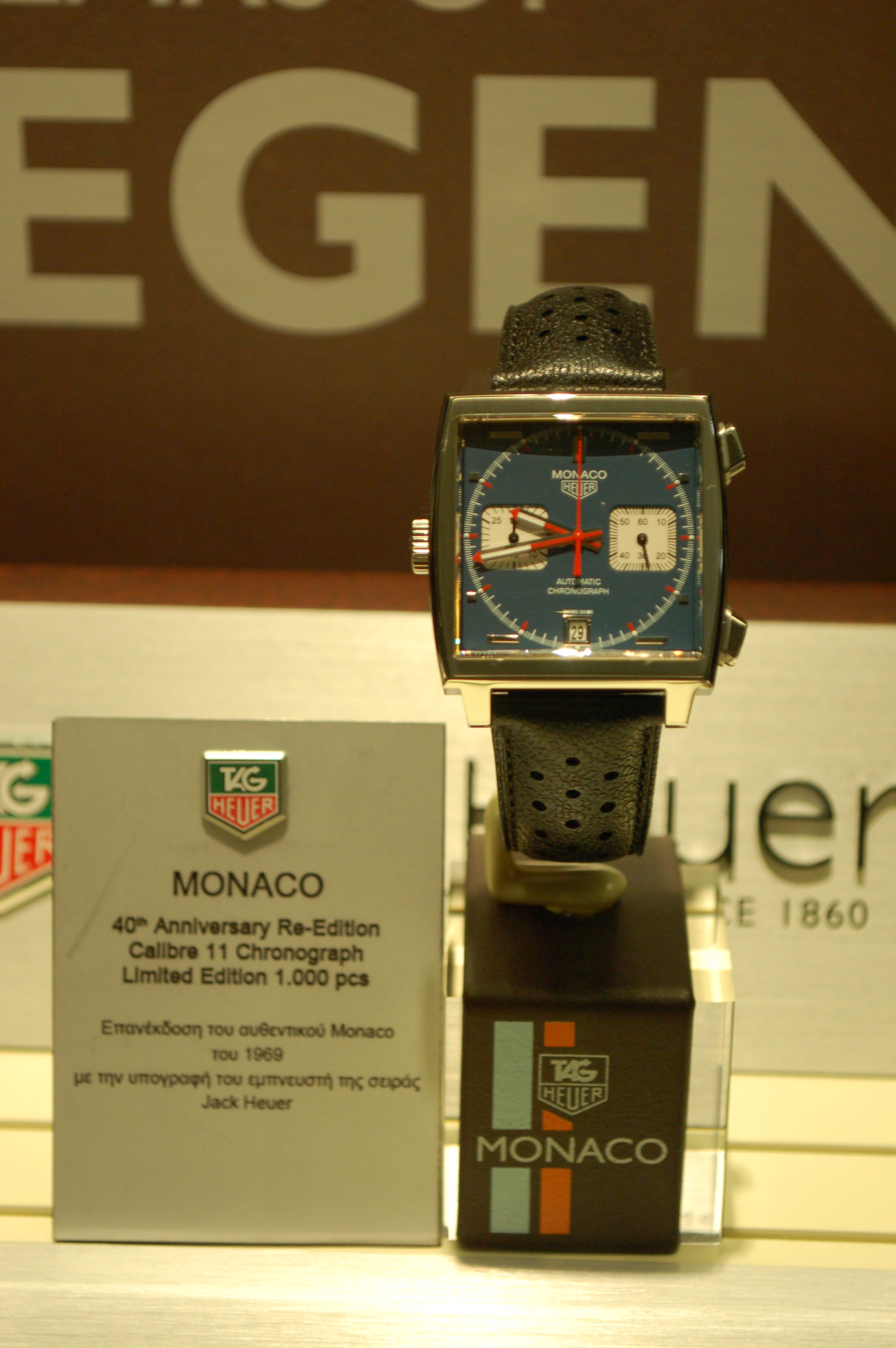
TAG Heuer Monaco 40th Anniversary re-edition
TAG Heuer Monaco 40th Anniversary re-edition — modern homage to the 1969 original that now commands premium prices in the vintage collector market.
Photo: Ferengi — CC BY-SA 3.0 — Wikimedia Commons
The vintage Heuer market has matured significantly since the early 2000s, when awareness of these references was limited to specialist collectors and auction houses. Key developments:

  • The OnTheDash database (onthedash.com) has catalogued reference variations, production details, and auction results across the Heuer catalogue, providing the reference infrastructure that collector markets require to function efficiently
  • Phillips Racing Pulse and Christie's have achieved significant results for important Heuer references, including the McQueen Monaco (USD 2,208,000) and important Autavia and Carrera examples
  • The Autavia Cup (2017) demonstrated mainstream awareness beyond the specialist community — 50,000+ votes in a brand-run competition about vintage references

Current collector hierarchy (approximate):
1. Monaco — especially McQueen provenance, Gulf editions, early Calibre 11 examples
2. Carrera — especially early ref. 2447 manual-wind examples in exceptional condition
3. Autavia — especially Siffert and Rindt references; 2446 and 1163T
4. Silverstone, Monza, Montreal, Skipper — strong collector interest, lower prices than the top tier


Frequently Asked Questions

What does "vintage Heuer" refer to?
Watches produced before the 1985 TAG acquisition — the pre-TAG era when the brand carried only the Heuer name. Typically categorised as pre-Calibre 11 (manual-wind), Calibre 11 era (1969–c.1975), and post-Calibre 11/pre-TAG (c.1975–1985).

What is the Heuer Silverstone?
A square-cased, integrated-strap sports chronograph introduced circa 1974, named after the British F1 circuit. Its angular case design is the most extreme expression of 1970s Heuer design. Produced with Calibre 12 and Lemania movements.

What is the Heuer Monza?
A 1976 chronograph produced to celebrate Ferrari's 1975 Constructors' Championship, featuring a black PVD case coating — unusual in Swiss watchmaking at the time. Named after the Italian F1 circuit.

What is the Heuer Skipper?
A chronograph designed for sailing, with a distinctive orange/blue dial featuring a countdown interval layout for timing race starts. Produced in manual-wind and Calibre 11 automatic variants.

What is the collector significance of the oscillating pinion?
Edouard Heuer's 1887 patent appears in the movements of nearly every Heuer chronograph — the Valjoux calibres, the Calibre 11 consortium movement, and Lemania variants. It is the mechanical thread connecting the 1960s–1970s production to the brand's foundational patent.


Related Articles

Recent Posts

By Zach Charles • October 10, 2026
Hamilton's American Classic Cushion Mechanical revives its 1926 Art Deco cushion watches, seen in Oppenheimer, in 30mm and 34mm with the new hand-wound…
Doxa SUB 200: The Accessible Everyday Diver
By Zach Charles • October 10, 2026
Complete guide to the Doxa SUB 200 — 42mm, 200m, four colorways, Sellita SW200-1. The accessible entry to the Doxa SUB family with the full…
By Zach Charles • October 10, 2026
The Breitling Top Time B01 Aston Martin DB5 pairs a cushion-shaped 41mm case, a wooden inner ring and the in-house Caliber 01 across three limited…
By Zach Charles • October 10, 2026
TAG Heuer developed the Mikrograph (2011, 1/100th second), Mikrotimer Flying 1000 (2011, 1/1000th second), and Mikrogirder (2012, 1/2000th second).
Doxa SUB 1500T: The 1,500-Metre Depth-Rating Flagship
By Zach Charles • October 10, 2026
Complete guide to the Doxa SUB 1500T — 45mm, 1,500m depth rating, helium escape valve, ETA 2892-2 movement, USD 2,690.
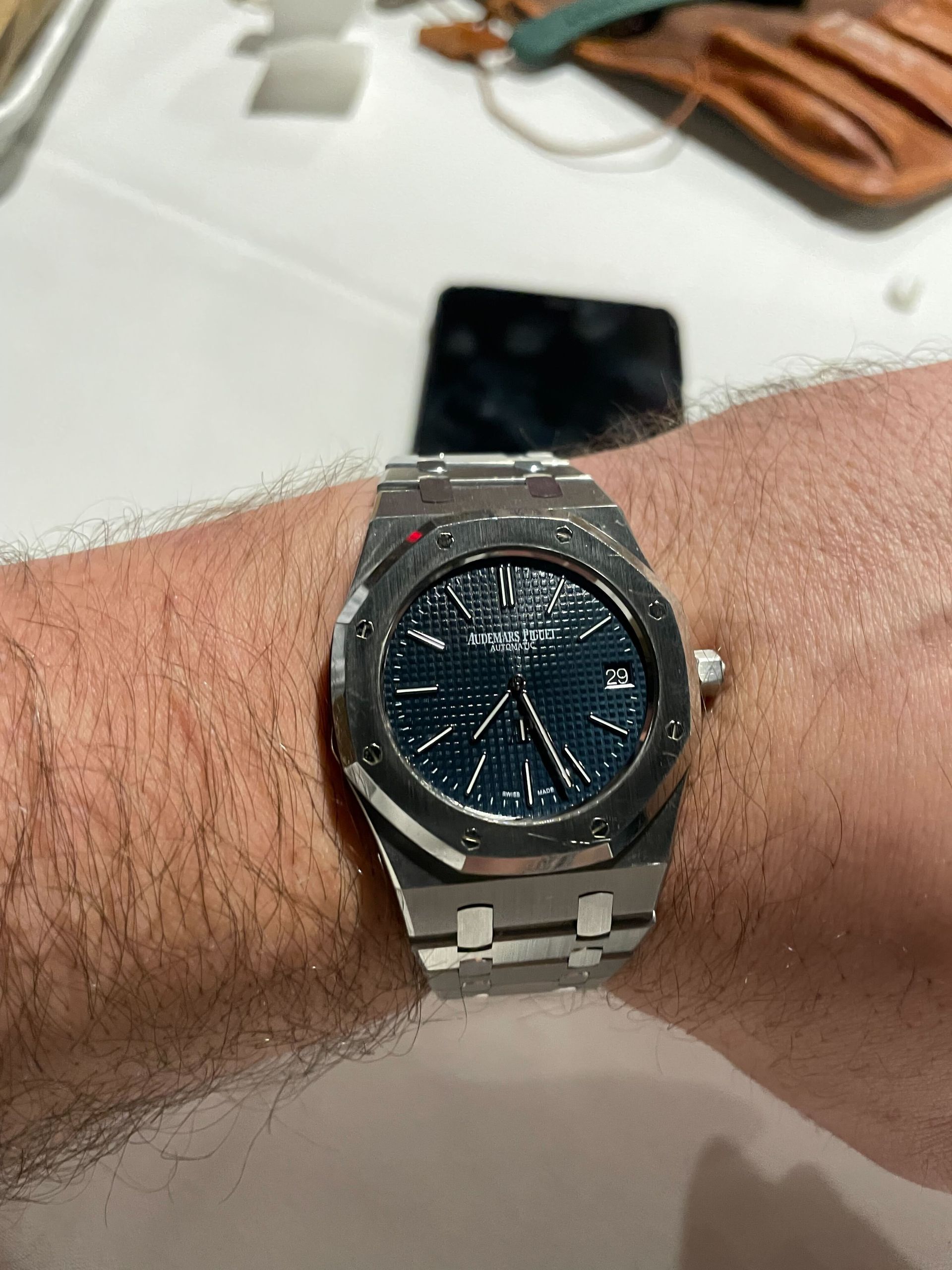
Audemars Piguet Royal Oak 'Jumbo' ref. 15202 with blue tapisserie dial and integrated steel bracelet
By Zach Charles • October 10, 2026
The Audemars Piguet × Swatch Royal Pop is a $400 bioceramic pocket watch in 8 colourways, powered by a new hand-wound SISTEM51 with 90+ hour power…

Time on the Move logo
By Zach Charles • October 10, 2026
Zach Charles is the editor of Time on the Move, an independent watch reference covering brand and model histories, buying guides and release news…
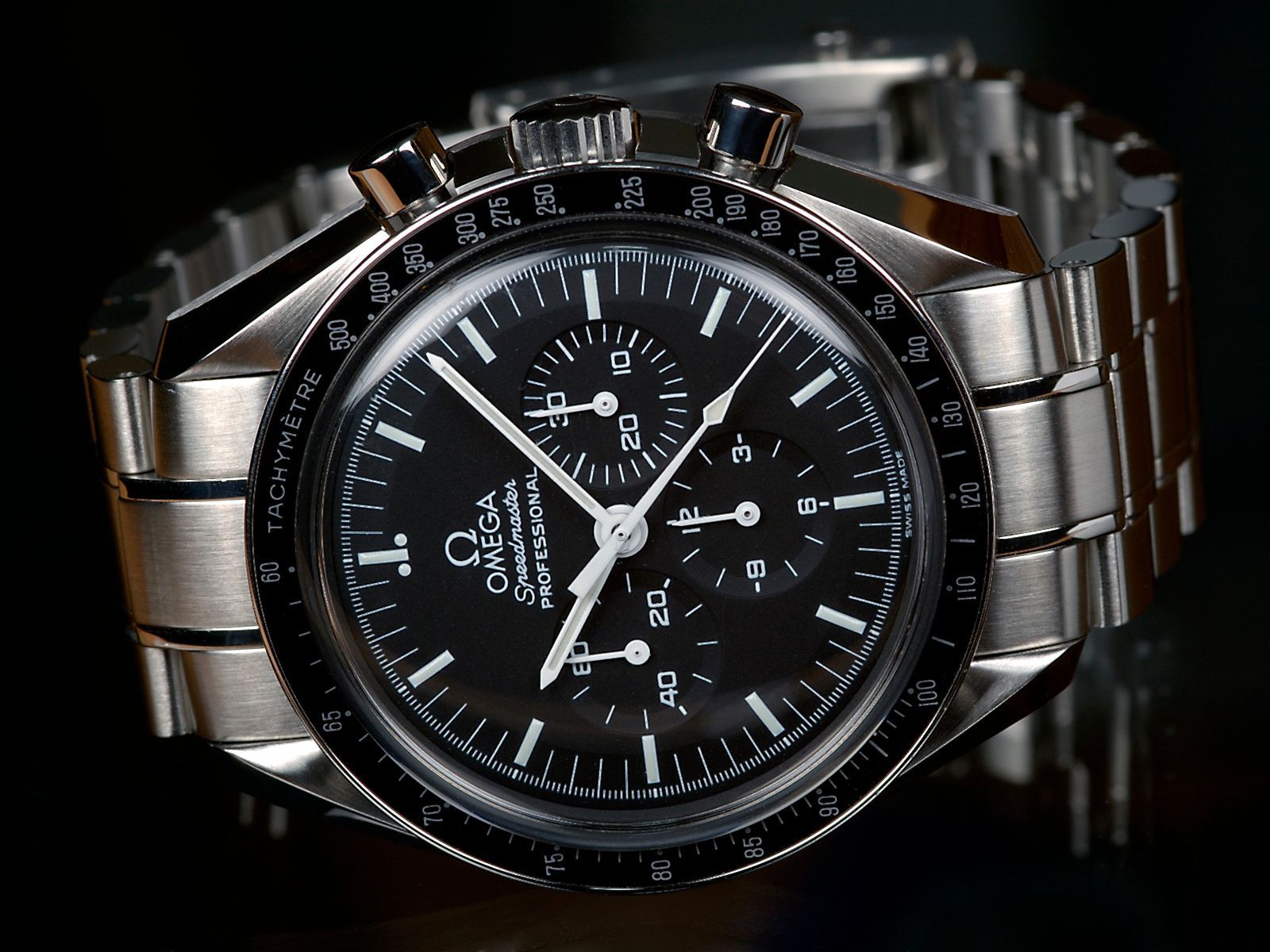
Omega Speedmaster Professional 'Moonwatch' chronograph, front view on steel bracelet
By Zach Charles • October 9, 2026
Find the best watches at every price point from $500 to $15,000 — new and pre-owned. Covers every budget tier with specific reference picks, brand…
By Zach Charles • October 9, 2026
The latest watch news: new releases, Watches and Wonders coverage, discontinuations, industry analysis, and market trends. Currently 1 article.
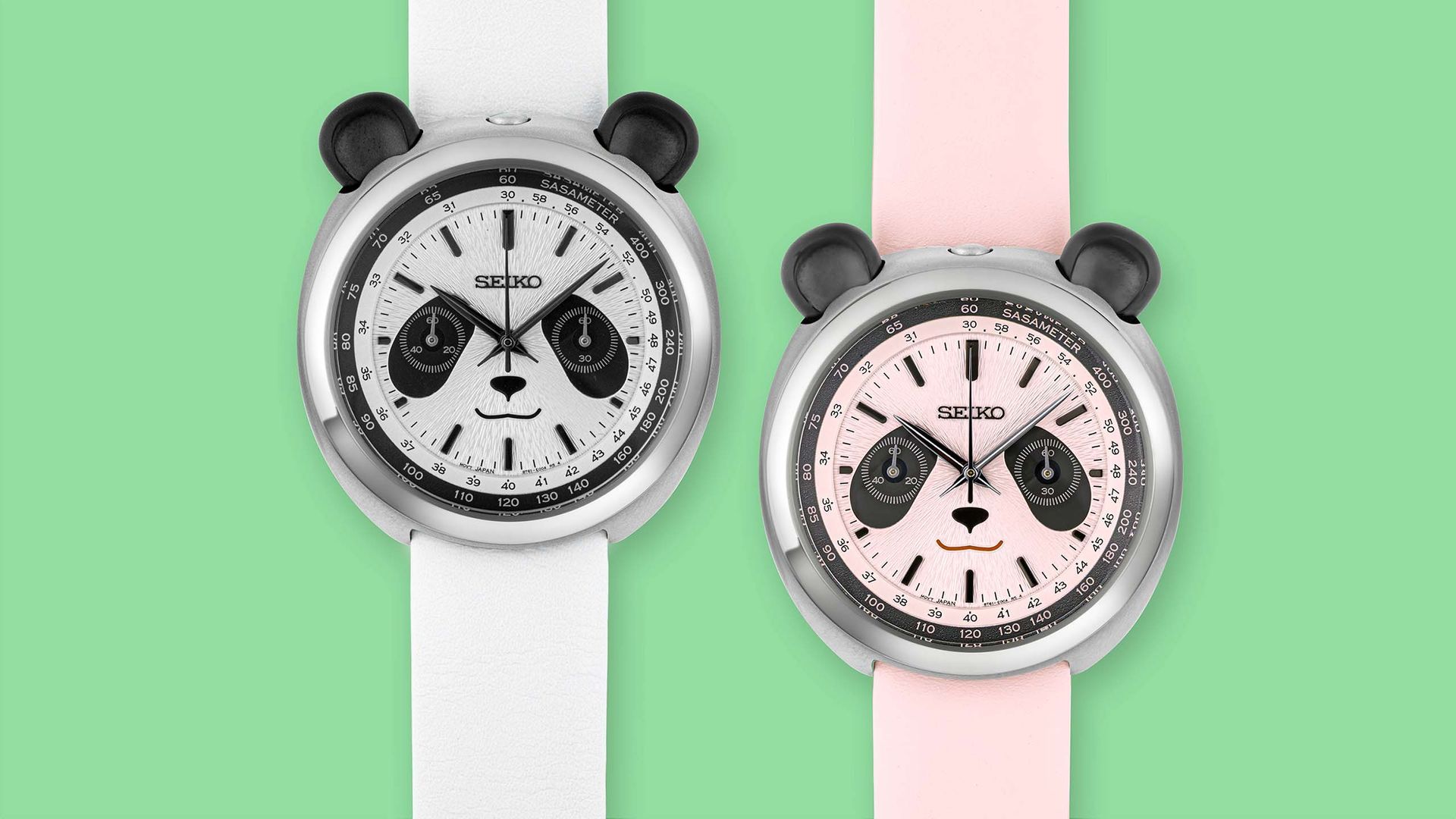
Seiko's New Panda Chronograph Is Literally a Panda: The Power Design Project HHK001 and HHK002
By Zach Charles • October 8, 2026
Seiko's Power Design Project panda chronograph (HHK001, HHK002) turns the panda dial into an actual panda face, with ear pushers, a 'Sasameter' and a 3D…
Show More