TAG Heuer Carrera: The Racing Chronograph

Zach Charles • July 7, 2026

Share this article

TAG Heuer Carrera: The Racing Chronograph

The Heuer Carrera was Jack Heuer's answer to a problem he had identified in the early 1960s: the watches motorsport professionals actually needed were too cluttered to be useful. The timing instruments of the era had small dials, dense text, and multiple sub-registers that made them difficult to read at speed. The Carrera resolved this with a clean, legible layout — a functional decision that produced a watch that has aged better than most of its contemporaries. It was named after a race that killed at least twenty-four people and was stopped because no country could justify continuing it.


TAG Heuer Carrera CV2010 automatic chronograph
TAG Heuer Carrera CV2010 automatic chronograph on stainless steel bracelet — a modern interpretation of Jack Heuer’s original 1963 Carrera racing chronograph.
Photo: Pinback66 (photo); Lämpel (retouching) — CC BY-SA 3.0 — Wikimedia Commons

The Carrera Panamericana

The Carrera Panamericana was a point-to-point road race across Mexico, run over approximately 3,078 km of open public roads — the Mexican section of the Pan-American Highway. It ran for five editions: 1950, 1951, 1952, 1953, and 1954 .

The race ended because it was too dangerous. Over five editions, at least 24 people died — drivers, co-pilots, and spectators. Mexican newspapers called it a "crime." After the 1954 race, the Mexican government concluded it was "not suited to Mexican characteristics" and shut it down permanently. (A revival version returned as a historic racing event in 1988, run at controlled speeds over different conditions.)

The name carrera in Spanish means both "race" and "career" — an ambiguity that gave the word resonance beyond its literal meaning. Jack Heuer learned about the race through a conversation with Pedro and Ricardo Rodríguez , Mexican Formula 1 drivers who told him the Carrera Panamericana was the most challenging race they had ever encountered. The name evoked speed, endurance, and an era of racing that would never be repeated. Jack Heuer registered it in Switzerland.


Introduction — 1963

TAG Heuer Carrera automatic chronograph with blue dial
TAG Heuer Carrera Automatic Chronograph with tachymetre scale and blue dial on steel bracelet, 2007.
Photo: Mike Chapman — CC BY-SA 3.0 — Wikimedia Commons
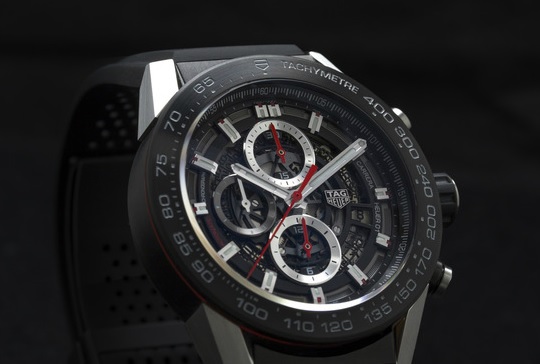
The Heuer Carrera ref. 2447 was launched in 1963 at a retail price of $89.50 .

Jack Heuer's design brief was specific: a chronograph legible under motorsport conditions. That meant large sub-registers, clean typography, no unnecessary text, high contrast between hands and dial, and a case size appropriate for reading at a glance. The Carrera was designed around function; its aesthetic reputation is a consequence of the functional decisions, not an end in itself.

The ref. 2447 came in multiple dial configurations:

  • Two-register (bi-compax) : 30-minute counter and small seconds — simpler, cleaner layout
  • Three-register (tri-compax) : 30-minute counter, 12-hour counter, and small seconds at 6 o'clock — "Carrera 12" designation

The three-register models used the Valjoux 72 — a highly respected Swiss chronograph calibre, manual-wind, known for its reliability and long service life. The two-register models used the Valjoux 92 .


Movement History

TAG Heuer Carrera Heuer 01 in-house chronograph
TAG Heuer Carrera Heuer 01 — the model that introduced TAG Heuer’s first fully in-house column-wheel chronograph movement.
Photo: Personey — CC BY-SA 4.0 — Wikimedia Commons

The Carrera's movement succession tracks the evolution of Swiss chronograph calibres across seven decades:

Era Movement Type
1963–1969 Valjoux 72 / Valjoux 92 Manual-wind
1969 onwards Calibre 11 / Calibre 12 Automatic (consortium)
1980s–1990s Lemania 5100, ETA 7750 variants Automatic
2010 Calibre 1887 In-house automatic
2015 Calibre Heuer 01 In-house automatic
2017–present Calibre Heuer 02 In-house automatic, 80hr

The transition from Valjoux to the Calibre 11 in 1969 was the first major movement shift — the Carrera was one of the watches that showcased the new automatic chronograph technology. The transition from outsourced movements to the Calibre 1887 in 2010 marked TAG Heuer's first serious in-house movement claim, though the Calibre 1887's origins were subsequently revealed to be based on a Seiko platform purchased in 2006.


Calibre Heuer 02 — Current Specification

Jack Heuer at age 85, 2017
Jack Heuer photographed at age 85 in June 2017 — CEO of Ed. Heuer & Co from 1961 to 1982, the period in which Heuer created the Monaco, Carrera, and Autavia.
Photo: BBCLCD — CC BY-SA 4.0 — Wikimedia Commons

The Calibre Heuer 02 , introduced in 2017, is the movement that currently powers the Carrera chronograph line:

Specification Value
Type Automatic, column wheel
Frequency 28,800 vph (4 Hz)
Power reserve 80 hours
Jewels 39
Clutch Vertical clutch
Certification COSC chronometer

The 80-hour power reserve is a significant specification — most automatic chronographs deliver 42–55 hours. The column wheel provides precise, positive engagement of the chronograph function. COSC certification means the movement is tested in five positions over 16 days to a rate of −4/+6 seconds per day.


Carrera Chronograph Race — The 1969 Context

TAG Heuer rally timing chronograph
TAG Heuer rally timing chronograph — official race timing equipment used in motorsport events.
Photo: Jorjum — CC BY-SA 3.0 — Wikimedia Commons

When the Carrera received the Calibre 11 in 1969, it entered a historically specific moment. Three watch brands announced automatic chronograph movements within weeks of each other:

  • Zenith announced the El Primero on 10 January 1969
  • Heuer-Léonidas/Breitling/Büren/Dubois-Dépraz (Calibre 11 consortium) announced on 3 March 1969
  • Chronographic SA (Rotor Chrono) announced a third movement shortly after

The Zenith El Primero was the only fully integrated automatic chronograph of the three — its timekeeping and chronograph functions shared the same gear train. The Calibre 11 was a modular design: a chronograph module stacked on top of a separate automatic base. Both movements were the first in their respective architectural approaches. The debate about which was "truly first" has occupied watch enthusiasts ever since.

For the Carrera, the practical consequence was that from 1969 it could be powered by an automatic movement without external mechanical intervention — a convenience for racing professionals who needed their chronograph ready to time without manual winding.


Design Continuity

TAG Heuer Monaco 2020
TAG Heuer Monaco 2020 — illustrating the design continuity of the squared Swiss sport watch alongside the Carrera.
Photo: EMore98 — CC BY-SA 4.0 — Wikimedia Commons
The Carrera has been in continuous or near-continuous production since 1963 — one of the longest production runs of any sports chronograph. The design elements that defined the ref. 2447 are visible in every generation that followed: clean dial architecture, strong sub-register contrast, round case, pump-style chronograph pushers.

Current Carrera references maintain a direct visual lineage to the 1963 original. The Carrera Calibre Heuer 02 in steel at approximately CHF 4,500–5,500 sits in a competitive market segment against Breitling Chronomat, Omega Speedmaster 38, and IWC Pilot Mark XX — but the Carrera's design has a 60-year lineage that most competitors cannot match.


Latest News

Frequently Asked Questions

Why is the Carrera named after a road race?
Jack Heuer registered the name after a conversation with Mexican F1 drivers Pedro and Ricardo Rodríguez, who described the Carrera Panamericana road race across Mexico as the most challenging they had encountered. The name — meaning both "race" and "career" in Spanish — evoked the spirit of racing without limitation.

What was the Carrera Panamericana?
A point-to-point road race across approximately 3,078 km of open Mexican public roads, run five times between 1950 and 1954. It was stopped after at least 24 deaths.

What was the original Carrera's movement?
The Valjoux 72 (three-register) or Valjoux 92 (two-register) — Swiss manual-wind chronograph calibres.

What is the Calibre Heuer 02?
TAG Heuer's current in-house automatic chronograph: 28,800 vph, 80-hour power reserve, column wheel, vertical clutch, COSC certified, 39 jewels.

When was the Carrera introduced?
1963. The original reference was the 2447, priced at $89.50 at launch.


Related Articles

Recent Posts

By Zach Charles • October 10, 2026
Hamilton's American Classic Cushion Mechanical revives its 1926 Art Deco cushion watches, seen in Oppenheimer, in 30mm and 34mm with the new hand-wound…
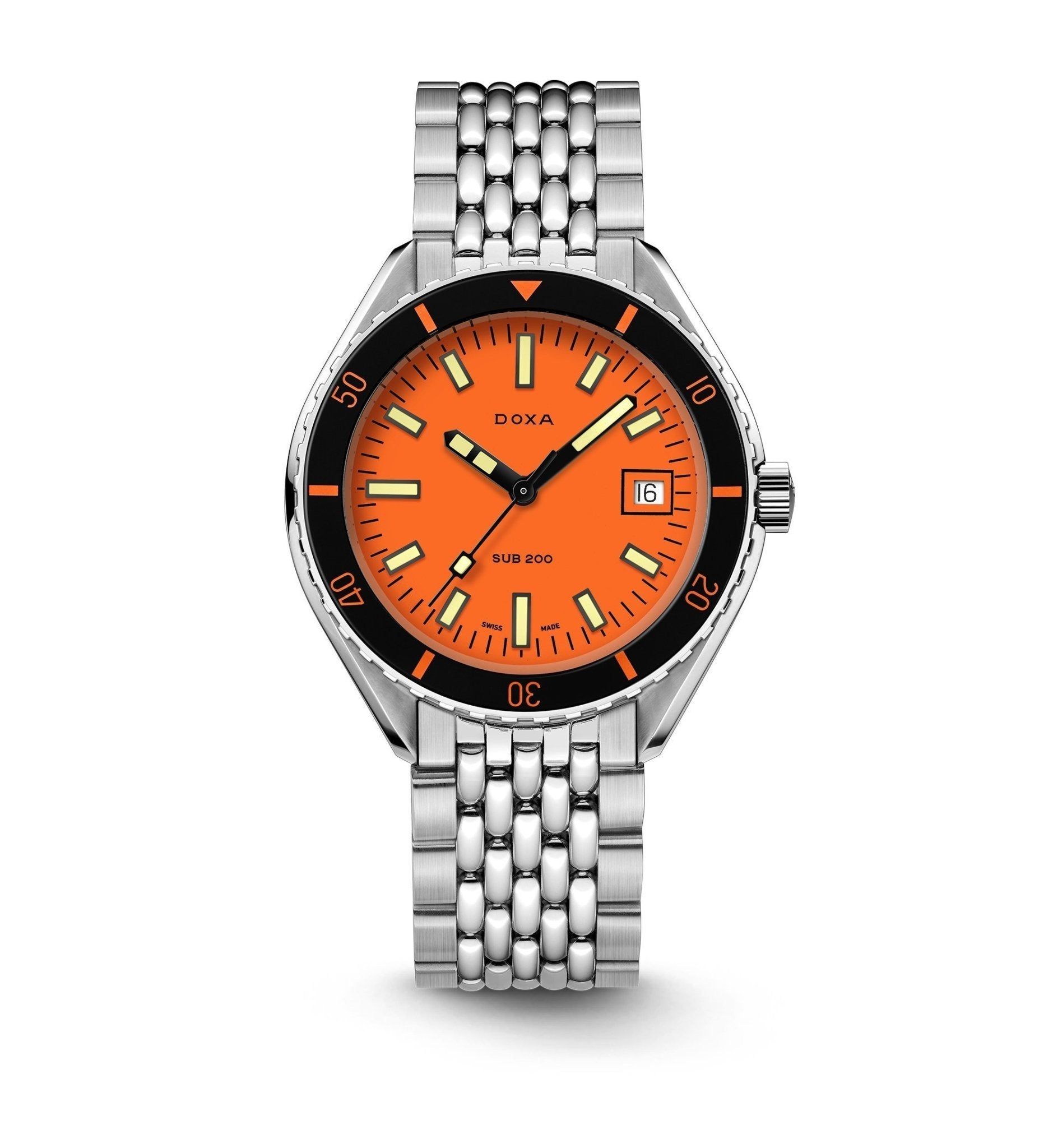
Doxa SUB 200: The Accessible Everyday Diver
By Zach Charles • October 10, 2026
Complete guide to the Doxa SUB 200 — 42mm, 200m, four colorways, Sellita SW200-1. The accessible entry to the Doxa SUB family with the full…
By Zach Charles • October 10, 2026
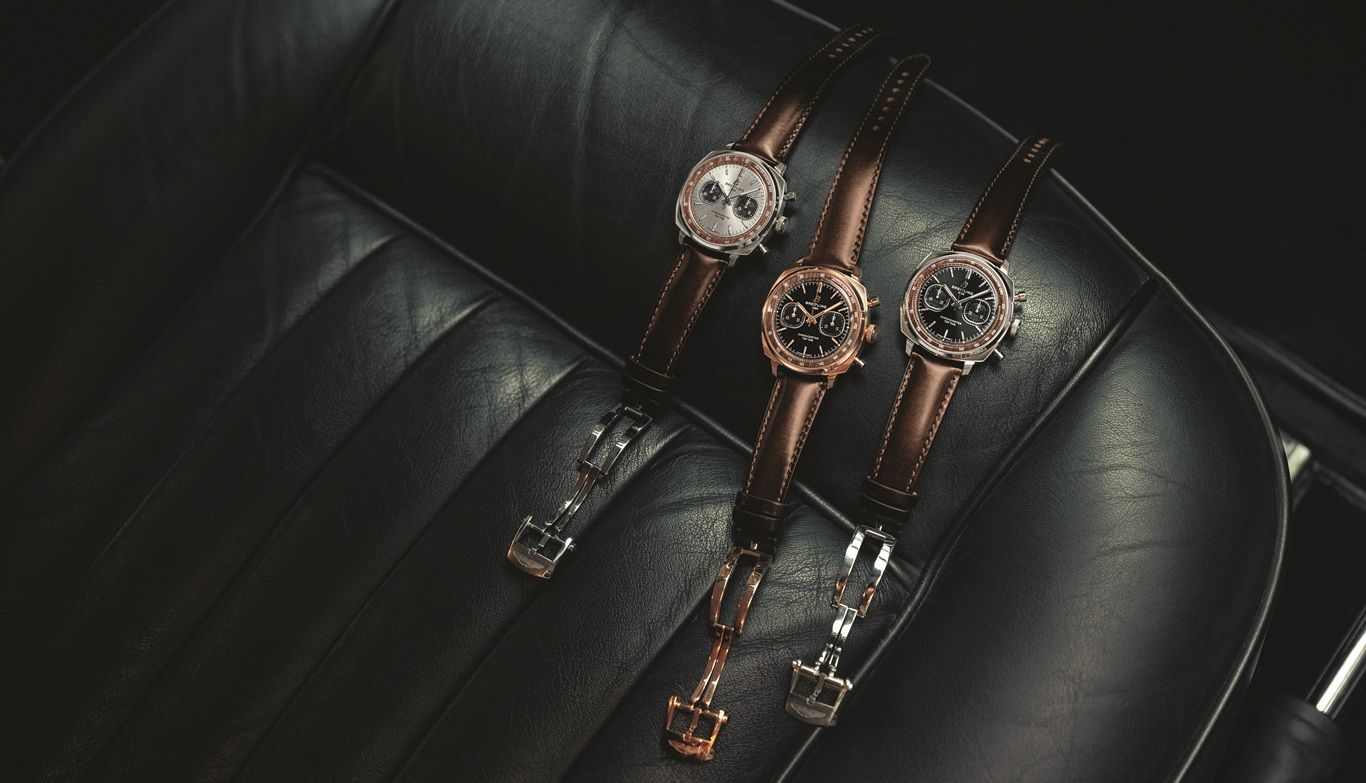
The Breitling Top Time B01 Aston Martin DB5 pairs a cushion-shaped 41mm case, a wooden inner ring and the in-house Caliber 01 across three limited…
By Zach Charles • October 10, 2026
TAG Heuer developed the Mikrograph (2011, 1/100th second), Mikrotimer Flying 1000 (2011, 1/1000th second), and Mikrogirder (2012, 1/2000th second).
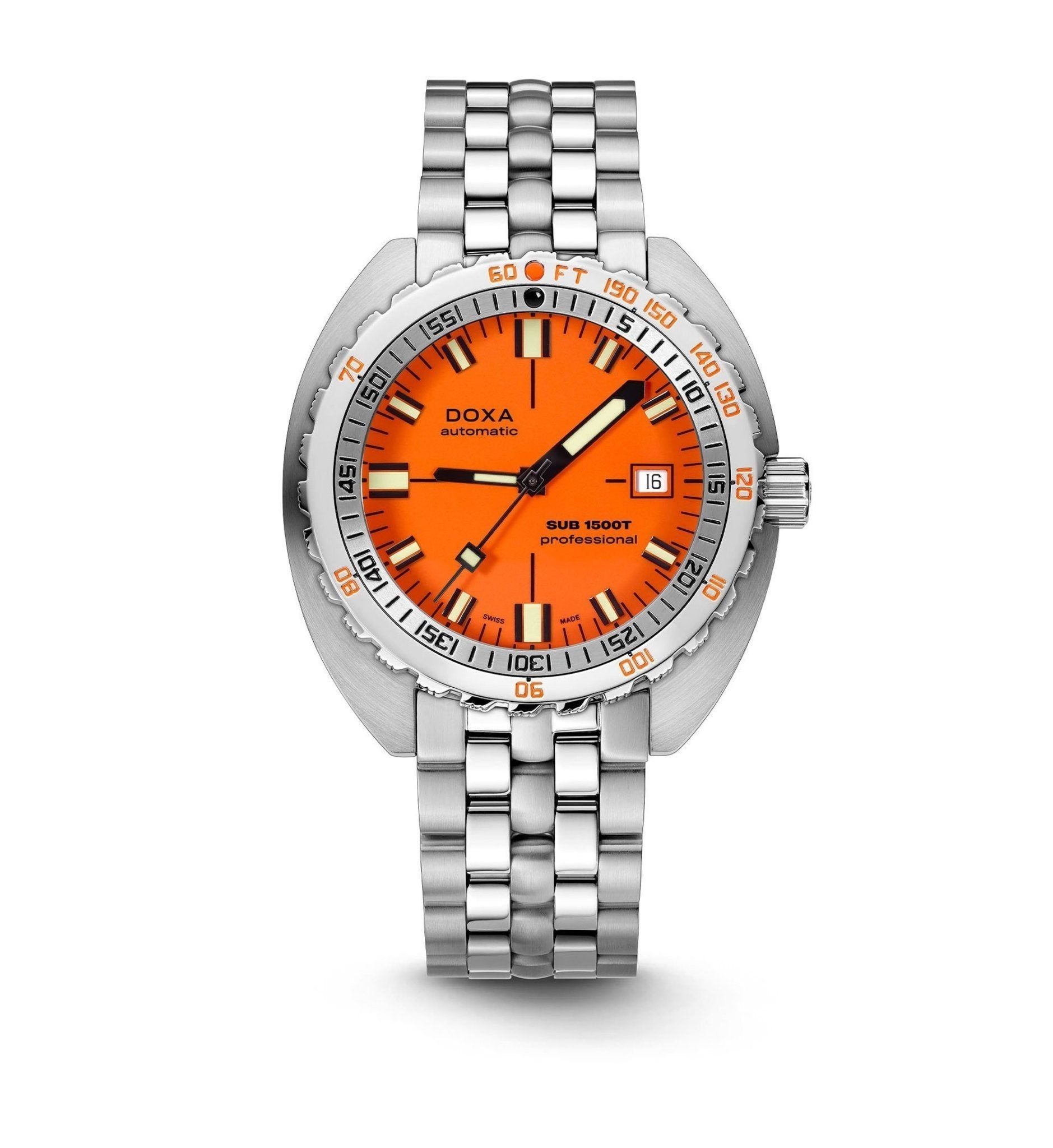
Doxa SUB 1500T: The 1,500-Metre Depth-Rating Flagship
By Zach Charles • October 10, 2026
Complete guide to the Doxa SUB 1500T — 45mm, 1,500m depth rating, helium escape valve, ETA 2892-2 movement, USD 2,690.
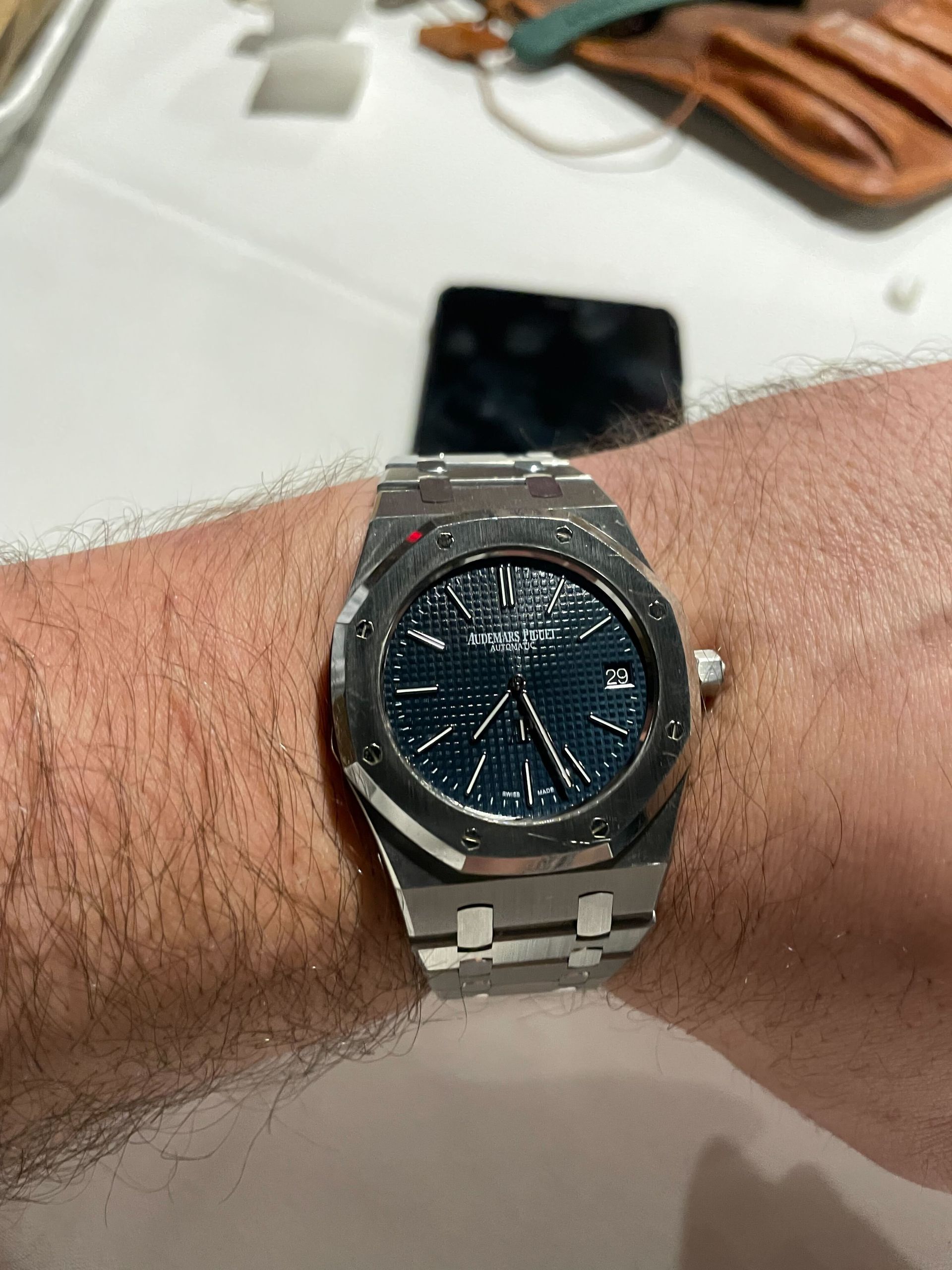
Audemars Piguet Royal Oak 'Jumbo' ref. 15202 with blue tapisserie dial and integrated steel bracelet
By Zach Charles • October 10, 2026
The Audemars Piguet × Swatch Royal Pop is a $400 bioceramic pocket watch in 8 colourways, powered by a new hand-wound SISTEM51 with 90+ hour power…

Time on the Move logo
By Zach Charles • October 10, 2026
Zach Charles is the editor of Time on the Move, an independent watch reference covering brand and model histories, buying guides and release news…
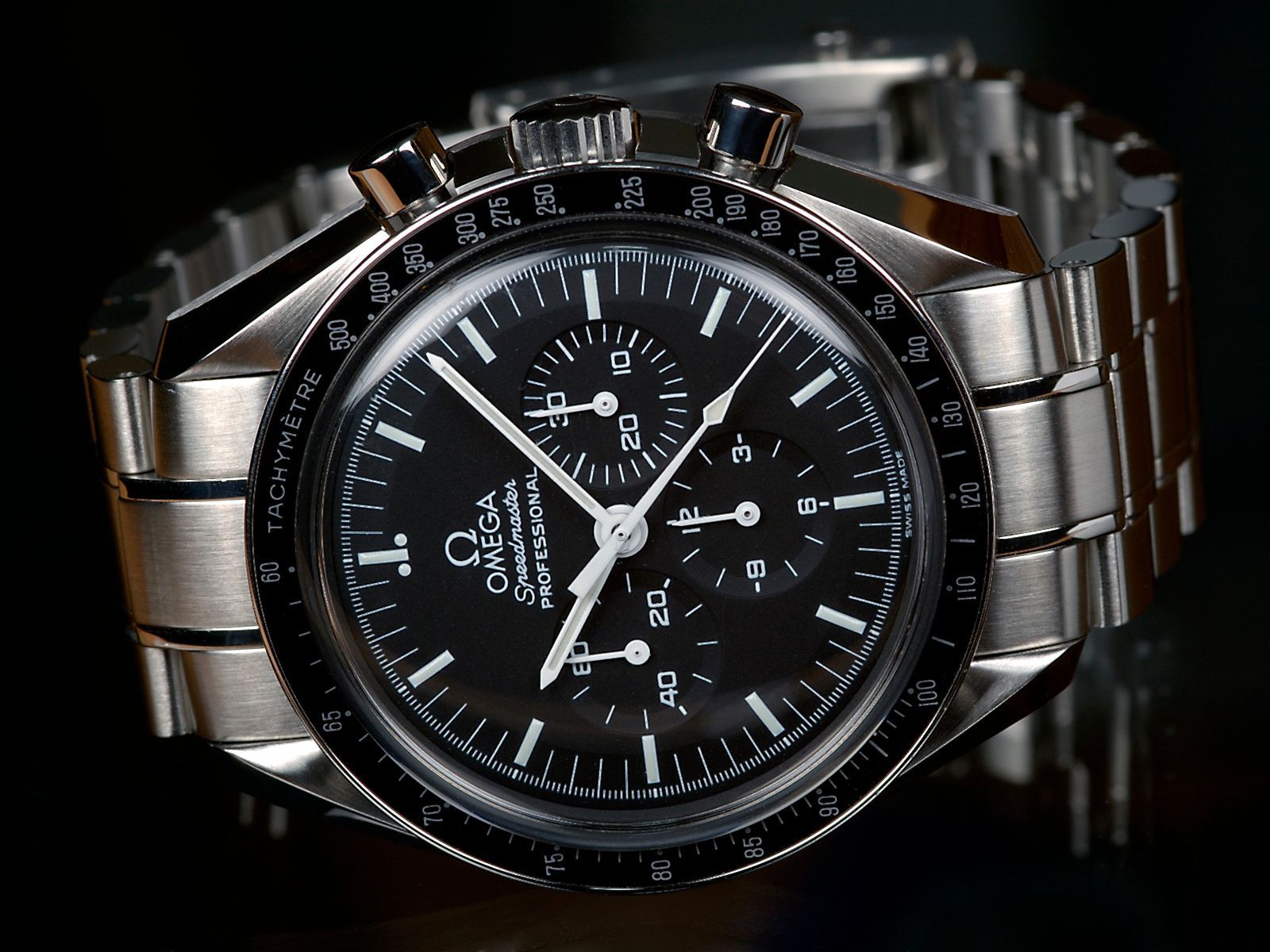
Omega Speedmaster Professional 'Moonwatch' chronograph, front view on steel bracelet
By Zach Charles • October 9, 2026
Find the best watches at every price point from $500 to $15,000 — new and pre-owned. Covers every budget tier with specific reference picks, brand…
By Zach Charles • October 9, 2026
The latest watch news: new releases, Watches and Wonders coverage, discontinuations, industry analysis, and market trends. Currently 1 article.
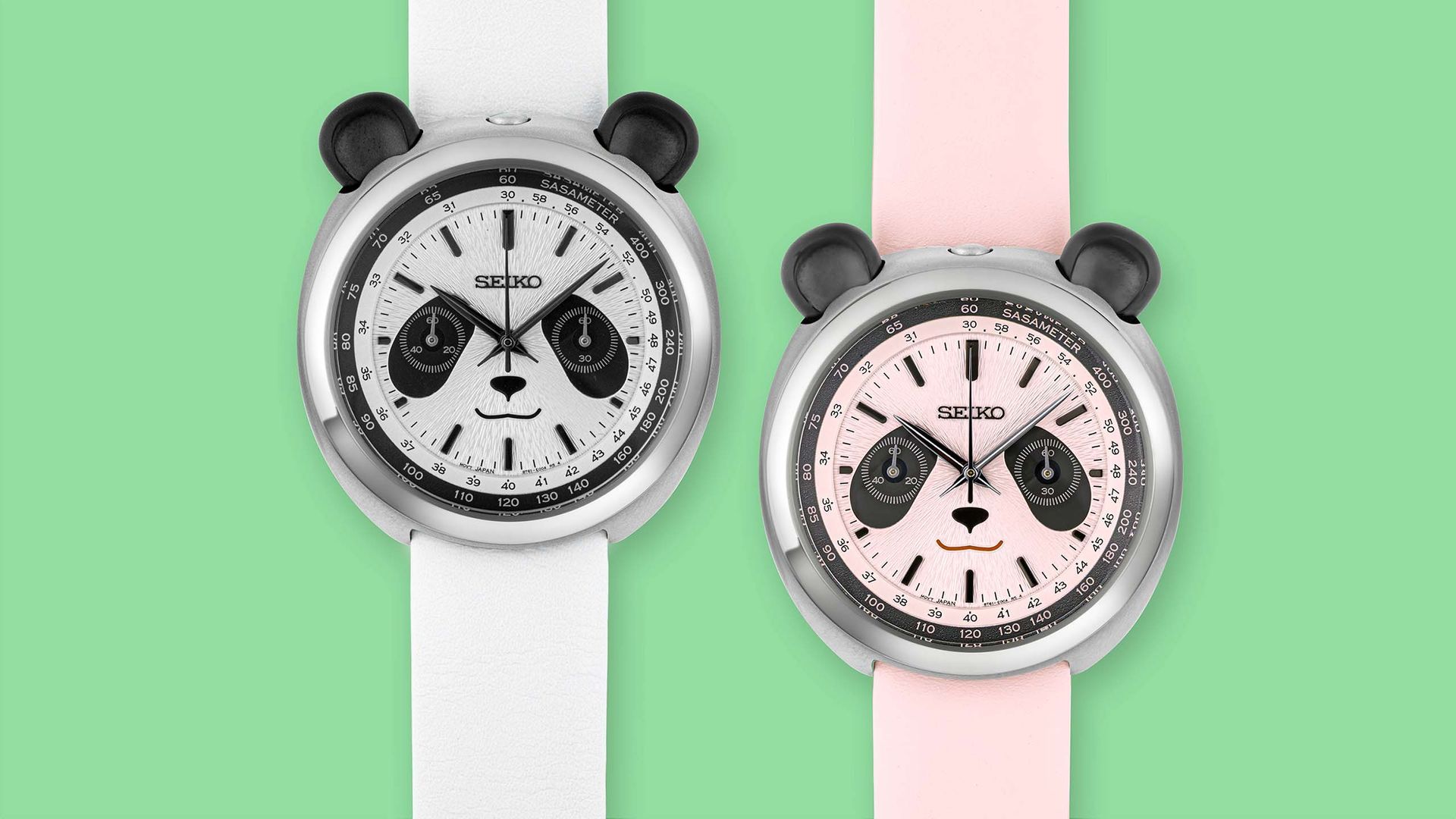
Seiko's New Panda Chronograph Is Literally a Panda: The Power Design Project HHK001 and HHK002
By Zach Charles • October 8, 2026
Seiko's Power Design Project panda chronograph (HHK001, HHK002) turns the panda dial into an actual panda face, with ear pushers, a 'Sasameter' and a 3D…
Show More