Grand Seiko: From the 1960 Observatory Champion to an Independent Luxury Brand
Grand Seiko: The Japanese Manufacture
By Zach Charles, Editor, Time on the Move
On 18 December 1960, Suwa Seikosha — one of two major manufacturing arms of the Seiko group — introduced a watch to the Japanese market with a stated purpose that was unusual in its specificity. The watch was to be the finest in the world. Not competitive with Swiss chronometers. Finer. The watch was called Grand Seiko.
Sixty-five years later, that ambition has produced two manufacture locations, three distinct movement technologies (mechanical, Spring Drive, and quartz), a set of finishing standards acknowledged across the industry, and a reputation that has moved from regional curiosity to genuine global presence. This article covers the history.
Photo: Roland Fischer (Dnalor 01) — CC BY-SA 3.0 AT — Wikimedia Commons
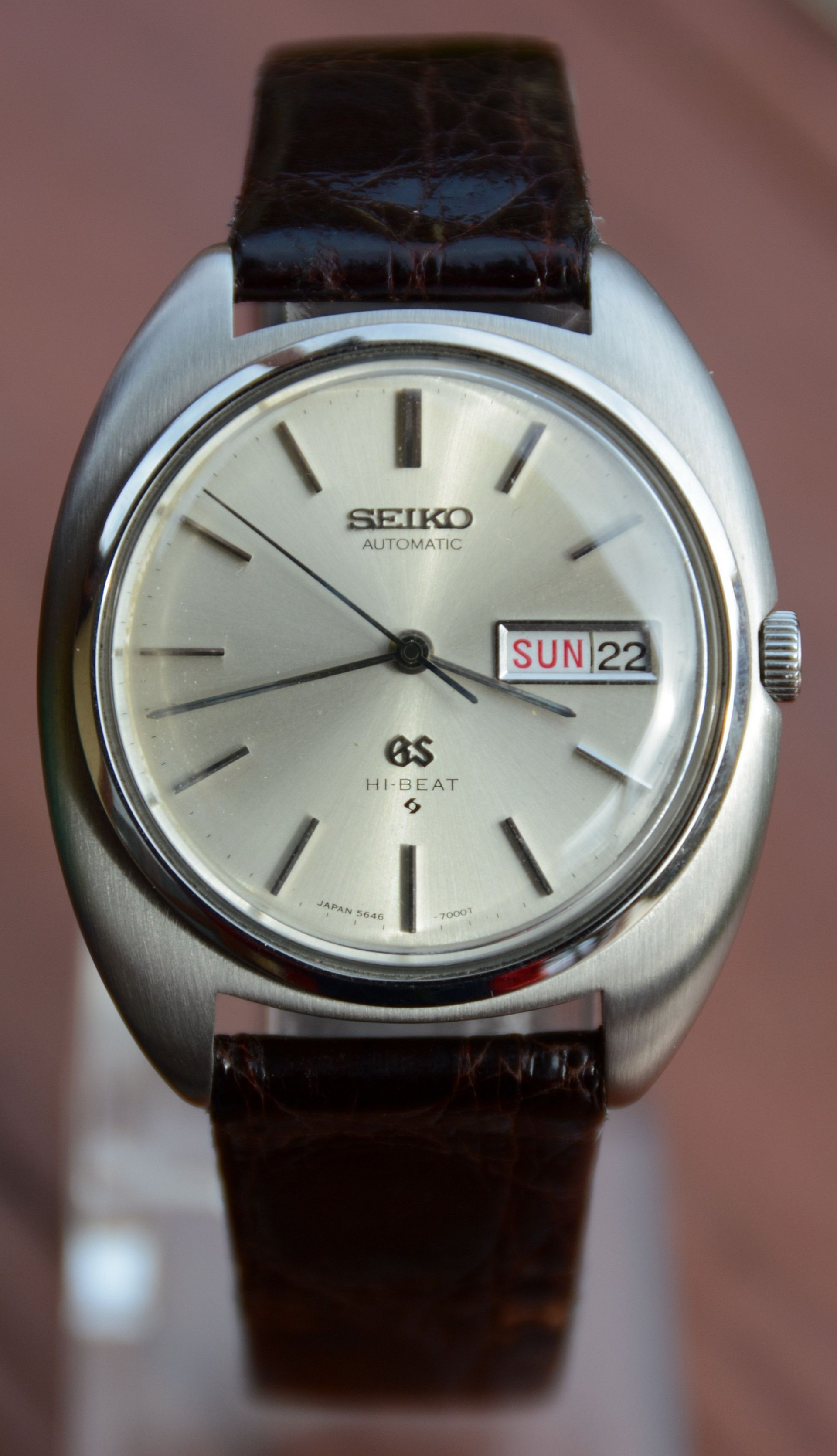
The First Grand Seiko — 1960
Photo: STSPP — CC BY-SA 4.0 — Wikimedia Commons
The impetus for Grand Seiko emerged from discussions within Hattori Seiko in 1959. Swiss watchmaking dominated the global fine watch market, and the Seiko group's existing watches — while reliable — did not compete at the level of the established Swiss chronometer houses. The instruction given to Suwa Seikosha was to produce a watch that would.
The first Grand Seiko was introduced on 18 December 1960 , powered by Calibre 3180 — a manually wound movement with the following specifications:
- Frequency: 18,000 vph (5 beats per second)
- Jewels: 25
- Power reserve: 45 hours
- Accuracy: +12/−3 seconds per day
The case was gold-plated to a depth of 80 microns — substantially thicker than the standard practice of the period, which reflected the conviction that a watch sold as the finest should be built to a standard that would outlast typical gold-plate wear. A small number of platinum examples were also produced.
The 3180 was submitted to the Bureaux Officiels de Contrôle de la Marche des Montres (BOCM) in Geneva — the most respected independent chronometer testing authority of the period — and received a rating of excellence. It was the first Japanese watch to do so.
Total production of the 3180 across its three-year run was approximately 36,000 pieces.
The Observatory Chronometer Competitions — 1960s
Photo: STSPP — CC BY-SA 4.0 — Wikimedia Commons
The Observatory Chronometer Competitions of the 1960s were the most rigorous public tests of watch accuracy available. Seiko entered with ambitions that matched its 1960 declaration.
The results were remarkable. At the Neuchâtel Observatory Chronometer Competition , Seiko's Calibre 45 movements submitted in one competition took the top seven positions for mechanical wristwatch accuracy. Of 103 individual Cal. 45 movements submitted, 73 exceeded the official chronometer standard.
By 1967, both Seiko manufacturing arms — Suwa Seikosha (Nagano) and Daini Seikosha (Tokyo) — were competing. In the Neuchâtel Company Series competition of 1967:
- Daini Seikosha placed 2nd
- Suwa Seikosha placed 3rd
In 1968, at the Geneva Observatory Competition , Suwa Seikosha's mechanical movements took 4th through 10th place in the individual wristwatch category. The first three places went to quartz watches — the result that presaged the decade ahead.
The internal rivalry between the two Seiko factories drove the development of the VFA (Very Fine Adjusted) models — Grand Seiko watches guaranteed accurate to ±1 minute per month for two years from purchase. The VFA represents the apex of 1960s Grand Seiko mechanical accuracy.
The Quartz Transition and Dormancy — 1975–1998
The quartz crisis affected the Swiss industry far more severely than the Japanese. Seiko — having developed its own quartz technology, including the 1969 Seiko Quartz Astron (the world's first commercially produced quartz wristwatch) — navigated the transition without the existential disruption that Swiss houses experienced.
Grand Seiko mechanical production ceased in 1975 after a 15-year run. The decision reflected a straightforward commercial reality: the quartz movement could maintain accuracy at a fraction of the mechanical's price, and the market was moving accordingly.
The brand was not abandoned. On 22 September 1988 , Grand Seiko returned — initially as a quartz collection, with the introduction of the 95GS. The mechanical tradition was held in abeyance for another decade.
1998: Mechanical Grand Seiko watches returned to production with the new 9S5-series calibres — the 9S55 automatic and 9S54 manual wind. These movements were sold initially in Japan only, available exclusively through select retailers. The re-entry into mechanical watchmaking was deliberate and controlled: Grand Seiko was not in a hurry.
Spring Drive — 1999 (Seiko) and 2004 (Grand Seiko)
Photo: STSPP — CC BY-SA 4.0 — Wikimedia Commons
In parallel with the mechanical revival, a third movement technology arrived. Spring Drive — conceived by engineer Yoshikazu Akahane beginning in 1977 and developed through more than 600 prototypes over two decades — reached commercial production in 1999 , first in a Seiko (not Grand Seiko) watch powered by Calibre 7R68. Akahane died in 1998 at age 52, before his invention reached market.
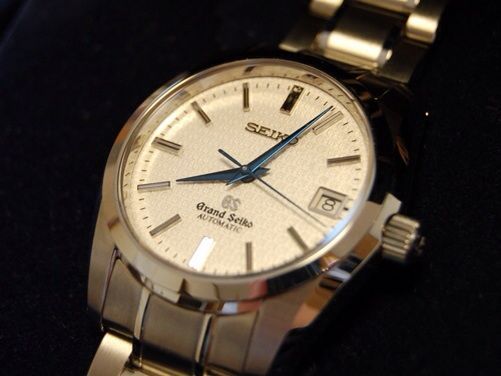
In September 2004 , Spring Drive entered the Grand Seiko line as Calibre 9R65 — the movement that now drives the SBGA211 "Snowflake" and remains the foundation of the Spring Drive programme. The 9R65 brought Spring Drive's characteristic smooth seconds hand and ±1 second/day accuracy to the Grand Seiko catalogue.
Spring Drive is covered in detail in the Spring Drive article.
International Launch — 2010
Photo: Hiroaki Kikuchi (Torajiro) — CC BY-SA 3.0 — Wikimedia Commons
For its first 50 years, Grand Seiko was sold exclusively in Japan. The watches were known internationally only to collectors who sought them out or acquired them on visits to Japan.
2010 changed this. Grand Seiko entered international markets for the first time, making the catalogue available in the United States, Europe, and select Asian markets outside Japan. The watch that introduced Grand Seiko to the global collector community in this period was the SBGA211 "Snowflake" — a titanium-cased Spring Drive watch with a distinctive silver-plated textured dial that had no equivalent in the Swiss market.
The Snowflake's combination of Spring Drive movement, lightweight titanium case, and a dial that referenced the specific landscape of the Shinshu region of Nagano — the snowfields of the Hotaka mountain range visible from the manufacture — gave international collectors a watch with a clear identity and no obvious European precedent.
Brand Independence — 2017
Photo: Roland Fischer (Dnalor 01) — CC BY-SA 3.0 AT — Wikimedia Commons
On 1 January 2017, Grand Seiko was formally separated from the Seiko brand for the international market. The Seiko logo was removed from the 12 o'clock position on the dial; the Grand Seiko golden lion moved from 6 o'clock to 12 o'clock. The brand would be marketed, positioned, and sold independently of the parent Seiko identity.
The decision acknowledged what the collector community had already concluded: Grand Seiko occupied a fundamentally different market position than Seiko consumer watches, and continued presentation as a Seiko sub-brand understated the quality and price point of the product. Independence gave the brand the freedom to communicate its own history, manufacture, and craft traditions without reference to the parent company's broader commercial range.
The Manufacture Today
Grand Seiko operates two manufacture facilities:
- Shinshu Watch Studio (Shiojiri, Nagano) — produces all Spring Drive calibres (9R series) and all 9F quartz calibres. One of the world's most integrated manufactures: designs, produces, and assembles movements, cases, dials, hands, and indices under one roof.
- Grand Seiko Studio Shizukuishi (Iwate Prefecture) — produces all 9S mechanical calibres, from the 9S65 standard automatic through the 9S85 Hi-Beat to the flagship 9SA5. Opened July 2020 in a building designed by architect Kengo Kuma.
Both studios are discussed in detail in the Studios article.
Grand Seiko competes at the CHF 3,000–20,000+ tier internationally. Its movement architecture — particularly Spring Drive and the 9SA5 Dual Impulse Escapement — has no direct technical parallel in the Swiss market, which distinguishes it from other luxury watch brands that compete primarily on finishing and heritage rather than proprietary mechanism.
Grand Seiko Model and Technology Guides
Each Grand Seiko collection and key technology has its own in-depth history on Time on the Move:
- Grand Seiko Elegance Collection: Manual-Wind Thin Cases and Enamel Dials
- Grand Seiko Evolution 9: The 9SA5 Dual Impulse Escapement
- Grand Seiko Heritage Collection: The 44GS Design Language and Hi-Beat 9S85
- Grand Seiko Nature of Time: Seasonal Dials and the Mitate Tradition
- Grand Seiko Snowflake: The SBGA011 Dial and the Shinshu Studio
- Grand Seiko Sport Collection: Spring Drive GMT and Chronograph
- Grand Seiko Spring Drive: The Tri-Synchro Regulator and Calibre 9R
- Grand Seiko Studios: Shizukuishi and Shinshu Watch Studio
- Grand Seiko Zaratsu Polishing: Mirror Finish and the Sharp Edge
Latest News
Frequently Asked Questions
When was Grand Seiko founded?
18 December 1960, when Suwa Seikosha introduced the first Grand Seiko watch, powered by Calibre 3180, to the Japanese market. It was the first Japanese watch certified to the BOCM Geneva chronometer standard.
When did Grand Seiko become available internationally?
2010, when the brand entered international markets for the first time after 50 years of Japan-only availability.
When did Grand Seiko become independent from Seiko?
1 January 2017. The Seiko logo was removed from the dial; the Grand Seiko golden lion moved to 12 o'clock. The brand has operated independently in the international market since then.
What happened to Grand Seiko mechanical watches between 1975 and 1998?
Mechanical production ceased in 1975. Grand Seiko returned as a quartz collection in 1988, then resumed mechanical production in 1998 with the 9S-series calibres, sold initially in Japan only.
What are the two Grand Seiko manufacture locations?
Shinshu Watch Studio in Shiojiri, Nagano (Spring Drive and quartz production) and Grand Seiko Studio Shizukuishi in Iwate Prefecture (mechanical production). Both are full manufacture facilities that produce movements, cases, dials, and finished watches.