Grand Seiko Studios: Shizukuishi and Shinshu Watch Studio
Grand Seiko Studio Shizukuishi and Shinshu Watch Studio
Most fine watch manufactures have one facility. Grand Seiko has two — one in northern Honshu and one in central Honshu, separated by hundreds of kilometres and the full range of Japan's geographic diversity. Each produces a different category of Grand Seiko watch. Each is surrounded by a landscape that directly inspires the dials made within it. Each is, in the strictest sense, a full manufacture: designing, producing, and assembling movements, cases, and dials under one roof.
Photo: Roland Fischer (Dnalor 01) — CC BY-SA 3.0 AT — Wikimedia Commons
Grand Seiko Studio Shizukuishi
Photo: STSPP — CC BY-SA 4.0 — Wikimedia Commons
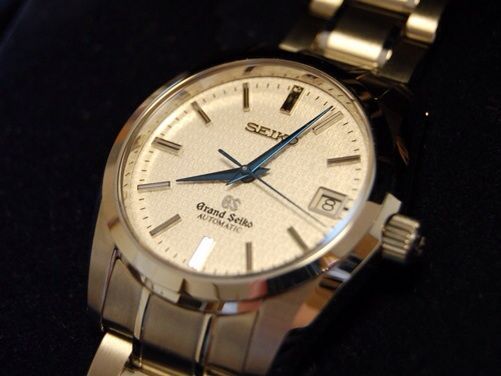
Location: Town of Shizukuishi, Iwate Prefecture, northern Honshu. Operated by Morioka Seiko Instruments Inc., a Seiko Group company.
Opened as Studio Shizukuishi: July 2020, to mark Grand Seiko's 60th anniversary.
Architect: Kengo Kuma — the Japanese architect whose practice is known for integrating traditional Japanese materials with contemporary architecture. Kuma's other major projects include the Japan National Stadium (Tokyo 2020 Olympics venue). For Studio Shizukuishi, the challenge was specifically unusual: creating the precision-controlled clean room environment required for high-grade watch assembly from natural wood construction. The building uses timber as its primary structural and surface material, embedding the precision facility within an aesthetic that belongs to the landscape.
What Studio Shizukuishi Produces
- All 9S mechanical calibres — from the standard 9S65 automatic through the Hi-Beat 9S85 to the flagship 9SA5 with its Dual Impulse Escapement
- Movement bridges, mainplates, and mechanical components
- Balance springs (produced in-house to Grand Seiko's proprietary Spron alloy specifications)
- Assembly, adjustment, and final inspection of all mechanical Grand Seiko watches
- Cases, dials, and hands for the watches assembled here
Studio Shizukuishi Originals
Studio Shizukuishi produces a small number of "Studio Original" watches — exclusive references purchasable only at the studio or through the studio's specific retail channels. These watches are produced in very limited quantities and designed specifically to reference the Shizukuishi environment.
Example: SBGH283 — a mechanical watch with a dial referencing the autumn colours of the Iwate forests, available exclusively through Studio Shizukuishi. The studio's surrounding environment — the Shizukuishi plateau, the Ou Mountains, the deciduous forests — determines what these dials reference.
The Shizukuishi Landscape and Dial Design
Iwate Prefecture has heavy snowfall winters and vivid autumns. The Ou Mountains are heavily forested with deciduous trees that cycle dramatically through the seasons. The Joboji district of Iwate is one of Japan's remaining centres of high-quality urushi (lacquer) production — lacquer trees producing the sap used in Urushi lacquer dials for the Elegance Collection.
The geographic connection between the studio, the landscape, and the dials is not metaphorical. The urushi used in some Elegance Collection dials comes from trees grown in the same prefecture where those dials are assembled. The autumn and winter dial themes in the Heritage Collection reference the specific quality of light and colour in this landscape.
Photo: Hiroaki Kikuchi (Torajiro) — CC BY-SA 3.0 — Wikimedia Commons
Shinshu Watch Studio
Photo: STSPP — CC BY-SA 4.0 — Wikimedia Commons
Location: Seiko Epson Corporation facility, town of Shiojiri, Nagano Prefecture, central Honshu. Situated with views of the Jonen and Hotaka mountain ranges.
Operated by: Seiko Epson Corporation — the Seiko Group company responsible for the original Suwa Seikosha tradition, which produced the first Grand Seiko in 1960.
What Shinshu Watch Studio Produces
- All 9R Spring Drive calibres — 9R65, 9R66, 9R31, 9R86, 9R96, and future Spring Drive developments
- All 9F quartz calibres — including the 9F85 (±5 seconds/year) used in Heritage Collection quartz references
- Cases, dials, hands, and indices for Spring Drive and quartz Grand Seiko watches
- Final assembly and adjustment of all Spring Drive and quartz Grand Seiko watches
The Shinshu facility is described by Grand Seiko as one of the world's few fully integrated manufactures: it develops, designs, and produces movements, cases, dials, hands, and indices — then assembles and adjusts the completed watch — all within a single facility. The dial-making, case-making, and movement production are not contracted to external suppliers.
The Micro Artist Studio
Established in 2000 within the Shiojiri facility, the Micro Artist Studio is a workshop dedicated to the highest-grade Grand Seiko and Credor timepieces. This is where Credor Sonnerie, Minute Repeater, and Eichi II watches are created — the brand's most expensive and most extensively hand-finished products.
The Micro Artist Studio's watches represent the pinnacle of what the Seiko Group produces: movements finished to a standard that requires individual craftspeople to spend weeks on each component. The Eichi II (Credor), for example, carries a manually wound mechanical movement with finishing standards that rival — and in some respects exceed — the finest Swiss finishing houses.
The Shinshu Landscape and Dial Design
The Hotaka mountain range is visible from the Shinshu Watch Studio. Its peaks carry snow through winter and into spring; the snow visible from the studio windows is the direct inspiration for the Snowflake dial texture. The summer green of the same mountains inspires the Hotaka Green dial of the SBGE295.
Lake Suwa — nearby in Nagano prefecture — freezes in winter, and the Omiwatari ice-ridge phenomenon (referenced in the SBGY007 dial) occurs within the same geographic region. The 24 sekki that structure Grand Seiko's seasonal edition programme are observed from a landscape that experiences each of them distinctly.
Photo: STSPP — CC BY-SA 4.0 — Wikimedia Commons
Two Studios, One Standard
Photo: STSPP — CC BY-SA 4.0 — Wikimedia Commons
The separation between the two studios is not a division of quality but of technology and specialisation:
| Studio Shizukuishi (Iwate) | Shinshu Watch Studio (Nagano) | |
|---|---|---|
| Movements | 9S mechanical (9S65, 9S85, 9SA5) | 9R Spring Drive, 9F quartz |
| Balance springs | In-house Spron alloys | In-house (different technology) |
| Flagship calibre | 9SA5 (Dual Impulse Escapement) | 9R96 (±0.5 sec/day Spring Drive) |
| Opened | July 2020 | Ongoing since Suwa Seikosha era |
| Architect | Kengo Kuma | — |
| Special facility | — | Micro Artist Studio (est. 2000) |
| Landscape | Ou Mountains, Iwate forests | Hotaka/Jonen ranges, Lake Suwa area |
Both studios are open to visitors — each offers a perspective on a specific aspect of Grand Seiko's manufacture. The Studio Originals programme at Shizukuishi and the Micro Artist Studio at Shinshu represent the highest expressions of what each facility produces.
Frequently Asked Questions
What is Grand Seiko Studio Shizukuishi?
Grand Seiko's mechanical watch manufacture in Iwate Prefecture, opened July 2020 in a building designed by architect Kengo Kuma. It produces all 9S mechanical calibres (9S65, 9S85, 9SA5) and exclusive Studio Original watches available only at the studio.
What is the Shinshu Watch Studio?
Grand Seiko's Spring Drive and quartz manufacture in Shiojiri, Nagano, operated by Seiko Epson Corporation. It produces all 9R Spring Drive calibres and 9F quartz calibres, and is one of the world's most integrated manufactures — designing, producing, and assembling movements, cases, dials, and hands under one roof.
What is the Micro Artist Studio?
A workshop established in 2000 within the Shinshu Watch Studio, dedicated to the highest-grade Grand Seiko and Credor timepieces — including Credor Minute Repeater and Eichi II watches. Individual craftspeople spend weeks finishing single components.
Who designed Grand Seiko Studio Shizukuishi?
Kengo Kuma — the Japanese architect also known for the Japan National Stadium (Tokyo 2020 Olympics). His challenge was creating a precision clean-room environment from natural wood construction appropriate to the Iwate landscape.
Why are there two Grand Seiko manufacture facilities?
The two studios reflect Grand Seiko's history: Shinshu descends from Suwa Seikosha (Nagano), which developed Spring Drive and produced the first Grand Seiko in 1960; Shizukuishi descends from Morioka Seiko Instruments (Iwate), which specialises in mechanical movement production. The two studios produce different movement technologies to the same finishing standard.