
Grand Seiko Zaratsu Polishing: Mirror Finish and the Sharp Edge

Zach Charles • June 22, 2026

Share this article

Grand Seiko Zaratsu Polishing

Open any Swiss watch catalogue and the finishing language is consistent: mirror polish on the bezel and case flanks, hairline brush on the lugs, each surface shining. The result is technically adequate — visually bright, commercially appealing. But look at the ridges where the mirror surfaces meet the brushed ones. In most cases, there is a slight rounding, a softening of the transition. The line is not quite sharp.

In a Grand Seiko watch, the line is sharp. The mirror surface is flat — not almost flat, not brilliantly polished to a convex curve, but geometrically, measurably flat. The ridge between the polished and brushed planes is not rounded. These properties have a cause: Zaratsu polishing .


Grand Seiko SBGR051 — side view
The Grand Seiko SBGR051 from the side — showing the case thickness and lug profile that result from the Zaratsu polishing process: mirror-finished flat surfaces meeting brushed flanks at a perfectly crisp edge.
Photo: STSPP — CC BY-SA 4.0 — Wikimedia Commons

Name and Origin

Grand Seiko Automatic Hi-Beat watch
A Grand Seiko Automatic Hi-Beat — running at 36,000 vph (10 beats per second), the hi-beat movements deliver improved positional accuracy and a characteristically smooth seconds sweep compared with standard-beat automatics.
Photo: Roland Fischer (Dnalor 01) — CC BY-SA 3.0 AT — Wikimedia Commons

"Zaratsu" is a Japanese phonetic transliteration of "Sallaz" — the Swiss company Gebrüder Sallaz (Sallaz Brothers), which manufactured polishing machines. Seiko purchased a Sallaz polishing machine in the 1950s for use in case finishing. The technique that developed around this machine — and the standard it produces — became known in Japanese watchmaking as "Zaratsu polishing."

The name now refers to the process and the quality standard, not specifically to the Sallaz machine. Grand Seiko maintains the technique across both manufacture locations.


The Process

Grand Seiko Calibre 9S65 automatic movement
The Grand Seiko Calibre 9S65 automatic movement — a standard-beat automatic at 28,800 vph with 72-hour power reserve, hand-finished to the Grand Seiko standard with machine-striped plates and manually bevelled components.
Photo: STSPP — CC BY-SA 4.0 — Wikimedia Commons

Zaratsu polishing uses a rotating disc — confirmed as tin by the most reliable independent sources, coated with an extremely fine proprietary abrasive slurry. The exact abrasive compound formulation is not publicly disclosed by Grand Seiko.

The critical distinction from conventional machine polishing is in the disc geometry. Conventional machine polishing uses:
- Flexible buff wheels or abrasive belts — surfaces that conform slightly to the component being polished

Zaratsu polishing uses:
- A rigid, flat disc — the broad face of the rotating tin disc, not its edge

The craftsperson holds the watch case component and presses it against the flat face of the rotating disc. Because the disc face is geometrically flat and rigid, it cannot conform to any irregularities in the case surface — instead, it cuts through them. The result is a surface that is geometrically flat because it has been polished against a flat reference.

The process is repeated through progressively finer abrasive compounds until mirror quality is achieved. Each pass refines the surface further; the final pass leaves the surface with the optical quality that makes a Zaratsu-polished case immediately distinguishable.


What Zaratsu Achieves

Grand Seiko SBGW231 manual-wind — side view
The Grand Seiko SBGW231 manual-wind from the side — powered by Calibre 9S64, the 4.28mm manual-wind movement that underpins the Elegance Collection and represents Grand Seiko’s purest expression of thin-case dress watchmaking.
Photo: STSPP — CC BY-SA 4.0 — Wikimedia Commons
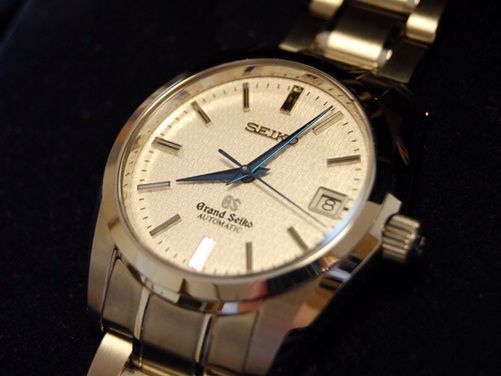
1. Geometrically flat, distortion-free mirror surfaces

A machine-buffed surface achieves brightness by polishing away surface irregularities — but the flexible buff wheel, as it removes material, also introduces a slight convex curvature across the surface. The result is a polished surface that bulges very slightly away from true flatness. This is measurable and visible: if you sight along a machine-polished flat surface in raking light, you will see the curvature in how the reflection distorts.

A Zaratsu-polished surface polished against the rigid flat disc maintains flatness. The reflection is undistorted — a straight line reflected in the surface remains straight. Taro Tanaka's ninth principle — "distortion-free mirror surfaces" — is not achievable by machine polishing. Zaratsu is required.

2. Knife-sharp ridge lines

Where a Zaratsu-polished mirror surface meets a hairline-brushed surface, the transition is a geometric line with no rounding. The brush strokes of the hairline surface stop at exactly the ridge; the mirror surface begins at exactly the ridge. The ridge itself is as sharp as the machining of the case allows.

This sharpness is the visual consequence of Zaratsu's flatness: because each surface is flat to its ridge, there is no rounding at the transition. Machine polishing, by introducing slight convexity on each surface, softens the ridge from both sides simultaneously.

3. Maximum light reflection

A flat mirror surface reflects incident light in one clean plane. A slightly convex surface scatters the reflection across a range of angles. The Grand Seiko Style's emphasis on flat mirror surfaces is an optical requirement: only a flat surface produces the single, intense reflection that Tanaka's design principles require for full visual effect. Zaratsu is the means to that flatness.


The Human Element

Grand Seiko SBGR037 with Calibre 9S automatic
The Grand Seiko SBGR037 — a Heritage Collection automatic with Calibre 9S, illustrating the 44GS design language: horizontal brushed dial, applied indices, and the case geometry developed by Taro Tanaka at the Suwa Seikosha studio in 1967.
Photo: Hiroaki Kikuchi (Torajiro) — CC BY-SA 3.0 — Wikimedia Commons

Zaratsu is not an automated process. The quality of the result depends entirely on variables controlled by the craftsperson's hands: pressure applied to the component against the disc, dwell time on each section of the surface, the angle and orientation of the component relative to the disc rotation.

Too much pressure damages the surface. Too little fails to remove the previous abrasive's marks. Uneven pressure creates variation in surface flatness across the component. The craftsperson must maintain consistent pressure and orientation across every pass — across a surface that is, typically, a few millimetres wide and a few centimetres long.

Seiko polishing specialists have described the skill development as requiring months of practice before the required intuitive consistency is achieved. The sensory feedback is primarily tactile and auditory — the sound and feel of the component against the rotating disc communicates the progress of the process.


Surfaces That Receive Zaratsu

Grand Seiko SBGR051 — side view
The Grand Seiko SBGR051 from the side — showing the case thickness and lug profile that result from the Zaratsu polishing process: mirror-finished flat surfaces meeting brushed flanks at a perfectly crisp edge.
Photo: STSPP — CC BY-SA 4.0 — Wikimedia Commons
All Grand Seiko watches receive Zaratsu polishing on their flat mirror-finished surfaces. The specific surfaces vary by case design but typically include:

  • Bezel — the flat top face, where the optical quality is most visible from the wearing position
  • Case flanks and sides — the flat vertical or angled surfaces between the lugs and the caseback
  • Lugs — on their mirror-polished faces (the brushed lug surfaces are finished separately by hairline brushing, not Zaratsu)
  • Dial and hands also receive mirror polishing — in some cases using the same Zaratsu technique, in others by related but separately managed processes

The contrast between Zaratsu-polished mirror surfaces and hairline-brushed surfaces is a deliberate design element throughout the Grand Seiko Style. The design principles require this contrast; Zaratsu provides the mirror quality that makes it work.


Zaratsu Across the Catalogue

Zaratsu polishing is applied across all Grand Seiko collections:

  • Heritage Collection: The 44GS case design's flat surfaces require Zaratsu for the inward-slanted sides and flat bezel to achieve their intended optical character
  • Elegance Collection: Same case architecture; same requirement
  • Evolution 9: The more complex multi-surface case architecture increases the number of flat planes that receive Zaratsu treatment — more surfaces means more polishing time per watch
  • Sport Collection: Applied to the titanium cases of the SBGE and SBGC series; harder material requires adjusted abrasive selection and process parameters

The Sport Collection's application of Zaratsu to Grade 5 titanium (harder than stainless steel) is technically more demanding than on steel — the abrasive and process must be adapted for the harder material — but the visual standard is consistent throughout the catalogue.


Frequently Asked Questions

What is Zaratsu polishing?
A hand-applied mirror polishing process using the flat face of a rotating tin disc coated with fine abrasive slurry. The craftsperson presses the case component against the rigid flat disc, producing geometrically flat surfaces and knife-sharp ridges between polished and brushed planes.

Why is Zaratsu better than machine polishing?
Machine polishing with flexible buff wheels produces bright surfaces but introduces slight convex distortion — the flexible wheel conforms to the surface and rounds it slightly. Zaratsu uses a rigid flat disc, maintaining geometric flatness and preserving sharp transitions between polished and brushed surfaces.

Where does the name "Zaratsu" come from?
It is a Japanese phonetic transliteration of "Sallaz" — the Swiss company Gebrüder Sallaz, which made polishing machines. Seiko purchased a Sallaz machine in the 1950s, and the technique that developed around it became known as Zaratsu polishing.

Is Zaratsu used on all Grand Seiko watches?
Yes. All Grand Seiko watches receive Zaratsu polishing on their mirror-finished flat surfaces, including Heritage Collection, Elegance Collection, Evolution 9, and Sport Collection (including titanium cases).

How long does it take to learn Zaratsu polishing?
Months of practice are required before the intuitive consistency of pressure, angle, and dwell time needed for consistent results is developed. The process is primarily guided by tactile and auditory feedback rather than visual observation during polishing.


Related Articles

Recent Posts

By Zach Charles • October 10, 2026
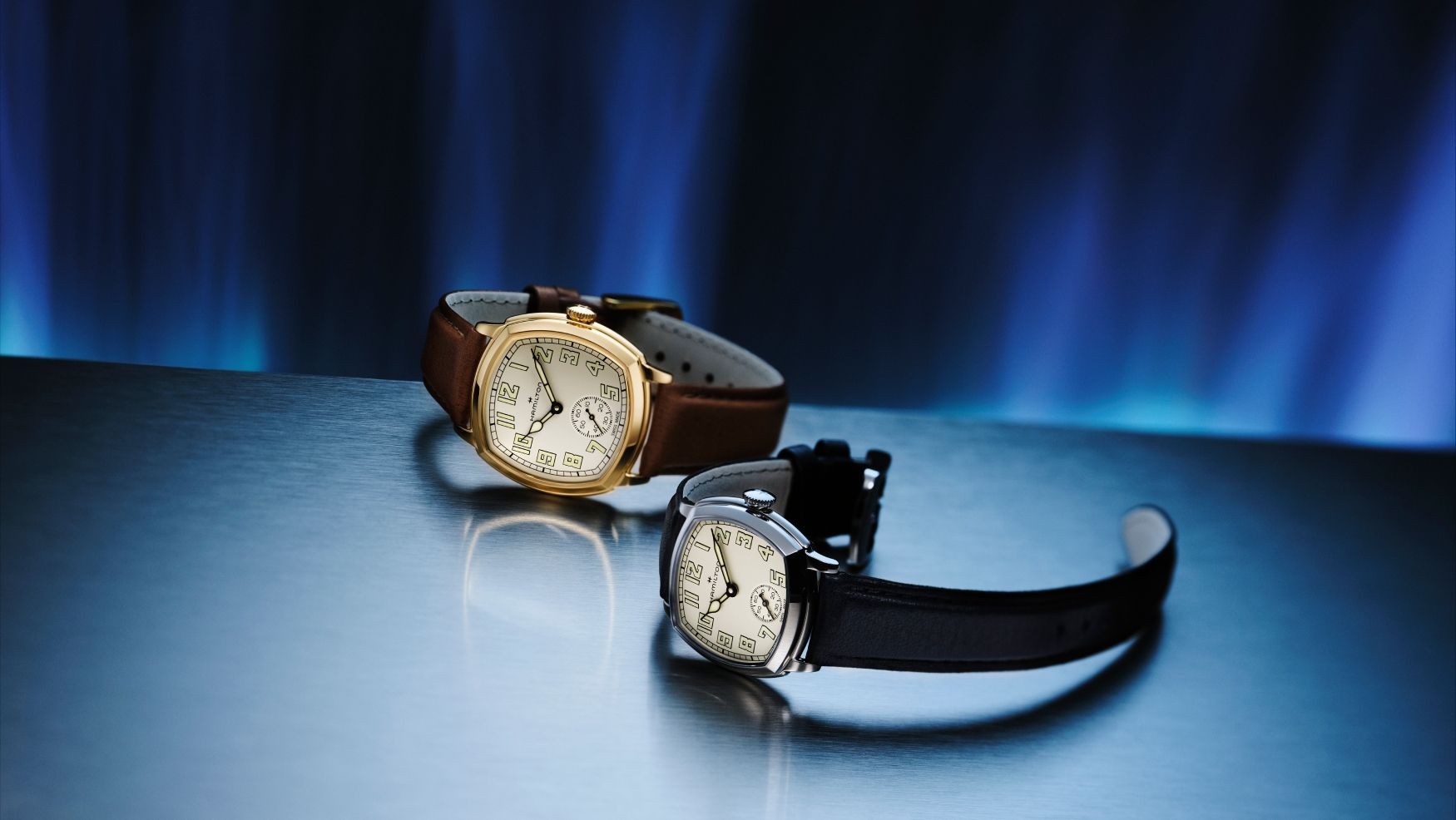
Hamilton's American Classic Cushion Mechanical revives its 1926 Art Deco cushion watches, seen in Oppenheimer, in 30mm and 34mm with the new hand-wound…
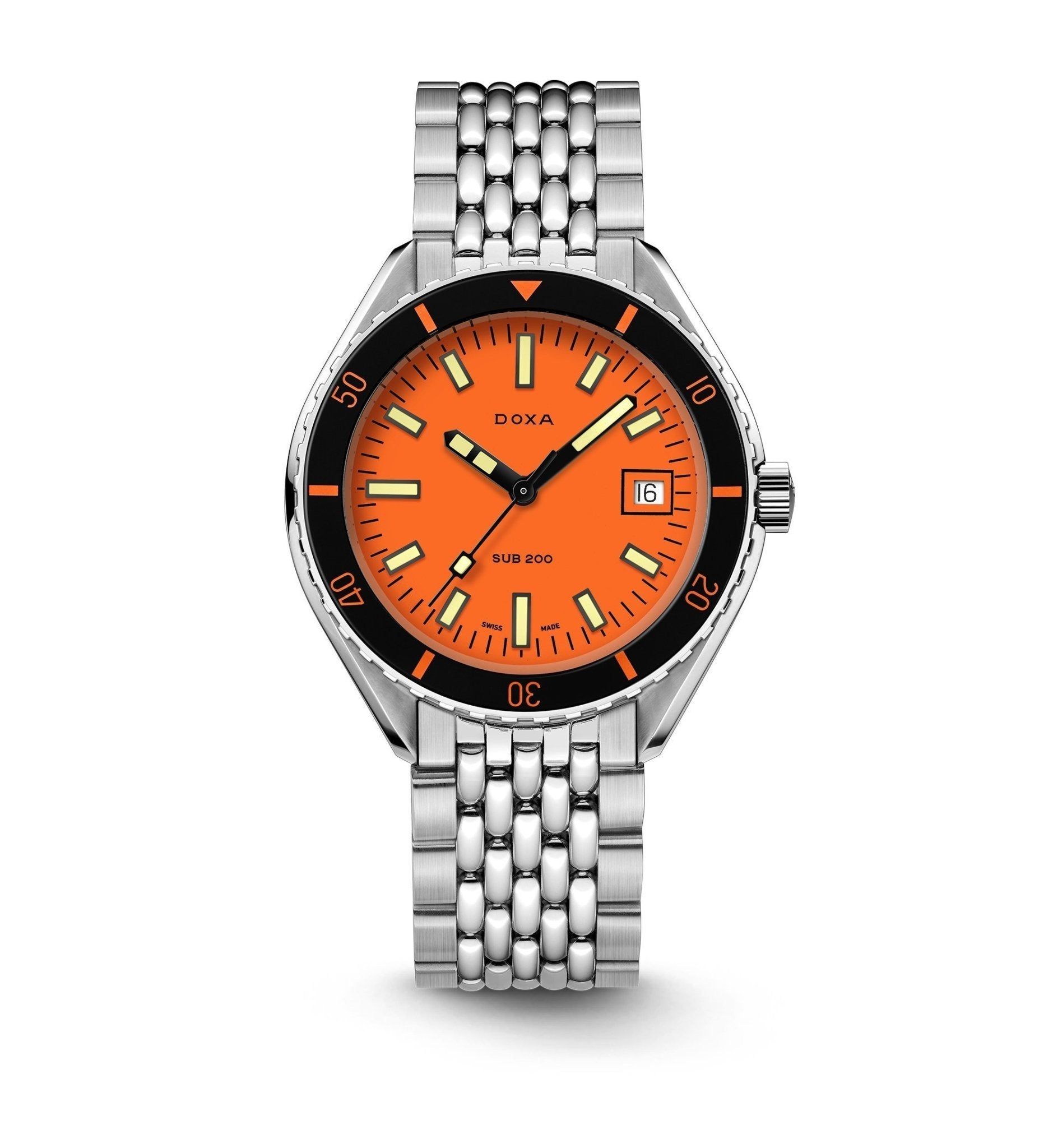
Doxa SUB 200: The Accessible Everyday Diver
By Zach Charles • October 10, 2026
Complete guide to the Doxa SUB 200 — 42mm, 200m, four colorways, Sellita SW200-1. The accessible entry to the Doxa SUB family with the full…
By Zach Charles • October 10, 2026
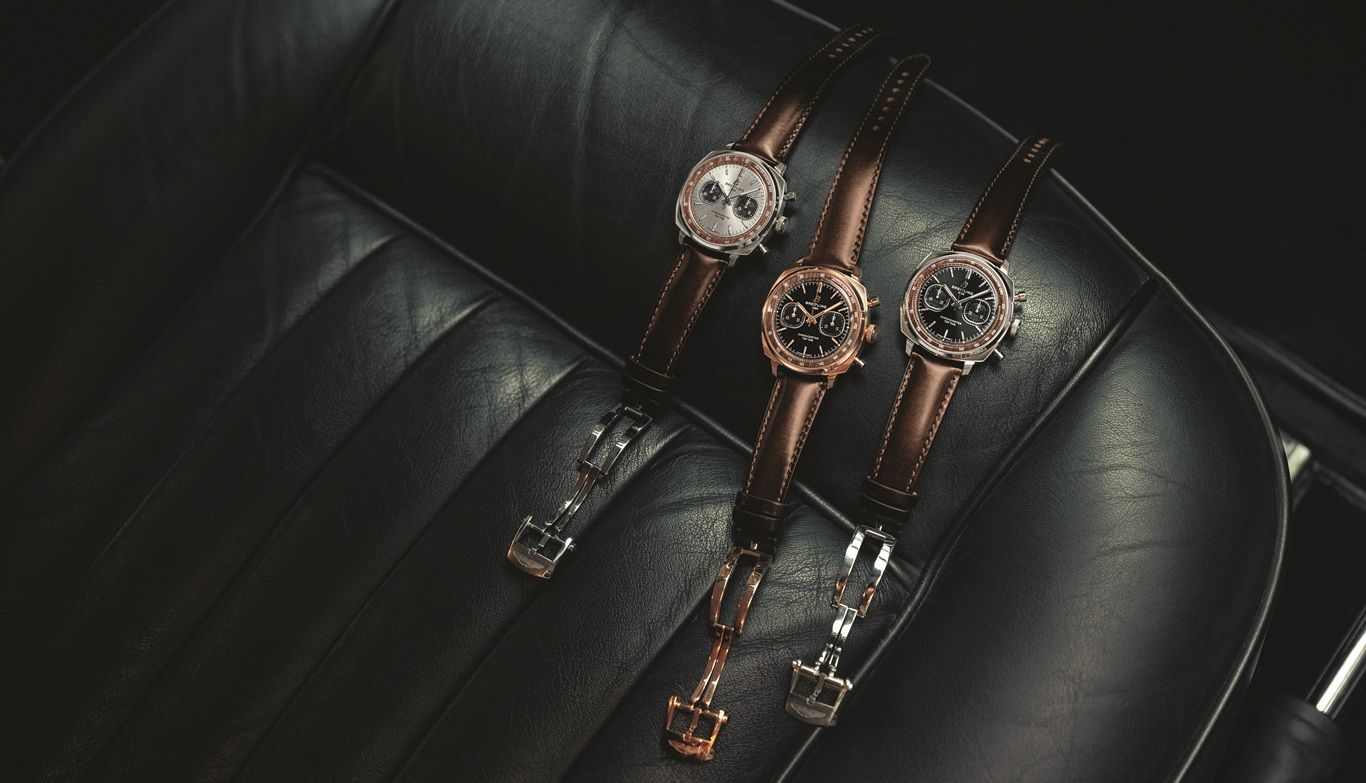
The Breitling Top Time B01 Aston Martin DB5 pairs a cushion-shaped 41mm case, a wooden inner ring and the in-house Caliber 01 across three limited…
By Zach Charles • October 10, 2026
TAG Heuer developed the Mikrograph (2011, 1/100th second), Mikrotimer Flying 1000 (2011, 1/1000th second), and Mikrogirder (2012, 1/2000th second).
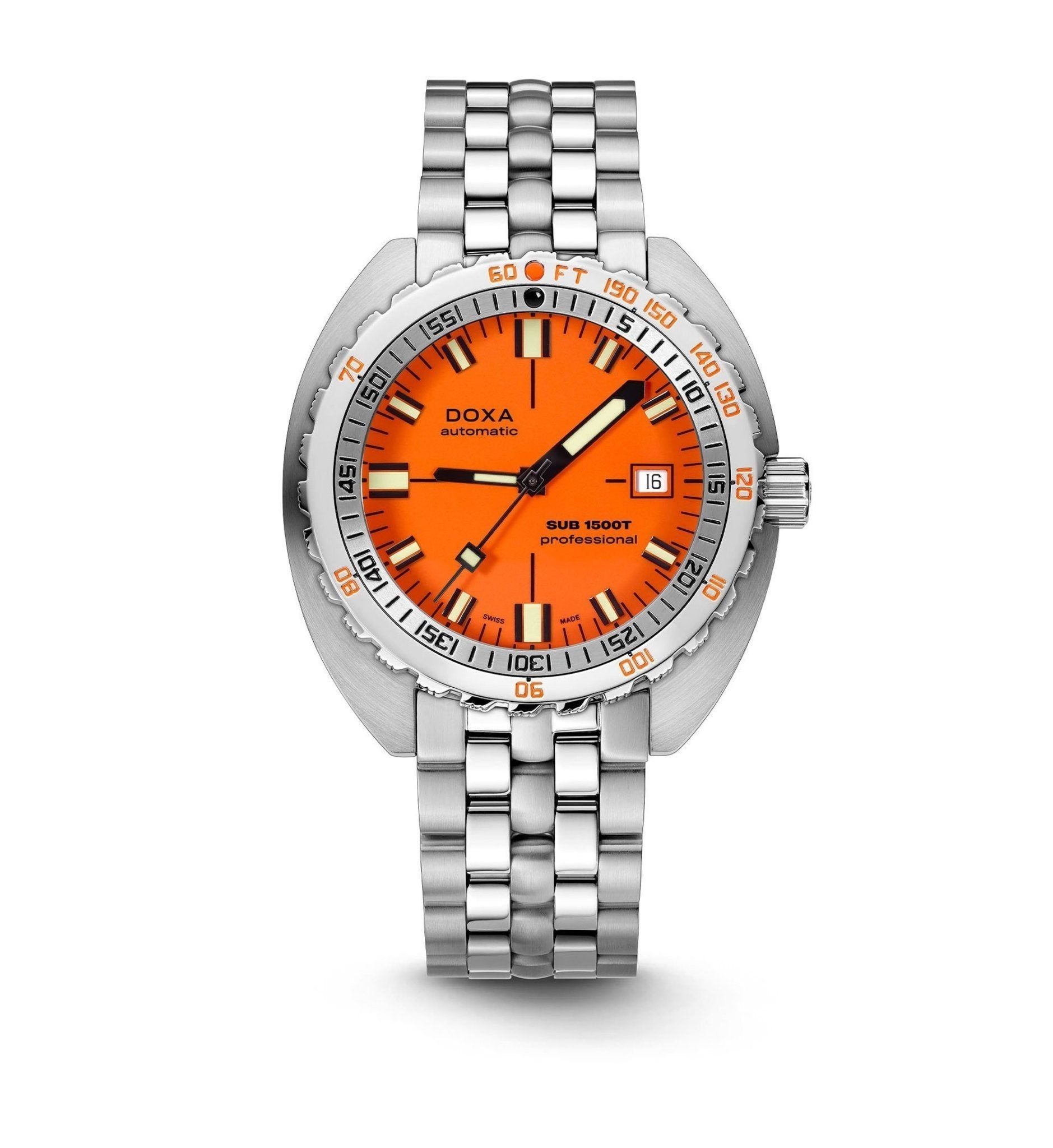
Doxa SUB 1500T: The 1,500-Metre Depth-Rating Flagship
By Zach Charles • October 10, 2026
Complete guide to the Doxa SUB 1500T — 45mm, 1,500m depth rating, helium escape valve, ETA 2892-2 movement, USD 2,690.
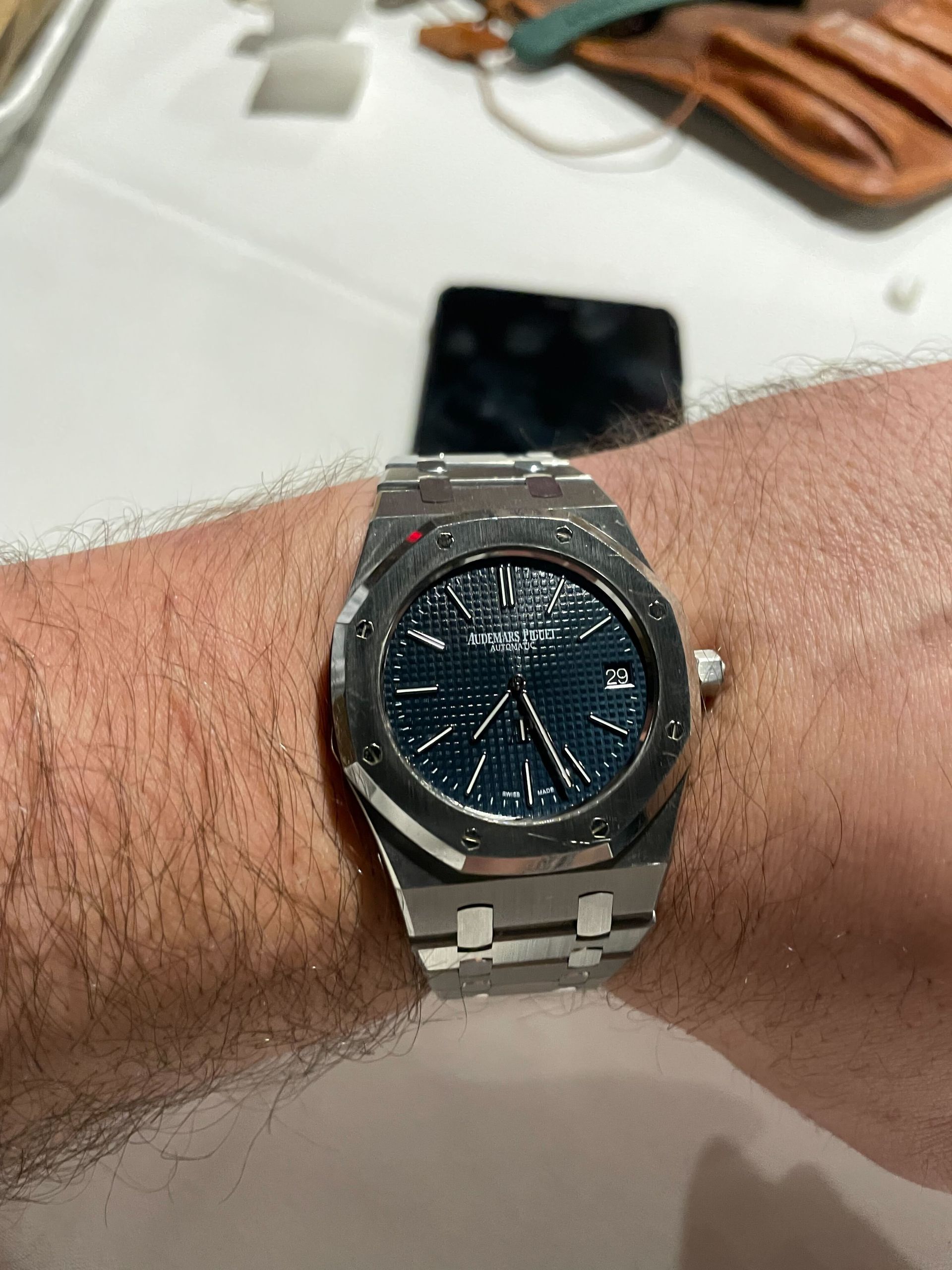
Audemars Piguet Royal Oak 'Jumbo' ref. 15202 with blue tapisserie dial and integrated steel bracelet
By Zach Charles • October 10, 2026
The Audemars Piguet × Swatch Royal Pop is a $400 bioceramic pocket watch in 8 colourways, powered by a new hand-wound SISTEM51 with 90+ hour power…

Time on the Move logo
By Zach Charles • October 10, 2026
Zach Charles is the editor of Time on the Move, an independent watch reference covering brand and model histories, buying guides and release news…
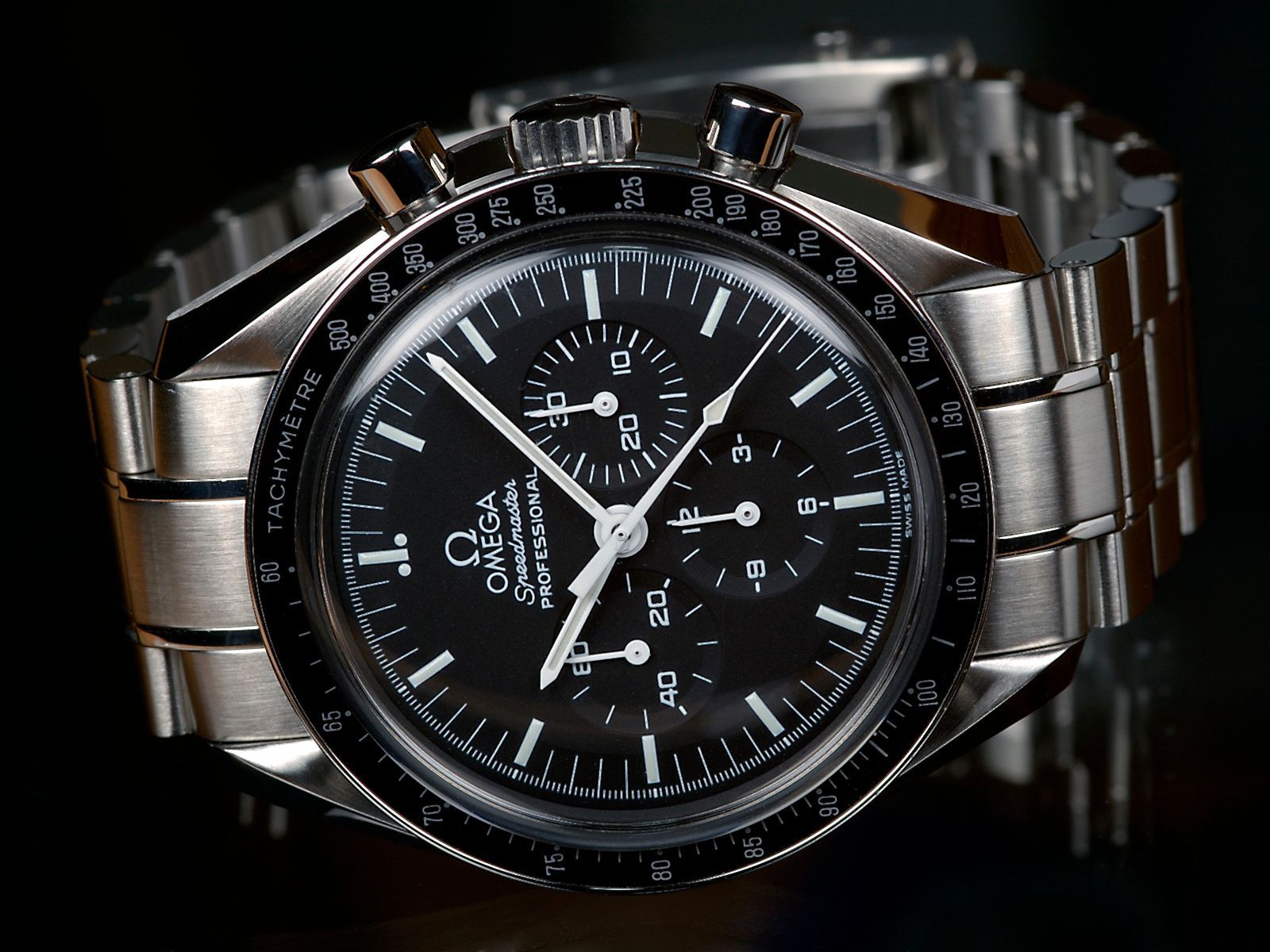
Omega Speedmaster Professional 'Moonwatch' chronograph, front view on steel bracelet
By Zach Charles • October 9, 2026
Find the best watches at every price point from $500 to $15,000 — new and pre-owned. Covers every budget tier with specific reference picks, brand…
By Zach Charles • October 9, 2026
The latest watch news: new releases, Watches and Wonders coverage, discontinuations, industry analysis, and market trends. Currently 1 article.
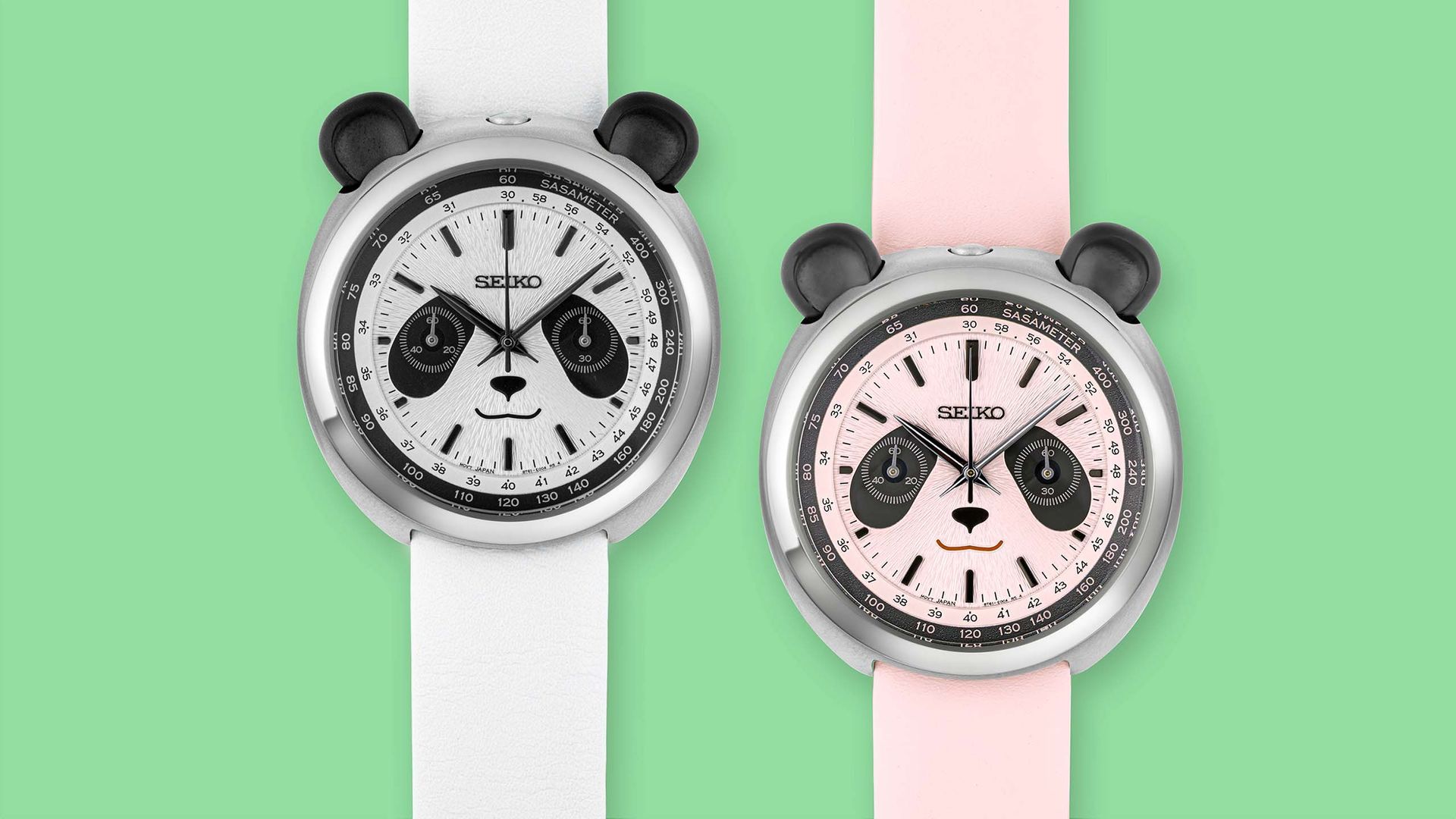
Seiko's New Panda Chronograph Is Literally a Panda: The Power Design Project HHK001 and HHK002
By Zach Charles • October 8, 2026
Seiko's Power Design Project panda chronograph (HHK001, HHK002) turns the panda dial into an actual panda face, with ear pushers, a 'Sasameter' and a 3D…
Show More