
Longines Calibres and Timing Heritage

Zach Charles • July 29, 2026

Share this article

Longines Calibres and Timing Heritage

Longines' movement history begins with the factory itself: when Ernest Francillon completed the first purpose-built watch factory at Les Longines in 1867, the first movement produced within it — the Calibre 20A — established a production lineage that has continued without interruption for over 155 years. The milestones in that history are not incidental: the 1878 Calibre 20H was one of the first chronograph movements to win a gold medal at a world exposition; the 1913 Calibre 13.33Z was the first chronograph movement designed for a wristwatch; the 1936 Calibre 13ZN was the first flyback chronograph wristwatch movement produced commercially. These are primary documents in the history of mechanical timekeeping. The current production calibres — all ETA-based — are modern instruments with silicon springs and precision certification; understanding what they evolved from provides context for what they represent.


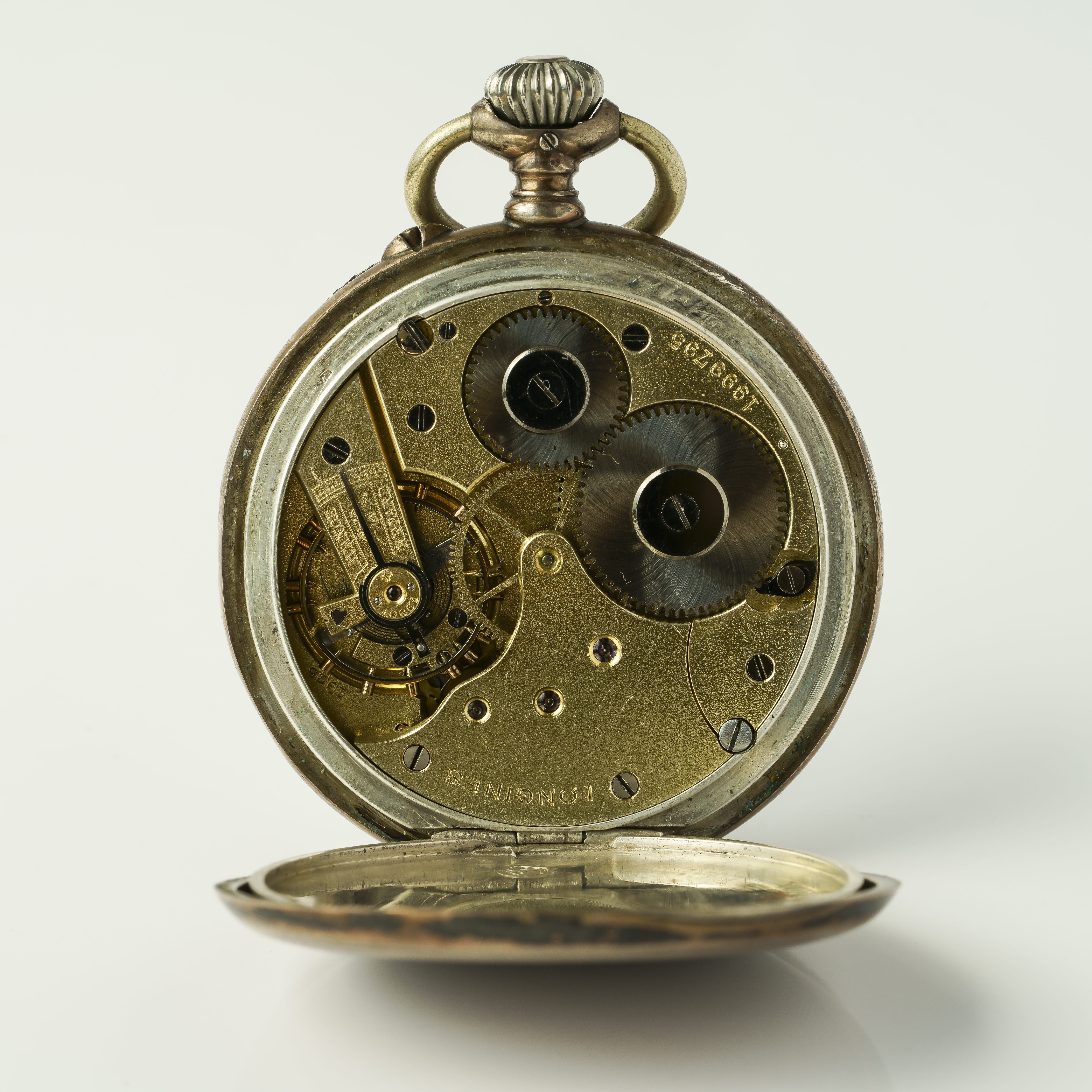
Longines 4 Grand Prix pocket watch, c.1907, clockwork visible
Longines 4 Grand Prix pocket watch, c.1907 — high-resolution pixel-shift photograph showing the clockwork in detail. Four Grand Prix awards are engraved on the case.
Photo: Franz van Duns — CC BY-SA 4.0 — Wikimedia Commons

Historical Calibres — The Founding Documents

Longines model 183 pocket watch — oldest surviving Longines
Longines model 183 pocket watch — among the oldest surviving Longines pieces, directly related to the founding production era of the 1860s–70s.
Photo: Longines183 — CC BY-SA 4.0 — Wikimedia Commons

Calibre 20A — 1867

The Calibre 20A was the first movement completed within Francillon's new factory at Les Longines in 1867 . It was not the first Longines movement — the établissage era produced movements before the factory existed — but it was the first to be manufactured, assembled, and regulated entirely under one roof. As such it is the founding document of Longines as a factory-based manufacturer rather than an assembly and trading operation.

Calibre 20H — 1878

The Calibre 20H was Longines' first chronograph movement — a pocket watch calibre that won the gold medal at the 1878 Paris Exposition Universelle . The 20H was a mono-pusher chronograph: a single push engaged and stopped the chronograph function; a second push reset it. This was the standard chronograph architecture of the period. The gold medal at Paris was significant: the exposition was the most prominent scientific and industrial competition of its era, and the Longines precision record that the brand later used as its identity began with this award.

Calibre 13.33Z — 1913

The Calibre 13.33Z of 1913 was the first chronograph movement designed specifically for a wristwatch . The move from pocket watch to wristwatch was not merely a change of case shape: it required a movement small enough to fit a wristwatch case while maintaining the structural integrity required by the chronograph mechanism. The 13.33Z solved this problem. It established Longines as the pioneer of wristwatch chronograph technology at a moment when the wristwatch form was itself still evolving from novelty to mainstream instrument.

Calibre 13ZN — 1936

Longines Calibre 13ZN chronograph movement
The Longines Calibre 13ZN — the first flyback chronograph wristwatch movement produced commercially (1936).
Photo: EMore98 — CC BY-SA 4.0 — Wikimedia Commons

The Calibre 13ZN of 1936 is Longines' most historically significant single movement. It was the first flyback chronograph wristwatch movement produced commercially — and the first to incorporate a column wheel, which provides more consistent and precise chronograph engagement than the cam-and-lever systems used in many competitors.

The flyback function — activated by a single push that simultaneously stops, resets, and restarts the chronograph — was developed by Longines in 1934 and commercialised in the 13ZN two years later. The function was designed for pilots and navigators who needed to time sequential intervals without the three-step stop–reset–start sequence of a conventional chronograph. The 13ZN remained in production until the early 1970s — an extraordinary run of nearly four decades for a single architecture.


Current Production — ETA-Based Calibres

1928 Longines wrist chronograph with flyback function
A 1928 Longines wrist-chronograph using a modified Calibre 13.33Z with flyback function — the earliest known flyback wristwatch, now in the Longines Museum.
Photo: LonginesOfficial — CC BY-SA 4.0 — Wikimedia Commons

All current Longines movements are ETA-based — produced under the ETA SA umbrella within the Swatch Group structure, with the L888 family manufactured exclusively for Longines. This is not a disadvantage: ETA movements are produced to high tolerances, the Longines-exclusive variants incorporate silicon balance springs and COSC certification, and the movement specifications are competitive within the High Range tier.

Calibre Base Beat Rate Power Reserve Silicon Spring COSC Used In
L888.4 ETA A31.L11 25,200 vph 64 hours Yes Yes Record, Spirit, Spirit Zulu
L888.5 ETA A31.L11 25,200 vph 59 hours Yes No HydroConquest
L888.6 ETA A31.L11 25,200 vph 72 hours Yes No Conquest
L688 ETA-based 25,200 vph 54 hours No No Conquest chrono, Avigation Big Eye
L791.4 ETA 7753 (modified) 28,800 vph 68 hours Yes Yes Spirit Flyback
L844.4 ETA-based GMT 25,200 vph — Yes Yes Spirit Zulu Time
L899 ETA-based 25,200 vph 64 hours Yes No Master Collection moonphase
L897 ETA-based 25,200 vph 64 hours No No Master Collection annual calendar
L678 ETA Valjoux 7751 28,800 vph — No No Master Collection chrono-moonphase
L592 ETA A20.L01 — 40 hours No No DolceVita automatic

The L888 Family

ETA Peseux 7001 rebranded as Longines L396.2, early 1990s
ETA Peseux 7001 rebranded as Longines L396.2, early 1990s — documenting the ETA-sourced movement era that preceded the current Longines-exclusive L888 architecture.
Photo: EMore98 — CC BY-SA 4.0 — Wikimedia Commons

The L888 is produced by ETA exclusively for Longines under the designation ETA A31.L11 . The "L" in the designation signifies the Longines-exclusive production specification — the movement is not available to other brands. The silicon balance spring is the key improvement over standard ETA A31 architecture: it eliminates magnetic sensitivity as a significant accuracy variable and removes corrosion as a spring degradation pathway.

The three L888 variants are differentiated by power reserve and COSC status:
- L888.4 (64hr, COSC) — the precision variant used in Record and Spirit
- L888.5 (59hr, no COSC) — the dive variant used in HydroConquest
- L888.6 (72hr, no COSC) — the extended reserve variant used in Conquest

The L791.4

The L791.4 is a modified ETA 7753 — itself derived from the ETA 7750 architecture — with a column wheel controlling the chronograph mechanism rather than a cam-and-lever system. The column wheel provides more consistent engagement and release across the chronograph's operating life, and is associated with higher-quality chronograph construction. The L791.4 runs at 28,800 vph (faster than the L888 family) and carries COSC certification . It is used exclusively in the Spirit Flyback.


COSC-Certified Longines Calibres

Longines Calibre 30CH chronograph movement
Longines Calibre 30CH — a column-wheel chronograph calibre.
Photo: EMore98 — CC BY-SA 4.0 — Wikimedia Commons
Calibre Collection Standard
L888.4 Record, Spirit (3-hand), Spirit Zulu ±4 sec/day
L791.4 Spirit Flyback ±4 sec/day
L844.4 Spirit Zulu Time ±4 sec/day

Frequently Asked Questions

Longines Calibre 30L movement, 1960s
Longines Calibre 30L, 1960s — a slim automatic movement from Longines' mid-century production.
Photo: EMore98 — CC BY-SA 4.0 — Wikimedia Commons
Does Longines make its own movements?
No — all current Longines movements are ETA-based. The L888 family is manufactured by ETA exclusively for Longines (designated ETA A31.L11) and is not available to other brands. This is a Longines-exclusive ETA calibre, not a generic movement.

What was the Calibre 13ZN?
The first flyback chronograph wristwatch movement produced commercially — introduced in 1936 and produced until the early 1970s. It used a column wheel and the flyback function Longines had developed in 1934.

Which Longines movements are COSC-certified?
The L888.4 (Record, Spirit, Spirit Zulu), L791.4 (Spirit Flyback), and L844.4 (Spirit Zulu Time). The Record was the first Longines collection to carry COSC certification as a universal production standard (2017).

What is the silicon balance spring?
A balance spring made from silicon rather than traditional metal alloy. Silicon is non-magnetic, corrosion-resistant, and maintains consistent elasticity across temperature variation — improving both accuracy and longevity compared to conventional springs.


Related Articles

Recent Posts

By Zach Charles • October 10, 2026
Hamilton's American Classic Cushion Mechanical revives its 1926 Art Deco cushion watches, seen in Oppenheimer, in 30mm and 34mm with the new hand-wound…
Doxa SUB 200: The Accessible Everyday Diver
By Zach Charles • October 10, 2026
Complete guide to the Doxa SUB 200 — 42mm, 200m, four colorways, Sellita SW200-1. The accessible entry to the Doxa SUB family with the full…
By Zach Charles • October 10, 2026
The Breitling Top Time B01 Aston Martin DB5 pairs a cushion-shaped 41mm case, a wooden inner ring and the in-house Caliber 01 across three limited…
By Zach Charles • October 10, 2026
TAG Heuer developed the Mikrograph (2011, 1/100th second), Mikrotimer Flying 1000 (2011, 1/1000th second), and Mikrogirder (2012, 1/2000th second).
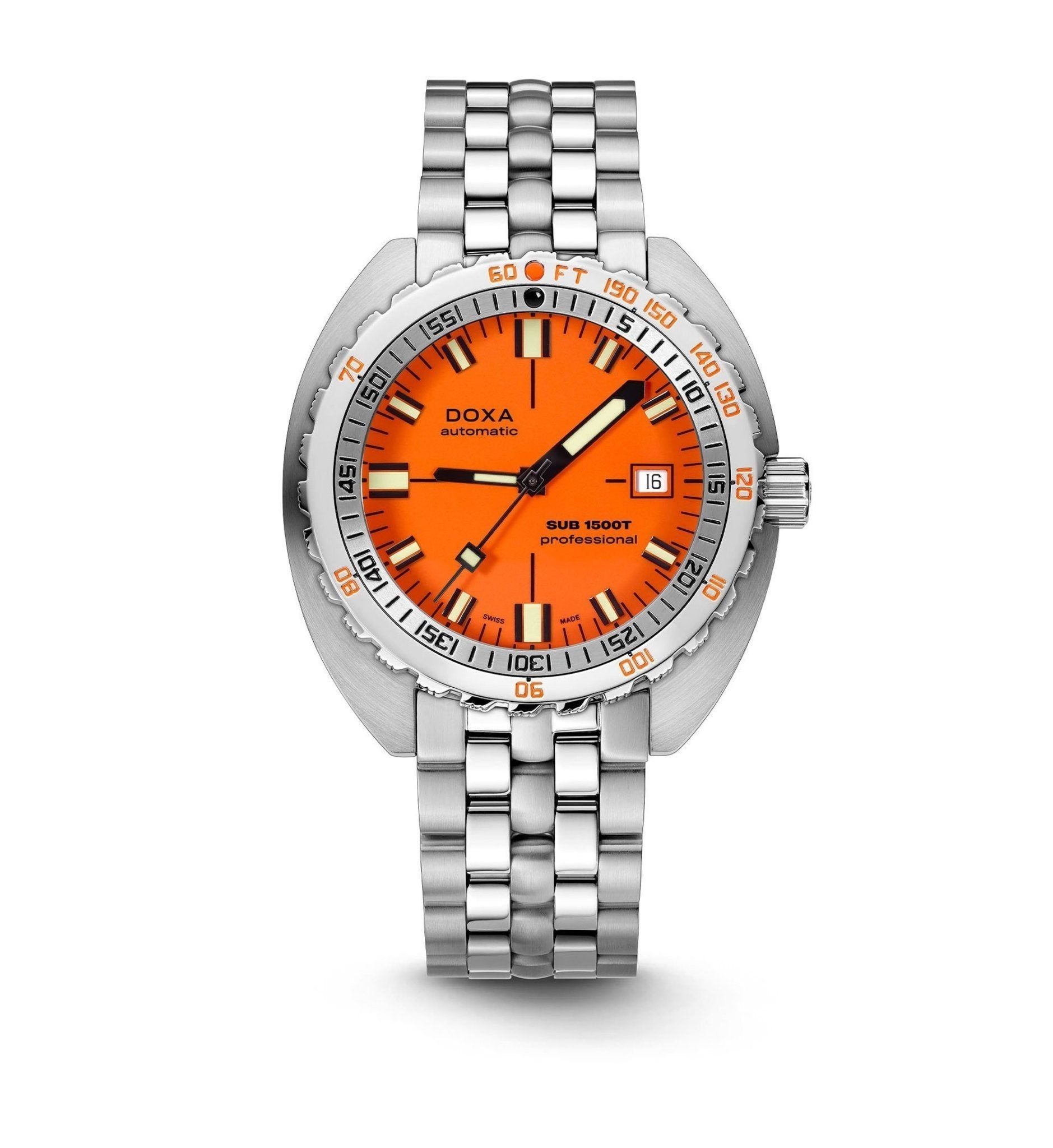
Doxa SUB 1500T: The 1,500-Metre Depth-Rating Flagship
By Zach Charles • October 10, 2026
Complete guide to the Doxa SUB 1500T — 45mm, 1,500m depth rating, helium escape valve, ETA 2892-2 movement, USD 2,690.
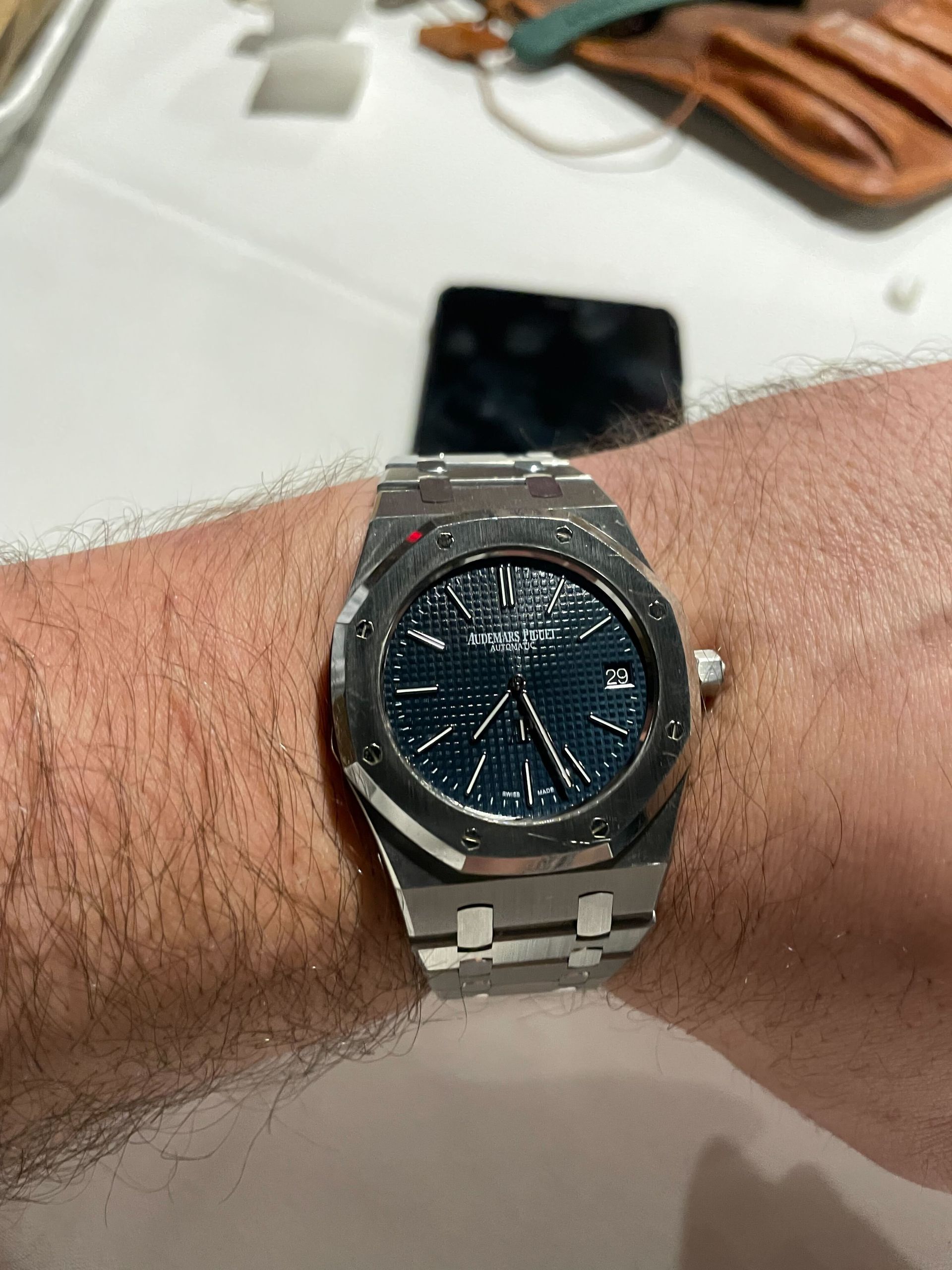
Audemars Piguet Royal Oak 'Jumbo' ref. 15202 with blue tapisserie dial and integrated steel bracelet
By Zach Charles • October 10, 2026
The Audemars Piguet × Swatch Royal Pop is a $400 bioceramic pocket watch in 8 colourways, powered by a new hand-wound SISTEM51 with 90+ hour power…

Time on the Move logo
By Zach Charles • October 10, 2026
Zach Charles is the editor of Time on the Move, an independent watch reference covering brand and model histories, buying guides and release news…
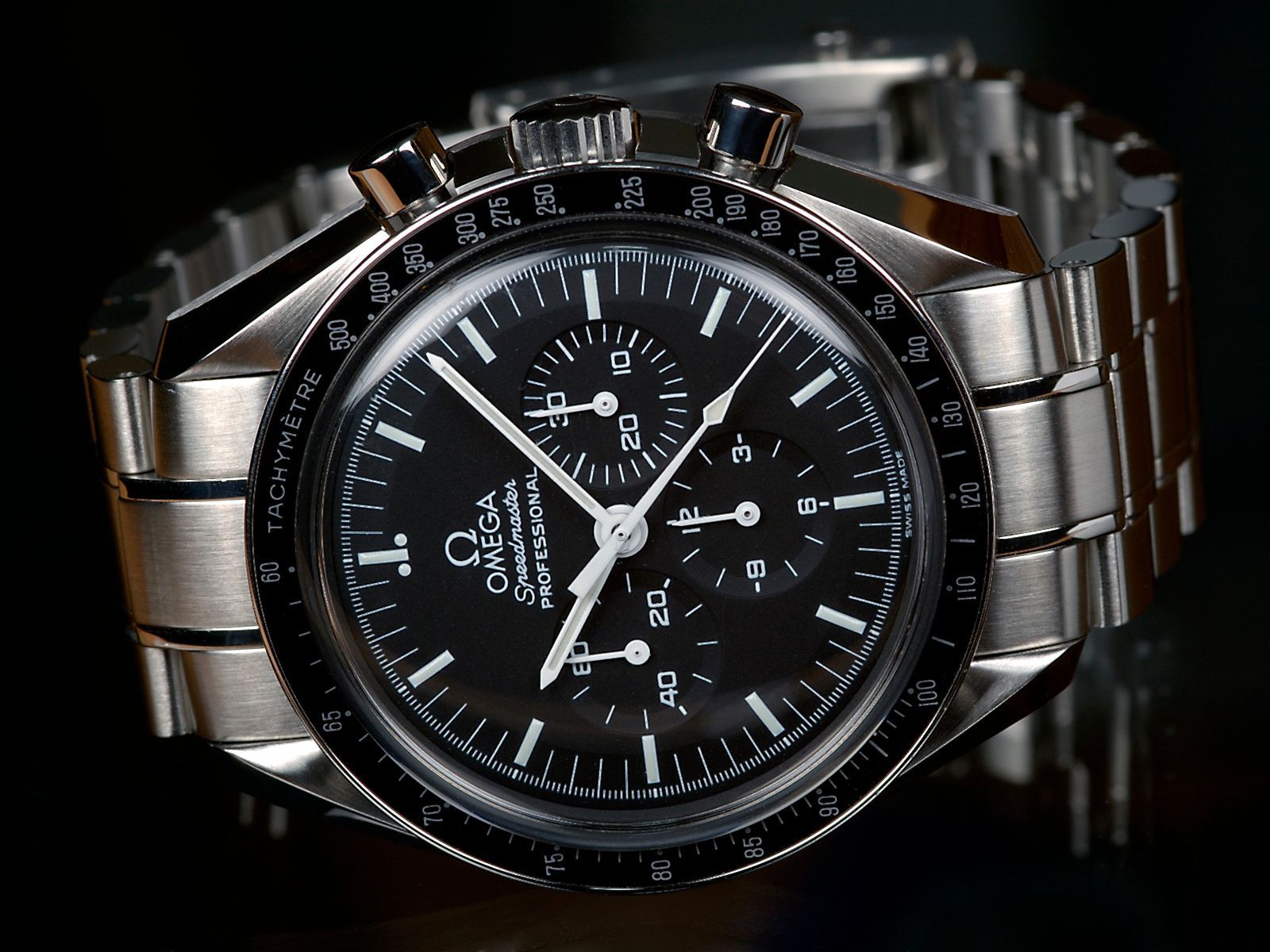
Omega Speedmaster Professional 'Moonwatch' chronograph, front view on steel bracelet
By Zach Charles • October 9, 2026
Find the best watches at every price point from $500 to $15,000 — new and pre-owned. Covers every budget tier with specific reference picks, brand…
By Zach Charles • October 9, 2026
The latest watch news: new releases, Watches and Wonders coverage, discontinuations, industry analysis, and market trends. Currently 1 article.
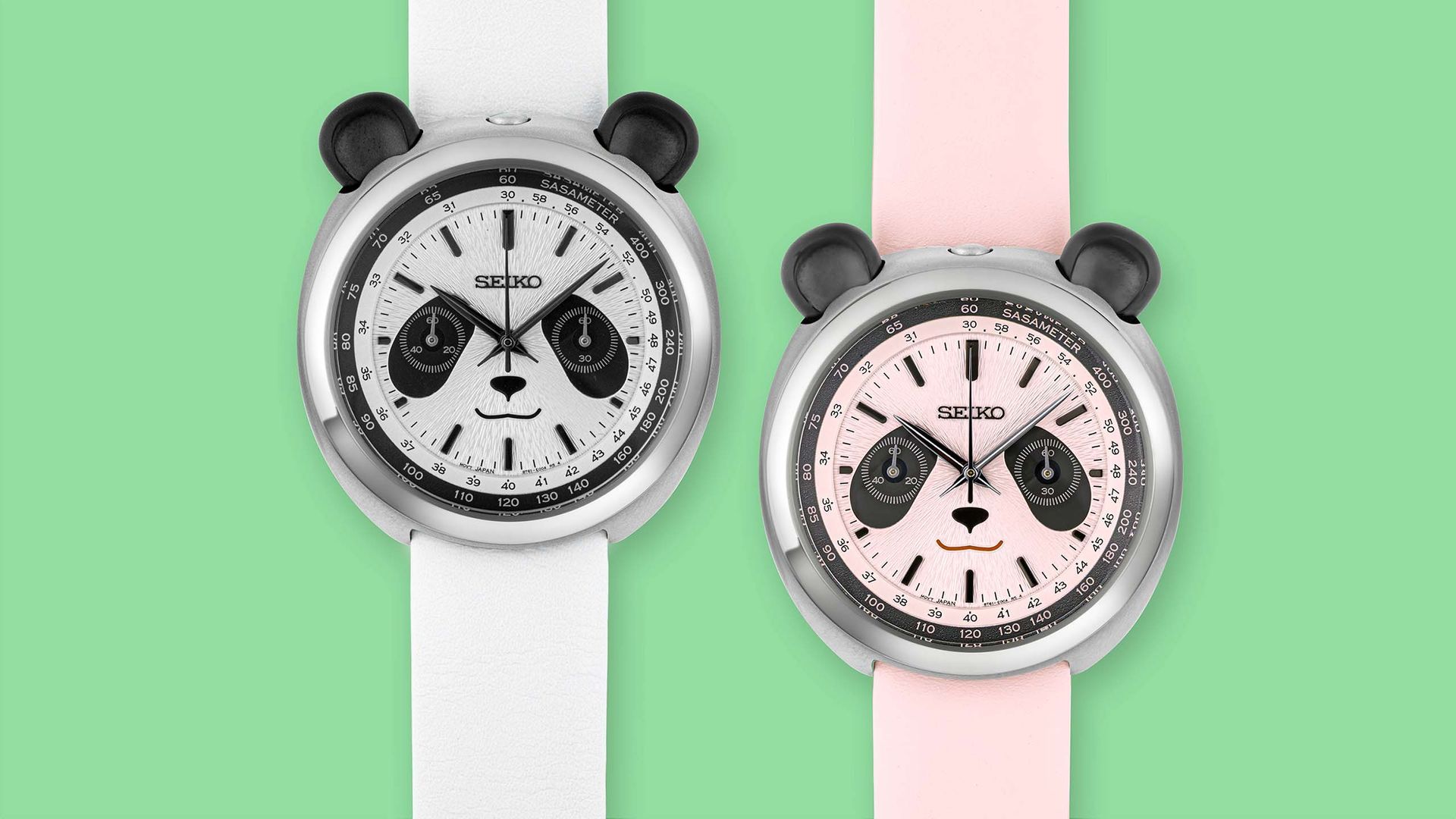
Seiko's New Panda Chronograph Is Literally a Panda: The Power Design Project HHK001 and HHK002
By Zach Charles • October 8, 2026
Seiko's Power Design Project panda chronograph (HHK001, HHK002) turns the panda dial into an actual panda face, with ear pushers, a 'Sasameter' and a 3D…
Show More