
Grand Seiko Spring Drive: The Tri-Synchro Regulator and Calibre 9R

Zach Charles • June 1, 2026

Share this article

Grand Seiko Spring Drive: The Tri-Synchro Regulator

The conventional mechanical watch uses a balance wheel and lever escapement to regulate the release of energy from the mainspring. The rate at which the escapement ticks — its frequency — determines accuracy. No conventional mechanical escapement, however precisely regulated, can achieve the accuracy of a quartz oscillator. The two technologies had always represented a choice: mechanical means, or quartz precision.

Spring Drive eliminates the choice. It is powered entirely by a mainspring — no battery, no external energy source — and regulated by a quartz oscillator. Its accuracy (±1 second per day) is four times better than the COSC mechanical chronometer standard (±4 seconds per day). No other watch mechanism does this.


Grand Seiko Calibre 9S65 automatic movement
The Grand Seiko Calibre 9S65 automatic movement — a standard-beat automatic at 28,800 vph with 72-hour power reserve, hand-finished to the Grand Seiko standard with machine-striped plates and manually bevelled components.
Photo: STSPP — CC BY-SA 4.0 — Wikimedia Commons
Invention — 1977 to 1999

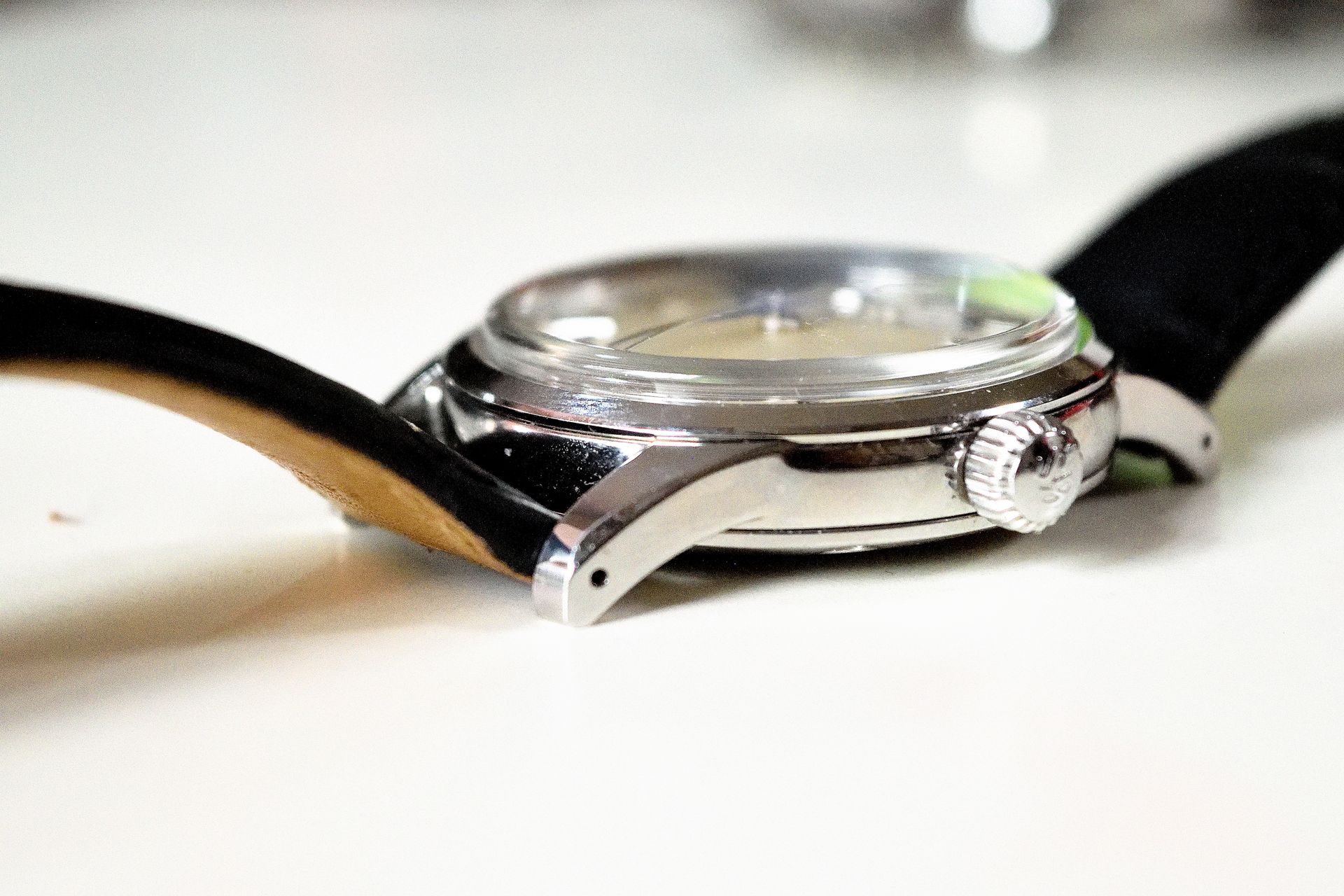
Grand Seiko SBGW231 manual-wind — side view
The Grand Seiko SBGW231 manual-wind from the side — powered by Calibre 9S64, the 4.28mm manual-wind movement that underpins the Elegance Collection and represents Grand Seiko’s purest expression of thin-case dress watchmaking.
Photo: STSPP — CC BY-SA 4.0 — Wikimedia Commons

Yoshikazu Akahane , an engineer at Suwa Seikosha (now Seiko Epson) in Nagano, conceived the underlying idea in 1977 . His insight reportedly came in 1978 while observing a bicycle descending a hill at constant speed: the rider was using brakes not to stop the bicycle but to maintain a steady controlled velocity. An electromagnetic braking force, applied continuously and variably to a mechanical gear train, could in principle regulate a watch movement the same way — maintaining constant gear speed without the stop-start friction of a mechanical escapement.

The development consumed twenty years and more than 600 prototypes . Early versions ran only for hours before failing. The requirement was for a mechanism that would work reliably at watch scale, continuously, without external power, for the life of the watch.

Akahane died in 1998 at the age of 52 , before his invention reached production. The first commercial Spring Drive watch — a Seiko (not Grand Seiko) powered by Calibre 7R68 — launched in 1999 . Spring Drive entered the Grand Seiko line in September 2004 as Calibre 9R65 .


How Spring Drive Works — The Tri-Synchro Regulator

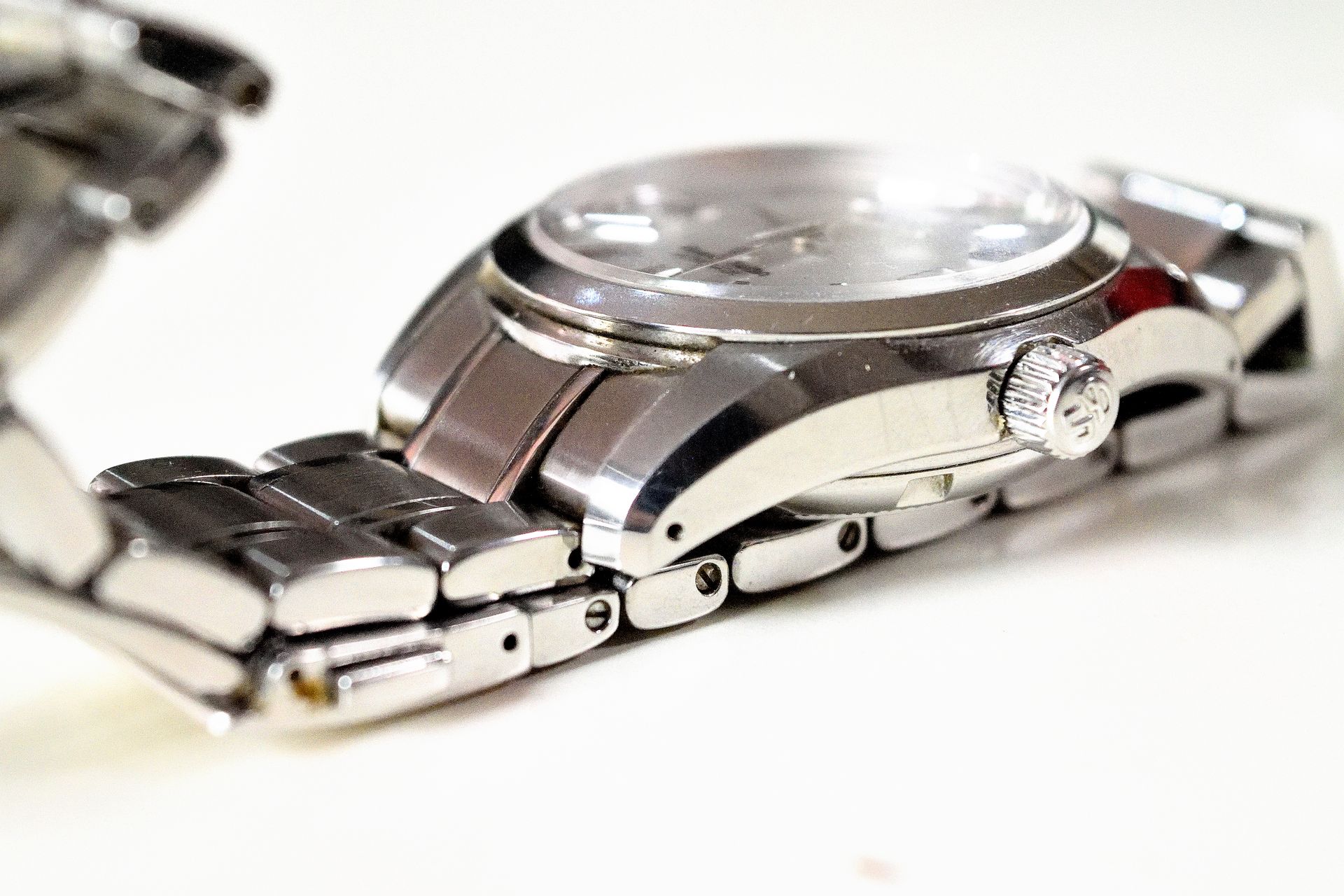
Grand Seiko Automatic Hi-Beat watch
A Grand Seiko Automatic Hi-Beat — running at 36,000 vph (10 beats per second), the hi-beat movements deliver improved positional accuracy and a characteristically smooth seconds sweep compared with standard-beat automatics.
Photo: Roland Fischer (Dnalor 01) — CC BY-SA 3.0 AT — Wikimedia Commons
Spring Drive's regulation mechanism is called the Tri-synchro regulator because it harmonizes three forms of energy:

1. Mechanical energy
The mainspring unwinds and drives the gear train as in any conventional mechanical watch. There is no escapement in the conventional sense — no lever, no pallet fork, no locking action. The gear train drives continuously.

2. Electrical energy
At the end of the gear train, instead of a balance wheel, there is a component called the glide wheel — a very light rotor. As the gear train drives the glide wheel, it spins at a target rate of 8 revolutions per second . The spinning glide wheel interacts electromagnetically with a stator coil surrounding it, generating a tiny electrical current — the glide wheel functions as a miniature electrical generator.

3. Electromagnetic energy
The electrical current generated by the glide wheel powers two things: a quartz oscillator (running at 32,768 Hz, as in a quartz watch) and an integrated circuit (IC) . The IC continuously compares the glide wheel's actual rotational speed against the quartz oscillator's reference frequency. If the gear train is running too fast — if the mainspring is releasing energy at a rate that would make the watch run ahead — the IC triggers an electromagnetic braking force that slows the glide wheel to the correct speed. If the gear train is running at the correct speed, no braking is applied.

The braking is continuous and infinitely variable — it adjusts constantly, not in steps. There is no click, no locking and releasing, no mechanical friction of the kind inherent to a conventional escapement. This is why the Spring Drive seconds hand moves in a smooth, uninterrupted sweep: the regulation is happening continuously, not 6 or 8 times per second.

This mechanism is the world's only watch mechanism that uses a mainspring as its sole power source, regulated by a quartz oscillator, without a battery.


Calibre 9R65 — Standard Spring Drive Automatic

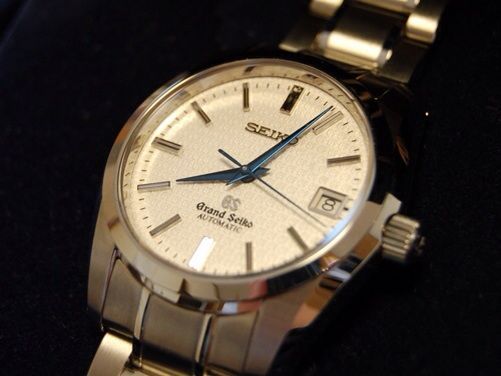
Grand Seiko SBGR051 — side view
The Grand Seiko SBGR051 from the side — showing the case thickness and lug profile that result from the Zaratsu polishing process: mirror-finished flat surfaces meeting brushed flanks at a perfectly crisp edge.
Photo: STSPP — CC BY-SA 4.0 — Wikimedia Commons
Calibre 9R65 is the foundational Spring Drive movement in the Grand Seiko line and the most widely used Spring Drive calibre.

  • Type: Self-winding (automatic)
  • Jewels: 30
  • Quartz oscillator frequency: 32,768 Hz
  • Power reserve: 72 hours
  • Accuracy: ±1 second per day / ±15 seconds per month
  • Additional features: Power reserve indicator, hand-windable rotor
  • Shock protection: Diashock
  • Introduction in Grand Seiko: September 2004

The 9R65 is used in the SBGA series, including the SBGA211 "Snowflake" — the watch that introduced most international collectors to Grand Seiko after the brand entered global markets in 2010.


Calibre 9R66 — Spring Drive GMT

Grand Seiko SBGR037 with Calibre 9S automatic
The Grand Seiko SBGR037 — a Heritage Collection automatic with Calibre 9S, illustrating the 44GS design language: horizontal brushed dial, applied indices, and the case geometry developed by Taro Tanaka at the Suwa Seikosha studio in 1967.
Photo: Hiroaki Kikuchi (Torajiro) — CC BY-SA 3.0 — Wikimedia Commons

Calibre 9R66 adds a GMT complication to the Spring Drive platform.

  • Type: Self-winding Spring Drive with GMT
  • Jewels: 30
  • Power reserve: 72 hours
  • Accuracy: ±1 second per day / ±15 seconds per month
  • GMT function: True GMT — the local hour hand is independently adjustable while the GMT reference hand remains tracking a fixed time zone
  • Introduction: 2006
  • Used in: SBGE series (SBGE253, SBGE255, SBGE257, SBGE295)


Calibre 9R31 — Spring Drive Manual Wind

Calibre 9R31 brings the Spring Drive mechanism to a manual-winding configuration, introduced in 2019 for the 20th anniversary of Spring Drive's commercial launch.

  • Type: Manual-winding Spring Drive
  • Jewels: 30
  • Power reserve: 72 hours (dual-spring barrel)
  • Accuracy: ±1 second per day / ±15 seconds per month
  • Introduction: 2019
  • Used in: SBGY007 "Omiwatari," SBGY011 "Asaborake"

A manual-wind Spring Drive is preferred by some collectors for its thinner profile — the absence of an automatic rotor reduces movement thickness — and for the directness of the relationship between winding and reserve indicator.


Calibre 9R86 — Spring Drive Chronograph GMT

Calibre 9R86 is Grand Seiko's Spring Drive chronograph movement, combining the GMT function with a column-wheel chronograph.

  • Type: Self-winding Spring Drive Chronograph with GMT
  • Jewels: 50
  • Power reserve: 72 hours
  • Accuracy: ±1 second per day / ±15 seconds per month
  • Introduction: 2007 — the first Spring Drive chronograph movement
  • Used in: SBGC series (SBGC201, SBGC203, SBGC205, SBGC253)

The chronograph's seconds hand, like the timekeeping seconds hand, moves in a continuous sweep — a visual consequence of the Spring Drive's continuous regulation that is unmatched by any conventional chronograph at any price. The column-wheel architecture ensures clean operation and precise start/stop/reset function.


Calibre 9R96 — Enhanced Spring Drive

Calibre 9R96 is a specially adjusted variant of the 9R86 platform, individually tuned to a higher accuracy standard.

  • Accuracy: ±0.5 seconds per day / ±10 seconds per month
  • Distinguishing mark: Bears the Grand Seiko golden lion medallion — the mark applied to the brand's highest-grade movements
  • Context: The 9R96 is the precision pinnacle of the Spring Drive calibre family; each movement is individually adjusted to the enhanced standard before casing


Accuracy in Context

Grand Seiko Calibre 9S65 automatic movement
The Grand Seiko Calibre 9S65 automatic movement — a standard-beat automatic at 28,800 vph with 72-hour power reserve, hand-finished to the Grand Seiko standard with machine-striped plates and manually bevelled components.
Photo: STSPP — CC BY-SA 4.0 — Wikimedia Commons
Standard Accuracy
COSC Mechanical Chronometer ±4 seconds/day
Grand Seiko 9S mechanical (adjusted) +5/−3 seconds/day
Spring Drive 9R65/9R66/9R86 ±1 second/day
Spring Drive 9R96 (enhanced) ±0.5 seconds/day
Seiko 9F Quartz (GS Quartz) ±10 seconds/year

Spring Drive achieves its accuracy because the regulation is by quartz oscillator rather than mechanical escapement. A mechanical escapement accumulates errors from temperature variation, positional change, lubricant viscosity, and mainspring torque variation as it unwinds — all of which affect the balance's oscillation rate. The Spring Drive's electromagnetic regulation corrects continuously against the quartz reference regardless of these variables.


Frequently Asked Questions

What is Spring Drive?
A watch mechanism that uses a mainspring as its sole power source, regulated by a quartz oscillator without a battery. The gear train drives a glide wheel that generates electricity, powering a quartz oscillator and IC that apply electromagnetic braking to maintain the correct rate. Accuracy: ±1 second/day — four times better than the COSC mechanical standard.

Who invented Spring Drive?
Yoshikazu Akahane, an engineer at Suwa Seikosha (now Seiko Epson). He conceived the idea in 1977, spent 20 years and over 600 prototypes developing it, and died in 1998 at 52, one year before the first commercial Spring Drive watch launched.

When did Spring Drive enter Grand Seiko?
September 2004, as Calibre 9R65 (automatic). The first commercial Spring Drive launched in 1999 in a Seiko-branded watch (Calibre 7R68).

Why does the Spring Drive seconds hand sweep smoothly?
Because regulation is continuous and infinitely variable — electromagnetic braking adjusts constantly rather than in discrete mechanical ticks. There is no locking and releasing action as in a conventional escapement.

What is the most accurate Spring Drive movement?
Calibre 9R96, individually adjusted to ±0.5 seconds per day / ±10 seconds per month. It bears the Grand Seiko golden lion medallion denoting enhanced-grade status.


Related Articles

Recent Posts

By Zach Charles • October 10, 2026
Hamilton's American Classic Cushion Mechanical revives its 1926 Art Deco cushion watches, seen in Oppenheimer, in 30mm and 34mm with the new hand-wound…
Doxa SUB 200: The Accessible Everyday Diver
By Zach Charles • October 10, 2026
Complete guide to the Doxa SUB 200 — 42mm, 200m, four colorways, Sellita SW200-1. The accessible entry to the Doxa SUB family with the full…
By Zach Charles • October 10, 2026
The Breitling Top Time B01 Aston Martin DB5 pairs a cushion-shaped 41mm case, a wooden inner ring and the in-house Caliber 01 across three limited…
By Zach Charles • October 10, 2026
TAG Heuer developed the Mikrograph (2011, 1/100th second), Mikrotimer Flying 1000 (2011, 1/1000th second), and Mikrogirder (2012, 1/2000th second).
Doxa SUB 1500T: The 1,500-Metre Depth-Rating Flagship
By Zach Charles • October 10, 2026
Complete guide to the Doxa SUB 1500T — 45mm, 1,500m depth rating, helium escape valve, ETA 2892-2 movement, USD 2,690.
Audemars Piguet Royal Oak 'Jumbo' ref. 15202 with blue tapisserie dial and integrated steel bracelet
By Zach Charles • October 10, 2026
The Audemars Piguet × Swatch Royal Pop is a $400 bioceramic pocket watch in 8 colourways, powered by a new hand-wound SISTEM51 with 90+ hour power…

Time on the Move logo
By Zach Charles • October 10, 2026
Zach Charles is the editor of Time on the Move, an independent watch reference covering brand and model histories, buying guides and release news…
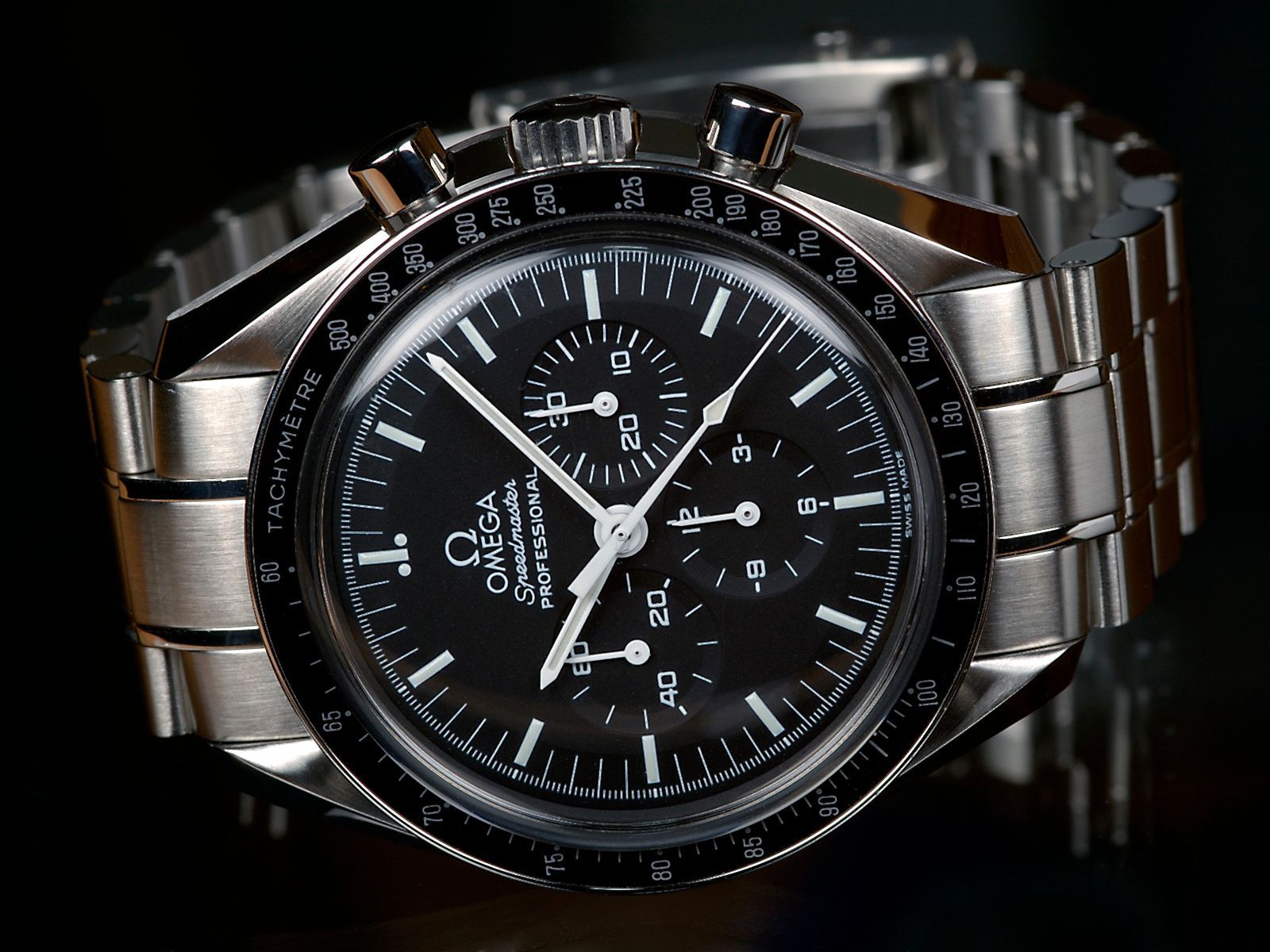
Omega Speedmaster Professional 'Moonwatch' chronograph, front view on steel bracelet
By Zach Charles • October 9, 2026
Find the best watches at every price point from $500 to $15,000 — new and pre-owned. Covers every budget tier with specific reference picks, brand…
By Zach Charles • October 9, 2026
The latest watch news: new releases, Watches and Wonders coverage, discontinuations, industry analysis, and market trends. Currently 1 article.

Seiko's New Panda Chronograph Is Literally a Panda: The Power Design Project HHK001 and HHK002
By Zach Charles • October 8, 2026
Seiko's Power Design Project panda chronograph (HHK001, HHK002) turns the panda dial into an actual panda face, with ear pushers, a 'Sasameter' and a 3D…
Show More