Grand Seiko Elegance Collection: Manual-Wind Thin Cases and Enamel Dials
Grand Seiko Elegance Collection
Grand Seiko's catalogue has three movement technologies — Spring Drive, mechanical, and quartz — and two primary design directions — the geometric discipline of Heritage Collection and the more architecturally assertive Evolution 9. The Elegance Collection sits across both: it takes Heritage Collection design references (particularly the 44GS case proportions) and combines them with the brand's most refined dial artistry, in both Spring Drive and mechanical configurations.
The Elegance Collection is not defined by a single movement. It is defined by a design approach: restraint, traditional Japanese craft techniques in dial finishing, and an emphasis on how the watch reads in natural light as opposed to how it reads in a specifications table.
Photo: STSPP — CC BY-SA 4.0 — Wikimedia Commons
Movement Architecture — Standard Beat, Not Hi-Beat
Photo: Roland Fischer (Dnalor 01) — CC BY-SA 3.0 AT — Wikimedia Commons
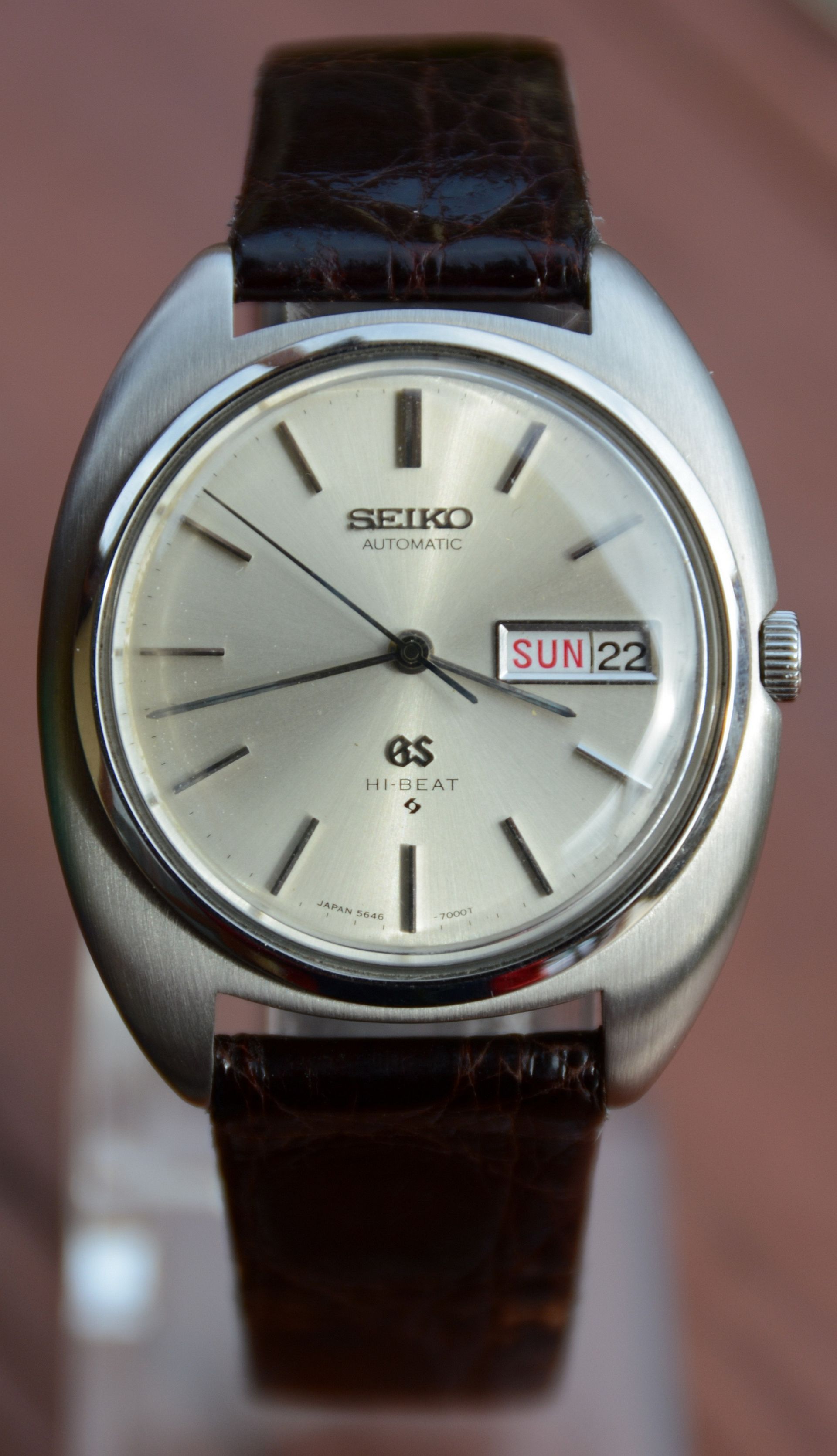
A clarification before the calibre detail: the mechanical movements in the Elegance Collection run at 28,800 vph — standard beat, not Hi-Beat. Grand Seiko's Hi-Beat movements (9S85 at 36,000 vph and the 9SA5 also at 36,000 vph) belong to the Heritage Collection's upper tier and the Evolution 9 line respectively. The Elegance Collection's mechanical calibres prioritise thin movement profiles and energy efficiency over high-frequency oscillation.
Calibre 9S64 — Manual-Wind Mechanical
Photo: STSPP — CC BY-SA 4.0 — Wikimedia Commons
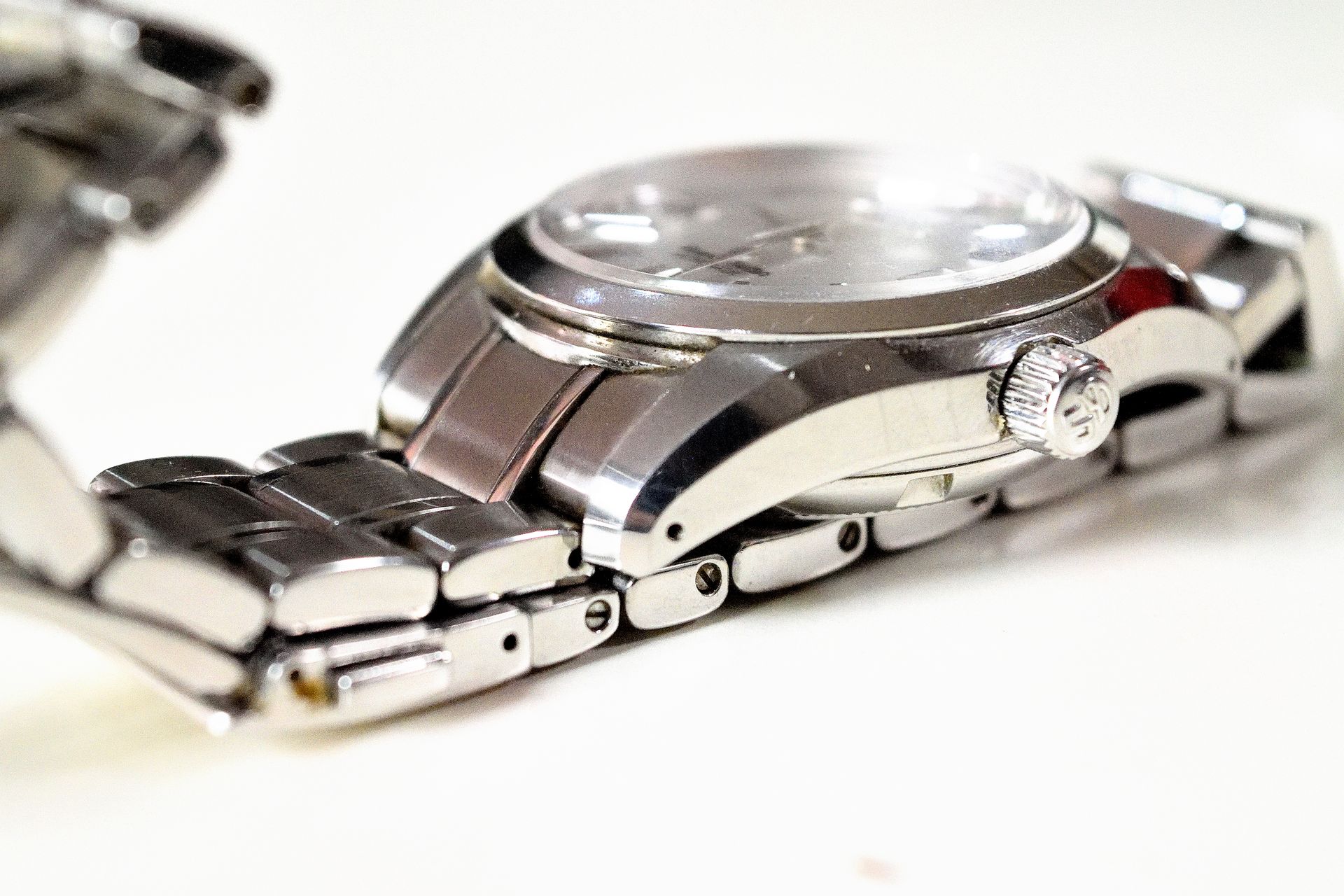
Calibre 9S64 is the manual-winding mechanical movement used in the SBGW-series dress watches.
- Type: Manual-winding mechanical
- Jewels: 24
- Frequency: 28,800 vph (4 Hz)
- Power reserve: Approximately 72 hours (fully wound)
- Accuracy: +5/−3 seconds per day
- Shock protection: Diashock
- Introduction: 2011
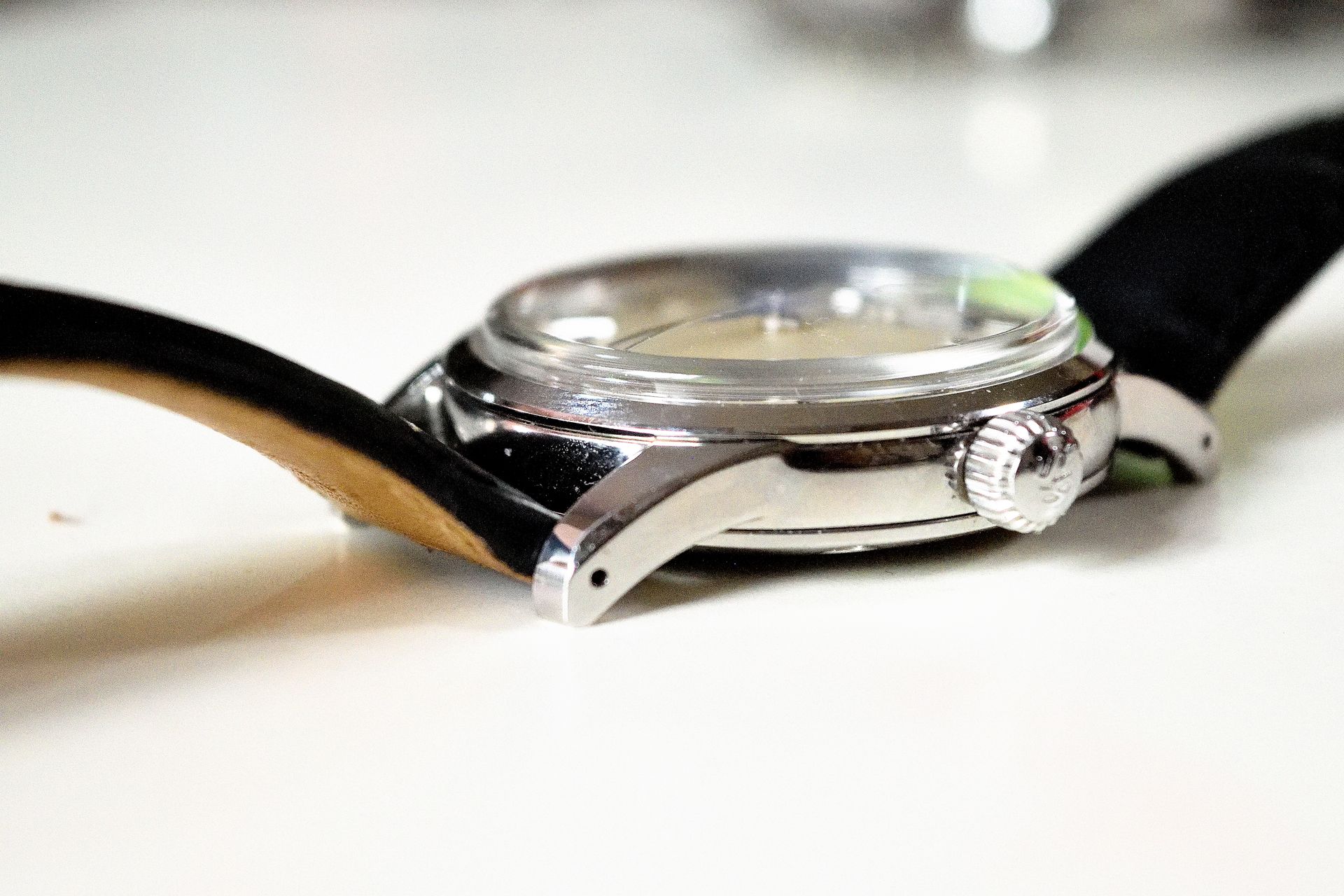
Manual-wind movements are preferred in the Elegance Collection context for two reasons: the absence of a rotor reduces movement thickness (enabling slimmer case profiles), and the act of daily winding creates a direct relationship between the wearer and the watch. The SBGW series built on the 9S64 represents Grand Seiko's most classically proportioned dress watches.
Key references using 9S64:
- SBGW231, SBGW262, SBGW281:
Standard Elegance Collection dress watches
- SBGW262:
Yellow gold case with Urushi lacquer dial — one of the most refined expressions in the standard lineup
- SBGY007 "Omiwatari":
Spring Drive 9R31 (manual-wind Spring Drive variant, separate calibre but same manual-wind philosophy)
Calibre 9S65 — Standard Automatic
Photo: STSPP — CC BY-SA 4.0 — Wikimedia Commons
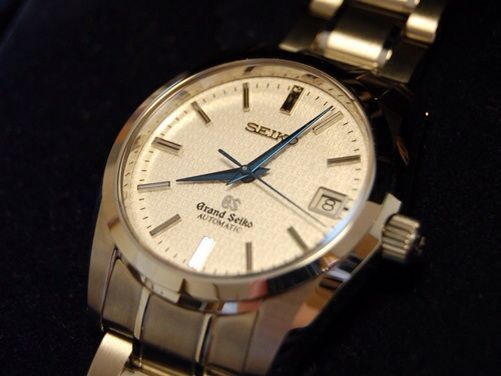
Calibre 9S65 is the standard-beat automatic movement, sharing frequency and accuracy with the 9S64 while adding self-winding.
- Type: Self-winding (automatic) mechanical
- Jewels: 35
- Frequency: 28,800 vph (4 Hz)
- Power reserve: 72 hours
- Accuracy: +5/−3 seconds per day
- Hairspring: Spron 610 alloy (proprietary Grand Seiko formulation)
- Shock protection: Diashock
- Introduction: 2009
The Spron 610 hairspring is a specific alloy developed within the Seiko group for its combination of temperature stability, anti-magnetic properties, and consistent elasticity. It is produced in-house — another expression of the Shizukuishi and Shinshu facilities' fully integrated manufacture capability.
Dial Techniques in the Elegance Collection
Photo: Hiroaki Kikuchi (Torajiro) — CC BY-SA 3.0 — Wikimedia Commons
The Elegance Collection showcases Grand Seiko's most traditional dial-making techniques. These are not standard finishing operations applied across the catalogue but specialised processes that require artisan skill and are applied to specific references.
Urushi lacquer (漆)
Traditional Japanese lacquerwork applied to brass dial blanks in multiple layers. Joboji lacquer — sourced from lacquer trees in Iwate Prefecture, near Grand Seiko Studio Shizukuishi — is considered among the finest produced in Japan. Each layer is applied by hand, allowed to cure in a humid environment, and polished before the next application. The resulting surface has a depth and warmth that no synthetic coating replicates.
Kirazuri (雲母摺)
A finishing technique in which mica particles or similar metallic materials are incorporated into or applied over the dial surface, creating a shimmering, crystalline quality that shifts as the viewing angle changes. Kirazuri dials are among the most visually dynamic in the Grand Seiko catalogue — the surface appears to move in natural light.
Multi-layer brushed and graduated dials
Some Elegance Collection references use dials finished through 15 or more layers of paint applied and polished repeatedly, creating colour gradations and depth not achievable with single-application techniques.
Ladies' Elegance — STGF Series
Photo: STSPP — CC BY-SA 4.0 — Wikimedia Commons
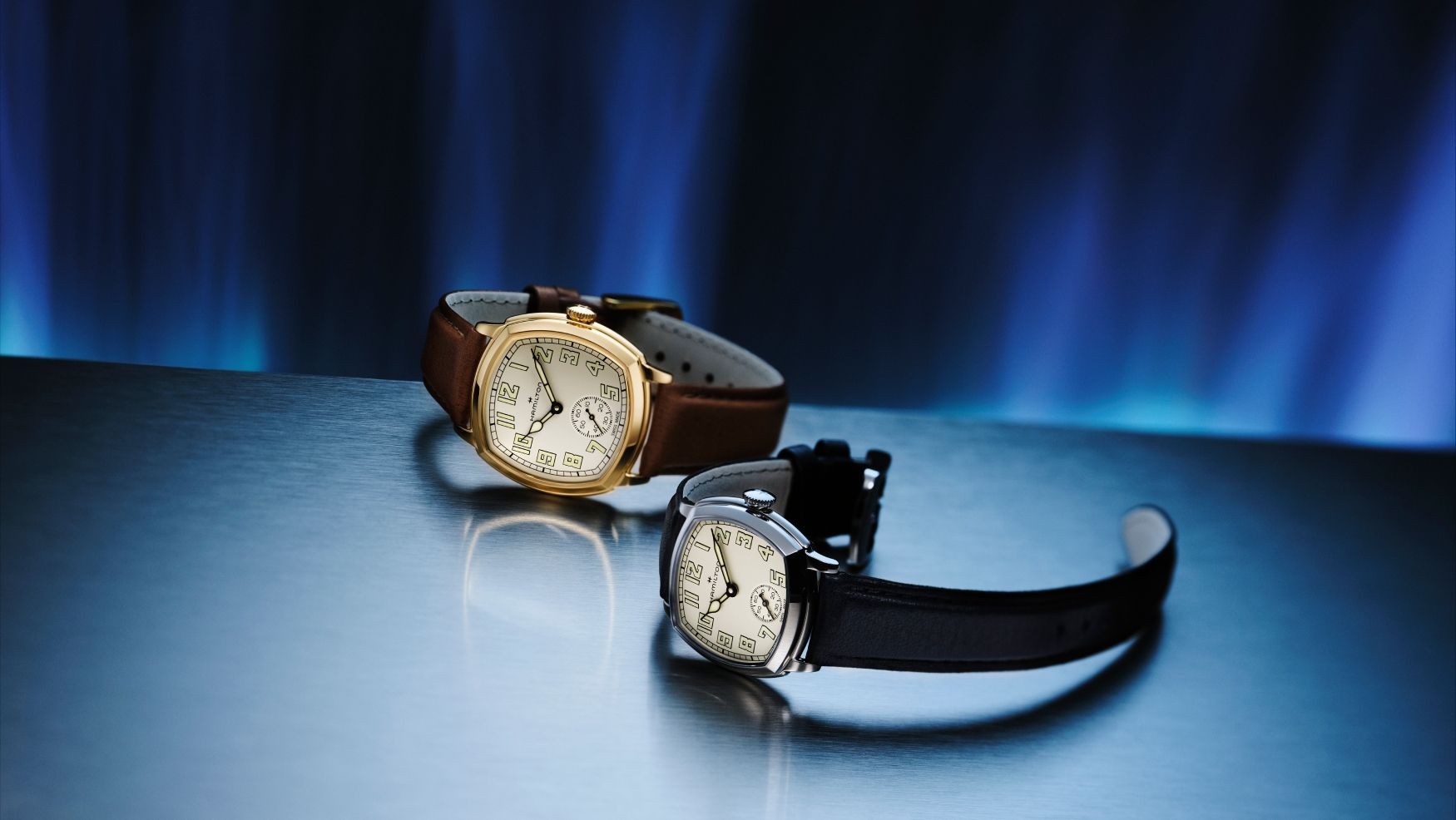
The Elegance Collection includes a dedicated ladies' line under the STGF reference prefix. These watches apply the same dial artistry and case finishing standards to smaller case dimensions and, in some cases, diamond-set bezels or case components.
STGF346:
Rose gold case, diamond-set bezel, red dial, limited to 30 pieces (60th anniversary edition)
STGF359:
The ladies' Snowflake-dial variant — bringing the iconic silver-plated textured dial to the smaller Elegance case
The ladies' line demonstrates that Elegance Collection positioning is not gendered — the same commitment to dial artistry and finishing applies regardless of case size.
The Elegance Collection's Place in the Grand Seiko Catalogue
The Elegance Collection occupies a distinct position between the Heritage Collection (which emphasises the 44GS design vocabulary and includes Hi-Beat variants) and the Evolution 9 (which is architecturally assertive and centres on the 9SA5). Its defining characteristics are:
- Emphasis on traditional Japanese craft in dial finishing (Urushi, Kirazuri, multi-layer paint)
- Standard-beat mechanical calibres (9S64, 9S65) or Spring Drive manual wind (9R31)
- Smaller, slimmer case profiles than Evolution 9
- References within the 37–40mm range
- Price range typically US$3,000–8,000 for standard steel references, substantially higher for precious metal or limited editions
The Elegance Collection argument is that the correct place to invest craftsmanship is the dial — the face the wearer sees every time they read the time — rather than the movement complication or the case assertiveness. It is a position that makes sense for a manufacture whose dial-making capability is genuinely distinctive.
Latest News
- Grand Seiko SBGW325 'Arabic Blue' (2026): An Indigo Tribute to the First 9S Manual — September 23, 2026
Frequently Asked Questions
What movements are in the Grand Seiko Elegance Collection?
Primarily Calibre 9S64 (manual-wind, 28,800 vph, 72-hour power reserve) and Calibre 9S65 (automatic, 28,800 vph, 72-hour power reserve). Some Elegance references use Spring Drive Calibre 9R31 (manual-wind Spring Drive). These are NOT Hi-Beat movements — they run at 28,800 vph, not 36,000 vph.
What is Urushi lacquer?
Traditional Japanese lacquerwork applied in multiple layers to brass dial blanks, polished between coats. Joboji Urushi from Iwate Prefecture is used in some Grand Seiko references. The result has a depth and warmth synthetic coatings cannot replicate.
What is Kirazuri?
A dial finishing technique incorporating mica particles to create a shimmering, crystalline surface that shifts with light and viewing angle — one of the most visually distinctive dial effects in the Grand Seiko catalogue.
What is the difference between the Elegance Collection and the Heritage Collection?
Both use the 44GS design language. The Elegance Collection emphasises traditional Japanese dial artistry (Urushi, Kirazuri) and standard-beat calibres for slim profiles. The Heritage Collection includes Hi-Beat variants (9S85) and is somewhat more technically oriented.
What are the key Elegance Collection references?
SBGW series for manual-wind dress watches (9S64), SBGR series for automatic (9S65), SBGY007 "Omiwatari" and SBGY011 "Asaborake" for Spring Drive manual-wind, and the STGF ladies' series.