
Cartier: History of the French Watch and Jewellery House

Zach Charles • August 23, 2026

Share this article

Cartier: The Jeweller Who Invented the Wristwatch

Cartier is the only watch brand that can legitimately claim to have invented the wristwatch. That claim rests on one specific object — the Santos, created by Louis Cartier for the Brazilian aviator Alberto Santos-Dumont in 1904 — and on the broader context of Cartier's transformation of watchmaking from pocket to wrist in the years that followed. Before the Santos, wristwatches existed as ladies' jewellery items; they were not considered appropriate for men, and they were not designed with precision in mind. The Santos changed both assumptions simultaneously, and within a decade the wristwatch had become the dominant form for both sexes.

That the world's leading jeweller should also hold this position in watchmaking history is not accidental. Cartier's distinctiveness has always been the combination of jewellery intelligence and horological seriousness — a willingness to treat the watch as an object of art without compromising its function as a timekeeping instrument. The Tank, designed in 1917 and still in production, remains the standard by which all rectangular dress watches are measured. The Crash, made in London in 1967, is the most radical design produced by any major watchmaker. The Panthère, the Ballon Bleu, the Santos: each has redefined what a watch can mean as an aesthetic object.

Understanding Cartier requires understanding that it has always operated at the intersection of three things that other houses keep separate: jewellery, watchmaking, and art. That intersection is the source of its greatest achievements.


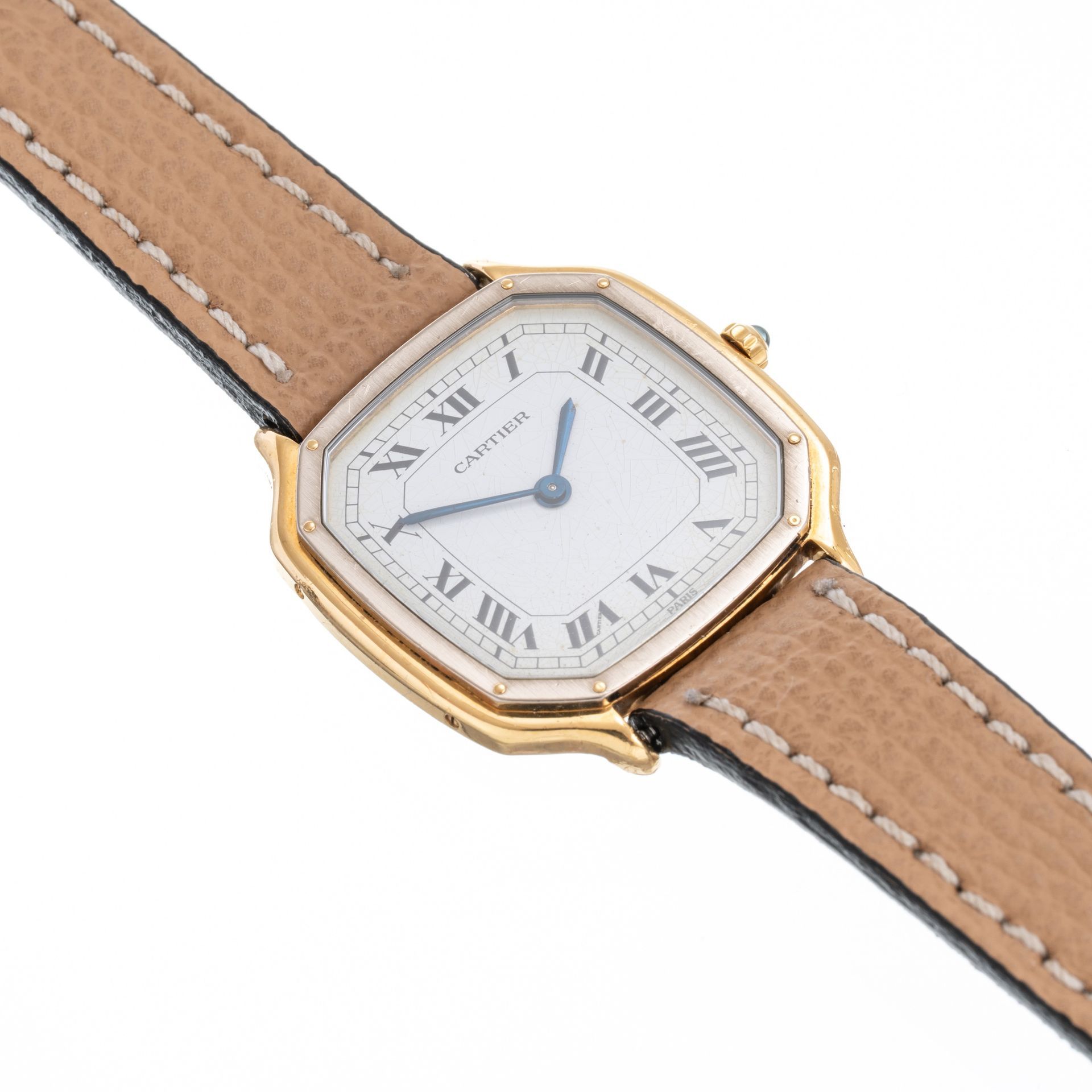
Cartier Santos Trianon
A Cartier Santos Trianon — the ultra-thin Santos variant that strips the model to its most essential elements. The Santos Trianon’s rectangular case with exposed screws on the bezel is the direct descendant of Santos-Dumont’s 1904 commission: square case, visible construction, aviation-derived practicality translated into a formal dress watch.
Photo: EMore98 — CC BY-SA 4.0 — Wikimedia Commons
Origins — Louis-François Cartier (1847)

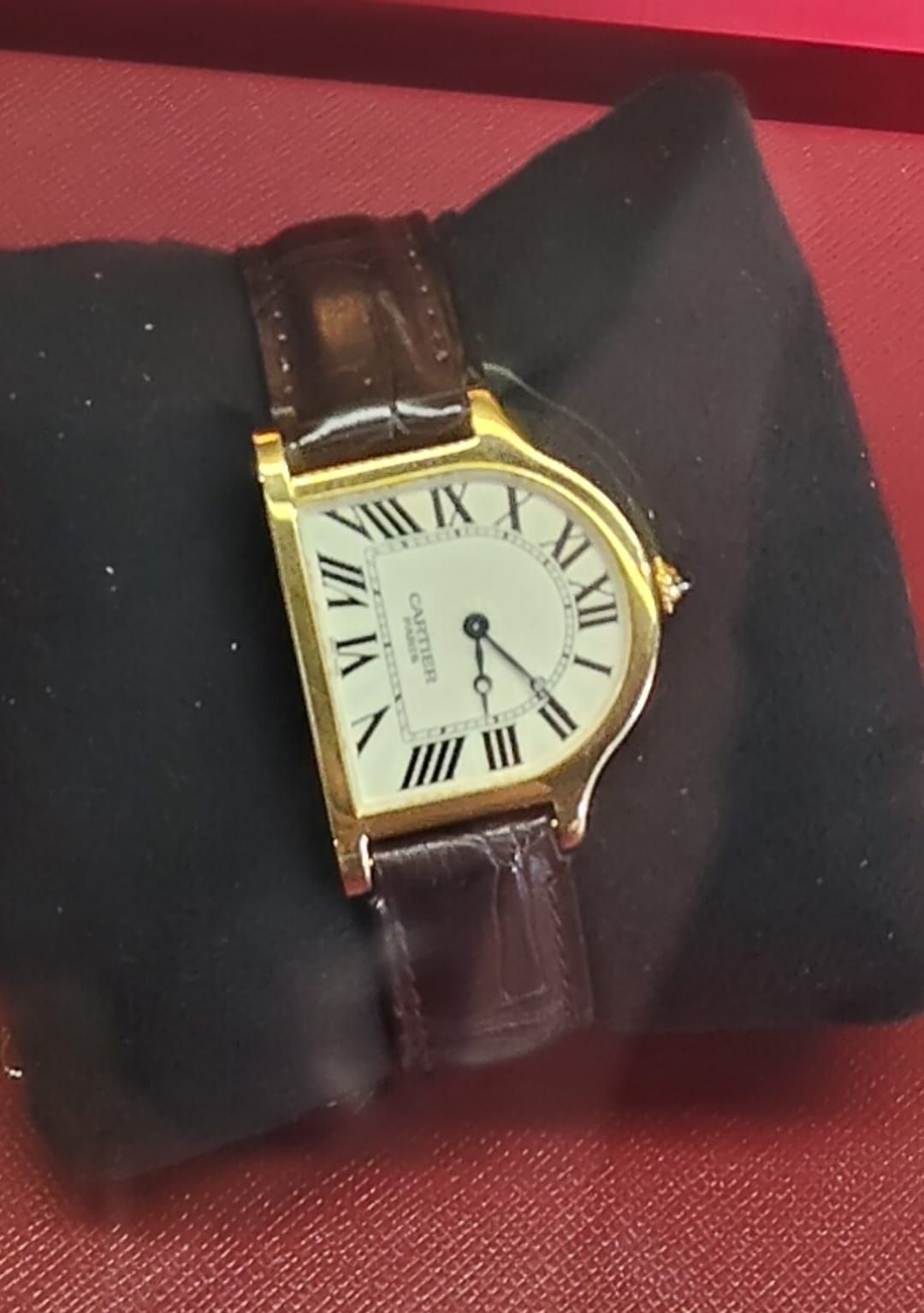
Cartier Cloche ref. 2841
A Cartier Cloche reference 2841 — illustrating Cartier’s tradition of unconventional case shapes derived from Art Deco geometry. The Cloche (“bell”) case, with its inverted arch and movement positioned vertically within the case, exemplifies the approach to watch design that Jeanne Toussaint and Louis Cartier developed across the 1920s and 1930s: form first, movement engineering second, with no case shape considered too difficult to achieve.
Photo: EMore98 — CC BY-SA 4.0 — Wikimedia Commons
The house of Cartier was founded in Paris in 1847, when Louis-François Cartier (1819–1904) took over the workshop of his master, the jeweller Adolphe Picard, at 29 Rue Montorgueil. The founding context is important: Paris in 1847 was the unchallenged capital of European luxury, and Adolphe Picard's workshop was among the established sources of high jewellery for the Parisian bourgeoisie and aristocracy.

Louis-François Cartier's achievement in his first decade was to move the business upmarket and uptown. By 1853 he had opened at 5 Rue Neuve-des-Petits-Champs; by 1859 he had moved to the Boulevard des Italiens, the centre of fashionable Paris. The clientele shifted with the address: Napoleon III's court, Princess Mathilde, the aristocracy that surrounded the Second Empire. This was not simply commercial success — it was a deliberate repositioning that defined Cartier as a jeweller of consequence rather than of competence.

The Second Empire connection solidified under Alfred Cartier (1841–1925), who took over from his father and developed the house's relationships with European royalty. In 1904, King Edward VII of England — who had been a Cartier client since the 1870s — reportedly called Cartier "the jeweller of kings and the king of jewellers," a phrase that has appeared in Cartier's marketing ever since. Whether apocryphal or not, it accurately describes the house's position by the early twentieth century.


Louis Cartier and the Wristwatch Revolution

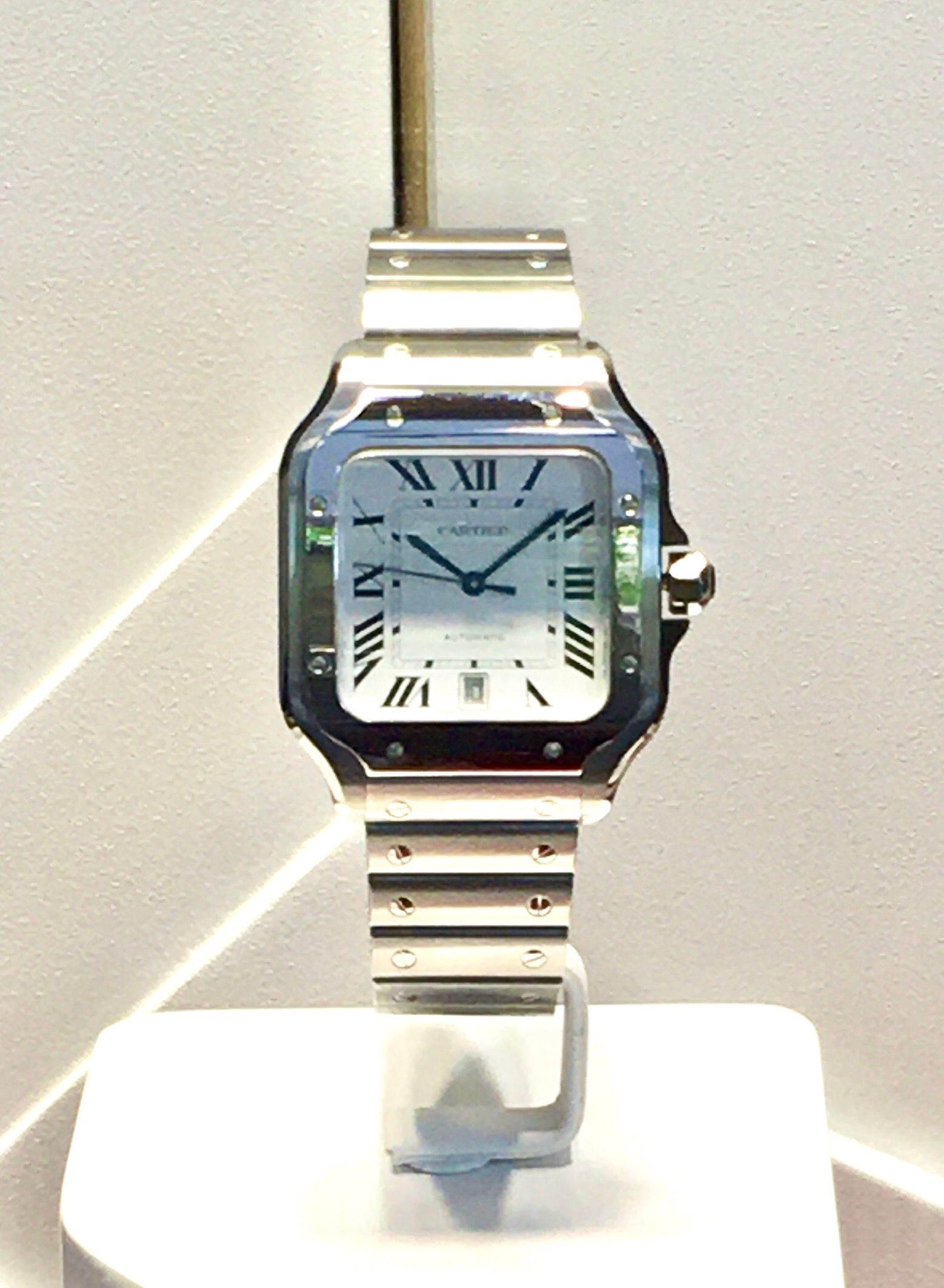
Cartier Santos wristwatch
A Cartier Santos wristwatch — the model that Alberto Santos-Dumont commissioned from Louis Cartier in 1904 when he complained that pocket watches were impractical to consult while piloting an aircraft. The Santos was the first purpose-designed men’s wristwatch from a major jewellery house and is widely considered the founding document of the men’s wristwatch category.
Photo: Pittigrilli — CC BY-SA 4.0 — Wikimedia Commons
The transformation of Cartier from jeweller to watchmaker was the achievement of Louis Cartier (1875–1942), the grandson of the founder and the most creatively consequential figure in the house's history. Louis Cartier joined the family business in 1898, took over management in 1906, and over the following three decades designed or commissioned the watches that remain Cartier's canonical models.

The Santos (1904) came first and was the most transformative. Alberto Santos-Dumont, the Brazilian-French aviation pioneer who was among the most celebrated men in Paris, had complained to his friend Louis Cartier that pocket watches were impractical in the cockpit. Cartier's solution — a square-cased watch worn on the wrist with a leather strap — was radical in its simplicity. The Santos went into commercial production in 1911, became Cartier's first commercial wristwatch, and established the category.

The Santos was followed by a decade of formal experimentation. The Tortue (1912) — "tortoise" in French, named for its cushion-shaped case — applied Cartier's jewellery intelligence to a softened, organic case geometry. The Baignoire (1906, commercial production from the 1950s) — "bathtub" in French — took the oval form to an extreme of elegance. These were watches designed as much for their case architecture as for their timekeeping function, and they set the template for everything Cartier made afterward.


The Tank (1917–Present)

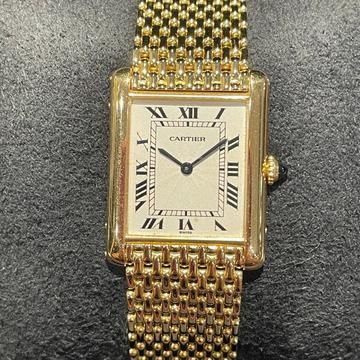
Cartier Tank Louis Cartier in gold, ref. 96065
A Cartier Tank Louis Cartier in gold, reference 96065 — the purist’s Tank. The Tank Louis Cartier is the closest contemporary equivalent to Louis Cartier’s 1917 original: rectangular case with parallel “rails” referencing the overhead view of a WWI tank chassis, Roman numeral dial, and the cabochon winding crown that Cartier has used across its watch collections since the early twentieth century.
Photo: EMore98 — CC BY-SA 4.0 — Wikimedia Commons
The Tank is Cartier's most historically significant watch and the defining statement of the rectangular dress watch form. Designed by Louis Cartier in 1917, it was named for the Renault FT tank, which Louis Cartier had observed during a visit to the Western Front. The watch's case architecture reproduces the tank's profile: two parallel "rails" (the brancards) connected by rectangular panels, with the case extending beyond the dial face in the same way a tank's tracks extend beyond its body.

The Tank went into commercial production in 1919. It was an immediate success with the clientele Cartier had spent decades cultivating — the watch was worn by Rudolph Valentino, the Prince of Wales, Jackie Kennedy, and Andy Warhol, among hundreds of other figures whose association with it has made the Tank a continuous presence in cultural history throughout the twentieth century.

More than a century after its introduction, the Tank is still in production in essentially its original form. The Tank Louis Cartier (named posthumously) and Tank Solo are the core references; the Tank Américaine, with its curved case, and Tank Française, with its integrated bracelet, are the significant variations. No other watch design has maintained continuous commercial relevance for as long, which is either a tribute to the original design's perfection or evidence that Cartier has successfully made it timeless — probably both.


Three Brothers, Three Cities

Alfred Cartier's achievement was to establish the house's international structure. His three sons — Louis (Paris), Pierre (New York), and Jacques (London) — each ran a distinct boutique as a semi-autonomous operation, resulting in Cartier simultaneously being present in the three cities that mattered most to the early-twentieth-century luxury market.

This structure had consequences for design. The London boutique, under Jacques and later Jean-Jacques Cartier, developed a distinct character: more experimental, less bound by Parisian convention. The Crash (1967), designed in London, could only have come from that environment. The Paris house produced the Tank, the Santos, the grandes complications; London produced the Crash. The New York house, under Pierre, built Cartier's American client base and was responsible for the famous gem-set animal objects — the panther brooches, the Tutti Frutti bracelets — that defined Cartier's American identity in the 1920s and 1930s.

The three-city structure ended in 1964, when the Cartier family sold the business. The house subsequently passed through several corporate owners before being acquired by Richemont in 1988, where it remains and where it has been run with unusual consistency and investment in its historical identity.


Jeanne Toussaint and the Panther

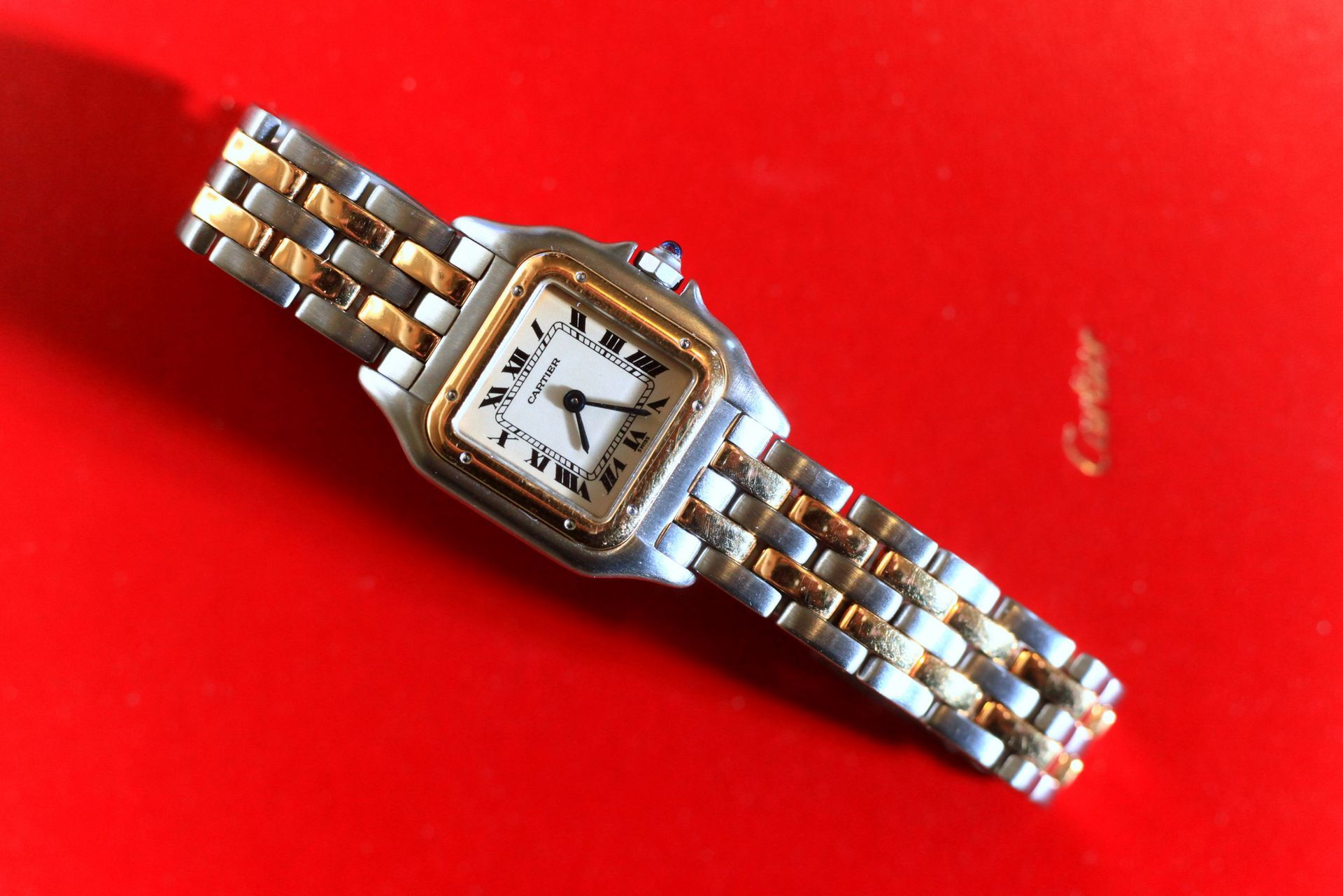
Cartier Panthère two-tone watch
A Cartier Panthère in two-tone steel and gold — illustrating the signature bracelet construction that defines the collection. The Panthère’s articulated bracelet, with its alternating square and rectangular links graduating toward the case, is one of the most complex bracelet designs in Swiss watchmaking: each link is individually finished and the bracelet must flex naturally on the wrist while maintaining its architectural rigidity.
Photo: Gisling — CC BY-SA 3.0 — Wikimedia Commons

No figure other than Louis Cartier has had a more lasting influence on the house's aesthetic than Jeanne Toussaint (1887–1978). Toussaint joined Cartier in 1918 and became director of fine jewellery in 1933, a position she held for over forty years. Louis Cartier gave her the nickname "La Panthère" — a reference both to her personality and to her affinity for the panther as an artistic subject.

Under Toussaint's direction, the panther became Cartier's most elaborate recurring motif. Three-dimensional panther brooches crouching on cabochon emerald spheres, panther bangles, Duchess of Windsor panther suites — these are among the most technically demanding and aesthetically refined objects in twentieth-century jewellery history. The panther appeared on the Panthère watch launched in 1983, five years after Toussaint's death, as a tribute to her influence.

Toussaint also developed the "Tutti Frutti" style — the vivid use of carved coloured gemstones (rubies, emeralds, sapphires) derived from Indian jewellery traditions — that was one of Cartier's most successful commercial innovations of the 1920s. Her influence on the house's vocabulary was total during her tenure and remains visible in every Cartier collection today.


Watchmaking Identity: What Makes a Cartier Watch

Cartier Pasha automatic
A Cartier Pasha automatic — the round sports watch originally commissioned by the Pasha of Marrakech in the 1930s and relaunched commercially in 1985. The Pasha’s distinctive crown cap on a chain and its grid-patterned dial became design signatures that distinguished it within Cartier’s catalogue, appealing to buyers who wanted Cartier’s formal credentials in a more sporting case.
Photo: EMore98 — CC BY-SA 4.0 — Wikimedia Commons
Cartier's watch design vocabulary is unusually coherent for a house that has produced so many different designs across more than a century. Several elements recur so consistently that they constitute a recognisable Cartier aesthetic regardless of the model.

Roman numerals : Cartier uses Roman numerals almost without exception on its watch dials. Where other brands oscillate between Roman and Arabic according to fashion, Cartier has maintained Roman numerals as a house signature since the earliest wristwatches. The choice aligns the watch with historical and classical references — Roman numerals on a sundial, on a public clock — that reinforce Cartier's identity as a jeweller with centuries behind it.

Blue sword hands : The blue Breguet-style sword hands — blued by oxidation or, in modern production, by a specific finishing process — appear across the entire range. On the Tank, on the Santos, on the Panthère, on the Ballon Bleu: the hands are always the same shape and the same blue.

Blue sapphire crowns : On Cartier's finest models, the winding crown is set with a blue cabochon sapphire. This is the "secret signature" — a detail that requires close examination to notice, present to reward the careful observer.

Integrated case and bracelet : Beginning with the Santos bracelet (screwed links, part of the original design), Cartier has consistently explored the integration of case and bracelet as a single architectural object rather than two separate components. The Panthère carries this the furthest; the Tank Française and Santos are intermediate examples; even the tank's flat leather strap is designed as part of the case's visual system rather than as an afterthought.


Cartier's Current Position (2024)

Cartier is, by revenue, the world's largest luxury jewellery brand and among the top five luxury watch brands. Within the Richemont group, it is the flagship asset. Its annual watch production is not disclosed, but industry estimates place it in the range of 400,000–600,000 pieces per year across all price points — a figure that makes it a large-scale producer by Swiss watch industry standards while remaining well below the volumes of Rolex or Omega.

The watch range divides broadly into three tiers. The entry tier — Santos in steel, Ballon Bleu in steel, Panthère in steel — begins at approximately $4,000–$6,000 and represents the volume of the collection. The prestige tier — Santos, Tank, Ballon Bleu, and Panthère in gold — occupies $8,000–$30,000. The fine watchmaking tier — Rotonde de Cartier complications, Clé de Cartier, high jewellery watches — extends from $30,000 to well above $1,000,000.

The company's in-house movement programme, launched seriously in the 2000s, has produced the Calibre 1904 MC (automatic, 48 hours), the Calibre 1847 MC (automatic), and a range of complication calibres including tourbillons and minute repeaters. This represents a significant investment in horological credibility for a brand that was long dependent on purchased movements, and it has been rewarded with greater seriousness from collectors.


Frequently Asked Questions

Who founded Cartier?
Louis-François Cartier founded the house in Paris in 1847, taking over the workshop of his master Adolphe Picard. His son Alfred and grandson Louis subsequently developed the business into an international luxury brand with boutiques in Paris, London, and New York.

Did Cartier invent the wristwatch?
Cartier created the first purpose-designed men's wristwatch: the Santos, made for aviator Alberto Santos-Dumont in 1904. While earlier wristwatches existed as ladies' jewellery items, the Santos was the first to treat the wristwatch as a serious timekeeping instrument for a man, and its commercial launch in 1911 established the wristwatch as a category for both sexes.

What is Cartier's most iconic watch?
The Tank (1917) is Cartier's most historically significant design — continuous production since 1919, worn by cultural figures from Rudolph Valentino to Andy Warhol to Princess Diana. The Santos (1904/1911) has equal historical claim as the first commercial men's wristwatch. The Ballon Bleu (2007) is Cartier's current bestseller.

Is Cartier a watch brand or a jewellery brand?
Both, by design and history. Cartier describes itself as a jeweller that makes watches, and this is accurate: jewellery generates the majority of Cartier's revenue, but its watches are among the most significant designs in watchmaking history. The tension between the two identities — jewellery and timekeeping — is the source of the house's most interesting work.


Cartier Watch Collection

Recent Posts

By Zach Charles • October 10, 2026
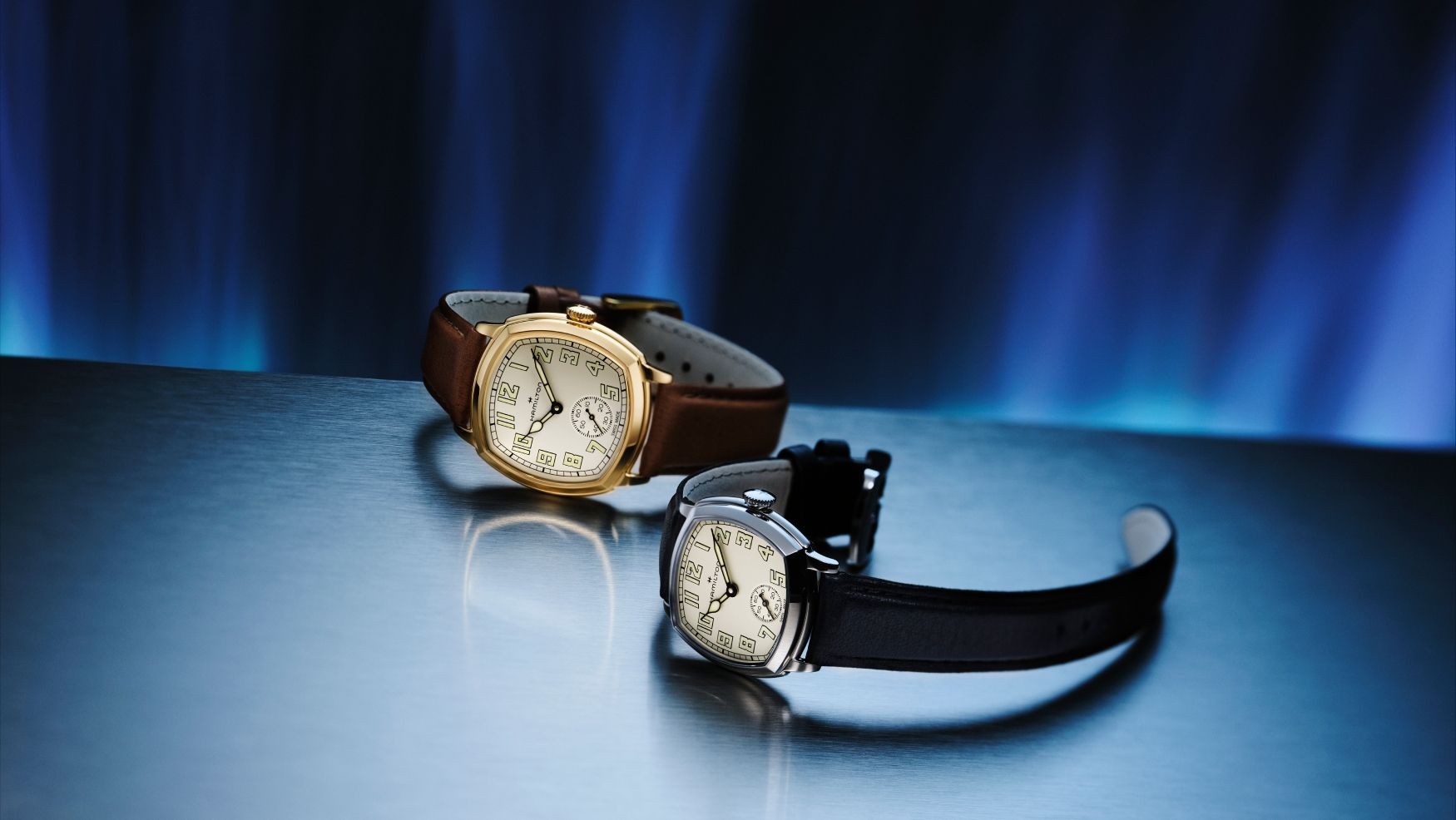
Hamilton's American Classic Cushion Mechanical revives its 1926 Art Deco cushion watches, seen in Oppenheimer, in 30mm and 34mm with the new hand-wound…
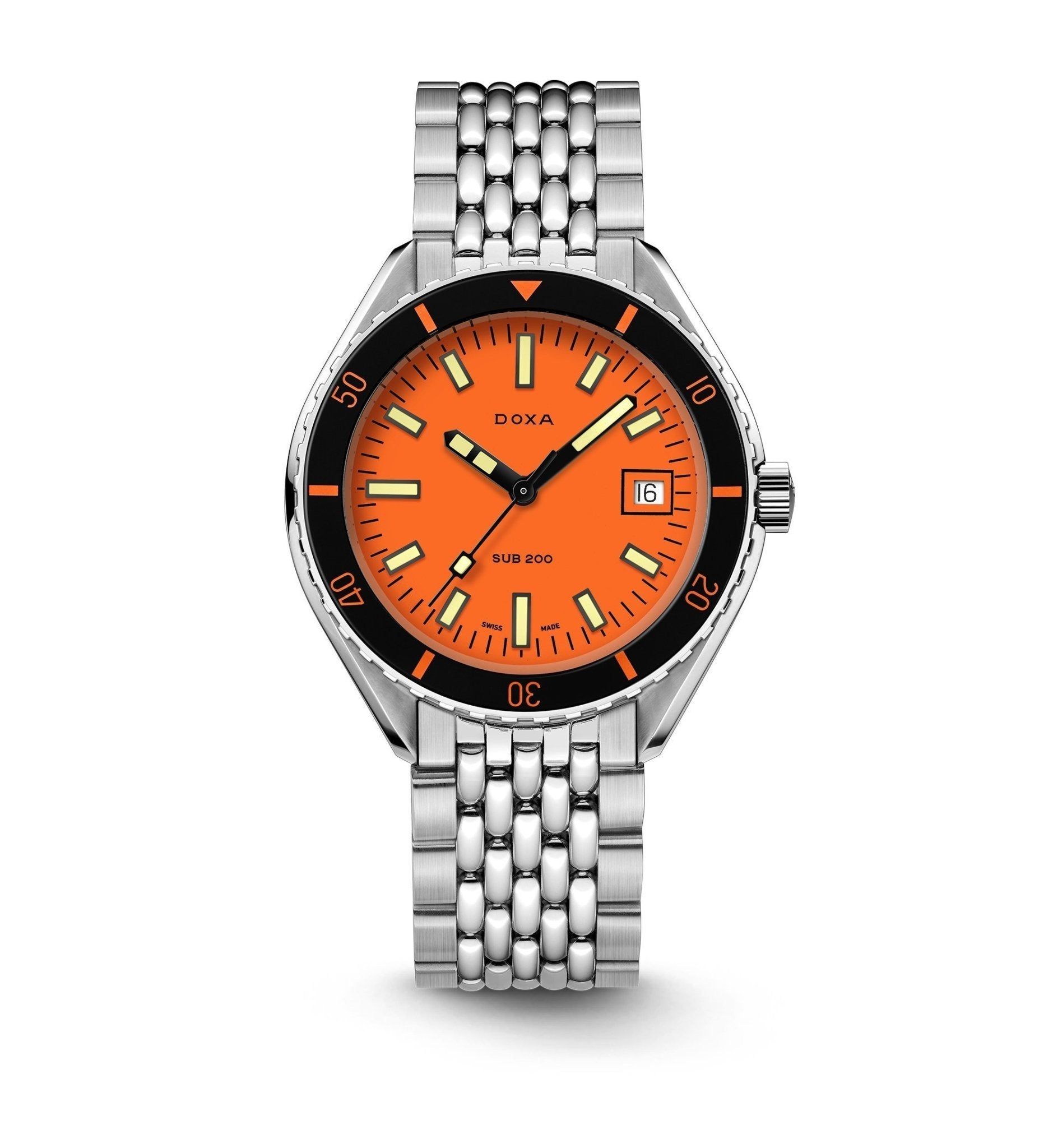
Doxa SUB 200: The Accessible Everyday Diver
By Zach Charles • October 10, 2026
Complete guide to the Doxa SUB 200 — 42mm, 200m, four colorways, Sellita SW200-1. The accessible entry to the Doxa SUB family with the full…
By Zach Charles • October 10, 2026
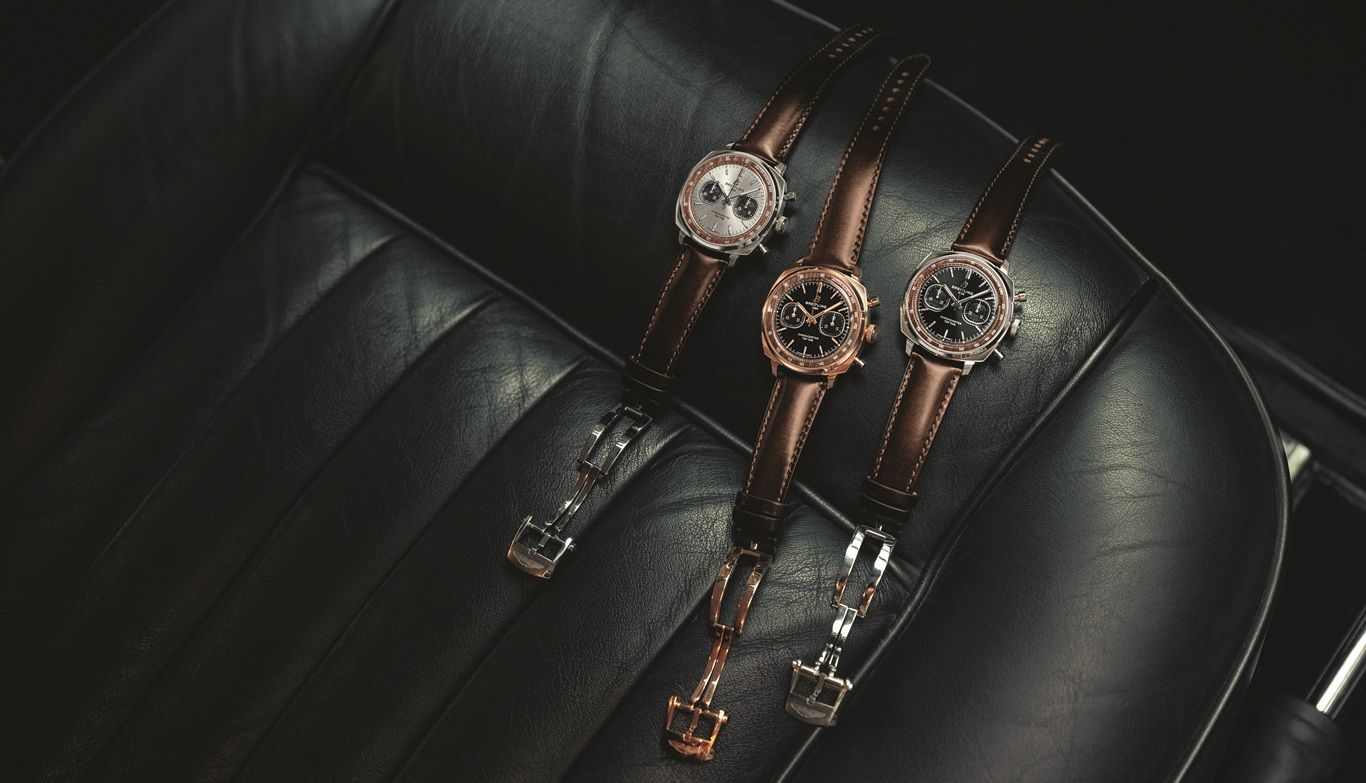
The Breitling Top Time B01 Aston Martin DB5 pairs a cushion-shaped 41mm case, a wooden inner ring and the in-house Caliber 01 across three limited…
By Zach Charles • October 10, 2026
TAG Heuer developed the Mikrograph (2011, 1/100th second), Mikrotimer Flying 1000 (2011, 1/1000th second), and Mikrogirder (2012, 1/2000th second).
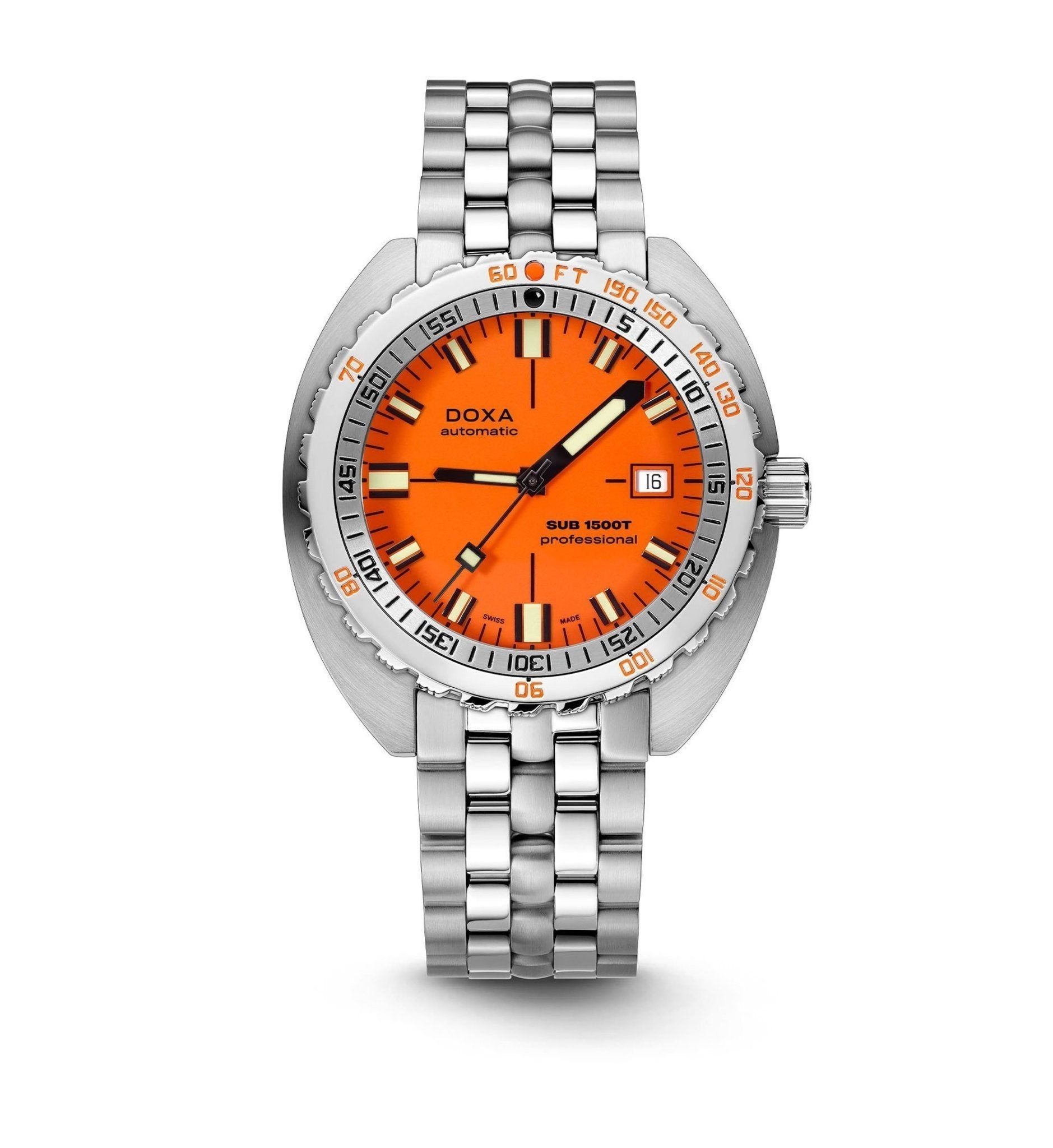
Doxa SUB 1500T: The 1,500-Metre Depth-Rating Flagship
By Zach Charles • October 10, 2026
Complete guide to the Doxa SUB 1500T — 45mm, 1,500m depth rating, helium escape valve, ETA 2892-2 movement, USD 2,690.
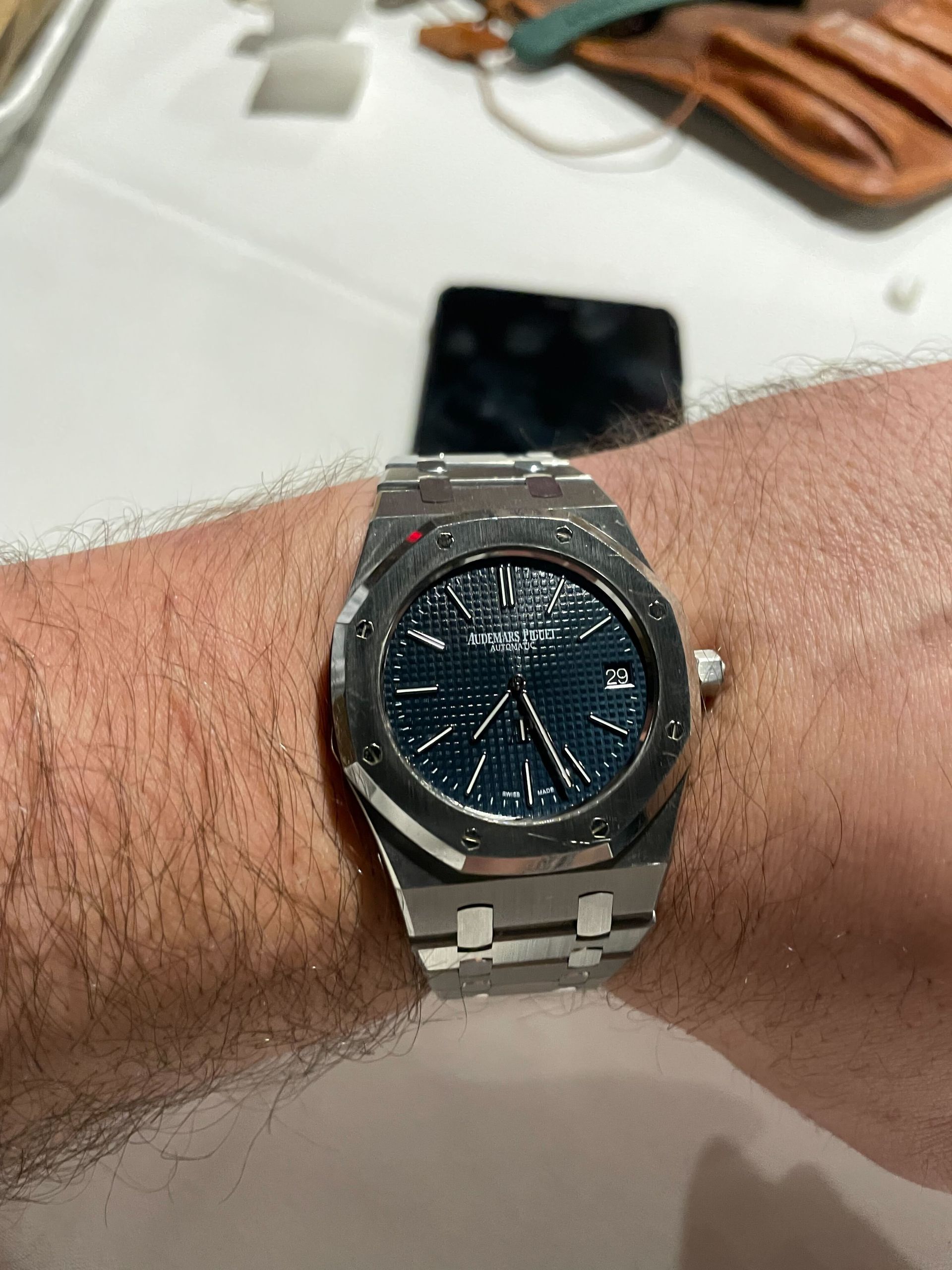
Audemars Piguet Royal Oak 'Jumbo' ref. 15202 with blue tapisserie dial and integrated steel bracelet
By Zach Charles • October 10, 2026
The Audemars Piguet × Swatch Royal Pop is a $400 bioceramic pocket watch in 8 colourways, powered by a new hand-wound SISTEM51 with 90+ hour power…

Time on the Move logo
By Zach Charles • October 10, 2026
Zach Charles is the editor of Time on the Move, an independent watch reference covering brand and model histories, buying guides and release news…
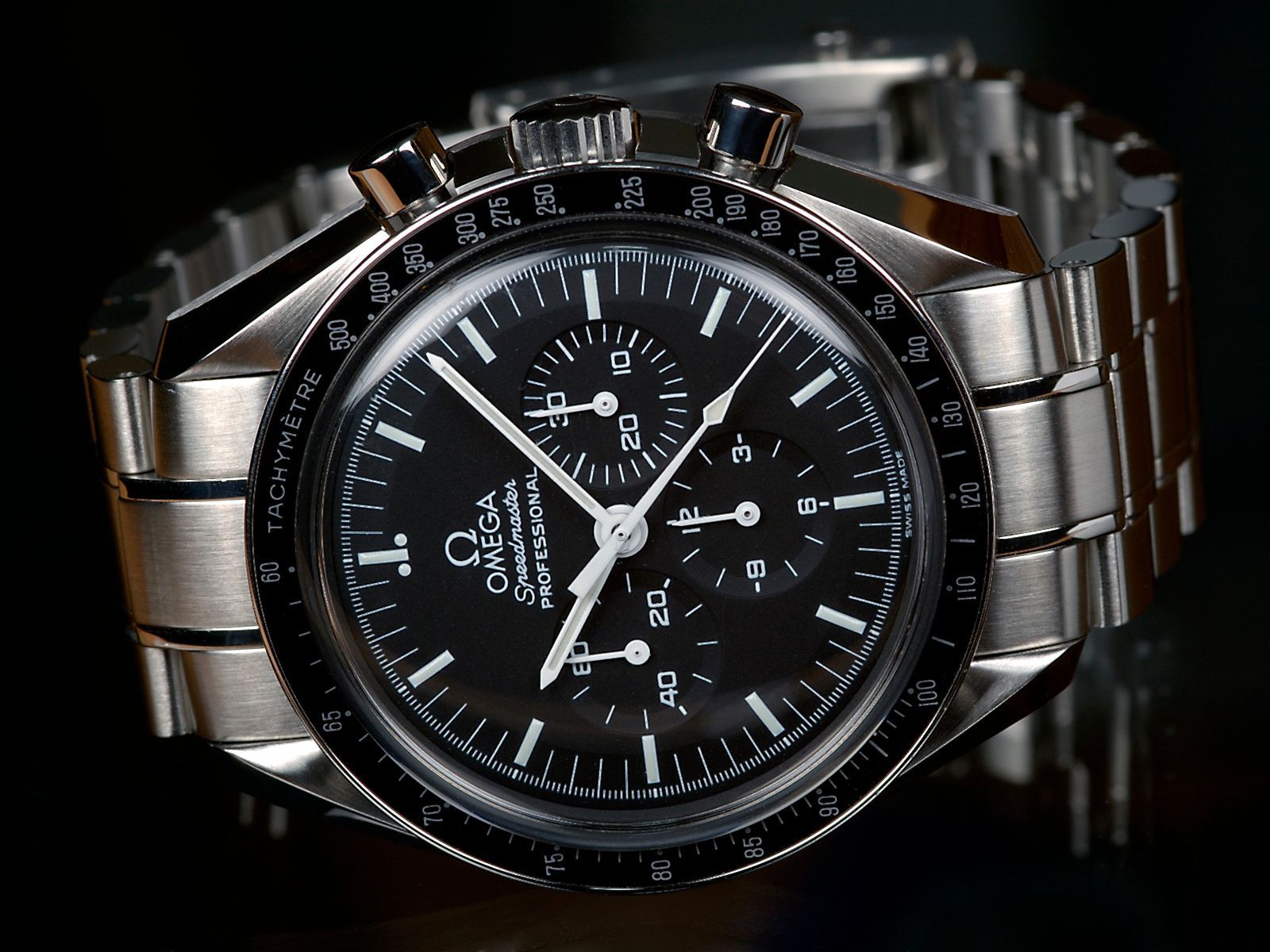
Omega Speedmaster Professional 'Moonwatch' chronograph, front view on steel bracelet
By Zach Charles • October 9, 2026
Find the best watches at every price point from $500 to $15,000 — new and pre-owned. Covers every budget tier with specific reference picks, brand…
By Zach Charles • October 9, 2026
The latest watch news: new releases, Watches and Wonders coverage, discontinuations, industry analysis, and market trends. Currently 1 article.
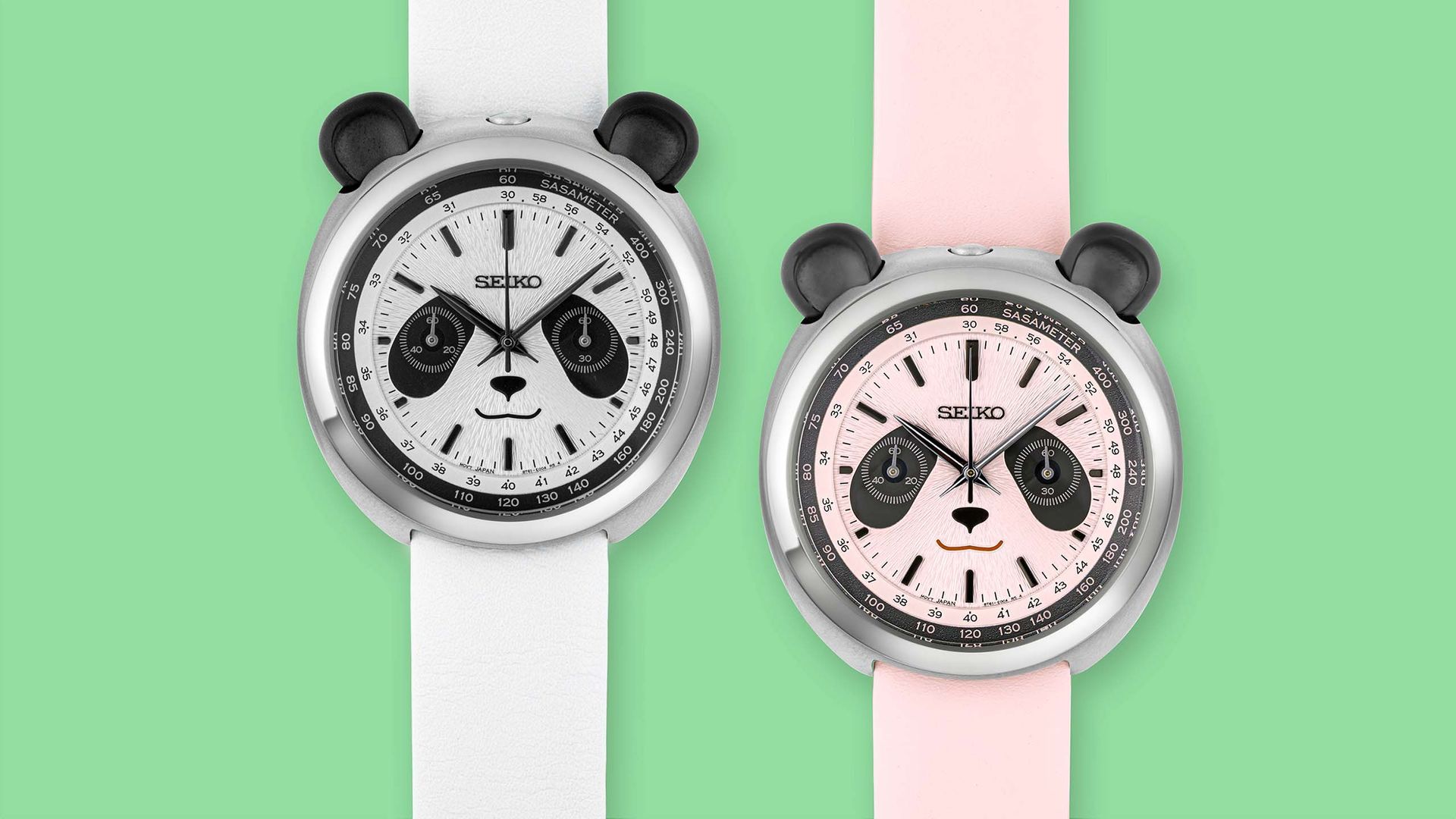
Seiko's New Panda Chronograph Is Literally a Panda: The Power Design Project HHK001 and HHK002
By Zach Charles • October 8, 2026
Seiko's Power Design Project panda chronograph (HHK001, HHK002) turns the panda dial into an actual panda face, with ear pushers, a 'Sasameter' and a 3D…
Show More