
Cartier Crash: History of the Melted Watch

Zach Charles • June 23, 2026

Share this article

Cartier Crash: The Surrealist Watch That Survived a Car Accident

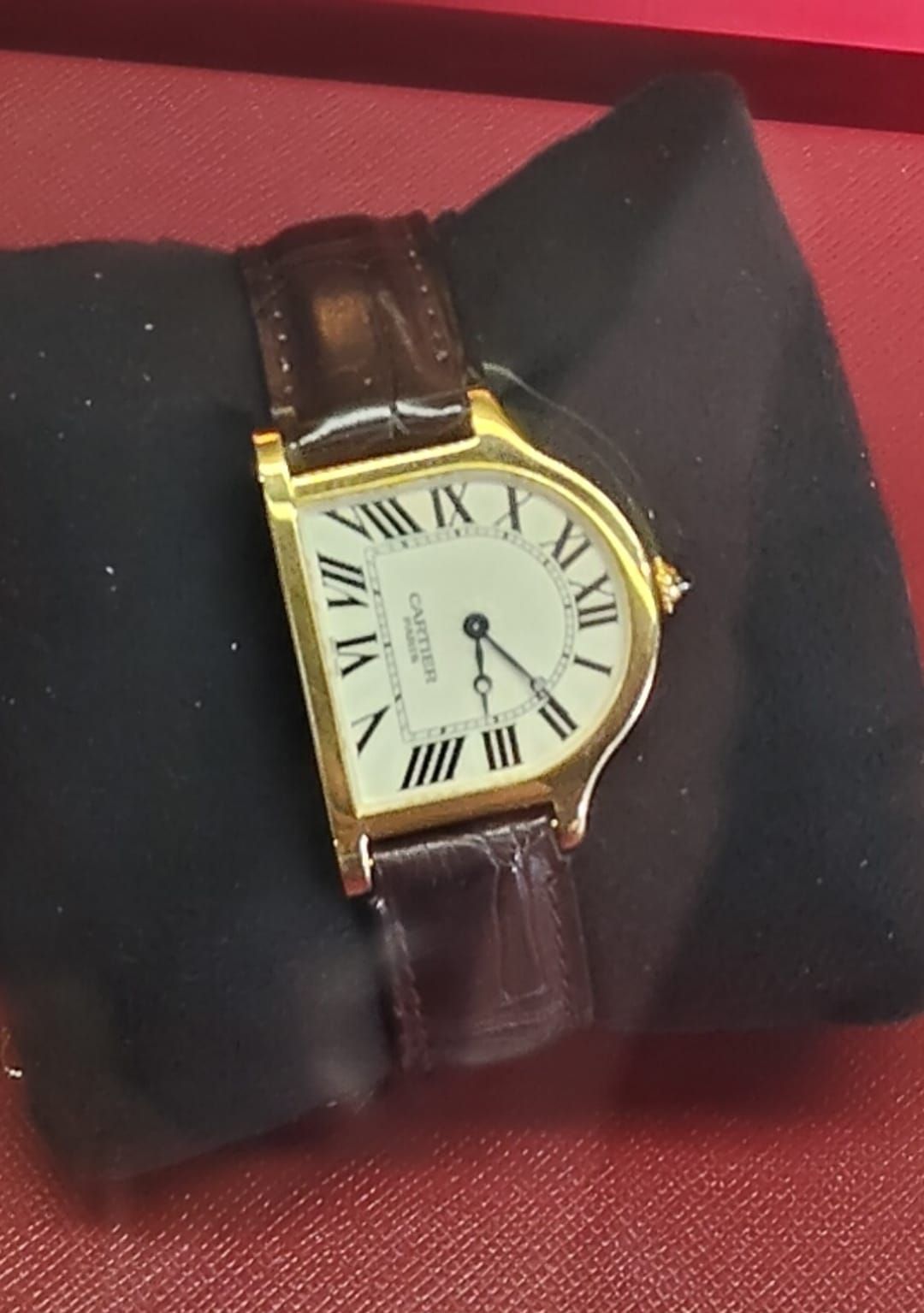
The Cartier Crash is the most radical watch design from one of watchmaking's most design-conscious houses. Its asymmetric case — melted, distorted, the dial face apparently buckling from an imaginary force — is either the result of a real car accident in 1960s London or a deliberate surrealist design statement inspired by Salvador Dalí. Either version of the origin story is compelling. What is certain is that the Crash, produced in tiny numbers at the Cartier London boutique from 1967, has become one of the most sought-after, most discussed, and most expensive vintage watches in the world.

The Crash occupies a position in watchmaking analogous to what Duchamp's readymades occupy in art history: it challenges the assumption of what the object is supposed to be. A watch is an instrument for telling time, and its case exists to protect the movement and present the dial legibly. The Crash's case does none of these things conventionally. It is asymmetric, its dial is angled and partially obscured by the distorted case, its hands are skewed. It tells time — but it does so while insisting that this is not the point. The point is what it looks like, what it means, what it makes you feel when you look at it.

No other watch from any major manufacturer has ever been this radical. That singularity is why the Crash is worth what it is.


Cartier Cloche ref. 2841
A Cartier Cloche reference 2841 — illustrating Cartier’s tradition of unconventional case shapes derived from Art Deco geometry. The Cloche (“bell”) case, with its inverted arch and movement positioned vertically within the case, exemplifies the approach to watch design that Jeanne Toussaint and Louis Cartier developed across the 1920s and 1930s: form first, movement engineering second, with no case shape considered too difficult to achieve.
Photo: EMore98 — CC BY-SA 4.0 — Wikimedia Commons
The Origin Story — Two Versions

Cartier Pasha automatic
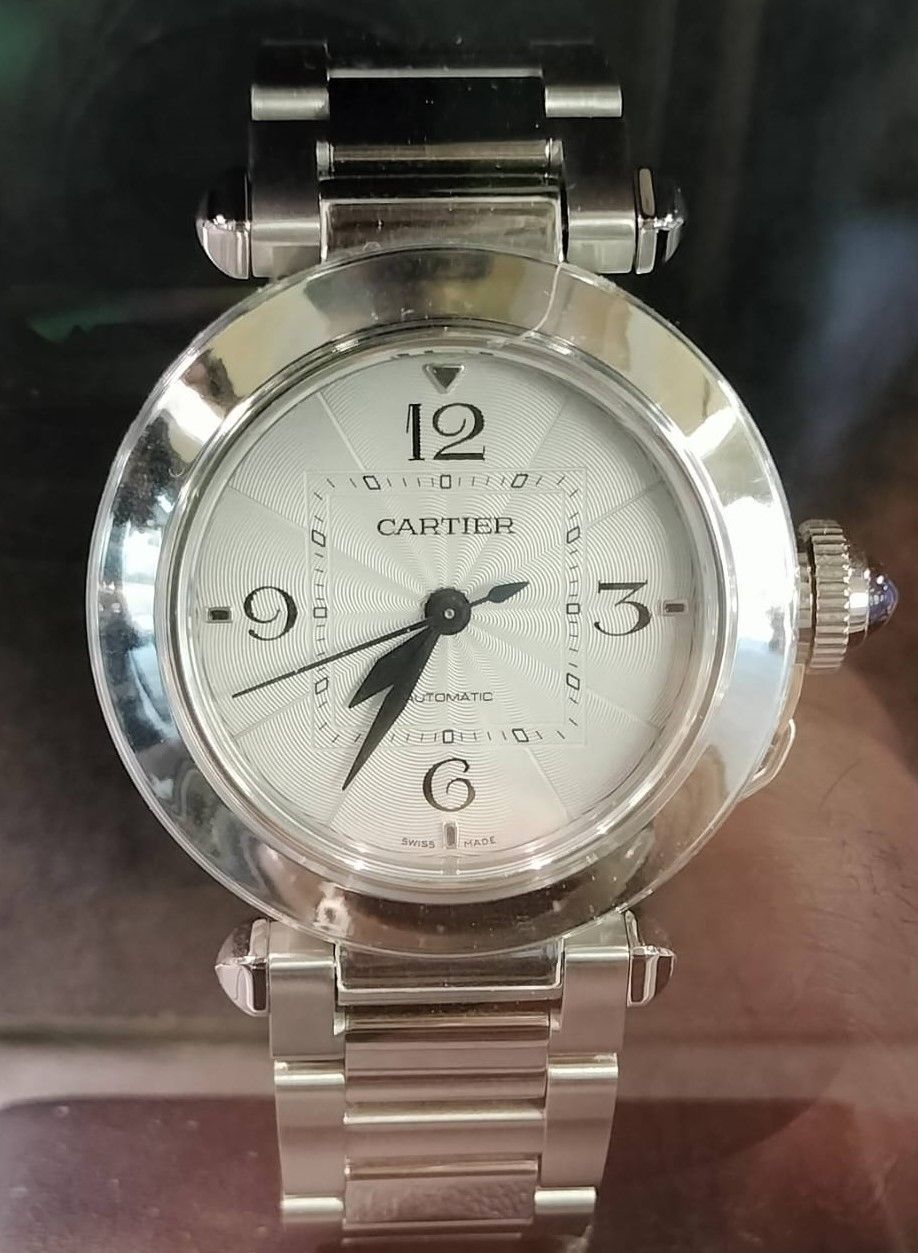
A Cartier Pasha automatic — the round sports watch originally commissioned by the Pasha of Marrakech in the 1930s and relaunched commercially in 1985. The Pasha’s distinctive crown cap on a chain and its grid-patterned dial became design signatures that distinguished it within Cartier’s catalogue, appealing to buyers who wanted Cartier’s formal credentials in a more sporting case.
Photo: EMore98 — CC BY-SA 4.0 — Wikimedia Commons
Every account of the Crash begins with the origin story dispute, and it is worth engaging with both versions seriously because each illuminates something true about the watch.

Version One — The Accident: In the late 1960s, a Cartier client in London was involved in a serious car accident. His Baignoire Allongée watch — Cartier's oval, elongated case shape — was recovered from the wreck, distorted and partially melted by the fire that followed the collision. The owner brought the damaged watch to the Cartier boutique at 175 New Bond Street in London. Jean-Jacques Cartier, who was running the London operation at the time, and the design team were so struck by the aesthetic quality of the distorted case that they began designing a watch that deliberately reproduced the effect. The Crash was the result.

Version Two — The Design Statement: The accident story is romantic mythology, constructed after the fact to give a deliberately radical design a more accessible narrative. The Crash was always a design statement — specifically, a surrealist design statement in the tradition of Salvador Dalí's "The Persistence of Memory" (1931), the painting of melting clocks that is the most famous artwork in the surrealist canon. The distortion was intentional from the first sketch. Jean-Jacques Cartier and his London team were creating art, and they chose to give it a more digestible origin story for clients who might otherwise be confused by a watch that looked like this.

Most horological historians now lean toward a hybrid: the Crash was a deliberate design, almost certainly inspired by surrealism's engagement with time and distortion, but the accident story — whether real or apocryphal — may have served as the triggering image or as the marketing frame. What is documented without dispute is that the Crash was designed in London (not Paris), that Jean-Jacques Cartier has personally confirmed its London origin, and that it was introduced in 1967 as a unique product of the Cartier London boutique.


The 1967 Design — Original Production

Cartier Cloche ref. 2841
A Cartier Cloche reference 2841 — illustrating Cartier’s tradition of unconventional case shapes derived from Art Deco geometry. The Cloche (“bell”) case, with its inverted arch and movement positioned vertically within the case, exemplifies the approach to watch design that Jeanne Toussaint and Louis Cartier developed across the 1920s and 1930s: form first, movement engineering second, with no case shape considered too difficult to achieve.
Photo: EMore98 — CC BY-SA 4.0 — Wikimedia Commons

The original Crash is a product of extraordinary specificity. It was made at Cartier London, not at the Paris manufacture, and was produced in very small numbers — estimates range from eight to twenty pieces per year during the initial production run, which lasted from 1967 to approximately 1975. Total original production is generally estimated at between 150 and 250 pieces, though no definitive registry exists.

The case material was 18k yellow gold throughout the original production run. The shape is asymmetric: the case is wider and more distorted on one side than the other, the top of the case rises higher than the bottom, and the overall profile creates the impression of a watch that has been subjected to a force it was not designed to withstand. The dial — white with Roman numerals — follows the distortion, the numerals skewed and crowded toward one side of the available space. The hands are set at an angle that is itself slightly wrong, which means that reading the time from a Crash requires a moment of reorientation that no other watch demands.

The movement fitted into the Crash case is hand-wound, shaped and finished to fit the irregular interior of the case. This is a significant technical achievement: fitting a working movement into a case whose interior geometry is deliberately non-standard requires individual fitting for each piece, which is one of the reasons the original Crashes were made in such small numbers. Each is, in a meaningful sense, a unique object.


Why the Crash Is So Valuable

Cartier Pasha automatic
A Cartier Pasha automatic — the round sports watch originally commissioned by the Pasha of Marrakech in the 1930s and relaunched commercially in 1985. The Pasha’s distinctive crown cap on a chain and its grid-patterned dial became design signatures that distinguished it within Cartier’s catalogue, appealing to buyers who wanted Cartier’s formal credentials in a more sporting case.
Photo: EMore98 — CC BY-SA 4.0 — Wikimedia Commons

The Crash's auction performance over the past two decades has been extraordinary, and understanding why requires understanding the intersection of rarity, design singularity, and institutional prestige.

The rarity is genuine. Approximately 150–250 original pieces, spread across private collections worldwide, with an unknown number lost, damaged beyond restoration, or held by museums and estates that will not sell. The supply of collectible original Crashes available at any given auction is extremely limited — typically two or three pieces globally in any given year. This structural scarcity supports prices that might otherwise seem extraordinary.

The design singularity is equally important. Nothing else in watchmaking looks like the Crash. Not a little like it — at all like it. In a market full of round watches and square watches and rectangular watches, the Crash is the only distorted watch produced by a major manufacture. This exclusivity of design means that a collector who wants a Crash cannot substitute another watch; there is no equivalent.

The institutional prestige of Cartier — the oldest luxury jeweller in the world, the brand that made watches for European royalty — provides the context that elevates the Crash from curiosity to grail. A distorted watch by an unknown maker would be an oddity. A distorted watch by Cartier, made in London in 1967 during one of the most creatively fertile periods of the house's history, is a historical document.

Auction results reflect this: a 1969 Crash in yellow gold sold at Christie's for CHF 1.4 million (approximately $1.5 million) in 2021. Earlier examples have sold in the $300,000–$800,000 range consistently throughout the 2010s and 2020s. The trajectory has been upward.


Limited Relaunches (1991, 2015, 2023)

Cartier Cloche ref. 2841
A Cartier Cloche reference 2841 — illustrating Cartier’s tradition of unconventional case shapes derived from Art Deco geometry. The Cloche (“bell”) case, with its inverted arch and movement positioned vertically within the case, exemplifies the approach to watch design that Jeanne Toussaint and Louis Cartier developed across the 1920s and 1930s: form first, movement engineering second, with no case shape considered too difficult to achieve.
Photo: EMore98 — CC BY-SA 4.0 — Wikimedia Commons

Cartier has returned to the Crash three times since the original production ended.

The 1991 relaunch was the first indication that Cartier considered the Crash a permanent part of its heritage rather than a historical footnote. A limited edition in yellow gold was produced at the Paris manufacture — not London — with an updated movement. These pieces trade at $30,000–$60,000 pre-owned, entirely distinct from the vintage originals in value and collector perception.

The 2015 relaunch produced a yellow gold Crash with the Cal. 8971 MC hand-wound movement, itself a significant development — an in-house movement in a Crash case demonstrated that Cartier's manufacture could achieve the individual fitting required by the irregular interior. These pieces retailed at approximately $25,000–$30,000 and trade at similar levels pre-owned.

The 2023 Crash Skeleton is the most radical relaunch yet. An open-worked movement — bridges and wheels visible through an open dial — fitted into the distorted case creates an object of genuine aesthetic complexity. The skeletonised movement, visible through a Crash case, mirrors the distortion of the exterior in its own exposed geometry. At approximately $70,000 retail, the Crash Skeleton is the most expensive standard-production Crash ever offered.


The Crash in Contemporary Culture

Cartier Pasha automatic
A Cartier Pasha automatic — the round sports watch originally commissioned by the Pasha of Marrakech in the 1930s and relaunched commercially in 1985. The Pasha’s distinctive crown cap on a chain and its grid-patterned dial became design signatures that distinguished it within Cartier’s catalogue, appealing to buyers who wanted Cartier’s formal credentials in a more sporting case.
Photo: EMore98 — CC BY-SA 4.0 — Wikimedia Commons

The Crash's transition from horological curiosity to mainstream collectible accelerated in the 2010s as a generation of watch collectors — younger, more design-focused, less anchored to Swiss sports watch orthodoxy — entered the market. The Crash offered something the Royal Oak and Nautilus could not: genuine surrealism, a watch that made you think about time rather than simply measure it.

Kim Kardashian's public appearances wearing a vintage Crash in the early 2020s accelerated mainstream awareness dramatically. Whatever one thinks of the endorsement as a cultural signal, the commercial effect was real: enquiries to dealers and auction houses for Crash examples increased measurably after her appearances with the watch. John Mayer, an active and knowledgeable watch collector who discusses his collection publicly, has cited the Crash as one of the most interesting designs in watchmaking.

The Crash appears on virtually every serious watch publication's annual grail list. It is one of the few vintage watches that appeals simultaneously to traditional horological collectors (who value its technical individuality and institutional provenance), design collectors (who respond to its aesthetic radicalism), and a younger demographic drawn to its cultural references and visual impact.


Frequently Asked Questions

How was the Cartier Crash designed?
The origin is disputed. One version claims it was inspired by a client's Baignoire Allongée watch distorted in a London car crash; the other that it was a deliberate surrealist design statement. Most historians believe the design was intentional, inspired by surrealism's engagement with distorted time-objects, particularly Dalí's melting clocks. The Crash was designed in London in 1967 by the Cartier London team under Jean-Jacques Cartier.

How many original Cartier Crash watches exist?
Approximately 150–250 original pieces were made during the first production run (1967–approximately 1975) at the Cartier London boutique. Limited relaunches in 1991, 2015, and 2023 added further pieces, but the original vintage production remains the rarest and most valuable distinct population.

How much is a Cartier Crash worth?
Original 1967–1975 vintage Crashes sell at auction for $300,000–$1.5 million depending on condition and provenance. A 1969 example sold at Christie's for CHF 1.4 million in 2021. Relaunch pieces (1991, 2015) sell for $30,000–$60,000 pre-owned. The 2023 Crash Skeleton retails at approximately $70,000.


Related Articles

Recent Posts

By Zach Charles • October 10, 2026
Hamilton's American Classic Cushion Mechanical revives its 1926 Art Deco cushion watches, seen in Oppenheimer, in 30mm and 34mm with the new hand-wound…
Doxa SUB 200: The Accessible Everyday Diver
By Zach Charles • October 10, 2026
Complete guide to the Doxa SUB 200 — 42mm, 200m, four colorways, Sellita SW200-1. The accessible entry to the Doxa SUB family with the full…
By Zach Charles • October 10, 2026
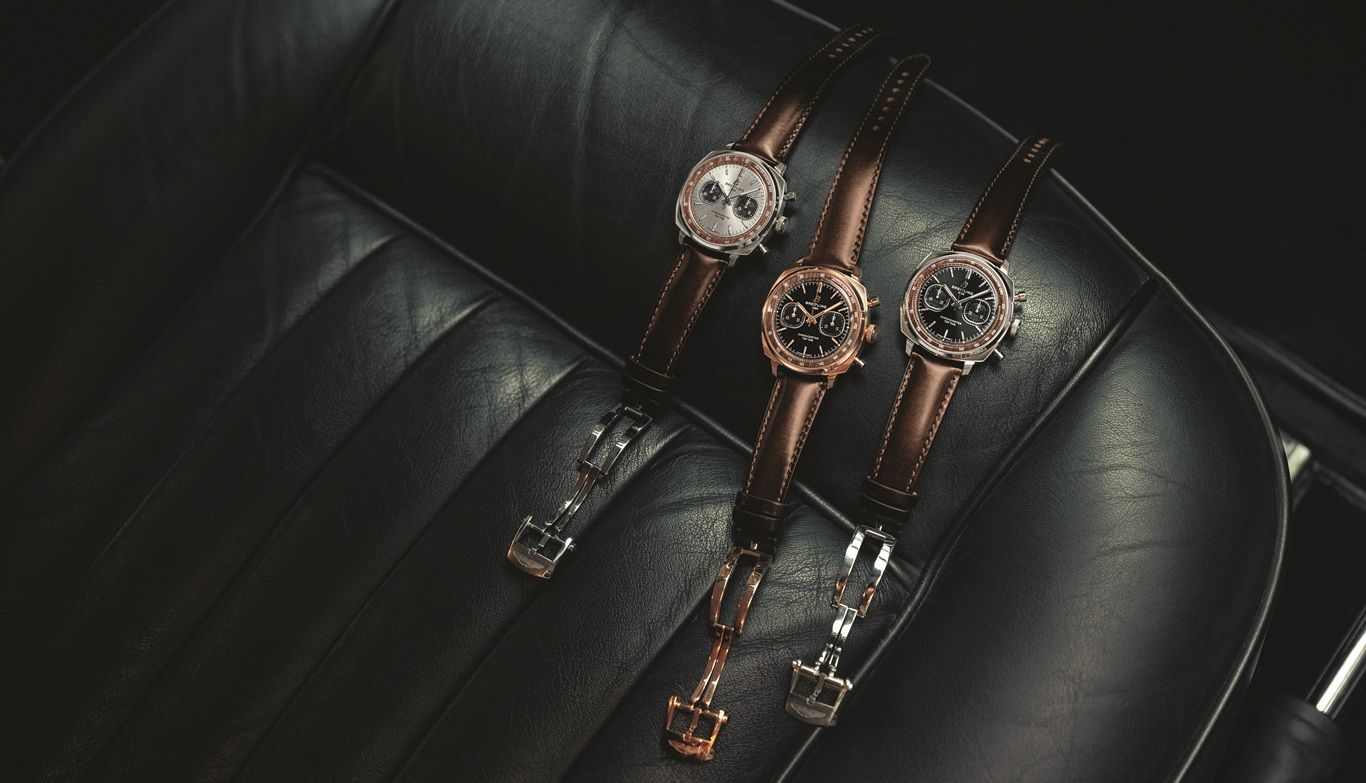
The Breitling Top Time B01 Aston Martin DB5 pairs a cushion-shaped 41mm case, a wooden inner ring and the in-house Caliber 01 across three limited…
By Zach Charles • October 10, 2026
TAG Heuer developed the Mikrograph (2011, 1/100th second), Mikrotimer Flying 1000 (2011, 1/1000th second), and Mikrogirder (2012, 1/2000th second).

Doxa SUB 1500T: The 1,500-Metre Depth-Rating Flagship
By Zach Charles • October 10, 2026
Complete guide to the Doxa SUB 1500T — 45mm, 1,500m depth rating, helium escape valve, ETA 2892-2 movement, USD 2,690.
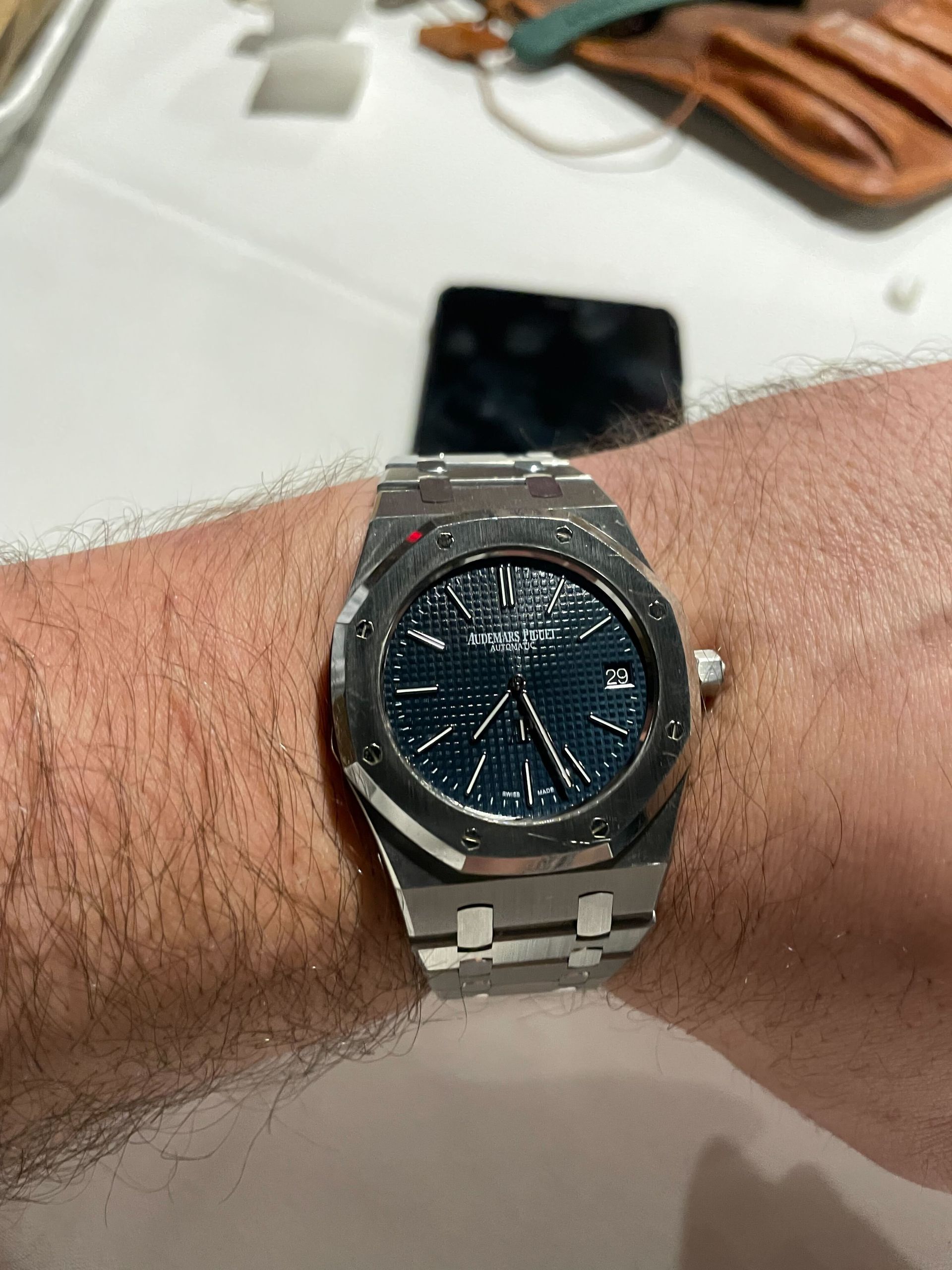
Audemars Piguet Royal Oak 'Jumbo' ref. 15202 with blue tapisserie dial and integrated steel bracelet
By Zach Charles • October 10, 2026
The Audemars Piguet × Swatch Royal Pop is a $400 bioceramic pocket watch in 8 colourways, powered by a new hand-wound SISTEM51 with 90+ hour power…

Time on the Move logo
By Zach Charles • October 10, 2026
Zach Charles is the editor of Time on the Move, an independent watch reference covering brand and model histories, buying guides and release news…
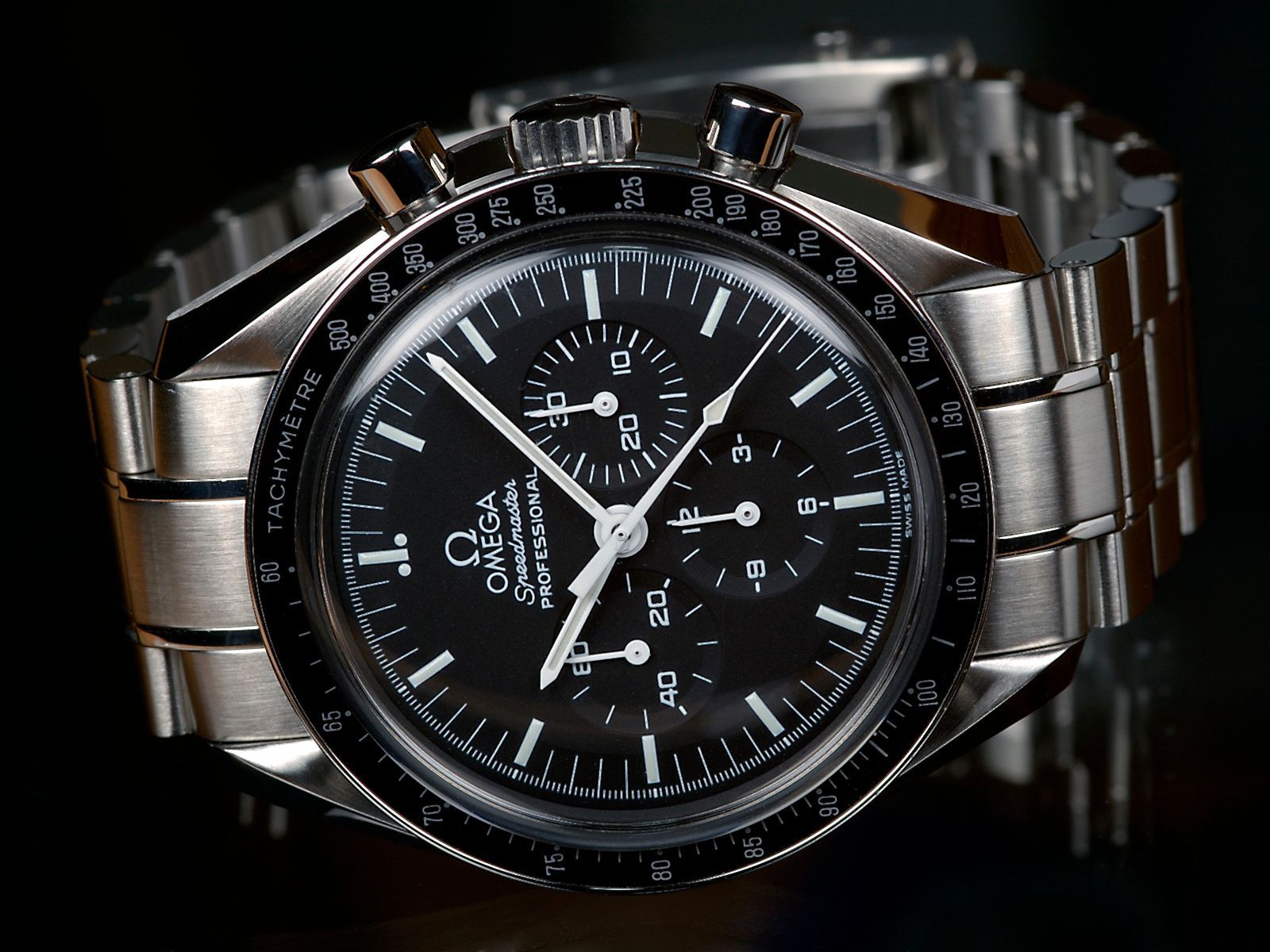
Omega Speedmaster Professional 'Moonwatch' chronograph, front view on steel bracelet
By Zach Charles • October 9, 2026
Find the best watches at every price point from $500 to $15,000 — new and pre-owned. Covers every budget tier with specific reference picks, brand…
By Zach Charles • October 9, 2026
The latest watch news: new releases, Watches and Wonders coverage, discontinuations, industry analysis, and market trends. Currently 1 article.
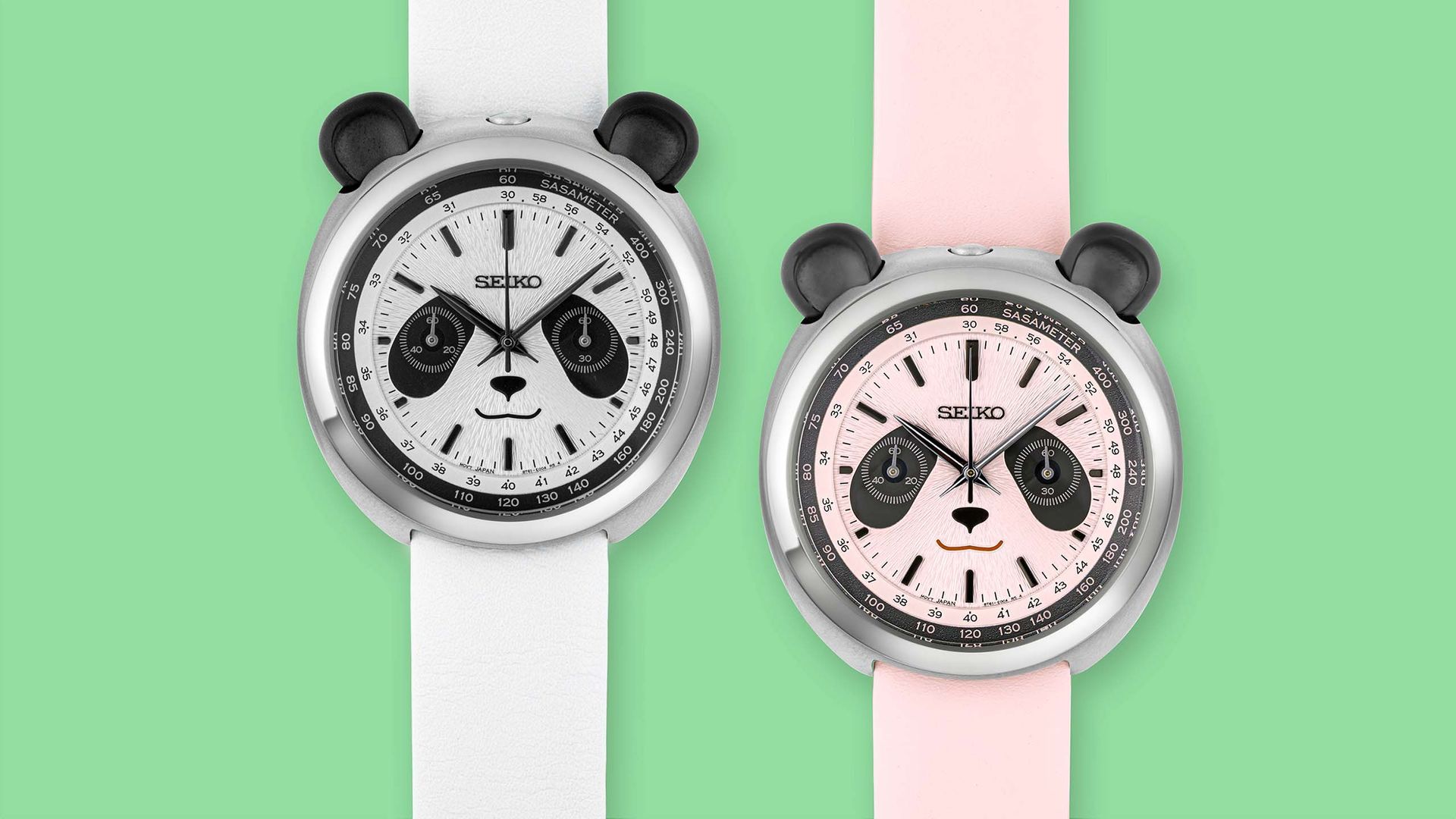
Seiko's New Panda Chronograph Is Literally a Panda: The Power Design Project HHK001 and HHK002
By Zach Charles • October 8, 2026
Seiko's Power Design Project panda chronograph (HHK001, HHK002) turns the panda dial into an actual panda face, with ear pushers, a 'Sasameter' and a 3D…
Show More