
Breitling Endurance Pro: SuperQuartz, Breitlight, and 1/100th-Second Precision

Zach Charles • August 13, 2026

Share this article

Breitling Endurance Pro: History of the Performance Sports Watch

When Georges Kern took over Breitling in 2017, one of his first and most strategically revealing decisions was to build Squads. Not teams of ambassadors in the conventional luxury-watch sense — celebrities photographed at events, actors associated with aspirational lifestyle imagery — but operational communities of people who actually used the watches for their intended purposes. The Surfer Squad, the Explorer Squad, the Triathlon Squad: each group was composed of professionals and committed amateurs who brought genuine expertise in their discipline to the brand's creative process.

The Triathlon Squad was the direct origin of the Endurance Pro.


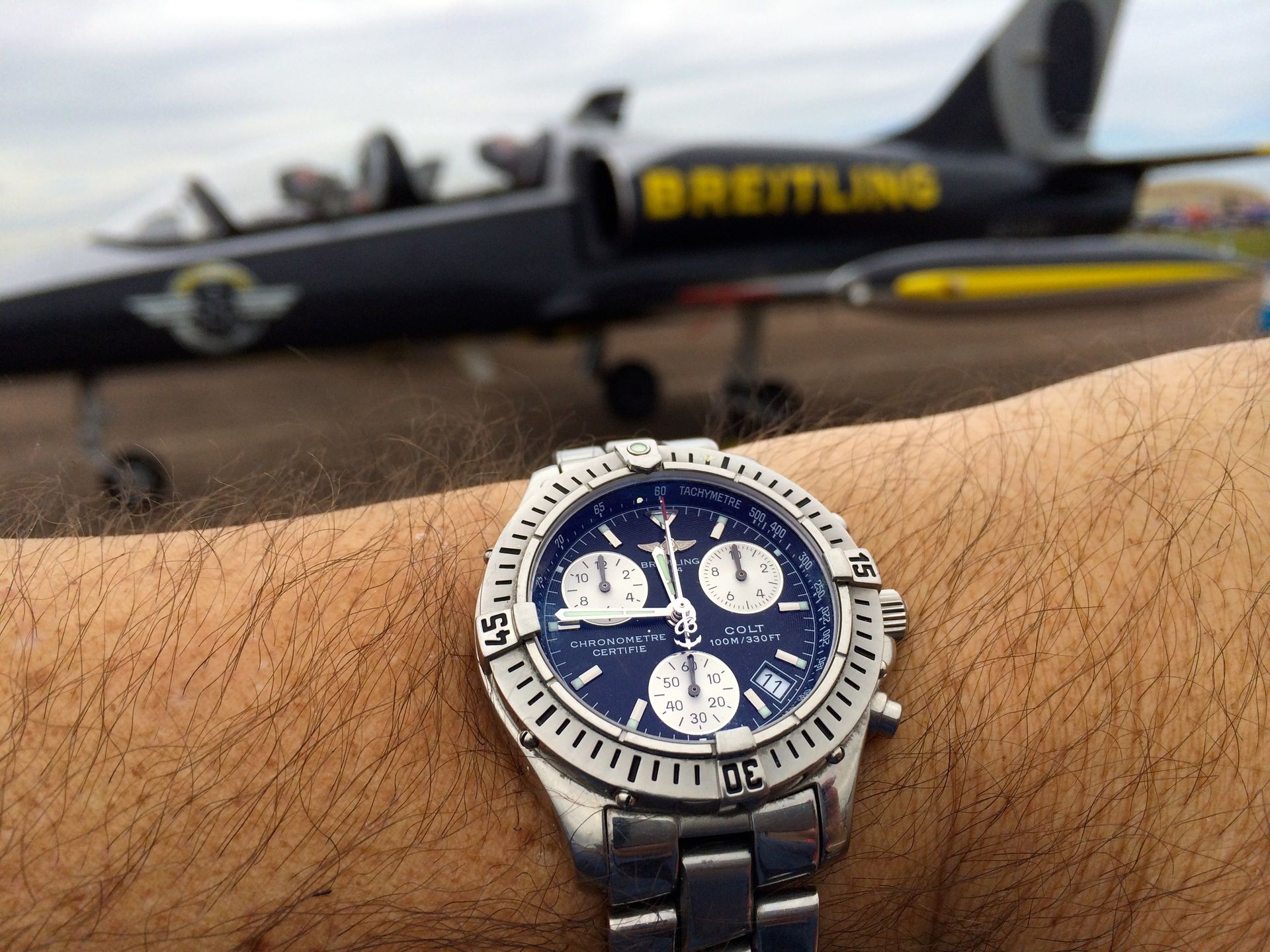
Breitling Colt — sport three-hand watch
A Breitling Colt — Breitling’s entry-level sport three-hand watch with a unidirectional rotating bezel and 300m water resistance. The Colt name references military aviation and anchors Breitling’s affordable professional range below the Superocean and Avenger.
Photo: Phil Guest — CC BY-SA 2.0 — Wikimedia Commons
The Squad Strategy — Authenticity as Method

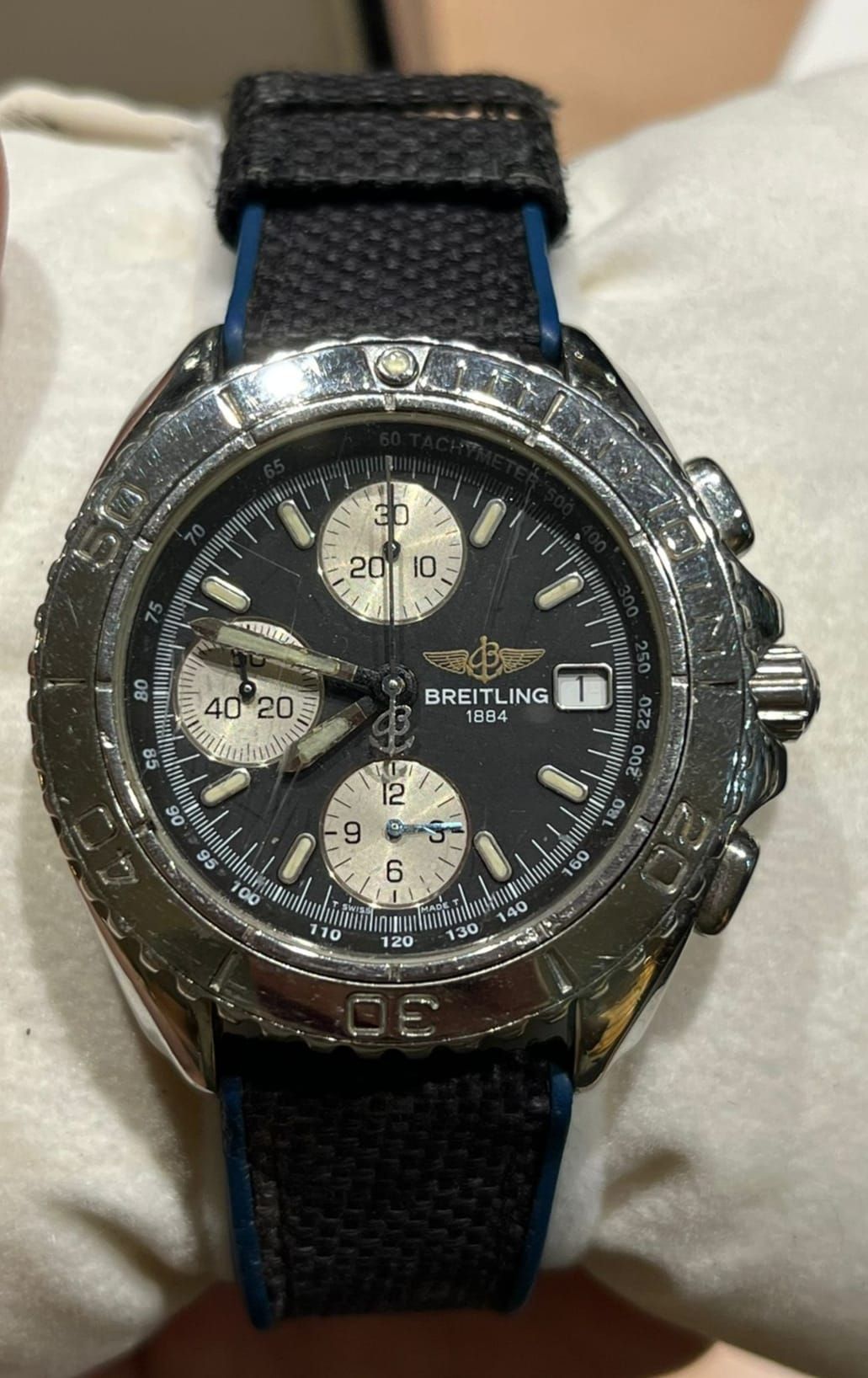
Breitling Aeromarine Shark ref. A13051 — mid-1990s
A Breitling Aeromarine Shark ref. A13051 from the mid-1990s — a 200m water-resistant diver’s chronograph from the Aeromarine line, predecessor to the Superocean and Avenger Seawolf. The orange accents and ceramic bezel insert mark it as a professional dive tool.
Photo: EMore98 — CC BY-SA 4.0 — Wikimedia Commons
The Squad approach was more than a marketing strategy, though it was that too. For the Endurance Pro specifically, working with elite triathletes exposed a genuine design brief: what does a watch need to do on the wrist of someone swimming 3.8 kilometres, cycling 180 kilometres, and then running a marathon, in the specific sequence that defines an Ironman-distance triathlon?

The answer was not "look impressive at the finish line." The answer involved weight, legibility in motion, resistance to water and salt and impact, and — most specifically — a chronograph capable of timing the transitions between disciplines with the precision that matters to a competitive athlete. A triathlete crossing from swim to bike does not pause to appreciate mechanical finishing. They need a split time they can read while pulling on cycling shoes.

The Endurance Pro launched in 2020 as Breitling's answer to that brief — and as a watch that demonstrated the brand's willingness to follow a genuine functional requirement wherever it led, regardless of whether the destination was conventional within Swiss luxury watchmaking.


Breitlight — The Case Material That Makes It

Breitling Colt — sport three-hand watch
A Breitling Colt — Breitling’s entry-level sport three-hand watch with a unidirectional rotating bezel and 300m water resistance. The Colt name references military aviation and anchors Breitling’s affordable professional range below the Superocean and Avenger.
Photo: Phil Guest — CC BY-SA 2.0 — Wikimedia Commons

The Endurance Pro's case is Breitlight — the same proprietary composite material that Breitling introduced in the Avenger Hurricane, here applied to a very different brief.

Breitlight is approximately 3.3 times lighter than titanium and significantly harder, with properties that read like an engineering specification designed specifically for athletic use: corrosion resistance that handles salt water and sweat without concern; thermal stability across the temperature ranges an outdoor athlete encounters; non-magnetic and non-conductive properties that eliminate any electromagnetic interaction concerns.

The practical consequence on the wrist is immediately apparent. At 44mm, a steel watch of this diameter would be a meaningful weight commitment over a twelve-hour race. A titanium equivalent would be meaningfully better. The Breitlight case is in a different category: the Endurance Pro wears on the wrist with almost no perceived mass. Athletes who train and race wearing it report that the watch effectively disappears — present when you look at it, absent when you don't.

The case is available in bold, saturated colours — blue, red, yellow, green — that reflect the visual culture of endurance sports rather than the restrained palette of Swiss dress watches. The colours are functional as well as aesthetic: high visibility in the water, legibility in transition zones, a clarity of presence on the wrist that suits a watch designed to be consulted in motion.

Water resistance is 100 metres — sufficient for competitive open-water swimming at any depth a triathlete would encounter, and more than adequate for training in pools, lakes, and the sea.


Calibre B82 — SuperQuartz for Sport

Breitling Aeromarine Shark ref. A13051 — mid-1990s
A Breitling Aeromarine Shark ref. A13051 from the mid-1990s — a 200m water-resistant diver’s chronograph from the Aeromarine line, predecessor to the Superocean and Avenger Seawolf. The orange accents and ceramic bezel insert mark it as a professional dive tool.
Photo: EMore98 — CC BY-SA 4.0 — Wikimedia Commons

The movement is Breitling's Calibre B82, an analogue/digital hybrid SuperQuartz that brings the thermocompensated oscillator technology the brand developed for the Aerospace into a sports context.

SuperQuartz delivers accuracy of approximately ±15 seconds per year — roughly ten times better than a standard quartz movement. For an athlete timing race splits, training sessions, and transition sequences, this level of accuracy over the course of a season means accumulated timing error that approaches irrelevance. A watch whose daily rate varies by a fraction of a second is not introducing uncertainty into athletic performance data.

The B82's most distinctive capability is its 1/100th-second chronograph — a digital precision level that mechanical chronographs cannot approach and that standard quartz chronographs do not typically offer. The display updates 100 times per second, reading to centiseconds, with a practical implication that matters in racing contexts: transition times can be captured to a precision that allows meaningful comparison between race performances, training runs, and between athletes in a coached squad setting.

The analogue display handles primary timekeeping in a format legible at a glance during training. The digital window provides chronograph readout, elapsed time, and additional function access. The architecture is functionally close to the Aerospace's dual-register approach — an analogue clock face augmented by a digital instrument — but calibrated for athletic rather than aviation use.


The 1/100th-Second Chronograph — Why Resolution Matters

Breitling Colt — sport three-hand watch
A Breitling Colt — Breitling’s entry-level sport three-hand watch with a unidirectional rotating bezel and 300m water resistance. The Colt name references military aviation and anchors Breitling’s affordable professional range below the Superocean and Avenger.
Photo: Phil Guest — CC BY-SA 2.0 — Wikimedia Commons

A standard mechanical chronograph reads to 1/4 or 1/8 of a second. A standard quartz chronograph typically reads to 1/10 of a second. The Endurance Pro's 1/100th-second resolution raises an obvious question: does this precision matter in practice?

For competitive athletes, the answer is yes, in specific contexts. Triathlon transitions — swim-to-bike, bike-to-run — are timed events in competition. Elite transition times are measured in seconds and fractions thereof. A coach or athlete reviewing a season of transition data can meaningfully compare performances that differ by less than a second; the 1/100th-second resolution provides that granularity without ambiguity.

For interval training, the same precision allows capture of splits that standard watches would round to the nearest tenth. For a swimmer tracking 100-metre splits across a training set, the additional decimal place is data rather than noise.

For most recreational users, the 1/100th-second readout is in practice more impressive than operationally necessary. But the capability is genuinely there, performing as specified, for the users for whom it was designed.


Positioning — The Garmin Question

Breitling Aeromarine Shark ref. A13051 — mid-1990s
A Breitling Aeromarine Shark ref. A13051 from the mid-1990s — a 200m water-resistant diver’s chronograph from the Aeromarine line, predecessor to the Superocean and Avenger Seawolf. The orange accents and ceramic bezel insert mark it as a professional dive tool.
Photo: EMore98 — CC BY-SA 4.0 — Wikimedia Commons

The Endurance Pro exists in a market where GPS-equipped multisport watches from Garmin, Polar, COROS, and Suunto offer capability that no Swiss watch can match: navigation, biometric monitoring, training load analysis, route mapping, power meter connectivity. A Garmin Fenix 7 does things the Endurance Pro cannot do and was not designed to do.

Breitling's answer to this comparison is that the two categories are not in competition. The Garmin is a training computer worn on the wrist. The Endurance Pro is a Swiss instrument watch — COSC-validated, Breitlight-cased, hand-assembled in Grenchen — that happens to be optimised for athletic use. These serve different needs, and the serious athlete who might buy an Endurance Pro almost certainly already owns a Garmin.

The real question is whether an athlete wants to own and race in a Swiss watch of this quality — and for the buyer who does, the Endurance Pro occupies ground that no other Swiss watch manufacturer has credibly developed. The Omega X-33 Skywalker addresses a somewhat analogous brief for aerospace professionals, but its aviation focus and significantly higher price position it differently. At approximately $3,000–$4,500 depending on configuration, the Endurance Pro is within reach of the serious amateur athlete who wants Swiss watchmaking quality in a sports-specific instrument.


Three Buyer Circles

The Endurance Pro has developed a following across three overlapping but distinct buyer groups.

Competitive athletes and triathletes : The watch's design brief was genuine, and athletes who train and race in demanding conditions respond to a watch built specifically for their needs. The Breitlight case's weight and durability properties are not marketing language; they have tangible value in athletic contexts.

Watch collectors drawn to sports watch innovation : The Endurance Pro is genuinely unusual within Swiss watchmaking — a COSC-certified SuperQuartz in a proprietary composite case, offering 1/100th-second chronograph precision, positioned in a segment that mechanical watchmakers have largely ignored. Collectors who track technical development and brand positioning find it interesting precisely because it exists outside the conventional categories.

Luxury sports lifestyle buyers : The Kern-era Breitling has been intentional about attracting buyers who want the brand's quality and heritage in a form associated with active, outdoor life rather than aviation instruments. The Endurance Pro's bold colours, athletic associations, and relatively accessible price point attract buyers who might find the Navitimer or Chronomat too specifically aviation-focused.


vs. Omega X-33 Skywalker

The most technically comparable Swiss watch is the Omega Speedmaster X-33 Skywalker — an analogue/digital multifunctional instrument developed with the European Space Agency for professional spaceflight applications. The X-33 Skywalker uses a thermo-compensated quartz movement, has a similar analogue/digital display architecture, and is positioned as a professional-grade instrument rather than a dress or sports watch.

The differences are significant. The X-33 Skywalker is priced substantially higher — around $9,000 — and carries a professional aerospace specification that makes it more specialised. The Endurance Pro is less expensive, broader in its intended user base, and designed around endurance sport rather than spaceflight. Both validate the analogue/digital SuperQuartz approach as a serious technical category; they serve different professional contexts within it.


Frequently Asked Questions

What is the Endurance Pro case made of?
Breitlight — Breitling's proprietary composite material. It is approximately 3.3 times lighter than titanium, harder, non-magnetic, non-conductive, and highly resistant to corrosion. The 44mm Breitlight case weighs so little on the wrist that athletes describe the watch as effectively disappearing during training and racing.

Does the Endurance Pro have GPS?
No. The Endurance Pro is a Swiss instrument watch with a SuperQuartz movement and analogue/digital display. It does not offer GPS, biometric monitoring, or connected training features. For athletes who want GPS multisport functionality, a Garmin or similar device is the appropriate tool — and most Endurance Pro owners own one already.

What does 1/100th-second chronograph mean in practice?
The chronograph display updates 100 times per second and reads to centiseconds. For competitive athletes capturing transition times, swim splits, or interval data, this precision allows comparison of performances that differ by less than one second. For recreational users, the additional resolution is more impressive than operationally necessary.

How does the Endurance Pro compare to the Breitling Aerospace?
Both use Breitling's SuperQuartz technology (thermocompensated oscillator, ±15 seconds per year) and both feature analogue/digital dual-register displays. The Aerospace was designed for professional aviation — titanium case, multi-function secondary display, airline crew and military pilot brief. The Endurance Pro was designed for endurance sport — Breitlight case, 1/100th-second chronograph, bold sport colours. The technical architecture is related; the application and aesthetic are distinct.


Related Articles

Recent Posts

By Zach Charles • October 10, 2026
Hamilton's American Classic Cushion Mechanical revives its 1926 Art Deco cushion watches, seen in Oppenheimer, in 30mm and 34mm with the new hand-wound…
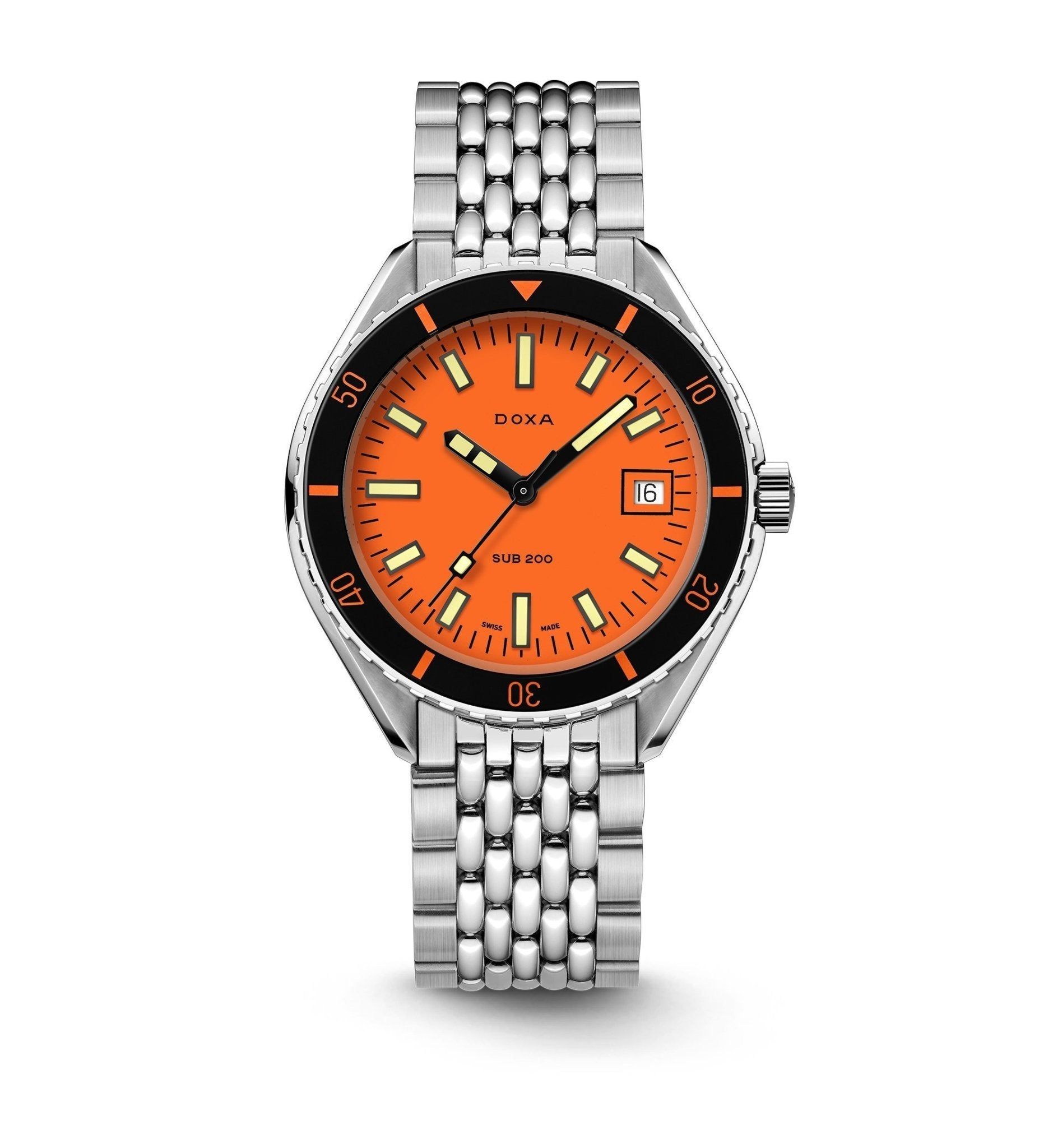
Doxa SUB 200: The Accessible Everyday Diver
By Zach Charles • October 10, 2026
Complete guide to the Doxa SUB 200 — 42mm, 200m, four colorways, Sellita SW200-1. The accessible entry to the Doxa SUB family with the full…
By Zach Charles • October 10, 2026
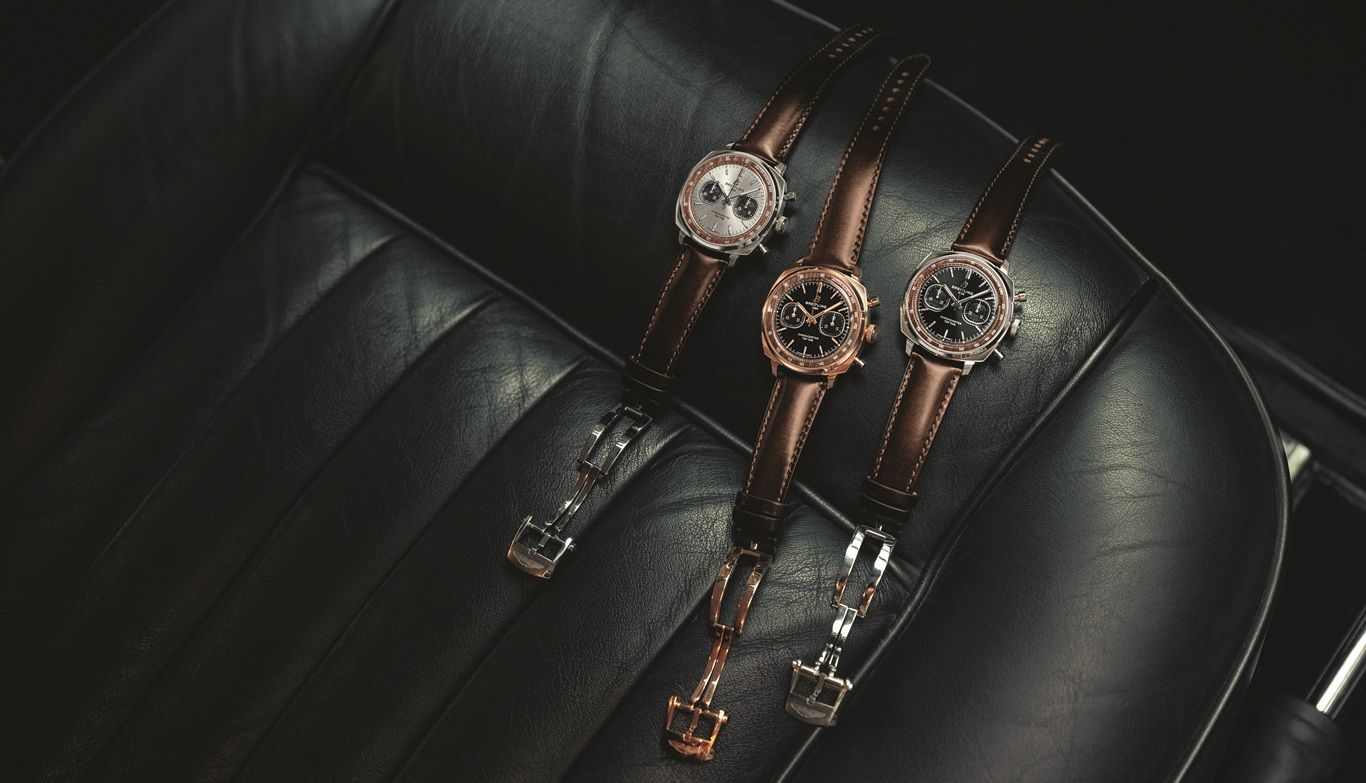
The Breitling Top Time B01 Aston Martin DB5 pairs a cushion-shaped 41mm case, a wooden inner ring and the in-house Caliber 01 across three limited…
By Zach Charles • October 10, 2026
TAG Heuer developed the Mikrograph (2011, 1/100th second), Mikrotimer Flying 1000 (2011, 1/1000th second), and Mikrogirder (2012, 1/2000th second).
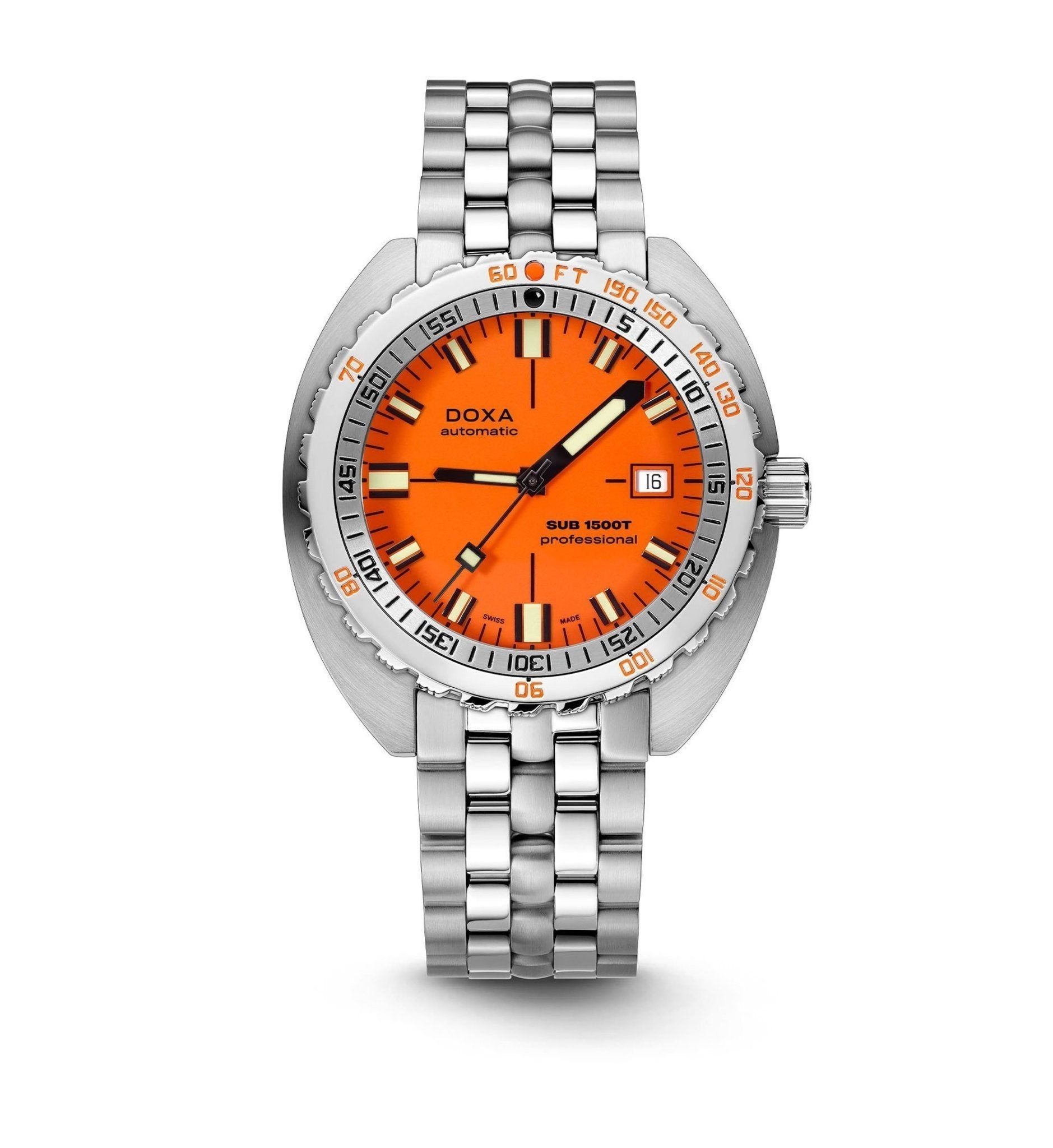
Doxa SUB 1500T: The 1,500-Metre Depth-Rating Flagship
By Zach Charles • October 10, 2026
Complete guide to the Doxa SUB 1500T — 45mm, 1,500m depth rating, helium escape valve, ETA 2892-2 movement, USD 2,690.
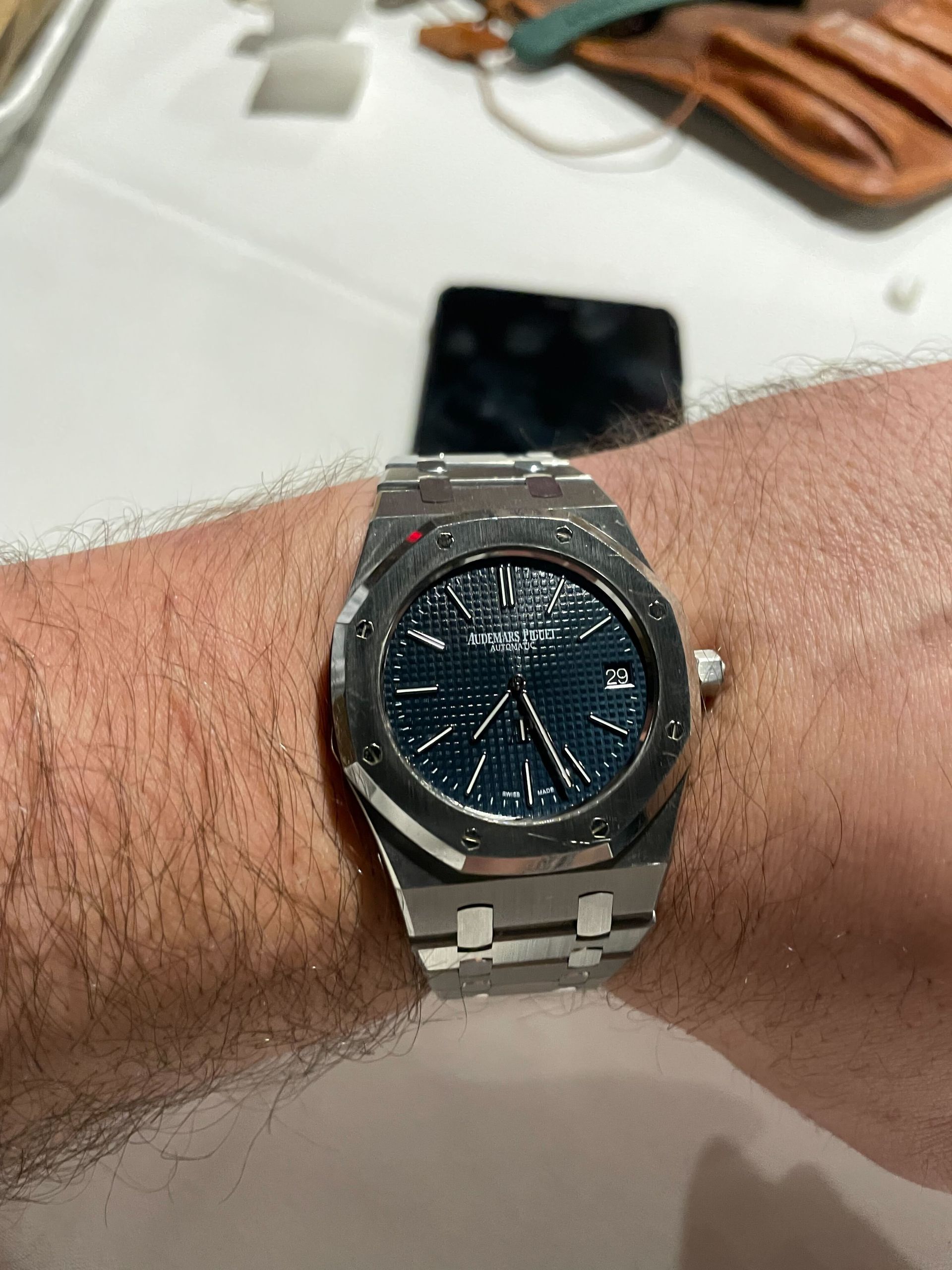
Audemars Piguet Royal Oak 'Jumbo' ref. 15202 with blue tapisserie dial and integrated steel bracelet
By Zach Charles • October 10, 2026
The Audemars Piguet × Swatch Royal Pop is a $400 bioceramic pocket watch in 8 colourways, powered by a new hand-wound SISTEM51 with 90+ hour power…

Time on the Move logo
By Zach Charles • October 10, 2026
Zach Charles is the editor of Time on the Move, an independent watch reference covering brand and model histories, buying guides and release news…
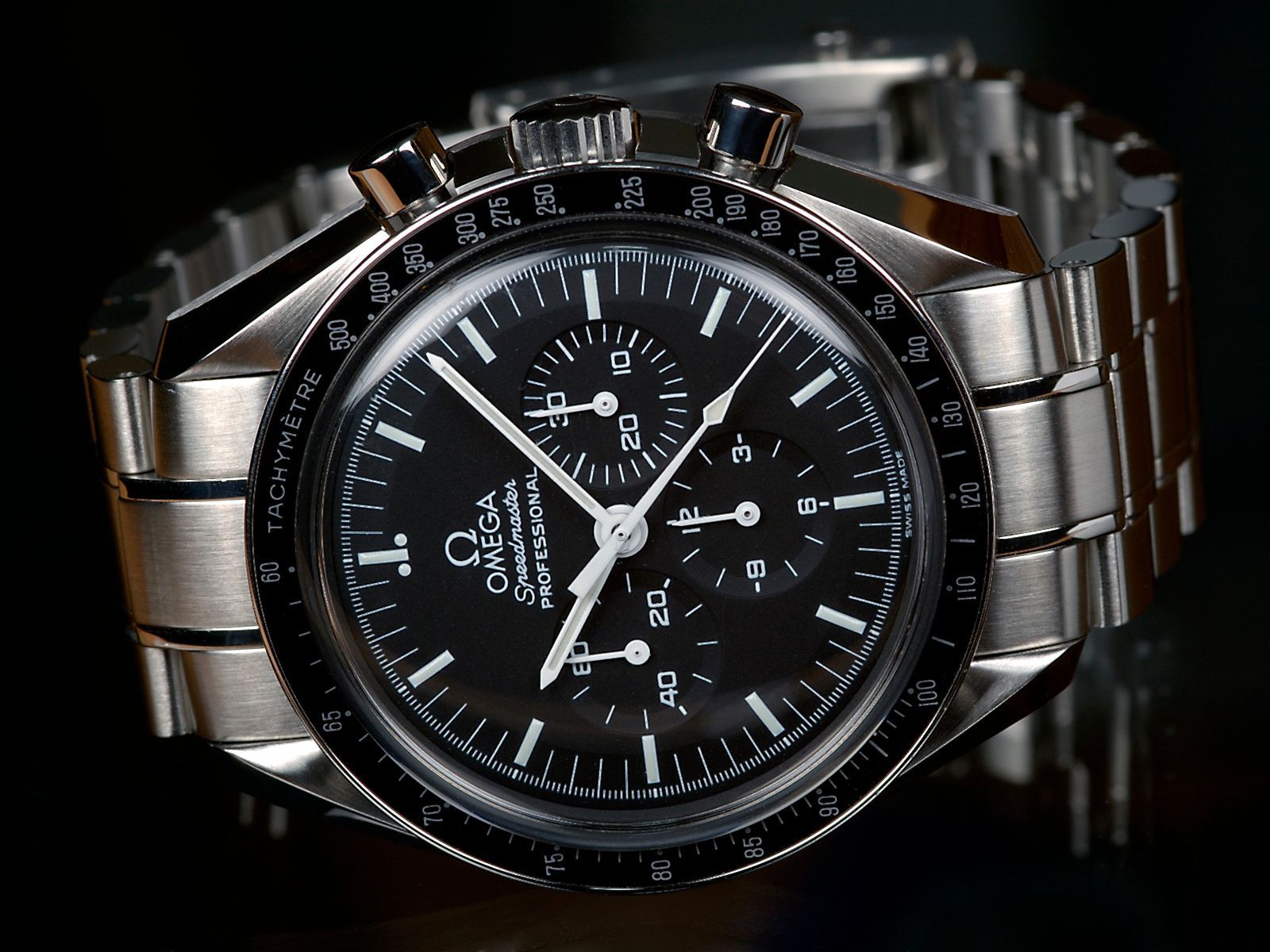
Omega Speedmaster Professional 'Moonwatch' chronograph, front view on steel bracelet
By Zach Charles • October 9, 2026
Find the best watches at every price point from $500 to $15,000 — new and pre-owned. Covers every budget tier with specific reference picks, brand…
By Zach Charles • October 9, 2026
The latest watch news: new releases, Watches and Wonders coverage, discontinuations, industry analysis, and market trends. Currently 1 article.
Seiko's New Panda Chronograph Is Literally a Panda: The Power Design Project HHK001 and HHK002
By Zach Charles • October 8, 2026
Seiko's Power Design Project panda chronograph (HHK001, HHK002) turns the panda dial into an actual panda face, with ear pushers, a 'Sasameter' and a 3D…
Show More