

Breitling Emergency: The Watch with a Built-In Personal Locator Beacon

Zach Charles • June 14, 2026

Share this article

Breitling Emergency: The Watch That Can Save Your Life

There is a sentence that almost no watchmaker in history has been able to say with a straight face: this watch is regulated by civil aviation authorities. Breitling says it routinely. The Emergency — first released in 1995 and now in its second generation — is registered not merely as a timepiece but as an aviation instrument in a number of countries, subject to the same regulatory framework that governs aircraft transponders and distress beacons. Unnecessary activation can result in a fine. Activation in a genuine emergency can summon a rescue helicopter. The Emergency is the only production wristwatch on earth that can make either of those claims, and that distinction is not a marketing flourish. It is a statement of engineering fact.

Understanding the Emergency requires setting aside the usual vocabulary of fine watchmaking. There is no conversation to be had here about dial lacquer, anglage, or the depth of a movement's finishing. The Emergency exists in a different register — closer to military equipment than to the contents of a velvet tray at a boutique. It was conceived for people who fly small aircraft over mountain ranges, cross oceans in sailboats, and move through remote terrain where the distance between a bad decision and a fatality is measured in hours. For those people, the Emergency is not a luxury purchase. It is, in the most literal sense, a piece of survival equipment that happens to tell the time.


Breitling Old Navitimer ref. A13322 — early 2000s
A Breitling Old Navitimer ref. A13322 from the early 2000s — the circular slide rule bezel, a defining Navitimer feature since 1952, allows pilots to perform airspeed, fuel consumption, and distance calculations without a separate computer.
Photo: EMore98 — CC BY-SA 4.0 — Wikimedia Commons
The Problem the Emergency Was Designed to Solve

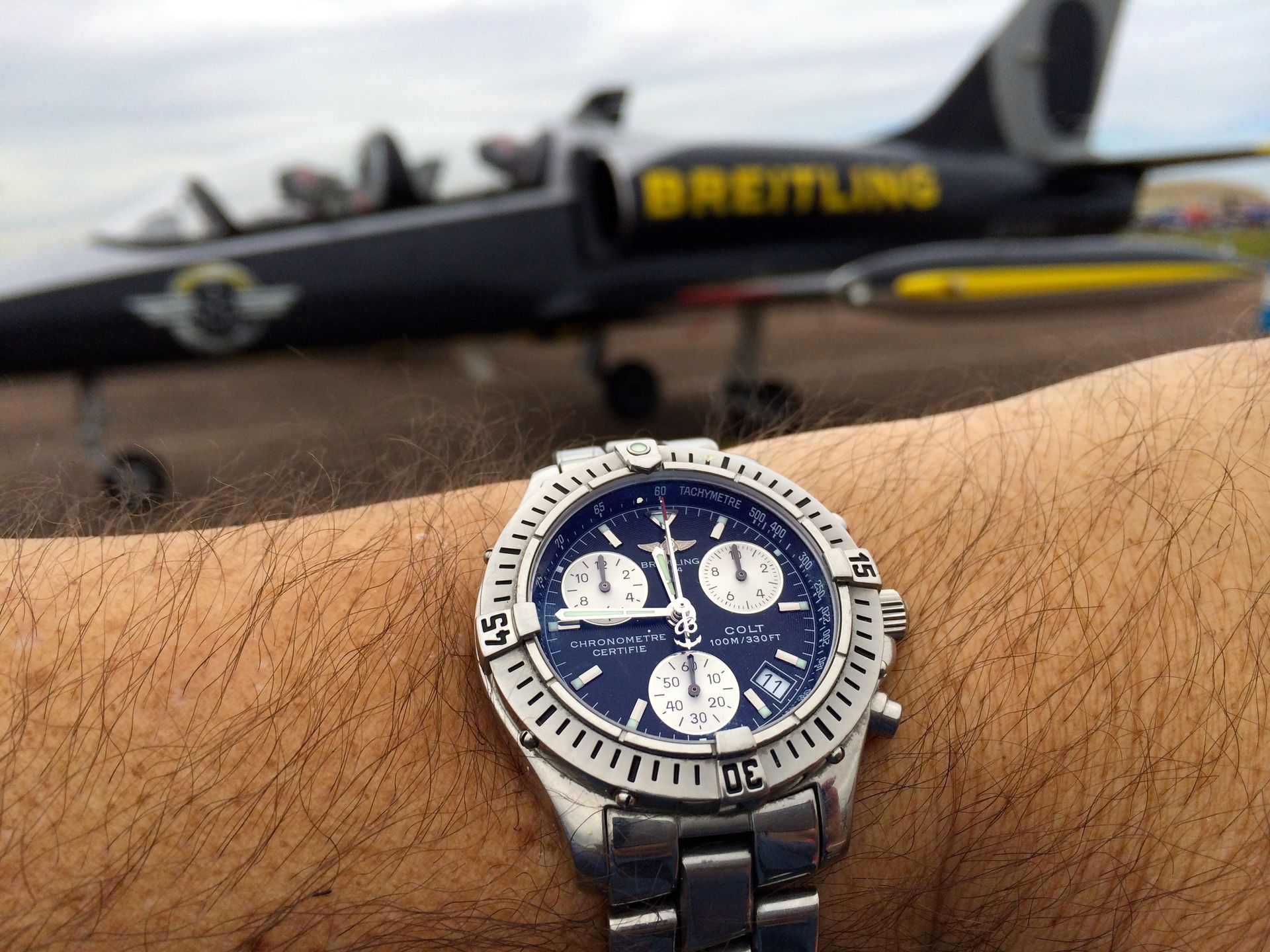
Breitling Colt — sport three-hand watch
A Breitling Colt — Breitling’s entry-level sport three-hand watch with a unidirectional rotating bezel and 300m water resistance. The Colt name references military aviation and anchors Breitling’s affordable professional range below the Superocean and Avenger.
Photo: Phil Guest — CC BY-SA 2.0 — Wikimedia Commons

Personal locator beacons — PLBs — have existed since the 1970s. The international distress frequency of 121.5 MHz was established as a civil aviation emergency channel, monitored continuously by air traffic control and overflying aircraft. If a downed pilot could get a signal out on that frequency, there was a reasonable chance someone would hear it. The problem was always the same: you have to have it with you when things go wrong.

Gear stowed in an aircraft you just crashed is not always accessible. A PLB in your pack is not always in your hand when you fall. But a watch is on your wrist. Breitling's engineers, working in the early 1990s in collaboration with Dassault Electronique, asked a straightforward question: could you build a functional emergency transmitter into a wristwatch? The answer was yes — but barely, and only if you were willing to accept a watch that looked nothing like a conventional timepiece.


Emergency I (1995) — The Antenna in the Crown

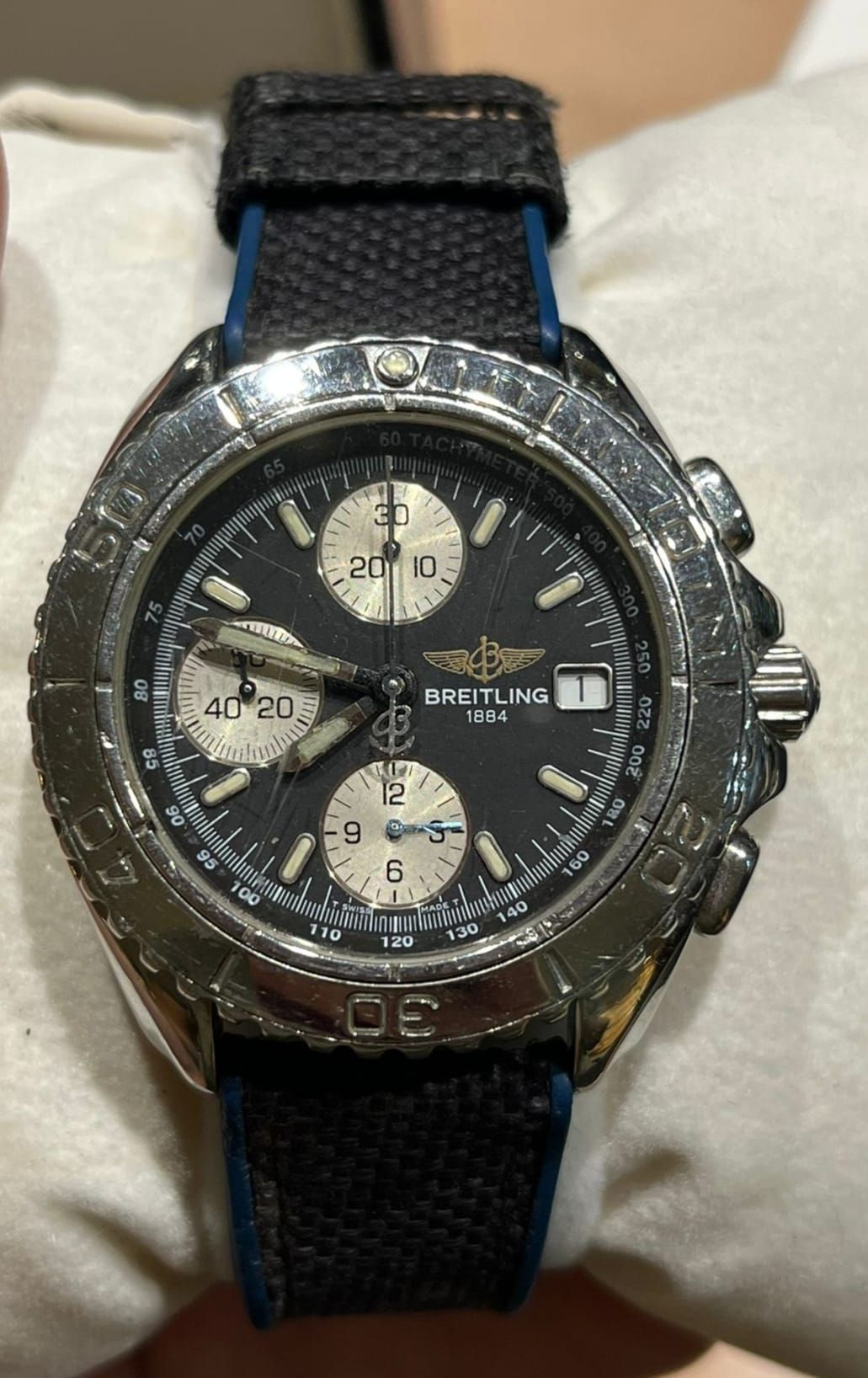
Breitling Old Navitimer ref. A13322 — early 2000s
A Breitling Old Navitimer ref. A13322 from the early 2000s — the circular slide rule bezel, a defining Navitimer feature since 1952, allows pilots to perform airspeed, fuel consumption, and distance calculations without a separate computer.
Photo: EMore98 — CC BY-SA 4.0 — Wikimedia Commons
The original Emergency launched in 1995, and its fundamental mechanism remains one of the most elegant pieces of functional engineering in wristwatch history. The distress beacon antenna is contained within the crown. Under normal circumstances the crown appears to be an ordinary winding and setting crown — slightly oversized, slightly more robust than average, but not obviously different from the crown on any other large-case pilot watch. In an emergency, the user unscrews and pulls the crown out to its full extension. This deploys the antenna and activates transmission on 121.5 MHz, the international civil aviation distress frequency.

The transmission is continuous and automatic once activated. The signal is monitored by civil aviation facilities globally and, under the COSPAS-SARSAT system operational at the time, could be detected by overflying commercial aircraft and relayed to search and rescue coordination centres. The 121.5 MHz frequency had one significant limitation: it did not provide GPS coordinates. Rescuers receiving the signal knew that someone, somewhere within a certain radio horizon, was in distress. They knew the general area from triangulation. They did not know a precise location.

The Emergency I was housed in a titanium case measuring approximately 43mm. The watch included a full chronograph function and a SuperQuartz thermocompensated movement — accurate to within 15 seconds per year, dramatically more precise than any mechanical chronograph. The dial was optimised for rapid reading under adverse conditions: large Arabic numerals, high-contrast printing, a pilot watch aesthetic that prioritised function over elegance.

From the moment of launch, ownership carried regulatory weight. In many jurisdictions the Emergency had to be registered with civil aviation authorities — the same process applied to aircraft emergency locator transmitters. Activation of the beacon unnecessarily was and remains a legal offence in most countries. The watch came with documentation and explicit warnings. Breitling leaned into this. The legal weight surrounding the Emergency was not a liability to be managed; it was proof of the watch's legitimacy as a real instrument.


Emergency II (2013) — Going Satellite

Breitling Aeromarine Shark ref. A13051 — mid-1990s
A Breitling Aeromarine Shark ref. A13051 from the mid-1990s — a 200m water-resistant diver’s chronograph from the Aeromarine line, predecessor to the Superocean and Avenger Seawolf. The orange accents and ceramic bezel insert mark it as a professional dive tool.
Photo: EMore98 — CC BY-SA 4.0 — Wikimedia Commons
By the 2000s, the limitations of 121.5 MHz were being addressed internationally. COSPAS-SARSAT phased out satellite monitoring of 121.5 MHz in 2009. The frequency remained monitored by aircraft and ground stations, but the satellite backbone of global search and rescue had migrated entirely to 406 MHz — a digital frequency that transmits an encoded signal containing the device's registered identity and, crucially, its precise GPS coordinates. A 406 MHz activation anywhere on earth is detected within minutes by COSPAS-SARSAT satellites and relayed with location data accurate to within roughly 100 metres to the nearest rescue coordination centre.

Breitling's response was the Emergency II, introduced in 2013. The engineering challenge was significant: accommodating both a 121.5 MHz antenna and a 406 MHz antenna within a wristwatch case required substantially more internal volume than the first generation. The Emergency II measures 51mm — enormous by any standard, and a direct consequence of physics. The antennas required to transmit on these frequencies have minimum dimensional requirements, and the case had to be built around them. The size is not a design choice.

The dual-frequency system works in concert: 121.5 MHz provides a homing signal that allows rescue aircraft to close in at short range, while the 406 MHz signal provides the satellite-detected location fix that directs them to the right region. Together, they represent the complete current standard for personal distress beacons.

To maintain the beacon's power reserves without requiring active battery management by the owner, the Emergency II incorporates a solar-powered secondary battery. Wearing the watch in ambient light keeps the beacon's power supply charged. The primary quartz movement is battery-powered conventionally, but the beacon system is sustained by a separate solar-charged cell — ensuring that a watch worn daily is always rescue-ready without any action by the wearer.


Real Rescues

Breitling has documented cases in which Emergency owners activated the beacon in genuine life-threatening situations and were located by rescue services as a result. Downed light aircraft pilots in remote terrain, mountaineers at altitude, sailors in distress at sea — the record of real activations is not extensive by the standards of dedicated PLB deployments, but it exists, and it is factual. The company presents these accounts with appropriate restraint, without the promotional triumphalism that might attach to lesser claims.

What these recoveries underscore is the core premise of the Emergency's design: proximity matters. In a genuine emergency, the equipment on your body when the situation deteriorates is the equipment that can help you. A PLB in a flooded cockpit is useless. A watch on your wrist is available at the worst moment, regardless of what else has been lost.


Emergency vs. Dedicated PLBs

Breitling Colt — sport three-hand watch
A Breitling Colt — Breitling’s entry-level sport three-hand watch with a unidirectional rotating bezel and 300m water resistance. The Colt name references military aviation and anchors Breitling’s affordable professional range below the Superocean and Avenger.
Photo: Phil Guest — CC BY-SA 2.0 — Wikimedia Commons

It would be dishonest to present the Emergency as technically superior to a dedicated PLB in every respect. Standalone beacons from manufacturers such as ACR and McMurdo transmit on 406 MHz with registered identities, carry multi-year battery lives, and are typically certified to military environmental standards. They are purpose-built for the sole function of getting a distress signal out.

The Emergency is not a dedicated PLB. It is a wristwatch with a fully functional distress beacon built in. What it offers over a separate device is not technical superiority but integration: it is always present, always powered within its design parameters, and always accessible. A mountaineer who would never clip a separate PLB to their harness might wear a watch every day without thinking about it. The best emergency equipment is the equipment you have. The Emergency ensures you have something.


Design and Who Buys It

Breitling Old Navitimer ref. A13322 — early 2000s
A Breitling Old Navitimer ref. A13322 from the early 2000s — the circular slide rule bezel, a defining Navitimer feature since 1952, allows pilots to perform airspeed, fuel consumption, and distance calculations without a separate computer.
Photo: EMore98 — CC BY-SA 4.0 — Wikimedia Commons

The Emergency makes no attempt to be elegant. It is large, purposeful, and visually arresting in the way that a military radio is visually arresting — through robustness, clarity, and the obvious seriousness of its construction. The titanium case resists corrosion, reduces weight relative to steel, and provides structural integrity for the environments where the watch is designed to operate. The dial is optimised for rapid reading under stress.

Professional pilots constitute the core customer base — particularly those flying remote corridors in northern Canada, Alaska, Patagonia, and Central Asia. Offshore racing sailors, mountaineers, and polar expedition members are further segments of genuine working use. The watch also attracts a substantial collector audience: people drawn to its uniqueness within horology who may never activate the beacon but understand and value the fact that it is real.

Current pricing reflects the Emergency's niche position and genuine technical complexity: the single-frequency Emergency (121.5 MHz) is priced at approximately $9,000; the dual-frequency Emergency II at approximately $16,000 and above. Neither watch has a meaningful direct competitor in production. No other manufacturer has built a functioning distress beacon into a wristwatch sold to the public.


Frequently Asked Questions

Is the Breitling Emergency legal to own?
Yes, in virtually all jurisdictions. The watch is sold legally in Breitling's major markets. However, ownership typically requires registration with civil aviation authorities in countries including the United States, where the FCC and FAA treat the Emergency's beacon as a registered aviation instrument. What carries legal weight is activation: the beacon must only be deployed in genuine emergency situations.

Has the Breitling Emergency ever saved a life?
Yes. Breitling has documented genuine activations in which the beacon signal led to the recovery of the watch's owner — downed pilots in remote terrain and individuals in distress in wilderness environments. The factual record supports the claim that the Emergency has functioned as designed in real survival situations.

Why is the Emergency II so large at 51mm?
The size is a direct consequence of antenna physics. A 406 MHz antenna capable of reaching COSPAS-SARSAT satellites and a 121.5 MHz antenna capable of providing an aviation homing signal both have minimum dimensional requirements. The 51mm case was designed around those requirements. It is perhaps the clearest example in wristwatch history of a case size being genuinely dictated by function rather than fashion.

Can I test the Emergency beacon?
No. Testing the beacon is illegal in most countries and can result in significant fines. Because the watch transmits on protected civil distress frequencies monitored by search and rescue services, an unnecessary activation triggers a real response. The documentation accompanying every Emergency purchase makes this unambiguous.


Related Articles

Recent Posts

By Zach Charles • October 10, 2026
Hamilton's American Classic Cushion Mechanical revives its 1926 Art Deco cushion watches, seen in Oppenheimer, in 30mm and 34mm with the new hand-wound…
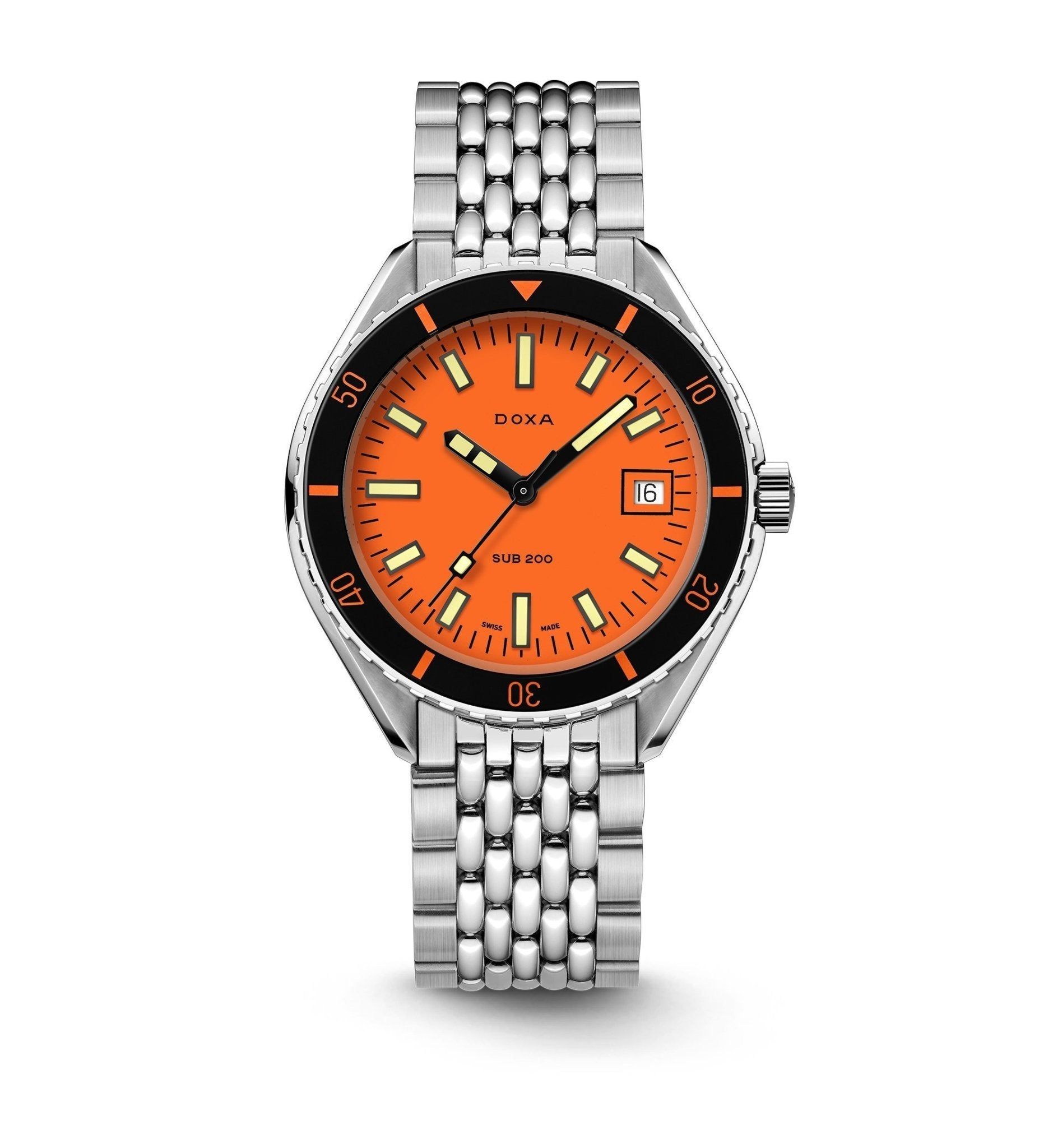
Doxa SUB 200: The Accessible Everyday Diver
By Zach Charles • October 10, 2026
Complete guide to the Doxa SUB 200 — 42mm, 200m, four colorways, Sellita SW200-1. The accessible entry to the Doxa SUB family with the full…

By Zach Charles • October 10, 2026
The Breitling Top Time B01 Aston Martin DB5 pairs a cushion-shaped 41mm case, a wooden inner ring and the in-house Caliber 01 across three limited…
By Zach Charles • October 10, 2026
TAG Heuer developed the Mikrograph (2011, 1/100th second), Mikrotimer Flying 1000 (2011, 1/1000th second), and Mikrogirder (2012, 1/2000th second).
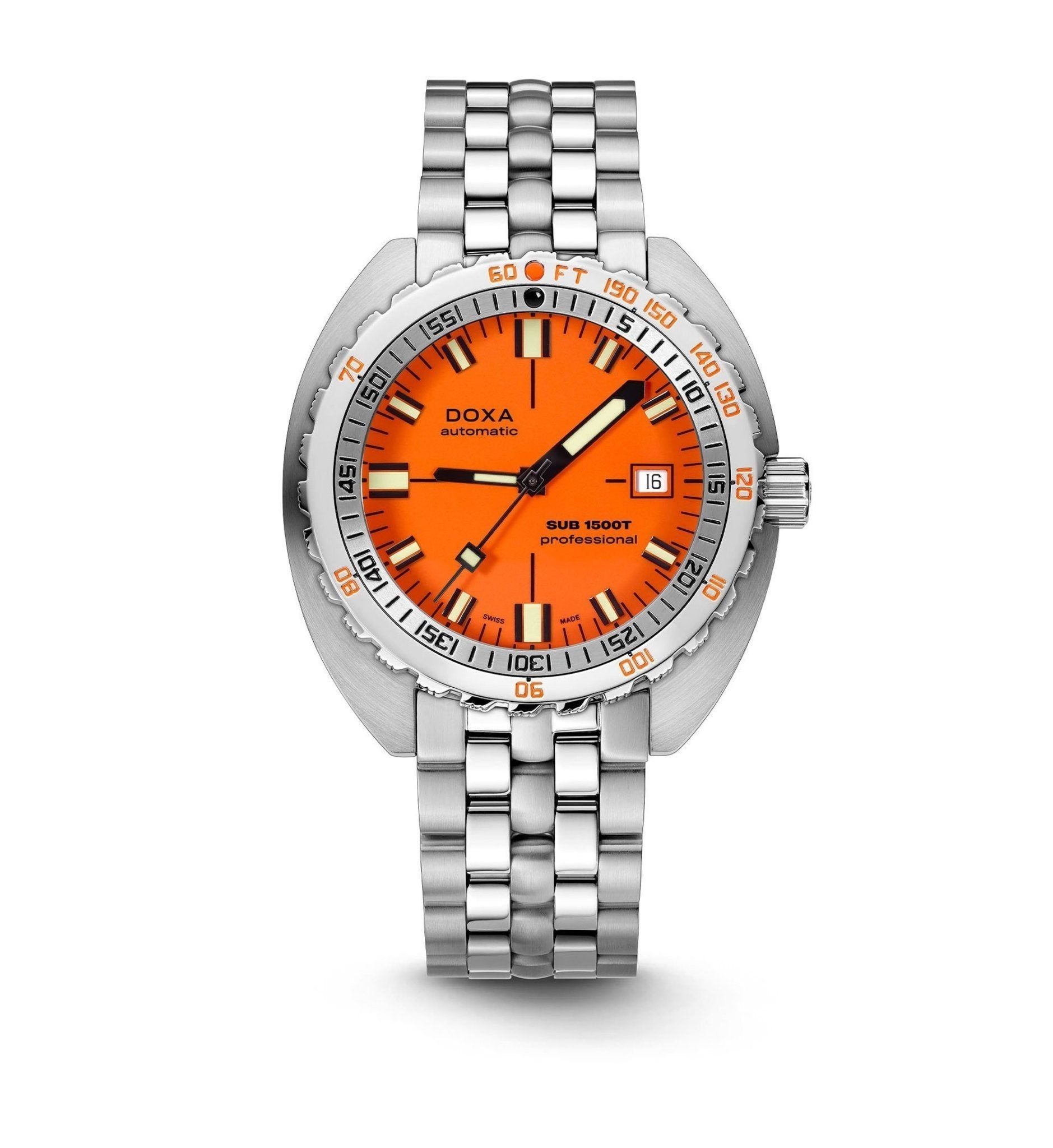
Doxa SUB 1500T: The 1,500-Metre Depth-Rating Flagship
By Zach Charles • October 10, 2026
Complete guide to the Doxa SUB 1500T — 45mm, 1,500m depth rating, helium escape valve, ETA 2892-2 movement, USD 2,690.
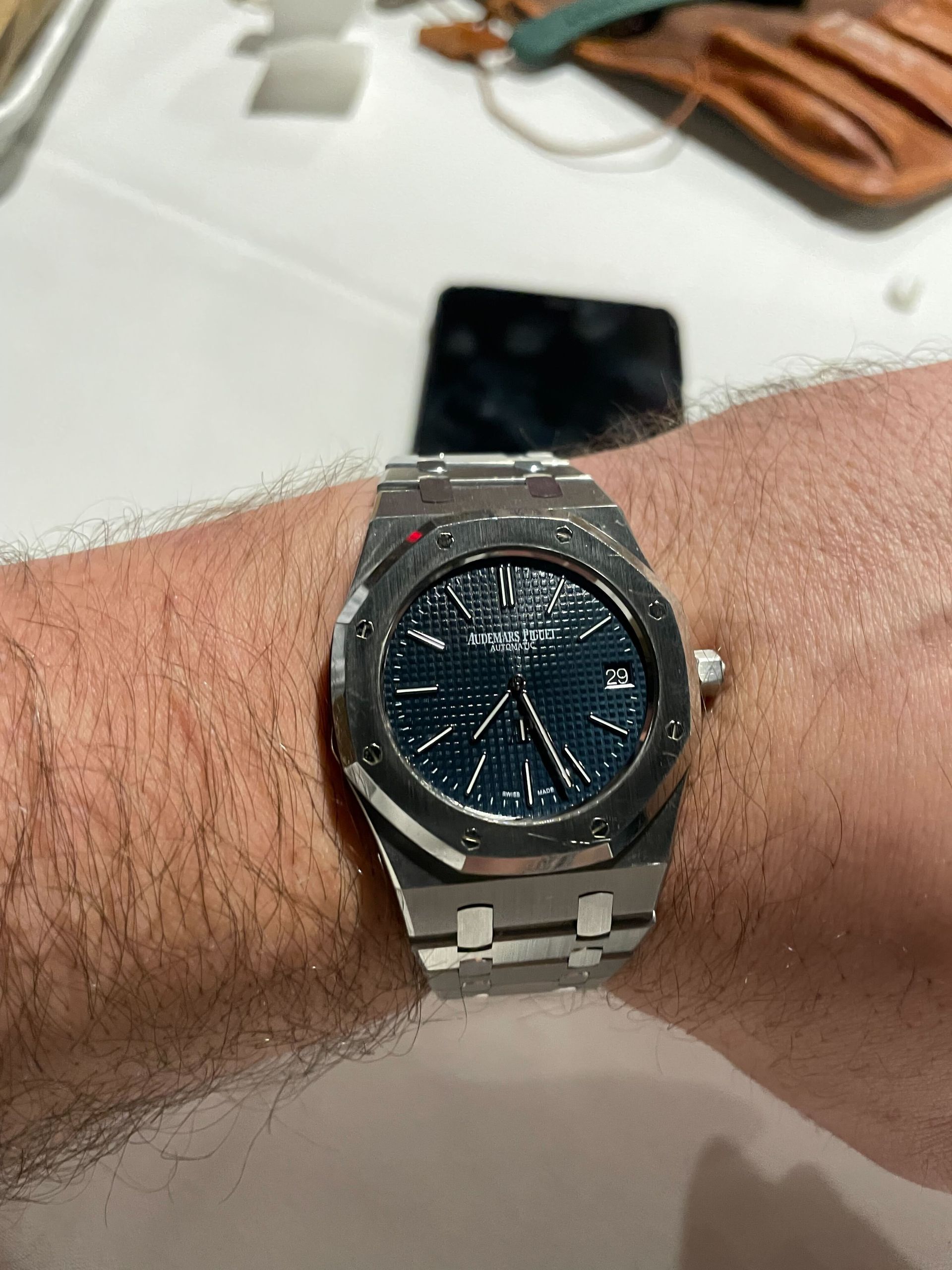
Audemars Piguet Royal Oak 'Jumbo' ref. 15202 with blue tapisserie dial and integrated steel bracelet
By Zach Charles • October 10, 2026
The Audemars Piguet × Swatch Royal Pop is a $400 bioceramic pocket watch in 8 colourways, powered by a new hand-wound SISTEM51 with 90+ hour power…

Time on the Move logo
By Zach Charles • October 10, 2026
Zach Charles is the editor of Time on the Move, an independent watch reference covering brand and model histories, buying guides and release news…
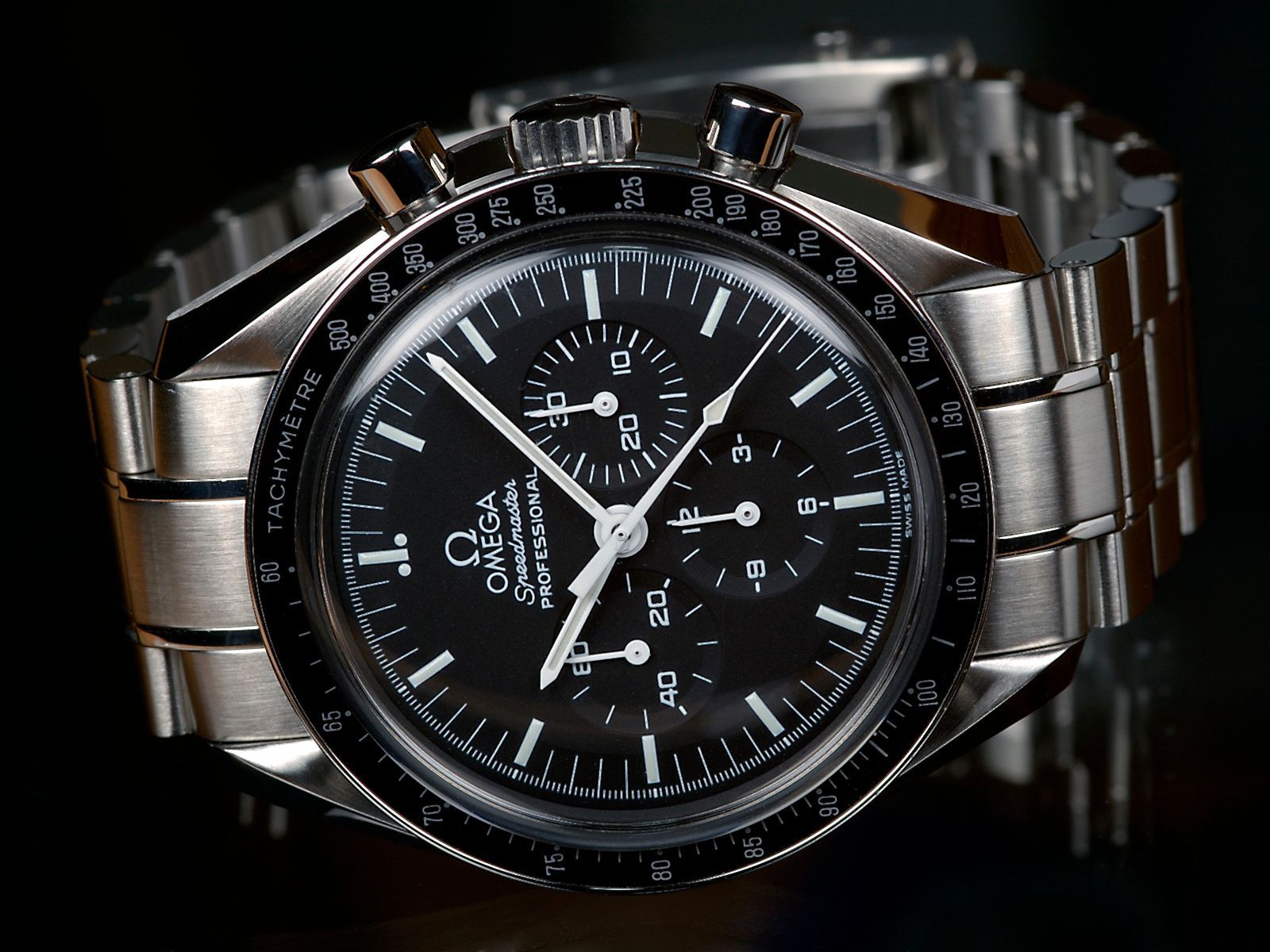
Omega Speedmaster Professional 'Moonwatch' chronograph, front view on steel bracelet
By Zach Charles • October 9, 2026
Find the best watches at every price point from $500 to $15,000 — new and pre-owned. Covers every budget tier with specific reference picks, brand…
By Zach Charles • October 9, 2026
The latest watch news: new releases, Watches and Wonders coverage, discontinuations, industry analysis, and market trends. Currently 1 article.

Seiko's New Panda Chronograph Is Literally a Panda: The Power Design Project HHK001 and HHK002
By Zach Charles • October 8, 2026
Seiko's Power Design Project panda chronograph (HHK001, HHK002) turns the panda dial into an actual panda face, with ear pushers, a 'Sasameter' and a 3D…
Show More