Breitling Transocean: The Elegant Chronograph from the 1950s Jet Age
Breitling Transocean: History of the Long-Haul Aviation Watch
The 1950s represented commercial aviation's first golden age. BOAC was flying Comets from London to Johannesburg. Pan Am's Stratocruisers crossed the North Atlantic with genuine luxury — sleeping berths, a lower-deck cocktail lounge, the experience of intercontinental travel made leisurely and civilised. TWA's Constellations, with their distinctive triple-tail profile, connected New York to European capitals in a manner that still felt extraordinary. The men who flew these aircraft — and the passengers of appropriate means who flew on them — understood that crossing time zones was now a routine fact of professional life, that the question "what time is it here?" had become genuinely complicated in a way it had never been before.
The Breitling Transocean was made for this world. Named explicitly for the transatlantic and transoceanic routes that defined the era, it addressed the practical and aesthetic requirements of a professional class for whom elegant, refined precision was a daily necessity — and for whom the Navitimer's computational dial was more instrument than they required.
Photo: Clyde94 — CC BY-SA 4.0 — Wikimedia Commons
The 1950s Original — Elegance for the Jet Set
Photo: EMore98 — CC BY-SA 4.0 — Wikimedia Commons
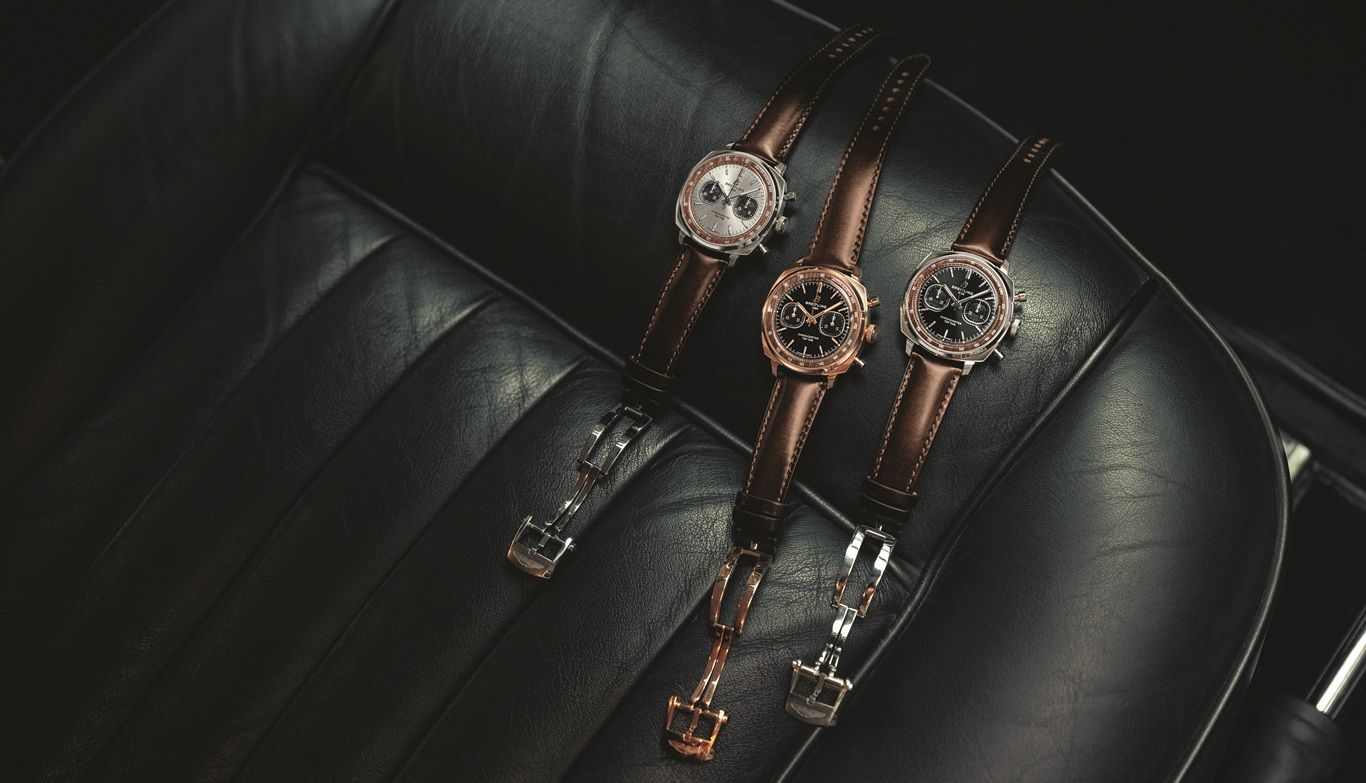
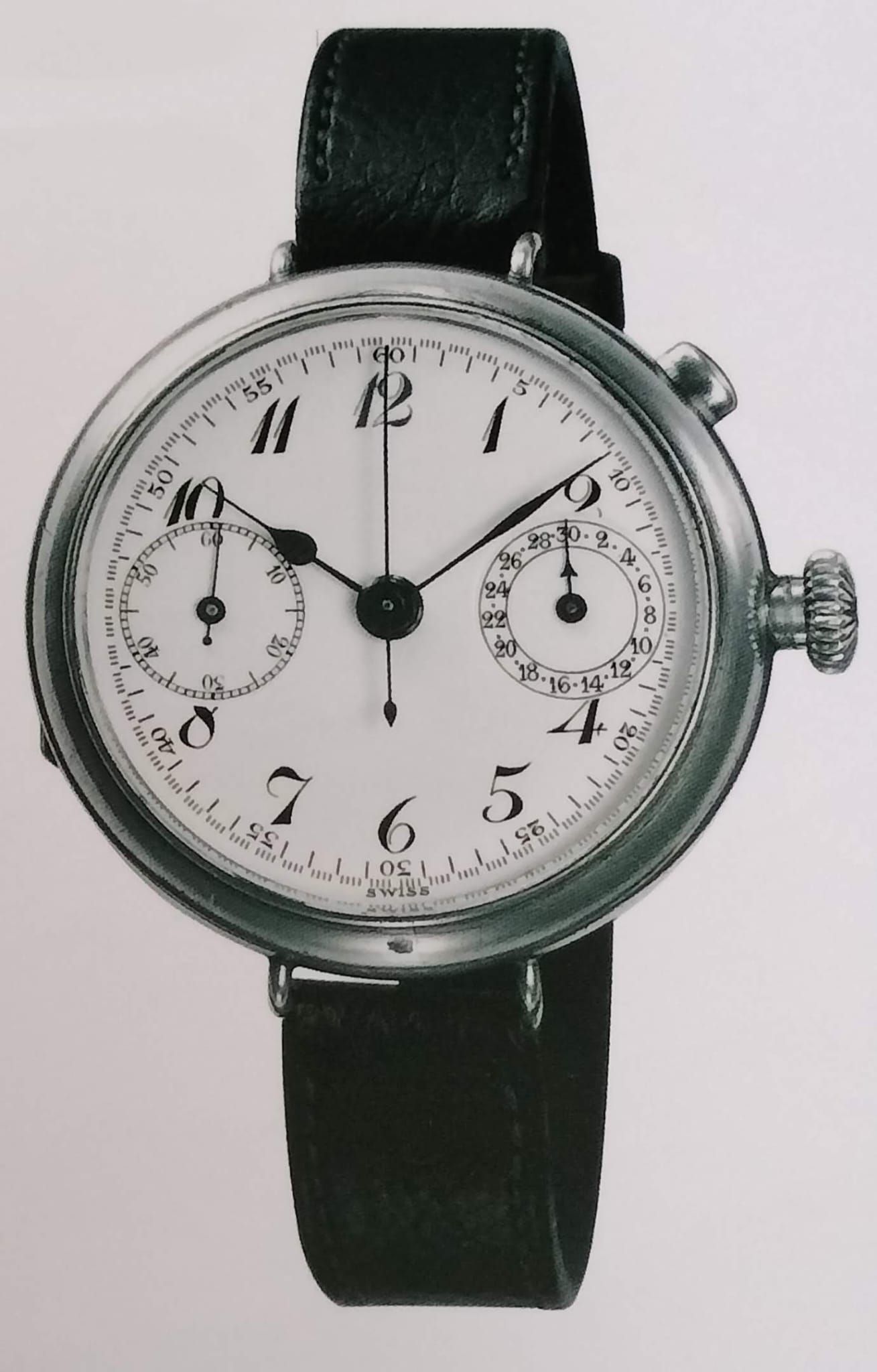
The original Transocean references emerged from Breitling's catalogue in the 1950s as a deliberate counterpoint to the brand's aviation instrument identity. Where the Navitimer was built around a computational bezel demanding active engagement, the Transocean offered slim cases — 35 to 38 millimetres — with clean dials, polished finishing, and the restrained aesthetic appropriate for a first-class passenger or a senior airline officer who needed Swiss precision without the visual complexity of a slide rule on their wrist.
The design language was continental European in sensibility: dressy without being ostentatious, precise without being fussy. Cases came in gold and steel. Dials were uncluttered. The finishing was polished where the Navitimer's was functional. As a product, the Transocean acknowledged that the world of professional aviation contained people who solved problems with their minds, not their bezels — who needed to know the time with accuracy but had no use for in-flight computation tools.
The original references traded on Breitling's reputation without requiring buyers to sign up for the full aeronautical instrument philosophy. They were successful in their moment, selling to the cocktail-circuit professionals and international travellers for whom Swiss watchmaking represented the appropriate standard of timekeeping.
The Long Absence
Like the Premier, the Transocean did not survive the disruption of the 1970s quartz crisis in any form that commanded continued investment. Breitling contracted through that decade, concentrating on what would prove its rescuing strength: the mechanical chronograph as professional instrument. The 1984 Chronomat relaunch defined the brand's identity for the following generation, and within that identity there was limited space for slim, elegant dress references named after intercontinental flight routes.
The Transocean name remained dormant in Breitling's archive for the better part of three decades — a historical footnote, remembered by collectors who appreciated the original references' clean design but not pressing enough in commercial terms to warrant revival.
The 2012 Revival — A Collection for Modern Collectors
Photo: Clyde94 — CC BY-SA 4.0 — Wikimedia Commons
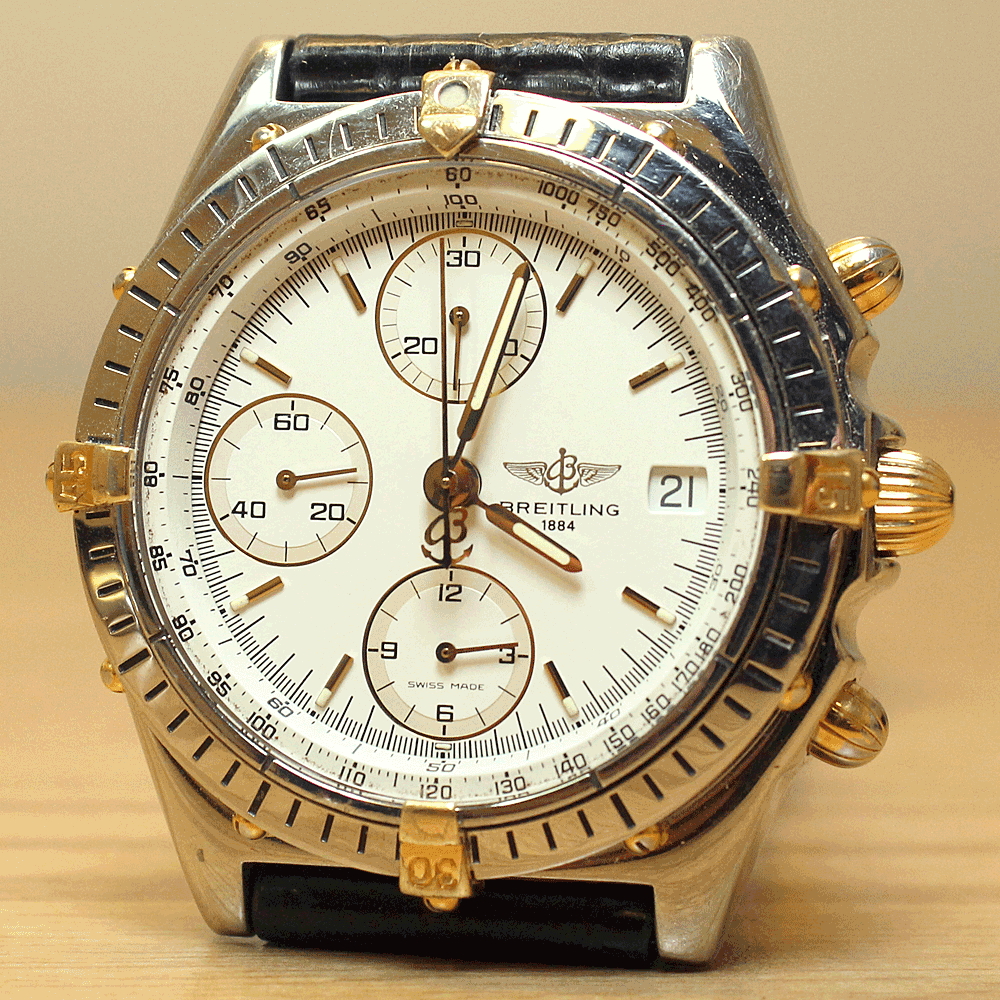
When Breitling revived the Transocean name in 2012, the context was substantially different from the Premier's 2018 return. This was not yet the Georges Kern era; the brand was operating under a different strategic mandate. The Transocean revival was nonetheless thoughtfully conceived: a family of references sharing a consistent design language that referenced 1950s dress-watch sensibility while offering modern complications and movement quality.
The 2012 collection launched with four principal references, each serving a distinct purpose within the family.
The Chronograph 43 — Tricompax Architecture
Photo: Jonathan Mauer — CC BY 4.0 — Wikimedia Commons
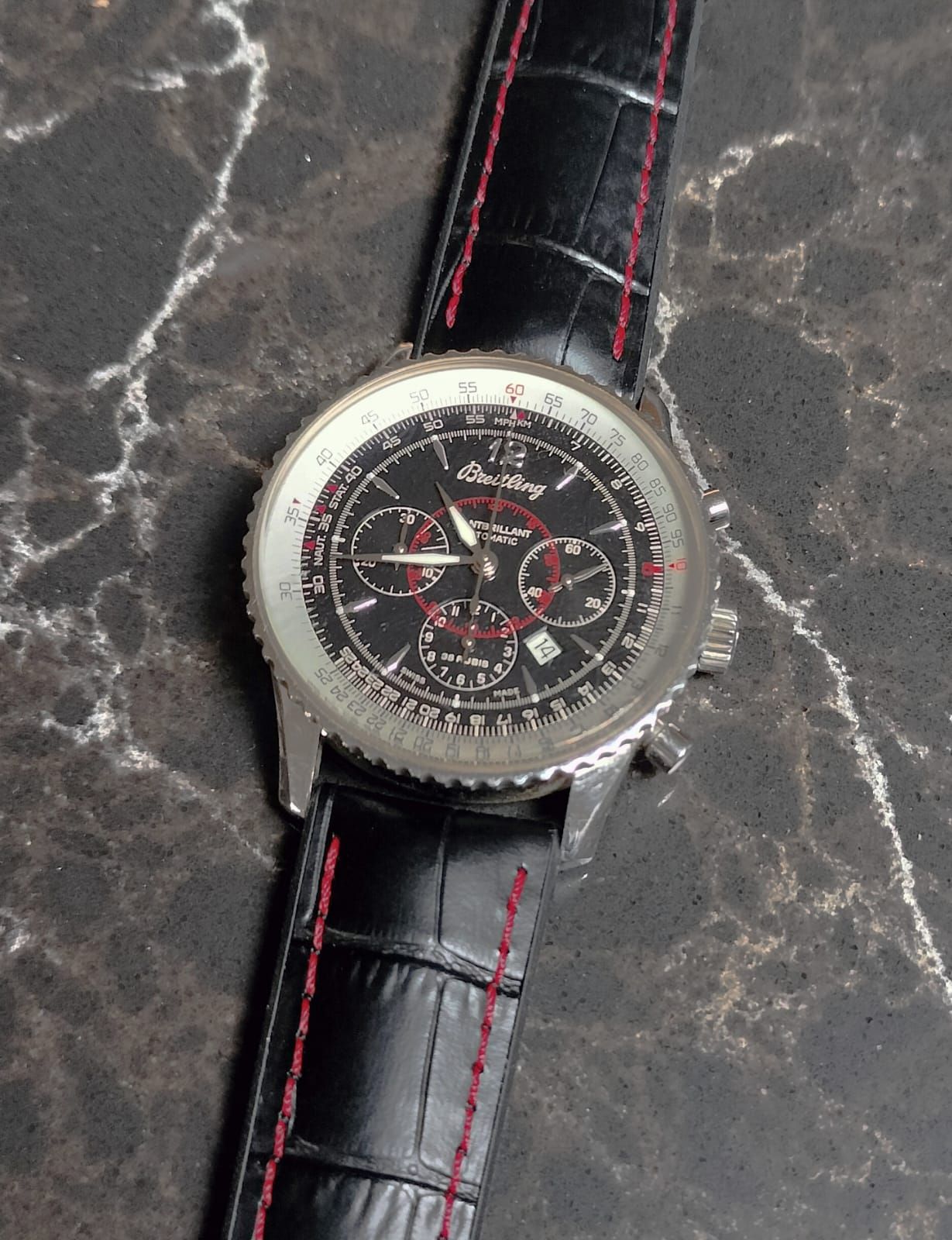
The flagship of the 2012 revival was the Transocean Chronograph 43 — a 43mm chronograph organised around the "tricompax" register layout that had defined mid-century Swiss chronograph design. Three subdials in balanced positions: running seconds at nine o'clock, 30-minute counter at three o'clock, 12-hour counter at six o'clock. The dial layout referenced the aesthetic of 1940s and 1950s Swiss chronographs without attempting to replicate them. Clean without being minimal; classical without being nostalgic.
Powered by the Breitling Calibre B06 — a movement based on the IWC-family calibre architecture, COSC-certified — it offered chronograph functionality in an elegantly resolved case. The smooth bezel, domed sapphire crystal, and leather strap options distinguished it immediately from the rider-tabbed, rubber-strapped instrument watches of the Avenger family. The Transocean wore its Breitling identity lightly, in the manner appropriate to a watch positioned for occasions where the Chronomat would be conspicuous.
The Chronograph 38 — A More Versatile Scale
The Transocean Chronograph 38 addressed the portion of the market that found 43mm impractical for formal occasions or for wrists of more moderate circumference. At 38mm, the watch scaled down without losing the tricompax layout's proportional elegance. It became the reference that female collectors and buyers who preferred a more restrained scale could wear as an everyday formal chronograph — the case size appropriate for business dress without advertising an aviation heritage its wearer might not share.
The Day & Date — Practical Elegance
Photo: Clyde94 — CC BY-SA 4.0 — Wikimedia Commons
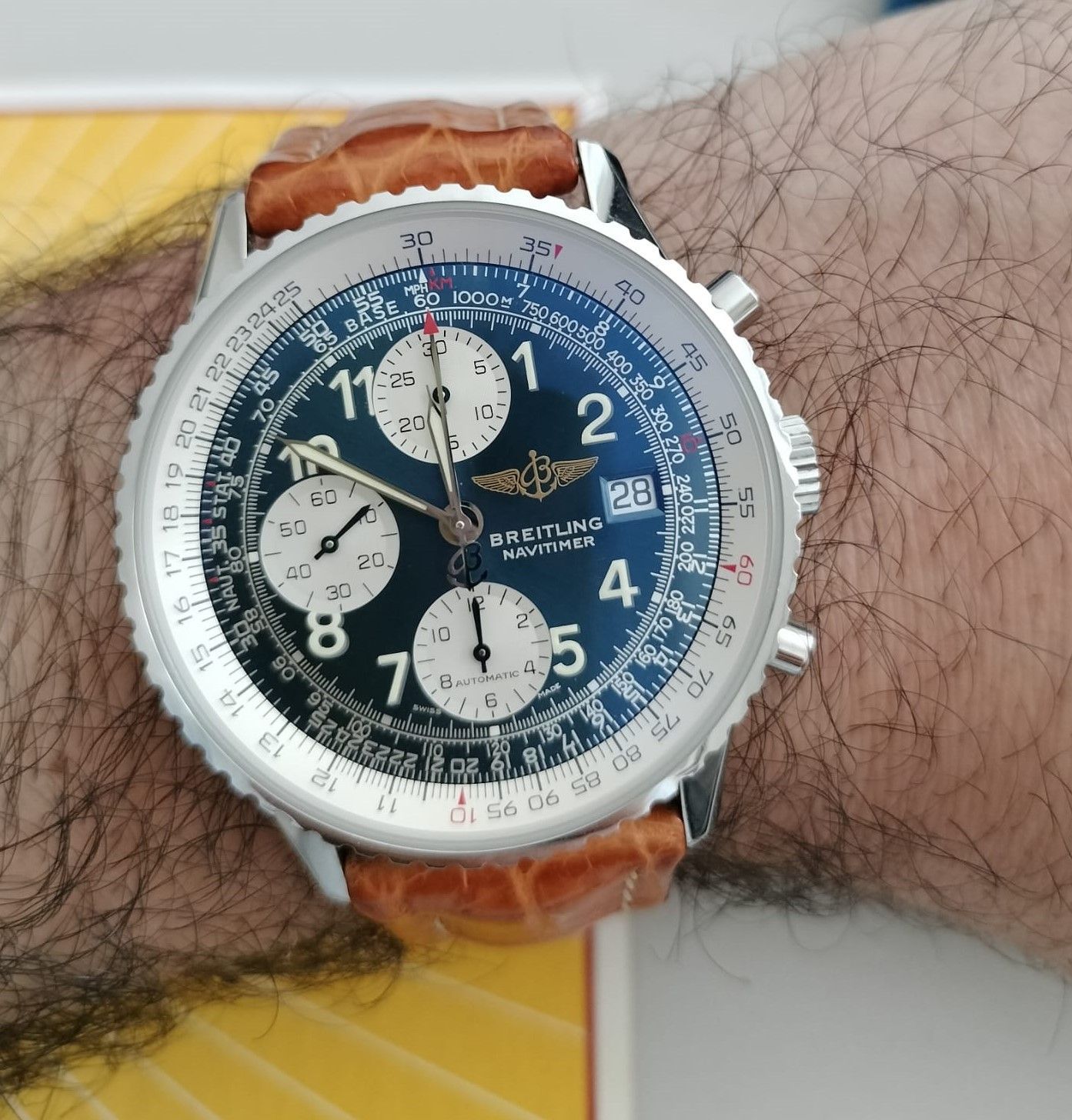
The Transocean Day & Date offered a non-chronograph option with a dual calendar display — day of the week and date — in a 43mm case. For the travel professional who needed an accurate date reference across time zones but no stop-start timing capability, the Day & Date was the practical choice: less complicated than the chronograph, less busy on the dial, more versatile across formal and semi-formal contexts.
The Unitime — A World-Time Complication
The Transocean Unitime was the collection's horological statement — a 46mm world-time watch offering simultaneous display of the current time in all major time zones. At its core was a complication with deep historical roots.
The world-time complication was developed in its modern form by the Geneva watchmaker Louis Cottier in the 1930s. Cottier's mechanism — a rotating city ring linked to a 24-hour inner ring and a standard hour hand — allowed the wearer to read local time and reference time simultaneously, while identifying the current time in every named time zone at a glance. The complication became associated with Patek Philippe, which produced world-time references from the 1930s onward and continues to do so. But Cottier licensed the mechanism broadly, and world-time complications appeared across multiple Swiss manufacturers.
Breitling's Unitime mechanism adapted this tradition to an aviation context. The rotating bezel carried city names corresponding to the world's major time zones. Setting the watch for a departure city aligned the bezel; on arrival, the wearer rotated the bezel to the destination city and read local time directly from the 24-hour display. The practical utility for long-haul aviation professionals — particularly for coordination of UTC-based aviation communications against multiple local time references — was genuine.
The Unitime's 46mm case was its most contentious feature. A world-time mechanism requires circumference for its city ring, and the Unitime prioritised legibility over wearability in the dress-watch sense. On wrists of appropriate scale, it was imposing and architecturally impressive. On smaller wrists or under a shirt cuff, it was not a practical daily proposition.
The Kern Era and Discontinuation
When Georges Kern arrived as CEO in 2017 and began repositioning Breitling around a cleaner brand architecture, the Transocean's place in the catalogue became ambiguous. The Premier, revived in 2018, occupied the elegant dress-watch territory more deliberately and with stronger historical credentials — the 1943 Art Deco origins were a more compelling narrative than the 1950s Transocean references, and the Premier's design language was cleaner and more immediately legible as a dress watch.
The Transocean was progressively sidelined and eventually discontinued under the Kern reorganisation. The family was not poorly made or poorly conceived, but it occupied territory that the Premier addressed more effectively, and in a brand rationalisation the duplication was resolved in the Premier's favour. The Transocean's secondary market reflects this: references from 2012–2018 trade at discounts to their original retail, a function of the collection's abbreviated run and the ongoing availability of new-old-stock examples through dealers.
Secondary Market and Collector Perspective
Photo: EMore98 — CC BY-SA 4.0 — Wikimedia Commons
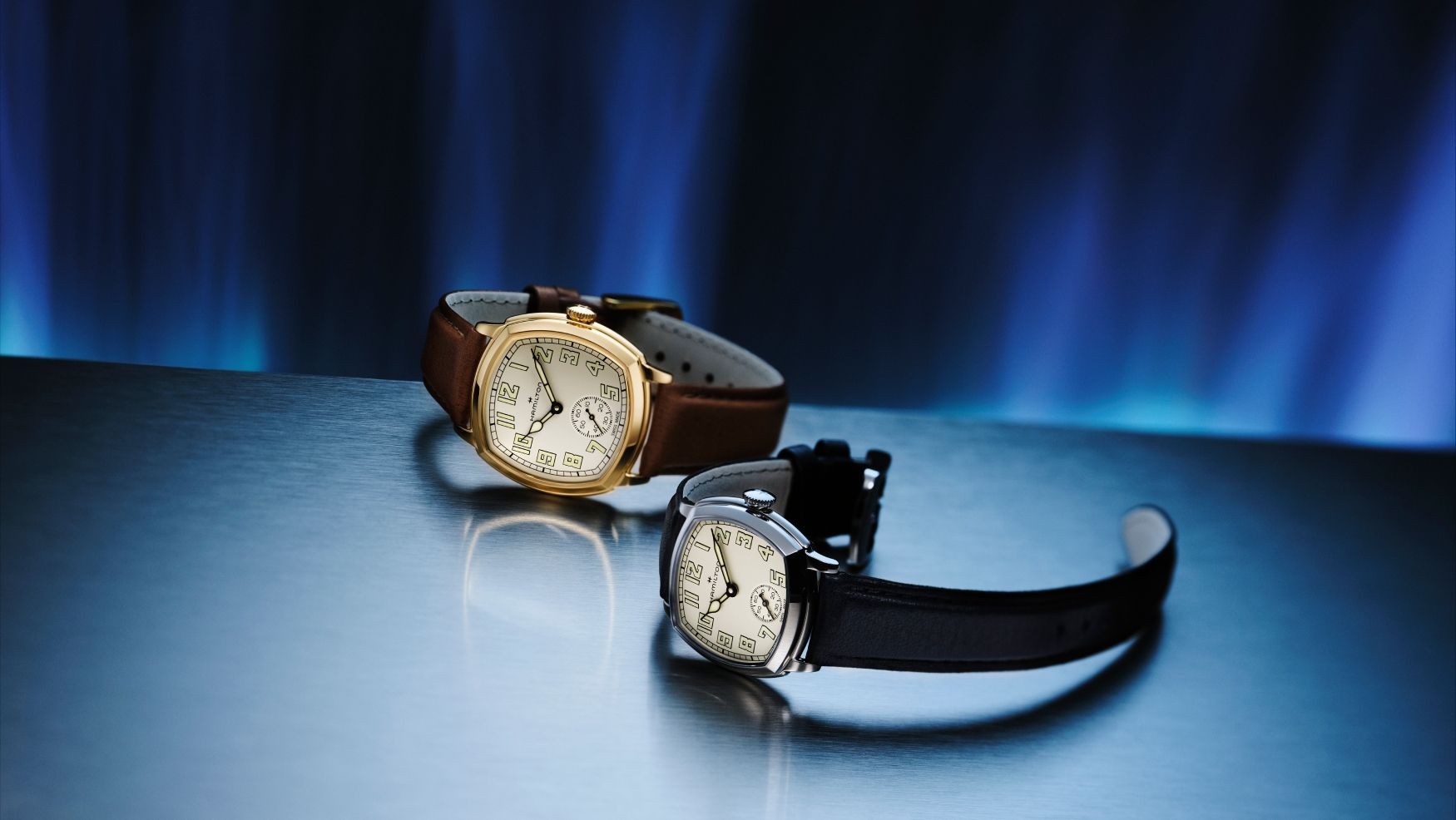
The Transocean's secondary market position is relatively straightforward to assess. As a collection discontinued before establishing the long reference history that typically drives collector interest, it lacks the vintage depth of the Navitimer or the iconic design continuity of the Chronomat. The Unitime references generate the most collector interest — world-time complications at any price point tend to attract buyers who value the mechanism — but even these trade substantially below retail.
For buyers who want a refined Breitling dress chronograph at a modest entry point, the Transocean Chronograph 43 from the 2012–2018 run represents genuinely good value: COSC-certified movement, quality case finishing, and a design that makes no wrong moves, available on the secondary market at prices that reflect the collection's commercial rather than horological standing.
Frequently Asked Questions
What made the Transocean different from the Premier?
Both were Breitling's dress-watch offerings, but the Transocean had a more explicit aviation narrative — named for transatlantic routes, with the Unitime's world-time complication as its signature. The Premier had deeper historical roots (1943 vs. 1950s) and a more refined Art Deco design identity. Under Georges Kern's repositioning, the Premier was chosen as Breitling's single dress watch line, leading to the Transocean's discontinuation.
What is the Unitime complication?
The Unitime is Breitling's world-time complication — a mechanism displaying the current time in all major time zones simultaneously via a rotating city ring and 24-hour display. The world-time mechanism traces its lineage to Louis Cottier's 1930s design. The Unitime adapted this tradition for aviation use, allowing pilots and aviation professionals to read local time against UTC and destination time zones without mental conversion.
Is the Transocean still in production?
No. The collection was discontinued under Georges Kern's Breitling restructuring around 2018–2019, with the Premier serving as Breitling's dress watch offering going forward.
Is the Transocean good value on the secondary market?
For buyers who want a quality Breitling dress chronograph at a reasonable price, yes. Transocean references typically trade at meaningful discounts to their original retail prices, making them an accessible entry point to a COSC-certified Breitling in a refined case. The Unitime references command some premium for their complication but remain well below comparable world-time watches from Patek Philippe or IWC.
Related Articles
- Breitling: The Instrument Watch Maker Since 1884
- Breitling Navitimer: The Complete History of Aviation's Greatest Chronograph
- Breitling Premier: The Elegant Side of a Tool Watch Brand
- Breitling Chronomat: The Complete History of the Pilot's Sports Watch
- Breitling Premier: The Elegant Side of a Tool Watch Brand