Doxa Watches: 136 Years of Swiss Tool Watch History
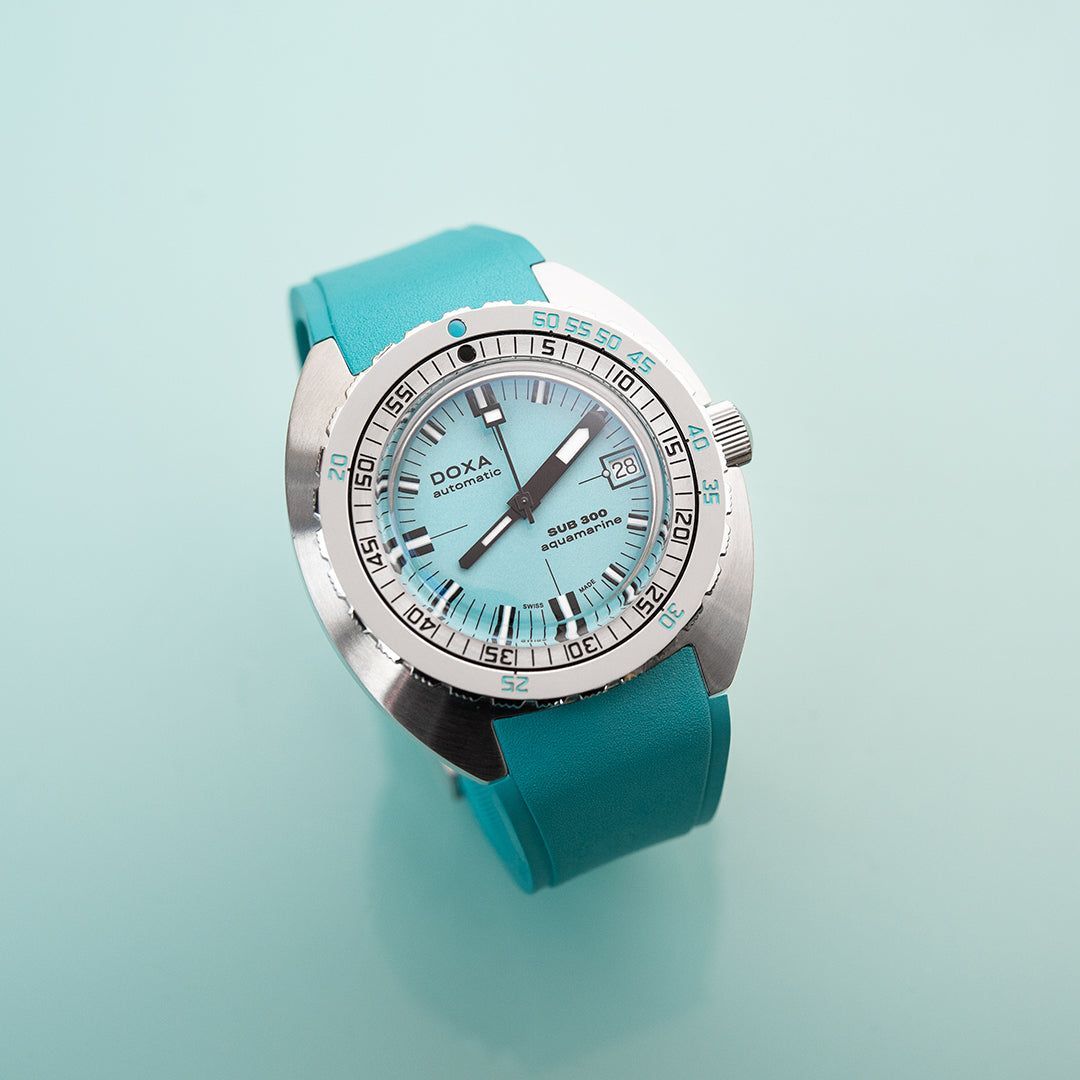
Doxa (Δόξα — Greek for "glory" or "belief") is a Swiss watch manufacturer founded in 1889 in Le Locle, Switzerland. For most of its first eight decades it was a respected but unremarkable movement supplier and dress watch maker. Then in 1967, a single design decision — a bright orange dial on a new dive watch — redirected the entire brand and created one of the most distinctive identities in watchmaking history. The orange SUB, endorsed by Jacques-Yves Cousteau and worn aboard the research vessel Calypso , made Doxa the professional diver's brand. Everything that has followed — the titanium cases, the no-decompression bezels, the extreme depth ratings — descends from that 1967 choice.
Founding and Early History: Le Locle, 1889
Georges Ducommun founded Doxa on January 1, 1889, in Le Locle, Switzerland — the heart of the Vallée de Joux watchmaking tradition. He was 21 years old and had been apprenticed to a watchmaker since the age of 12. His first workshop specialized in pocket watch movements, but Ducommun's ambitions ran wider. By 1907, he had patented an 8-day automotive dashboard clock movement, and within a few years Doxa movements were timing the dashboards of Bugatti , Mercedes-Benz , and Peugeot motor cars. A Doxa anti-magnetic timepiece won a gold medal at the 1906 Milan World's Fair.
When Georges Ducommun died in 1936, leadership passed to his son-in-law, Jacques Nardin — a descendant of the Ulysse Nardin family — and Doxa entered its mid-century era as a respected supplier of movements and a maker of dress watches. The Grafic line, introduced in the late 1950s, became the brand's bestseller: a square-cased Bauhaus watch in stainless steel that anticipated the later interest in geometric watch design by a decade.
1967: The SUB 300 and the Orange Dial That Changed Everything
In 1967, Doxa introduced the SUB 300 — a 45mm dive watch with 300 metres of water resistance, an orange dial, and a patented rotating bezel marked with a no-decompression table . The no-deco bezel was a functional breakthrough: it allowed a diver to read safe ascent times directly from the watch without carrying separate tables. No watch had done this before in a practical, integrated form.
The orange dial was chosen on engineering grounds: orange is one of the last colors in the visible spectrum to disappear at depth, remaining legible at distances where other colors have faded to grey. The choice was functional before it was aesthetic. It became iconic because of what happened next.
In 1968, Jacques-Yves Cousteau — co-inventor of the Aqua-Lung, director of The Undersea World of Jacques Cousteau , and the most famous oceanographer alive — obtained exclusive distribution rights for the SUB through his company US Divers . Cousteau's dive team wore orange Doxas aboard the Calypso , and the weekly television series brought those watches into living rooms across the world. Orange dial. No-deco bezel. The Doxa SUB became the professional diver's watch by association with the most visible professional diver in history.
The SUB Family Expands: 1969–1980s
The success of the SUB 300 prompted Doxa to extend the concept. In 1969, the brand introduced the SUB 200 T.Graph — a hand-wound dive chronograph using an Eberhard column-wheel movement, sealed to 200 metres despite carrying two crown and pusher penetrations through the case. Only approximately 300 pieces per color variant were produced, making it one of the rarest dive chronographs of its era and a significant collector object today.
Doxa also extended the SUB family into professional territory during this period. The SUB 300T — the "T" standing for "Taucher," German for diver — added a helium escape valve to the SUB case, one of the first commercial dive watches to solve the crystal-blowout problem inherent to saturation diving. Doxa developed the helium release valve before Rolex brought a version to market, making the SUB 300T Conquistador (1968–1969) a landmark in commercial diving history. The depth-rated SUB 600T followed in 1982 with a distinctive angular case and crown at 4 o'clock, targeting advanced technical and commercial divers.
Dormancy and Revival: 1983–1997
The watch industry crisis of the late 1970s and early 1980s — driven by the arrival of cheap, accurate quartz movements — devastated many Swiss mechanical watch makers. Doxa entered dormancy in 1983. The brand did not disappear entirely; the Jenny family of Bienne, Switzerland, preserved the archives, tooling, and remaining movement stocks for over a decade.
In 1997, the Jennys revived Doxa as a subsidiary of their holding company Walca S.A., returning the brand to active production with a focus on the SUB family that had made it famous. The revival was not a nostalgic exercise but a serious recommitment to the dive watch category, with new references in the established colorway system and careful attention to maintaining the original design language.
Doxa Today: Le Locle, Permanent Production, Collector Culture
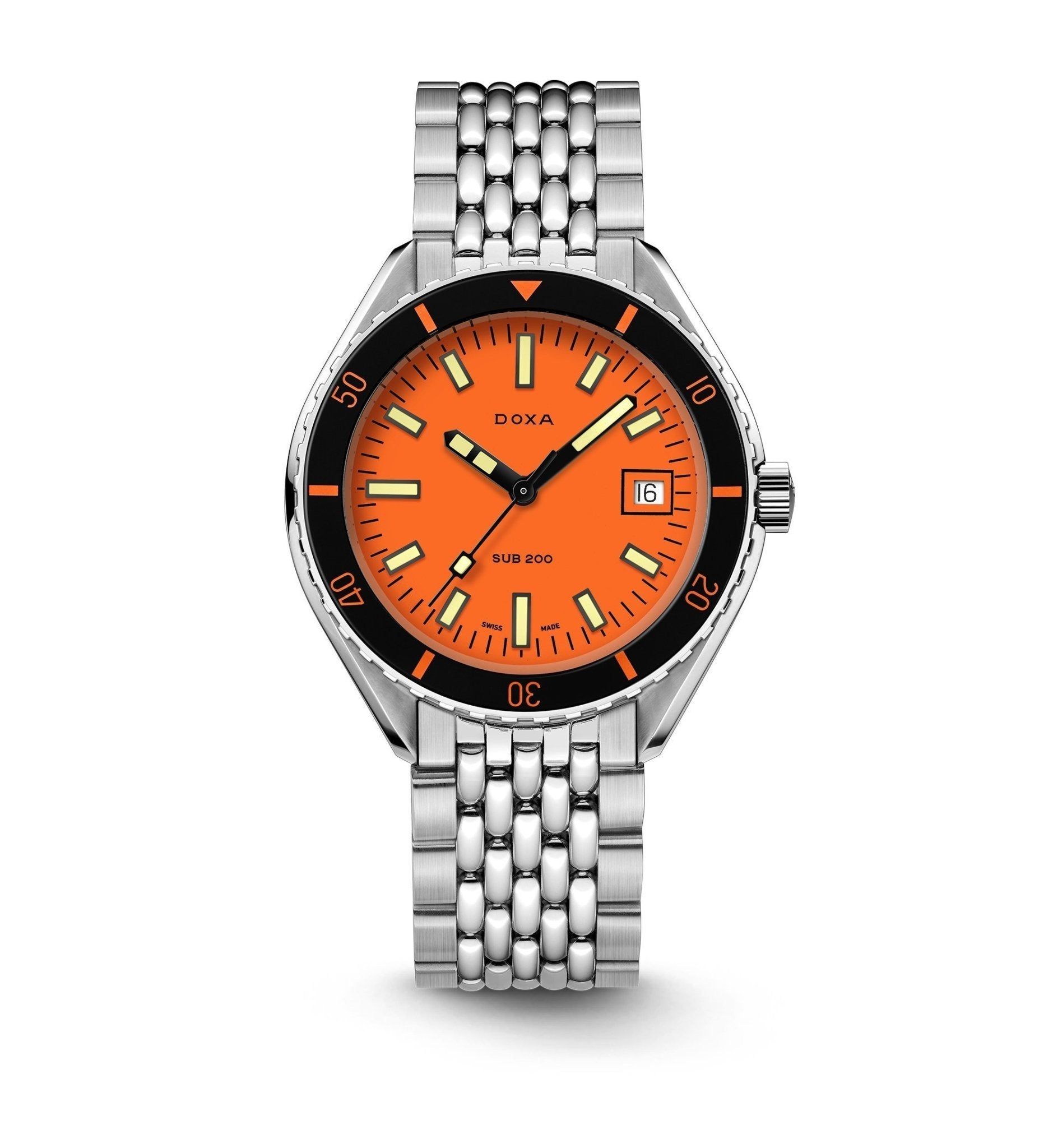
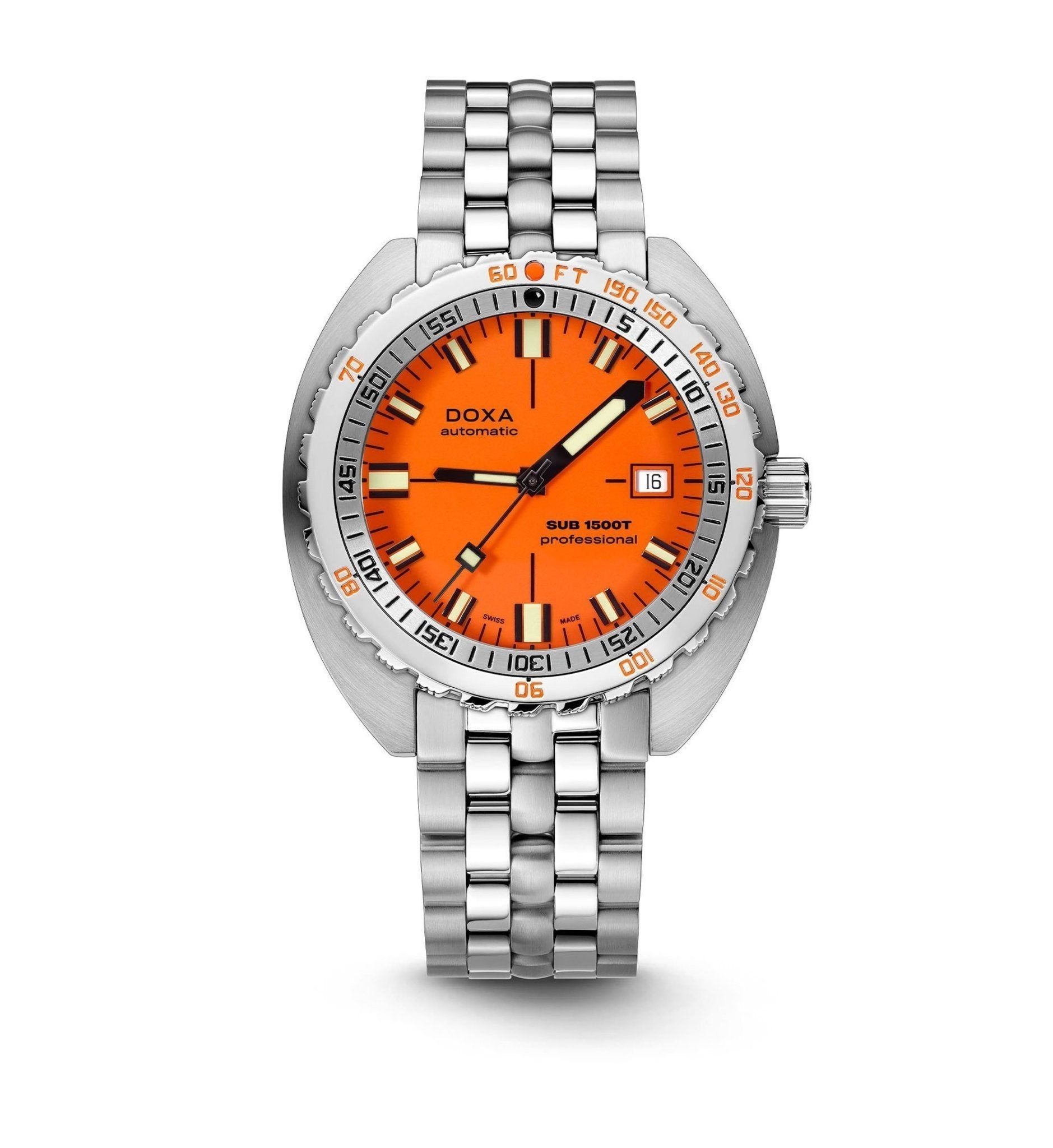
Contemporary Doxa operates from Le Locle and produces a range built almost entirely around the SUB architecture: the SUB 200 and SUB 300 as the accessible steel entries, the SUB 300T (helium escape valve, 1,200m) and SUB 600T (angular case, 600m) in the professional tier, and the SUB 1500T at the extreme depth end of the lineup (1,500m, ETA 2892-2). The SUB 300 Carbon brings forged carbon composite to the original 300 template. The Grafic sees periodic revival for collectors interested in the pre-dive era of the brand.
Doxa's collector culture is unusually cohesive. The brand's specificity — dive watches in a narrow range of designs — means its community is self-selected: people who value functional design, historical depth, and genuine tool-watch credentials over luxury-goods positioning. The 2019 SUB 200 T.Graph limited reissue sold out almost immediately and confirmed that the demand for Doxa history extends well beyond the current production lineup.
Founded: January 1, 1889 | Founder: Georges Ducommun
Headquarters: Le Locle, Switzerland (Vallée de Joux)
Ownership: Walca S.A. (Jenny family, Bienne) since 1997 revival
Signature design: Orange no-deco dive watch | Key partnership: Jacques Cousteau / US Divers, 1968
Production status: Active, Le Locle
The Doxa Model Guide
SUB 300
The 1967 original. Orange dial, no-deco bezel, 300m, Cousteau. The watch that defined Doxa.
SUB 200
The accessible everyday diver. Four colorways, 200m, current production from CHF 1,490.
SUB 200 T.Graph
The 1969 dive chronograph. ~300 made. Eberhard column-wheel. Revived in 2019 and 2026.
SUB 300T
Titanium case evolution. Lighter, corrosion-proof, preferred by professional divers.
SUB 600T
The angular alternative. 600m, distinctive 4 o'clock crown, shark-tooth bezel markers. From USD 1,550.
SUB 1500T
Doxa's deepest diver. 1,500m, helium escape valve, ETA 2892-2. The professional depth-rating flagship.
SUB 300 Carbon
Modern materials on the original template. Carbon composite case, current production.
Grafic
The pre-dive Doxa. 1950s Bauhaus square case. Bestseller before the SUB era.
Frequently Asked Questions
Where is Doxa made?
Doxa is manufactured in Le Locle, Switzerland — the Vallée de Joux, the historic centre of Swiss watchmaking. The brand has been based there since its 1889 founding by Georges Ducommun.
What does Doxa mean?
Doxa (Δόξα) is a Greek word meaning "belief," "opinion," or "glory." The name was chosen by founder Georges Ducommun in 1889.
Did Jacques Cousteau really wear a Doxa?
Yes. Jacques-Yves Cousteau's company US Divers obtained exclusive distribution rights for Doxa SUB watches in 1968. Cousteau's dive team wore orange-dialed Doxa SUBs aboard the research vessel Calypso , and the watches appeared repeatedly in the weekly television series The Undersea World of Jacques Cousteau , giving Doxa worldwide exposure in the late 1960s and 1970s.
Why is the Doxa dial orange?
Orange was chosen in 1967 because it is one of the last colors in the visible spectrum to fade at depth — it remains legible at distances where other colors become indistinguishable grey. The choice was made for professional visibility, not aesthetics. It became the brand's visual signature through the Cousteau partnership.
Who owns Doxa?
Doxa is owned by Walca S.A., a holding company controlled by the Jenny family of Bienne, Switzerland. The Jennys revived the brand in 1997 after a period of dormancy that began in 1983, preserving the archives and tooling during the intervening years.
Sources: Doxa Watches (doxawatches.com), Analog:Shift, The Hour Markers, Wikipedia, Fratello Watches, aBlogtoWatch, Monochrome Watches.
Latest News