Doxa SUB 200 T.Graph II: The 1969 Dive Chronograph Returns as a Permanent Collection Member
In 1969, adding a chronograph complication to a dive watch was not a routine engineering exercise. Every additional crown and pusher penetrating the case was another potential failure point for water ingress, and achieving meaningful water resistance — 200 metres — while maintaining a functioning two-pusher chronograph mechanism required solutions that most Swiss manufacturers had declined to attempt. Doxa, then at the peak of its experimental period, did it anyway. The SUB 200 T.Graph of 1969 has been a collector cult object ever since: estimated at roughly 300 pieces per color variant, it is among the rarest dive chronographs of its era.
Fifty-seven years later, Doxa has revived the model properly. The Doxa SUB 200 T.Graph II , launching in late June 2026 as a permanent collection member , is a 42mm automatic chronograph in four dial colors, powered by a Sellita SW510, priced at EUR 3,950 / USD 4,250 on rubber strap and EUR 3,990 / USD 4,290 on bracelet. It is not a limited edition. After the 2019 anniversary reissue sold out and spent years as a secondary-market fixture, Doxa has decided the demand signal was conclusive enough to justify a permanent production run.
The 1969 Original: Why a Dive Chronograph Was a Remarkable Achievement
The concept of combining a chronograph with a dive watch was genuinely uncommon in 1969. Dive watch technology was itself relatively new — Doxa had only introduced the SUB 300 with its signature orange dial and patented no-decompression bezel in 1967 — and the challenge of sealing a case with multiple crown and pusher openings to 200 metres without compromising the mechanism inside had limited the field to a small number of specialist manufacturers.
What made the original T.Graph additionally notable was its movement: a hand-wound Eberhard Calibre 310-82 (rebadged as Doxa Calibre 287), which used a column-wheel chronograph mechanism — a construction associated with higher-grade pocket watch movements and considered more precise than the simpler cam-and-lever systems that would dominate later decades. Some authorities on the subject describe the Eberhard 310-82 as the last original escapement design of the 1960s–70s era to use a column wheel in a wristwatch chronograph. The movement came to Doxa via its relationship with the Synchron Group, which then owned Eberhard and supplied premium chronograph movements to select partners.
The result was a tool watch that offered timing capability beyond what the graduated bezel alone provided: a professional diver could time a surface interval with the chronograph without touching the bezel, and could time two stages of a dive simultaneously using bezel and chronograph together. Fewer than 1,000 examples in all colors were produced before the model disappeared from the catalog, and the originals now change hands at prices far above what any of their original owners paid.
Jacques Cousteau and the Orange Dial That Defined a Brand
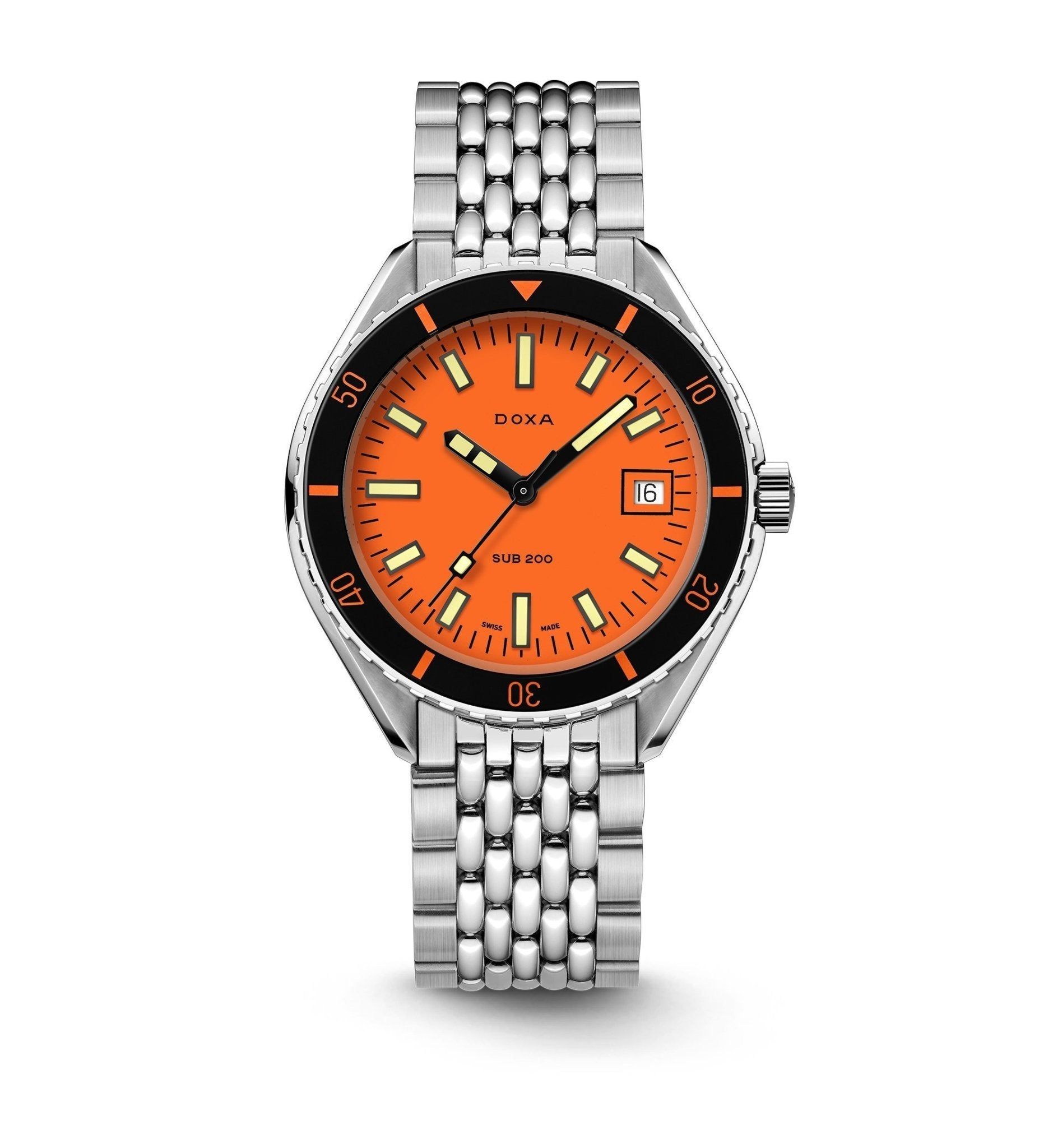
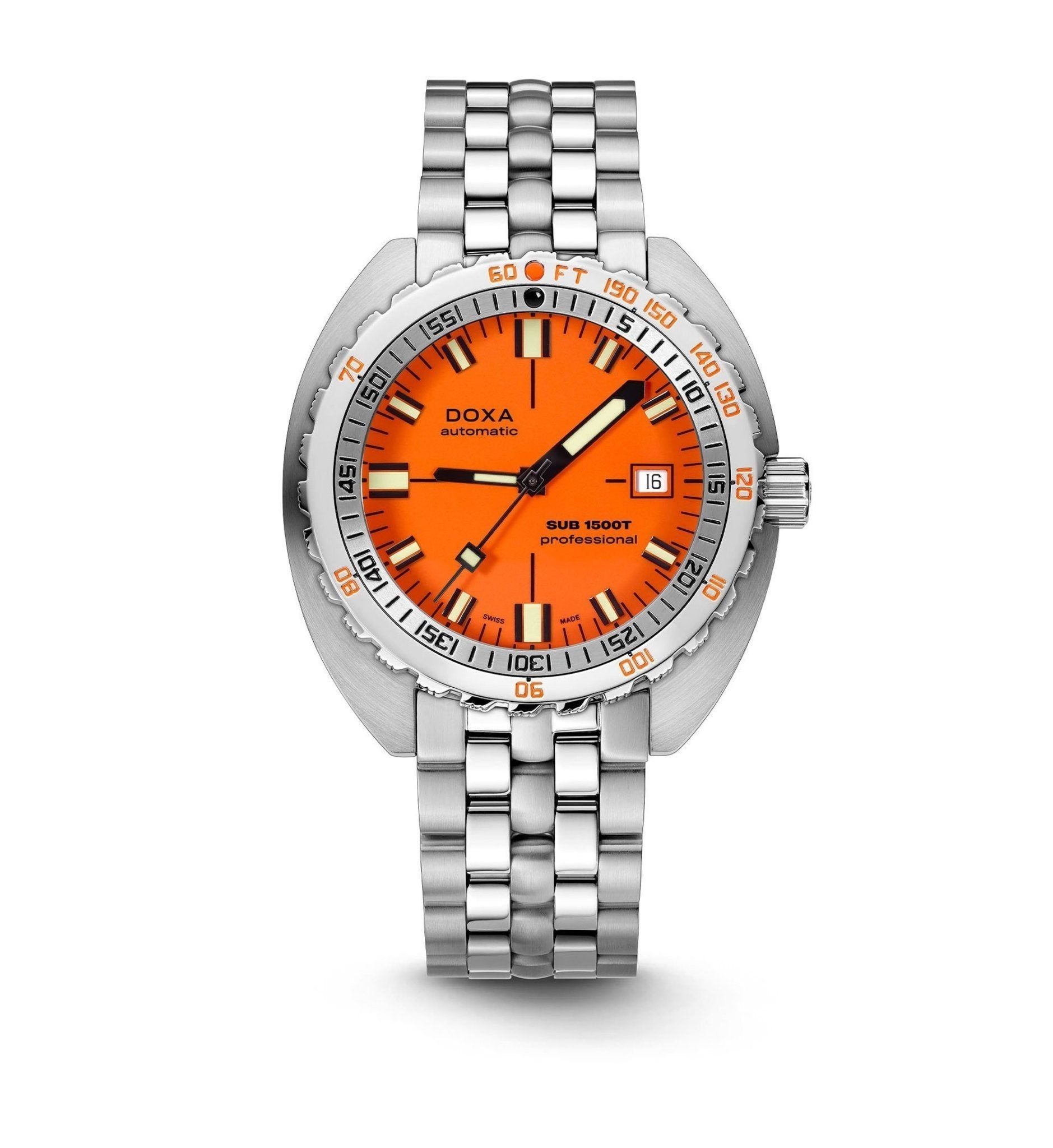
To understand why the T.Graph II's Professional variant carries an orange dial rather than a black, silver, or blue one, you have to go back to Doxa's foundational design decision of 1967. When the brand introduced the first SUB 300, it chose orange as the primary dial color based on underwater physics: orange is one of the last colors in the visible spectrum to absorb and fade at depth, remaining visible at distances where other colors have effectively become grey. The choice was functional before it was aesthetic.
Then Jacques-Yves Cousteau happened. The co-inventor of the Aqua-Lung and director of the television series The Undersea World of Jacques Cousteau — broadcast weekly to tens of millions of viewers across the late 1960s and 1970s — obtained exclusive distribution rights for Doxa SUB watches through his company US Divers , beginning in 1968. Cousteau's crew wore orange Doxas aboard the Calypso. The orange dial became, on the back of that televised exposure, one of the most recognisable design signatures in tool watch history. The T.Graph shared it.
The 2019 Limited Edition and What It Proved
In 2019, on the 50th anniversary of the original T.Graph, Doxa produced a limited reissue: 300 pieces in stainless steel and 13 pieces in solid gold. The steel pieces used vintage-specification Valjoux 7734 movements that the Jenny family (Doxa's reviving ownership group) had preserved for over three decades. Priced at EUR 4,900, the stainless edition sold out quickly and spent subsequent years trading well above retail on the secondary market.
The significance of that reception was not lost on the brand. The 2019 reissue had demonstrated, under controlled conditions, that a sustained collector market existed for the T.Graph concept beyond the original vintage audience. The 2026 T.Graph II is Doxa's response to that demonstration: a modern engineering interpretation that replaces the scarce vintage movement with a reliable Swiss automatic, reduces the case modestly from 43mm to 42mm , and commits to regular production rather than artificial scarcity.
The 2026 T.Graph II: Specifications and Four Colorways
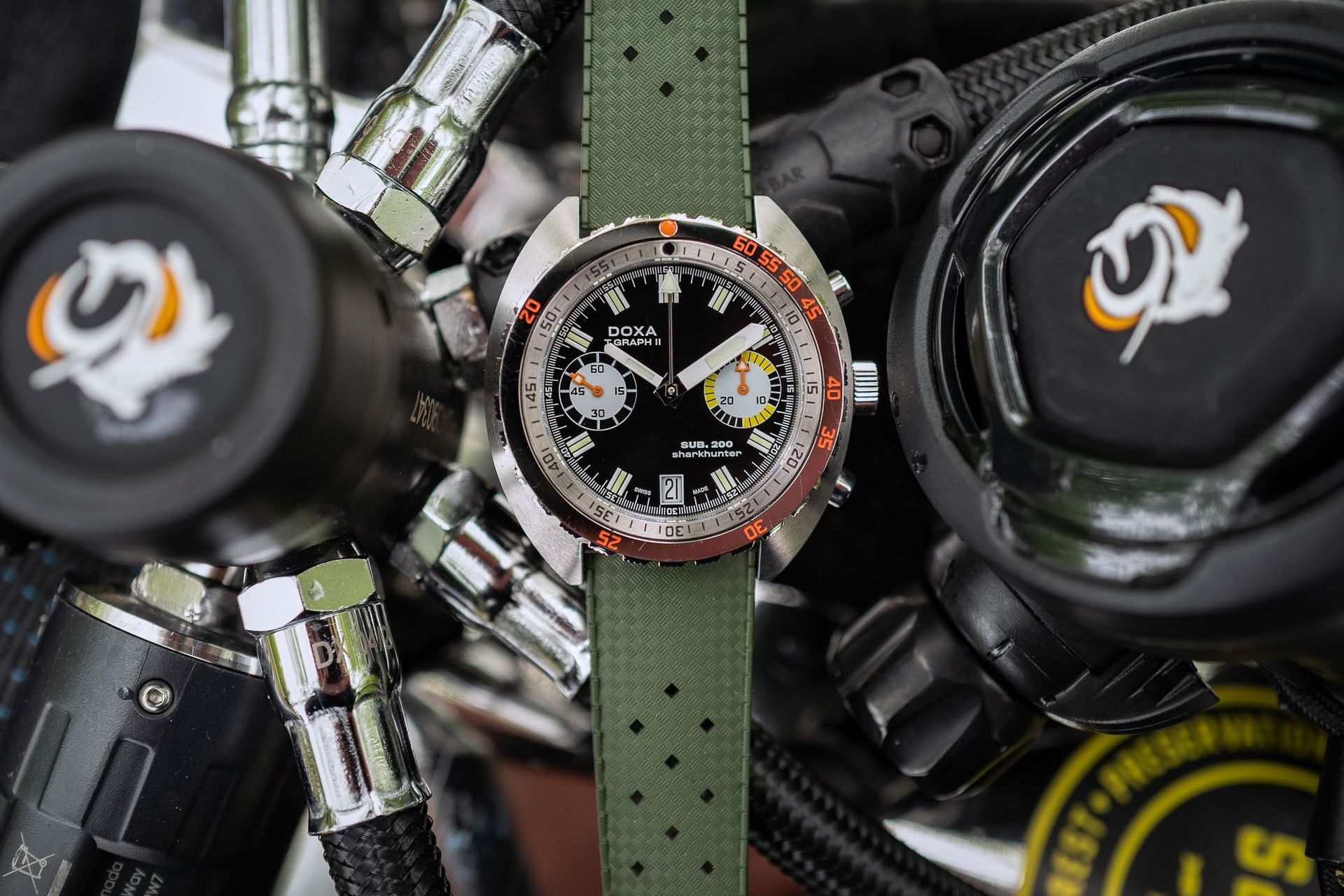
The T.Graph II wears a 42mm cushion-case silhouette that references the tonneau shape of the 1969 original, now in 316L stainless steel with brushed and polished finishing. The case is 14.6mm thick (reduced from the original's 15.15mm), with a 44.5mm lug-to-lug. The bezel is unidirectional rotating, stainless steel, with a 60-minute graduated scale for dive timing. The screw-down crown and solid screw-down caseback seal the case to 200 metres of water resistance. A domed sapphire crystal with anti-reflective coating sits above the dial; the caseback carries no display window.
The movement is the Sellita SW510 , an automatic chronograph based on the Valjoux 7750 platform, running at 28,800 vph with a 56-hour power reserve and 27 jewels. The chronograph sub-registers follow the 7750/SW510 convention: a 30-minute counter at 3 o'clock and small running seconds at 9 o'clock, with the date at 6 o'clock. The central chronograph seconds hand activates via the 2 o'clock and 4 o'clock pushers.
Four color variants correspond to Doxa's established heritage naming system:
| Color | Name | Bracelet Ref. | Rubber Ref. |
|---|---|---|---|
| Orange | Professional | 806.10.351.10 | 806.10.351.21 |
| Black | Sharkhunter | 806.10.101.10 | 806.10.101.20 |
| Silver | Searambler | 806.10.021.10 | 806.10.021.20 |
| Navy Blue | Caribbean | 806.10.201.10 | 806.10.201.32 |
The Caribbean navy blue is new to the T.Graph — the 1969 original came in orange, black, and silver. The bracelet is Doxa's beads-of-rice design with a ratcheting micro-adjustment mechanism accessible via secondary pushers on the clasp, providing on-the-fly sizing without opening the bracelet. A wetsuit extension is available for both bracelet and rubber strap variants.
Movement: Sellita SW510 automatic chronograph | Frequency: 28,800 vph | Power reserve: ~56 hours | Jewels: 27
Case: 42mm | 14.6mm thick | 44.5mm L2L | 316L stainless steel
Water resistance: 200m | Bezel: Unidirectional rotating, 60-min scale
Crystal: Domed sapphire with AR coating | Crown & caseback: Screw-down
On the Sellita SW510: An Honest Assessment
The Sellita SW510 is not the column-wheel Eberhard 310-82 of the 1969 original, and it does not pretend to be. Where the original used a column-wheel chronograph mechanism valued for its smooth, precise actuation, the SW510 uses a traditional cam-and-lever system — simpler, more robust, and more straightforward to service. The practical implications: the 2026 T.Graph II chrono pushers will not have quite the same engagement feel as a column-wheel, and the movement is not built in-house. These are genuine distinctions.
What the SW510 does provide, unambiguously, is reliability over a long service life, a well-understood service schedule, and parts availability that will remain stable for decades. The 1969 Eberhard movements, by contrast, are 55 years old and increasingly difficult to service without access to new-old-stock components. For a watch intended for permanent production and daily use, the Swiss-made Sellita is the appropriate engineering choice. At USD 4,250, a column-wheel in-house automatic chronograph with 200m water resistance would not exist — the development cost alone would push the price well above EUR 6,000.
Pricing and Availability
The SUB 200 T.Graph II launches in late June 2026 with first deliveries expected in mid-July. All four color variants are available on either the beads-of-rice bracelet or the rubber strap:
| Option | EUR | USD |
|---|---|---|
| Rubber strap (all variants) | €3,950 | $4,250 |
| Stainless steel bracelet (all variants) | €3,990 | $4,290 |
The T.Graph II is available through Doxa authorised retailers and directly at doxawatches.com. It is a permanent collection addition with no announced production limit.
Frequently Asked Questions
How many original 1969 Doxa SUB 200 T.Graph watches were made?
Production is estimated at approximately 300 pieces per color variant (orange, black, and silver) — roughly 900 total across the original three colors. The originals are now extremely rare and command significant premiums when they appear on the secondary market.
What movement does the Doxa SUB 200 T.Graph II use?
The Sellita SW510, a Swiss-made automatic chronograph based on the Valjoux 7750 platform. It runs at 28,800 vph, delivers approximately 56 hours of power reserve, and uses a cam-and-lever chronograph mechanism. The original 1969 T.Graph used a hand-wound Eberhard column-wheel movement (Calibre 310-82 / Doxa Calibre 287).
Is the Doxa T.Graph II a limited edition?
No. The T.Graph II is a permanent Doxa collection addition with no announced production limit. This distinguishes it from the 2019 anniversary reissue, which was limited to 300 pieces in steel and 13 in gold.
What is the price of the Doxa SUB 200 T.Graph II?
EUR 3,950 / USD 4,250 on rubber strap, and EUR 3,990 / USD 4,290 on the stainless steel beads-of-rice bracelet. All four colorways (Professional orange, Sharkhunter black, Searambler silver, Caribbean navy) are the same price.
Why does Doxa use orange dials?
Orange was chosen by Doxa in 1967 for the SUB 300 based on underwater visibility: orange is one of the last colors in the visible spectrum to fade at depth, remaining legible at distances where darker colors have become indistinguishable. The choice gained cultural weight through Jacques Cousteau's adoption of the orange-dialed Doxa SUB for his US Divers Company, making it iconic through the television series The Undersea World of Jacques Cousteau.
Sources: Doxa Watches (doxawatches.com), Monochrome Watches, Fratello Watches, aBlogtoWatch, Teddy Baldassarre, Gear Patrol, Caliber Corner, Analog:Shift. Specifications and pricing as reported at launch, June 2026.