Blancpain: The World’s Oldest Watch Brand Since 1735
Blancpain: The World's Oldest Watch Brand Since 1735
By Zach Charles, Editor, Time on the Move
Blancpain's primary marketing claim — "Since 1735. Never a quartz watch. Never will be." — encapsulates the brand's entire identity in three sentences. The first locates it in history; the second and third define its philosophical commitment. Whether or not Blancpain can genuinely claim unbroken continuity since 1735 is debatable, but the 1983 revival by Jean-Claude Biver is one of the most audacious and consequential acts in the history of modern watchmaking.
Jehan-Jacques Blancpain and the 1735 Founding
Photo: EMore98 — CC BY-SA 4.0 — Wikimedia Commons
Jehan-Jacques Blancpain (1684–1735) is the founder on record. In 1735 , he established a watchmaking workshop in his farmhouse in Villeret — a small village in the canton of Berne, in the Vallée de Joux region of the Swiss Jura. Villeret had been a watchmaking centre since the seventeenth century, part of the dispersed établissage network that characterised early Swiss horology.
The workshop Blancpain established was by the standards of the time a normal rural watchmaking operation: pocket watch assembly, component sourcing from local suppliers, sale through trading intermediaries. No dramatic technical distinction separated Blancpain from dozens of contemporaneous workshops in the same valley.
What distinguished the 1735 date is its claimed continuity: Blancpain asserts that the workshop passed through successive ownership — family and otherwise — without interruption to the present day. The precision of the claim is contested by historians, who note that continuity of a name through commercial transfer is not the same as continuity of the original enterprise. Nevertheless, 1735 has been the official founding date, and the Guinness World Record for oldest watch brand has been attributed to Blancpain on this basis.
The Nineteenth Century — Growth and Reputation
Photo: EMore98 — CC BY-SA 4.0 — Wikimedia Commons
Through the nineteenth century, the Blancpain name was associated with a series of proprietors who maintained watchmaking in Villeret. The firm built a reputation for quality rather than volume, and references to Blancpain pocket watches in Swiss horology records from the 1800s provide documentary evidence of continuous commercial activity.
The significant nineteenth-century development was the expansion of the Swiss precision watch industry following the introduction of machine-based component manufacture. Blancpain, like other Jura manufacturers, adapted to semi-industrial production while retaining artisanal finishing — a model that characterised the mid-market Swiss watch industry until the mid-twentieth century.
By the early twentieth century, Blancpain had become a respected but relatively small manufacturer. The Schwanck family held the brand through much of the early-to-mid twentieth century, commissioning movements from specialist calibre makers — notably the highly regarded movement specialist Frédéric Piguet — rather than manufacturing its own.
Frédéric Emile Blancpain — The Last Family Descendant
Photo: EMore98 — CC BY-SA 4.0 — Wikimedia Commons
The last Blancpain family member to run the company was Frédéric Emile Blancpain , who managed the firm through the mid-twentieth century. He died in 1932 without direct heirs. Ownership passed to employees and subsequently to a series of proprietors, maintaining the Blancpain name but ending family control.
This transition is the core of the continuity controversy: can a brand founded by a specific person be considered the "same" brand after family ownership ends? Blancpain's position is yes — the name, the location, and the watchmaking activity continued. Critics argue the relevant heritage was effectively over in 1932.
The Quartz Crisis and Near-Extinction — 1970s
Photo: EMore98 — CC BY-SA 4.0 — Wikimedia Commons
The quartz crisis hit Blancpain with particular severity. As a small manufacturer of quality mechanical watches, Blancpain had no mass-market volume to offset the collapse of the precision mechanical segment. By the late 1970s, the brand had effectively ceased meaningful production.
By 1981, Blancpain was dormant. The workshop in Villeret had closed. The name existed but there was no active company making watches under it. This extinction — even if temporary — is the other point that historians flag: the 1735 continuity claim must account for this gap.
Jean-Claude Biver and the 1983 Revival
Photo: EMore98 — CC BY-SA 4.0 — Wikimedia Commons
The story of the revival is one of the great entrepreneurial narratives in watchmaking. In 1983 , Jean-Claude Biver and his partner Jacques Piguet purchased the dormant Blancpain name and assets for a sum variously reported as extremely modest. Biver's thesis was contrarian: the mechanical watch market was not dead, it was merely sleeping, and the brands that survived the quartz crisis positioned as genuine luxury would own the recovery.
The audacity of the Blancpain positioning in 1983: "never a quartz watch, never will be." At the moment when the Swiss industry was abandoning mechanical watches as obsolete, Blancpain declared its absolute commitment to them. This was simultaneously a philosophical statement and a marketing masterstroke — differentiation through refusal.
Biver and Piguet sourced movements from Frédéric Piguet (Jacques Piguet's family firm, then the leading independent movement maker for complication watches), cased them in new Blancpain-designed cases, and presented them as the continuation of the world's oldest watch brand. The market responded. Blancpain's revival preceded and arguably catalysed the broader mechanical watch renaissance of the late 1980s and 1990s.
Swatch Group Acquisition — 1992
Photo: EMore98 — CC BY-SA 4.0 — Wikimedia Commons
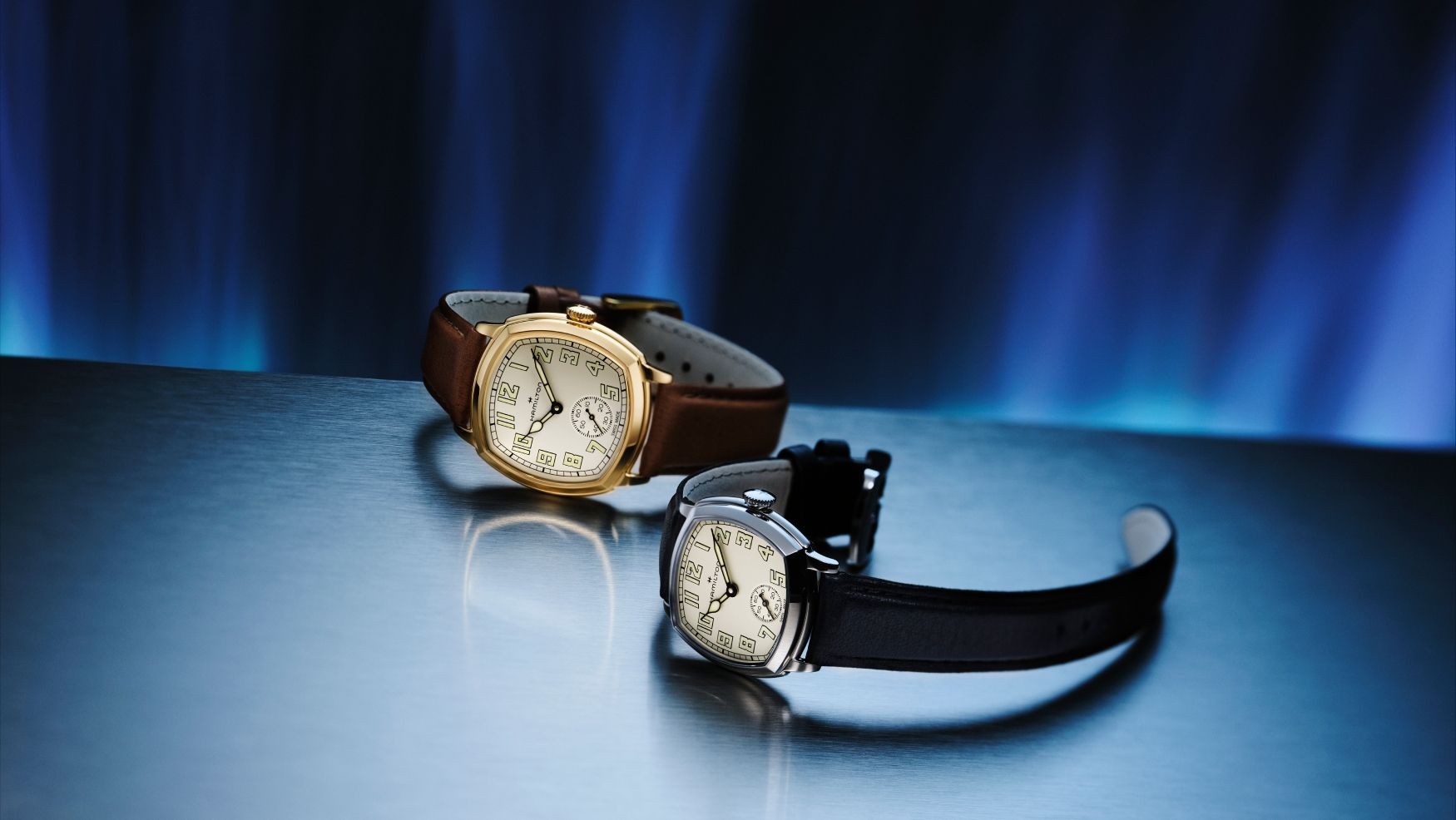
In 1992 , Swatch Group (then SMH, led by Nicolas Hayek) acquired Blancpain. Biver remained involved through the transition. The acquisition placed Blancpain at the apex of the Swatch Group brand hierarchy — above Omega, alongside Breguet and Jaeger-LeCoultre — in the ultra-luxury tier.
The Swatch Group structure provided Blancpain with financial stability, distribution infrastructure, and access to group-wide manufacturing resources — while maintaining the brand's independent creative direction. Blancpain's manufacture in Le Sentier (Vallée de Joux) and its workshop in Paudex produce movements in-house.
Blancpain Today
Blancpain is led by Marc Hayek (grandson of Nicolas Hayek) as President. The brand produces approximately 20,000–25,000 watches annually — a deliberately constrained volume consistent with ultra-luxury positioning. All movements are mechanical; the "never a quartz" commitment has been maintained without exception.
The brand's portfolio is organised into five collections: Fifty Fathoms (dive), Villeret (dress), L-Evolution (sport/complications), Women (ladies'), and Le Brassus (grand complications). Ocean conservation — specifically coral reef protection through the Blancpain Ocean Commitment — has become a significant dimension of the brand's identity, echoing the Fifty Fathoms' diving heritage.
Blancpain Model and Technology Guides
Each Blancpain collection and key technology has its own in-depth history on Time on the Move:
- Blancpain Calibres: In-House Movements from Le Sentier
- Blancpain Fifty Fathoms: The Original Modern Dive Watch
- Blancpain L-Evolution: Sport Complications in Titanium and Carbon
- Blancpain Le Brassus: Ultra-Grand Complications from the Vallée de Joux
- Blancpain Ocean Commitment: Watchmaking for Ocean Conservation
- Blancpain Perpetual Calendar: The Quantième Perpétuel Tradition
- Blancpain Tourbillon: Forty Years of Rotating Escapement Watchmaking
- Blancpain Villeret: The Grand Complications Dress Collection
- Blancpain Women: The Ladybird and the Ladies’ Collection