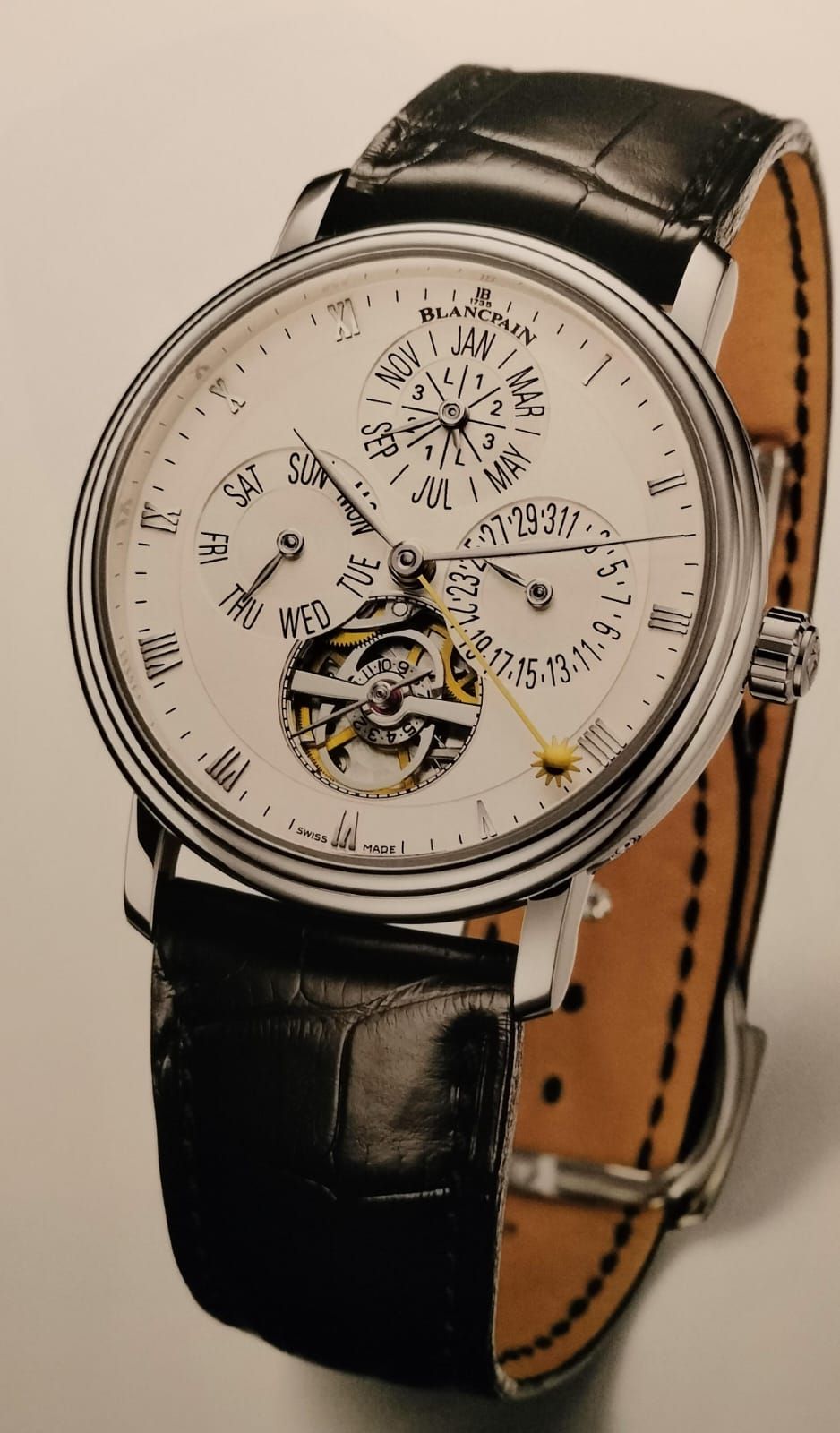
Blancpain Villeret: The Grand Complications Dress Collection
Blancpain Villeret: Ultra-Thin Dress Watches from the Jura
The Villeret collection takes its name from the Swiss village in the canton of Berne where Jehan-Jacques Blancpain established his workshop in 1735. By naming the brand's dress watch collection after its founding location, Blancpain makes the Villeret the guardian of institutional heritage — the watches that most directly connect to the pre-industrial craftsmanship of the original atelier. These are thin, round, classically proportioned dress watches with complications that emphasise calendar and astronomical functions over sporting utility.
The Village of Villeret
Photo: EMore98 — CC BY-SA 4.0 — Wikimedia Commons
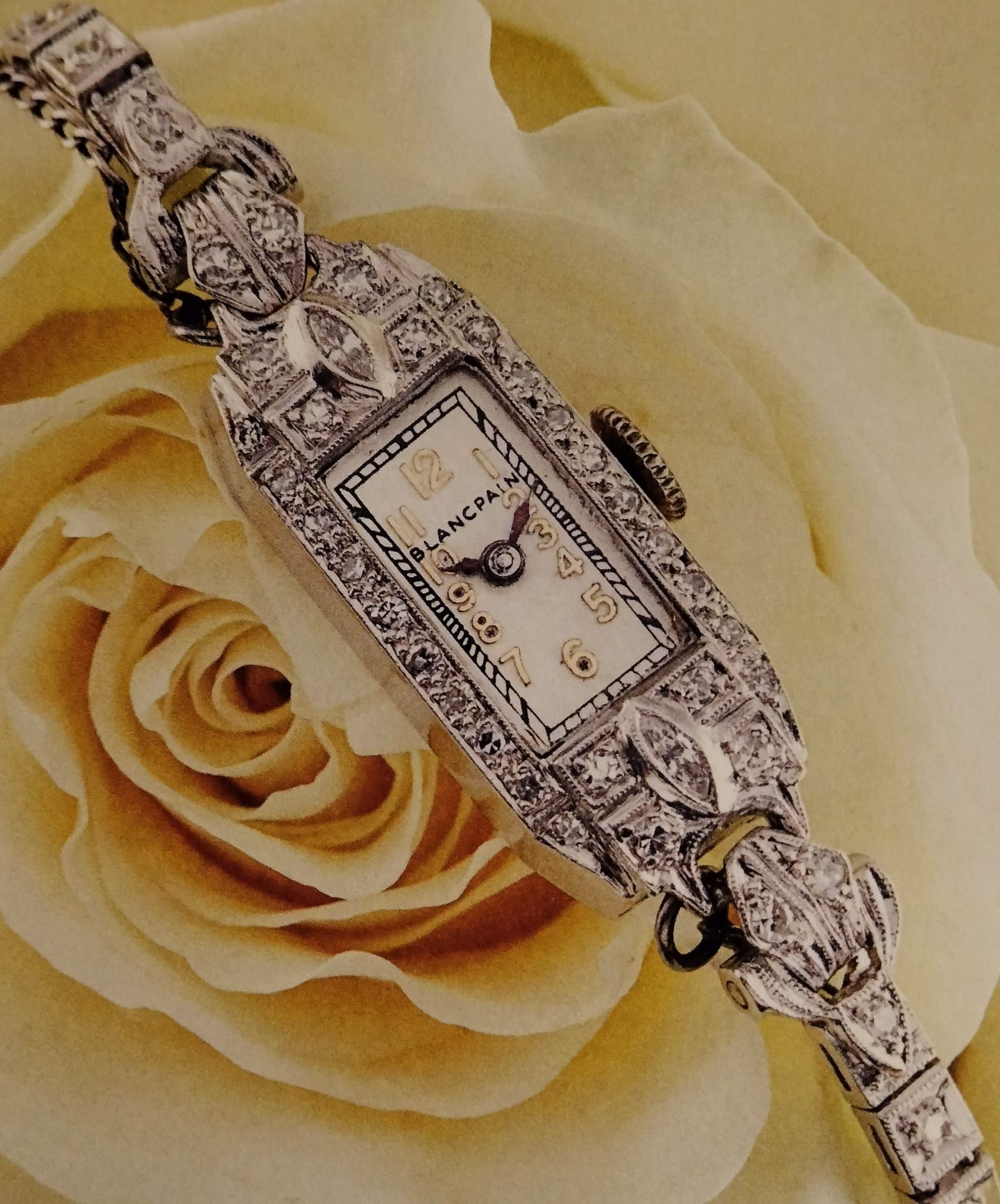
Villeret is a small community in the district of Courtelary in the canton of Berne, situated in the Vallée de Saint-Imier — a valley that has been central to Swiss watchmaking since the seventeenth century. The valley's other notable watchmaking address is Saint-Imier itself, home to Longines.
The watchmaking tradition in Villeret predates Jehan-Jacques Blancpain: the village had cottage watchmakers before 1735. Blancpain's founding formalised what was already a local craft. Today, Blancpain's manufacture is not in Villeret (it is in Le Sentier and Paudex) but the village name persists in the collection as a reminder of origin.
Design Language — The Villeret Aesthetic
Photo: EMore98 — CC BY-SA 4.0 — Wikimedia Commons
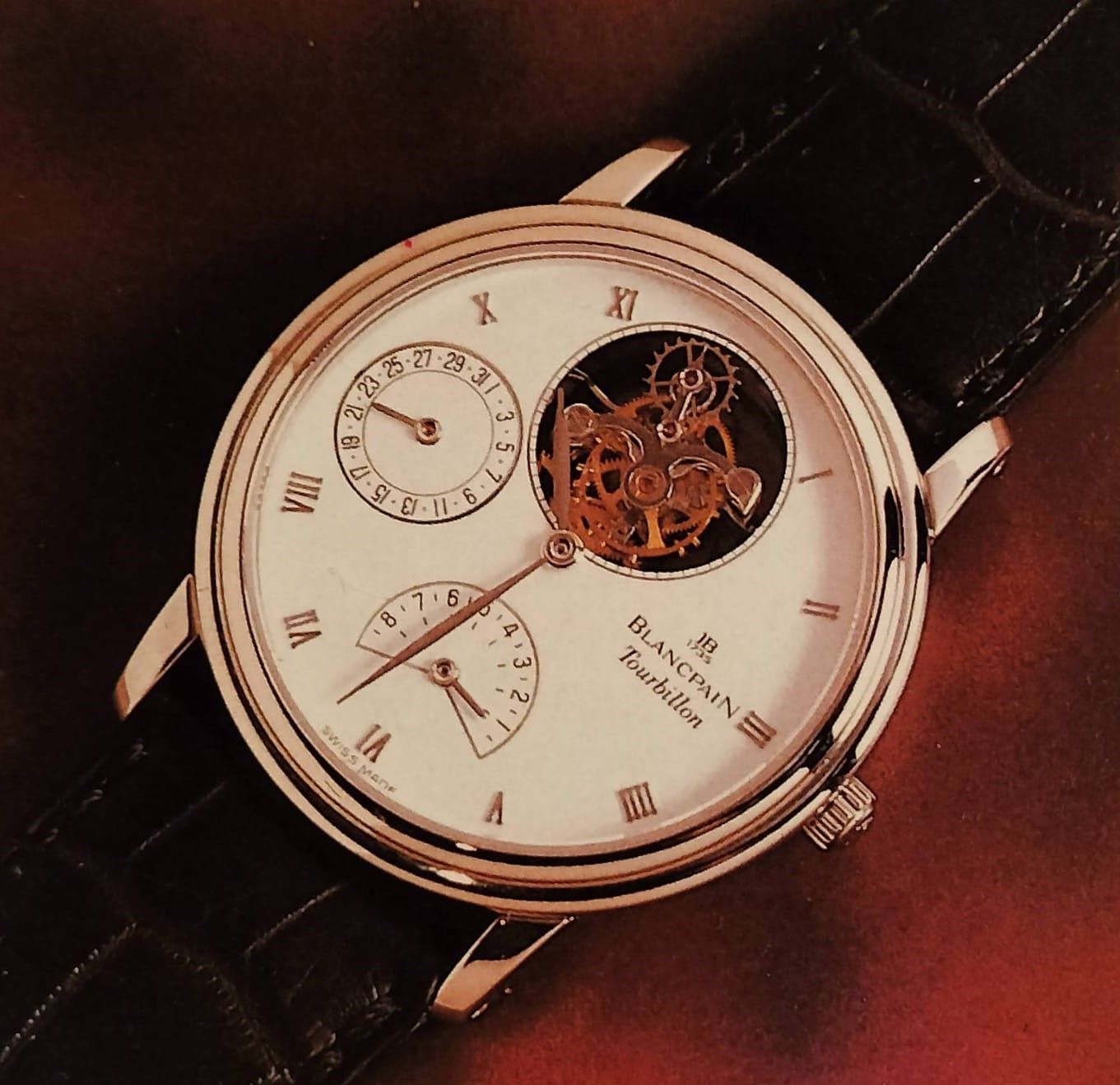
The Villeret collection has a distinct visual identity within the Blancpain range:
- Double stepped case — a Villeret signature: the case middle is stepped in two distinct shoulders, creating a visual break between the bezel and the case side that distinguishes it from the flat-profile cases of most dress watches
- Round cases — no tonneau, no cushion, no square; the Villeret is unambiguously round
- Slim profiles — case heights between 8mm and 11mm depending on complication
- Elaborate guilloche dials — engine-turned decoration on metal dials (typically gold)
- Leaf-shaped or Baton hands — traditional, elongated, with high-polish finish
- Double sapphire crystal and caseback — showing the movement and the dial simultaneously in some references
The double-stepped case is the most immediately recognisable Villeret feature — visible at a distance and distinctive enough to identify the collection from across a room.
Villeret Ultra-Slim — The Calibre 1150 and 1151
Photo: EMore98 — CC BY-SA 4.0 — Wikimedia Commons
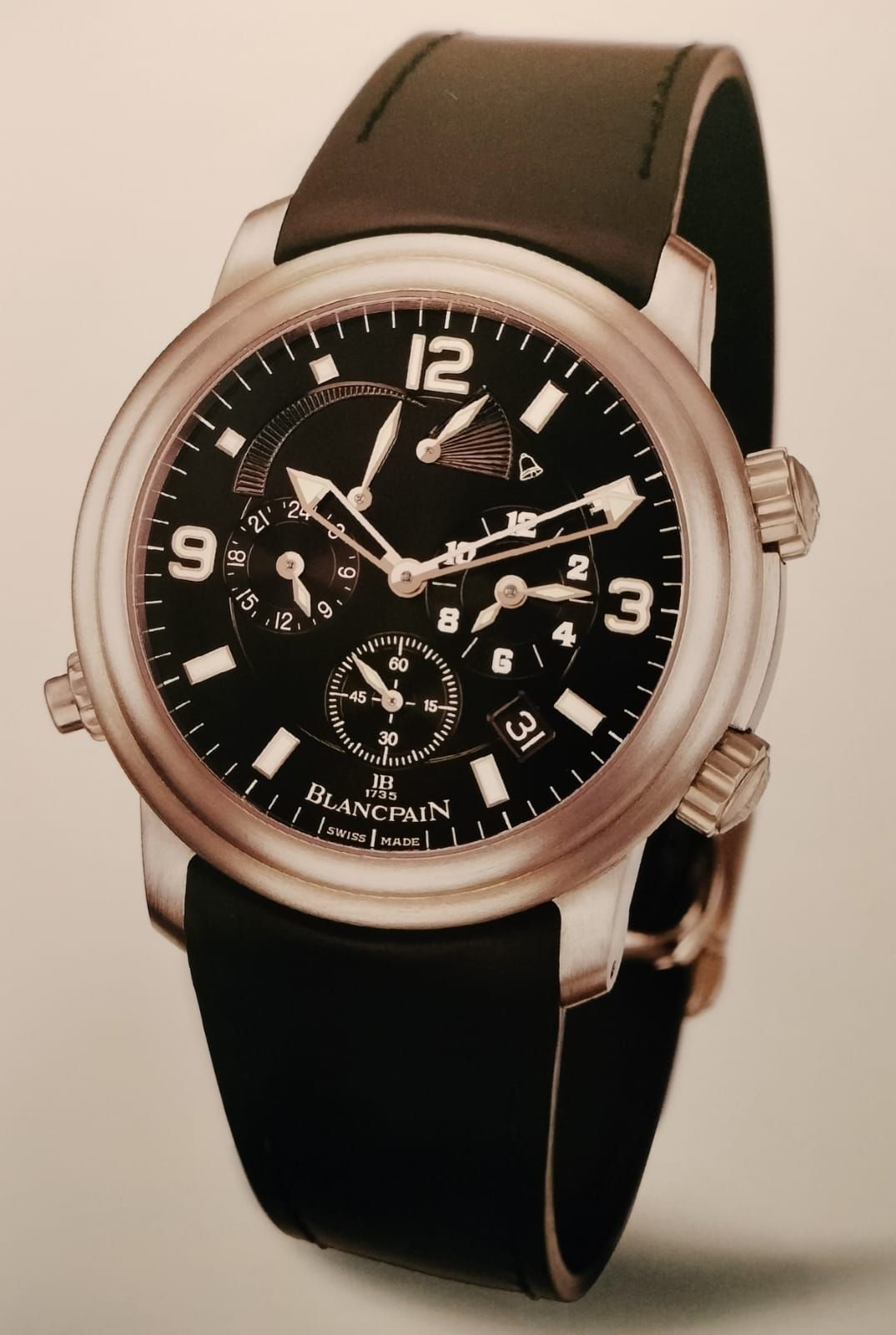
The Calibre 1150 (manual-wind) and Calibre 1151 (automatic) are the foundational Villeret movements. Both are thin calibres — the 1150 measures approximately 2.6mm in height, the 1151 approximately 3.25mm — allowing Villeret cases of under 10mm total height.
The Calibre 1150 architecture derives from the tradition of ultra-thin calibres developed by Frédéric Piguet — the Vallée de Joux movement specialist that has supplied Blancpain and other prestige brands since the 1980s revival. Both calibres are now produced at Blancpain's own manufacture.
Villeret Ultra-Slim references (plain time-only): approximately 38mm case, 7.8mm case height, white gold or platinum case, hand-engraved guilloché dial. These are Blancpain's most directly comparable watches to the JLC Master Ultra-Thin or Piaget Altiplano — elegant, thin, expensive.
Villeret Complete Calendar — Quantième Complet
Photo: EMore98 — CC BY-SA 4.0 — Wikimedia Commons
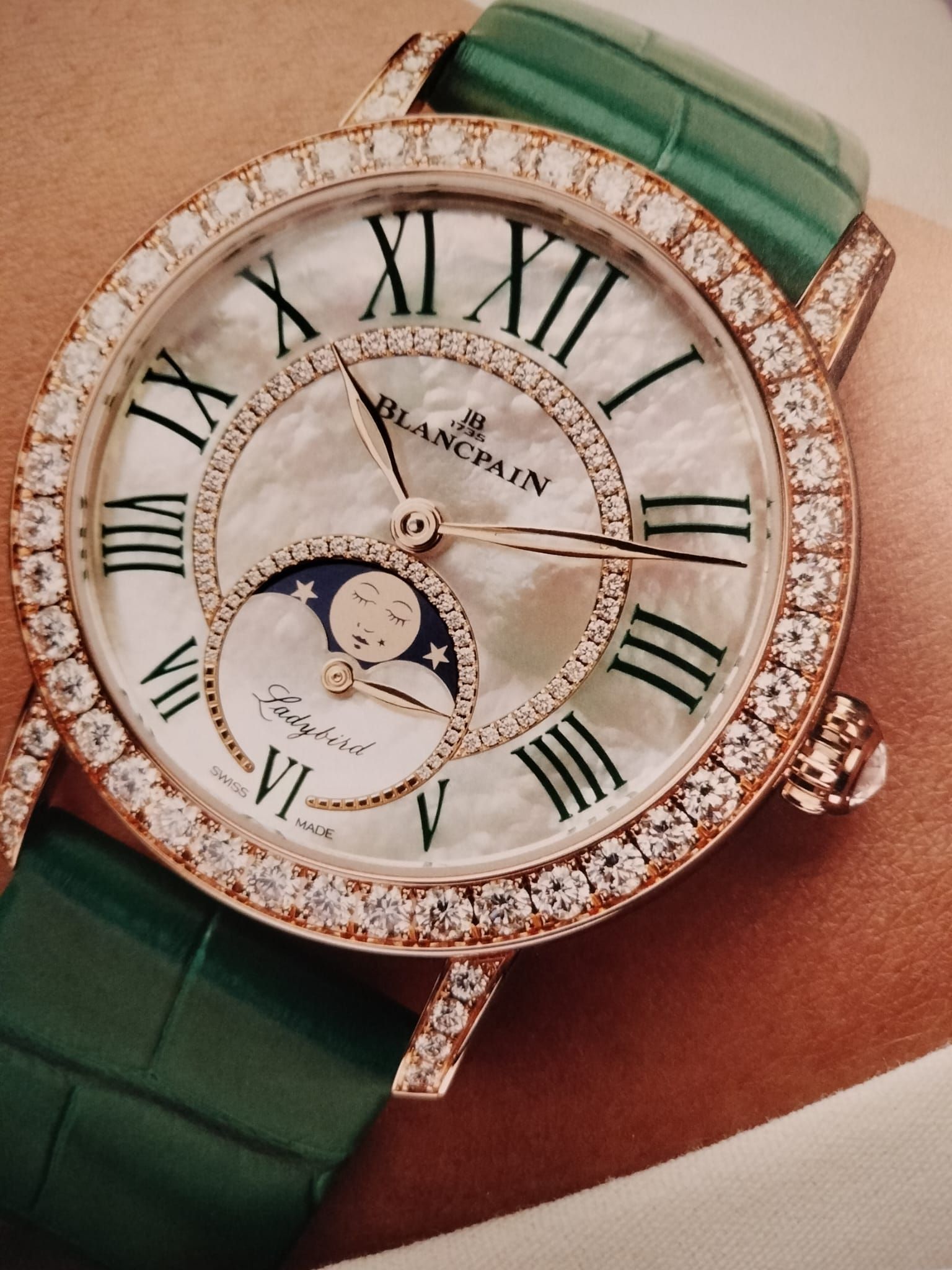
The Villeret Complete Calendar (Quantième Complet) adds date, day, month, and moonphase displays to the ultra-slim formula. The complete calendar mechanism indicates all four elements simultaneously and advances automatically — unlike a simple calendar, which requires manual correction for months of 30 days.
Key specifications:
- Calibre 6763 (manual-wind complete calendar)
- Moonphase accuracy: one day's deviation in approximately 122 years (more precise than the standard 29.5-day lunar disc)
- Four apertures or subsidiary dials for date, day, month, moonphase
- Typically 40mm case, platinum or rose gold
The 122-year moonphase accuracy is a technical achievement: achieved through a 135-tooth lunar wheel (standard is 59 teeth), meaning the mechanical display drifts from astronomical reality extremely slowly. At 122 years per day's error, the watch is effectively a life-long precision instrument.
Villeret Perpetual Calendar — Quantième Perpétuel
Photo: EMore98 — CC BY-SA 4.0 — Wikimedia Commons
The Villeret Perpetual Calendar (Quantième Perpétuel, Ref. 6658) is Blancpain's prestige calendar complication — a mechanism that automatically accounts for months of 28, 29, 30, and 31 days, requiring no correction until the year 2100 (when a century-end non-leap year requires manual intervention).
The perpetual calendar in the Villeret context adds:
- The full perpetual calendar mechanism (programming cam and lever system)
- Leap year indicator
- Equation of time display (showing the difference between solar noon and mean clock time — up to ±16 minutes)
- Sunrise/sunset indicator (in some references)
The equation of time indication on a wristwatch is exceptionally rare and technically demanding: it requires a cam profiled to the exact annual variation in solar time relative to mean time.
Villeret Tourbillon
Photo: EMore98 — CC BY-SA 4.0 — Wikimedia Commons

The Villeret Tourbillon is Blancpain's showcase complication in dress watch format. The tourbillon — a rotating cage that carries the escapement to average out the effects of gravity — was invented by Abraham-Louis Breguet in 1801 and patented for ten years. Blancpain's implementation:
- One-minute tourbillon (cage completes one revolution per minute)
- Manual-wind movement
- Typically in platinum case, 38–40mm
- Exhibition caseback showing the movement and tourbillon cage