Blancpain Fifty Fathoms: The Original Modern Dive Watch
Blancpain Fifty Fathoms: The First Modern Dive Watch
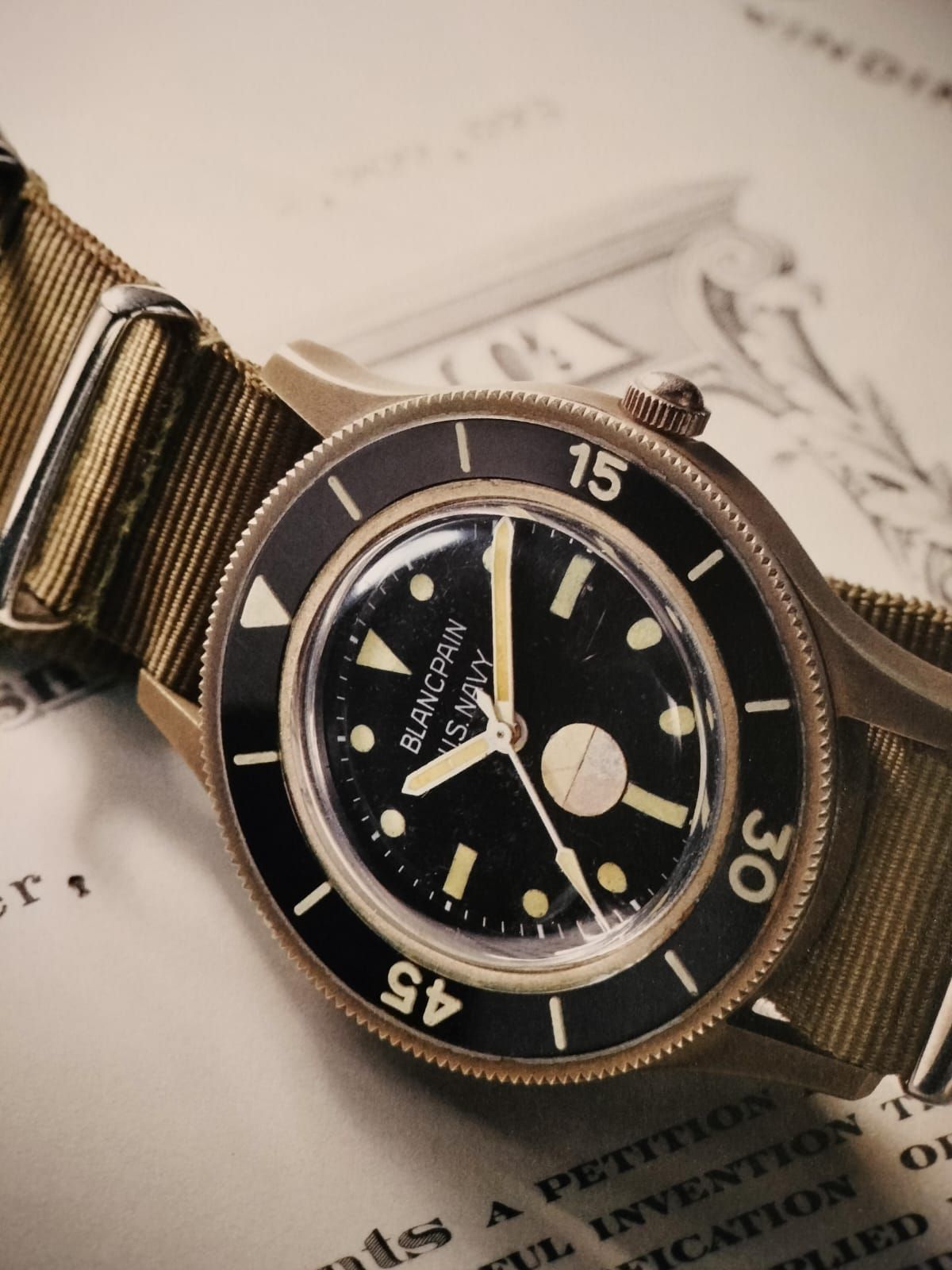
The Blancpain Fifty Fathoms of 1953 is disputed with the Rolex Submariner for the title of first modern purpose-designed dive watch — and the dispute is genuine, as both appeared within months of each other. What is not disputed is that the Fifty Fathoms established many of the defining characteristics of the professional dive watch: the unidirectional bezel, high water resistance with double-locked crown, and high-contrast legible dial designed for underwater use.
Origins — 1953 and the Birth of the Modern Dive Watch
Photo: EMore98 — CC BY-SA 4.0 — Wikimedia Commons
The creation of the Fifty Fathoms is credited to Commandant Robert Maloubier and Lieutenant Claude Riffaud — French Navy combat diver officers who approached Blancpain in the early 1950s with a specification for an instrument watch suitable for professional diving. The French Navy's underwater combat swimmer unit (the nageurs de combat ) needed watches that could withstand the pressures and conditions of their operations.
The specification Maloubier brought to Blancpain:
- Water resistance to 91 metres
(fifty fathoms — the unit giving the watch its name; a fathom is approximately 1.83 metres)
- Unidirectional rotating bezel
for measuring elapsed dive time — unidirectional because accidental rotation can only reduce the apparent elapsed time, a safety feature that prevents a diver from believing they have more air remaining than they do
- Luminous dial with high contrast
for underwater legibility
- Automatic movement
— so the diver never has to open the crown to wind the watch
- Moisture indicator
to show if water has penetrated the case
The result, developed by Blancpain with the watchmaker Frédéric Piguet providing the movement, was presented to the French Navy in 1953 . The reference number was the OG (for Officine Générale, the production code).
Technical Innovations of the Original
Photo: EMore98 — CC BY-SA 4.0 — Wikimedia Commons
The 1953 Fifty Fathoms established features that became universal standards for dive watches:
Unidirectional bezel: The most significant safety innovation. A bidirectional bezel can rotate accidentally in either direction; a unidirectional bezel can only rotate counterclockwise (backwards), making any accidental rotation safe — it can only make a dive appear longer than it is, never shorter.
Automatic movement: The Calibre 1180 (Frédéric Piguet-sourced automatic) meant the crown never needed to be unscrewed for winding — reducing the most common source of water ingress on diver watches of the era.
Moisture indicator: A piece of moisture-sensitive paper behind the crystal changed colour if water entered the case — providing a visual warning that the watch's water resistance had been compromised.
Screw-down crown lock: Double security for the crown, reducing ingress risk compared to push-pull crowns.
Case diameter: 41mm — large for 1953, when dress watches of 32–35mm were standard. The size was functional: underwater legibility requires larger indices and hands.
Adoption by Military and Professional Divers
Photo: EMore98 — CC BY-SA 4.0 — Wikimedia Commons
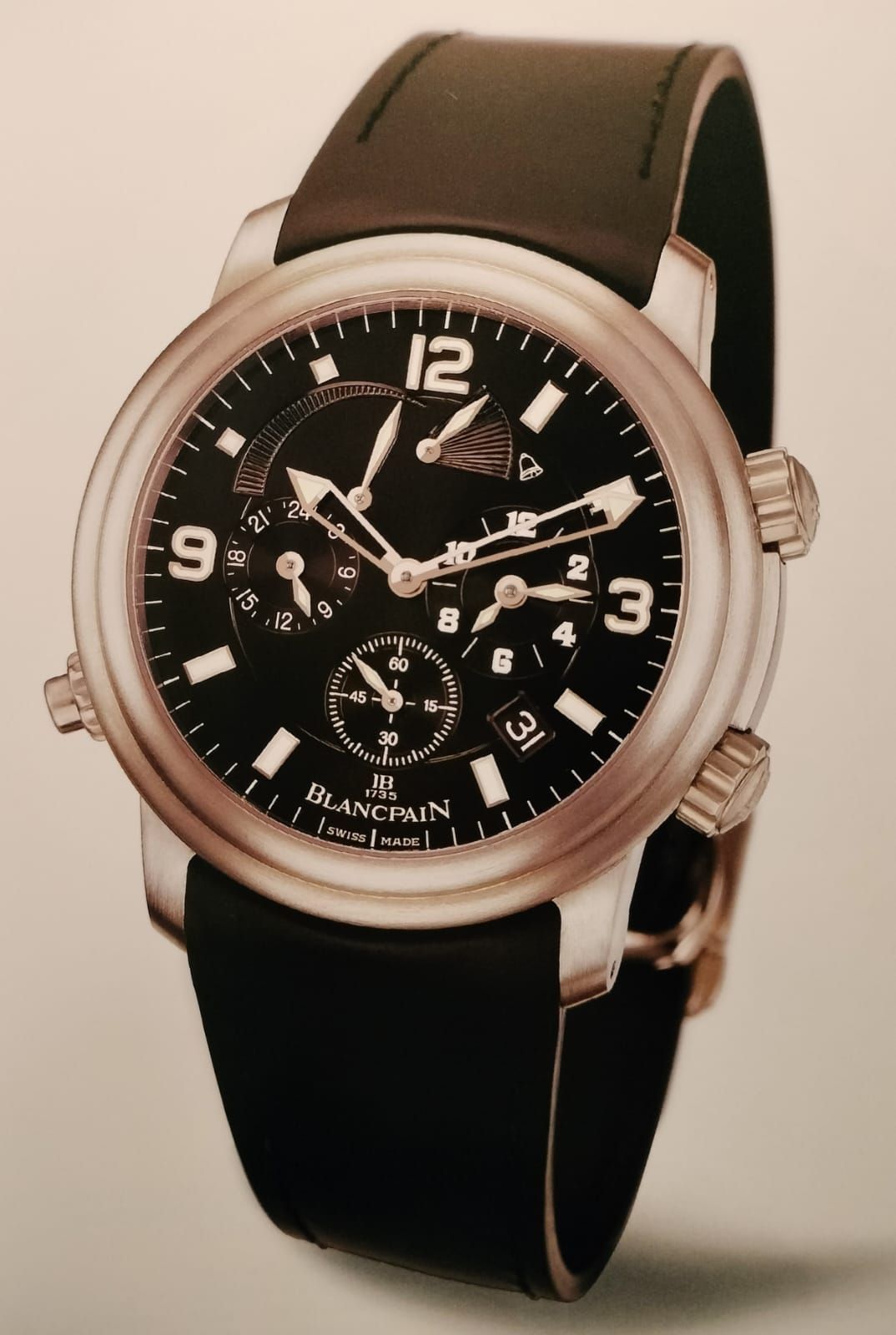
The French Navy adopted the Fifty Fathoms officially. Subsequently, other armed forces sourced Fifty Fathoms variants:
- German Bundesmarine (Federal German Navy)
- US Navy special operations units (before the Navy adopted the MIL-SPEC Doxa and other references)
- Pakistan Navy
- Various European special forces units
The CIA-linked programme that sourced dive watches for US government agencies used the Fifty Fathoms in the 1950s and 1960s, a fact documented in declassified US Navy procurement records and referenced in collector literature.
Jacques-Yves Cousteau's diving team used Fifty Fathoms watches during expeditions in the 1950s and 1960s, providing the connection between Blancpain's dive watch and the most famous ocean explorer of the twentieth century.
The Long Absence — 1970s to 2003
Photo: EMore98 — CC BY-SA 4.0 — Wikimedia Commons
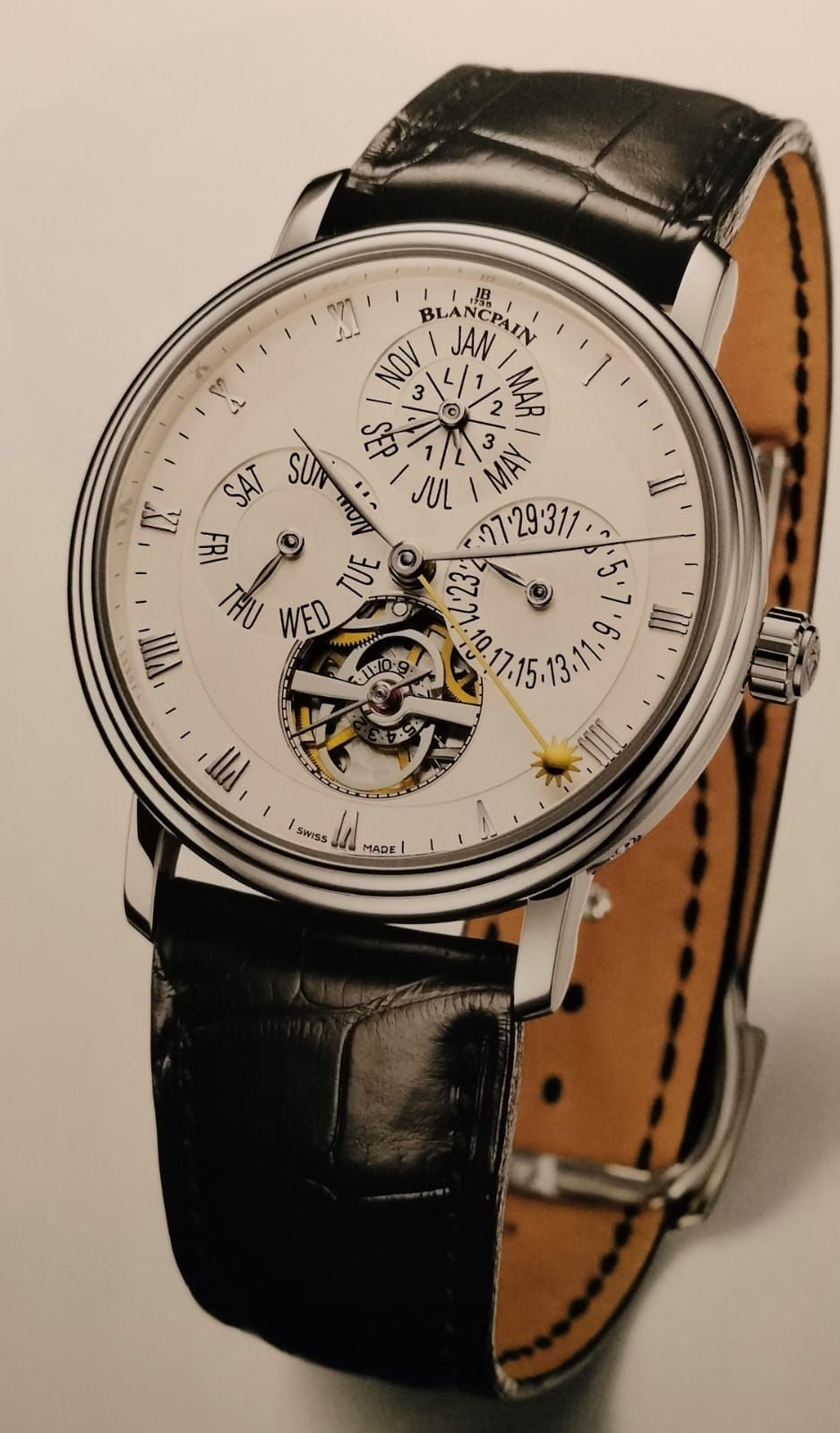
Blancpain's near-extinction during the quartz crisis meant that the Fifty Fathoms was not produced between the late 1970s and 2003 . The name and design existed in collectors' consciousness through the original references — which became highly collectible — but there was no production watch.
When Jean-Claude Biver revived Blancpain in 1983, the initial focus was on the Villeret and Le Brassus complication watches. The dive watch heritage was acknowledged but not immediately revived as a production line.
The 2003 Revival — Fifty Fathoms Returns
Photo: EMore98 — CC BY-SA 4.0 — Wikimedia Commons
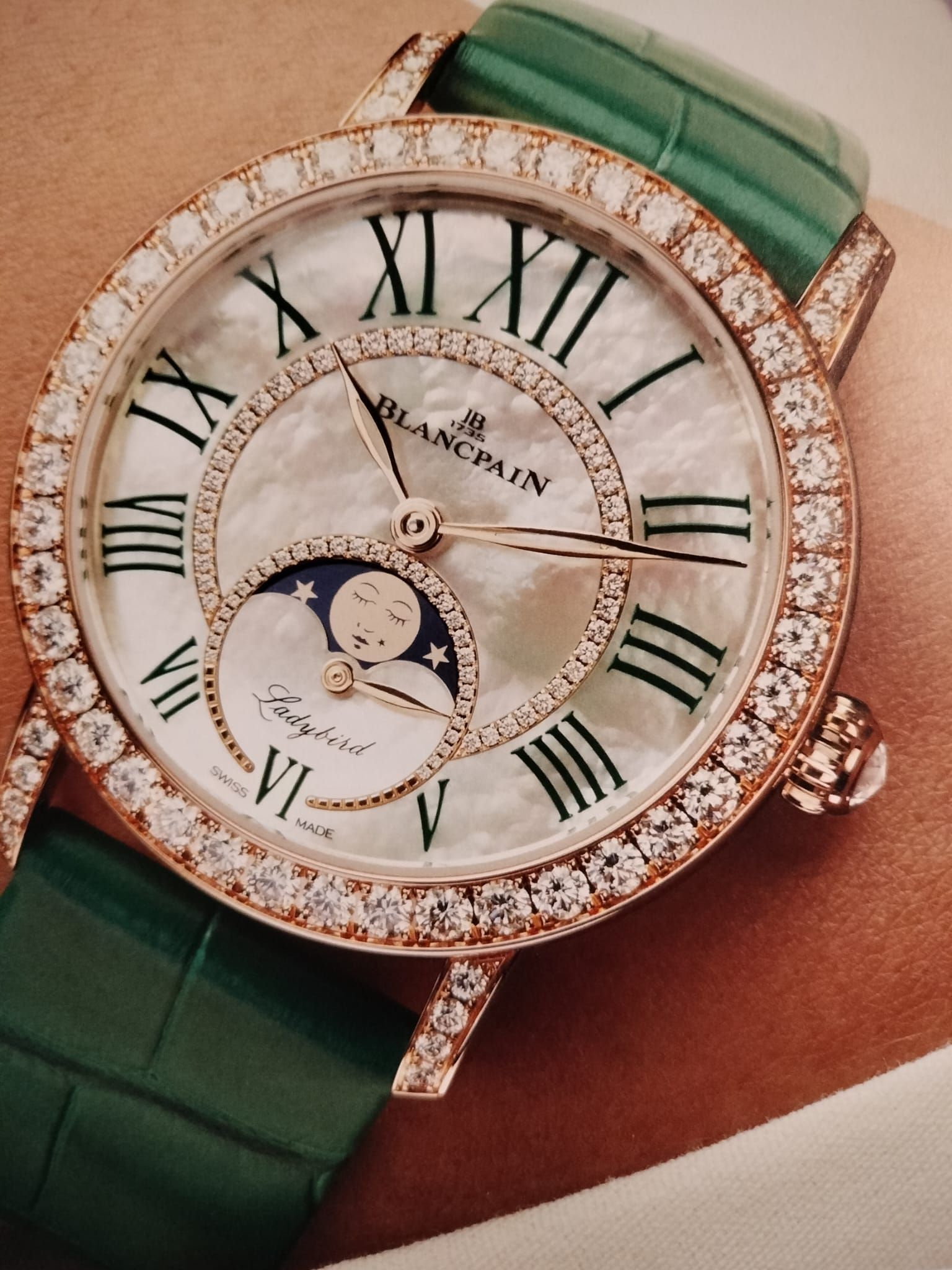
The modern Fifty Fathoms era began at BaselWorld 2003 with the launch of the contemporary Fifty Fathoms reference — a 45mm titanium case, 300m water resistance, and the Calibre 1151 automatic movement. The design paid homage to the 1953 original while incorporating modern case architecture and materials.
The 2003 revival connected Blancpain's dive watch to the Ocean Commitment conservation programme (launched in the same period), positioning the Fifty Fathoms not merely as a heritage-reissue luxury diver but as the flagship of an active environmental initiative.
Fifty Fathoms Bathyscaphe
Photo: EMore98 — CC BY-SA 4.0 — Wikimedia Commons
The Fifty Fathoms Bathyscaphe
(introduced 2013, 60th anniversary) is the sporty, more accessible variant of the Fifty Fathoms line:
- Ceramic bezel insert (more scratch-resistant than aluminium or steel)
- 43mm case — slightly smaller than the standard 45mm
- Fabric strap as standard
- Calibre 1315 automatic with 5-day power reserve
- Price: approximately CHF 10,000 versus CHF 15,000+ for the full Fifty Fathoms
The Bathyscaphe is named for the deep-sea submersible (bathyscaphe = Greek "deep boat") — a reference to extreme depth capability.
Ocean Commitment Editions
Blancpain's Ocean Commitment conservation programme uses the Fifty Fathoms as its vehicle. Limited editions with proceeds directed to specific conservation campaigns have included:
- Bathyscaphe Chronographe Flyback "Ocean Commitment" — funding coral reef surveys
- Fifty Fathoms "Bathymetric" editions — marking specific deep-sea research expeditions
- Annual limited editions tied to specific species or habitat conservation (humphead wrasse, polar waters, etc.)
The Ocean Commitment reflects the founding connection between the Fifty Fathoms and professional diving — the watch that was created to support underwater professionals now funds the science that protects the underwater environment.