Blancpain L-Evolution: Sport Complications in Titanium and Carbon
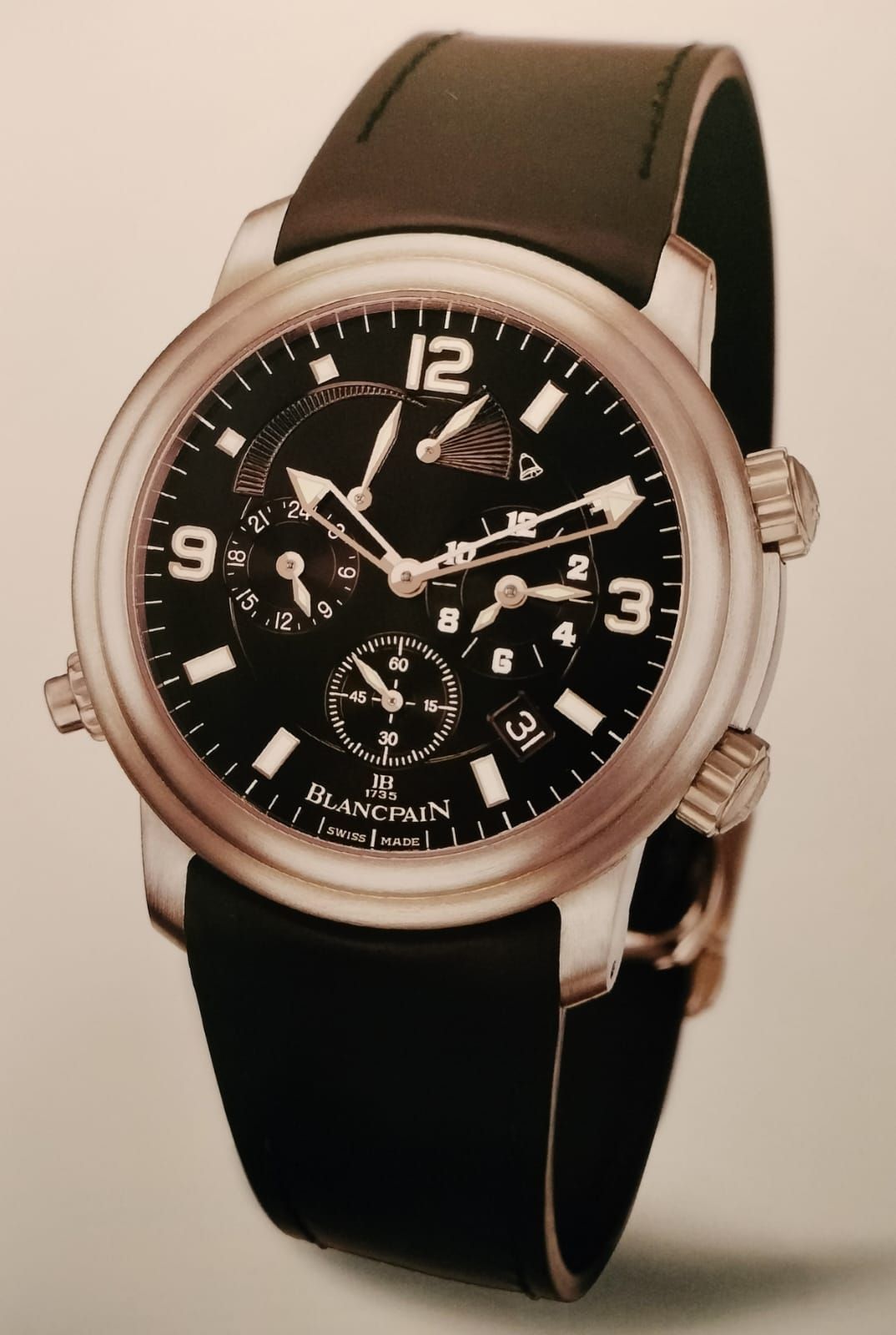
The L-Evolution is Blancpain's sport watch collection — the category that would seem most natural for a brand whose core identity is built around the Fifty Fathoms dive watch and the grand complications of Le Brassus. But the L-Evolution is not a dive watch: it is a large-case sport watch in titanium, black carbon, and rubber, hosting the same complex movements found in the Villeret. The collection demonstrates that Blancpain can dress its complications in a more aggressive case vocabulary without abandoning the mechanical substance that defines the brand.
Introduction and Design Brief
Photo: EMore98 — CC BY-SA 4.0 — Wikimedia Commons
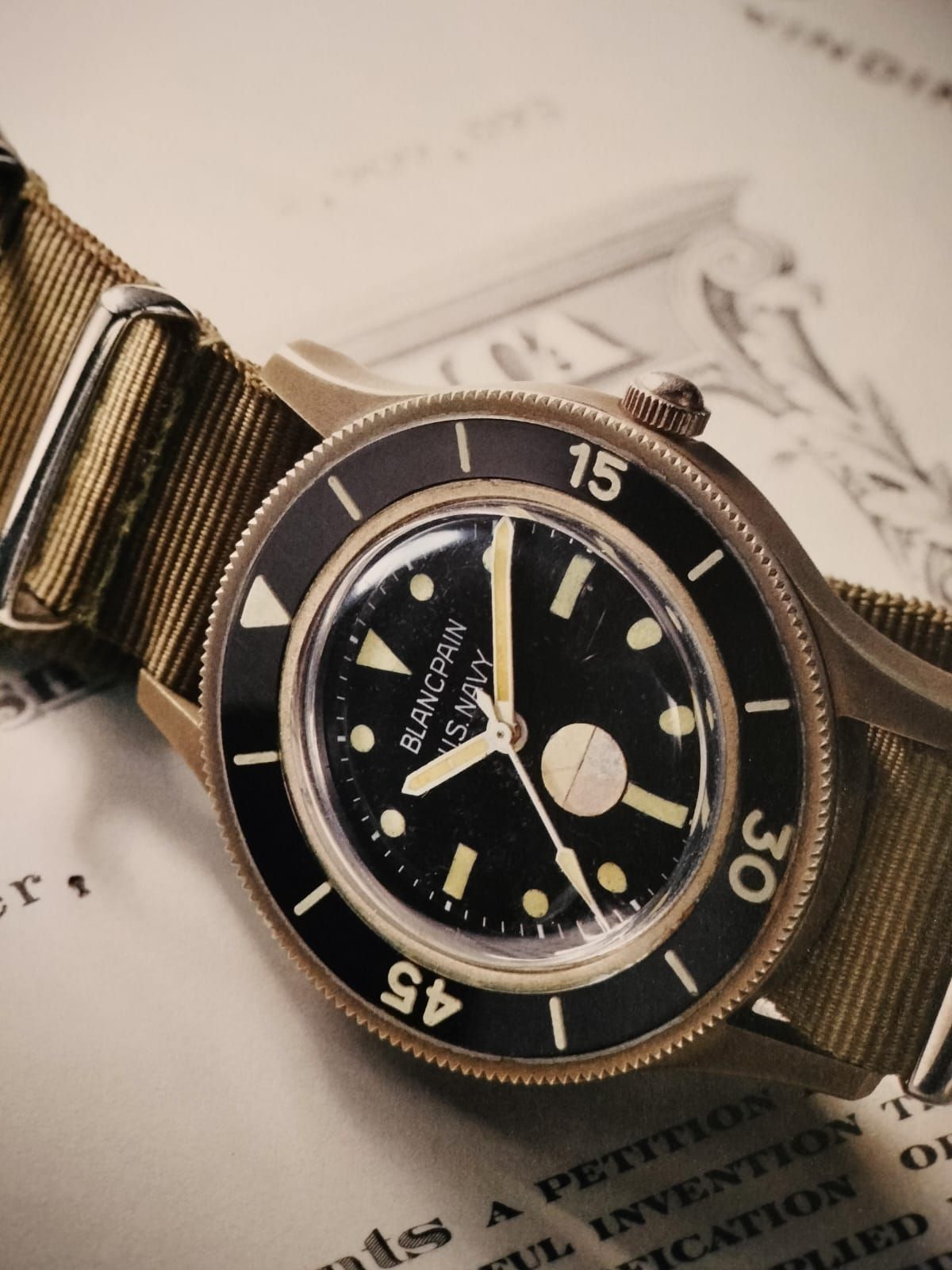
The L-Evolution was introduced in the mid-2000s as a response to the emergence of the high-complication sport watch as a distinct market category — the AP Royal Oak Offshore, the Hublot Big Bang, the Richard Mille range. These watches demonstrated demand for technically complex watches in robust, large, non-precious-metal cases.
The L-Evolution's brief: take Blancpain's complication expertise — perpetual calendars, tourbillons, chronographs — and put them in cases of 44–45mm , using titanium as the primary material, with rubber integrated straps and a design language that reads as contemporary sport rather than traditional dress.
The name "L-Evolution" references both evolution (technological progress) and the "L" shape visible in the case profile from certain angles.
L-Evolution Case Architecture
Photo: EMore98 — CC BY-SA 4.0 — Wikimedia Commons
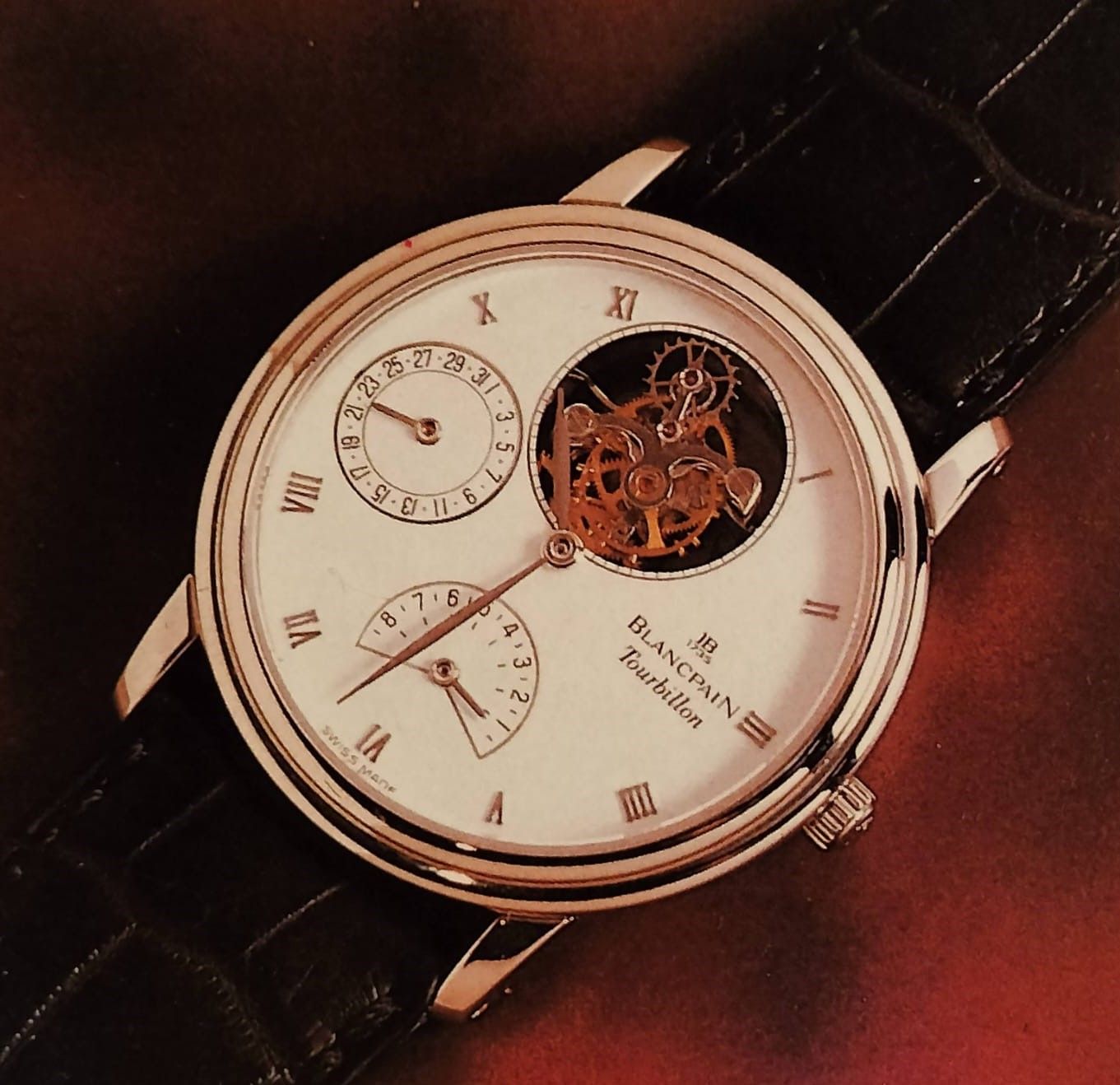
The L-Evolution case is constructed differently from the round dress watch cases of the Villeret:
- Case diameter: 44–45mm depending on reference
- Primary material: Grade 5 titanium (Ti6Al4V alloy)
- Surface treatment: Sandblasting and satin finishing
- Crystal: Domed sapphire with anti-reflective coating
- Integrated rubber strap: Moulded into the case for a seamless visual line
- Water resistance: 100m (100 metres) for most references
Titanium provides approximately 40% weight reduction versus steel of the same volume — significant for a large-case watch. The combination of titanium case and rubber strap makes L-Evolution watches substantially lighter than comparable steel complications.
L-Evolution Flyback Chronograph
Photo: EMore98 — CC BY-SA 4.0 — Wikimedia Commons
The L-Evolution Flyback Chronograph (Calibre 6925F) is one of the collection's core references:
- Column-wheel flyback chronograph mechanism
- 72-hour power reserve
- 28,800 vph
- Skeletonised bridges visible through sapphire caseback
- 43.5mm titanium case
The flyback function — single-push return-to-zero-and-restart — is combined with a column-wheel for precise, consistent actuation. The calibre is decorated with circular côtes de Genève (Geneva stripes) on the bridges and bevelled anglage on plate edges.
L-Evolution Perpetual Calendar Flyback
Photo: EMore98 — CC BY-SA 4.0 — Wikimedia Commons
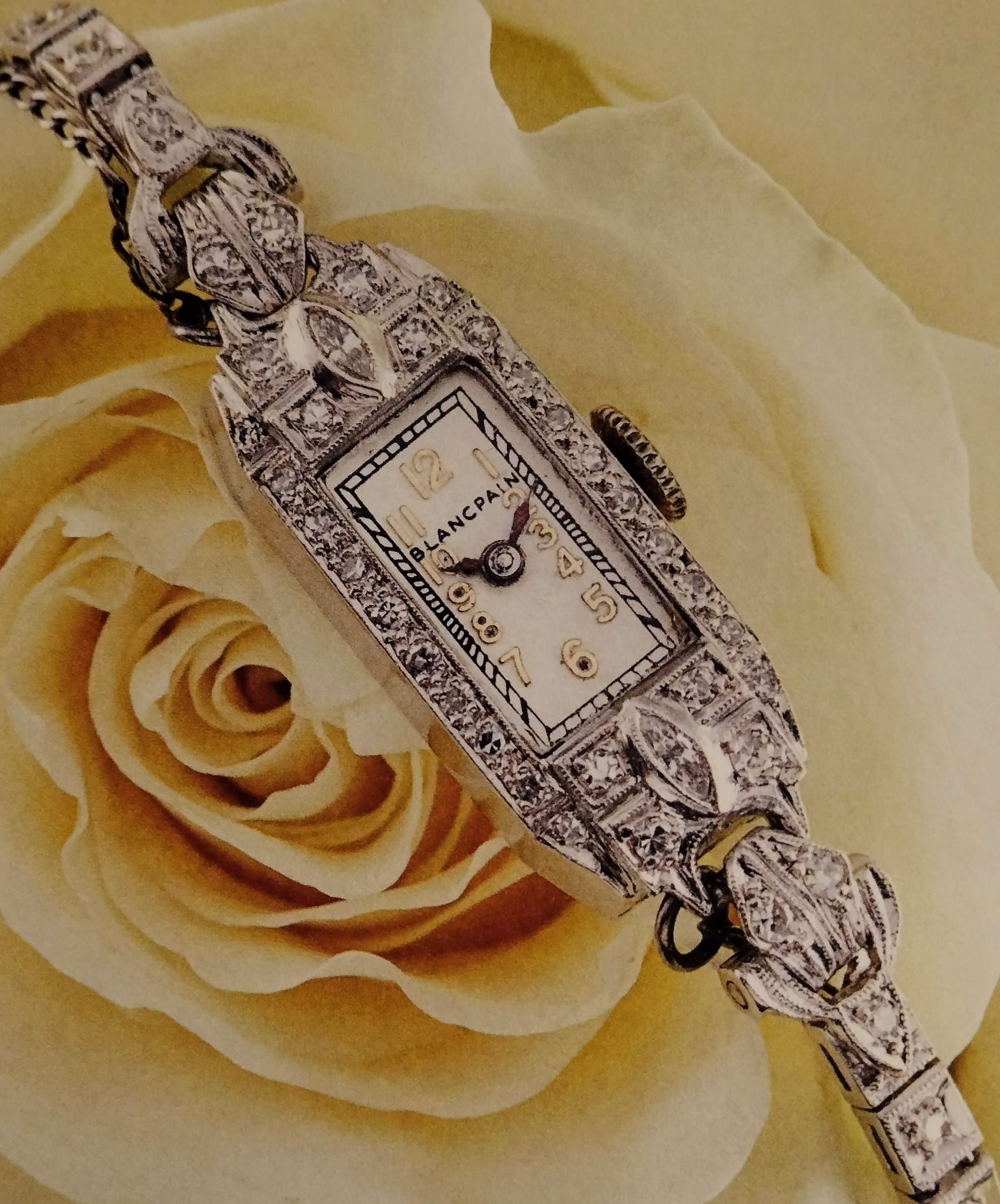
The L-Evolution Perpetual Calendar Flyback Chronograph applies the Calibre 2585's mechanism — the same perpetual split-seconds chronograph as the Le Brassus dress watch — in the L-Evolution case. This is a rare combination: grand complication movement in sport case format.
The result: a watch that could plausibly be worn for diving (100m resistance), cycling, or other outdoor activities while housing one of the most complex wristwatch movements in production. The incongruity is deliberate — Blancpain arguing that sport watchmaking need not choose between form and mechanical substance.
L-Evolution Tourbillon Chronograph
Photo: EMore98 — CC BY-SA 4.0 — Wikimedia Commons
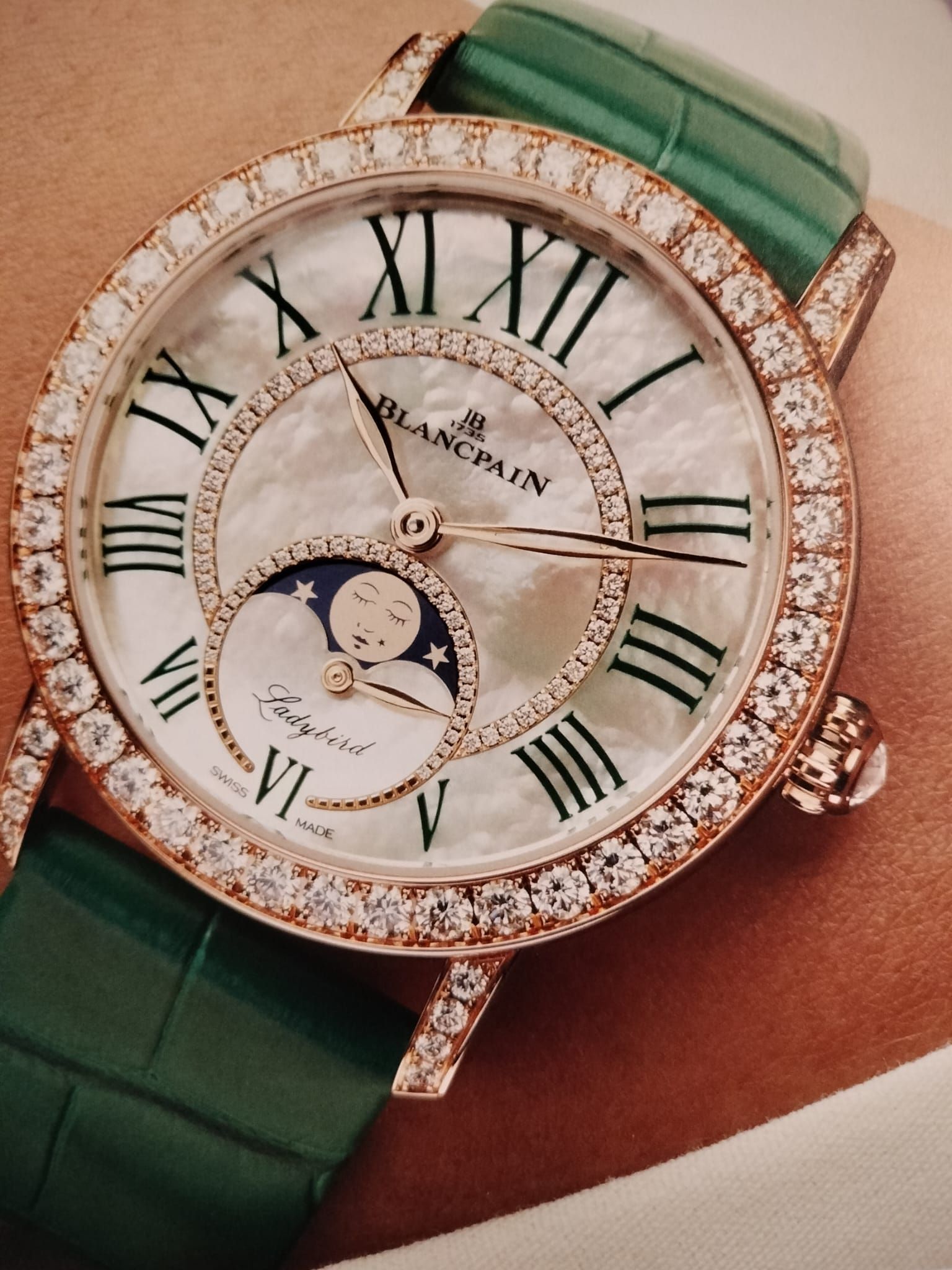
The L-Evolution Tourbillon Chronograph
combines:
- One-minute tourbillon at 6 o'clock position
- Flyback chronograph with column-wheel
- 7-day power reserve
- 45mm titanium case
The tourbillon's position at 6 o'clock on the dial provides maximum visual drama — the rotating cage visible through the large aperture in the lower dial hemisphere.
Materials Development — Carbon and Ceramics
Photo: EMore98 — CC BY-SA 4.0 — Wikimedia Commons
From the mid-2010s, L-Evolution references began incorporating:
Carbon fibre composites: Case middle and bezel components in woven carbon fibre — extremely light, visually textured, and resistant to conventional case damage (carbon does not dent or scratch in the same way as metal).
Ceramics: Bezel inserts in technical ceramics (aluminium oxide or zirconium oxide) — harder than steel, maintaining precise edge definition, and with a distinctive appearance.
Liquidmetal (amorphous alloys): Used in specific L-Evolution limited editions — these are amorphous metal alloys (not crystalline like conventional metals) that can be moulded to extremely precise tolerances, providing a different surface texture and hardness than titanium.
L-Evolution and the Blancpain Range
The L-Evolution occupies the position in the Blancpain range that the Royal Oak Offshore occupies in the AP range or the Big Bang in Hublot: a sport-inflected vessel for high complications, appealing to buyers who want the technical content without the dress watch aesthetic.
For some buyers, L-Evolution watches feel less coherent than either the Fifty Fathoms (genuinely functional dive watch) or the Villeret (genuinely dress watch): neither fully committed to sport nor to luxury. For others, the combination of genuine technical depth with the informal case vocabulary is exactly the point — a complication watch you can wear anywhere.
Production volumes are small — L-Evolution represents a modest fraction of total Blancpain output — and prices are in the CHF 20,000–90,000 range depending on complication.