
Panerai Calibres: From Unitas 6497 to the In-House P.2002, P.9000, and P.900

Zach Charles • August 24, 2026

Share this article

Panerai In-House Calibres

For most of its civilian existence, Panerai's movements came from outside. From the first commercial sale in 1993 through the mid-2010s, the core calibre was the Unitas 6497 — a Swiss pocket-watch-derived movement that Panerai modified, decorated, and branded as the OP (Officine Panerai) calibre series. The Unitas 6497 is a reliable and respected movement, and the OP calibres were competent executions. But they were not Panerai's own. The in-house programme that began at the Neuchâtel Manufacture in 2002 was the most consequential technical initiative in the brand's modern history — moving Panerai from a company that bought movements to a company that made them.


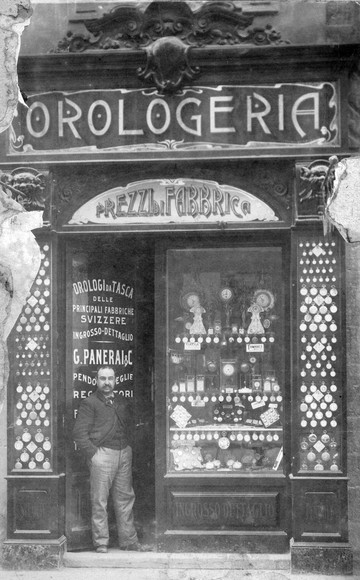
Giovanni Panerai — historical photograph, 1860
A historical photograph of Giovanni Panerai, founder of the shop on the Ponte alle Grazie in Florence in 1860 that would become Officine Panerai. The establishment served initially as a watchmaking school and supplier of precision naval instruments to the Italian Navy.
Photo: Historical photograph — Public Domain — Wikimedia Commons

The Pre-Manufacture Era: Unitas 6497 (OP Calibres)

Vintage Panerai diving equipment set
A set of vintage Panerai diving tools and instruments supplied to the Italian Navy — illustrating Panerai’s role as a full-service military equipment supplier rather than merely a watchmaker. The firm produced depth gauges, compasses, and underwater breathing apparatus alongside watches.
Photo: Piero7 — Public Domain — Wikimedia Commons
From 1993 to the late 2010s , Panerai's workhorse movement was the Unitas 6497 — a hand-wound, large-diameter (36.6mm) calibre originally designed for pocket watches, used in wristwatch applications by multiple brands due to its generous size and visible architecture.

Panerai designated these movements the OP calibre series (OP I through OP XXXIV), with variations covering different finishing levels, small-seconds positions, and complication additions. The Unitas 6497 was well-suited to Panerai's 44mm cases — its large diameter produced a visually impressive movement through the caseback, and its manual-wind architecture matched the brand's military-utilitarian positioning.

In 2018 , Panerai announced that no new model launches would use ETA/Unitas movements. The transition was substantially complete by the early 2020s. The OP calibres remain in service in some older production references.


The Neuchâtel Manufacture — 2002

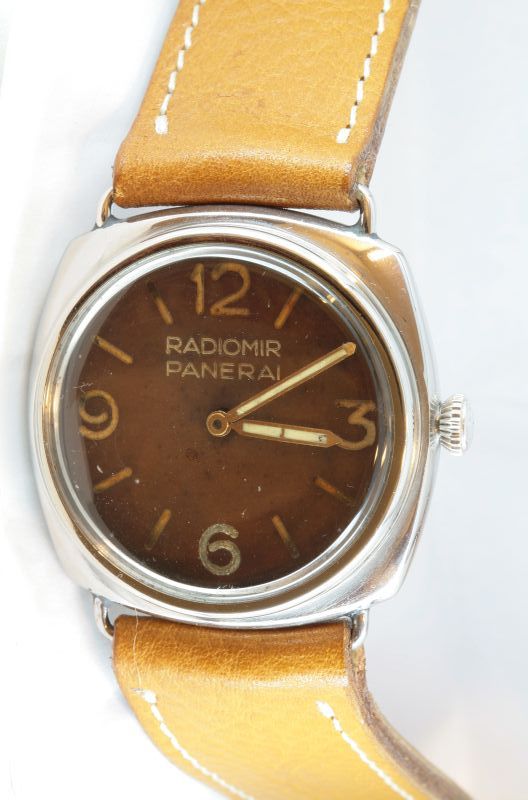
Panerai Radiomir wristwatch
A Panerai Radiomir — the cushion-cased dive watch derived from the 1936 prototype supplied to the Italian Navy. The wire lugs, large onion crown, and sandwich dial are characteristic of the original military specification.
Photo: Piero7 — Public Domain — Wikimedia Commons

The Manufacture facility in Neuchâtel, Switzerland was established in 2002 — specifically to enable in-house movement development. A significantly expanded building opened in early 2014 .

The P.2002 calibre's name reflects the year development began. This naming convention — using the development start year in the calibre designation — became the Panerai standard for the P.2000-series complications calibres.


P.2002 — First In-House Calibre (2005)

Panerai crown-guard bridge — close detail
A close view of the Panerai lever-bridge crown guard — patented on 30 November 1955. The bridge locks the winding crown in the closed position, providing a watertight seal under diving conditions. This crown-guard mechanism remains the most distinctive design feature of the Luminor case.
Photo: Piero7 — Public Domain — Wikimedia Commons
The P.2002 was Panerai's first in-house calibre, launched in 2005 . It is a hand-wound manual movement with an exceptional specification for its era.

Specification Value
Type Hand-wound manual
Diameter 37.80mm
Thickness 6.6mm
Jewels 21
Frequency 28,800 vph (4 Hz)
Power reserve 192 hours (8 days) — three spring barrels in series
Components 247 parts
Complications GMT function (24-hour indicator), date, power reserve indicator, quick-set local hour, seconds reset

The 8-day power reserve from three barrels in series was the headline specification — unusual for a wristwatch movement of this complexity. The 28,800 vph frequency for an 8-day movement also distinguished it from lower-frequency competitors; maintaining precision at high frequency across a long power reserve is more demanding than the alternative.

P.2003 : Automatic variant of the P.2002 family. Power reserve extended to 10 days (240 hours) via self-winding. GMT and power reserve indicator complications retained.

P.2004 : Hand-wound, 8-day power reserve, with chronograph function added — a rare combination of long power reserve and stopwatch capability.

P.2005 : Hand-wound, with a tourbillon complication featuring an unusual axis orientation — the tourbillon cage rotates on an axis perpendicular to the conventional configuration, a Panerai-specific innovation.


P.9000 — First In-House Automatic (2009)

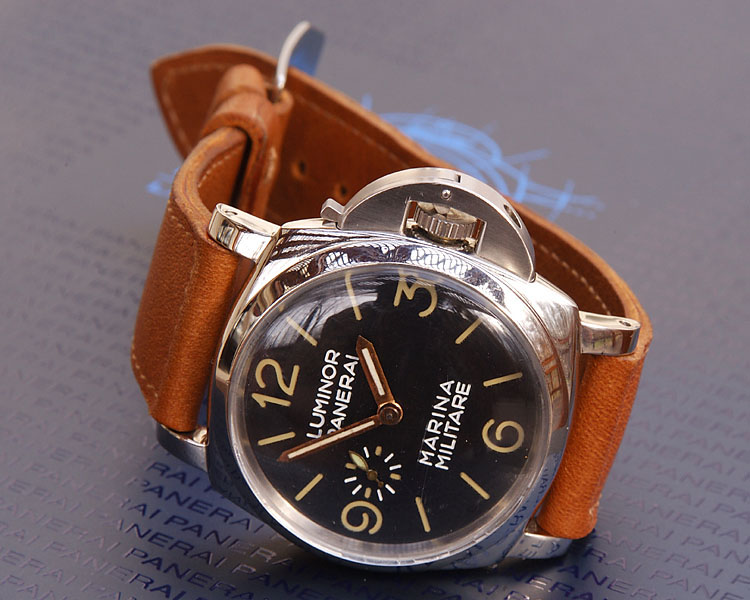
Panerai Luminor Marina Militaire
A Panerai Luminor Marina Militaire — the military-grade variant of the Luminor with crown-guard locking bridge, luminous hour markers, and rubber strap. The Marina Militaire designation reflects Panerai’s historical supply contracts with the Italian Navy.
Photo: Jay Pulli — Copyrighted Free Use — Wikimedia Commons

The P.9000 , introduced in 2009 , was Panerai's first in-house automatic movement — the self-winding counterpart to the P.2002's manual architecture.

Specification Value
Type Automatic (bidirectional winding rotor)
Diameter 37.80mm
Jewels 28
Frequency 28,800 vph (4 Hz)
Power reserve 72 hours (3 days) — two spring barrels
Components ~197 parts
Features Glucydur balance, Incabloc anti-shock, hacking seconds, date, small seconds

P.9001 : GMT variant of the P.9000. 29 jewels, 7.9mm thick, 229 parts, 72-hour power reserve. Adds a central GMT hand tracking a second time zone, plus seconds reset function.

P.9010 : The current-production descendant of the P.9000 family. 28 jewels, 28,800 vph, 72-hour power reserve. The primary automatic calibre across the contemporary Luminor Marina and Submersible collections, paired with date at 3 o'clock and small seconds at 9 o'clock.


P.3000 — Standard Manual Wind

Giovanni Panerai — historical photograph, 1860
A historical photograph of Giovanni Panerai, founder of the shop on the Ponte alle Grazie in Florence in 1860 that would become Officine Panerai. The establishment served initially as a watchmaking school and supplier of precision naval instruments to the Italian Navy.
Photo: Historical photograph — Public Domain — Wikimedia Commons
The P.3000 is the in-house manual-wind calibre for the mainstream Luminor and Radiomir collections — a simpler architecture than the P.2002 without the 8-day reserve or GMT complication, designed for accessible pricing and a clean dial with minimal complication clutter.

Specification Value
Type Hand-wound manual
Diameter 36.60mm (16½ lignes)
Jewels 21
Frequency 21,600 vph (3 Hz)
Power reserve 72 hours (3 days) — two spring barrels
Complications Hours, minutes, small seconds (9 o'clock)

Variants include the P.3000 base (no date), and derivatives with date and/or GMT. The 21,600 vph frequency (lower than the P.2002 and P.9000) reduces energy consumption — appropriate for a three-barrel architecture providing 72-hour reserve.


P.5000 — 8-Day Manual (Accessible)

The P.5000 , introduced at SIHH 2014 , is Panerai's second 8-day manual calibre — architecturally simpler than the P.2002 and positioned at a lower price point within the Panerai collection.

Specification Value
Type Hand-wound manual
Diameter 35.7mm (15¾ lignes)
Thickness 4.5mm
Jewels 21
Frequency 21,600 vph (3 Hz)
Power reserve 192 hours (8 days) — two spring barrels
Components 127 parts
Anti-shock KIF Parechoc
Complications Hours, minutes, small seconds. No date, no power reserve indicator

The P.5000 achieves the 8-day power reserve with only 127 components (versus 247 in the P.2002) by omitting the GMT, date, power reserve indicator, and quick-set functions. It is the movement that brings the 8-day specification — a practical reference to the Angelus military calibres of the 1950s — to a broader range of the Panerai collection.


P.4000 — Ultra-Slim Micro-Rotor

The P.4000 , introduced at Watches & Wonders 2014 , is Panerai's first in-house micro-rotor automatic — the movement enabling the Luminor Due.

Specification Value
Type Automatic, off-centre micro-rotor
Diameter 31mm
Thickness 3.95mm
Jewels 31
Frequency 28,800 vph (4 Hz)
Power reserve 72 hours (3 days) — two spring barrels
Oscillating weight Off-centre tungsten micro-rotor

At 3.95mm, the P.4000 is one of the thinnest automatic movements in production. The micro-rotor sits within the movement's diameter rather than above it — eliminating the rotor height that makes conventional automatics thick. The tungsten weight of the micro-rotor provides sufficient winding mass despite its small diameter.


P.900 — Slim Automatic (ValFleurier Architecture)

The P.900 is a 4.2mm-thick automatic movement, 23 jewels, 28,800 vph, 72-hour power reserve with a single spring barrel. It appears in the Luminor Due alongside the P.4000.

Its base architecture is shared with other Richemont brands via the ValFleurier manufacture — the same base calibre used in the Cartier Calibre 1847 MC, IWC 32000 series, and Baume & Mercier Baumatic. This is a common practice within the Richemont Group and does not affect the movement's reliability, but it distinguishes the P.900 from fully proprietary Panerai calibres like the P.4000.


Calibre Summary

Calibre Type Frequency Power Reserve Jewels Key Feature
P.2002 Manual 28,800 vph 8 days 21 GMT, PR indicator, 3 barrels
P.3000 Manual 21,600 vph 72 hours 21 Mainstream manual
P.5000 Manual 21,600 vph 8 days 21 127 parts, simple 8-day
P.9000 Automatic 28,800 vph 72 hours 28 First in-house auto
P.9010 Automatic 28,800 vph 72 hours 28 Current production auto
P.4000 Auto (micro-rotor) 28,800 vph 72 hours 31 3.95mm thick
P.900 Automatic 28,800 vph 72 hours 23 ValFleurier architecture

Frequently Asked Questions

When did Panerai begin developing in-house movements?
The Neuchâtel Manufacture was established in 2002. The first in-house calibre, the P.2002, launched in 2005. The name reflects the year development began.

What was the P.2002's significance?
Panerai's first in-house movement: hand-wound, 8-day power reserve from three barrels, 28,800 vph, GMT function, date, power reserve indicator, and quick-set local hour. 247 components. It demonstrated Panerai could produce a technically competitive in-house movement from the start.

What is the difference between P.3000 and P.5000?
Both are manual-wind at 21,600 vph with 21 jewels. The P.3000 provides a 72-hour (3-day) power reserve; the P.5000 provides 192 hours (8 days). The P.5000 is simpler (127 parts vs the P.3000's more complex architecture) and omits date and complications.

What makes the P.4000 special?
At 3.95mm thick, it is one of the thinnest automatic movements in production, achieved through a micro-rotor architecture where the oscillating weight sits within the movement's diameter. It enabled the Luminor Due's ~10.5mm case thickness.

When did Panerai stop using Unitas/ETA movements?
In 2018, Panerai announced no new models would use ETA/Unitas movements. The transition was substantially complete by the early 2020s. Pre-manufacture OP calibres (Unitas 6497 based) remain in some earlier references.


Related Articles

Recent Posts

By Zach Charles • October 10, 2026
Hamilton's American Classic Cushion Mechanical revives its 1926 Art Deco cushion watches, seen in Oppenheimer, in 30mm and 34mm with the new hand-wound…
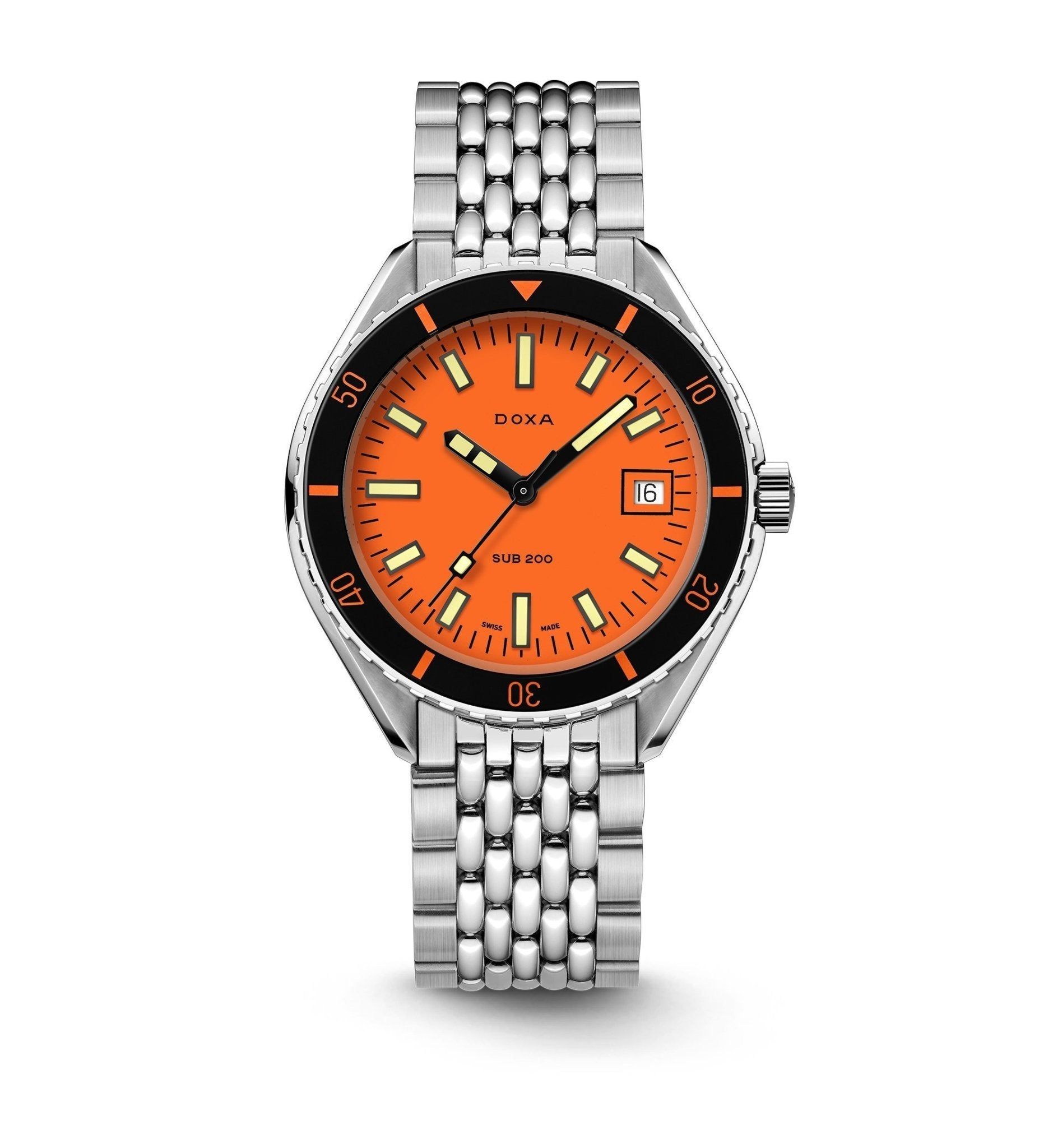
Doxa SUB 200: The Accessible Everyday Diver
By Zach Charles • October 10, 2026
Complete guide to the Doxa SUB 200 — 42mm, 200m, four colorways, Sellita SW200-1. The accessible entry to the Doxa SUB family with the full…
By Zach Charles • October 10, 2026
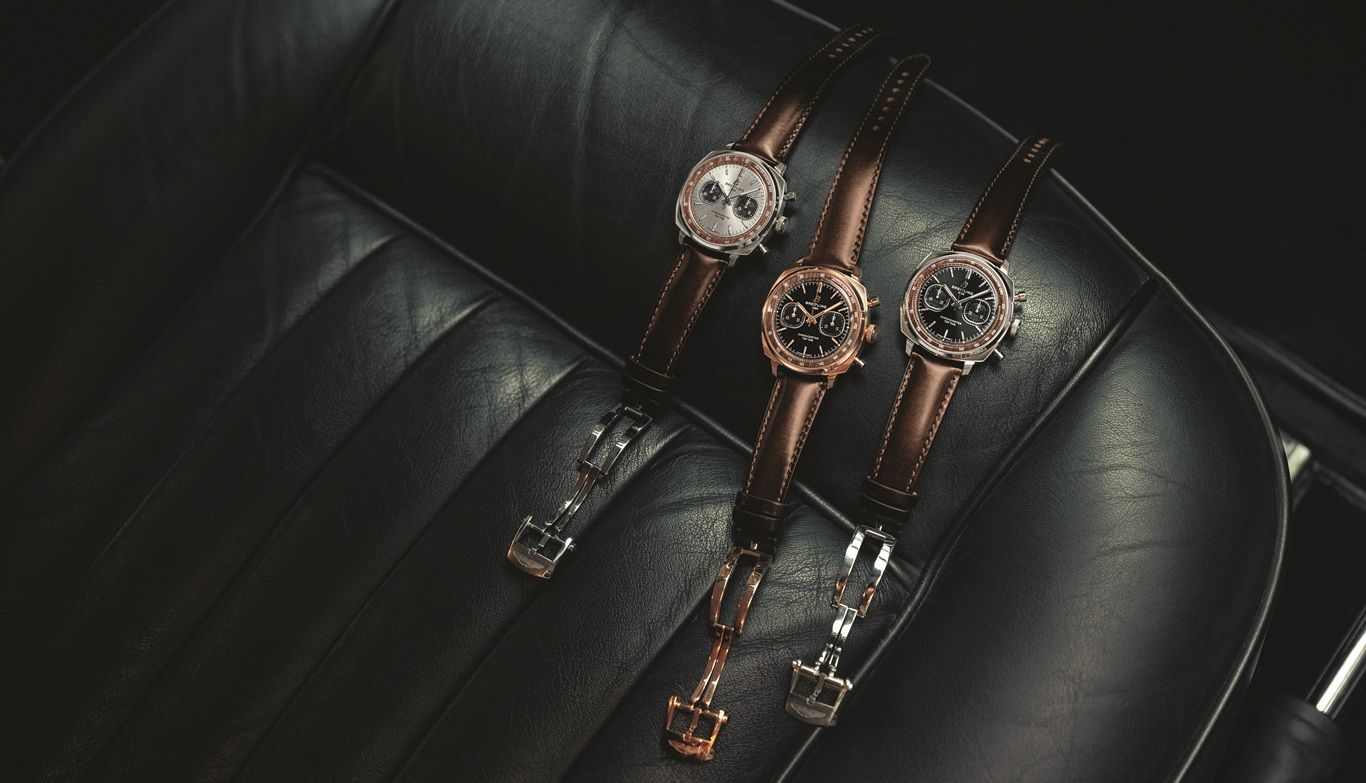
The Breitling Top Time B01 Aston Martin DB5 pairs a cushion-shaped 41mm case, a wooden inner ring and the in-house Caliber 01 across three limited…
By Zach Charles • October 10, 2026
TAG Heuer developed the Mikrograph (2011, 1/100th second), Mikrotimer Flying 1000 (2011, 1/1000th second), and Mikrogirder (2012, 1/2000th second).
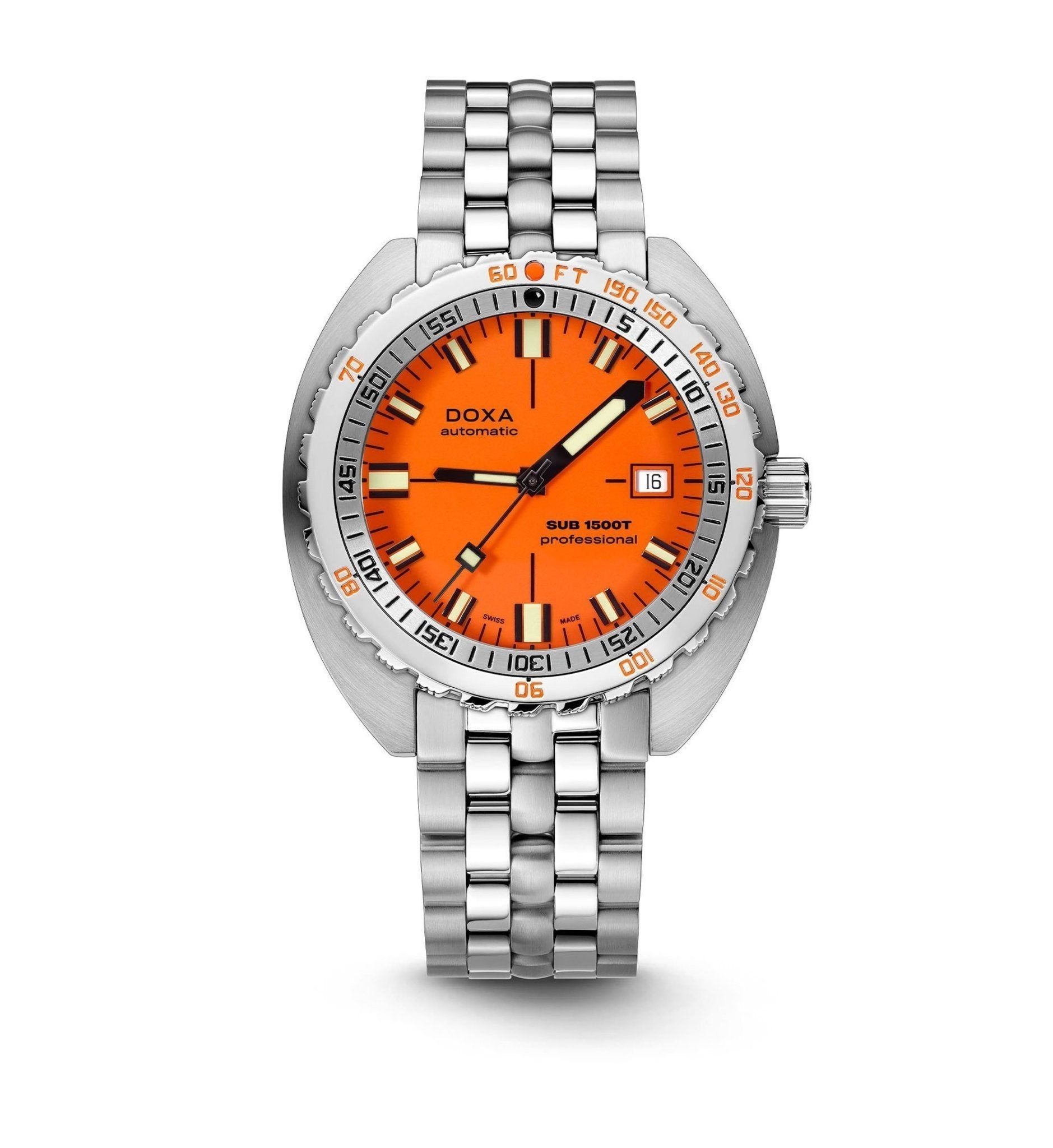
Doxa SUB 1500T: The 1,500-Metre Depth-Rating Flagship
By Zach Charles • October 10, 2026
Complete guide to the Doxa SUB 1500T — 45mm, 1,500m depth rating, helium escape valve, ETA 2892-2 movement, USD 2,690.
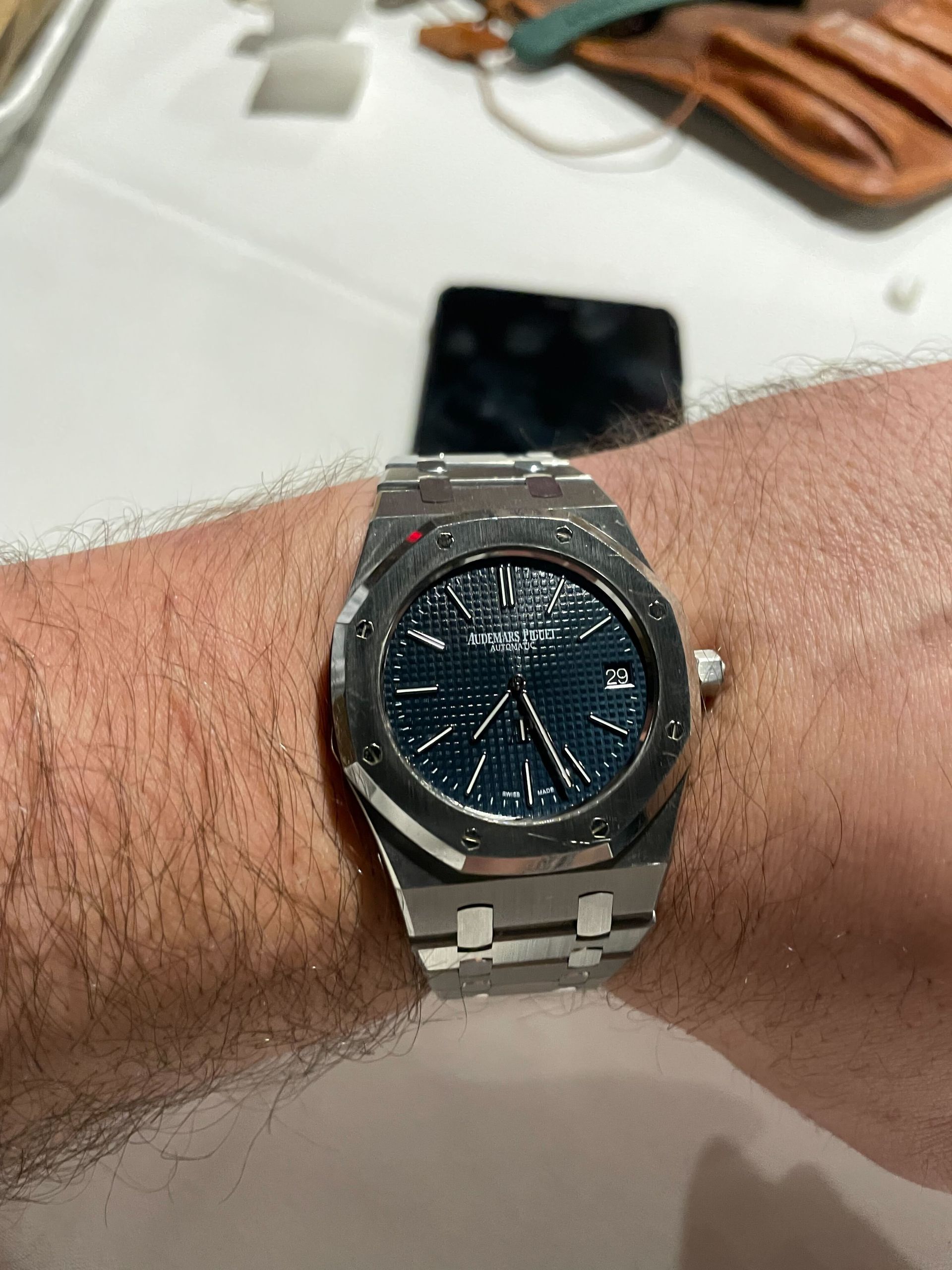
Audemars Piguet Royal Oak 'Jumbo' ref. 15202 with blue tapisserie dial and integrated steel bracelet
By Zach Charles • October 10, 2026
The Audemars Piguet × Swatch Royal Pop is a $400 bioceramic pocket watch in 8 colourways, powered by a new hand-wound SISTEM51 with 90+ hour power…

Time on the Move logo
By Zach Charles • October 10, 2026
Zach Charles is the editor of Time on the Move, an independent watch reference covering brand and model histories, buying guides and release news…
Omega Speedmaster Professional 'Moonwatch' chronograph, front view on steel bracelet
By Zach Charles • October 9, 2026
Find the best watches at every price point from $500 to $15,000 — new and pre-owned. Covers every budget tier with specific reference picks, brand…
By Zach Charles • October 9, 2026
The latest watch news: new releases, Watches and Wonders coverage, discontinuations, industry analysis, and market trends. Currently 1 article.
Seiko's New Panda Chronograph Is Literally a Panda: The Power Design Project HHK001 and HHK002
By Zach Charles • October 8, 2026
Seiko's Power Design Project panda chronograph (HHK001, HHK002) turns the panda dial into an actual panda face, with ear pushers, a 'Sasameter' and a 3D…
Show More