Nomos Glashütte: The Bauhaus Watchmaker Founded in 1990
By Zach Charles, Editor, Time on the Move
Nomos Glashütte is a German watch brand founded in 1990 — the year of German reunification — in the Saxon town of Glashütte, which has been the centre of German precision watchmaking since the mid-nineteenth century. What distinguishes Nomos from other German watch brands is not merely age or location but a deliberate design philosophy: watches that look like nothing else in the market because they were designed by a furniture designer applying Bauhaus principles to horology, not by watchmakers referencing watchmaking tradition.
Glashütte — The German Watchmaking Town
Photo: Berlinerblau — CC BY-SA 4.0 — Wikimedia Commons
Glashütte (population approximately 7,000) sits in the Müglitz valley of Saxony, 30 kilometres south of Dresden. It became a watchmaking centre after Adolf Lange established his workshop there in 1845 , training local craftspeople and creating an industry that would produce precision pocket watches for the German imperial court and military.
The East German state nationalised the Glashütte industry in 1951, consolidating all watchmaking into the VEB Glashütter Uhrenbetriebe (GUB) — a state enterprise that produced watches under the Glashütte Original and Spezimatic brands until reunification in 1990. The GUB collapsed as the East German economy opened to competition.
This created an unusual opportunity in 1990: a town full of trained watchmakers and watch-manufacturing infrastructure, suddenly without an employer, in a country that had just reunified and was experiencing economic transformation at every level. Several new companies were founded in Glashütte in 1990–1992, including both Nomos and the refounded Glashütte Original.
Founding by Roland Schwertner — 1990
Photo: Berlinerblau — CC BY-SA 4.0 — Wikimedia Commons
Roland Schwertner registered Nomos Glashütte in 1990 at the moment of German reunification. Schwertner was not a watchmaker by training — he was a businessman who recognised the opportunity that the post-GUB vacuum presented. His founding insight: high-quality, German-made watches with a modern design identity could fill a gap in the market between the heritage-focused Swiss brands and the functional quartz segment.
The name "Nomos" comes from the Greek and Latin root meaning law, rule, or convention — an abstract but meaningful choice for a brand that would define its own design conventions rather than following established watchmaking aesthetic norms.
The brand's founding location in Glashütte gave it immediate access to the "Glashütte" designation — a legally protected geographical indication in Germany, comparable to Swiss Made in Switzerland. To use the Glashütte name, a watch must be manufactured substantially (at least 50% of value added) within the town. This requirement drove Nomos to progressively build in-house manufacturing capability.
The Design Foundation — Susanne Günther
Photo: Berlinerblau — CC BY-SA 4.0 — Wikimedia Commons
The visual identity of Nomos was shaped by Susanne Günther , a furniture and product designer rather than a watch designer. Schwertner's choice was deliberate: he wanted someone who would design watches with fresh eyes, applying principles of functional design from other fields rather than reproducing watchmaking convention.
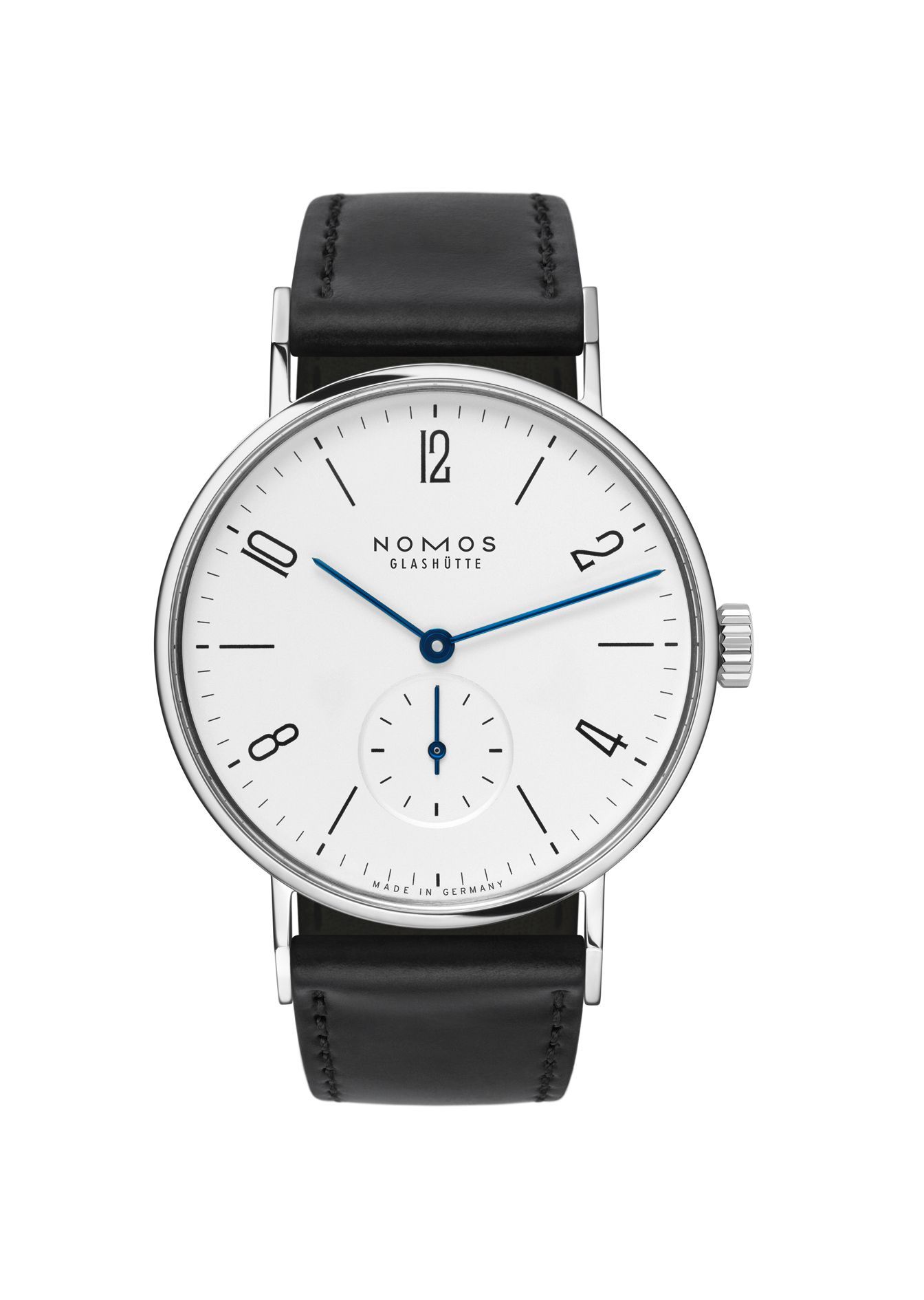
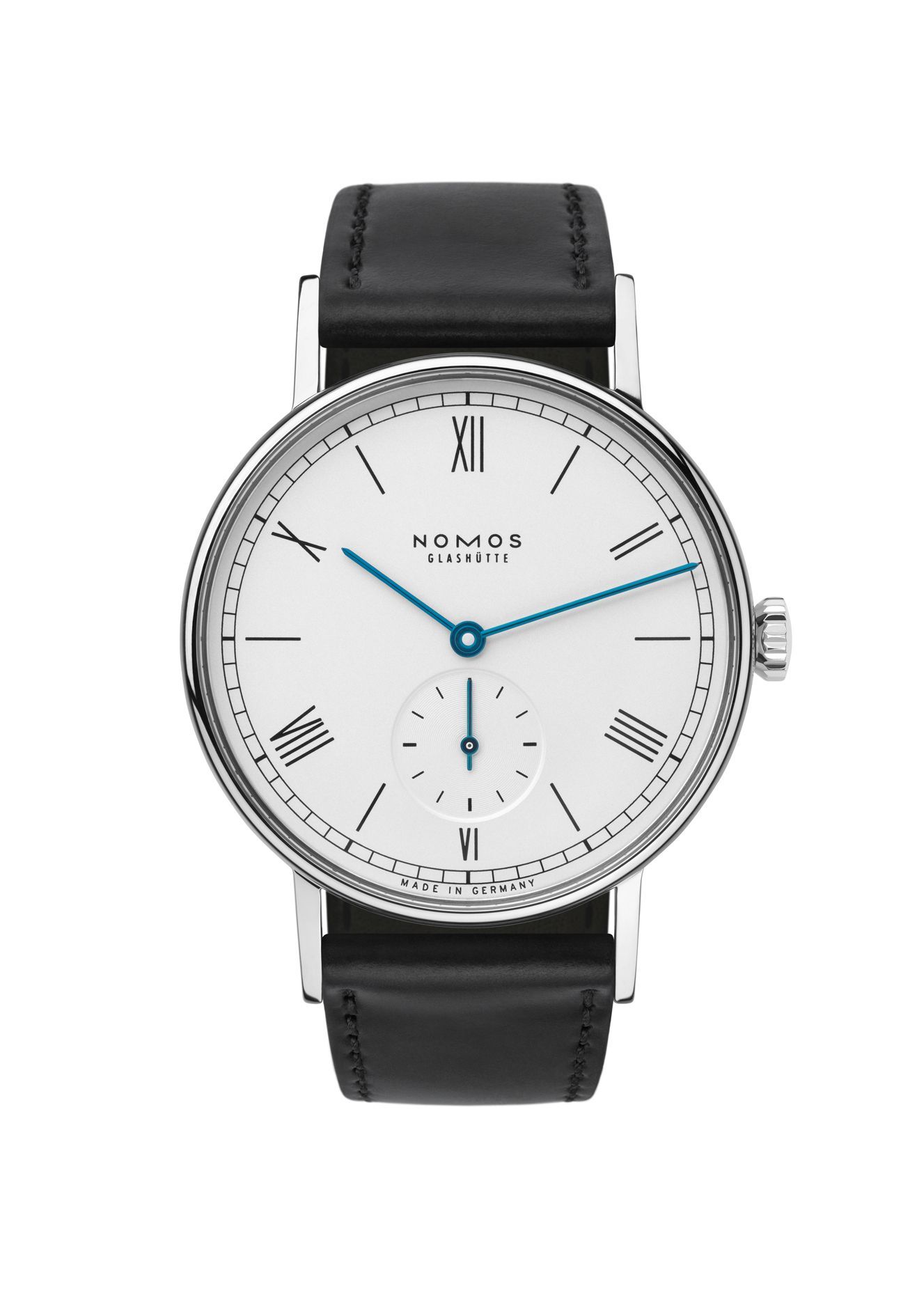
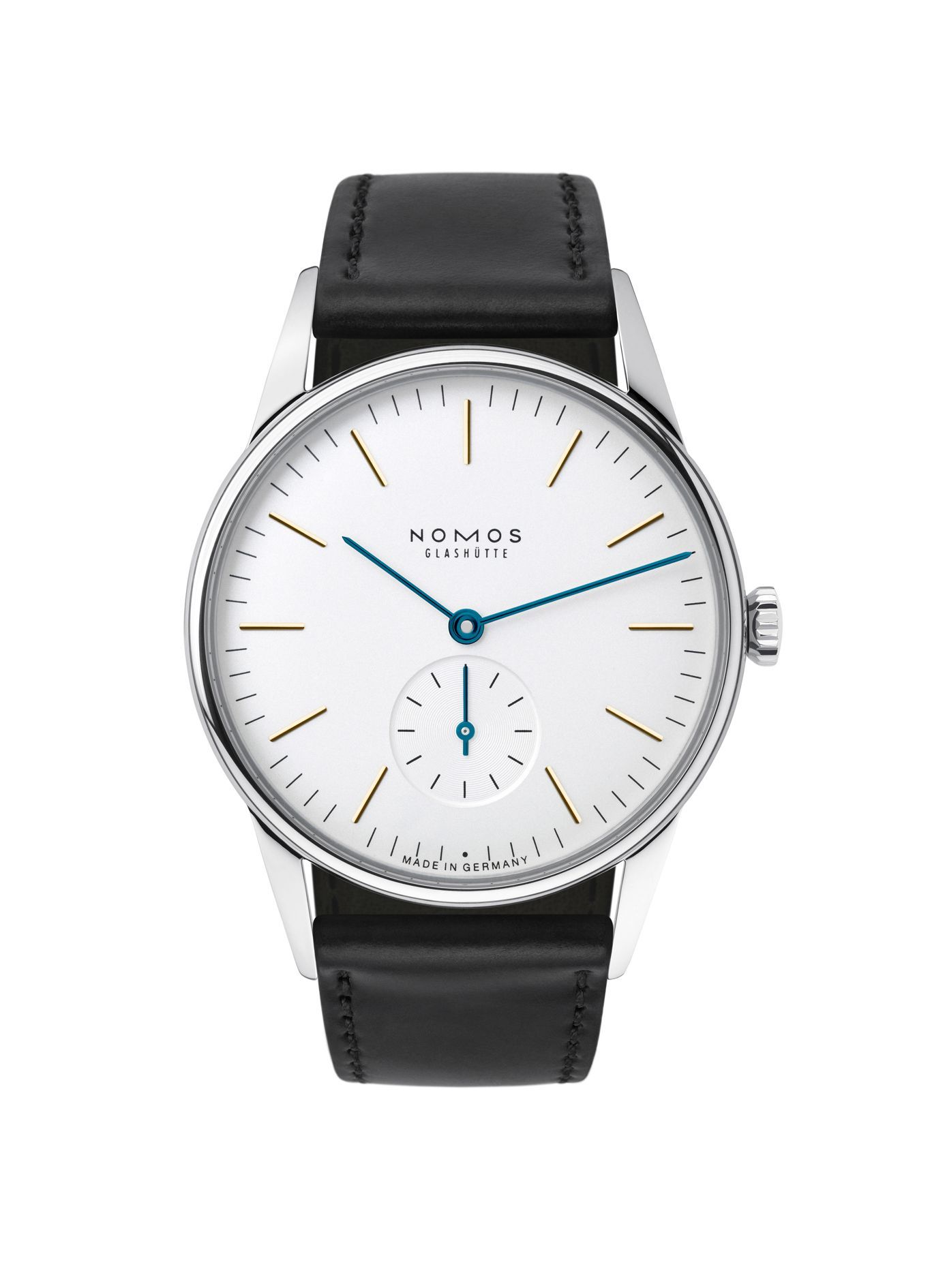
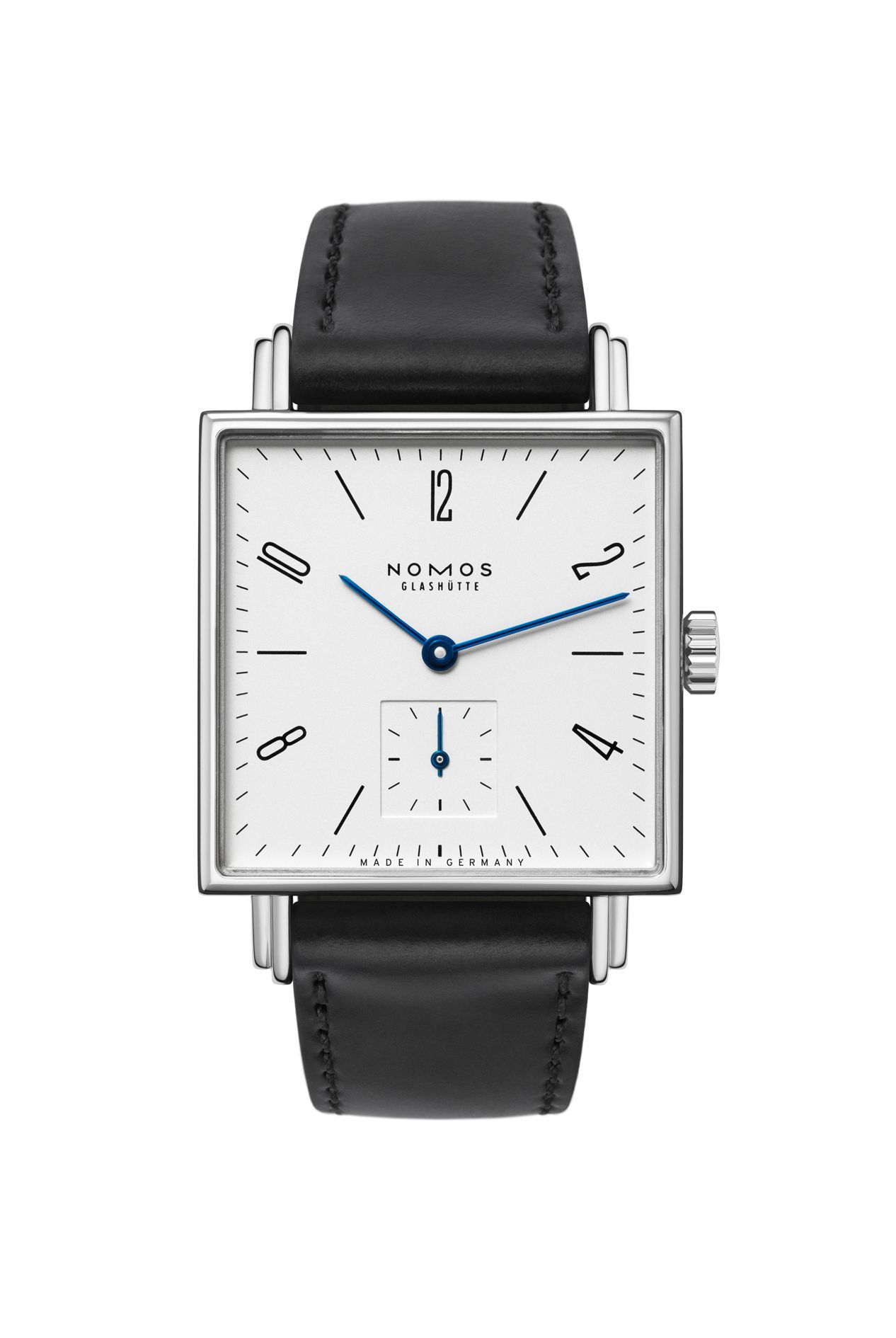
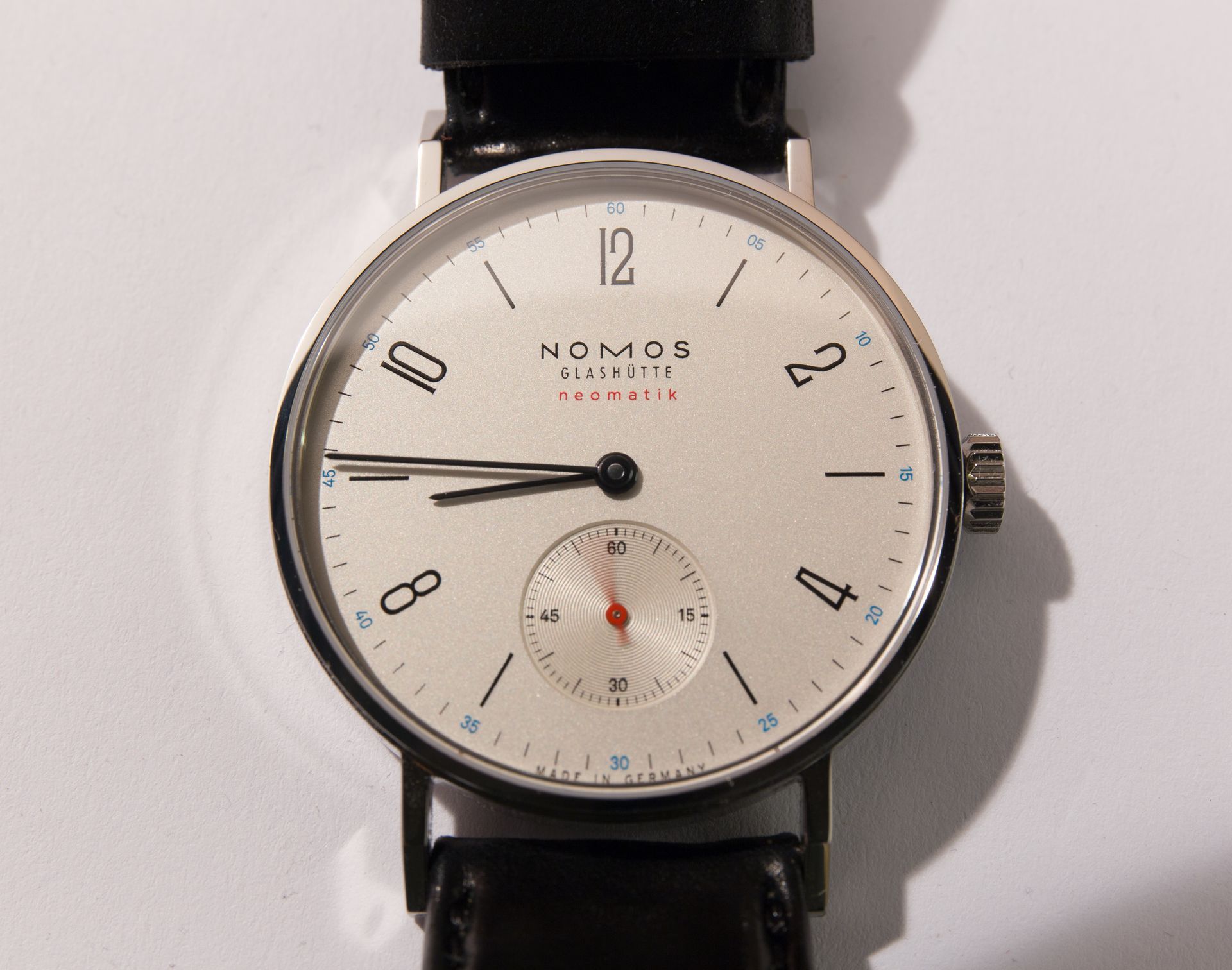
Günther's approach was explicitly Bauhaus-informed : simplicity, reduction to function, systematic visual language. The first Nomos watches — the Tangente and Orion — launched at Baselworld 1992 and established a design vocabulary that has remained consistent:
- Railroad track minute chapter ring (a ring of fine lines for the minutes, rather than a printed track)
- Cathedral hands (or sword hands in some references) with clean geometric profiles
- Restrained typography — custom Nomos typeface, no extraneous text
- White or cream dials as the default, with colour as a conscious accent choice
- Thin case profiles — emphasising lateral proportion over case height
These design choices were unusual for German watchmaking at the time, which tended toward the more conservative Lange aesthetic (three-quarter plate, traditional layout). Nomos made the opposite choice.
Early Years — ETA Movements and Controversy
Photo: Berlinerblau — CC BY-SA 4.0 — Wikimedia Commons
The initial Nomos watches used movements of debated origin. The Alpha manual-wind movement used in the earliest Tangente and Orion references was functionally identical to the Peseux 7001 — a Swiss-made movement manufactured by ETA. Whether Nomos modified this movement in Glashütte or simply installed Swiss movements in Glashütte cases was disputed for years.
The "Made in Glashütte" legal definition requires substantial value-added work within the town. The question of what constitutes sufficient in-Glashütte work — and whether the early Nomos met that standard — was a controversy that Nomos ultimately resolved by developing genuinely in-house movement architecture.
DUW In-House Movements — 2014 Onwards
Photo: GodeNehler — CC BY-SA 4.0 — Wikimedia Commons
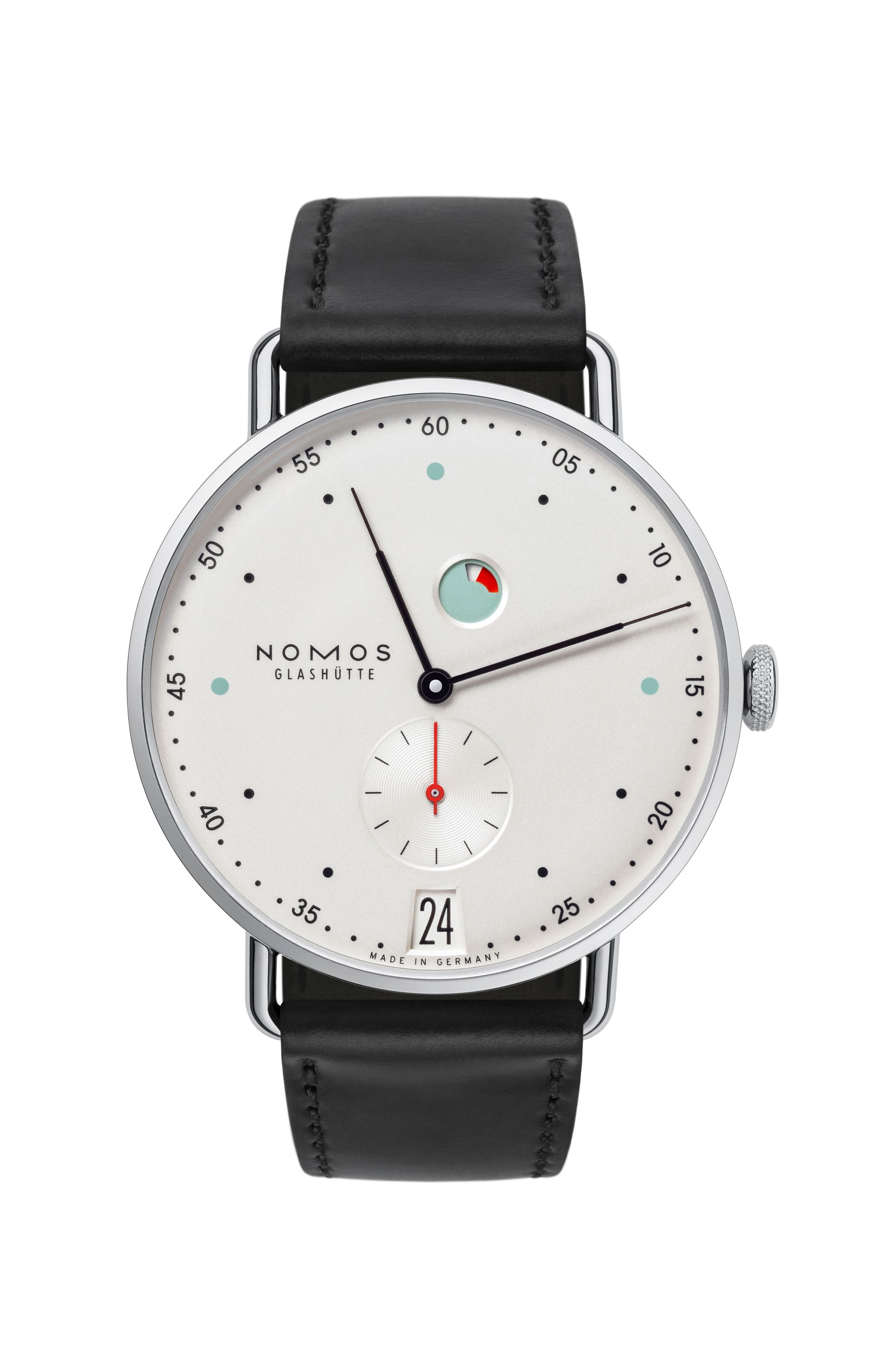
The decisive technical milestone in Nomos history was the launch of the DUW 1001 in 2014 — the first movement that Nomos designed and manufactured entirely in its own facilities in Glashütte. DUW stands for Deutsche Uhrenwerke (German Watch Works) — the name of Nomos's movement manufacture division.
The DUW 1001 is an automatic movement incorporating the swing system — Nomos's proprietary lever escapement, designed in collaboration with external horological engineers. The swing system was patented and provided genuine technical differentiation: a lever escapement with modified geometry that improves efficiency compared to the standard Swiss lever.
The DUW launch resolved the in-house controversy definitively. Subsequent DUW movements have expanded the range: DUW 3001 (thin automatic), DUW 6101 (neomatik with complications), DUW 5001 (sport), and the original Alpha and Delta in revised in-house versions.
Current Scale and Retail
Photo: Berlinerblau — CC BY-SA 4.0 — Wikimedia Commons

Nomos produces approximately 100,000 watches annually — a substantial figure for an independent German brand. The price range runs from approximately €1,600 (Tangente 33, manual) to €8,000 (Lambda ultra-thin, limited complications). The brand sits clearly in the mid-high segment: more expensive than Longines or Hamilton, less expensive than the Swiss Grand Maison brands.
Retail is distributed through boutiques in major cities, authorised dealers, and Nomos's own online store — one of the few fine watch brands to sell directly online with consistent pricing. Online retail has been an important growth channel.
The managing director is Uwe Ahrendt . Production is in Glashütte — the watch manufactury building, opened 2011, is purpose-designed for the DUW movement production and houses the brand's design studio alongside manufacturing.
Nomos Glashütte Model and Technology Guides
Each Nomos Glashütte collection and key technology has its own in-depth history on Time on the Move:
- Nomos Ahoi: The Sports Watch from a Dress Watch Brand
- Nomos Glashütte and Bauhaus Design: Form Follows Function
- Nomos Club: The Entry-Level Nomos with Arc Seconds Display
- Nomos DUW Movements: In-House Calibres from Glashütte
- Nomos Lambda: Ultra-Thin Watchmaking from Glashütte
- Nomos Metro: Complications in a Bauhaus Dress Watch
- Nomos Orion: The Classic Dress Watch Since 1990
- Nomos Tangente: The Iconic Bauhaus Wristwatch Since 1992
- Nomos Tetra: The Square-Case Watch in Glashütte