Nomos Glashütte and Bauhaus Design: Form Follows Function

Zach Charles • June 25, 2026

Share this article

Nomos Glashütte and Bauhaus Design: Form Follows Function

The Bauhaus school operated for fourteen years, from 1919 to 1933. It trained fewer than 1,300 students. It was closed by the Nazis in its final year. And yet it produced a design philosophy so coherent and so applicable to industrial production that it has shaped product design, architecture, typography, and visual communication for the entire century since. When Roland Schwertner founded Nomos Glashütte in 1990, choosing Bauhaus as the design reference was not a marketing decision — it was a declaration of cultural alignment.


The Bauhaus School — 1919 to 1933

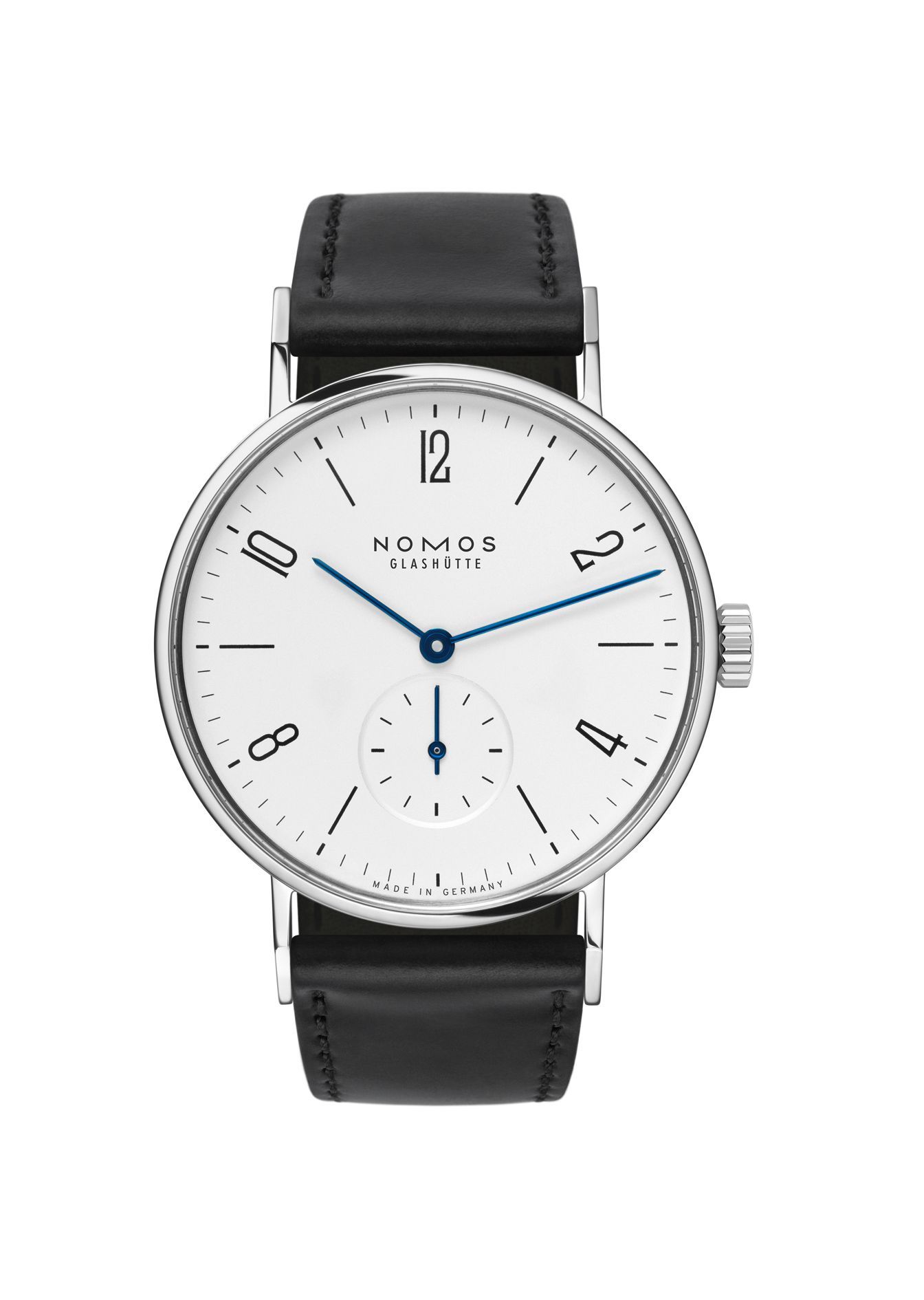
NOMOS Glashütte Tangente dress watch
NOMOS Glashütte Tangente — the brand’s most iconic reference, showing the railroad track chapter ring, cathedral hands, and clean white dial designed by Susanne Günther.
Photo: Berlinerblau — CC BY-SA 4.0 — Wikimedia Commons

The Staatliches Bauhaus (State House of Building) was founded in Weimar, Germany in 1919 by architect Walter Gropius . Its founding manifesto declared the unity of art and craft — against the prevailing separation of fine art from applied design — and proposed that the ultimate goal of all creative activity was architecture. Students studied both artistic concept and craft execution.

The school moved to Dessau in 1925 (where its iconic building, designed by Gropius, remains standing) and to Berlin in 1932, before being closed under National Socialist pressure in 1933 . Masters at the school included Wassily Kandinsky, Paul Klee, László Moholy-Nagy, Marcel Breuer, and Ludwig Mies van der Rohe (the final director).

The Bauhaus's design philosophy centred on several principles:

Form follows function: Objects should be designed for their function first; ornament should emerge from, not be applied to, functional form. Louis Sullivan's phrase, embraced by the school.

Reduction to essentials: Remove everything that does not serve the object's purpose. The result is not emptiness but clarity.

Industrial methods: Design for machine production, not hand craft — making good design accessible rather than exclusive to those who can afford bespoke objects.

Systematic language: A consistent visual vocabulary across a designer's or institution's work — so that individual objects are recognisably part of a family.


Why a German Watchmaker in 1990 Chose Bauhaus

Nomos Tangente neomatik with in-house automatic movement
Nomos Tangente neomatik — the Tangente fitted with Nomos’s proprietary in-house automatic DUW movement incorporating the swing system escapement.
Photo: GodeNehler — CC BY-SA 4.0 — Wikimedia Commons
Nomos was founded in 1990 , the year Germany reunified. Glashütte, in the former East Germany, had spent 40 years under GDR state control. The watchmaking tradition that Nomos inherited was the Glashütte of the nineteenth century — Adolf Lange's precision pocket watches, observatory chronometers, technical instruments. The GDR era had produced functional timepieces but suppressed design development.

In this context, Bauhaus was an available German design language that was simultaneously:
- Genuinely German (founded in Germany, taught by German designers)
- Internationally respected (Bauhaus influence extended to Scandinavia, the US, and beyond through the diaspora of its masters)
- Not associated with the GDR (the Bauhaus was a Weimar-era institution; the Nazis closed it, and the GDR never embraced it)
- Applicable to precision instruments (the Bauhaus explicitly addressed precision, measurement, and instrument design)

Choosing Bauhaus was choosing a German modernism that was neither nationalist nor communist — an artistically legitimate German tradition that could speak to international buyers.


Susanne Günther and the Nomos Design Vocabulary

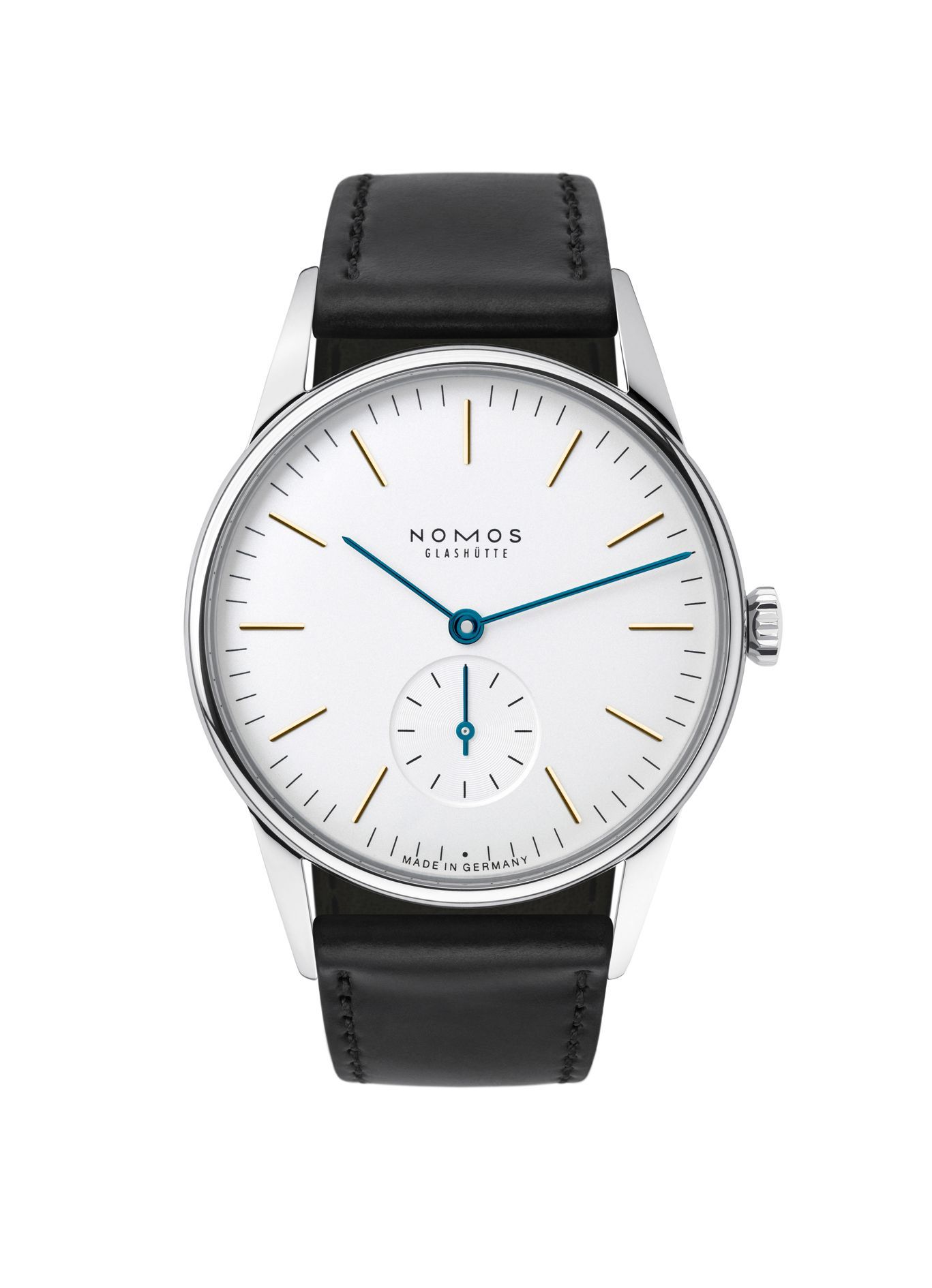
NOMOS Glashütte Orion dress watch
NOMOS Glashütte Orion — one of the original 1990 Nomos references, representing the brand’s most classical dress watch design with small seconds at 6 o’clock.
Photo: Berlinerblau — CC BY-SA 4.0 — Wikimedia Commons

The application of Bauhaus principles to Nomos watches was the work of Susanne Günther , hired by Roland Schwertner as designer. Günther's background was furniture and product design — specifically within the Bauhaus-influenced German industrial design tradition. She was not a watch designer.

This non-specialist background was intentional. A specialist watch designer would reference watchmaking conventions; Günther referenced design principles. The result:

Typography: Nomos developed its own typeface for dial text — a clean sans-serif that is identifiable as a Nomos specific font rather than a standard helvetica or optima variant. The typography is used consistently across all references, sized and positioned according to systematic rules.

Railroad track chapter ring: The fine-line minute track around the dial perimeter references scientific instrument dials — measuring devices, not luxury consumer goods. It signals precision without using luxury visual language.

Hand profiles: The cathedral (sword) hands are geometrically simple profiles with maximum legibility. No decorative fluting, no applied lume blobs — just the hand form, as clean as possible while performing its function.

Dial restraint: The Nomos dial carries exactly what is required for reading the time. Nothing more. This is not minimalism as an aesthetic; it is functionalism — removing what does not serve reading.


Dieter Rams and the German Design Tradition

Nomos Glashütte Metro complications dress watch
Nomos Glashütte Metro — the brand’s complications platform in dress watch form, showing the clean integration of functional indicators within a Bauhaus-influenced dial.
Photo: Berlinerblau — CC BY-SA 4.0 — Wikimedia Commons

Nomos is frequently associated with Dieter Rams — the industrial designer whose work at Braun (shavers, radios, audio equipment) in the 1950s–1980s applied Bauhaus principles to mass-market consumer electronics. Rams's ten principles of good design — beginning with "Good design is innovative" and including "Good design is as little design as possible" — articulate the Bauhaus legacy in explicit product design terms.

Apple's Jony Ive explicitly credited Rams as an influence on Apple's design under Steve Jobs. The Braun-Apple lineage is well documented; the Braun-Nomos lineage is the watch equivalent: both brands apply the same functionalist principle to their respective product categories.


The 2019 Bauhaus Centenary

NOMOS Glashütte Ludwig dress watch
NOMOS Glashütte Ludwig — a round-cased dress watch from the Nomos collection, demonstrating the brand’s consistent application of Bauhaus design principles.
Photo: Berlinerblau — CC BY-SA 4.0 — Wikimedia Commons

The 100th anniversary of the Bauhaus in 2019 provided Nomos with an opportunity for explicit commemorative engagement. The brand produced limited editions specifically marking the centenary:

  • Tangente 38 Bauhaus 100 : A special dial with typographic elements referencing Bauhaus graphic design
  • Club Automat Bauhaus 100 : A limited colour edition

More significantly, Nomos published design essays, hosted events, and participated in centenary programming — positioning the brand not as a commercial exploiter of an anniversary but as a participant in an ongoing design conversation.


Bauhaus Against Traditional Glashütte Ornament

NOMOS Glashütte Tetra square-case watch
NOMOS Glashütte Tetra — the brand’s square-case reference, with the railroad track chapter ring adapted for a square dial perimeter.
Photo: Berlinerblau — CC BY-SA 4.0 — Wikimedia Commons
Traditional Glashütte watchmaking — as embodied by A. Lange & Söhne — uses the Glashütte stripe, three-quarter plate, and decorative engraving as visible craft signals. The movement is a decorated object; quality is expressed through ornament.

Nomos uses the Glashütte stripe and three-quarter plate (tradition) but removes ornament from the dial (modernism). This is the most interesting tension in the Nomos design position: it maintains the craft tradition of the movement interior while applying Bauhaus principles to the exterior-facing dial.

The result is a watch that is, in its way, more demanding than conventional luxury watchmaking: it offers no visual shortcuts. The quality must be found in precision, proportion, and the quality of executed simplicity — not in decoration that signals expensive-ness.


Recent Posts

By Zach Charles • October 10, 2026
Hamilton's American Classic Cushion Mechanical revives its 1926 Art Deco cushion watches, seen in Oppenheimer, in 30mm and 34mm with the new hand-wound…
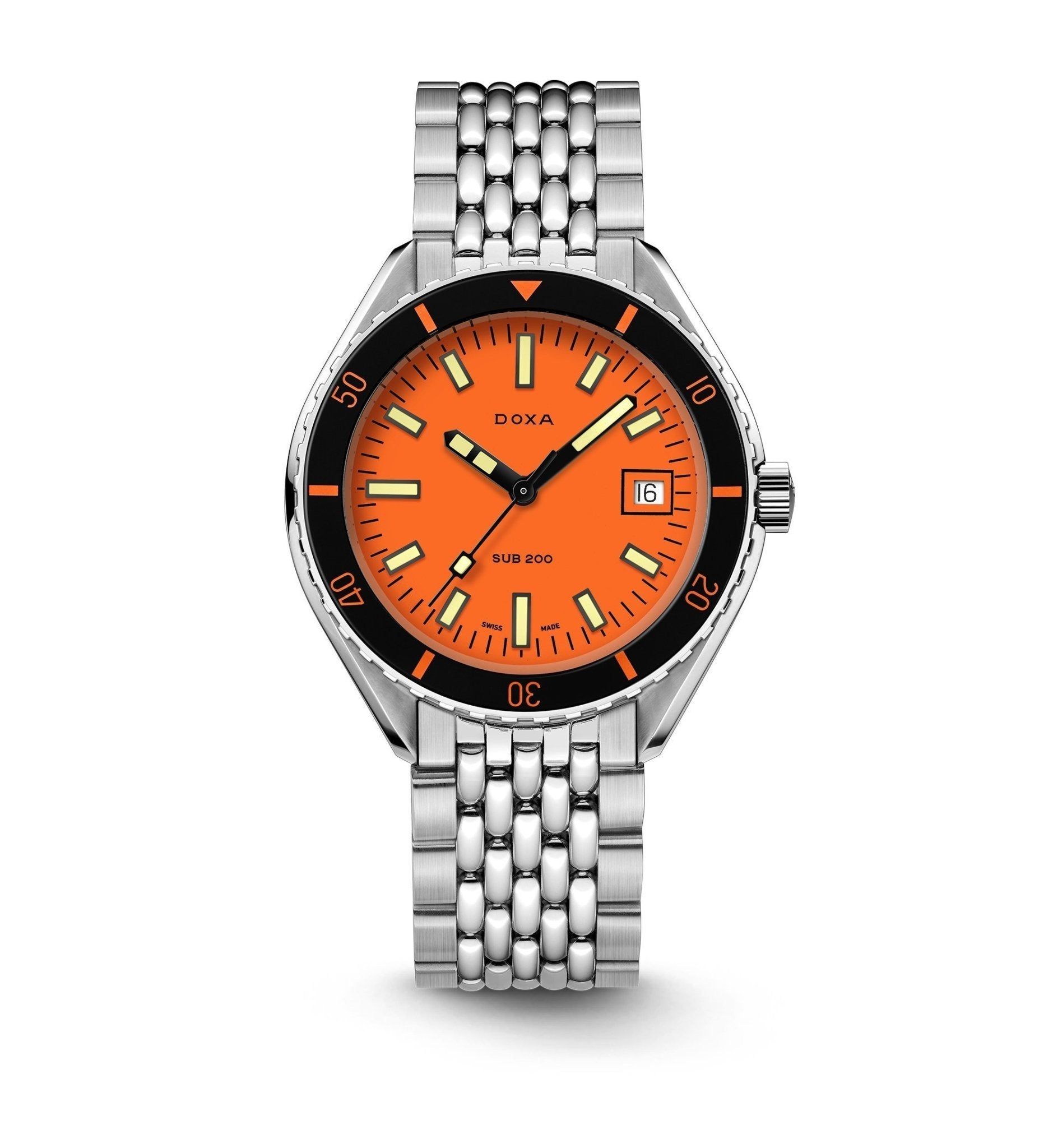
Doxa SUB 200: The Accessible Everyday Diver
By Zach Charles • October 10, 2026
Complete guide to the Doxa SUB 200 — 42mm, 200m, four colorways, Sellita SW200-1. The accessible entry to the Doxa SUB family with the full…
By Zach Charles • October 10, 2026
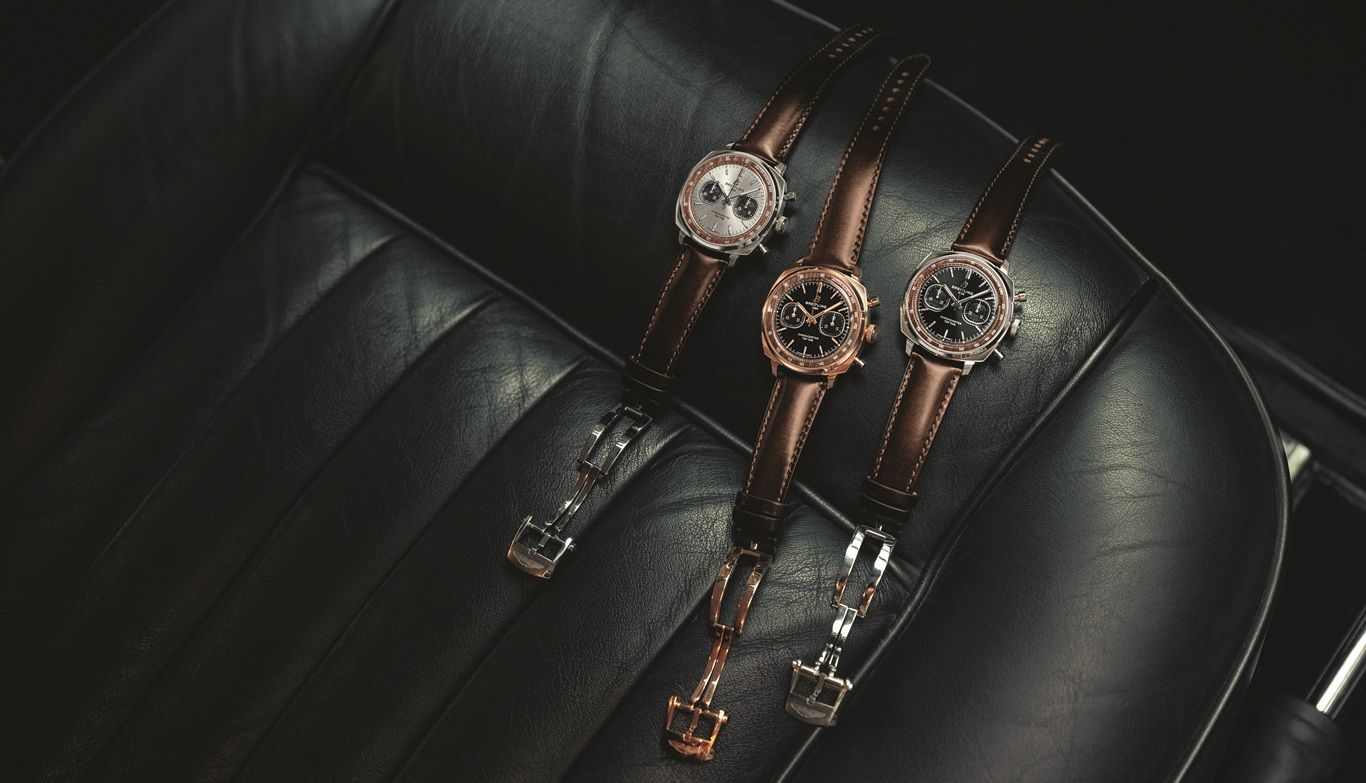
The Breitling Top Time B01 Aston Martin DB5 pairs a cushion-shaped 41mm case, a wooden inner ring and the in-house Caliber 01 across three limited…
By Zach Charles • October 10, 2026
TAG Heuer developed the Mikrograph (2011, 1/100th second), Mikrotimer Flying 1000 (2011, 1/1000th second), and Mikrogirder (2012, 1/2000th second).
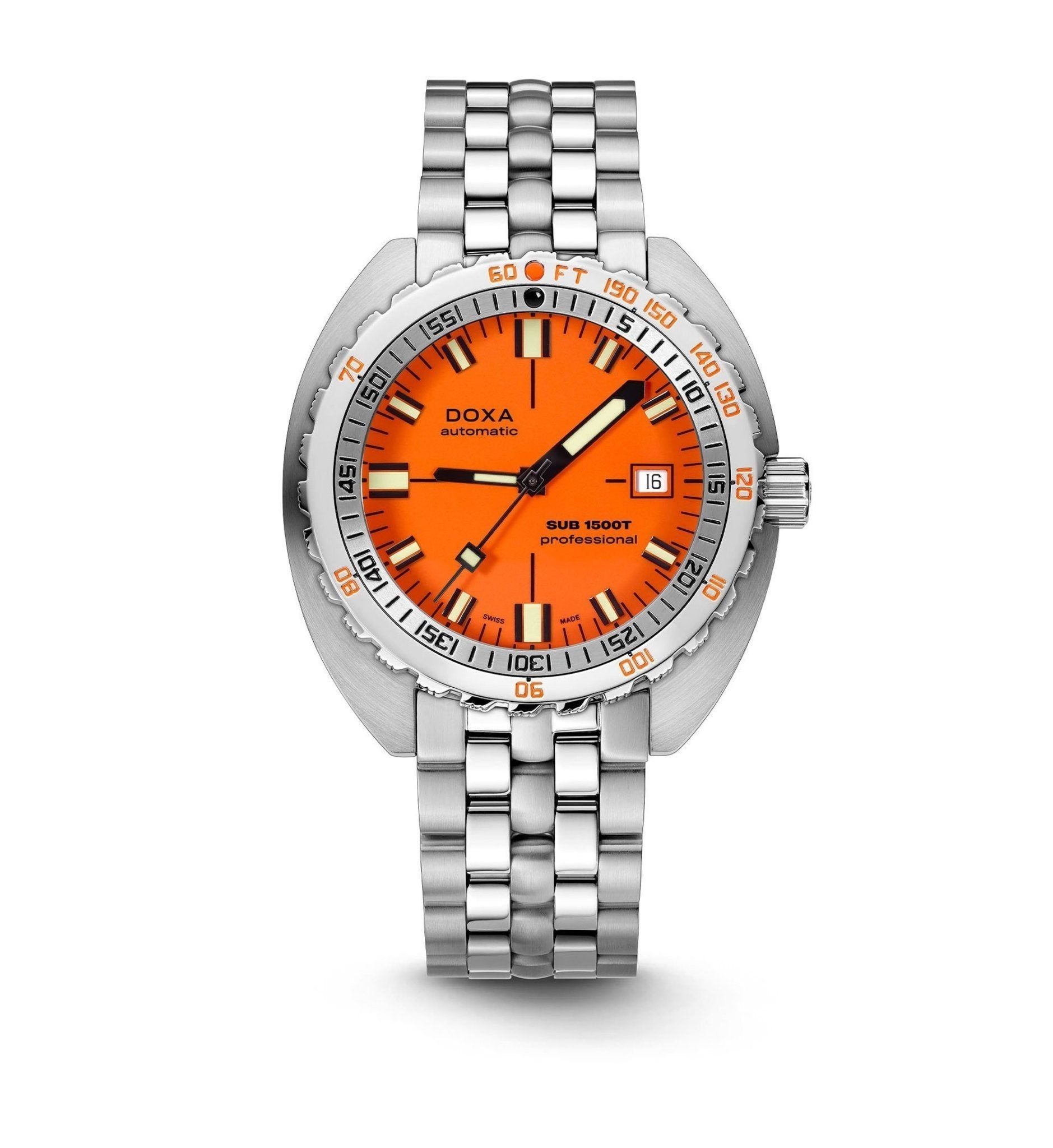
Doxa SUB 1500T: The 1,500-Metre Depth-Rating Flagship
By Zach Charles • October 10, 2026
Complete guide to the Doxa SUB 1500T — 45mm, 1,500m depth rating, helium escape valve, ETA 2892-2 movement, USD 2,690.
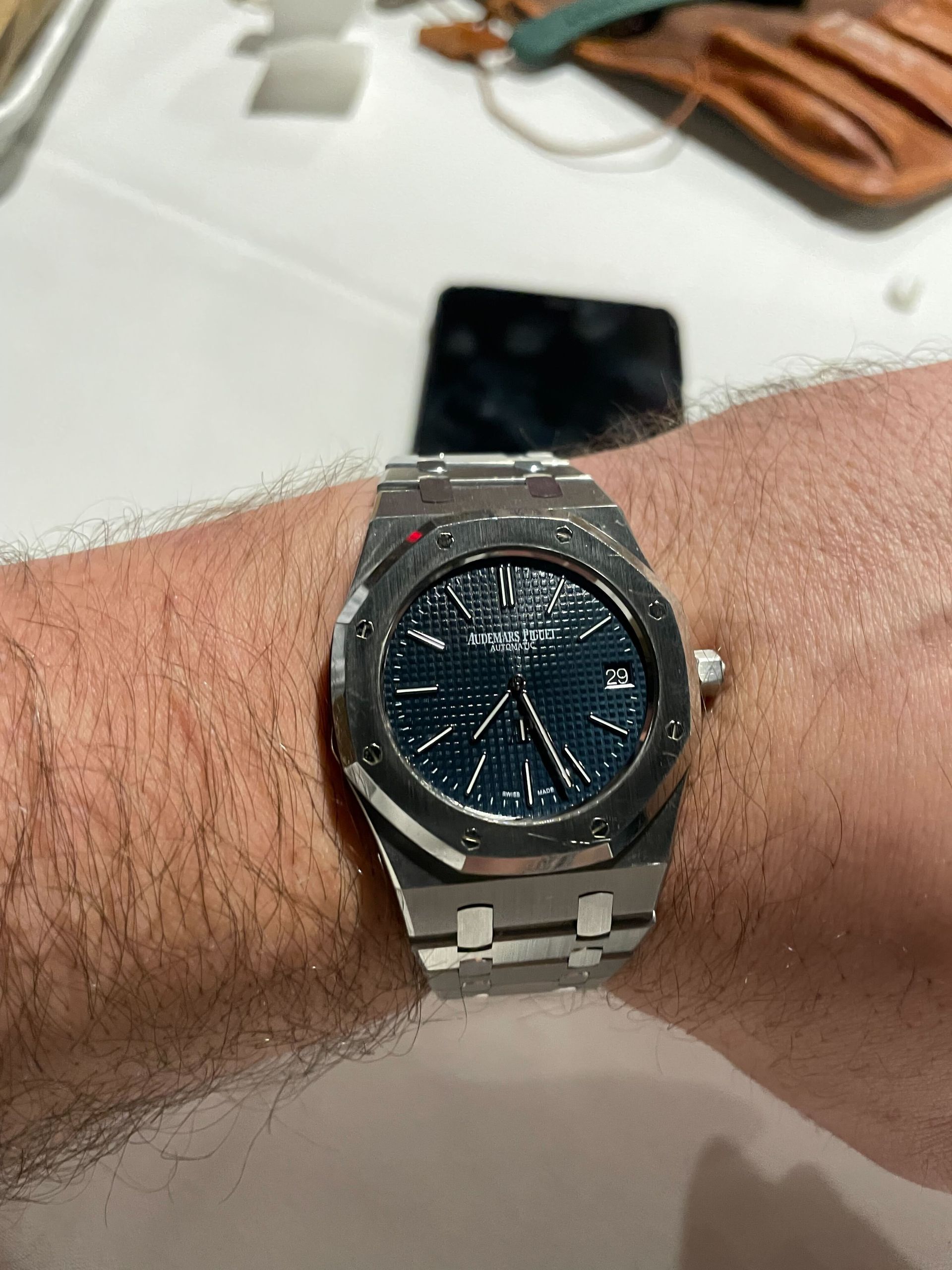
Audemars Piguet Royal Oak 'Jumbo' ref. 15202 with blue tapisserie dial and integrated steel bracelet
By Zach Charles • October 10, 2026
The Audemars Piguet × Swatch Royal Pop is a $400 bioceramic pocket watch in 8 colourways, powered by a new hand-wound SISTEM51 with 90+ hour power…

Time on the Move logo
By Zach Charles • October 10, 2026
Zach Charles is the editor of Time on the Move, an independent watch reference covering brand and model histories, buying guides and release news…
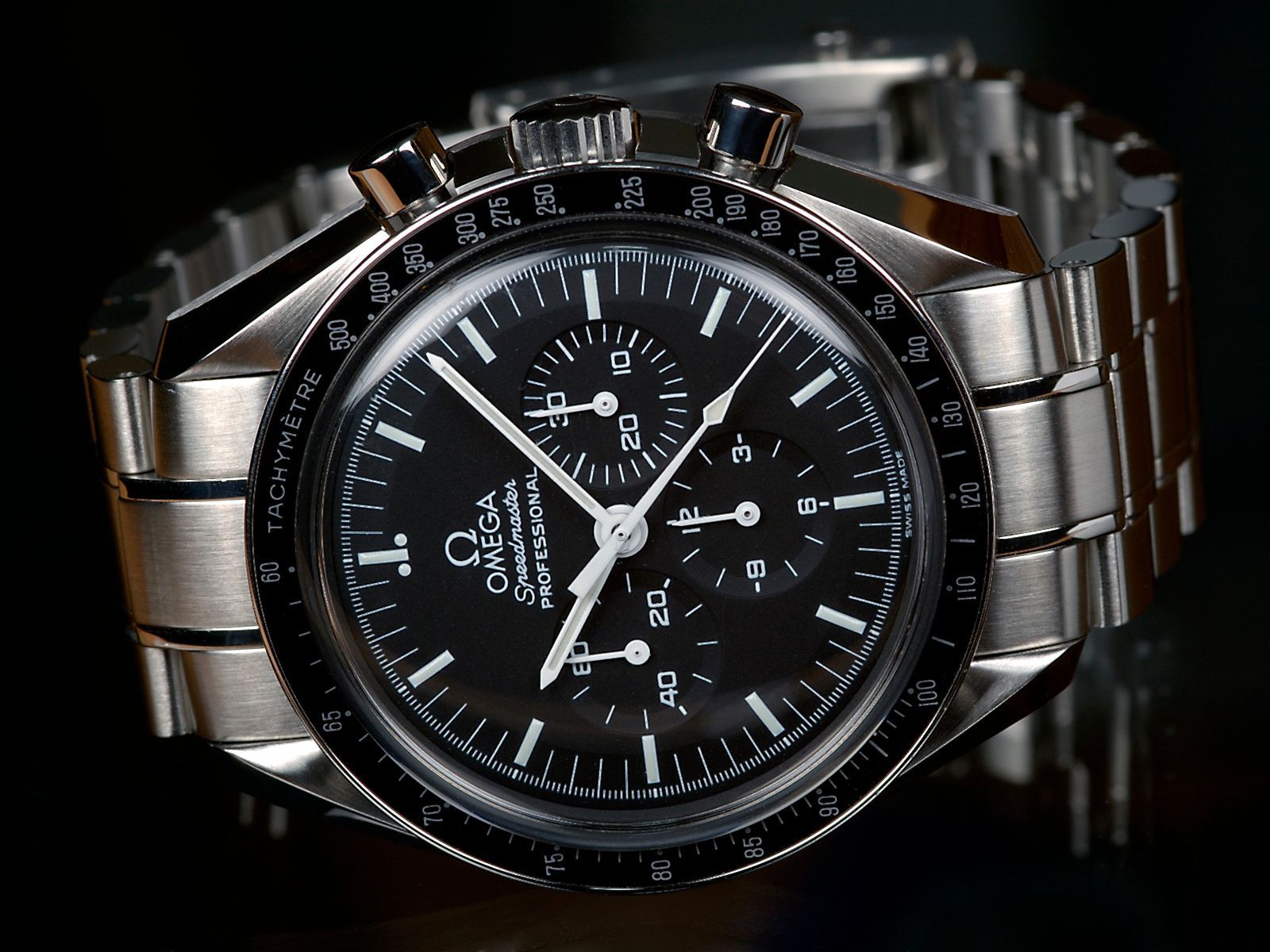
Omega Speedmaster Professional 'Moonwatch' chronograph, front view on steel bracelet
By Zach Charles • October 9, 2026
Find the best watches at every price point from $500 to $15,000 — new and pre-owned. Covers every budget tier with specific reference picks, brand…
By Zach Charles • October 9, 2026
The latest watch news: new releases, Watches and Wonders coverage, discontinuations, industry analysis, and market trends. Currently 1 article.
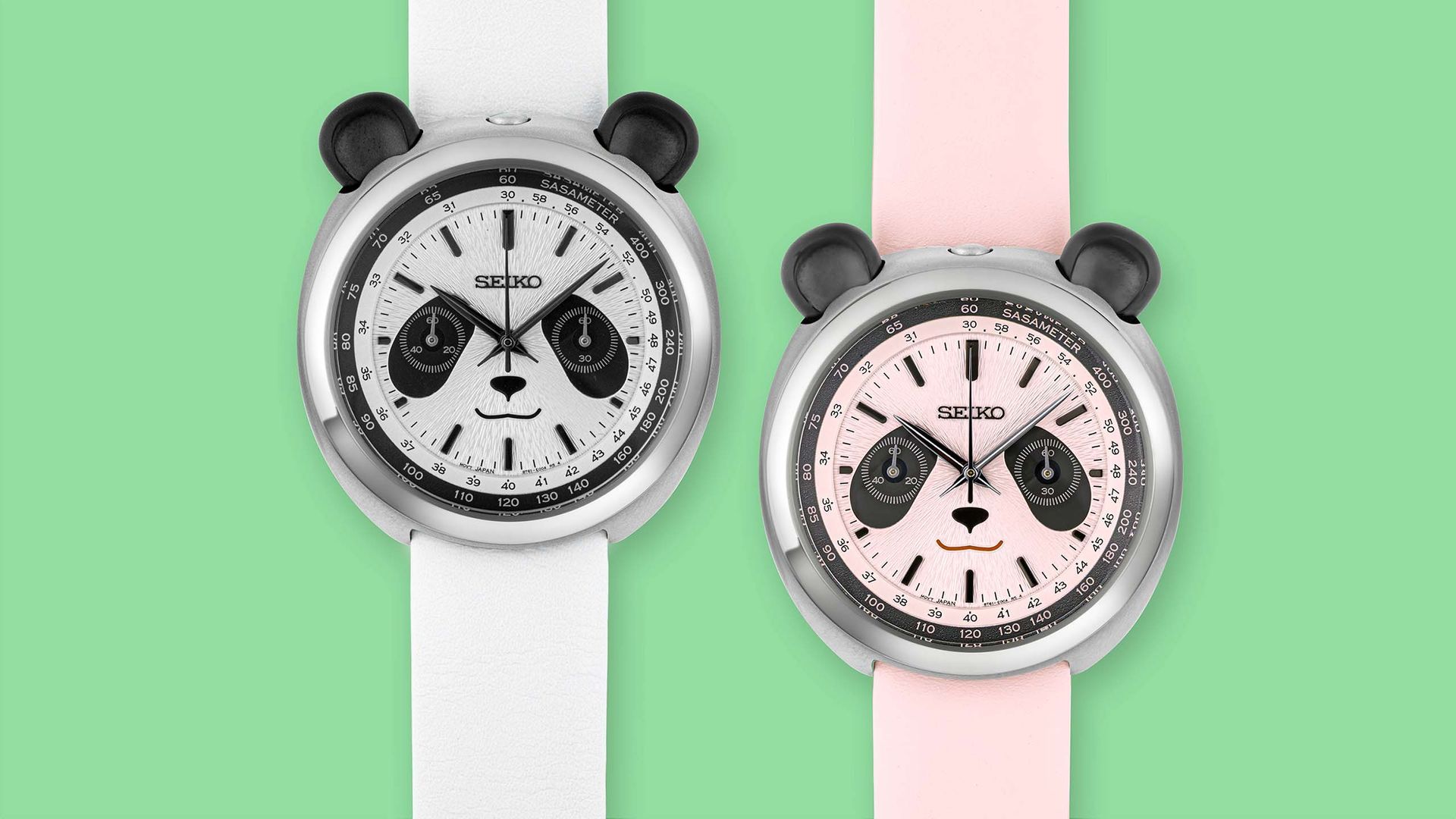
Seiko's New Panda Chronograph Is Literally a Panda: The Power Design Project HHK001 and HHK002
By Zach Charles • October 8, 2026
Seiko's Power Design Project panda chronograph (HHK001, HHK002) turns the panda dial into an actual panda face, with ear pushers, a 'Sasameter' and a 3D…
Show More