Nomos Tetra: The Square-Case Watch in Glashütte
The Tetra is Nomos's square-case watch — the only member of the collection that departs from the round case form that defines the Tangente, Orion, Club, Metro, Ahoi, and Lambda. Its cushion-square case, flat profile, and dial design adapted for a square format make it a genuinely distinct object in the Nomos lineup, and its development of a neomatik automatic for a non-round case represents a considerable technical achievement.
The Square Watch in Watchmaking History
Photo: Berlinerblau — CC BY-SA 4.0 — Wikimedia Commons
Square-case watches have a specific place in watchmaking history. The 1920s and 1930s saw the first formal square wristwatches as the Art Deco movement brought geometric forms from architecture and design into jewellery and watchmaking: Cartier's Tank (1917), various Art Deco gold squares, and the cushion forms of the interwar period.
The 1970s saw a second square watch moment — the decade of the Cartier Santos, the Piaget Polo, and various tonneau and square forms that defined an era before the "sport watch" aesthetic came to dominate.
Square watches never disappeared entirely, but the round watch's dominance from the 1980s onward made the square a niche. Producing a square watch requires specific manufacturing for non-round cases, non-round crystals, and movements that must be adapted to fill square case volumes efficiently.
The Tetra Design
Photo: Berlinerblau — CC BY-SA 4.0 — Wikimedia Commons
The Tetra is named for the Greek prefix "tetra" — four, referring to the four sides of its square case. The case is more precisely a cushion square : the corners are rounded, the sides very slightly curved, giving the case a softness that prevents it from looking overly mechanical or industrial.
The dial design adapts the Nomos vocabulary to the square format:
- The railroad track minute chapter ring runs around the square perimeter of the dial — this is technically demanding, as the chapter marks must follow a square path while maintaining consistent spacing
- The cathedral hands are shortened and proportioned for the square dial space
- The dial maintains the same restrained typography as round Nomos models
- No dial clutter : no subdials, no date window on the base reference — the Tetra dial is even more austere than the Tangente
Sizing — 27mm to 39mm
Photo: Berlinerblau — CC BY-SA 4.0 — Wikimedia Commons
The Tetra is available in compact to moderate sizes:
| Reference | Size | Movement |
|---|---|---|
| Tetra 27 | 27mm | DUW Alpha manual |
| Tetra 29 | 29mm | DUW Alpha manual |
| Tetra 33 | 33mm | DUW Alpha manual |
| Tetra Neomatik 39 | 39mm | DUW 3001 neomatik |
The 27mm and 29mm are specifically designed for wrists that find most watches oversized — the 27mm Tetra is one of the smallest fine mechanical watches available at retail from any manufacturer. These compact sizes are manual-wind: fitting an automatic rotor into a square case at these dimensions is not feasible without unacceptable case height.
The Tetra Neomatik 39 represents the technical achievement of fitting a neomatik automatic — bidirectional winding, full power reserve — into a square case of 39mm. The automatic rotor is circular and must be accommodated within the square movement framework, requiring careful architecture to maximise winding efficiency within the constraint.
The Challenge of Automatic Winding in a Square Case
Photo: GodeNehler — CC BY-SA 4.0 — Wikimedia Commons
Fitting an automatic movement into a square case presents a specific engineering challenge: the oscillating rotor is circular, but the case it must fit into is square. For a round case, the rotor diameter is limited by the case diameter — both are circular. For a square case, the inscribed circle within the square is smaller than the case would suggest, limiting rotor diameter.
A smaller rotor means a lighter rotor, which means less winding efficiency. Nomos's DUW 3001 in the Tetra Neomatik uses an optimised rotor bearing system and a rotor geometry shaped to maximise mass at the perimeter despite the size constraint. The 42-hour power reserve of the DUW 3001 is maintained across both round and square case versions.
Colour Editions and the Tetra
Photo: Berlinerblau — CC BY-SA 4.0 — Wikimedia Commons
More than other Nomos references, the Tetra has been a platform for colour exploration. The square dial format lends itself to bolder colour choices because the square frame provides a visual boundary that contains colour energy differently from a round case. Notable colour editions:
- Tetra 33 "Persian" colours — deep blue, turquoise, coral — as part of the "Persian Market" edition series
- Tetra 33 with coloured chapter ring — printed railroad track in coordinated colour
- Limited anniversary editions with specific dial colours for national or institutional anniversaries
These colour editions are typically limited to 500–1,000 pieces and sell through specific regional partners.
Tetra and the Nomos Customer
Photo: Berlinerblau — CC BY-SA 4.0 — Wikimedia Commons
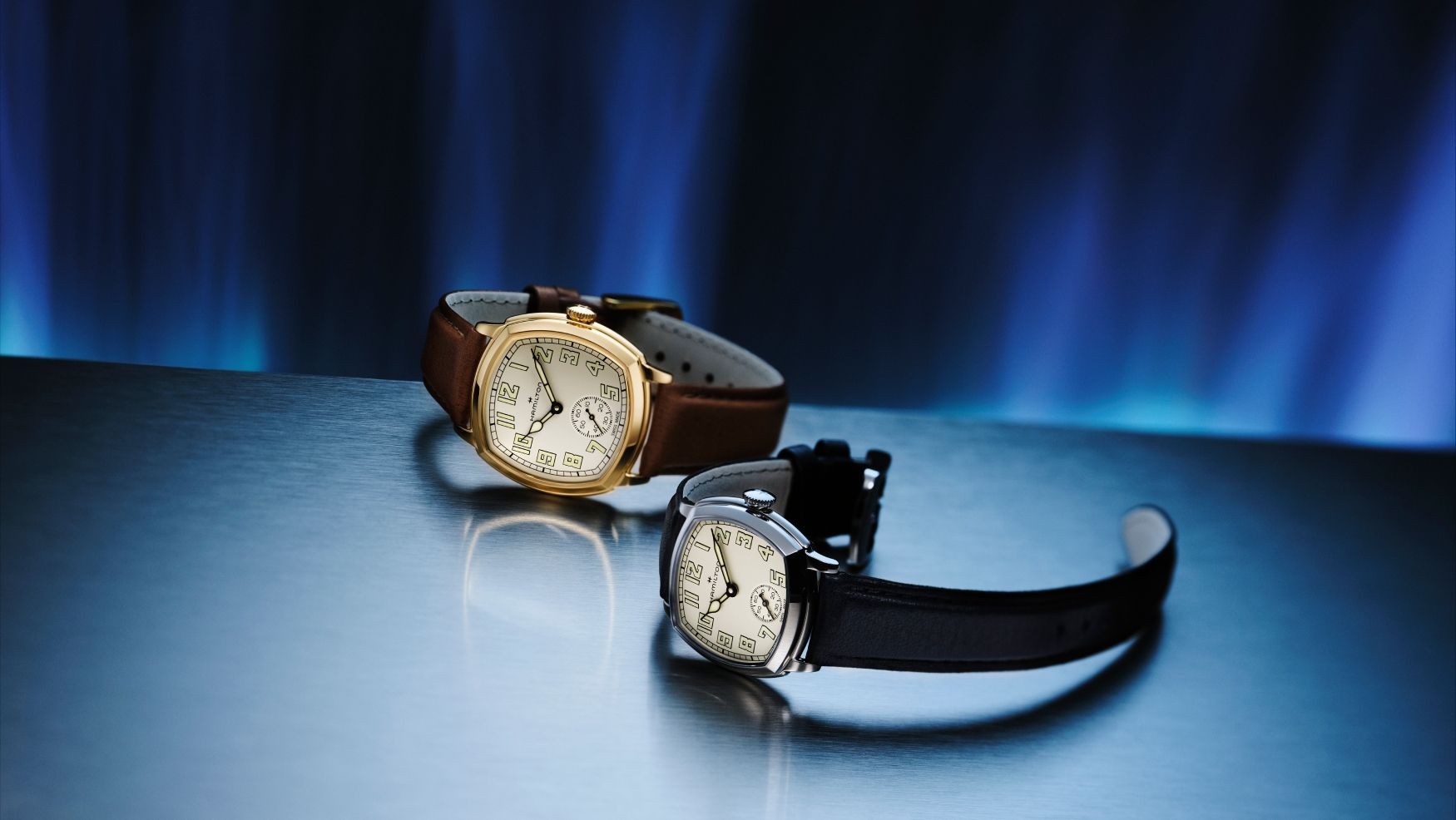
The Tetra attracts a specific Nomos buyer: someone interested in the Bauhaus design philosophy at its most geometric, someone who appreciates the square as a genuinely different formal statement from the round watches that dominate fine watchmaking. Many Tetra buyers come from design and architecture backgrounds where the square is a loaded form — the Bauhaus used it as a fundamental compositional element.
The Tetra is not the most commercially successful Nomos reference (that distinction belongs to the Tangente), but it represents a consistency of vision: Nomos produces the watch because it is coherent with the brand's design commitments, not because the square format guarantees volume.