Nomos DUW Movements: In-House Calibres from Glashütte

Zach Charles • August 19, 2026

Share this article

Nomos DUW Movements: In-House Calibres from Glashütte

DUW — Deutsche Uhrenwerke (German Watch Works) — is the movement manufacture arm of Nomos Glashütte. It represents the most important technical evolution in the brand's history: the transition from externally sourced movements of debated geographic origin to genuinely in-house calibres designed, manufactured, and assembled in Glashütte. The DUW name appears on every Nomos movement caseback and is both a technical descriptor and a brand statement.


Before DUW — The Alpha Controversy

Nomos Tangente neomatik with in-house automatic movement
Nomos Tangente neomatik — the Tangente fitted with Nomos’s proprietary in-house automatic DUW movement incorporating the swing system escapement.
Photo: GodeNehler — CC BY-SA 4.0 — Wikimedia Commons
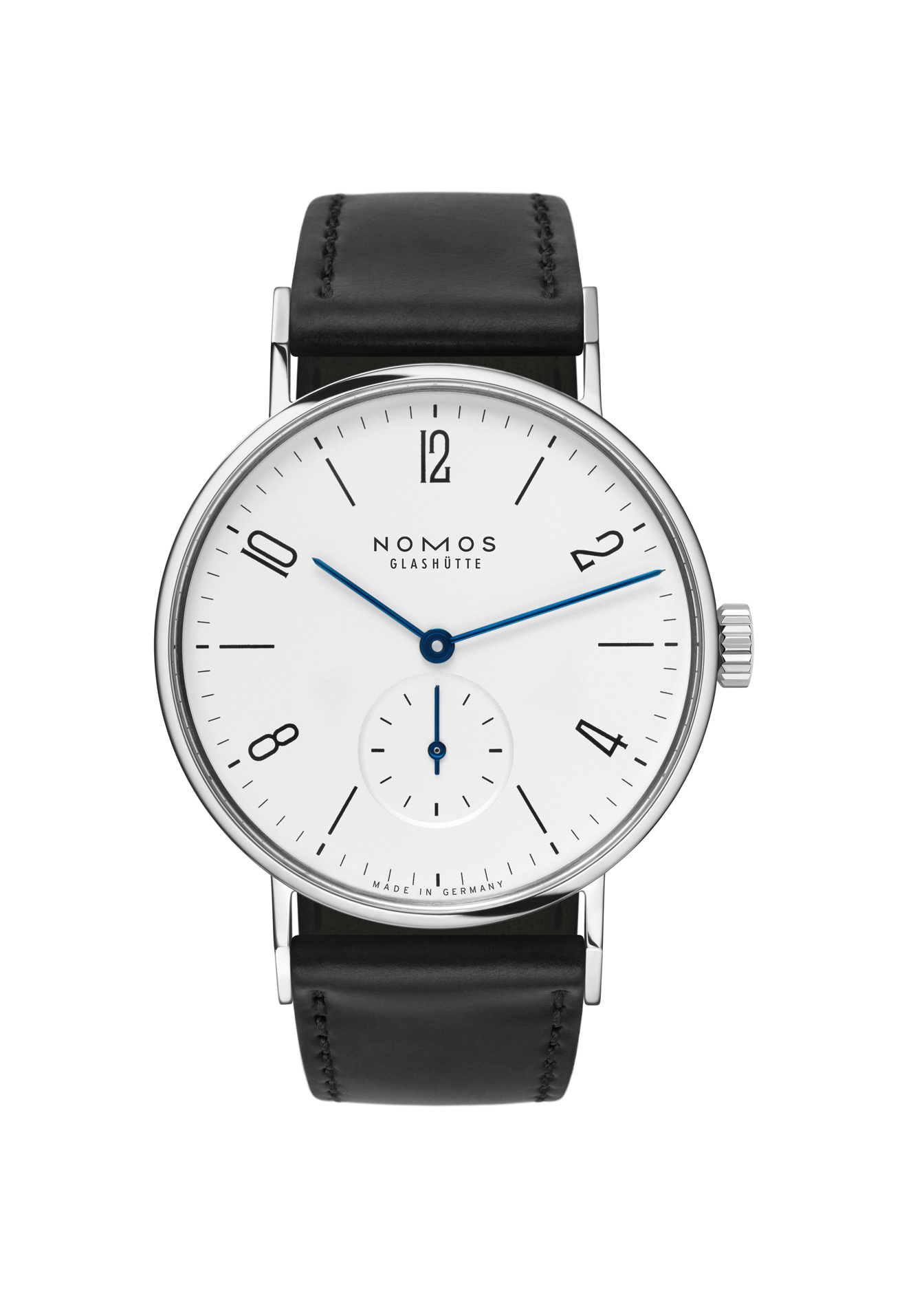
When Nomos launched in 1990, it fitted its first Tangente and Orion watches with a movement called the "Alpha" — a hand-wound calibre that was functionally identical to the Peseux 7001 , a Swiss ébauche manufactured in the Swiss Jura. The question this raised: was Nomos modifying a Swiss movement in Glashütte (sufficient to qualify as Glashütte manufacture), or simply importing and installing a Swiss movement (which would not qualify)?

German trade standards for the "Made in Glashütte" designation require that at least 50% of the manufacturing value be added within the town . The Peseux-derived Alpha's status under this definition was disputed throughout the 1990s and 2000s. Nomos maintained that sufficient work was performed in Glashütte; critics argued the movement was substantially Swiss.

The controversy was a commercial liability for a brand whose geographic designation was central to its identity. The resolution was not legal argument but technical action: develop genuinely in-house movements.


The First DUW Calibres — Alpha and Delta Redesigned

NOMOS Glashütte Tangente dress watch
NOMOS Glashütte Tangente — the brand’s most iconic reference, showing the railroad track chapter ring, cathedral hands, and clean white dial designed by Susanne Günther.
Photo: Berlinerblau — CC BY-SA 4.0 — Wikimedia Commons

Nomos began developing proprietary movement components in the 2000s. The first step was redesigning the existing calibres — Alpha (manual, dress) and Delta (manual, entry) — to replace the Peseux-sourced components with components manufactured in Glashütte.

This process proceeded incrementally: first the mainplate and bridges, then the escapement components, then the gear train components, until the movement was manufactured to Nomos specification from Nomos-sourced components in Glashütte. The resulting movements retained the "Alpha" and "Delta" names but were given DUW designations to signal their new manufacturing status.

The redesigned DUW Alpha and DUW Delta are the movements in the Tangente, Orion, Club, and Lambda manual-wind references. They share the same fundamental architecture as the original calibres but are now unambiguously Glashütte-made.


The Swing System — 2014

NOMOS Glashütte Ludwig dress watch
NOMOS Glashütte Ludwig — a round-cased dress watch from the Nomos collection, demonstrating the brand’s consistent application of Bauhaus design principles.
Photo: Berlinerblau — CC BY-SA 4.0 — Wikimedia Commons
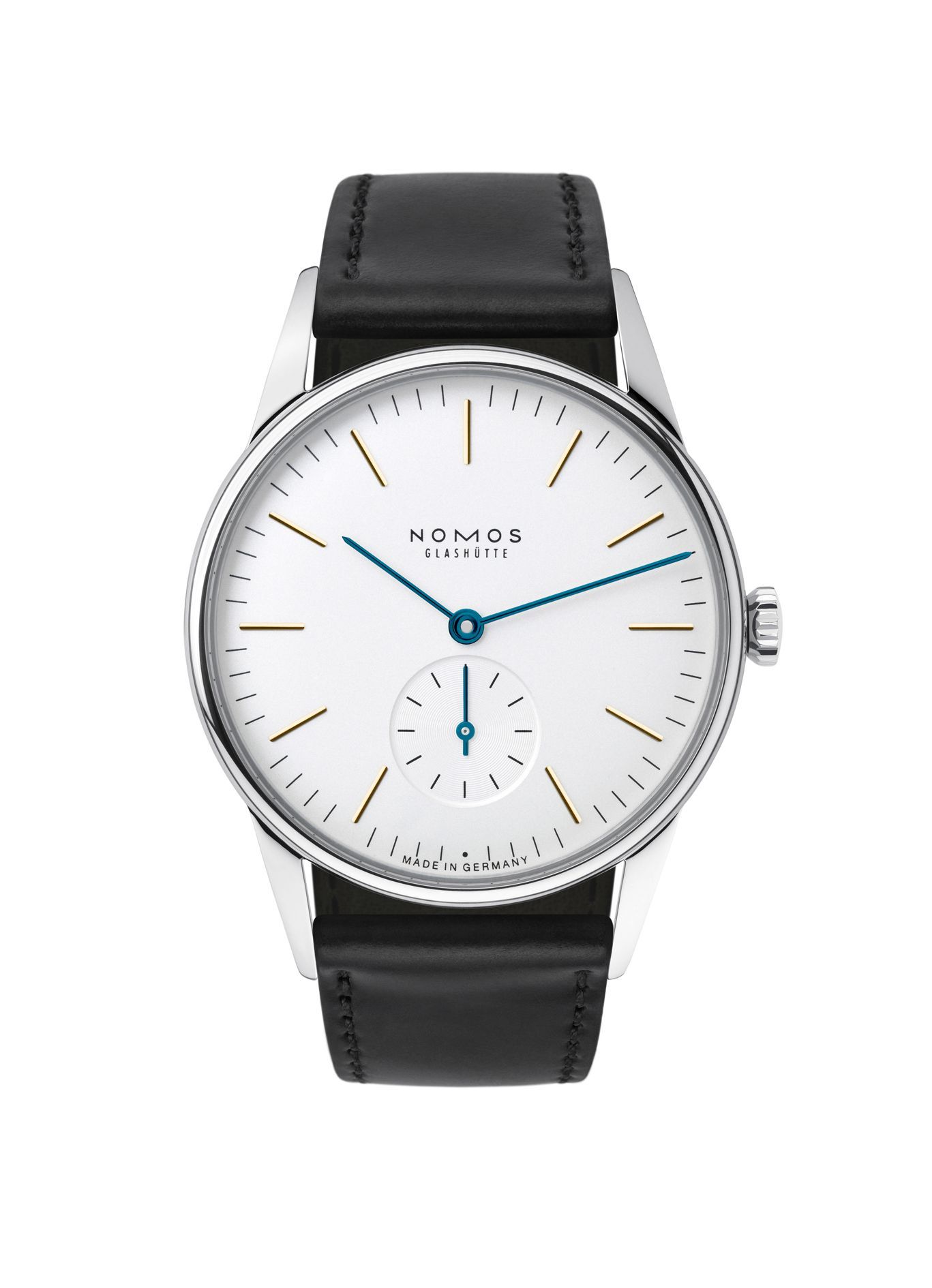
The decisive technical moment in DUW's history was the launch of the swing system in 2014 — Nomos's proprietary lever escapement, introduced with the DUW 1001 automatic movement.

The standard Swiss lever escapement (Swiss anchor escapement) has been the near-universal choice for mechanical watches for 150 years. It is reliable, repairable, and well-understood — but it is also copied by every manufacturer and provides no proprietary differentiation.

The swing system modifies the escapement geometry:
- The pallet fork (anchor) has a different angle relationship to the escape wheel
- The impulse surfaces are optimised for reduced friction
- The result (as tested and validated by Nomos): a more efficient impulse transfer , delivering more energy to the balance wheel per oscillation

This efficiency improvement allows a longer power reserve for a given mainspring, or a lighter mainspring for the same reserve, or improved amplitude (stronger balance swing) for the same mainspring energy. In the DUW 1001, it contributes to the 42-hour reserve from a single barrel.

The swing system was developed in collaboration with external watchmaking engineers and is patented by Nomos. It provides the technical differentiation that the original Peseux-derived Alpha could never offer.


DUW Calibre Family

NOMOS Glashütte Orion dress watch
NOMOS Glashütte Orion — one of the original 1990 Nomos references, representing the brand’s most classical dress watch design with small seconds at 6 o’clock.
Photo: Berlinerblau — CC BY-SA 4.0 — Wikimedia Commons
Calibre Type Reserve vph Applications
DUW Alpha Manual 43h 21,600 Tangente, Orion, Club (manual)
DUW Delta Manual 43h 21,600 Club Delta, basic references
DUW 1 Manual ultra-thin 43h 21,600 Lambda
DUW 1001 Automatic (swing) 42h 21,600 Orion Neomatik
DUW 3001 Automatic thin (neomatik) 42h 21,600 Tangente Neomatik, Metro
DUW 5001 Automatic + arc seconds 42h 21,600 Club Automat
DUW 6101 Automatic + complications 42h 21,600 Metro complications

"Neomatik" is Nomos's commercial designation for movements incorporating the swing system.


Glashütte Finishing Traditions

Nomos Glashütte Metro complications dress watch
Nomos Glashütte Metro — the brand’s complications platform in dress watch form, showing the clean integration of functional indicators within a Bauhaus-influenced dial.
Photo: Berlinerblau — CC BY-SA 4.0 — Wikimedia Commons

Every DUW movement applies traditional Glashütte surface finishing — the visual signatures of the Saxon watchmaking tradition:

Glashütte stripe (Glashütter Streifen): Fine parallel striations applied to the movement plate through a specific grinding technique. The stripes create a directional sheen that catches light differently depending on viewing angle. This finish is unique to Glashütte watchmaking — not applied by Swiss manufacturers, and legally protected as a regional craft designation.

Three-quarter plate: Rather than using individual bridges over each gear (Swiss-style), Glashütte movements use a single large plate covering most of the movement's upper surface. The three-quarter plate provides rigidity and a distinctive visual continuity. Nomos's DUW calibres use the three-quarter plate throughout.

Blue-tempered screws: The steel screws holding the movement together are heat-treated to a blue-black oxide finish. This is a purely decorative process applied after machining and threading; it signals care in finishing without altering the screw's mechanical properties.

Bevelled and anglaged edges: Movement plate and bridge edges are chamfered and polished — a labour-intensive process that removes sharp machined edges and provides a visual transition between the plate's flat surface and the vertical edge.


The "Made in Glashütte" Requirement

NOMOS Glashütte Tetra square-case watch
NOMOS Glashütte Tetra — the brand’s square-case reference, with the railroad track chapter ring adapted for a square dial perimeter.
Photo: Berlinerblau — CC BY-SA 4.0 — Wikimedia Commons
Under German trade regulation, watches described as "Made in Glashütte" must be manufactured within the town of Glashütte with at least 50% of the production value added there. The regulation is enforced by the German Uhrmacherschule Glashütte (watchmakers' school) in conjunction with trade authorities.

DUW movements, designed and manufactured in Glashütte with Glashütte-finishing, unambiguously meet this requirement. The DUW programme was in part a strategic response to the ambiguity of the earlier Alpha — ensuring that the brand's geographic designation is legally solid.


Recent Posts

By Zach Charles • October 10, 2026
Hamilton's American Classic Cushion Mechanical revives its 1926 Art Deco cushion watches, seen in Oppenheimer, in 30mm and 34mm with the new hand-wound…
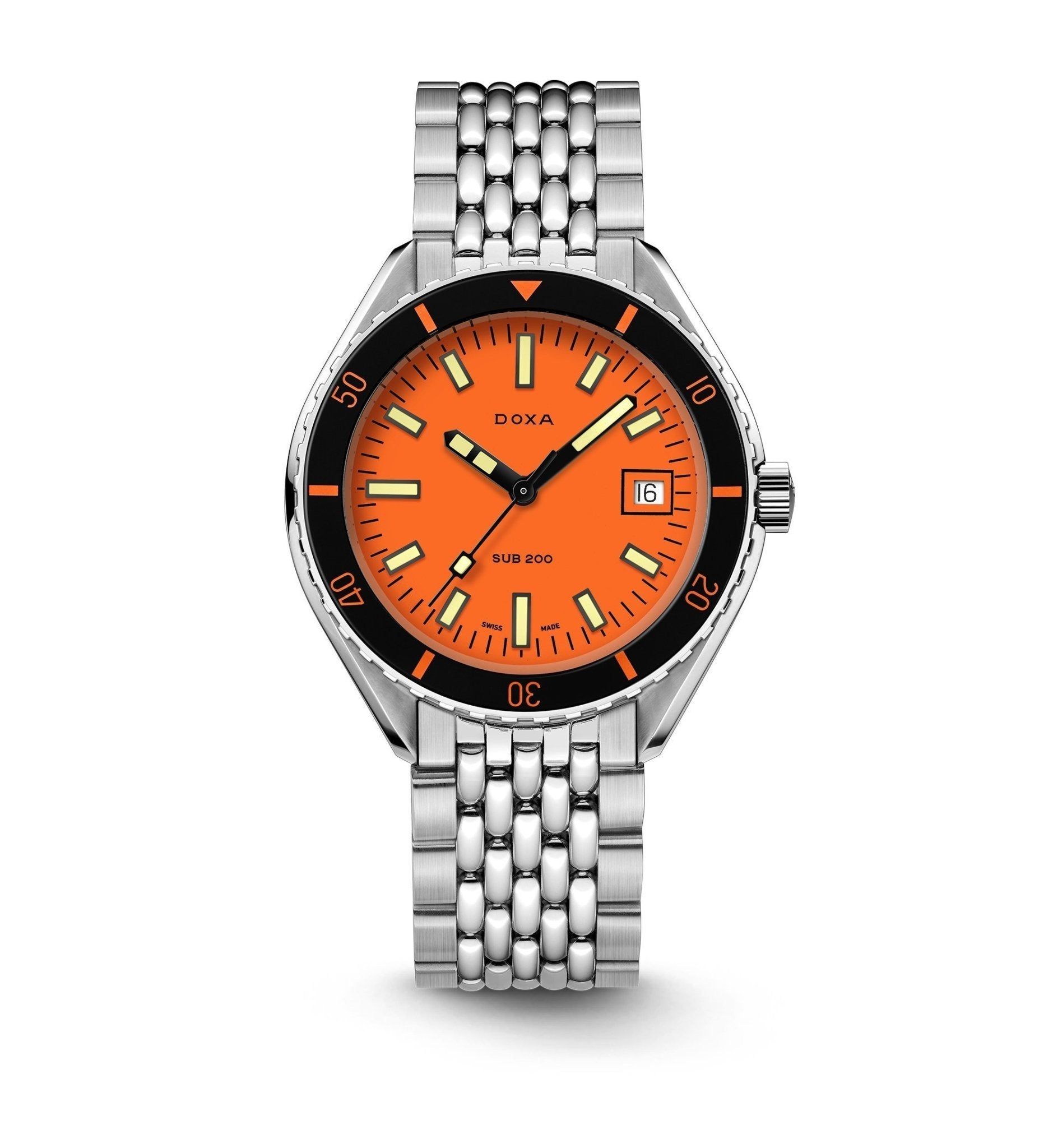
Doxa SUB 200: The Accessible Everyday Diver
By Zach Charles • October 10, 2026
Complete guide to the Doxa SUB 200 — 42mm, 200m, four colorways, Sellita SW200-1. The accessible entry to the Doxa SUB family with the full…
By Zach Charles • October 10, 2026
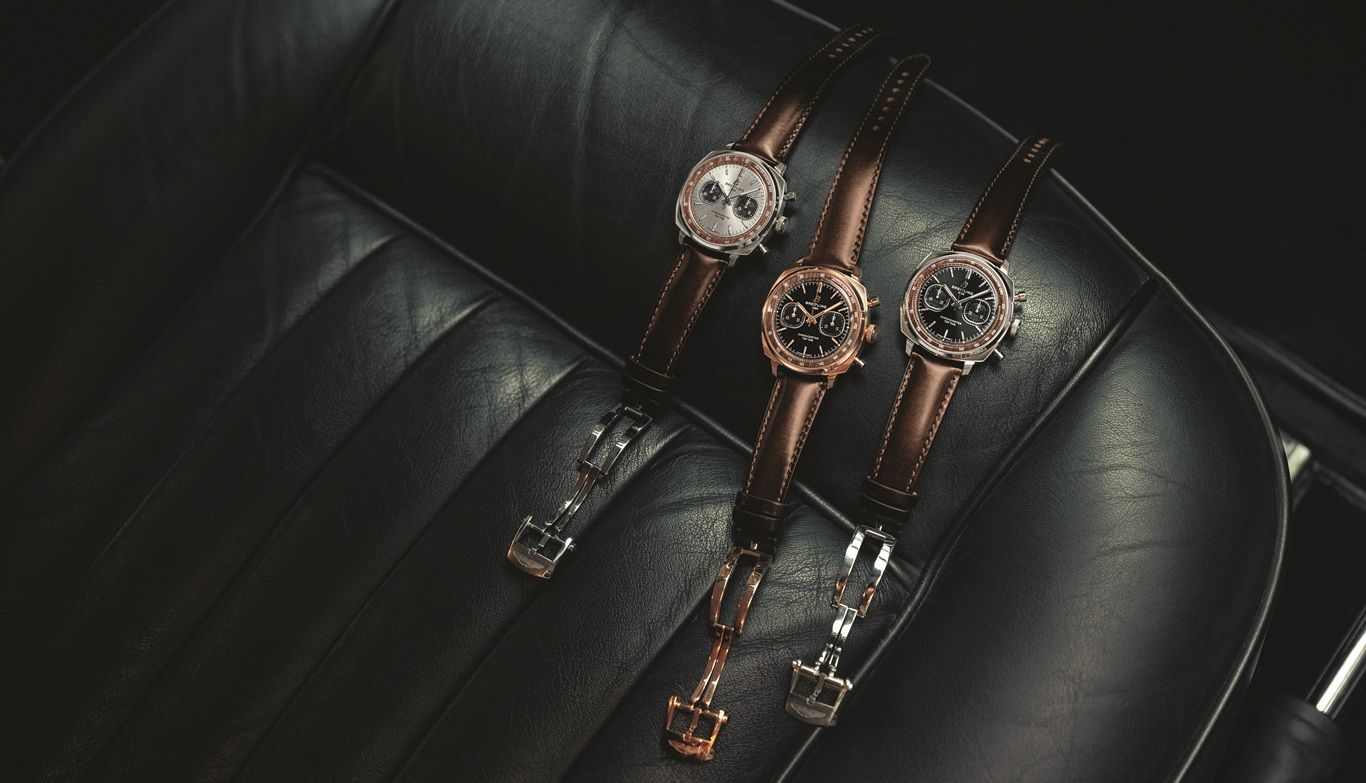
The Breitling Top Time B01 Aston Martin DB5 pairs a cushion-shaped 41mm case, a wooden inner ring and the in-house Caliber 01 across three limited…
By Zach Charles • October 10, 2026
TAG Heuer developed the Mikrograph (2011, 1/100th second), Mikrotimer Flying 1000 (2011, 1/1000th second), and Mikrogirder (2012, 1/2000th second).
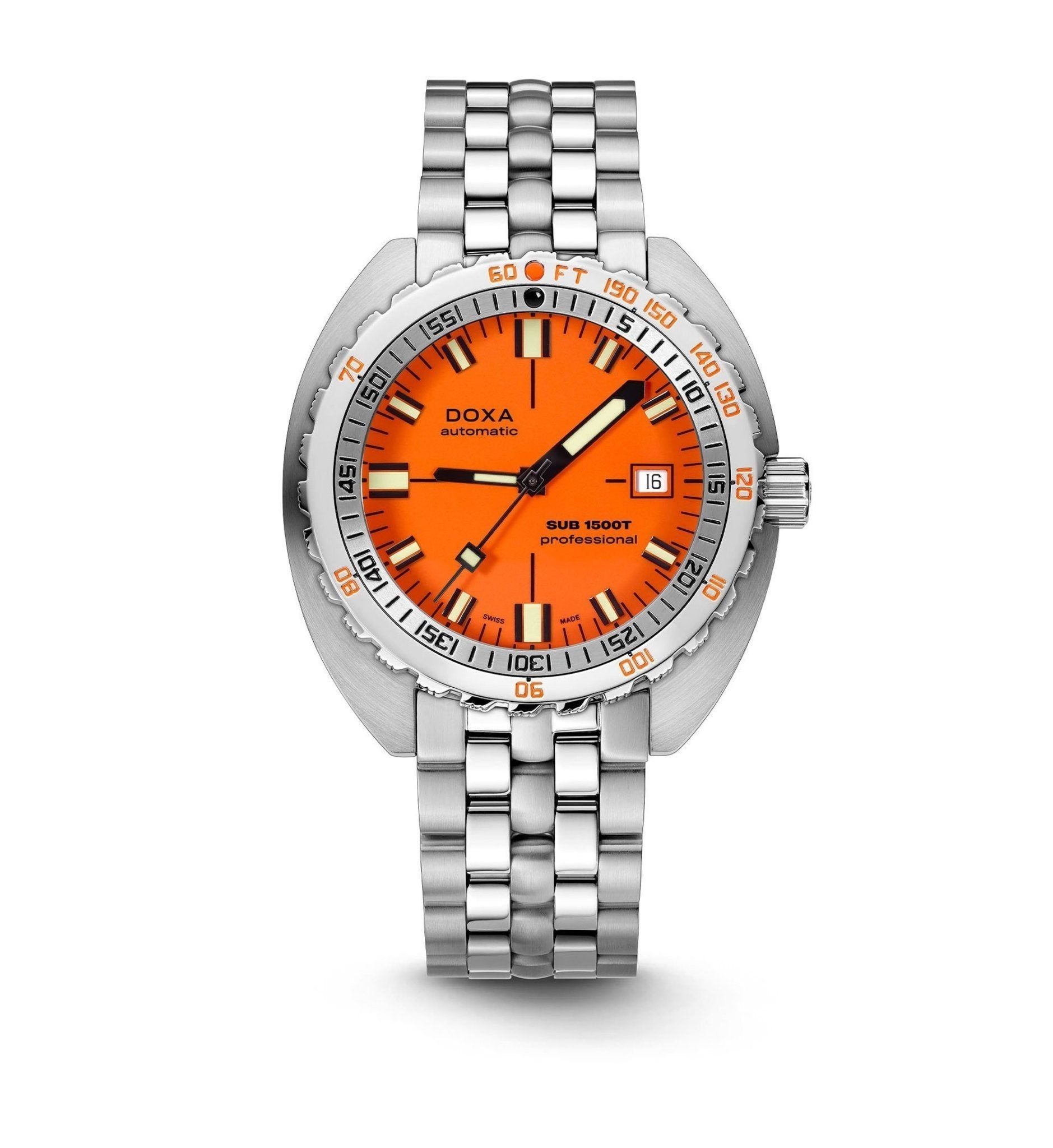
Doxa SUB 1500T: The 1,500-Metre Depth-Rating Flagship
By Zach Charles • October 10, 2026
Complete guide to the Doxa SUB 1500T — 45mm, 1,500m depth rating, helium escape valve, ETA 2892-2 movement, USD 2,690.
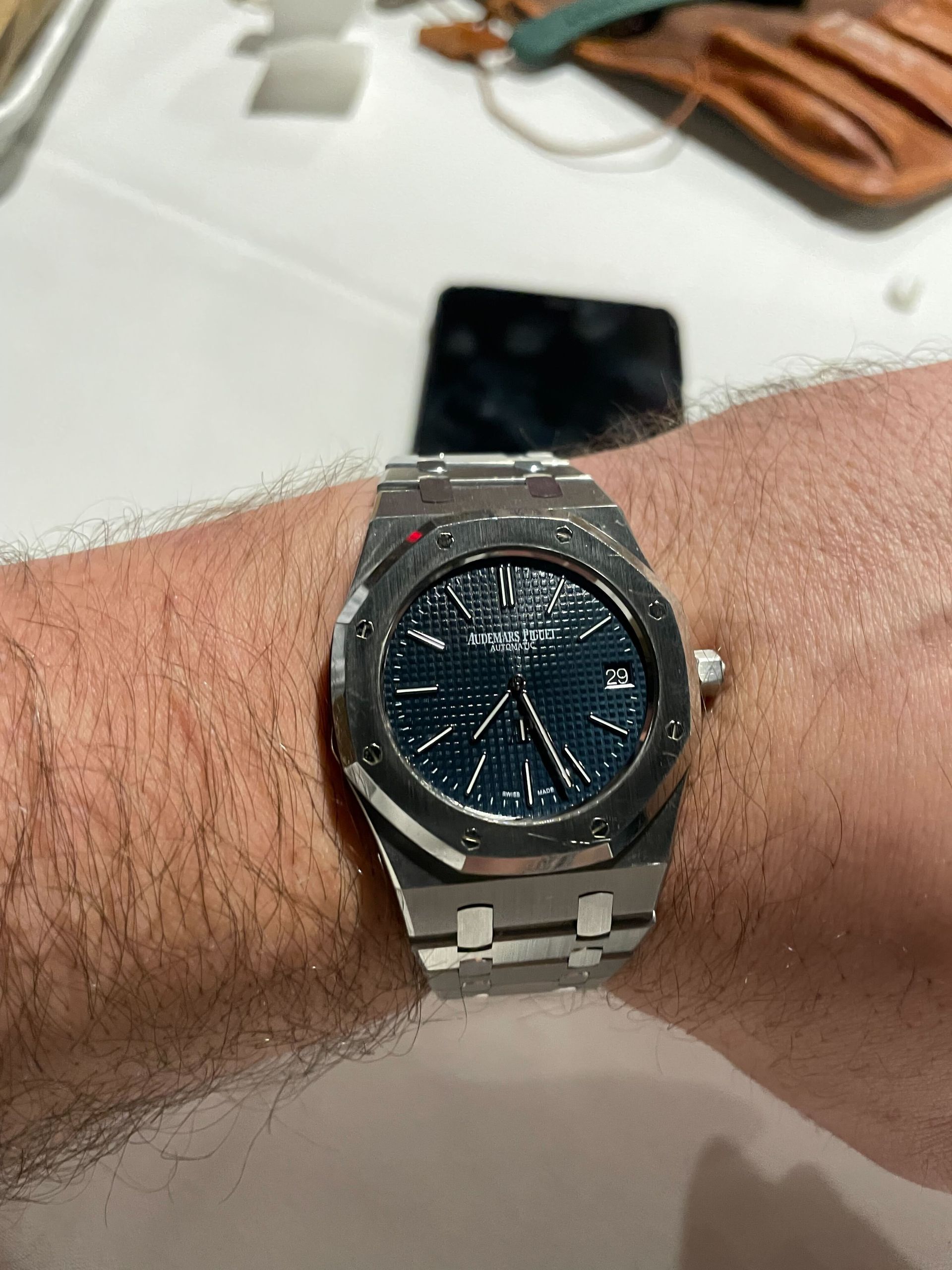
Audemars Piguet Royal Oak 'Jumbo' ref. 15202 with blue tapisserie dial and integrated steel bracelet
By Zach Charles • October 10, 2026
The Audemars Piguet × Swatch Royal Pop is a $400 bioceramic pocket watch in 8 colourways, powered by a new hand-wound SISTEM51 with 90+ hour power…

Time on the Move logo
By Zach Charles • October 10, 2026
Zach Charles is the editor of Time on the Move, an independent watch reference covering brand and model histories, buying guides and release news…
Omega Speedmaster Professional 'Moonwatch' chronograph, front view on steel bracelet
By Zach Charles • October 9, 2026
Find the best watches at every price point from $500 to $15,000 — new and pre-owned. Covers every budget tier with specific reference picks, brand…
By Zach Charles • October 9, 2026
The latest watch news: new releases, Watches and Wonders coverage, discontinuations, industry analysis, and market trends. Currently 1 article.
Seiko's New Panda Chronograph Is Literally a Panda: The Power Design Project HHK001 and HHK002
By Zach Charles • October 8, 2026
Seiko's Power Design Project panda chronograph (HHK001, HHK002) turns the panda dial into an actual panda face, with ear pushers, a 'Sasameter' and a 3D…
Show More