Nomos Orion: The Classic Dress Watch Since 1990
The Orion is one of the original Nomos references — presented alongside the Tangente when the brand launched at Baselworld 1992. While the Tangente became the more famous of the two, the Orion has maintained a parallel role as Nomos's most classical dress watch: slightly more traditional in its design language, slightly softer in its visual presence, and consistently available across the widest size range in the collection.
The 1990 Origin
Photo: Berlinerblau — CC BY-SA 4.0 — Wikimedia Commons
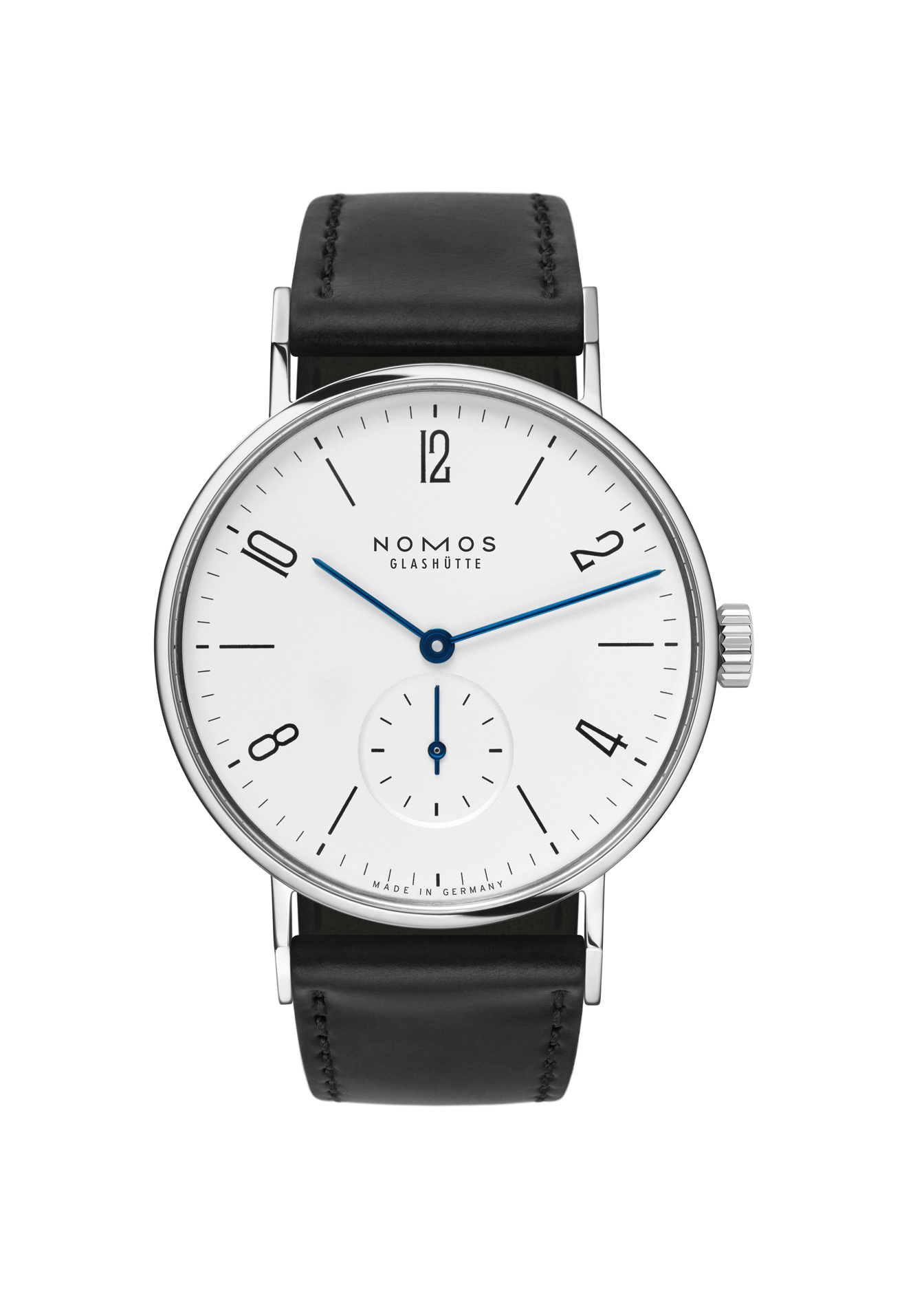
The Orion takes its name from the constellation — one of the most recognisable in the northern sky, prominent in winter skies above both Germany and Switzerland. The naming choice follows Nomos's preference for abstract, non-watchmaking references: a constellation name that carries associations of clarity, night navigation, and precision without being a marketing creation.
The Orion's design at launch was similar to the Tangente in its fundamentals — white dial, cathedral hands, Nomos typography — but with a distinguishing softness. The Orion case has a slightly different profile: where the Tangente has straighter, more emphatic lugs, the Orion's lugs taper more gently and the case edges are more rounded. The overall impression is marginally less austere, marginally more accessible.
This distinction is subtle and often invisible to non-Nomos buyers, but it matters for those choosing between the two: the Tangente for the most formal contexts, the Orion for everyday wear.
Design Language — Similarities and Differences from Tangente
Photo: Berlinerblau — CC BY-SA 4.0 — Wikimedia Commons
The Orion shares the fundamental Nomos design vocabulary:
Shared elements:
- Railroad track minute chapter ring
- Cathedral (sword) hands with lume fill
- White, blue, or black dial options
- Nomos Glashütte typography
- Thin case profile
Orion distinctions:
- Slightly shorter and wider lug proportions
- More rounded case shoulders
- The dial layout includes a small seconds subdial at 6 o'clock on certain references (the Tangente has no seconds on the basic version)
The small seconds at 6 o'clock is a significant Orion differentiator. A traditional small-seconds layout — where the running seconds hand occupies a dedicated subdial rather than making a full sweep of the main dial — signals classical watch design and the use of a movement architecture that separates the seconds wheel from the main gear train. It is associated with dress watches and manual-wind movements.
Sizing Range
Photo: Berlinerblau — CC BY-SA 4.0 — Wikimedia Commons
The Orion is available across the widest size range in the Nomos collection:
| Reference | Diameter | Movement |
|---|---|---|
| Orion 33 | 33mm | DUW Alpha manual |
| Orion 35 | 35mm | DUW Alpha manual |
| Orion 38 | 38mm | DUW Alpha manual |
| Orion Datum 38 | 38mm | DUW 1 automatic |
| Orion Neomatik 41 Date | 41mm | DUW 3001 neomatik |
The 33mm and 35mm remain manual-wind, as the neomatik automatic calibres are too large for compact cases at acceptable case heights. These smaller references are the thinnest-cased watches in the Nomos collection.
Orion Datum — The Date Variant
Photo: GodeNehler — CC BY-SA 4.0 — Wikimedia Commons
The Orion Datum adds a date display at 3 o'clock — a clean, rectangular date window using a white disc with black numerals. The Datum movement is the DUW 1 (early versions) or DUW 3001 neomatik (current production), both automatics.
The Orion Datum is the most commercially popular Orion reference: the date function adds practical utility to a dress watch design that might otherwise be perceived as purely aesthetic. The date window is the same size and style used across Nomos's dated references — a standard aperture integrated into the dial design rather than an afterthought.
Movement — DUW Alpha and DUW 1001
Photo: Berlinerblau — CC BY-SA 4.0 — Wikimedia Commons
The manual-wind Orion references use the DUW Alpha — Nomos's re-engineered version of the historical Alpha calibre, now manufactured in-house in Glashütte. The DUW Alpha:
- Manual wind
- 43 hours power reserve
- 21,600 vph
- Glashütte three-quarter plate with Glashütte stripe decoration
- Blue-tempered screws
- 17 jewels
The automatic Orion references use the DUW 1001 (earlier production) or DUW 3001 (neomatik, current) — the fully in-house automatic movements developed from 2014 onward. The neomatik calibre uses a particularly thin design for an automatic, achieved through movement architecture that optimises the rotor placement and gear train layout.
Gold Case Variants
Photo: Berlinerblau — CC BY-SA 4.0 — Wikimedia Commons

The Orion has been offered in precious metal cases more consistently than other Nomos references — a function of its classical dress watch brief. Offerings have included:
- Red gold (18ct) case with matching or contrasting dial
- Yellow gold (18ct) case, limited production
- Gold plating on steel cases — more accessible than solid gold
The precious metal Orion references occupy the upper price tier of the Nomos collection, ranging from approximately €3,500 (gold-plated) to €8,000 (solid 18ct gold). These represent a small fraction of Orion production but serve the important function of positioning Nomos as a brand capable of competing in the fine jewellery watch segment.
The Orion in Nomos's Identity
The Orion occupies a specific psychological position in the Nomos collection: it is the watch for people who want a Nomos but want something slightly less severe than the Tangente. The softer proportions, the small seconds subdial, and the gentler lug profile create a watch that communicates classical watchmaking values through Nomos's distinctly modern lens.
For buyers coming from the Swiss dress watch tradition — Longines, JLC Reverso, early Cartier — the Orion provides a visual bridge: recognisably traditional in layout, unmistakably Nomos in execution.