
Glashütte Original: Reviving German Fine Watchmaking After Reunification

Zach Charles • August 12, 2026

Share this article

Glashütte Original: Reviving German Fine Watchmaking After Reunification

Glashütte Original occupies a singular position in German watchmaking: a manufacture that emerged directly from the ruins of East Germany's state watchmaking apparatus and rebuilt itself, within a generation, into one of the most respected luxury watch brands in Europe. Its story is inseparable from the history of Glashütte — the small Saxon town that has produced fine watches since 1845 — and from the particular disruptions of German reunification.


Glashütte — The Saxon Watchmaking Town

Glashütte Original watches group display
Glashütte Original collection display — multiple references showing the brand’s range from Senator dress watches to complications, all produced at the Glashütte manufacture in Saxony.
Photo: Ferengi — CC BY-SA 3.0 — Wikimedia Commons
The town of Glashütte in the Erzgebirge mountains of Saxony became a centre of watchmaking in 1845 , when Adolf Lange established his workshop there. Lange chose Glashütte deliberately: the town was impoverished after the collapse of the silver mining industry, and Lange saw an opportunity to establish a skilled craft tradition from scratch, with the support of the Saxon government.

By the early twentieth century, Glashütte housed multiple watch manufacturers — A. Lange & Söhne, Glashütter Uhrenfabrik (UROFA/UFAG), Paul Müller, and others — producing movements of exceptional quality. The distinctive Glashütte style developed: three-quarter plates covering most of the movement's back, Glashütte ribbing (a variant of côtes de Genève), screw-set balance wheels with gold chatons, and bevelled, polished anglage on plate and bridge edges.

The Second World War and its aftermath destroyed this community in two stages: first, the 1945 bombing that levelled the town, and then the post-war Soviet occupation, which shipped the surviving machinery and watchmakers to the USSR as war reparations.


VEB Glashütter Uhrenbetriebe — The East German Era

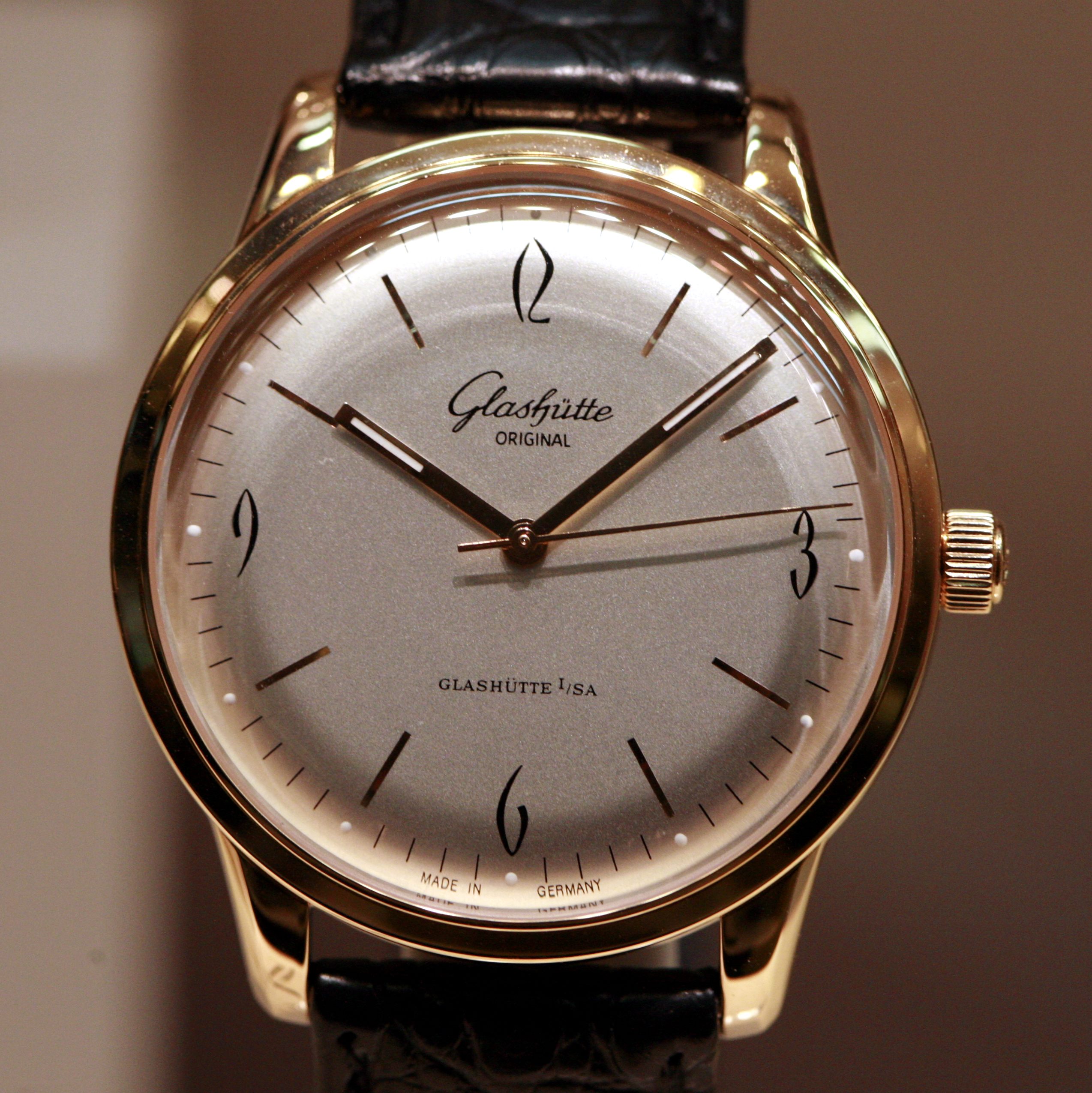
Glashütte Original Senator Sixties vintage-style dress watch
Glashütte Original Senator Sixties — the brand’s vintage-inspired Senator reference, showing the three-quarter plate movement through an exhibition caseback in a traditional round case.
Photo: Rama — CC BY-SA 2.0 FR — Wikimedia Commons

In the German Democratic Republic (East Germany), the surviving Glashütte watchmaking operations were nationalised and consolidated into a single state enterprise: VEB Glashütter Uhrenbetriebe (GUB) , founded in 1951 .

The VEB combined what remained of multiple pre-war firms into a single organisation. It produced watches under various brand names — Glashütte, Spezimatic, Tutima, Senator — for the East German market and for hard currency export. The GUB's movements maintained certain Glashütte finishing traditions while operating under the constraints of a planned economy: standardised calibres, limited material choices, production targets rather than market demand.

GUB employed approximately 1,500 people at peak production in the Glashütte valley. The quality of GUB's movements was generally high — the three-quarter plate tradition was maintained, and Glashütte ribbing continued — though the watches themselves lacked the case quality and gemological finishing of Western luxury competitors.


German Reunification and the Collapse of GUB

Glashütte Original movement detail
Glashütte Original movement — the three-quarter plate architecture with Glashütte ribbing, blued screws, and screw-set jewel chatons visible through an exhibition caseback.
Photo: Rama — CC BY-SA 2.0 FR — Wikimedia Commons

German reunification in October 1990 effectively ended the GUB as an economic entity. The planned economy that had sustained it disappeared overnight; the Eastern market for its watches collapsed as East Germans gained access to Western consumer goods; and the Treuhandanstalt (the German government's privatisation agency) was tasked with deciding the enterprise's fate.

The Treuhandanstalt's assessment was bleak: GUB had 1,500 employees but a business that could not sustain them in a market economy. The agency oversaw the separation of GUB's various operations and brands, and the search for buyers.


The 1994 Refounding

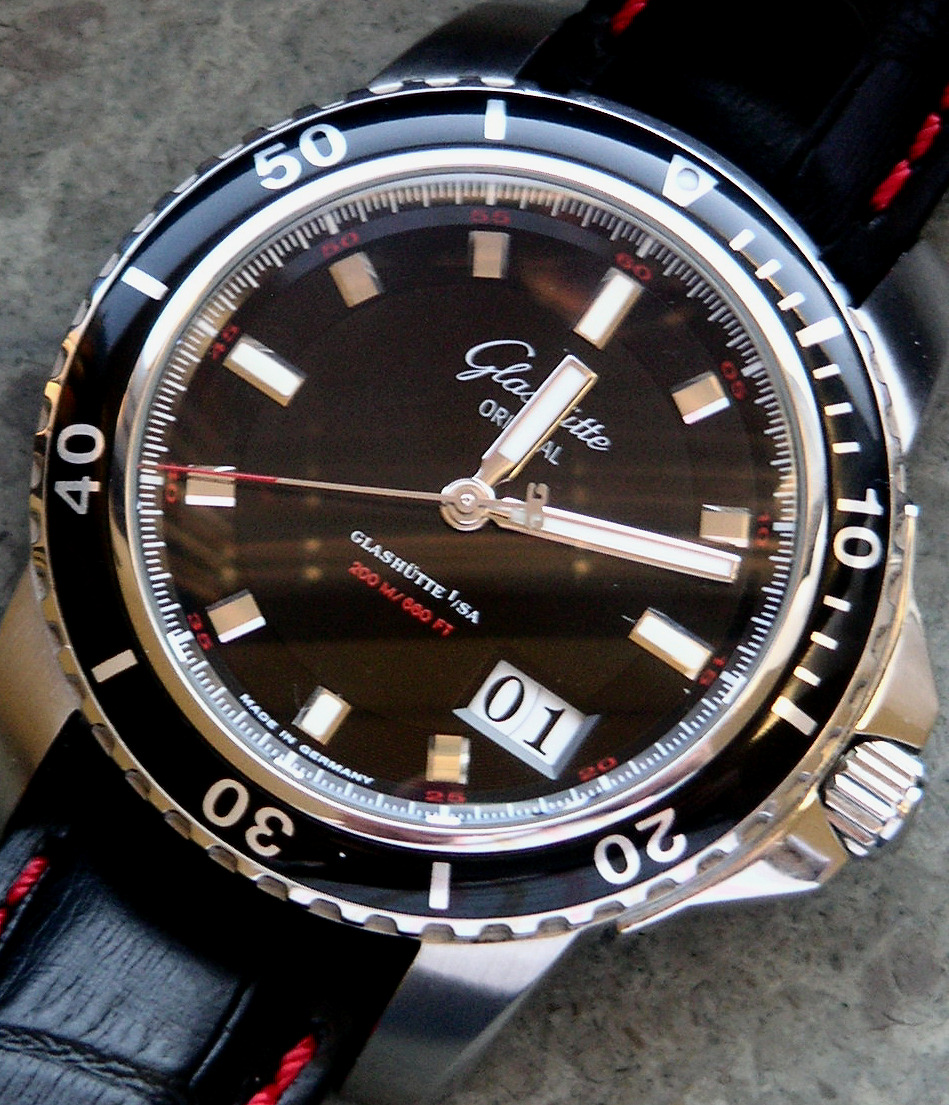
Glashütte Original watch detail
Glashütte Original — detail of a dress watch reference, showing the applied indices and handset characteristic of the brand’s Senator collection aesthetic.
Photo: Rama — CC BY-SA 2.0 FR — Wikimedia Commons
From the privatisation process, Glashütte Original emerged in 1994 as a newly constituted private company, established specifically to carry the Glashütte watchmaking tradition forward under market conditions. The founding drew on GUB's surviving skilled workforce, its manufacturing equipment, and — critically — the knowledge embedded in its watchmakers, many of whom had spent entire careers learning the Glashütte craft traditions.

The new company positioned itself explicitly in the luxury segment: fewer watches, higher quality, Swiss-comparable finishing, and a premium price point that German and international buyers could accept. The Senator line — a name with GUB precedent — became the flagship.

This positioning required rebuilding both the physical manufacture and the brand's reputation simultaneously — a challenging undertaking given that Glashütte Original had no established luxury credentials as a standalone brand.


Swatch Group Acquisition — 2000

Glashütte Original Sport Evolution chronograph
Glashütte Original Sport Evolution — the brand’s sport chronograph reference, demonstrating Glashütte manufacture quality in a robust sport case with in-house column-wheel chronograph movement.
Photo: Thomasbj — CC BY-SA 3.0 — Wikimedia Commons

In 2000 , Glashütte Original was acquired by the Swatch Group — the Swiss conglomerate that also owns Blancpain, Omega, Longines, and Breguet. The acquisition provided capital, distribution infrastructure, and the production resources of a large luxury group.

The Swatch Group investment enabled significant expansion of the manufacture: new movement development, case production in-house, and the construction of a purpose-built manufacture facility in Glashütte. Under Swatch Group ownership, Glashütte Original has remained headquartered in Glashütte — a point of emphasis, given that maintaining production in the town is central to the "Made in Glashütte" designation that German watchmaking law protects.


Glashütte Original Today

Glashütte Original Calibre 39 movement
Glashütte Original Calibre 39 — the in-house automatic chronograph movement showing the three-quarter plate, Glashütte ribbing, column wheel, and flyback chronograph mechanism.
Photo: Thomasbj — CC BY-SA 3.0 — Wikimedia Commons
The current Glashütte Original manufacture occupies a modern building in Glashütte, producing approximately 10,000–12,000 watches annually — a modest volume consistent with the luxury positioning. The collections span from the entry-level Seventies to the ultra-complex Senator Perpetual Calendar Tourbillon.

The movement manufacture produces calibres with Glashütte finishing standards: three-quarter plate, Glashütte ribbing, screw-set balance wheels (on selected references), and hand-bevelled anglage. The case production, dial manufacture, and movement assembly are all carried out in Glashütte.

Pricing ranges from approximately €5,000 to €100,000+ , with the Senator collection at the upper end and the PanoSeries and Seventies collections at more accessible price points.


Glashütte Original Model and Technology Guides

Each Glashütte Original collection and key technology has its own in-depth history on Time on the Move:

Recent Posts

By Zach Charles • October 10, 2026
Hamilton's American Classic Cushion Mechanical revives its 1926 Art Deco cushion watches, seen in Oppenheimer, in 30mm and 34mm with the new hand-wound…
Doxa SUB 200: The Accessible Everyday Diver
By Zach Charles • October 10, 2026
Complete guide to the Doxa SUB 200 — 42mm, 200m, four colorways, Sellita SW200-1. The accessible entry to the Doxa SUB family with the full…
By Zach Charles • October 10, 2026
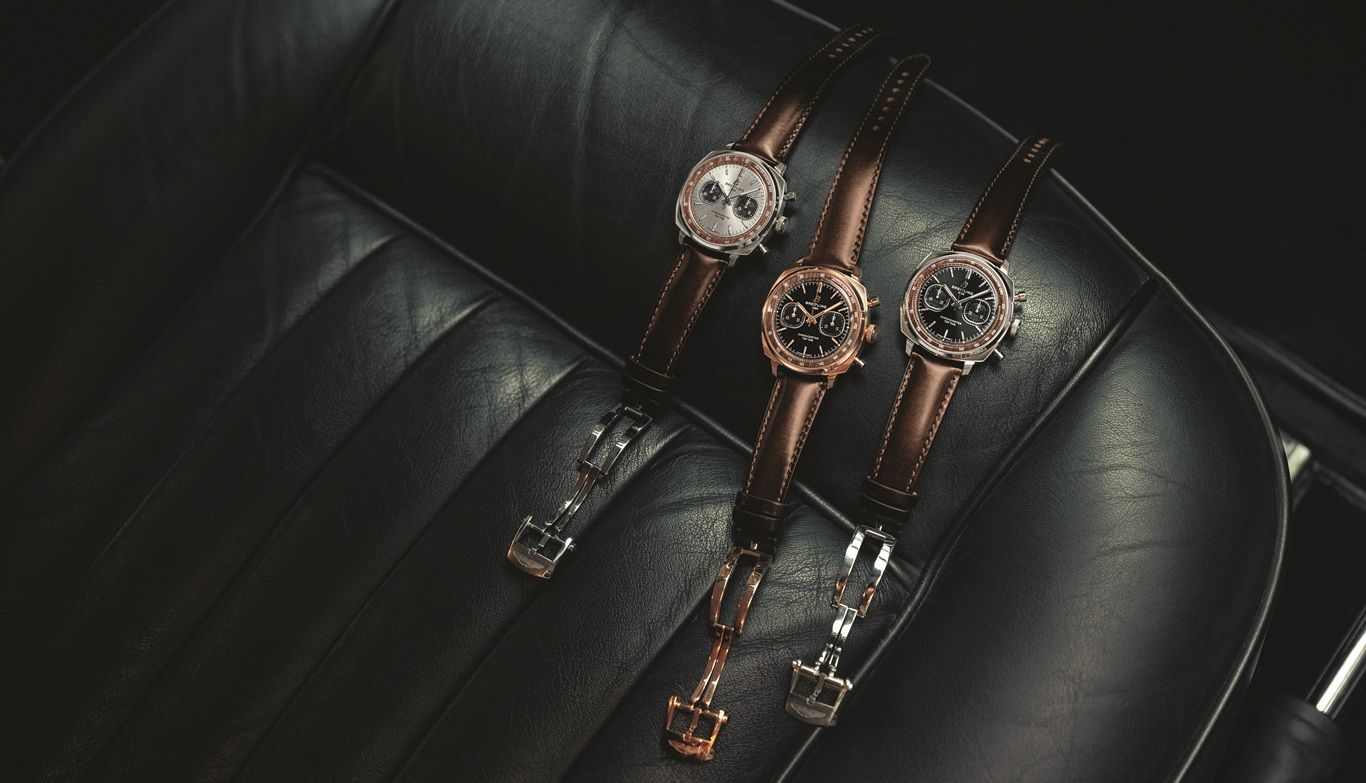
The Breitling Top Time B01 Aston Martin DB5 pairs a cushion-shaped 41mm case, a wooden inner ring and the in-house Caliber 01 across three limited…
By Zach Charles • October 10, 2026
TAG Heuer developed the Mikrograph (2011, 1/100th second), Mikrotimer Flying 1000 (2011, 1/1000th second), and Mikrogirder (2012, 1/2000th second).
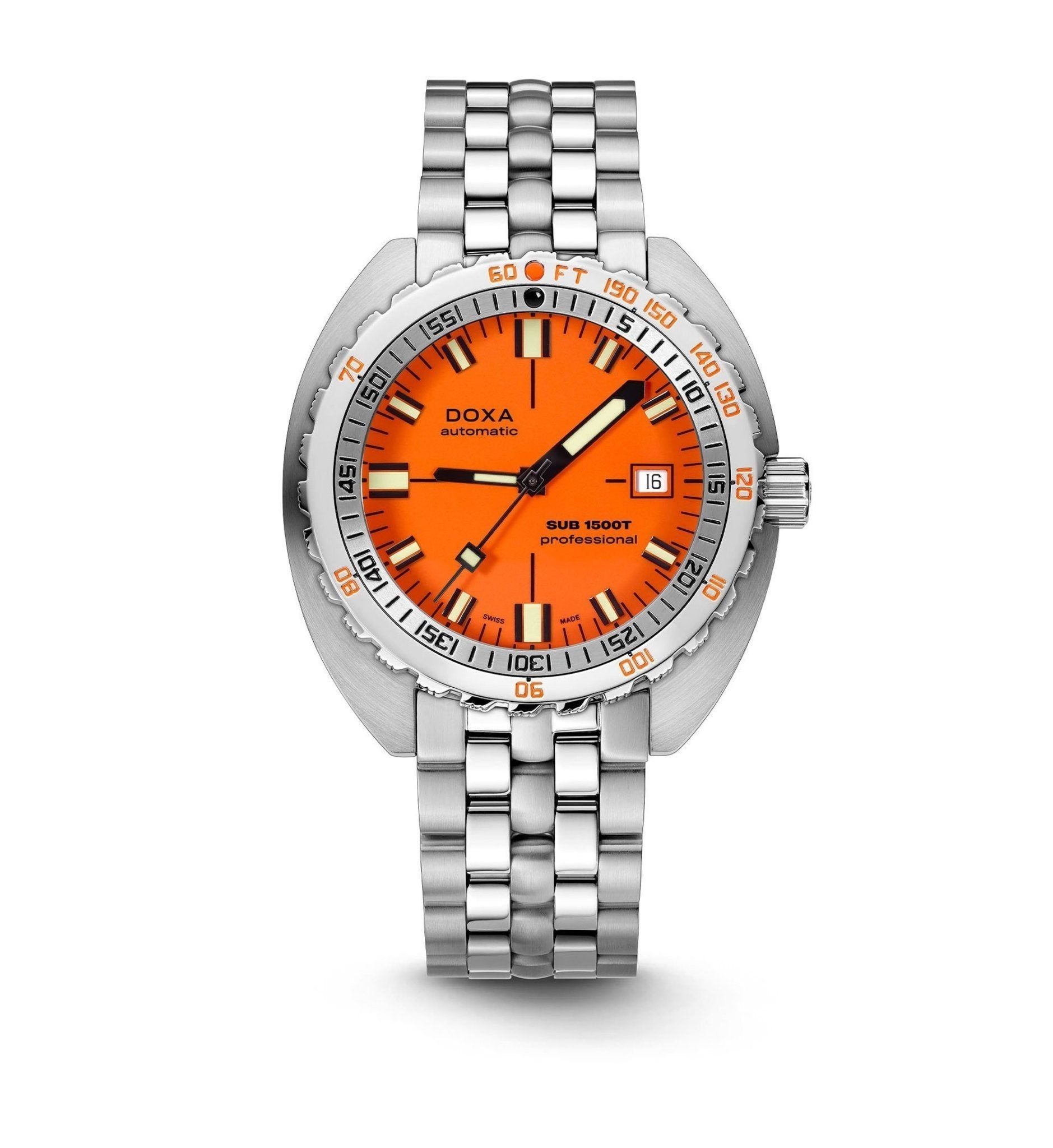
Doxa SUB 1500T: The 1,500-Metre Depth-Rating Flagship
By Zach Charles • October 10, 2026
Complete guide to the Doxa SUB 1500T — 45mm, 1,500m depth rating, helium escape valve, ETA 2892-2 movement, USD 2,690.
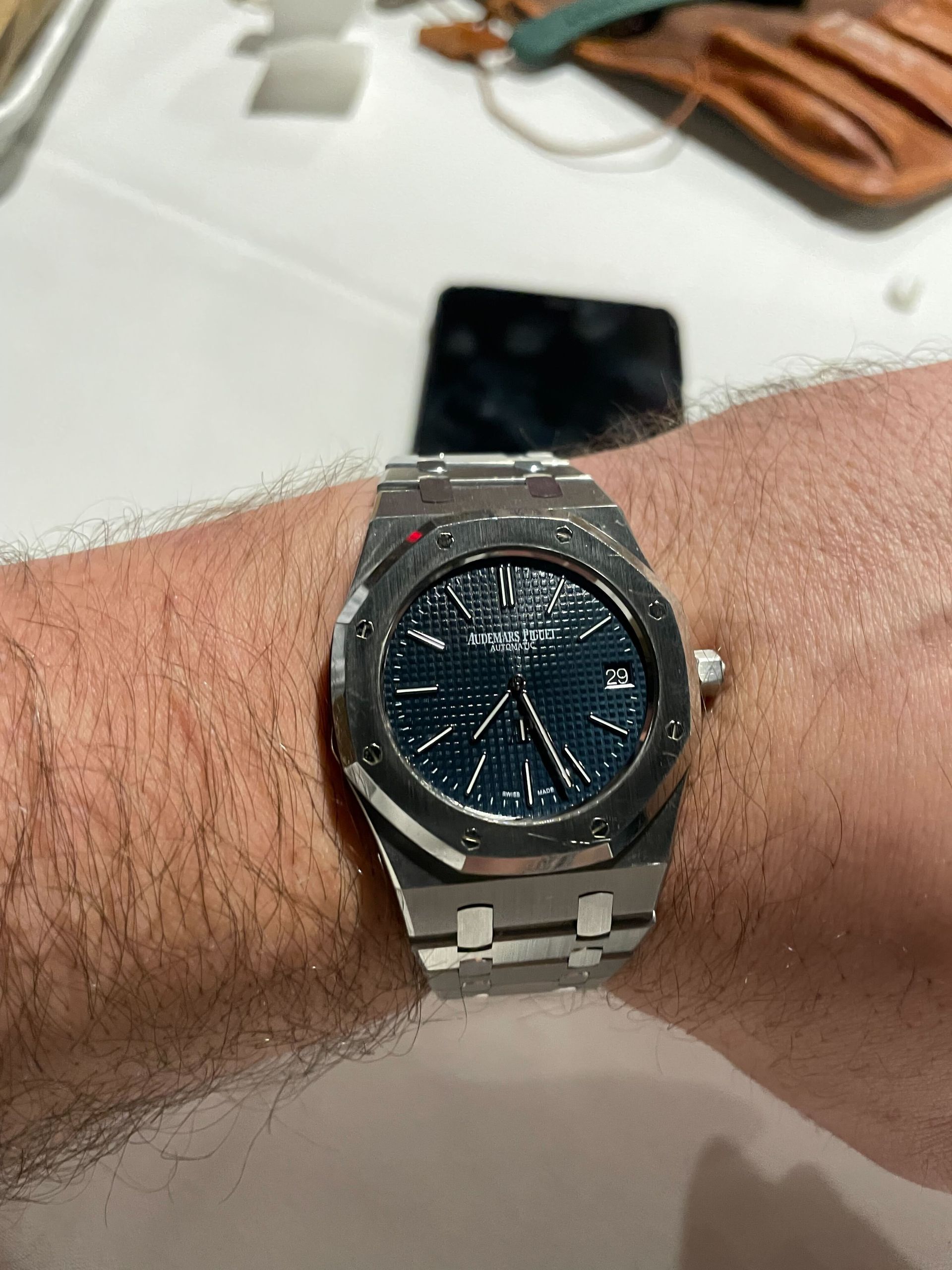
Audemars Piguet Royal Oak 'Jumbo' ref. 15202 with blue tapisserie dial and integrated steel bracelet
By Zach Charles • October 10, 2026
The Audemars Piguet × Swatch Royal Pop is a $400 bioceramic pocket watch in 8 colourways, powered by a new hand-wound SISTEM51 with 90+ hour power…

Time on the Move logo
By Zach Charles • October 10, 2026
Zach Charles is the editor of Time on the Move, an independent watch reference covering brand and model histories, buying guides and release news…
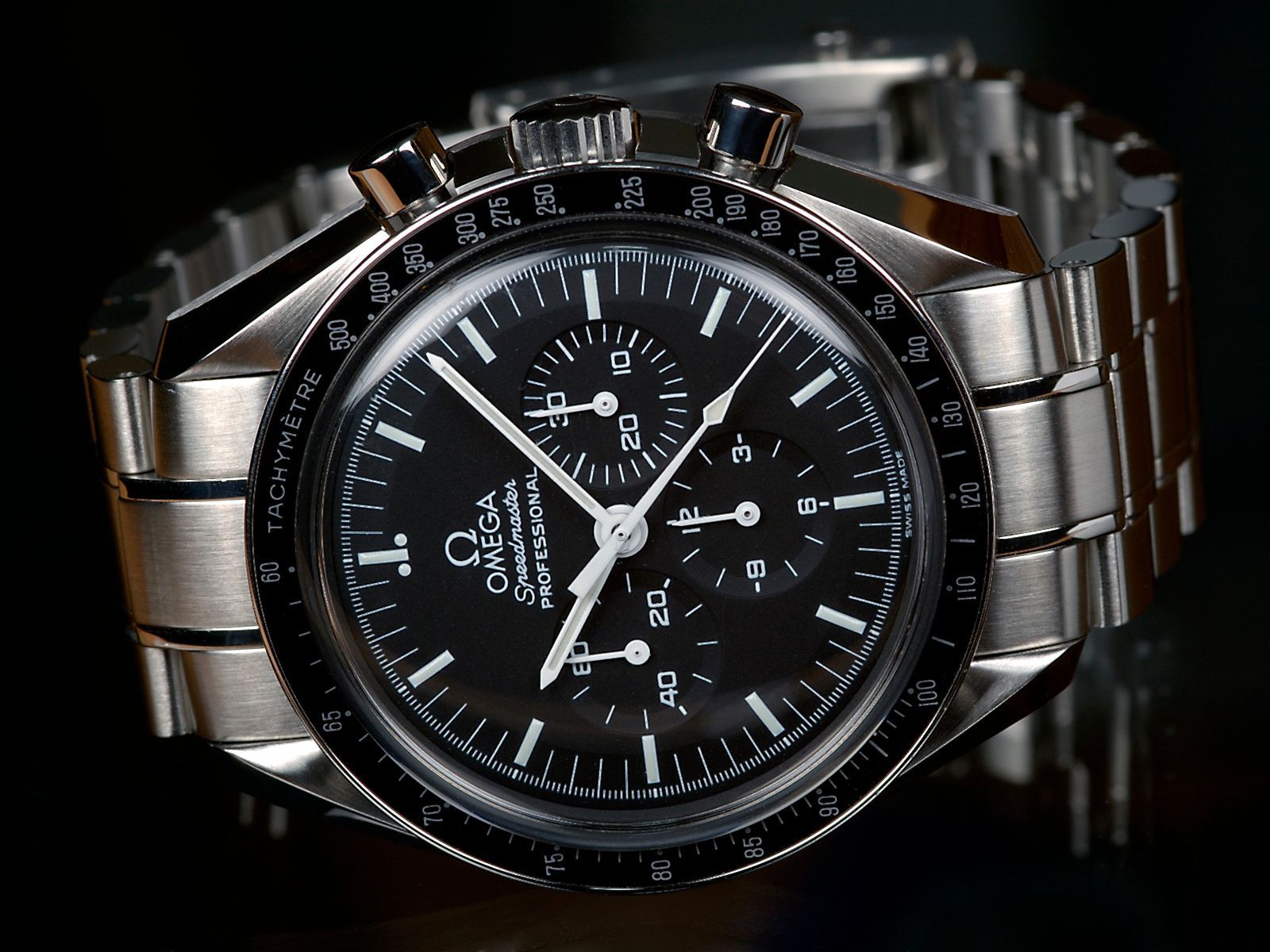
Omega Speedmaster Professional 'Moonwatch' chronograph, front view on steel bracelet
By Zach Charles • October 9, 2026
Find the best watches at every price point from $500 to $15,000 — new and pre-owned. Covers every budget tier with specific reference picks, brand…
By Zach Charles • October 9, 2026
The latest watch news: new releases, Watches and Wonders coverage, discontinuations, industry analysis, and market trends. Currently 1 article.
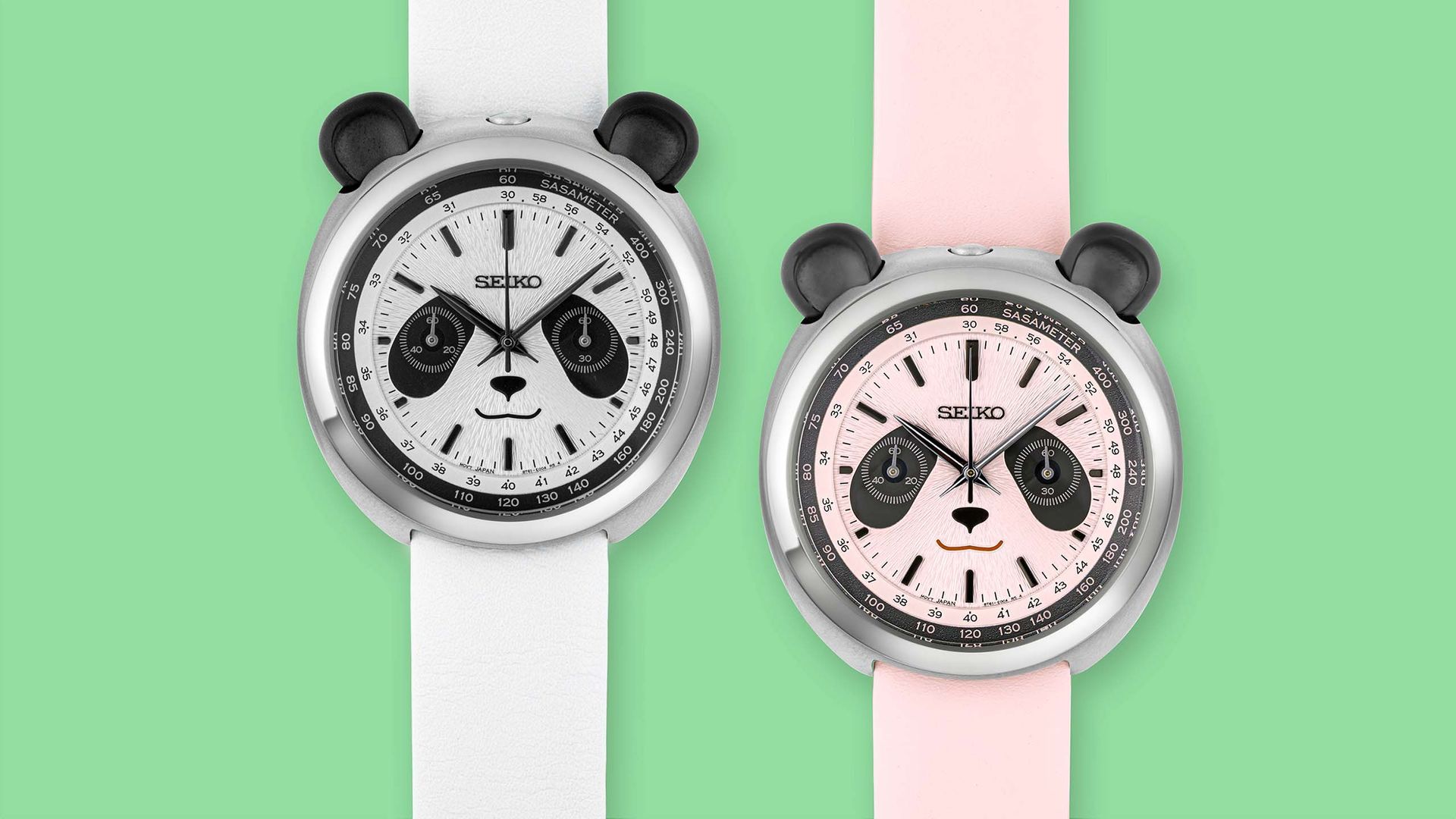
Seiko's New Panda Chronograph Is Literally a Panda: The Power Design Project HHK001 and HHK002
By Zach Charles • October 8, 2026
Seiko's Power Design Project panda chronograph (HHK001, HHK002) turns the panda dial into an actual panda face, with ear pushers, a 'Sasameter' and a 3D…
Show More