Glashütte Original Tourbillon: Saxon Grand Complication Watchmaking
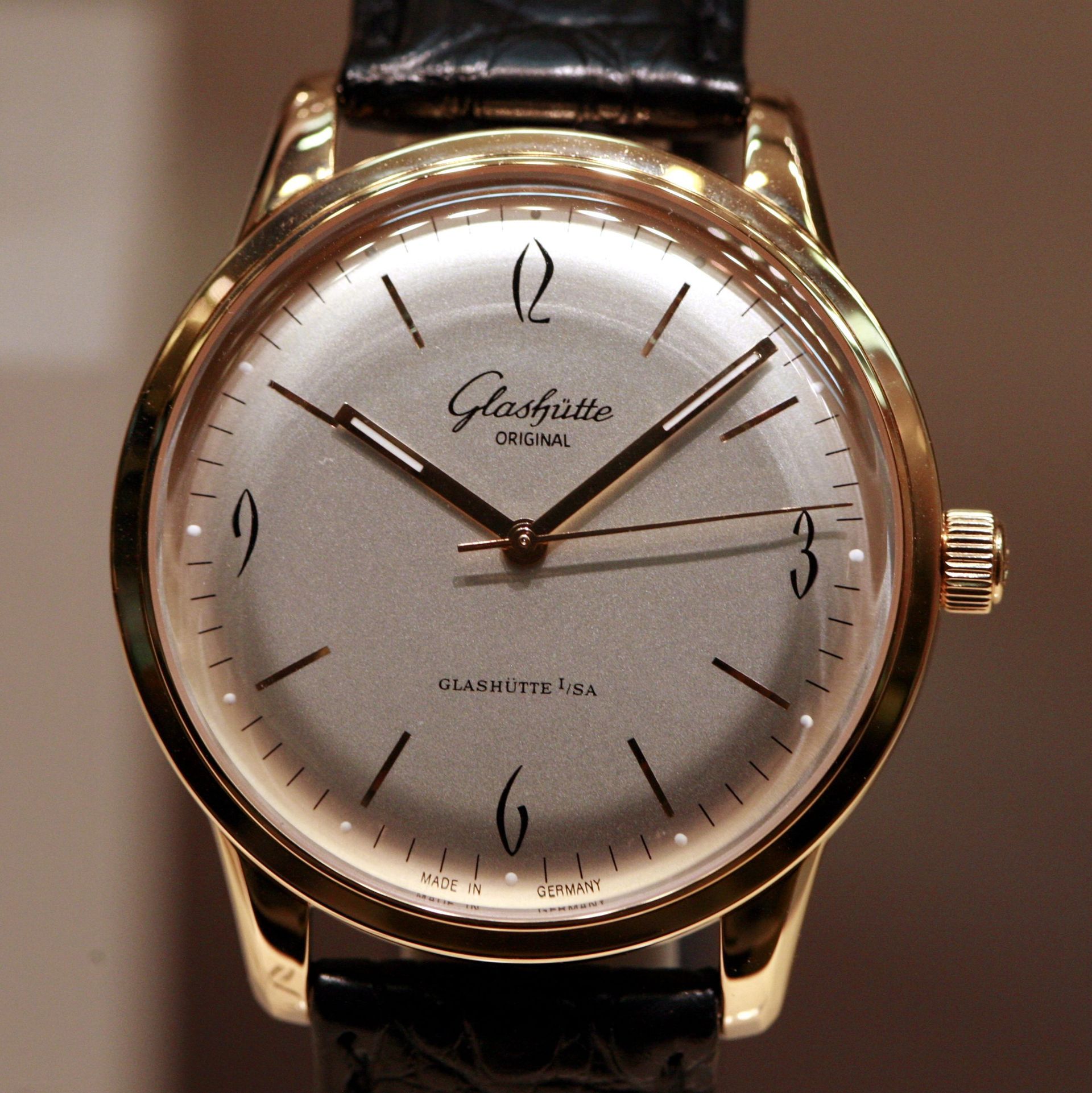
The tourbillon in a Glashütte Original watch is not merely a complication — it is a demonstration that Saxon watchmaking, rebuilt after reunification, can produce the most demanding mechanical complications at the same standard as the established Swiss houses. The Glashütte Original tourbillon combines the rotating escapement with the full Glashütte finishing tradition: three-quarter plate, Glashütte ribbing, and the screw-set balance wheel that has defined the Saxon style for over a century.
The Saxon Tourbillon Tradition
Photo: Rama — CC BY-SA 2.0 FR — Wikimedia Commons
Glashütte's watchmaking heritage includes tourbillon construction going back to the nineteenth century — A. Lange & Söhne, the senior Saxon manufacturer, produced tourbillons in the pre-war era of exceptional quality. VEB GUB (the East German state watchmaking collective) maintained some tourbillon capability during the DDR era, though primarily for prestige export watches rather than mass production.
When Glashütte Original was refounded in 1994, tourbillon production was among the capabilities it sought to re-establish — both as a technical demonstration and as a product for the upper end of the luxury market. The first Glashütte Original tourbillons appeared in the mid-1990s, establishing the manufacturing competency from scratch with surviving GUB-trained watchmakers.
Senator Tourbillon — The Flying Tourbillon
Photo: Rama — CC BY-SA 2.0 FR — Wikimedia Commons
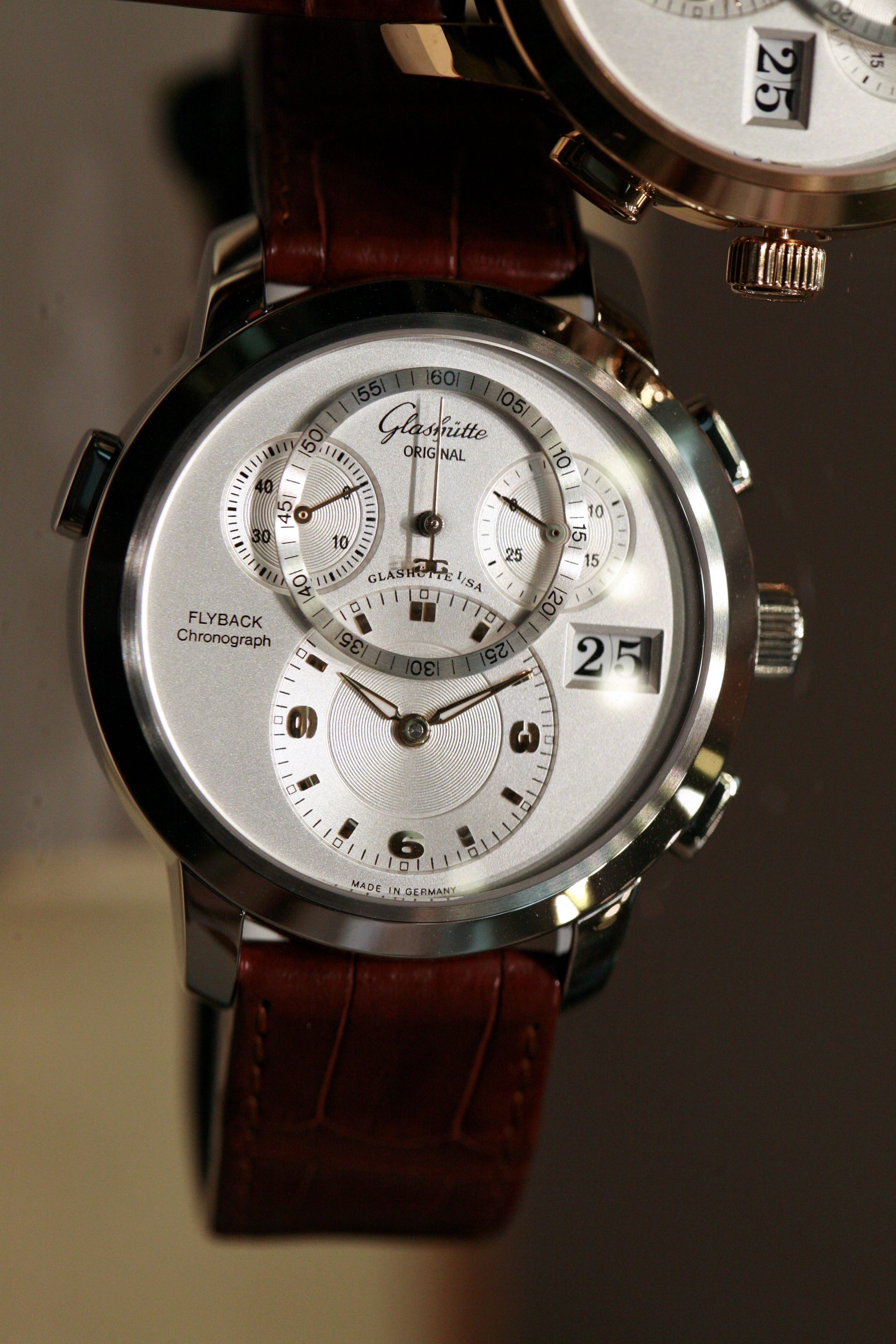
Glashütte Original's primary tourbillon reference is the Senator Tourbillon , incorporating a flying tourbillon :
| Specification | Detail |
|---|---|
| Calibre | 94-11 |
| Tourbillon type | Flying (no upper bridge) |
| Cage rotation | One revolution per minute |
| Power reserve | 72 hours |
| Frequency | 21,600 vph |
| Case | 42mm, gold |
The flying tourbillon — a variant in which the upper cage bridge is eliminated, leaving the cage apparently suspended without visible support from above — requires greater precision than a conventionally bridged tourbillon. Without an upper pivot, the cage's single lower pivot must carry the full rotational load without wobble; the cage components must be balanced to exceptional tolerances.
The visual benefit is dramatic: the tourbillon cage appears to float at the dial aperture, its rotation unobstructed by a bridge crossing above it. This is the preferred configuration for exhibition purposes.
Three-Quarter Plate with Tourbillon
Photo: Rama — CC BY-SA 2.0 FR — Wikimedia Commons
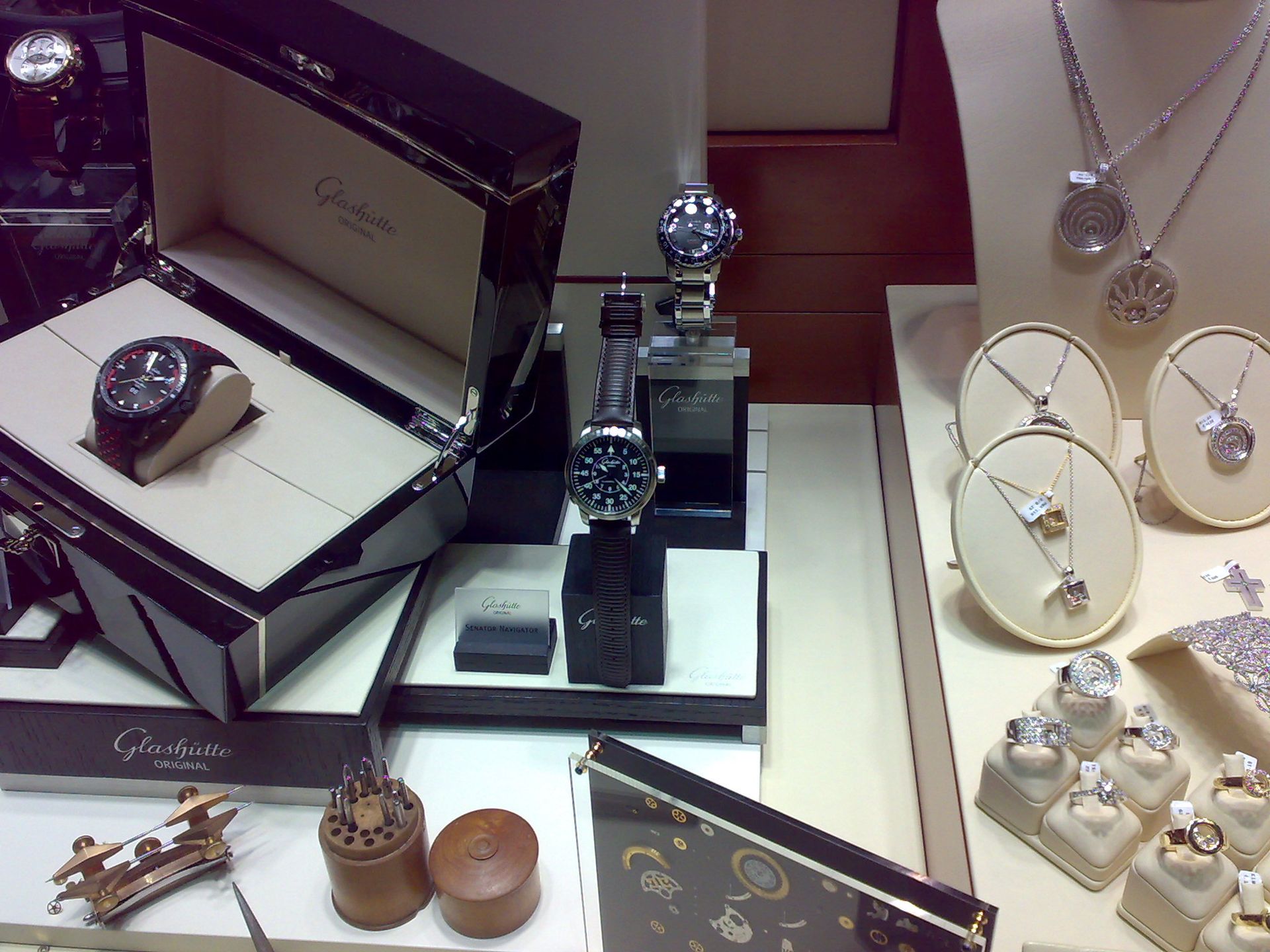
The combination of a three-quarter plate movement with a tourbillon requires specific architectural decisions. The three-quarter plate covers most of the movement's back surface — but the tourbillon cage must be accessible for regulation and inspection. Glashütte Original's solution maintains the three-quarter plate as the dominant movement element while providing the tourbillon cage with an appropriate aperture in both the plate (caseback side) and the dial (for the flying tourbillon display).
The result: both sides of the watch demonstrate complication and finishing simultaneously. The caseback reveals the Glashütte three-quarter plate with its ribbing and blued screws; the dial reveals the tourbillon cage in rotation.
Senator Excellence Perpetual Calendar Tourbillon
Photo: Ferengi — CC BY-SA 3.0 — Wikimedia Commons
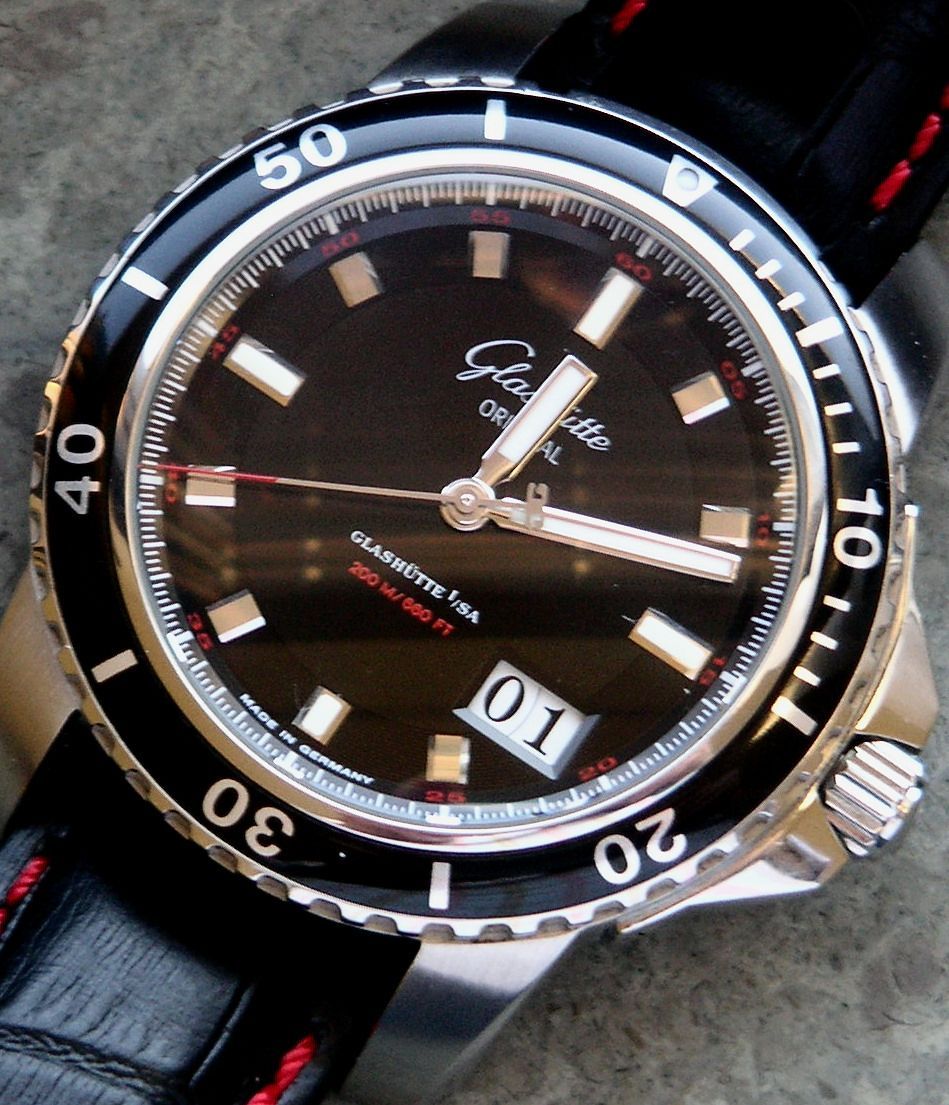
The apex of Glashütte Original's tourbillon range is the Senator Excellence Perpetual Calendar Tourbillon — combining:
- Flying tourbillon at 6 o'clock
- Perpetual calendar (day, date, month, year, leap year)
- Moonphase
- Power reserve indicator
The combination of perpetual calendar and tourbillon in a single movement is among the most demanding exercises in watchmaking. The perpetual calendar's programming mechanism (its cam and lever system) must function reliably without being disturbed by the tourbillon's continuous motion and by the energy demands of maintaining a rotating cage. The movement architecture must maintain independence between these two mechanical systems.
PanoTourbillon
Photo: Thomasbj — CC BY-SA 3.0 — Wikimedia Commons
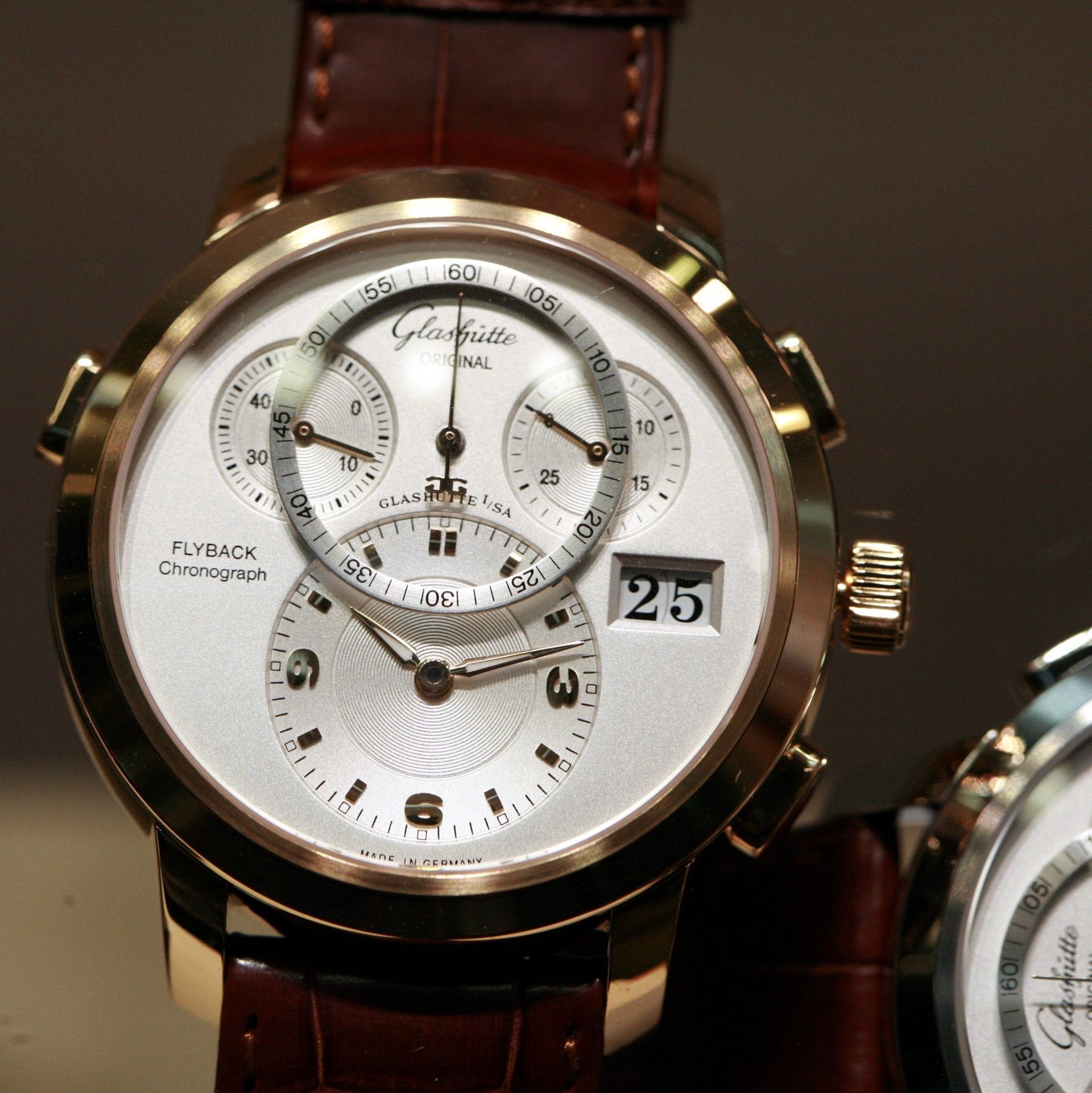
The PanoTourbillon applies the flying tourbillon to the PanoSeries off-centre dial architecture:
The tourbillon cage appears at the right portion of the dial — the subsidiary display area in the standard PanoSeries layout — while the off-centre time display occupies the upper left. The result is a watch that is immediately recognisable as a PanoSeries reference (by the asymmetric dial) and simultaneously a tourbillon watch (by the rotating cage visible at right).
This combination — PanoSeries design logic with tourbillon complication — requires that the calibre's off-centre going train be designed from the beginning to accommodate the tourbillon rather than treating it as an add-on module.
Tourbillon Production Volume
Photo: Thomasbj — CC BY-SA 3.0 — Wikimedia Commons
Glashütte Original's tourbillon watches are produced in small series — typically single-digit or low double-digit pieces per year for the most complex references. Each tourbillon cage is assembled by a single watchmaker who takes responsibility for the complete cage build, including the balance wheel adjustment and regulation.
The cage itself contains approximately 70–80 components in miniature, assembled to tolerances measured in hundredths of a millimetre. Cage weight is critical: heavier cages create more friction at the pivot and require more driving force from the gear train, reducing power reserve. Glashütte Original's tourbillon cages target sub-0.3 gram weight.