Seiko Turtle: The 6309 Diver and the Modern SRP777 Revival
Seiko Turtle: The Cushion-Case Diver
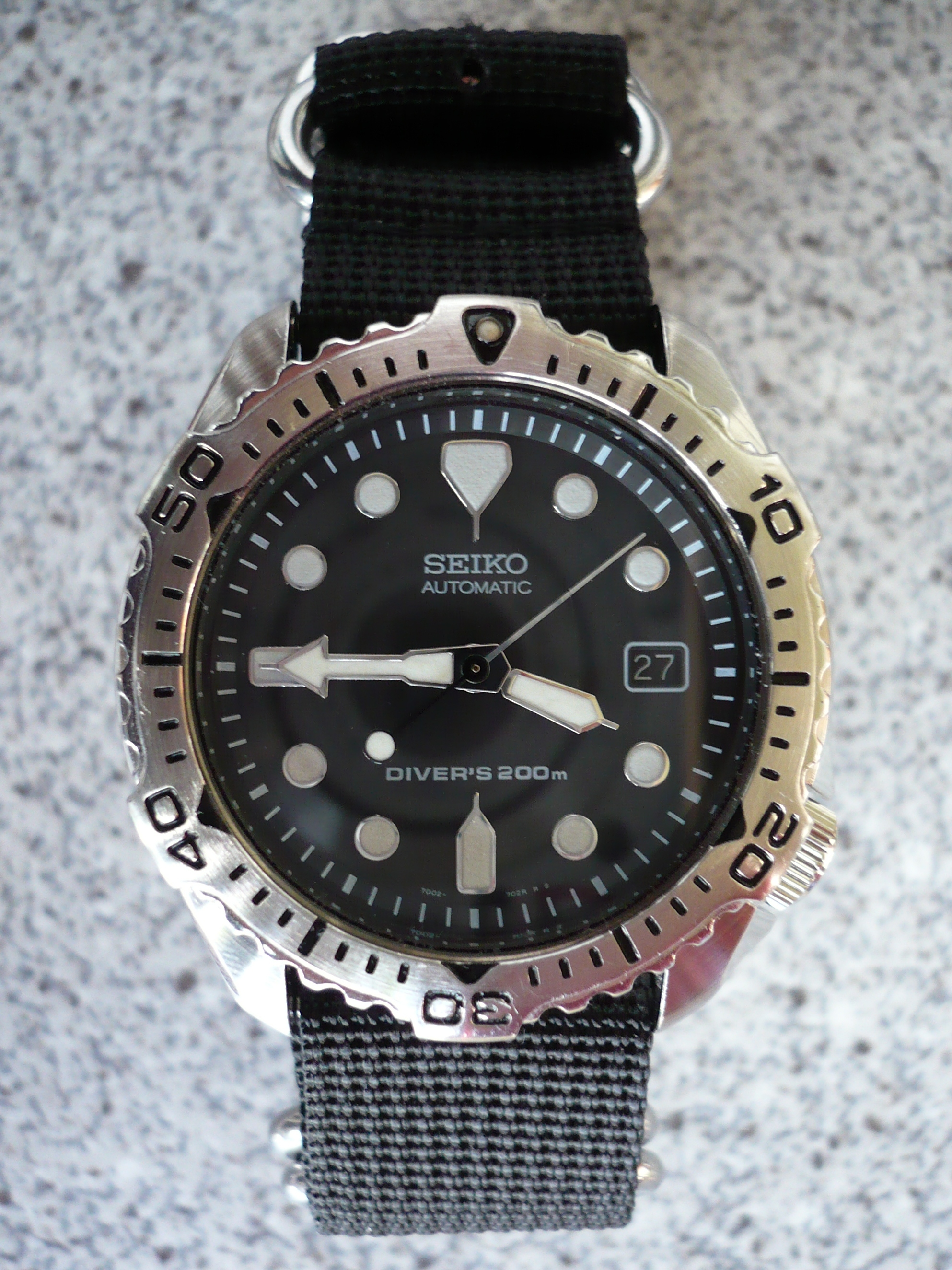
The cushion case is one of the defining case shapes of 1970s watch design — a square or rounded-square form with curved sides that softens the angularity of a square without committing to the full roundness of a circle. Seiko applied it to a dive watch in 1976, producing the 6309 series: a tool diver with a shape so distinctive that it accumulated a community nickname decades after production ended. The Turtle returned in 2015 with a modern revival that retained the defining geometry while upgrading everything else. It has since expanded into one of the most varied and sought-after sub-families in the Seiko Prospex catalogue.
Photo: Francis Flinch — Public Domain — Wikimedia Commons
The 6309 Series — 1976 Origins
Photo: Les Zetlein — Public Domain — Wikimedia Commons
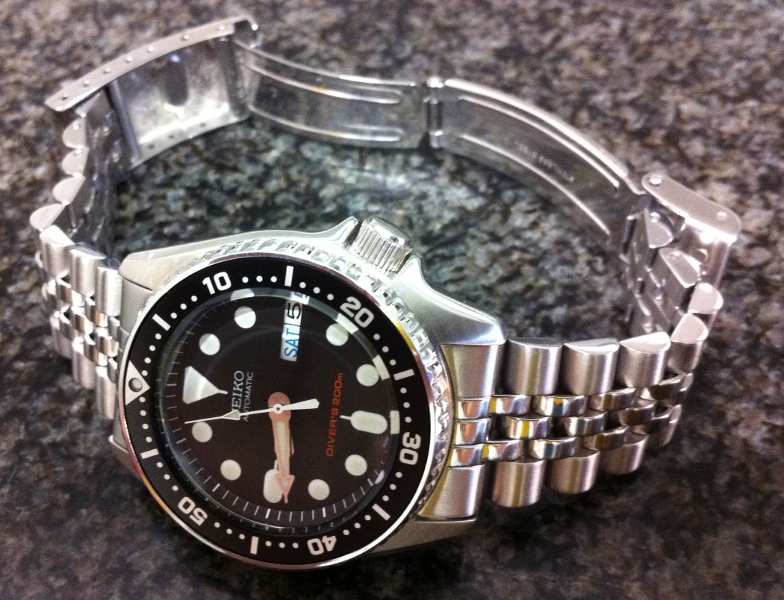
The original Turtle family carries the reference prefix 6309 , for the calibre that powered it. The Calibre 6309 was a 17-jewel automatic with day-date display, running at 21,600 vph and offering approximately 40 hours of power reserve. The 6309-7040 and related references introduced the cushion case shape to Seiko's professional dive watch line — a shape that would define the family through two distinct eras of production.
The 6309 series was produced from 1976 through the mid-1980s. It was primarily a Japan Domestic Market (JDM) product, with some international distribution, and it operated in the shadow of the more widely exported SKX series that followed. Its 150m water resistance was respectable for its era but less than the 200m that later became the standard for dive watches in this price category.
The "Turtle" nickname came from the enthusiast community rather than Seiko's marketing. The rounded cushion case, viewed from above, suggested the outline of a turtle's shell — a visual metaphor that stuck because it was exactly right. The case shape is the defining characteristic that makes a Turtle identifiable at a glance.
The Modern Revival — SRP777 Series
Photo: inside_loop — CC BY-SA 3.0 — Wikimedia Commons
Seiko revived the Turtle in 2015 (with the SRP series reaching wider markets through 2016) as part of the expanding Prospex collection. The revival retained the cushion case geometry while upgrading every specification to meet contemporary standards.
Standard Turtle Specifications
| Specification | Value |
|---|---|
| Case diameter | 45mm |
| Case shape | Cushion (rounded square) |
| Water resistance | 200m |
| Crystal | Hardlex |
| Movement | Calibre 4R36 |
| Frequency | 21,600 vph |
| Power reserve | ~41 hours |
| Hacking | Yes |
| Manual wind | Yes |
The 4R36 was a meaningful upgrade over the original 6309: the addition of hacking and manual winding addressed the limitations that the SKX's 7S26 carried forward. The 200m water resistance represented an increase over the original 6309's 150m and brought the Turtle into the same certification tier as the SKX.
Key SRP References
| Reference | Dial | Bezel |
|---|---|---|
| SRP777 | Black | Black aluminium |
| SRP773 | Dark blue | Blue aluminium |
| SRP779 | Blue/black "Pepsi" | Blue/red aluminium |
| SRP775 | Black | Gold-tone aluminium |
The SRP series was sold with a rubber strap and an additional bracelet in many markets, giving the watch immediate wearability in multiple configurations. The 45mm case dimension placed the Turtle at the larger end of the dive watch spectrum — a genuine presence on the wrist that suited the broad cushion geometry.
Special Editions
Photo: Francis Flinch — CC BY-SA 3.0 — Wikimedia Commons
Zimbe — SRPC49
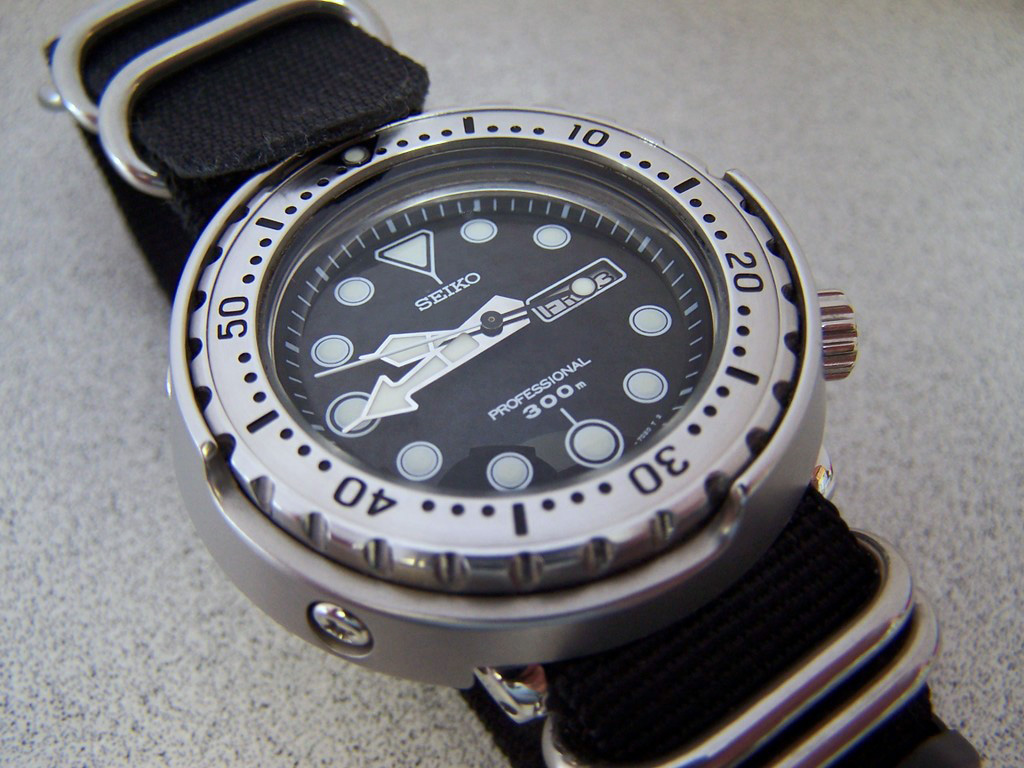
The SRPC49 "Zimbe" edition — named after a whale shark character in popular Japanese media — featured a distinctive dial texture intended to evoke shark skin. Limited production and distinctive appearance made it immediately sought after. Zimbe editions demonstrated the Turtle's versatility as a canvas for special releases.
PADI Edition — SRPC91
The SRPC91 was produced in collaboration with the Professional Association of Diving Instructors (PADI) , with a blue dial and orange elements referencing PADI's colour scheme. PADI branding appeared on the dial and caseback. The collaboration gave the Turtle an official connection to professional diving instruction that aligned naturally with its tool watch specification.
The Baby Turtle — 42mm
Photo: Francis Flinch — Public Domain — Wikimedia Commons
For wearers who found the 45mm standard Turtle too large, Seiko introduced the "Baby Turtle" (also called "Mini Turtle") at 42mm :
| Reference | Dial | Bezel |
|---|---|---|
| SRPC35 | Black | Black/blue aluminium |
| SRPC37 | Blue | Blue aluminium |
| SRPC41 | Blue/red | Blue/red "Pepsi" aluminium |
The Baby Turtle retains the 200m water resistance, the cushion case geometry, and the 4R36 movement of the full-size Turtle. The 42mm diameter and reduced lug-to-lug measurement make it meaningfully more wearable on smaller wrists without sacrificing the design language that defines the family.
Position in the Prospex Range
Photo: Ferengi — CC BY-SA 3.0 — Wikimedia Commons
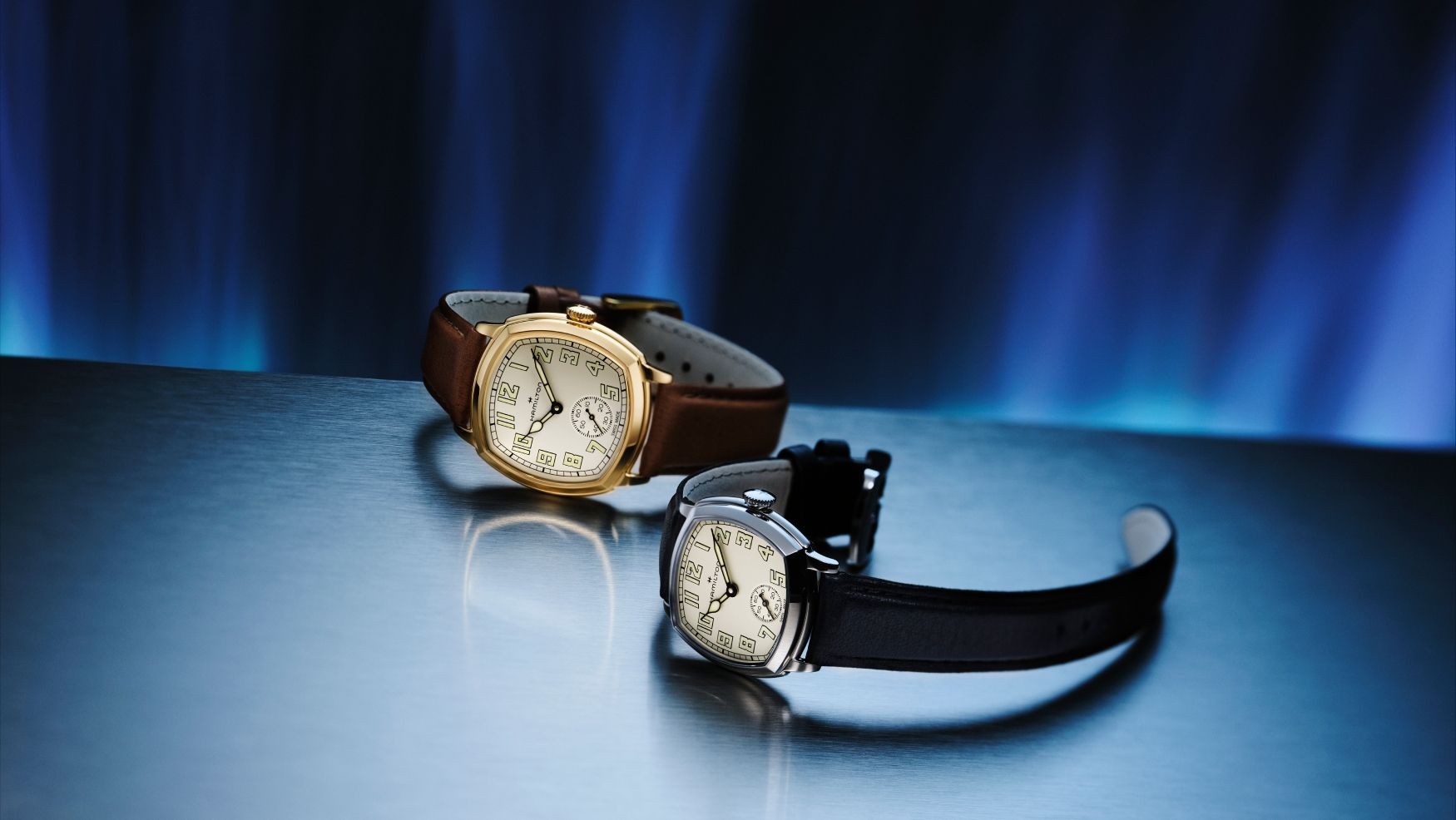
The Turtle occupies the mid-tier of the Seiko Prospex dive watch range — above the Seiko 5 Sports (100m WR, no dedicated dive bezel) and below the Marinemaster (professional-grade specifications, higher price). It sits alongside the Monster and Samurai as a character-driven choice within the Prospex catalogue: buyers select the Turtle for its case shape rather than as a default dive watch. The cushion geometry is specific enough that choosing a Turtle is a considered aesthetic decision.
The Turtle has expanded through Save the Ocean collaboration editions, anniversary references, and ongoing colour variant releases — a level of product activity that confirms its position as one of the most commercially active references in the Prospex range. The combination of an immediately recognisable case shape and a proven, accessible price point has made it one of the most recommended Seiko Prospex divers for first-time Prospex buyers.
Frequently Asked Questions
Why is it called the Turtle?
Community nickname derived from the cushion-shaped case, which viewed from above resembles a turtle's shell. The name is not used in Seiko's official marketing but has been widely adopted by Seiko's own communications in acknowledging the watch's identity.
What is the difference between the Turtle and the Baby Turtle?
Case size: the standard Turtle (SRP/SRPC series) is 45mm; the Baby Turtle (Mini Turtle) is 42mm. Both share the same cushion case geometry, 200m water resistance, and 4R36 movement.
What movement does the Seiko Turtle use?
Calibre 4R36: 24 jewels, 21,600 vph, approximately 41-hour power reserve, with hacking and manual winding. An upgrade over the 7S26 used in the original SKX.
Is the Seiko Turtle still in production?
Yes. The Turtle continues in the Seiko Prospex range with ongoing references, Save the Ocean editions, and colour variants. The cushion case design has remained unchanged through the modern production run.