Seiko SKX007 and SKX013: The Cult Diver’s Watch
Seiko SKX: The Cult Diver
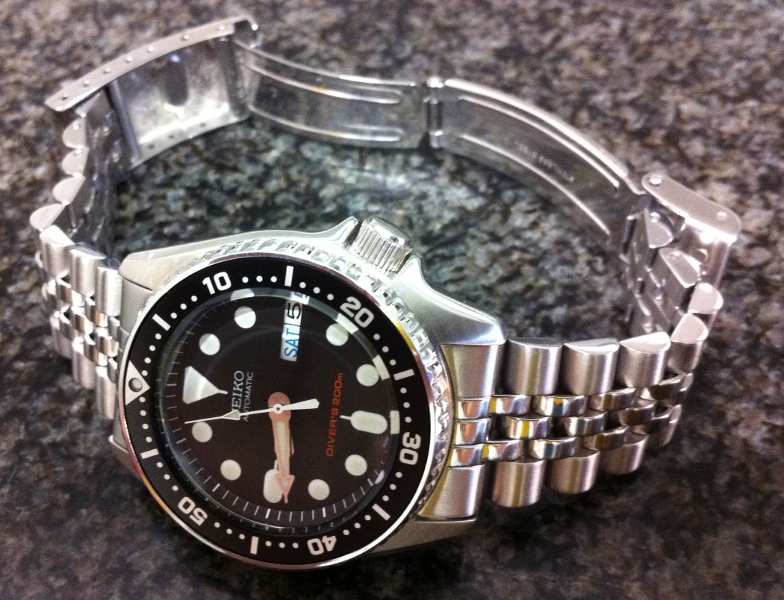
The Seiko SKX007 was never a limited edition. It was never marketed as a collector's watch. For most of its production life, it cost less than $200. When Seiko discontinued it in 2019, secondary market prices immediately doubled — and then kept rising. The SKX had become a cult object not through scarcity or prestige, but through a specific combination of quality, affordability, and modifiability that no other watch at its price point had ever offered simultaneously. It inspired a global community of enthusiasts who modified it, collected it, and debated its variants with a depth of attention usually reserved for watches costing ten times as much.
Photo: inside_loop — CC BY-SA 3.0 — Wikimedia Commons
Introduction — 1996
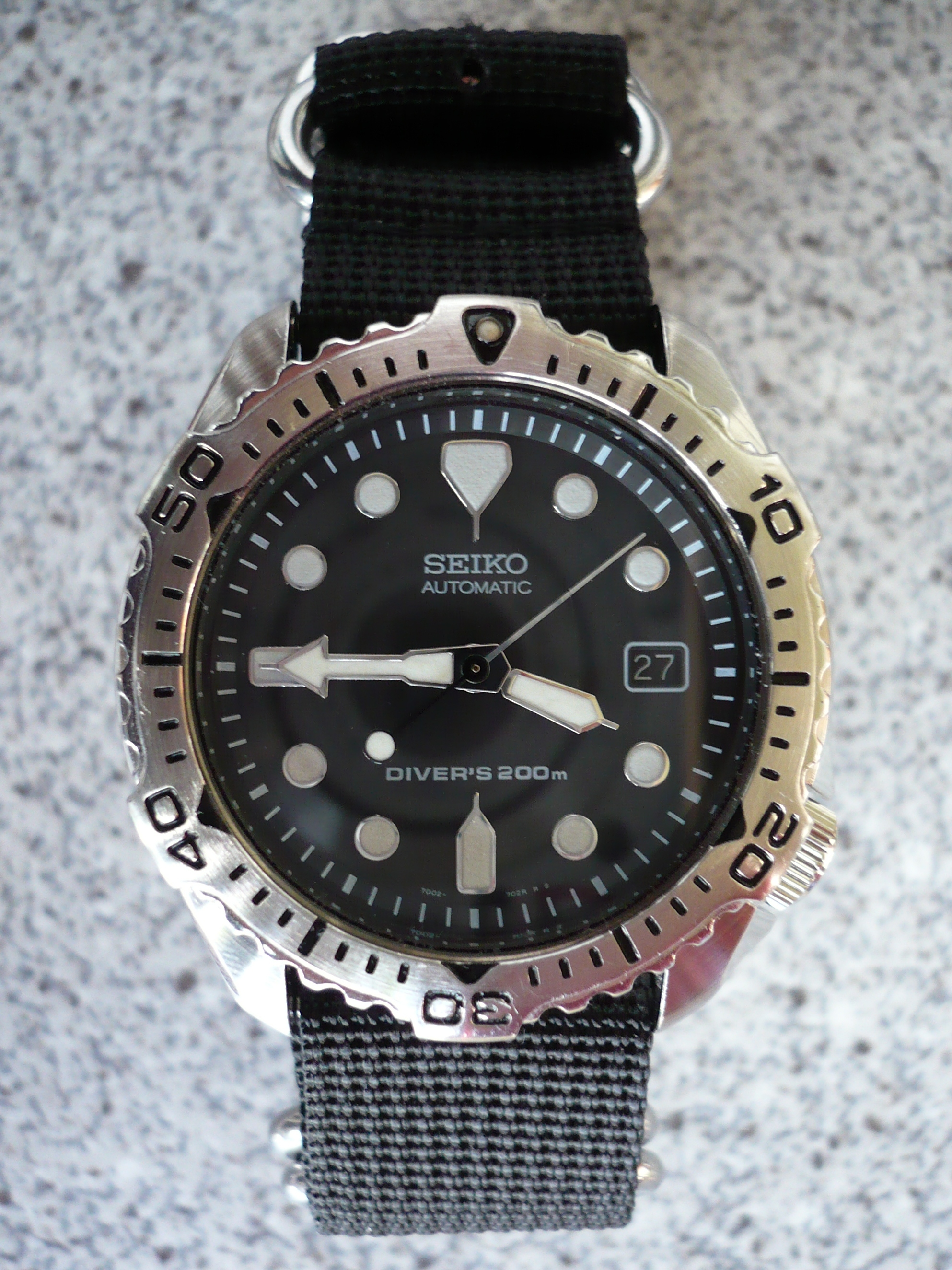
Photo: Francis Flinch — Public Domain — Wikimedia Commons
The SKX007 and SKX009 were introduced in 1996 , alongside the Calibre 7S26 movement designed specifically for them. Both references are ISO 6425-certified dive watches — not merely water resistant, but meeting the technical standard for a professional diving instrument: tested to 125% of rated water resistance, with a unidirectional rotating bezel, luminous indices, and a legible display under pressure.
The difference between the two references:
- SKX007 : Black dial, black aluminium bezel insert
- SKX009 : Dark navy blue dial, blue/red "Pepsi" aluminium bezel insert
Everything else — case dimensions, movement, water resistance, bracelet — is identical. The two references represent the same watch in different dress, and both achieved the same cult status through the same route.
Case Specifications
Photo: Ash Crow (Sylvain Boissel) — CC BY-SA 3.0 — Wikimedia Commons
| Specification | Value |
|---|---|
| Case diameter | 42.5mm |
| Case thickness | ~13.25mm |
| Lug-to-lug | 46mm |
| Lug width | 22mm |
| Water resistance | 200m (ISO 6425 certified) |
| Bezel | Unidirectional rotating, 60-minute |
| Crown | Screw-down, 4 o'clock position |
| Crystal | Hardlex (mineral) |
| Day-date display | Yes |
The crown at 4 o'clock — a feature shared with the Seiko 5 Sports — protects the winding crown from impact and prevents it from catching on gloves or gear. The combination of 200m water resistance and ISO 6425 certification meant the SKX was a legitimate professional dive tool, not merely a dive-styled watch.
Calibre 7S26 — The Movement and Its Limitations
Photo: Les Zetlein — Public Domain — Wikimedia Commons
The Calibre 7S26 powers every SKX007 and SKX009. Its specifications:
| Specification | Value |
|---|---|
| Jewels | 21 |
| Frequency | 21,600 vph (3 Hz) |
| Power reserve | ~41 hours |
| Hacking | No |
| Manual wind | No |
| Factory accuracy | -20 to +40 sec/day |
The absence of hacking and manual winding are the most frequently cited limitations of the 7S26. A watch that cannot be hacked cannot be set precisely to the second — the seconds hand continues running while the time is adjusted. A watch that cannot be manually wound requires arm movement to charge the mainspring. In a tool dive watch used by a professional diver on a regular schedule, these are genuine operational constraints.
In practice, the SKX was embraced despite these limitations because every other aspect of its specification — the 200m ISO certification, the reliable automatic movement, the unidirectional bezel, the durable construction — was exactly what a tool watch required. The 7S26's accuracy specification (up to 40 seconds/day fast at the loose end of the factory spec) was also frequently beaten in practice; many SKX owners reported movements running within ±10 seconds/day without regulation.
The SKX013 — The Smaller Variant
For wrists that found the 42.5mm SKX007/009 too large, Seiko produced the SKX013 : the same watch in a 38mm case with 20mm lugs and 44mm lug-to-lug. The SKX013 carried the same 7S26 movement, the same 200m water resistance, and the same Hardlex crystal. Its dial was black. It is less frequently discussed than the SKX007/009 but holds the same cult status among those who prefer or require a smaller case.
Discontinuation — 2019
Photo: Francis Flinch — Public Domain — Wikimedia Commons
Seiko discontinued the SKX line in 2019 , coinciding with the relaunch of the Seiko 5 Sports with the upgraded 4R36 movement (adding hacking and manual winding). The move was a rational product rationalisation: the 4R36-equipped Prospex and Seiko 5 Sports divers offered meaningfully better movements at similar price points.
The secondary market's response was immediate. SKX007 and SKX009 prices, which had been stable at $175–$200 in the final years of production, rose sharply after discontinuation. By 2025–2026, clean examples with original bracelets were trading at $370–$500 on Chrono24 — a 100–150% appreciation. The WatchCharts price index for the SKX779 (the original Monster, a spiritual predecessor) showed similar trajectory.
The discontinuation transformed the SKX from a current product into a collectible. Its successor in the Prospex lineup — the SRPD and SRPE dive watches — offered better movements but different aesthetics. The specific combination of SKX proportions, dial design, and community investment in the reference could not be straightforwardly replaced.
The Mod Community
Photo: Olgierd Rudak — CC BY-SA 4.0 — Wikimedia Commons
The SKX became the most modified affordable watch in history. The combination of a screw-down caseback, standardised case dimensions, widely available replacement parts, and an active enthusiast community produced a global aftermarket ecosystem that offered:
- Aftermarket dials (chapter rings, indices, colour options far beyond Seiko's production range)
- Replacement bezel inserts (ceramic, aluminium, sapphire — dozens of suppliers)
- Aftermarket hands (BGW9 lume, various metals and finishes)
- Replacement crystals (domed sapphire upgrades from multiple suppliers)
- Alternative straps and bracelets
- Full "chapter ring" modifications that changed the watch's character entirely
Websites and communities dedicated entirely to "Seiko mods" — using SKX or similar cases as the base — developed their own sub-culture within watch collecting. The availability of parts and the straightforward case opening process meant that a technically confident owner could fully transform an SKX without workshop tools. This modifiability drove a type of engagement that more expensive watches — sealed cases, proprietary parts, specialist servicing requirements — could never generate at the same scale.
Why the SKX Became a Cult Watch
Four factors combined to make the SKX an object of sustained collector attention:
Affordability with legitimacy : Under $200 for an ISO 6425-certified dive watch with a proven automatic movement was genuinely without competition at the price point. The legitimacy of the specification — not "dive-styled" but actually dive-rated — was what separated it from cheaper alternatives.
Modifiability : The aftermarket ecosystem described above gave owners a creative stake in their watches. A modified SKX is a different object from an unmodified one, and the community formed around the process of modification as much as the finished result.
Proven reliability : Two-plus decades of production with the same 7S26 movement, the same case architecture, the same bracelet — the SKX's long production run created a large population of worn examples demonstrating the movement's durability in real-world use.
Aesthetic clarity : Black dial, white indices, orange or red bezel markings, no unnecessary decoration — the SKX007 is a tool watch that looks like what it is. The directness of its design aged well precisely because it was never trying to be stylish.
Frequently Asked Questions
What is the difference between the SKX007 and SKX009?
The SKX007 has a black dial and black aluminium bezel insert. The SKX009 has a dark navy blue dial and a blue/red "Pepsi" aluminium bezel insert. All other specifications — movement, case dimensions, water resistance — are identical.
Does the SKX hack?
No. The Calibre 7S26 does not hack (seconds hand does not stop when setting time) and cannot be manually wound. The 4R36 movement in the modern Seiko 5 Sports and Prospex range corrects both limitations.
When was the SKX discontinued?
2019, concurrent with the Seiko 5 Sports relaunch. Secondary market prices approximately doubled following discontinuation.
What is the SKX013?
The 38mm variant of the SKX, with a 20mm lug width and a black dial. Same 7S26 movement and 200m ISO 6425 certification. Produced for smaller wrists; same production period as the SKX007/009.
Is there a direct successor to the SKX?
Not a direct replacement. The modern Seiko Prospex SRPD and SRPE divers offer superior movements (4R36 with hacking and hand-wind) but different proportions and aesthetics. The SKX's specific design has not been reissued.