
Seiko Samurai: The Angular Diver, 2017 Revival, and King Samurai

Zach Charles • June 9, 2026

Share this article

Seiko Samurai: The Angular Diver

The Seiko Samurai's name comes from a visual observation: the angular lug design, viewed from the side, recalls the sharp geometry of a samurai's sword. It is a community nickname — Seiko's own marketing designated these watches under their reference numbers without attaching a name — but it captured something real about the design's character. Where the Turtle is soft, the Samurai is hard. Where the Monster is textured, the Samurai is precise. It was produced from 2004 in titanium, went silent for nearly a decade, returned in 2016 in stainless steel at a larger diameter, gained a ceramic bezel upgrade in 2020, and was redesigned to a smaller, more refined specification in 2024. It is a watch that has evolved considerably while maintaining the angular identity that earned it its name.


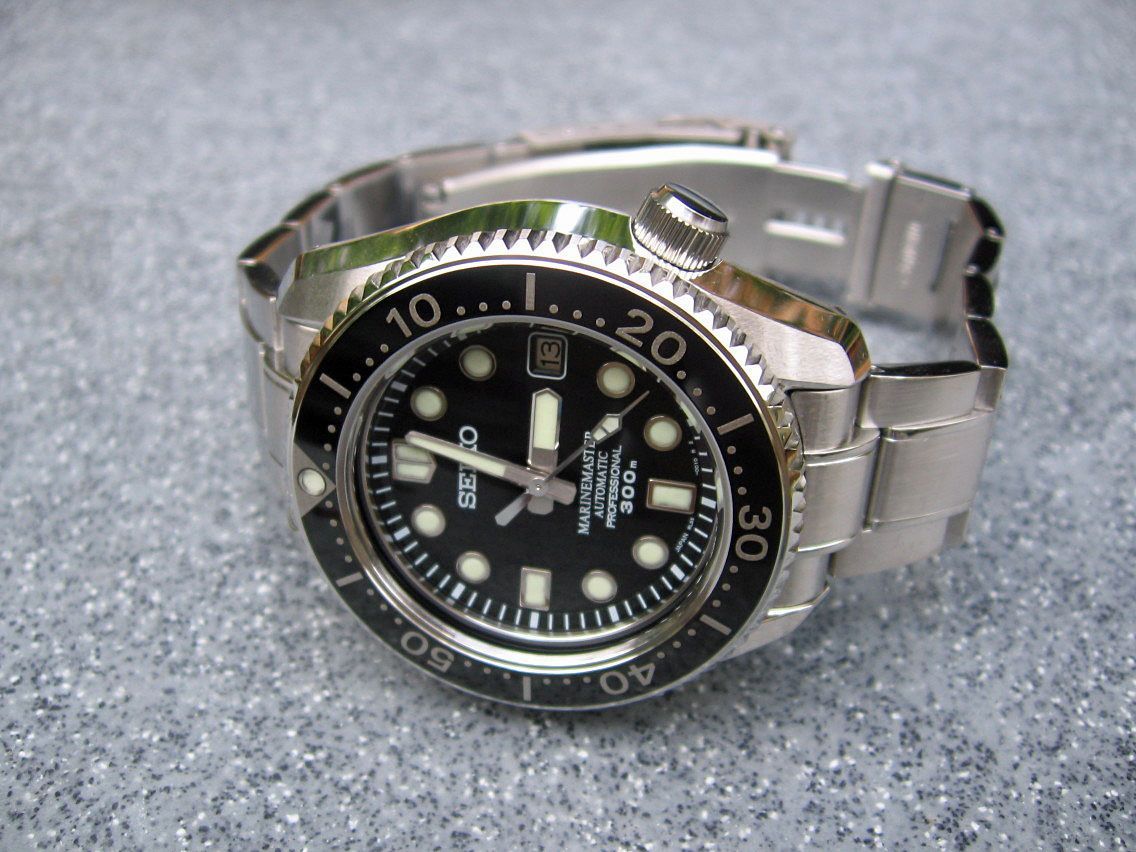
Seiko SBDX001 Marinemaster 300m professional diver
The Seiko SBDX001 Marinemaster 300m — professional-grade Prospex diver running the in-house Calibre 8L35 hi-beat automatic at 28,800 vph.
Photo: Francis Flinch — CC BY-SA 3.0 — Wikimedia Commons
The Original Samurai — 2004

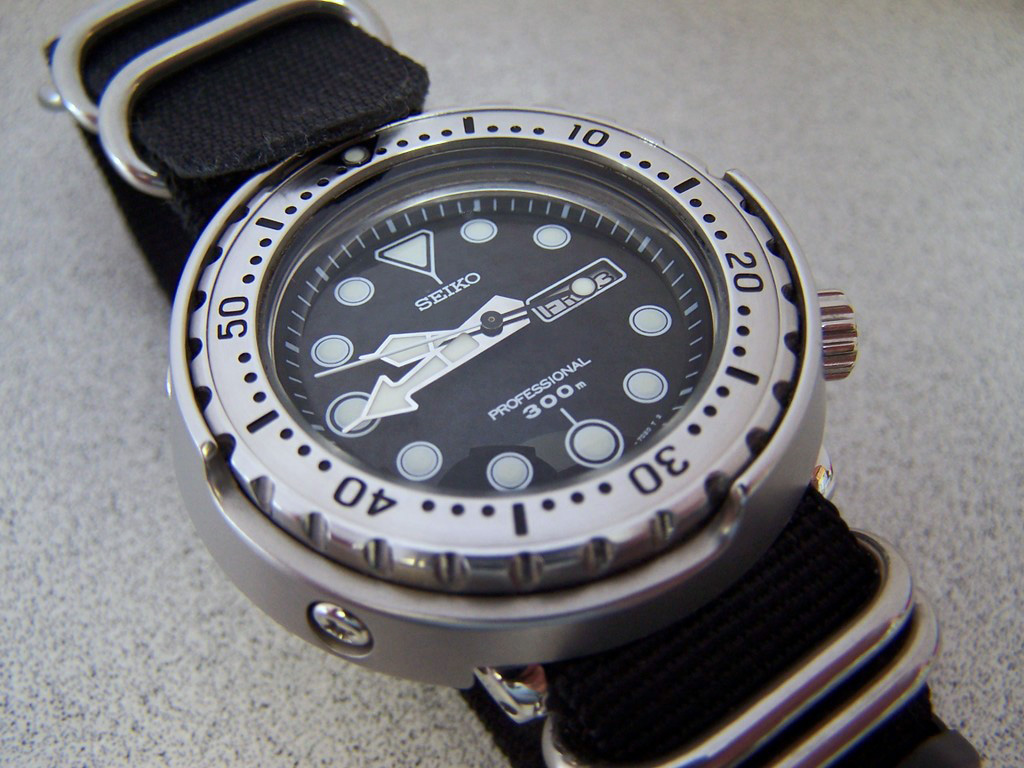
Seiko SBBN007 diver's 300m on 4-ring NATO strap
The Seiko SBBN007 300m diver on a NATO strap — professional-specification Prospex with the in-house Calibre 8L35 automatic.
Photo: Francis Flinch — Public Domain — Wikimedia Commons
The first-generation Samurai was introduced in 2004 as a Japan Domestic Market product, initially in titanium:

Reference Dial
SBDA001 Black
SBDA003 Blue
SBDA005 Orange

Specifications — First Generation

Specification Value
Case material Titanium
Case diameter 42mm
Case thickness ~13.7mm
Water resistance 200m
Crystal Hardlex
Movement Calibre 7S25 (21 jewels, 21,600 vph, 41hr PR, no hacking, no manual wind)
Original Japanese price ¥42,000

The Calibre 7S25 is the 7S26 without a day display — sharing the no-hacking, no-manual-wind characteristics of its sibling. The titanium case gave the original Samurai a lightness on the wrist that differentiated it from the heavier steel dive watches of the same era. The angular lug construction was the defining design element: the lugs cut away from the case in a triangular profile that suggested something edged and precise.

The Samurai name, like Monster and Turtle, was assigned by the community. It is now so widely used that Seiko itself has adopted it in press releases for subsequent generations.


The Hiatus — 2008 to 2017

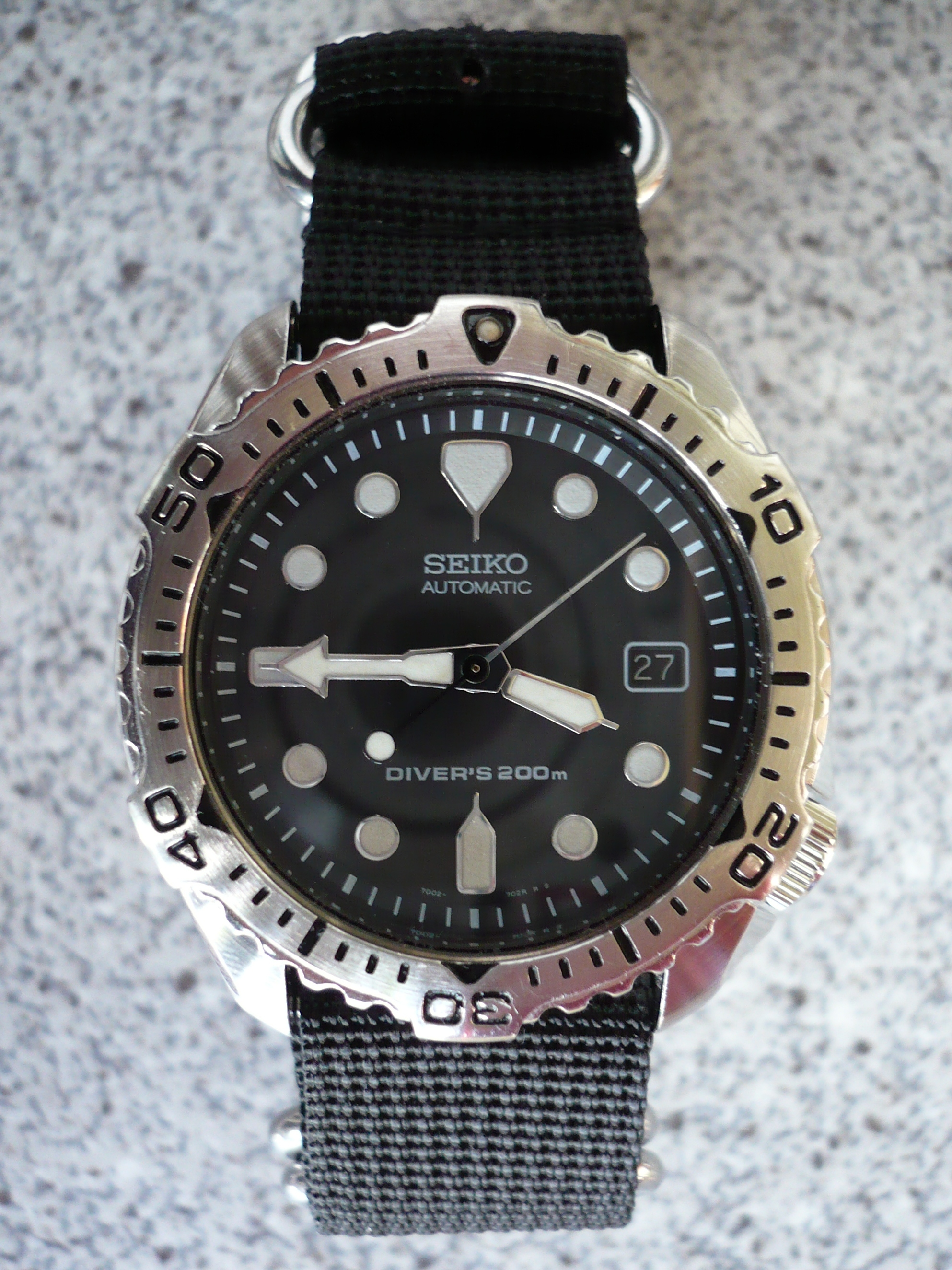
Seiko 7002-7020 diver's 200m on a 4-ring NATO strap
A Seiko 7002-7020 diver’s 200m on a 4-ring NATO strap — the pre-SKX design that established Seiko’s reputation for affordable, capable tool watches.
Photo: Francis Flinch — Public Domain — Wikimedia Commons

Production of the Samurai ceased around 2008 . The watch was absent from the Seiko catalogue for approximately nine years — a gap long enough that its return in 2017 was treated as a genuine revival rather than a model update.

The reasons for the hiatus are not publicly documented. The period coincided with the broader Seiko portfolio rationalisation that accompanied the Prospex line's development and the quartz crisis recovery strategies that dominated the 2000s and early 2010s. The Samurai returned when the Prospex collection was being actively expanded and the demand for character-driven mechanical divers at accessible prices was evident.


The 2017 Revival

Seiko SKX781 Orange Monster diver watch
The Seiko SKX781 ‘Orange Monster’ — the second-generation Monster diver whose orange dial and bezel gave the entire line its collector nickname.
Photo: Olgierd Rudak — CC BY-SA 4.0 — Wikimedia Commons

In 2017 , the Samurai returned — in stainless steel, at a larger diameter, with a significantly upgraded movement.

Specifications — 2017 Generation

Specification Value
Case material Stainless steel
Case diameter 43.8mm
Water resistance 200m
Crystal Mineral
Movement Calibre 4R35 (23 jewels, 21,600 vph, ~41hr PR, hacking, manual wind)
Lug width 22mm
Price at launch EUR 419–459

The 4R35 upgrade addressed the first generation's no-hacking, no-manual-wind limitation. The stainless steel case added weight relative to the titanium original but placed the 2017 Samurai at a more accessible price point. At 43.8mm, the 2017 Samurai was larger than the original 42mm — a common trend across watch category revivals in the 2010s — but the angular proportions handled the additional diameter without looking bloated.

2017 References

Reference Dial and Bezel
SRPB49K1 Blue dial, blue/grey bezel, steel bracelet
SRPB51K1 Black dial, black/grey bezel, steel bracelet
SRPB53K1 Blue dial, blue/red "Pepsi" bezel, rubber strap
SRPB55K1 Black dial, gold-tone bezel, rubber strap
SRPB99K1 PADI edition
SRPC93 Save the Ocean edition

The revival also included collaboration and conservation editions alongside the core production references. The PADI partnership gave the Samurai an institutional association with professional diving instruction; the Save the Ocean edition linked it to Seiko's broader marine conservation messaging.


King Samurai — 2020

King Seiko 5246-6000 Hi-Beat Automatic —
King Seiko 5246-6000 Automatic Special Hi-Beat — “Chronometer Officially Certified” — from the era of direct competition between Daini Seikosha and Suwa Seikosha.
Photo: Roland Fischer (Dnalor 01) — CC BY-SA 3.0 AT — Wikimedia Commons

In August 2020 , Seiko introduced the King Samurai — a premium tier within the Samurai line, distinguished by two significant specification upgrades:

  1. Ceramic bezel insert — replacing the aluminium insert of the standard Samurai
  2. Sapphire crystal with date magnification window

King Samurai Specifications

Specification Value
Case diameter 44mm
Case material Stainless steel
Bezel insert Ceramic
Crystal Sapphire (with magnification)
Movement Calibre 4R35 (41hr PR, hacking, manual wind)
Water resistance 200m

Key King Samurai References

Reference Dial
SRPE35K1 Black dial, steel bracelet — USD 625
SRPE37K1 White dial, rubber strap — USD 595
SRPG21K1 PADI edition
SRPE33K1 Save the Ocean edition

The ceramic bezel represents a meaningful materials upgrade: ceramic is harder than aluminium (scratch-resistant enough that the graduation markings retain their precision over years of wear), and the glossy black ceramic gives the King Samurai a more refined surface than the anodised aluminium of the standard variant. The sapphire crystal eliminates the scratch vulnerability of mineral crystal. The King Samurai costs approximately 40–50% more than the standard 2017 Samurai — a premium justified by tangible material improvements rather than cosmetic differences.


The 2024 Redesign — Smaller, Sharper

Seiko Spring Drive 5R86 calibre — disassembled components
The Seiko Spring Drive 5R86 calibre disassembled — the tri-synchro regulator combines mechanical energy with an electromagnetic governor to achieve ±0.5 seconds per day.
Photo: Ferengi — CC BY-SA 3.0 — Wikimedia Commons
For the Samurai's 20th anniversary in 2024, Seiko fully redesigned the watch — and moved against the trend, making it smaller rather than larger:

Specification 2017 Samurai 2024 Samurai
Case diameter 43.8mm 41.7mm
Case thickness ~13.4mm 12.3mm
Lug width 22mm 20mm
Movement 4R35 4R35
WR 200m 200m

The 2024 redesign was widely noted for returning the Samurai to proportions more consistent with its 2004 origins — the 42mm original had been superseded by the 43.8mm 2017 version, and the 2024 revision at 41.7mm brought it closer to that original footprint while refining the lug geometry.

2024 References

Reference Dial and Bezel
SRPL11K1 Burgundy red bezel and dial — EUR 650
SRPL13K1 Black dial, black bezel — EUR 650
SRPL15K1 All-black, matte finish, cream LumiBrite — EUR 600

Frequently Asked Questions

Why is it called the Samurai?
Community nickname derived from the angular lug shape, which viewed in profile recalls the blade geometry of a samurai sword. Not official Seiko marketing, though Seiko has adopted the name in press communications for the 2017 and later generations.

What calibre does the Seiko Samurai use?
The 2017 revival and subsequent generations use Calibre 4R35: 23 jewels, 21,600 vph, approximately 41-hour power reserve, with hacking and manual winding. The original 2004 generation used the 7S25 (no hacking, no manual wind).

What is the King Samurai?
A premium variant introduced in August 2020, distinguishable by a ceramic bezel insert and sapphire crystal (vs. aluminium bezel and mineral crystal on the standard 2017 Samurai). Case: 44mm. Movement: 4R35. Priced at USD 595–625.

Is the 2024 Samurai smaller than the 2017 version?
Yes. The 2024 redesign reduced the case from 43.8mm to 41.7mm, the thickness from ~13.4mm to 12.3mm, and the lug width from 22mm to 20mm — moving back toward the original 2004 Samurai's proportions.


Related Articles

Recent Posts

By Zach Charles • October 10, 2026
Hamilton's American Classic Cushion Mechanical revives its 1926 Art Deco cushion watches, seen in Oppenheimer, in 30mm and 34mm with the new hand-wound…
Doxa SUB 200: The Accessible Everyday Diver
By Zach Charles • October 10, 2026
Complete guide to the Doxa SUB 200 — 42mm, 200m, four colorways, Sellita SW200-1. The accessible entry to the Doxa SUB family with the full…
By Zach Charles • October 10, 2026
The Breitling Top Time B01 Aston Martin DB5 pairs a cushion-shaped 41mm case, a wooden inner ring and the in-house Caliber 01 across three limited…
By Zach Charles • October 10, 2026
TAG Heuer developed the Mikrograph (2011, 1/100th second), Mikrotimer Flying 1000 (2011, 1/1000th second), and Mikrogirder (2012, 1/2000th second).
Doxa SUB 1500T: The 1,500-Metre Depth-Rating Flagship
By Zach Charles • October 10, 2026
Complete guide to the Doxa SUB 1500T — 45mm, 1,500m depth rating, helium escape valve, ETA 2892-2 movement, USD 2,690.
Audemars Piguet Royal Oak 'Jumbo' ref. 15202 with blue tapisserie dial and integrated steel bracelet
By Zach Charles • October 10, 2026
The Audemars Piguet × Swatch Royal Pop is a $400 bioceramic pocket watch in 8 colourways, powered by a new hand-wound SISTEM51 with 90+ hour power…

Time on the Move logo
By Zach Charles • October 10, 2026
Zach Charles is the editor of Time on the Move, an independent watch reference covering brand and model histories, buying guides and release news…
Omega Speedmaster Professional 'Moonwatch' chronograph, front view on steel bracelet
By Zach Charles • October 9, 2026
Find the best watches at every price point from $500 to $15,000 — new and pre-owned. Covers every budget tier with specific reference picks, brand…
By Zach Charles • October 9, 2026
The latest watch news: new releases, Watches and Wonders coverage, discontinuations, industry analysis, and market trends. Currently 1 article.
Seiko's New Panda Chronograph Is Literally a Panda: The Power Design Project HHK001 and HHK002
By Zach Charles • October 8, 2026
Seiko's Power Design Project panda chronograph (HHK001, HHK002) turns the panda dial into an actual panda face, with ear pushers, a 'Sasameter' and a 3D…
Show More