
Seiko Calibres: From 7S26 to Spring Drive and GPS Solar

Zach Charles • July 17, 2026

Share this article

Seiko Calibres and Movements

Seiko manufactures its own movements. This statement, unremarkable in the context of Grand Seiko or Rolex, is extraordinary when the price points are considered. The 4R36 — hacking, hand-winding, 41-hour power reserve — sells in watches priced under $300. The 6R35 — 70-hour power reserve, the same fundamental architecture — sells in watches priced under $800. The 8L35 — 28,800 vph, 192 parts, hand-assembled at the Shizukuishi Watch Studio — appears in limited edition Prospex references under $2,000. The gap between what Seiko offers at each price tier and what European competitors offer at the same price is one of the structural realities of the modern watch market. Understanding Seiko's movement range is understanding how that gap is constructed.


Seiko Spring Drive 5R86 calibre — disassembled components
The Seiko Spring Drive 5R86 calibre disassembled — the tri-synchro regulator combines mechanical energy with an electromagnetic governor to achieve ±0.5 seconds per day.
Photo: Ferengi — CC BY-SA 3.0 — Wikimedia Commons

Entry-Level Automatics — 7S and 4R Families

Seiko 6309 calibre — movement of the original Turtle diver
The Seiko 6309 calibre — the automatic movement that powered the original 6309-7040 ‘Turtle’ diver from 1976 and many classic Seiko sport references.
Photo: Les Zetlein — Public Domain — Wikimedia Commons

Calibre 7S26

The 7S26 was introduced in 1996 for the SKX007 and SKX009 dive watches. It established the baseline specification that Seiko's entry-level automatic range has built on ever since.

Specification Value
Jewels 21
Frequency 21,600 bph (3 Hz)
Power reserve ~41 hours
Hacking No
Manual wind No
Factory accuracy -20 to +40 sec/day

The 7S26's two absent features — hacking and manual winding — are its defining limitations. A watch that cannot be hacked cannot be set to the precise second; a watch that cannot be manually wound requires arm movement to charge the mainspring from fully unwound. For an affordable tool watch used daily and not required to be set to the second, these are acceptable omissions. For a collector who expects these features as standard, they are frustrating.

The 7S26 powered the SKX007, SKX009, SKX013, and the classic SNK/SNZ Seiko 5 range.

Calibre 4R35 and 4R36

The 4R35/4R36 family builds on the 7S26 base, adding the two missing features:

Specification 4R35 4R36
Display Date only Day-date
Jewels 24 24
Frequency 21,600 bph 21,600 bph
Power reserve ~41 hours ~41 hours
Hacking Yes Yes
Manual wind Yes Yes
Factory accuracy -20/+40 sec/day -20/+40 sec/day

The 4R36 is the primary movement in the modern Seiko 5 Sports (SRPD/SRPE), the Turtle (SRP/SRPC), the second-generation Monster (SRP series), and the 2017 Samurai revival. The accuracy specification is unchanged from the 7S26 — the factory rating is wide, but many examples run significantly better than the -20/+40 specification.

NH35A and NH36A

These are not Seiko-branded movements . The NH35A (NH = "New Hattori") and NH36A are the designations used by Seiko Epson for the same calibre family when sold to third-party brands and the watch modification community. NH35A: 23 jewels (vs 4R35's 24); NH36A: day-date equivalent. Mechanically near-identical. The NH designation appears in microbrands and Seiko mods; the 4R designation appears in Seiko-branded watches.


Mid-Range Automatics — 6R Family

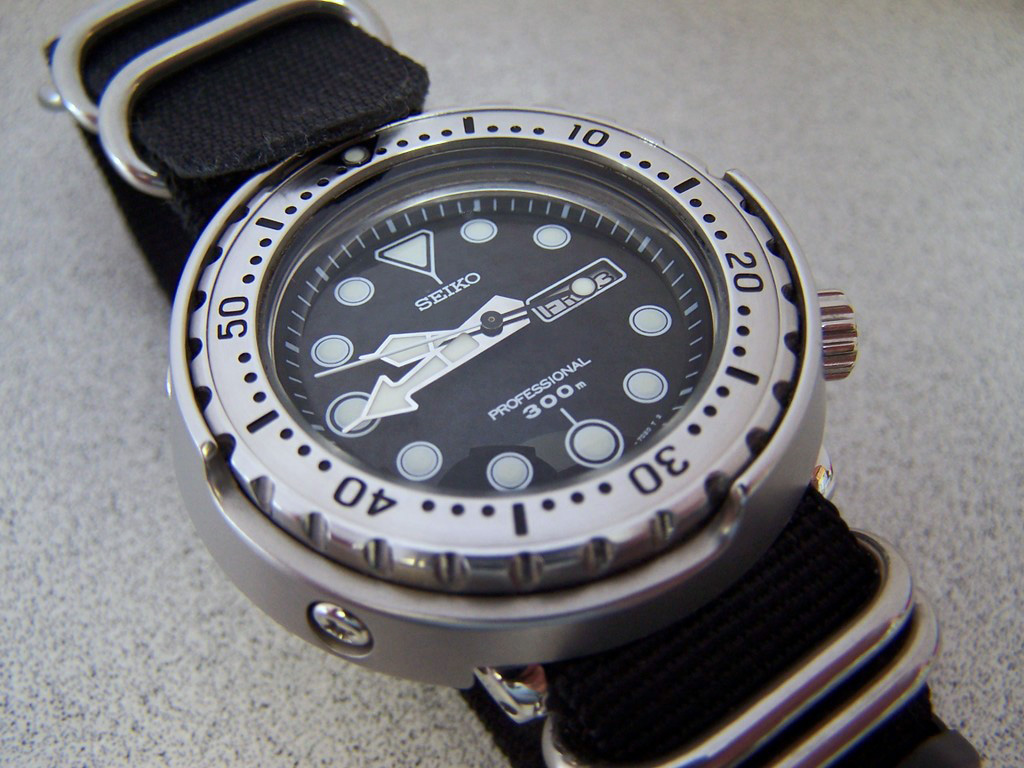
Seiko SBDX001 Marinemaster 300m professional diver
The Seiko SBDX001 Marinemaster 300m — professional-grade Prospex diver running the in-house Calibre 8L35 hi-beat automatic at 28,800 vph.
Photo: Francis Flinch — CC BY-SA 3.0 — Wikimedia Commons
Calibre 6R15

The 6R15 represented a meaningful step up from the 7S26/4R36 family — a different movement, not an incremented variant.

Specification Value
Jewels 23
Frequency 21,600 bph
Power reserve 50 hours
Hacking Yes
Manual wind Yes
Mainspring SPRON alloy (Seiko proprietary)

The SPRON alloy mainspring — Seiko's proprietary material developed for resistance to fatigue and elasticity loss — is a genuine engineering advantage over conventional mainspring alloys. The 6R15 powered the SARB017 Alpinist, the original Sumo (SBDC001–005), the Presage SARB065, and numerous higher-end Prospex references.

Calibre 6R35

The 6R35 is the current mid-range calibre — an evolution of the 6R15 with a significantly improved power reserve.

Specification Value
Jewels 24
Frequency 21,600 bph
Power reserve 70 hours
Hacking Yes
Manual wind Yes
Mainspring SPRON alloy

The 40% improvement in power reserve — from 50 to 70 hours — is the headline change. 70 hours means a fully wound watch worn regularly on weekdays will run through the weekend without winding, resuming Monday morning still running. This practical advantage is significant for daily wearers who do not want to think about their watch's power state.

The 6R35 is used in the modern Alpinist (SPB117/SPB121), the current Sumo (SBDC081/083), upper-tier Presage references, and a broad range of current Prospex production.

Calibre 6R31

The 6R31 is the no-date variant of the 6R35 — same movement, same 70-hour power reserve, without the date mechanism. This calibre powers the modern King Seiko (SPB279 series), where a clean dial without a date window is central to the design.


Premium Automatic — Calibre 8L35

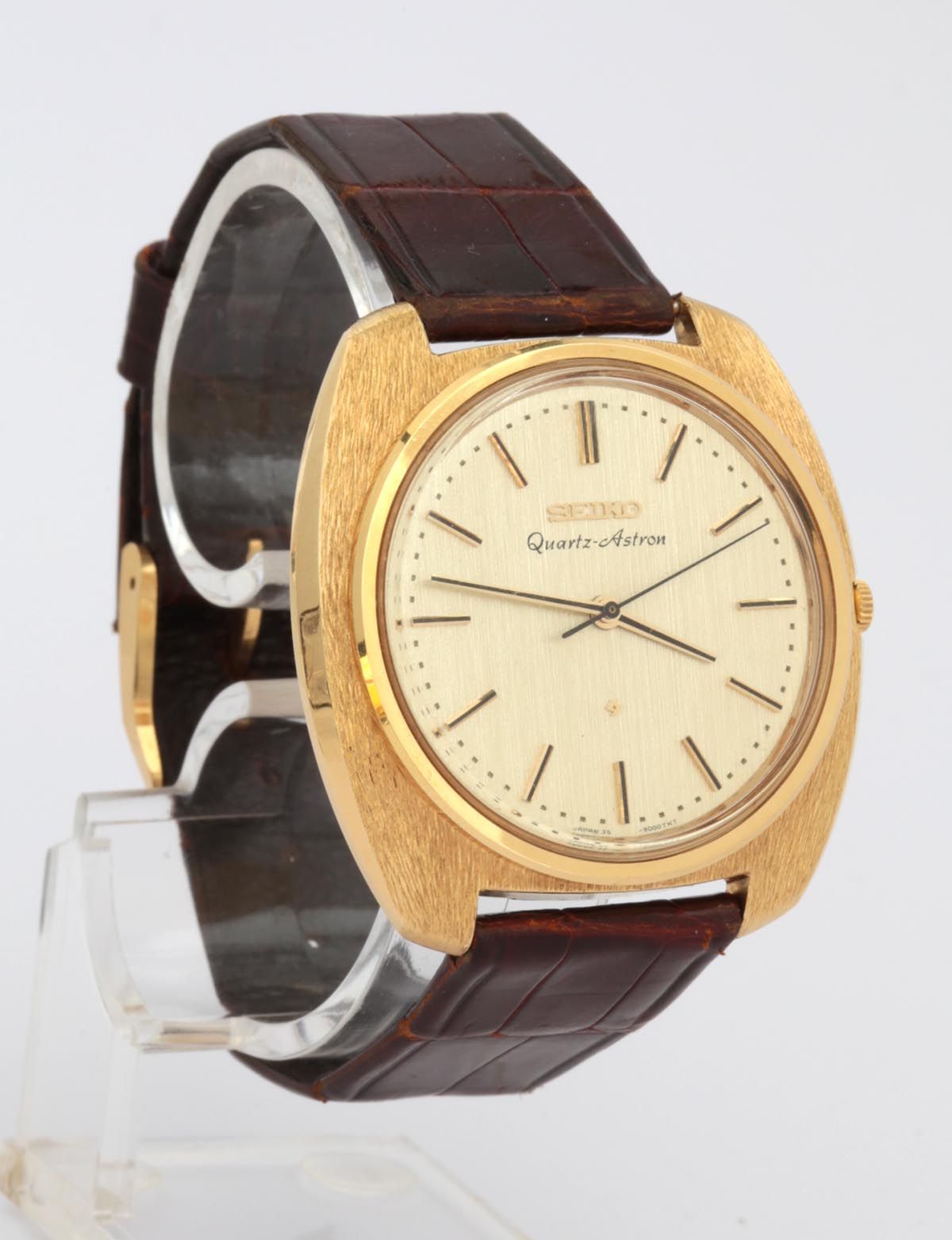
Seiko SBBN007 diver's 300m on 4-ring NATO strap
The Seiko SBBN007 300m diver on a NATO strap — professional-specification Prospex with the in-house Calibre 8L35 automatic.
Photo: Francis Flinch — Public Domain — Wikimedia Commons
The 8L35 is a different category of movement from anything else in the Seiko-branded (non-Grand Seiko) range.

Specification Value
Jewels 26
Frequency 28,800 bph (4 Hz)
Power reserve ~50 hours
Hacking Yes
Manual wind Yes
Parts 192
Accuracy -10/+15 sec/day
Mainspring SPRON alloy
Assembly Hand-assembled, Shizukuishi Watch Studio , Morioka

The 8L35 runs at 28,800 vph — double the frequency of the 6R35 — and is hand-assembled at the same Shizukuishi facility that produces Grand Seiko movements. Its 192-part count and -10/+15 sec/day accuracy specification place it in a different manufacturing tier from the production-line calibres above it.

The 8L35 appears in the SLA017 (1965 62MAS reissue), the SLA065, and the Marinemaster SBDX series — Seiko's limited and high-specification Prospex releases. It is the movement that demonstrates what Seiko can achieve in the Seiko-brand (as opposed to Grand Seiko) category when manufacturing quality is the priority.


Chronograph Calibres

Calibre 6139 — 1969 Automatic Chronograph

Specification Value
Year Mid-May 1969
Type Automatic, integrated
Frequency 21,600 bph
Features Column wheel, vertical clutch, day-date, 30-min counter

The 6139 is the most historically significant Seiko movement: the world's first mass-produced automatic chronograph, reaching retail sale before the Zenith El Primero and the Heuer-Büren Calibre 11 in the contested 1969 chronograph race. The 6139 was used in the Seiko 5 Sports Speed-Timer (reference 6139-6000 and variants) — the world's first wristwatch to combine automatic winding with a chronograph function.

Calibre 7A28 — 1983 Quartz Chronograph

Specification Value
Year 1983
Type Analogue quartz chronograph
Jewels 15
Features 30-minute chronograph, sweeping seconds, split-seconds function
Claim World's first analogue quartz chronograph

The 7A28 is notable for two reasons beyond its 1983 claim: all-metal gear train (no plastic components in the train, unusual for quartz), and a sweeping seconds hand rather than the stepped seconds typical of quartz movements. It appeared in over 40 Seiko Sport 100 variants, including references used as James Bond film props and in the film Aliens.

Calibre 8R48 — Modern Automatic Chronograph

Specification Value
Introduction 2014
Type Automatic, column wheel, vertical clutch
Jewels 34
Frequency 28,800 bph (4 Hz)
Power reserve 45 hours
Complications Central seconds, 30-min counter, 12-hr counter, date

The 8R48 powers the Seiko Prospex Speedtimer (SRQ051/SRQ053 and related) — Seiko's modern in-house automatic chronograph. At 28,800 vph with a column wheel and vertical clutch, the 8R48 matches the specification architecture of Swiss automatic chronographs costing several times more. MEMS-manufactured components (lighter and stronger than conventionally machined parts) contribute to the movement's precision.


Spring Drive — Calibre 5R65

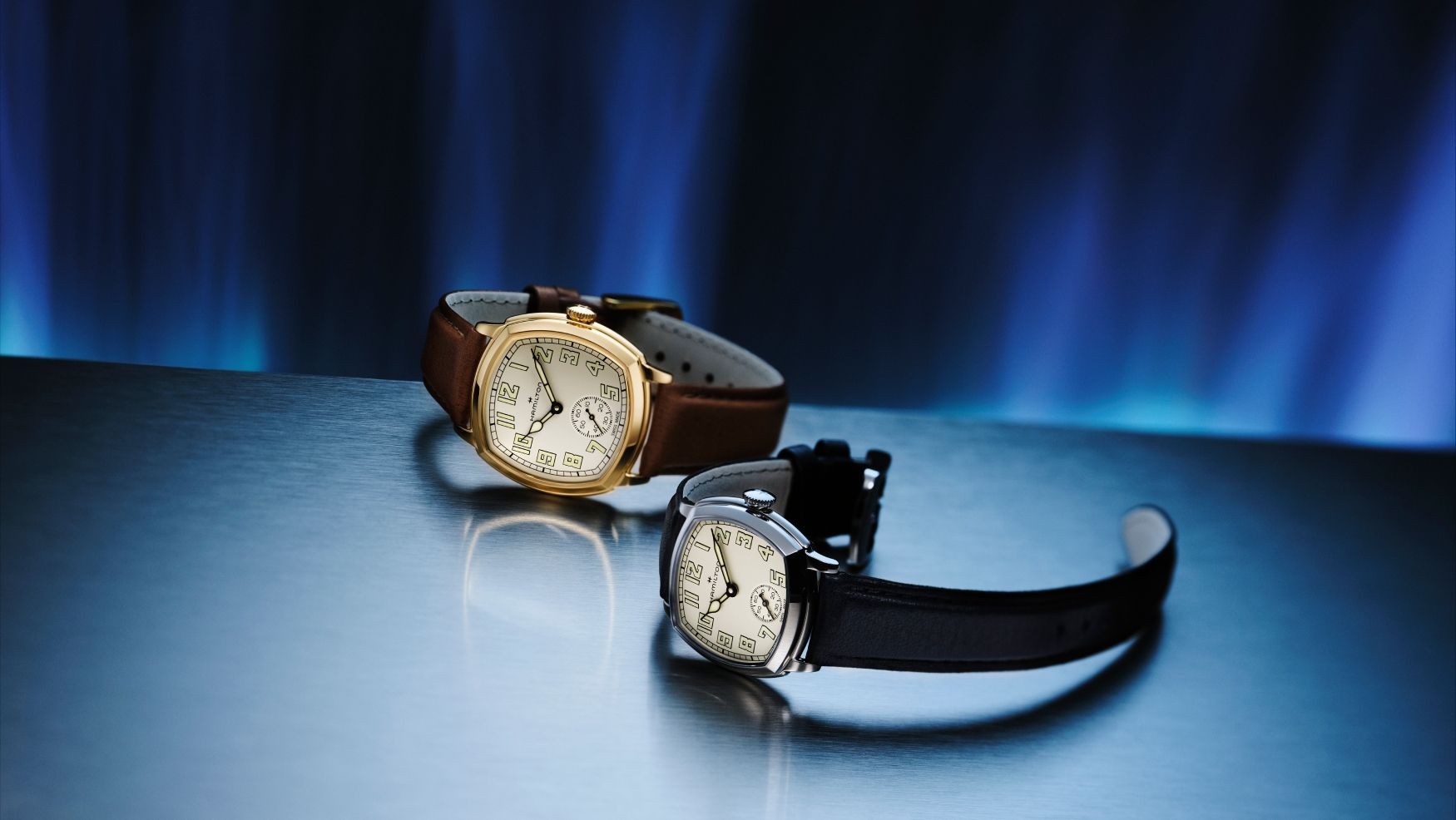
Seiko Astron 35SQ — world's first commercial quartz wristwatch, 1969
The Seiko Astron 35SQ — the world’s first commercial quartz wristwatch, sold on 25 December 1969 in Tokyo at 450,000 yen. Only 100 were made in the first production run.
Photo: Deutsches Uhrenmuseum — CC BY-SA 4.0 — Wikimedia Commons

The Spring Drive is Seiko's most radical movement concept — one that defies classification as either mechanical or quartz.

Specification Value
Energy source Mainspring (conventional mechanical)
Regulator Tri-synchro regulator (electromagnetic, mechanical, quartz)
Accuracy ±1 second/day
Power reserve (5R65) 72 hours

The tri-synchro regulator replaces the conventional escapement: a glide wheel is braked electromagnetically, with the braking force governed by a quartz oscillator that ensures the wheel rotates at exactly the correct average speed. No electricity enters the system from outside; the quartz element only regulates the electromagnetic braking of the mainspring-driven glide wheel.

The result: mainspring energy, quartz accuracy. ±1 second/day without a battery. The Spring Drive is used in the Prospex LX Line (5R65, 72hr PR) and, in more elaborate 9R-family variants, in Grand Seiko.


GPS Solar — Calibre 9F and GPS Series

King Seiko 5246-6000 Hi-Beat Automatic —
King Seiko 5246-6000 Automatic Special Hi-Beat — “Chronometer Officially Certified” — from the era of direct competition between Daini Seikosha and Suwa Seikosha.
Photo: Roland Fischer (Dnalor 01) — CC BY-SA 3.0 AT — Wikimedia Commons
Calibre 9F (primarily Grand Seiko and Credor): ±10 seconds/year accuracy, achieved by measuring temperature 540 times daily and micro-adjusting the oscillator frequency. Quartz crystals are aged for 90 days under electrical current before selection — establishing baseline stability before the movement is assembled.

GPS Solar calibres (3X22, 3X62 series) : Power GPS reception via solar charging, cross-reference location against an onboard database, and automatically adjust to the correct time zone. The 3X22 reduces power consumption by 25% versus the first-generation 7X series while improving GPS reception sensitivity by 50%.


Calibre Summary

Calibre Type Frequency Power Reserve Key Feature
7S26 Auto 21,600 bph 41hr No hacking, no manual wind
4R35/4R36 Auto 21,600 bph 41hr Adds hacking + hand-wind
6R15 Auto 21,600 bph 50hr SPRON mainspring
6R35 Auto 21,600 bph 70hr Improved power reserve
6R31 Auto (no date) 21,600 bph 70hr King Seiko
8L35 Auto 28,800 bph 50hr Shizukuishi hand-assembled
6139 Auto chrono 21,600 bph — World's first mass-produced auto chrono (1969)
7A28 Quartz chrono — — World's first analogue quartz chrono (1983)
8R48 Auto chrono 28,800 bph 45hr MEMS components, column wheel
5R65 Spring Drive — 72hr ±1 sec/day, no battery
3X22 GPS Solar quartz — Solar 39 time zones, atomic accuracy

Frequently Asked Questions

What is the difference between 7S26 and 4R36?
The 4R36 builds on the 7S26 base and adds hacking (seconds hand stops when setting time) and manual winding. Power reserve and frequency are identical. The 4R36 also has 24 jewels vs the 7S26's 21.

What is the NH35A?
The NH35A is Seiko Epson's designation for the calibre family equivalent to the 4R35, sold to third-party brands and the modification community. Mechanically near-identical to the 4R35 but with slightly different jewel count. Not used in Seiko-branded watches.

What makes the 8L35 special?
28,800 vph frequency, 192 components, hand-assembled at Shizukuishi Watch Studio — the same facility that assembles Grand Seiko movements. Accuracy: -10/+15 sec/day. Used in SLA017 and other limited Prospex references.

How does Spring Drive work?
Mainspring drives the gear train conventionally. A glide wheel replaces the conventional escapement; its rotation is braked electromagnetically, with braking force governed by a quartz oscillator. The result is mechanical power regulated to ±1 second/day accuracy without any external electricity source.


Related Articles

Recent Posts

By Zach Charles • October 10, 2026
Hamilton's American Classic Cushion Mechanical revives its 1926 Art Deco cushion watches, seen in Oppenheimer, in 30mm and 34mm with the new hand-wound…
Doxa SUB 200: The Accessible Everyday Diver
By Zach Charles • October 10, 2026
Complete guide to the Doxa SUB 200 — 42mm, 200m, four colorways, Sellita SW200-1. The accessible entry to the Doxa SUB family with the full…
By Zach Charles • October 10, 2026
The Breitling Top Time B01 Aston Martin DB5 pairs a cushion-shaped 41mm case, a wooden inner ring and the in-house Caliber 01 across three limited…
By Zach Charles • October 10, 2026
TAG Heuer developed the Mikrograph (2011, 1/100th second), Mikrotimer Flying 1000 (2011, 1/1000th second), and Mikrogirder (2012, 1/2000th second).
Doxa SUB 1500T: The 1,500-Metre Depth-Rating Flagship
By Zach Charles • October 10, 2026
Complete guide to the Doxa SUB 1500T — 45mm, 1,500m depth rating, helium escape valve, ETA 2892-2 movement, USD 2,690.
Audemars Piguet Royal Oak 'Jumbo' ref. 15202 with blue tapisserie dial and integrated steel bracelet
By Zach Charles • October 10, 2026
The Audemars Piguet × Swatch Royal Pop is a $400 bioceramic pocket watch in 8 colourways, powered by a new hand-wound SISTEM51 with 90+ hour power…

Time on the Move logo
By Zach Charles • October 10, 2026
Zach Charles is the editor of Time on the Move, an independent watch reference covering brand and model histories, buying guides and release news…
Omega Speedmaster Professional 'Moonwatch' chronograph, front view on steel bracelet
By Zach Charles • October 9, 2026
Find the best watches at every price point from $500 to $15,000 — new and pre-owned. Covers every budget tier with specific reference picks, brand…
By Zach Charles • October 9, 2026
The latest watch news: new releases, Watches and Wonders coverage, discontinuations, industry analysis, and market trends. Currently 1 article.
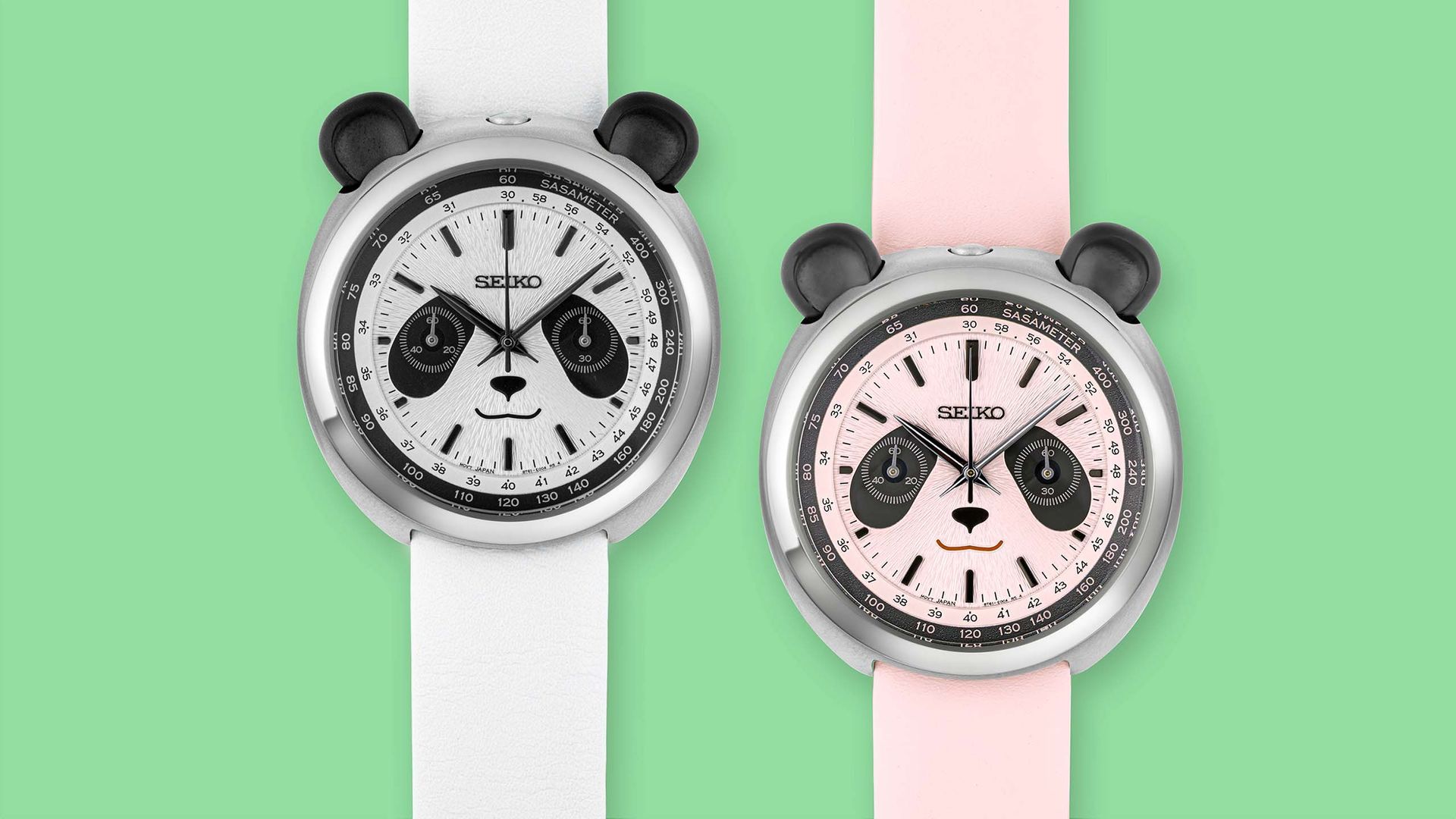
Seiko's New Panda Chronograph Is Literally a Panda: The Power Design Project HHK001 and HHK002
By Zach Charles • October 8, 2026
Seiko's Power Design Project panda chronograph (HHK001, HHK002) turns the panda dial into an actual panda face, with ear pushers, a 'Sasameter' and a 3D…
Show More