
IWC Pilot's Watch: The Complete Family Guide

Zach Charles • June 8, 2026

Share this article

IWC Pilot's Watch: The Complete Family Guide

The IWC Pilot's Watch family is the most historically grounded product line in the IWC Schaffhausen catalogue — and one of the most technically coherent families in Swiss watchmaking. Its central technical device, the soft-iron inner case that shields the movement from magnetic field interference, was not invented for marketing purposes. It was specified by the RAF, validated under forty-four days of institutional testing, and proven across three decades of operational service before it became a design language.

Understanding the Pilot's Watch family requires understanding the problem it was designed to solve, the military procurement process that forced IWC to solve it rigorously, and the institutional character that the resulting solution gave to every watch in the collection — from the wartime B-Uhr to the current ceramic Top Gun.


IWC Big Pilot Antoine de Saint-Exupéry limited edition
The IWC Big Pilot Antoine de Saint-Exupéry limited edition — one of 1,900 pieces. The 46mm case, triangle at 12 o’clock, large screw-down crown, and luminous Arabic numerals directly reference the Luftwaffe Beobachtungsuhren specification that IWC fulfilled in 1940 with B-Uhr reference 431.
Photo: Ferengi — CC BY-SA 3.0 — Wikimedia Commons
The Core Technical Problem — Magnetism and Movement Accuracy

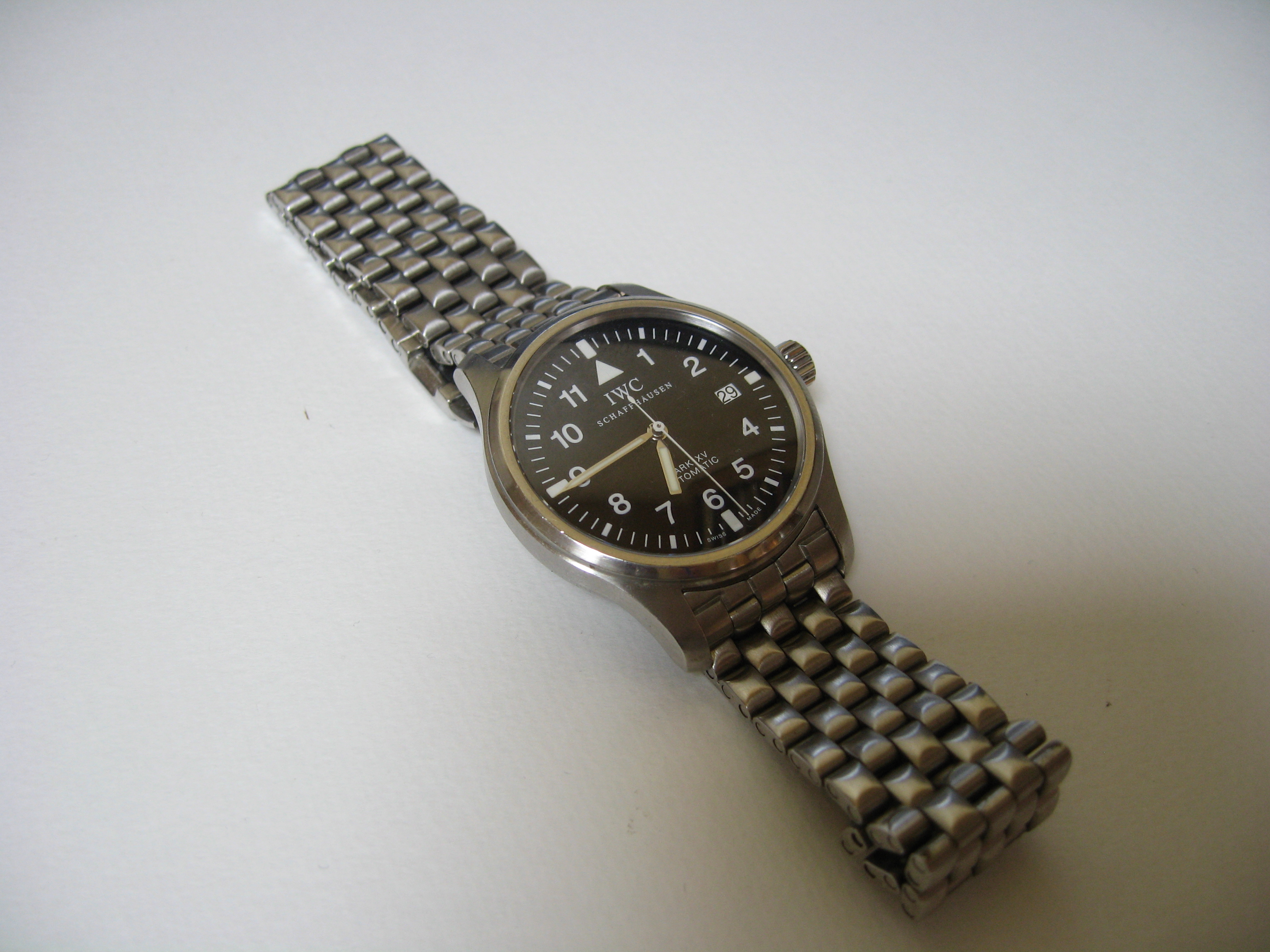
IWC Pilot’s Watch Mark XV
An IWC Pilot’s Watch Mark XV — the 38mm reference housing the Cal. 37524 (ETA 2892-A2 base) that bridged the Mark XII and Mark XVII. The clean tool-watch dial with Arabic numerals, luminous hands, and soft-iron inner case continues the design language established by IWC’s wartime RAF contracts from the 1940s.
Photo: サフィル — CC BY-SA 4.0 — Wikimedia Commons
Aircraft cockpits in the Second World War presented a specific hazard to mechanical watches: electromagnetic fields generated by avionics, electrical systems, and instrument clusters could magnetise the steel components of a movement's regulating organ — the balance wheel, the hairspring, the lever — causing unpredictable rate variation that was, in a navigation context, potentially fatal.

The engineering solution was containment: a secondary case of soft iron, placed inside the watch case and surrounding the movement. Soft iron is both highly permeable to magnetic fields and easily demagnetised — it channels field lines through itself and around the movement rather than allowing them to pass through the movement's components. The movement inside a soft-iron cage is functionally isolated from external magnetic fields.

This is the technical foundation of the IWC Pilot's Watch. It is not a decorative element. It is not a heritage reference. It is a genuine functional solution to a real problem that military aviation procurement officers understood in the 1940s, and it remains meaningful in any environment where magnetic interference is a concern.


The Wartime B-Uhr (1940) — Where It Started

IWC Big Pilot Antoine de Saint-Exupéry limited edition
The IWC Big Pilot Antoine de Saint-Exupéry limited edition — one of 1,900 pieces. The 46mm case, triangle at 12 o’clock, large screw-down crown, and luminous Arabic numerals directly reference the Luftwaffe Beobachtungsuhren specification that IWC fulfilled in 1940 with B-Uhr reference 431.
Photo: Ferengi — CC BY-SA 3.0 — Wikimedia Commons

In 1940, the German Luftwaffe issued a specification for a pilot's navigation watch — the Beobachtungsuhren, or B-Uhr. The specification required: minimum 55mm case diameter for legibility in the cockpit; a bidirectional triangle marker at 12 o'clock for rapid orientation without reading numerals; a soft-iron inner case for magnetic protection; a hand-wound movement with minimum 44-hour power reserve.

Five manufacturers were contracted to produce B-Uhr watches: A. Lange & Söhne, Laco, Stowa, Wempe — and IWC. IWC was the only Swiss manufacturer among the five; the others were German. IWC produced the B-Uhr reference 431, housing the Cal. 52T SC, a large-format hand-wound movement sized to match the specification's case diameter. Approximately 1,000 pieces were made.

The B-Uhr reference 431 established the design vocabulary that IWC's Pilot's Watch would carry forward: the triangle and two dots at 12, the applied Arabic numerals, the luminous hands, the understated tool-watch aesthetic, the functional anti-magnetic architecture beneath a purposeful exterior.


The Mark Series — From Military Contract to Collector Icon

IWC Pilot’s Watch Mark XV
An IWC Pilot’s Watch Mark XV — the 38mm reference housing the Cal. 37524 (ETA 2892-A2 base) that bridged the Mark XII and Mark XVII. The clean tool-watch dial with Arabic numerals, luminous hands, and soft-iron inner case continues the design language established by IWC’s wartime RAF contracts from the 1940s.
Photo: サフィル — CC BY-SA 4.0 — Wikimedia Commons

The IWC Mark series is the continuous thread running from the wartime period to the present. Beginning with the retroactively designated "Mark IX" (ref. 436, never officially named during production), through the famous Mark XI RAF contract watch, the transitional Mark XII, and the fully in-house Mark XX of 2022, the series represents the world's longest continuously evolved military-heritage pilot's watch line.

Each Mark generation embodied the functional priority of its era: the Mark X's Dirty Dozen conformance; the Mark XI's 36-hour power reserve and verified accuracy across 44 days of institutional testing; the Mark XV's ETA base movement; the Mark XX's silicon components and 120-hour power reserve. The complete Mark series history covers every reference in detail.


The Big Pilot — The B-Uhr Aesthetic in Modern Form

IWC Big Pilot Antoine de Saint-Exupéry limited edition
The IWC Big Pilot Antoine de Saint-Exupéry limited edition — one of 1,900 pieces. The 46mm case, triangle at 12 o’clock, large screw-down crown, and luminous Arabic numerals directly reference the Luftwaffe Beobachtungsuhren specification that IWC fulfilled in 1940 with B-Uhr reference 431.
Photo: Ferengi — CC BY-SA 3.0 — Wikimedia Commons

The IWC Big Pilot is the direct descendant of the B-Uhr reference 431, designed explicitly to recall the wartime oversized pilot's watch in a modern mechanical package. Günter Blümlein initiated the project in 2001; IWC launched the ref. IW5002 in 2002, one year after Blümlein's death.

At 46mm in the original specification, with the Pellaton automatic winding system and a seven-day power reserve from the Cal. 5011, the Big Pilot occupies a distinctive position: it is the most visually dramatic watch in the family, closest in spirit to the B-Uhr original, and offers the longest power reserve of any watch in the Pilot's family. It is also the watch that converted IWC's aviation heritage into a design statement for buyers who had no professional connection to aviation but responded to the aesthetic authority of the oversized instrument.


Spitfire — The Campaign Sub-Family

IWC Pilot’s Watch Mark XV
An IWC Pilot’s Watch Mark XV — the 38mm reference housing the Cal. 37524 (ETA 2892-A2 base) that bridged the Mark XII and Mark XVII. The clean tool-watch dial with Arabic numerals, luminous hands, and soft-iron inner case continues the design language established by IWC’s wartime RAF contracts from the 1940s.
Photo: サフィル — CC BY-SA 4.0 — Wikimedia Commons

The IWC Spitfire collection takes its name from the Supermarine Spitfire fighter aircraft — not because the watches were issued to Spitfire pilots (they were not) but because the Spitfire represents, in the cultural imagination of aviation, the quintessence of the single-seat fighter. IWC adopted the name for a sub-family oriented toward a specific aesthetic register: smaller, more field-capable, organised around the concept of an operational pilot's daily watch rather than a navigator's precision instrument.

The Spitfire line distinguishes itself within the Pilot's Watch family by lighter, more wearable cases — the current references run to 41mm — and an emphasis on legibility and durability over complication. The 2019 introduction of in-house calibres across the Spitfire line was part of IWC's broader manufacture rollout following the 2018 factory opening.


Top Gun — Ceramic and Combat

The Top Gun sub-family represents IWC's engagement with a different aspect of military aviation culture: the United States Navy Fighter Weapons School at Naval Air Station Fallon — the programme known publicly as Top Gun. IWC has maintained a partnership with the Naval Aviation community that provides the Top Gun watches with a documented military connection, and the watches themselves are built to the more aggressive specification the name implies.

Top Gun cases are typically ceramic — black zirconia — providing scratch resistance and a non-reflective finish appropriate for operational contexts where watch reflectivity is a practical concern. The current Top Gun range runs to 44mm and includes chronograph variants with flyback functionality. The aesthetic is intentionally more aggressive than the standard Pilot's Watch, with heavier case construction and a combat-utility visual register.


The Family Architecture Today

The IWC Pilot's Watch family in its current form is organised around three distinct registers:

Understated and historically grounded — The Mark series, from the Mark XX as the current standard. Clean dials, moderate size (40mm), 120-hour power reserve, in-house Cal. 32111. For buyers who want the technical foundation without the visual drama.

Classic and balanced — The standard Pilot's Watch Automatic in 36mm and 40mm variants. The workhorse references of the family; accessible entry points to IWC quality with clean, non-combat aesthetics.

Heritage-statement — The Big Pilot in its various configurations. The watch for buyers who want the full B-Uhr design vocabulary in modern execution.

Campaign and operational — The Spitfire line. Field-use aesthetic, lighter construction, in-house calibres, accessible price.

Combat specification — Top Gun. Ceramic case, aggressive aesthetic, maximum operational specification.


What Makes the Pilot's Watch Different

Every major luxury watch manufacturer offers a pilot's watch. The claim to aviation heritage is perhaps the most common single positioning statement in Swiss watchmaking — it implies precision, legality, and professional purpose without requiring the wearer to have professional aviation credentials.

IWC's Pilot's Watch family is distinguished from these competitors by three things. First, the genuine wartime contract history: the B-Uhr reference 431 and the Mark X and Mark XI are documented military-issue watches, not marketing claims. Second, the continuous technical architecture: the soft-iron inner case and its anti-magnetic philosophy run from the 1940s references through to current production. Third, the depth of the family: seven distinct sub-families, each with a coherent identity and a clear rationale, rather than a single pilot's watch reference diluted across case sizes.


Frequently Asked Questions

What is the soft-iron inner case?
A secondary case of soft iron that surrounds the movement inside the watch case. Soft iron channels magnetic field lines through itself rather than through the movement's components, protecting the balance wheel and hairspring from magnetisation. It is the foundational technical feature of IWC's Pilot's Watch family, first required by the RAF and Luftwaffe procurement specifications of the 1940s.

What is the difference between the Pilot's Watch, Spitfire, Big Pilot, and Top Gun?
All are part of IWC's Pilot's Watch family. The standard Pilot's Watch Automatic (36–40mm) is the accessible, balanced reference. The Spitfire emphasises field-use aesthetics and lighter construction. The Big Pilot (46mm) is the large-format B-Uhr descendant with a seven-day power reserve. The Top Gun uses a ceramic case with a combat-utility aesthetic. The Mark series is the historical line, running from wartime references to the current Mark XX.

Which Pilot's Watch has the longest power reserve?
The Big Pilot references with the Cal. 51111 Pellaton system achieve 168 hours (7 days). The Mark XX with Cal. 32111 achieves 120 hours (5 days). Standard Pilot's Watch Automatic references typically achieve 42 hours.

Is the Big Pilot based on a real wartime watch?
Yes. The Big Pilot's design directly references IWC's B-Uhr ref. 431, produced for the Luftwaffe in 1940 to the military specification for Beobachtungsuhren (observer's watches). The 46mm case diameter, triangle marker at 12, applied numerals, and crown-guard architecture all derive from that wartime brief.

Are Pilot's Watches good for everyday wear?
The standard 40mm Pilot's Watch Automatic and the 40mm Mark XX are well-suited to everyday wear — legible dials, robust construction, comfortable case proportions. The 46mm Big Pilot can be challenging under shirt cuffs. The ceramic Top Gun is virtually scratch-resistant and handles daily wear with ease.


Related Articles

Recent Posts

By Zach Charles • October 10, 2026
Hamilton's American Classic Cushion Mechanical revives its 1926 Art Deco cushion watches, seen in Oppenheimer, in 30mm and 34mm with the new hand-wound…
Doxa SUB 200: The Accessible Everyday Diver
By Zach Charles • October 10, 2026
Complete guide to the Doxa SUB 200 — 42mm, 200m, four colorways, Sellita SW200-1. The accessible entry to the Doxa SUB family with the full…
By Zach Charles • October 10, 2026
The Breitling Top Time B01 Aston Martin DB5 pairs a cushion-shaped 41mm case, a wooden inner ring and the in-house Caliber 01 across three limited…
By Zach Charles • October 10, 2026
TAG Heuer developed the Mikrograph (2011, 1/100th second), Mikrotimer Flying 1000 (2011, 1/1000th second), and Mikrogirder (2012, 1/2000th second).
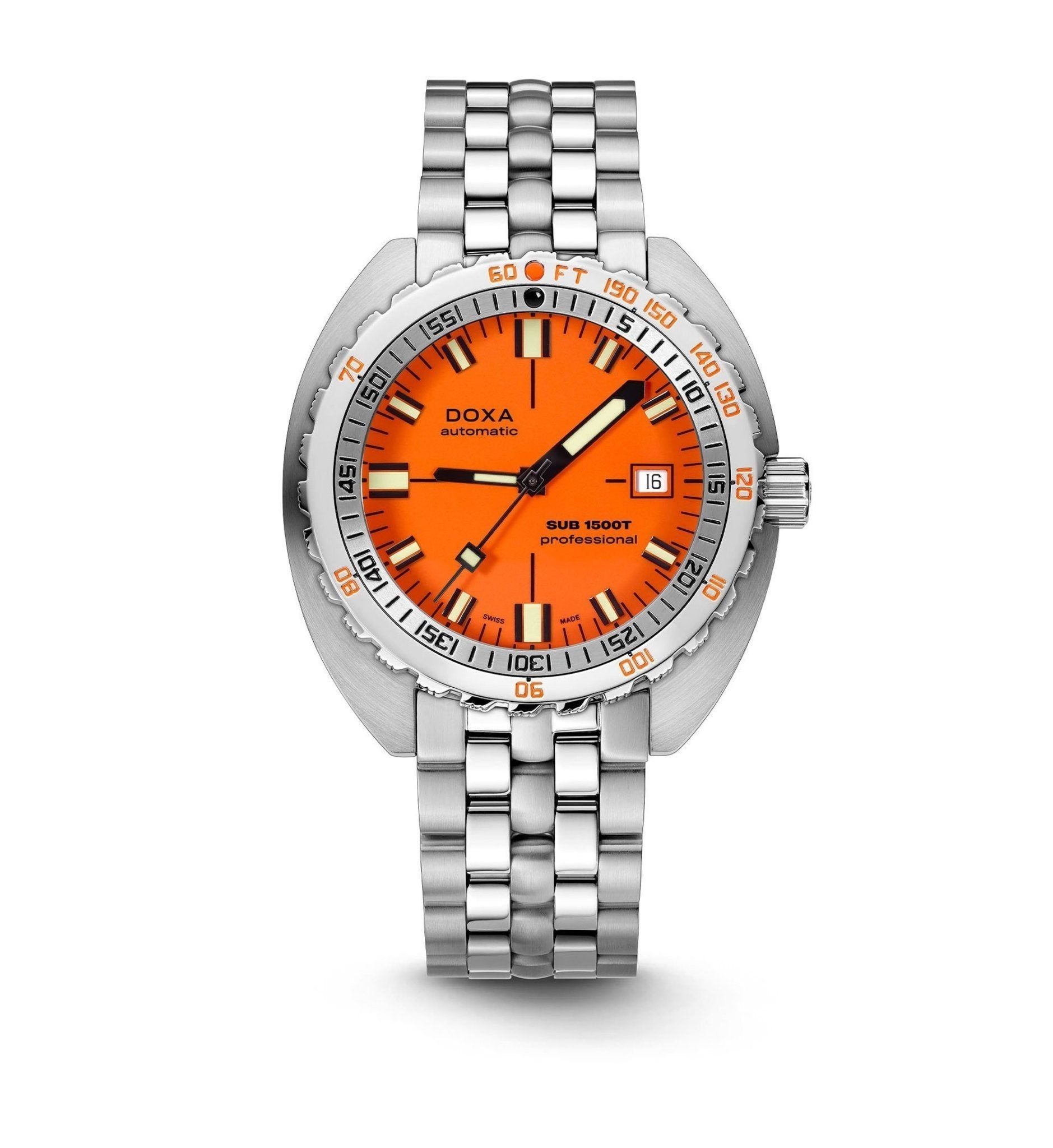
Doxa SUB 1500T: The 1,500-Metre Depth-Rating Flagship
By Zach Charles • October 10, 2026
Complete guide to the Doxa SUB 1500T — 45mm, 1,500m depth rating, helium escape valve, ETA 2892-2 movement, USD 2,690.
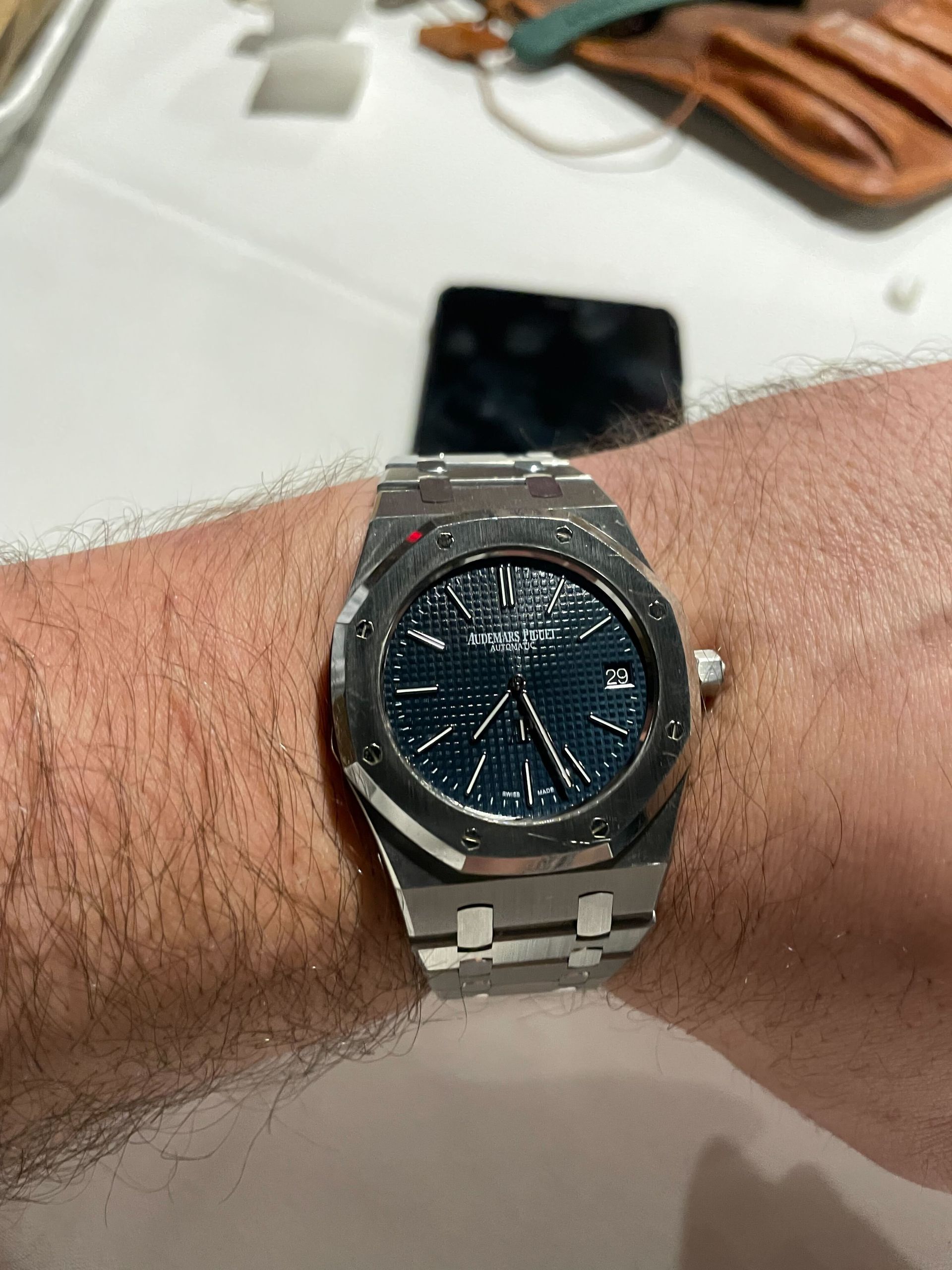
Audemars Piguet Royal Oak 'Jumbo' ref. 15202 with blue tapisserie dial and integrated steel bracelet
By Zach Charles • October 10, 2026
The Audemars Piguet × Swatch Royal Pop is a $400 bioceramic pocket watch in 8 colourways, powered by a new hand-wound SISTEM51 with 90+ hour power…

Time on the Move logo
By Zach Charles • October 10, 2026
Zach Charles is the editor of Time on the Move, an independent watch reference covering brand and model histories, buying guides and release news…
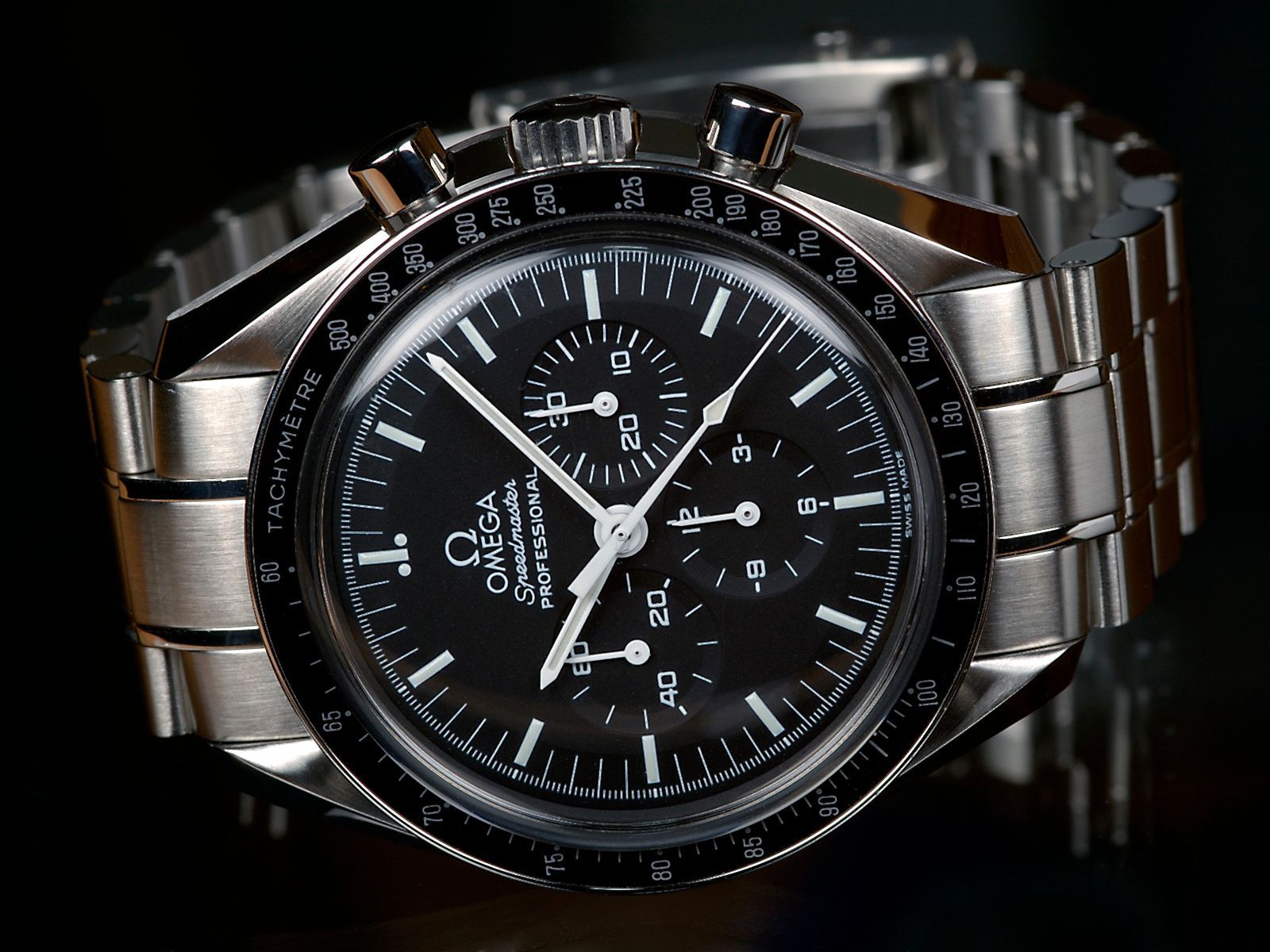
Omega Speedmaster Professional 'Moonwatch' chronograph, front view on steel bracelet
By Zach Charles • October 9, 2026
Find the best watches at every price point from $500 to $15,000 — new and pre-owned. Covers every budget tier with specific reference picks, brand…
By Zach Charles • October 9, 2026
The latest watch news: new releases, Watches and Wonders coverage, discontinuations, industry analysis, and market trends. Currently 1 article.

Seiko's New Panda Chronograph Is Literally a Panda: The Power Design Project HHK001 and HHK002
By Zach Charles • October 8, 2026
Seiko's Power Design Project panda chronograph (HHK001, HHK002) turns the panda dial into an actual panda face, with ear pushers, a 'Sasameter' and a 3D…
Show More